
Understanding Corydoras Shoaling vs. Schooling Behavior

Welcome to Aquarium Mastery!
Ever wondered if your Corydoras are truly schooling or just hanging out together? Understanding Corydoras fish schooling behavior is key to ensuring their happiness and well-being in your freshwater aquarium. Dive in to learn the subtle differences between shoaling and schooling, and discover how to create the perfect environment for these fascinating bottom-dwellers to thrive! Prepare to unlock the secrets of Corydoras social dynamics and elevate your aquarium game!
- Understanding Corydoras Shoaling Behavior
- Introduction to Corydoras Social Dynamics
- Corydoras: Shoaling, Not Schooling
- Factors Influencing Corydoras Shoaling Behavior
- Recognizing Healthy Shoaling Behavior in Corydoras
- Creating an Ideal Environment for Corydoras Shoaling
- The Benefits of Observing Corydoras Shoaling
- Addressing Problems with Corydoras Shoaling
- Conclusion: Promoting Healthy Corydoras Shoaling for a Thriving Aquarium
-
Frequently Asked Questions
- What is the primary difference between shoaling and schooling behavior in Corydoras fish?
- How many Corydoras are needed to observe their natural shoaling behavior?
- What are the benefits of Corydoras shoaling for the fish themselves?
- Does the type of Corydoras species influence their shoaling behavior?
- Can a lack of proper shoaling conditions negatively impact Corydoras fish?
- Final Reflection: The Subtle Symphony of Corydoras
- Dive Deeper: Nurture Thriving Cory Communities!
Understanding Corydoras Shoaling Behavior
The Appeal of Corydoras Catfish in Home Aquariums
Corydoras catfish are among the most beloved inhabitants of freshwater aquariums, cherished for their peaceful demeanor, active bottom-dwelling habits, and diverse range of species, from the iconic Bronze Corydoras ( Corydoras aeneus) to the charming Panda Corydoras ( Corydoras panda). Their constant foraging and characteristic "wiggling" as they sift through the substrate add dynamic movement and charm to the lower levels of any tank.
Often seen as vital members of the "clean-up crew," their relatively small size and generally easy-going nature make them suitable for both novice and experienced aquarists looking to enhance their aquatic displays. With proper care, many species can live for 3-5 years, and some even up to 10 years, becoming long-term companions.
Beyond their practical benefits, the distinct personalities and engaging social interactions of Corydoras contribute significantly to their appeal. They are not merely functional bottom feeders but active, curious fish that bring a sense of natural vitality to the aquarium. Observing their natural behaviors, such as their collective foraging or their playful darting movements, provides immense satisfaction. Understanding their specific social needs, particularly their "Corydoras fish schooling behavior" (more accurately described as shoaling), is paramount to unlocking their full potential for health and activity within the home aquarium.
Importance of Understanding Corydoras Behavior for Proper Care
A deep understanding of Corydoras behavior is crucial for providing optimal care and ensuring the well-being of these fascinating catfish. Many common issues, such as stress-induced diseases like fin rot or lethargy, often stem from a misunderstanding of their fundamental social requirements. Aquarists who fail to recognize that Corydoras are highly social animals, requiring the company of their own kind, inadvertently subject their fish to undue stress, leading to a diminished quality of life and reduced lifespan.
Proper care extends beyond just water parameters and diet; it encompasses creating an environment that supports their natural social dynamics. When Corydoras are kept in appropriate groups and conditions, their natural behaviors, such as collective foraging and resting, become evident, signaling their comfort and health. Conversely, a single or isolated Corydoras will often exhibit timidity, hide constantly, and become prone to illness, directly impacting their ability to thrive. Recognizing and facilitating their natural "Corydoras fish schooling behavior" is therefore not just a recommendation but a necessity for their long-term health and vitality.
Corydoras: Shoaling, Not Schooling
Defining Shoaling Behavior in Corydoras Catfish
Shoaling refers to a group of fish that remain together for social reasons, such as mutual protection, enhanced foraging, or simply companionship, without necessarily swimming in a highly synchronized or polarized manner. In the context of Corydoras catfish, this means they will typically congregate in groups, often resting together in small piles or moving across the substrate in close proximity. While they may spread out to forage individually when food is abundant, they consistently return to the safety and comfort of their group, especially if startled or when resting.
This collective behavior is a hallmark of healthy Corydoras. For instance, a group of 8 Corydoras pygmaeus might be seen exploring different areas of the substrate, but if a shadow passes over the tank, they will quickly converge into a tighter cluster. This inherent tendency to stay together in a loose aggregation is their primary social dynamic. It is this "Corydoras fish schooling behavior," or shoaling, that distinguishes them as highly social creatures requiring the company of their own species to feel secure and display their natural behaviors.
Why Corydoras Exhibit Shoaling Tendencies
Corydoras exhibit shoaling tendencies primarily for survival and well-being, a behavior honed through evolution in their natural South American habitats. One key advantage is protection from predators; a larger group makes it more difficult for a predator to single out an individual, and the collective vigilance of many eyes increases the chances of detecting threats early. For instance, in the Amazon basin, a lone Corydoras sterbai would be highly vulnerable, whereas a group of 15 would present a more formidable and confusing target.
Beyond safety, shoaling enhances foraging efficiency and facilitates breeding. More individuals searching for food can cover a wider area and locate resources more quickly. This collective effort ensures that each member of the group has a better chance of finding sustenance. Furthermore, the presence of multiple individuals stimulates breeding behaviors; Corydoras are known to be group spawners, and successful reproduction is significantly more likely when they are kept in a confident, established shoal. This innate "Corydoras fish schooling behavior" is fundamental to their physical and psychological health.
The Difference Between Shoaling and Schooling in Fish
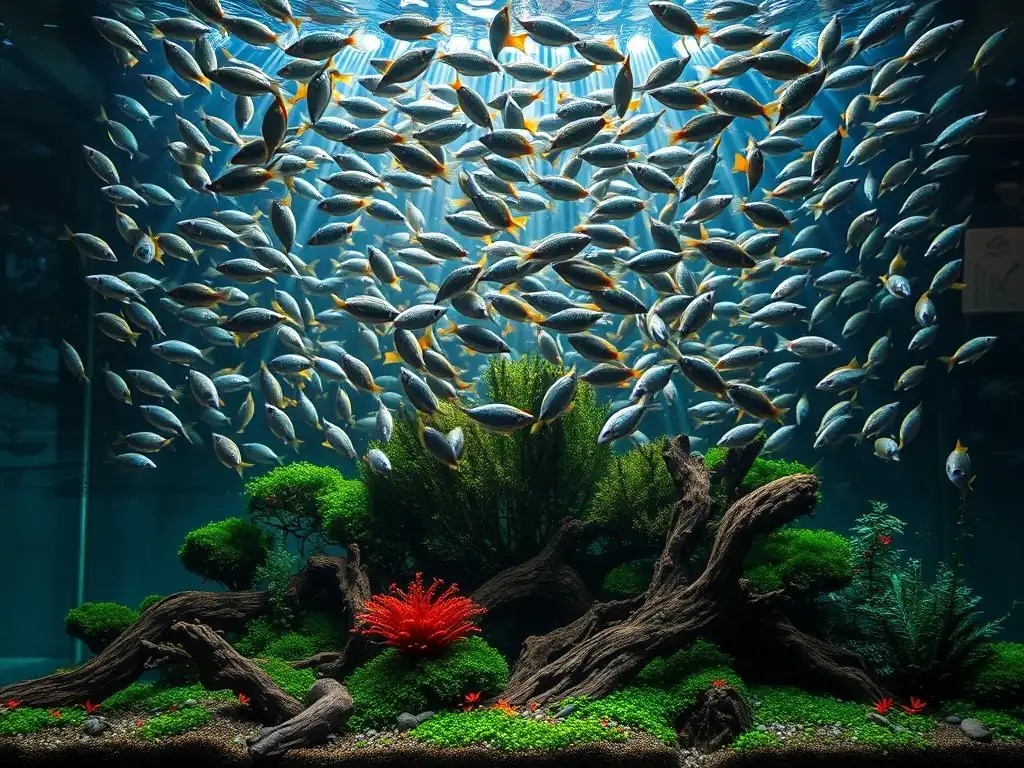
While often used interchangeably, the terms "shoaling" and "schooling" describe distinct fish behaviors. Schooling involves a highly coordinated, synchronized movement where fish maintain a relatively precise, uniform distance from each other, swimming in the same direction at the same speed. This creates a cohesive, moving unit that can react instantly and collectively to stimuli, often seen in species like Neon Tetras or Sardines forming tight, protective formations. The primary purpose of true schooling is often to confuse predators or to optimize hydrodynamic efficiency during migration.
In contrast, shoaling, as exhibited by Corydoras, is a looser aggregation. Fish in a shoal remain together as a group but do not necessarily swim in perfect synchronicity or maintain precise distances. They may spread out to forage or explore individually but will consistently return to the group, especially when resting or feeling threatened.
While Corydoras may occasionally "school up" briefly when startled or during feeding frenzies, their default and most common social interaction is shoaling. Understanding this nuance is critical for aquarists, as it correctly frames the "Corydoras fish schooling behavior" as a more relaxed, yet equally vital, social bond.
Factors Influencing Corydoras Shoaling Behavior
The size of the aquarium plays a critical role in facilitating natural Corydoras shoaling behavior. A tank that is too small can restrict their movement, leading to increased stress, timidity, and even aggression among group members due to perceived lack of space. While they are bottom-dwellers, Corydoras need ample footprint to forage, explore, and form their social clusters comfortably. Insufficient space can inhibit their natural "Corydoras fish schooling behavior" and make them less active and visible.
For a healthy group of 6-8 standard Corydoras species, such as Corydoras aeneus or Corydoras paleatus, a minimum of a 20-gallon long tank (approximately 30" x 12" footprint) is generally recommended. The "long" dimension provides more horizontal swimming and foraging area, which is crucial for these bottom-dwelling fish. For smaller species like Corydoras hastatus or Corydoras pygmaeus, a 10-gallon tank can comfortably house a group of 8-10 individuals, provided it has sufficient substrate area. Providing adequate space ensures they feel secure enough to express their natural social dynamics.
The Role of Group Size in Corydoras Shoaling
The number of individuals in a Corydoras group is perhaps the most significant factor influencing their shoaling behavior and overall well-being. Keeping Corydoras in insufficient numbers (e.g., fewer than six) is a common mistake that leads to stressed, shy, and inactive fish. A single Corydoras or a pair will often hide constantly, refuse to eat, and become highly susceptible to disease, completely suppressing their natural "Corydoras fish schooling behavior."
To observe their natural, confident shoaling, a minimum group size of six individuals of the same species is highly recommended. However, larger groups of 10-12 or more often exhibit even more pronounced and confident social interactions. For example, a group of 15 Corydoras panda will be far more active, visible, and engaging than a group of five, displaying their collective foraging and resting behaviors with greater frequency and confidence. Increasing the group size often transforms timid, hiding fish into vibrant, active members of the aquarium community.
Environmental Enrichment and its Effects on Corydoras Behavior
Environmental enrichment, including the choice of substrate, decor, and live plants, significantly impacts Corydoras shoaling behavior. A soft, fine substrate, such as aquarium sand (e.g., CaribSea Super Naturals Moonlight Sand or pool filter sand), is crucial for their delicate barbels, which they use extensively for sifting and foraging. Coarse or sharp gravel can damage these sensitive sensory organs, leading to stress, infection, and an unwillingness to engage in natural bottom-dwelling activities, thus inhibiting their "Corydoras fish schooling behavior."
Furthermore, providing ample hiding spots and visual barriers through driftwood, smooth rocks, and dense live plants (like Java Fern, Anubias, or cryptocorynes) enhances their sense of security. While Corydoras are social, they still appreciate places to retreat and feel safe. A well-scaped tank with both open sandy areas for foraging and sheltered zones for resting encourages them to emerge more confidently and display their full range of natural shoaling behaviors. For instance, a large piece of Mopani driftwood with attached Java Moss can serve as both a resting spot and a visual anchor for the group.
Recognizing Healthy Shoaling Behavior in Corydoras
Active Interaction and Communication within the Group
Healthy Corydoras in a well-established shoal exhibit constant, active interaction and subtle forms of communication. They will frequently be seen together, often foraging collectively across the substrate, sifting through the sand with their barbels in unison. When resting, they might pile up on top of each other or gather closely together under a piece of driftwood or in dense plant cover. This collective presence is a clear indicator of their comfort and social cohesion, a true display of "Corydoras fish schooling behavior" (shoaling).
Beyond just physical proximity, observe their subtle cues: gentle nudges, quick dashes to join a foraging companion, or a rapid "wiggle" that seems to attract others. When food is introduced, the entire group will often converge, displaying a coordinated enthusiasm. A confident shoal of Corydoras trilineatus will not only forage together but also engage in playful "races" across the tank bottom, demonstrating their vitality and comfort within the group. These interactions are signs of a thriving social structure.
Signs of Stress or Isolation in Corydoras Catfish
Recognizing signs of stress or isolation is crucial for intervention. A Corydoras that is not part of a healthy shoal will often exhibit highly timid behavior, constantly hiding behind filters, rocks, or plants, rarely venturing into open areas of the tank. Other indicators include rapid gilling, faded or dull coloration, clamped fins held close to the body, and a general lack of activity or interest in food. These are direct consequences of the absence of their natural "Corydoras fish schooling behavior."
An isolated Corydoras may also become lethargic, sitting motionless for long periods, or conversely, become unusually aggressive towards other peaceful bottom-dwellers out of fear or territoriality. For example, a single Corydoras julii might develop frayed fins from constantly rubbing against tank decor in an attempt to hide, or it might chase away a smaller Otocinclus, behaviors uncharacteristic of a healthy, shoaling Corydoras. These symptoms underscore the critical need for appropriate group sizes and a supportive environment.
Constant Movement and Exploration as a Group
A healthy shoal of Corydoras is characterized by constant, collective movement and exploration of the tank's bottom substrate. They are not static fish; they are perpetually sifting through the sand, searching for food particles, or investigating new areas. This activity is often performed as a cohesive unit, with individuals moving together, pausing, and then continuing their exploration as a group. This persistent, unified activity is a clear manifestation of their natural "Corydoras fish schooling behavior."
Observe how a group of Corydoras sterbai will systematically "patrol" the entire substrate area, moving from one end of the tank to the other, occasionally pausing to rest on a broad plant leaf or a piece of driftwood before resuming their journey. This active and widespread exploration indicates that the fish feel secure and confident in their environment and within their group. Such vibrant, collective movement is a strong indicator of well-being and a testament to the benefits of a properly established shoal.
Creating an Ideal Environment for Corydoras Shoaling
Optimal Tank Setup for Encouraging Natural Behavior
Creating an optimal tank setup is fundamental to encouraging natural Corydoras shoaling behavior. The cornerstone of this setup is a soft, fine substrate, with sand being the preferred choice (e.g., fine-grained aquarium sand or pool filter sand). This allows Corydoras to sift through it safely with their delicate barbels, preventing injury and promoting their natural foraging instincts. Avoid sharp or abrasive gravel, which can damage their barbels and lead to infections, thereby inhibiting their "Corydoras fish schooling behavior."
Beyond the substrate, ensure plenty of open bottom space for them to forage and move as a group, balanced with ample hiding spots. Incorporate smooth driftwood, caves, and dense live plants (such as Anubias, Java Fern, Cryptocoryne species, or even low-growing foreground plants like Monte Carlo) to provide security and visual breaks. A tank with a large, flat rock and a cluster of Amazon Sword plants can offer both open areas for collective movement and safe havens for rest, fostering a confident and active shoal.
Choosing Compatible Tank Mates for Corydoras
Selecting compatible tank mates is crucial for the peaceful coexistence and healthy shoaling of Corydoras. They are peaceful bottom-dwellers and can easily be intimidated or stressed by aggressive, large, or overly boisterous fish. Avoid any species known to be fin-nippers or predatory towards smaller fish. The best tank mates are equally peaceful, occupy different water columns, and do not compete directly for food or space on the substrate.
Excellent choices for companions include small, peaceful schooling fish like Neon Tetras, Cardinal Tetras, Ember Tetras, Harlequin Rasboras, and various Danio species. Otocinclus catfish are also ideal, as they are gentle algae eaters that will not interfere with Corydoras. Even peaceful dwarf cichlids, such as German Blue Rams, can coexist if the tank is sufficiently large and well-scaped. For instance, a group of 10 Neon Tetras swimming in the mid-water column will not disrupt the natural "Corydoras fish schooling behavior" at the bottom, creating a harmonious community tank.
Maintaining Water Parameters for Healthy Corydoras Shoaling
Maintaining stable and appropriate water parameters is paramount for the health and confidence of Corydoras, directly influencing their ability to shoal naturally. While specific parameters can vary slightly by species, most Corydoras thrive in temperatures between 72-78°F (22-26°C), a pH range of 6.0-7.5 (slightly acidic to neutral), and soft to moderately hard water (GH 2-15 dGH). Consistency in these parameters is often more important than hitting exact numbers.
Excellent water quality is non-negotiable. Regular partial water changes (e.g., 25-30% weekly) are essential to keep nitrate levels low (ideally below 20 ppm) and prevent the buildup of toxins. Effective filtration, combined with a well-maintained biological filter, ensures clean, oxygenated water. Poor water quality is a major stressor that can lead to lethargy, disease, and a complete cessation of their natural "Corydoras fish schooling behavior," making them timid and prone to hiding.
The Benefits of Observing Corydoras Shoaling
Enhanced Fish Health and Reduced Stress Levels
One of the most significant benefits of promoting healthy Corydoras shoaling is the dramatic improvement in the fish's overall health and a substantial reduction in stress levels. When Corydoras are kept in an appropriate group size and a suitable environment, they feel secure and confident, leading to a stronger immune system. This makes them significantly less susceptible to common aquarium ailments such as Ich (white spot disease), fin rot, and various bacterial infections that often plague stressed or isolated fish.
Observing a group of active, well-fed Corydoras constantly exploring and interacting is a clear indicator of their robust health. In tanks where their natural "Corydoras fish schooling behavior" is facilitated, these fish typically live longer, often reaching their full potential lifespan of 5-7 years or more for common species, compared to isolated individuals who might only survive 1-2 years due to chronic stress. A thriving shoal is a resilient shoal.
A More Natural and Engaging Aquarium Display
A well-established shoal of Corydoras transforms an aquarium into a more natural and engaging display. Instead of a single, timid fish hiding in a corner, you get to observe a dynamic group of active bottom-dwellers constantly sifting through the substrate, interacting with each other, and exhibiting their charming personalities. This collective movement and interaction add a captivating layer of activity to the lower levels of the tank, enhancing the overall aesthetic appeal.
Watching a group of 8-10 Corydoras panda or Corydoras habrosus collectively forage, rest in a pile, or dart playfully across the sand is far more visually appealing and educational than observing solitary individuals. This natural "Corydoras fish schooling behavior" creates a vibrant, miniature ecosystem that mimics their natural habitat, providing endless opportunities for observation and enjoyment for the aquarist. It brings the tank to life in a way a single specimen simply cannot.
Increased Breeding Success
For aquarists interested in breeding, promoting healthy Corydoras shoaling is almost a prerequisite for success. Corydoras are known to be group spawners, and the presence of multiple individuals within a confident and well-established shoal is a strong stimulus for breeding behaviors. The collective energy and social cues within the group encourage the natural courtship rituals and egg-laying processes that are unlikely to occur in isolated or stressed pairs.
Many experienced breeders report that successful Corydoras breeding typically begins only after increasing the group size to at least 8-10 individuals, providing a robust male-to-female ratio. The famous "T-position" breeding ritual, where the male clamps onto the female's barbels, is much more likely to be observed and result in successful egg fertilization in a thriving shoal. This natural "Corydoras fish schooling behavior" directly contributes to reproductive success, allowing aquarists to witness the full life cycle of these captivating fish.
Addressing Problems with Corydoras Shoaling
Identifying and Resolving Aggression Within the Group
While Corydoras are generally peaceful, aggression can occasionally occur within a shoal, typically stemming from stress factors rather than inherent aggression. Signs include constant chasing, nipping at fins, or one fish consistently harassing another, preventing it from feeding or resting. This often points to an underlying issue such as an insufficient tank size, too few individuals in the group, or competition for limited resources like food or hiding spots.
To resolve aggression, first ensure the tank is adequately sized for the number of Corydoras and other tank mates. Next, increase the group size to at least 8-10 individuals if possible; a larger group dilutes aggression by spreading out social interactions. Provide more hiding spots and visual barriers with decor and plants. Ensure food is distributed widely across the substrate to prevent competition. For instance, if a group of five Corydoras aeneus exhibits chasing, adding three more individuals and ensuring ample space often restores their natural, peaceful "Corydoras fish schooling behavior."
Stress is the primary precursor to disease in aquarium fish, and Corydoras are no exception. When their natural shoaling needs are not met, they become stressed, leading to a weakened immune system and increased susceptibility to common ailments like Ich (white spot disease), fin rot, and various bacterial or fungal infections. Preventing these diseases is far easier than treating them.
Prevention centers on providing an optimal environment: maintaining stable, pristine water parameters through regular water changes and effective filtration, offering a high-quality, varied diet, and critically, ensuring they are kept in an adequately sized, properly shoaling group. If disease does occur, prompt treatment with appropriate aquarium medications (e.g., malachite green for Ich, broad-spectrum antibiotics for bacterial infections) is necessary, but it must be coupled with addressing the underlying stressor—often the lack of proper "Corydoras fish schooling behavior"—to prevent recurrence.
Insufficient Shoaling: Causes and Solutions
If your Corydoras are not exhibiting their characteristic shoaling behavior—hiding constantly, being inactive, or not interacting with their conspecifics—it's a clear sign that something is amiss. The most common causes include an insufficient group size (too few fish), a tank that is too small, an inappropriate substrate (e.g., sharp gravel), or a generally stressful environment (e.g., aggressive tank mates, poor water quality).
The solutions directly address these causes. The first step is almost always to increase the group size to at least 6-8, and ideally 10 or more, of the same species. Ensure the tank size is appropriate for the species and number of fish. Replace sharp gravel with soft sand.
Provide plenty of hiding spots and visual breaks with decor and plants. Finally, review and optimize water parameters and quality. For example, if a group of Corydoras habrosus is unusually timid, adding 3-4 more individuals and introducing some dense foreground plants might encourage them to emerge and display their natural "Corydoras fish schooling behavior."
Conclusion: Promoting Healthy Corydoras Shoaling for a Thriving Aquarium
Key Takeaways for Understanding Corydoras Behavior
Understanding Corydoras behavior is fundamental to their successful keeping and the overall health of your aquarium. The primary takeaway is that Corydoras are shoaling fish, not true schooling fish, meaning they require the company of their own kind in groups to thrive, albeit in a looser aggregation than typical schooling species. To ensure their well-being, it is crucial to maintain them in groups of at least six individuals, with larger groups of 10 or more often yielding the most confident and active displays of their social dynamics.
Furthermore, providing an optimal environment, including a soft, sandy substrate, ample space, and numerous hiding spots, is just as vital as maintaining pristine water parameters. These elements collectively contribute to reducing stress, enhancing their natural "Corydoras fish schooling behavior," and promoting a longer, healthier life. By acknowledging and meeting these specific needs, aquarists can transform timid, stressed fish into vibrant, engaging members of their aquatic community.
Resources for Further Learning About Corydoras Care
For those eager to delve deeper into the fascinating world of Corydoras catfish, AquariumMastery.com offers a wealth of detailed resources. Explore specific species profiles to learn about the unique needs and characteristics of different Corydoras types, from the popular Corydoras paleatus to the more exotic Corydoras duplicareus. The website also provides comprehensive guides on essential aspects of their care, including optimal water chemistry, tailored feeding regimens, and techniques for successful breeding.
Continuous observation and learning are key to becoming a truly masterful aquarist. By closely watching your Corydoras' "Corydoras fish schooling behavior" and consulting reliable resources, you will be better equipped to identify their needs, address any issues promptly, and provide an environment where these charming bottom-dwellers can truly flourish. Embrace the journey of understanding these remarkable fish, and you will be rewarded with a more natural, engaging, and thriving aquarium display.
Frequently Asked Questions
What is the primary difference between shoaling and schooling behavior in Corydoras fish?
Shoaling refers to a loose association of fish for social reasons, while schooling involves a highly coordinated movement in the same direction. Corydoras primarily exhibit shoaling behavior for safety and social interaction.
How many Corydoras are needed to observe their natural shoaling behavior?
Generally, a group of at least six Corydoras is recommended to witness their natural shoaling behavior. Smaller groups can lead to stress and shyness in these social fish.
What are the benefits of Corydoras shoaling for the fish themselves?
Shoaling provides increased protection from predators through collective vigilance. It also promotes social interaction and reduces stress, leading to healthier and happier fish.
Does the type of Corydoras species influence their shoaling behavior?
Yes, some Corydoras species tend to shoal more tightly than others. Researching the specific needs of the particular Corydoras species you are interested in is crucial for proper care.
Can a lack of proper shoaling conditions negatively impact Corydoras fish?
Yes, keeping Corydoras in insufficient numbers can lead to increased stress levels, suppressed immune systems, and a higher susceptibility to disease. They may also become more reclusive and less active.
Okay, here's a final reflection designed to close your article on Corydoras shoaling vs. schooling behavior, optimized for emotional connection and a lasting impression, while also incorporating your keyword:
Final Reflection: The Subtle Symphony of Corydoras
The insights we've explored regarding Corydoras shoaling and schooling behavior are not merely academic; they are profoundly relevant in today's aquarium hobby, where responsible fishkeeping hinges on understanding the nuanced needs of our aquatic companions. By recognizing the difference between a stressed, huddled group and a thriving, interactive shoal, we empower ourselves to create environments that truly support the well-being of these charming catfish.
This understanding of Corydoras social dynamics extends beyond the glass walls of our aquariums. It reminds us of the importance of community, belonging, and the subtle cues that govern social interactions in all living beings. In the end, we will conserve only what we love; we will love only what we understand; and we will understand only what we are taught.
- Baba Dioum. This quote underscores the vital role of education in fostering appreciation and, ultimately, the preservation of the natural world, starting with the small ecosystems we create in our homes.
Now, consider how you can apply this knowledge. Observe your own Corydoras, or any shoaling fish you keep. Are they truly schooling, or merely seeking safety in numbers? By becoming more attuned to their behavior, you can not only improve their lives but also deepen your connection with the natural world and cultivate a more mindful approach to fishkeeping. Let the subtle symphony of Corydoras fish schooling behavior inspire you to create a more harmonious and enriching environment for all your aquatic inhabitants.
Dive Deeper: Nurture Thriving Cory Communities!
Thank you for exploring the fascinating world of Corydoras behavior! We hope this article has given you valuable insights into creating a happier, healthier aquarium for your little bottom-dwellers. Ready to take action?
Here are a few things you can do right now:
- Prioritize a larger group: Ensure your Corydoras have at least 6, and ideally 8-10, individuals to foster natural shoaling behaviors. This is the most impactful step you can take!
- Observe and share: Spend 15 minutes observing your Corydoras. What unique behaviors do you notice? Share your observations in the comments below!
- Revisit your setup: Re-evaluate your tank layout. Are there ample open spaces for foraging and interaction, as well as planted areas for refuge?
What's one small change you can implement this week to better support your Corydoras' social needs and encourage natural shoaling in your aquarium?