
Breeding Rummy Nose Tetras: A True Test of Your Aquarium Water Mastery

Welcome to Aquarium Mastery!
Ever wondered if you have truly mastered the art of aquarium keeping? Then dive deep into the fascinating world of Rummy Nose Tetra breeding! This delicate dance requires meticulous attention to detail and a profound understanding of your aquarium's ecosystem. Discover the secrets to successfully breeding these vibrant fish and elevate your aquarist skills to the next level. Ready to unlock the mysteries?
- Understanding Rummy Nose Tetras Before Breeding
- Preparing for Rummy Nose Tetra Breeding: Creating the Perfect Environment
- The Rummy Nose Tetra Spawning Process: Observation and Intervention
- Rummy Nose Tetra Egg Care and Hatching: A Delicate Stage
- Raising Rummy Nose Tetra Fry: From Tiny to Thriving
- Troubleshooting Rummy Nose Tetra Breeding Challenges
- The Rewards of Successfully Breeding Rummy Nose Tetras
- Advanced Tips for Rummy Nose Tetra Breeding Success
-
Frequently Asked Questions
- What are the key water parameters necessary for successful Rummy Nose Tetra breeding?
- What kind of tank setup is best for breeding Rummy Nose Tetras?
- What do Rummy Nose Tetras eat, and how does diet affect breeding success?
- How do I identify if my Rummy Nose Tetras are ready to breed?
- What should I do after the Rummy Nose Tetras have spawned?
- Final Reflection: The Delicate Dance of Life
- Ignite Your Aquarium Skills: Conquer the Rummy Nose Tetra Challenge!
Understanding Rummy Nose Tetras Before Breeding
The Allure of Rummy Nose Tetras: Vibrant Color and Schooling Behavior
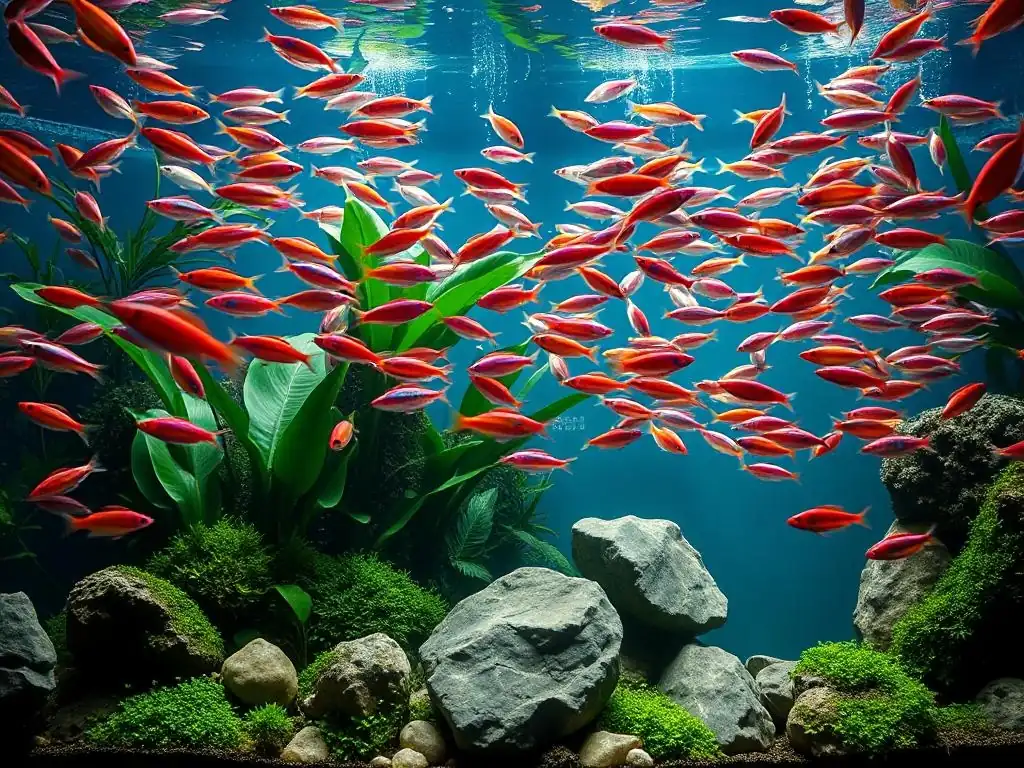
Rummy Nose Tetras (Hemigrammus rhodostomus, Petitella georgiae, or Hyphessobrycon bleheri) are renowned for their striking appearance and captivating schooling behavior. Their most distinctive feature is the vibrant red coloration on their nose and head, which intensifies with good health and ideal water parameters. This vivid splash of red, contrasted with their silvery bodies and black-and-white banded caudal fins, makes them a focal point in any well-planted freshwater aquarium. They typically reach a size of about 1.5 to 2 inches (3.8 to 5 cm), making them suitable for a variety of tank sizes.
Beyond their beauty, Rummy Nose Tetras are highly valued for their tight schooling habits. When kept in groups of at least six to eight individuals, they will swim in a cohesive formation, creating a dynamic and visually stunning display. This schooling behavior is not only aesthetically pleasing but also contributes to their sense of security, reducing stress. Their peaceful temperament also makes them excellent candidates for community tanks, provided their specific water chemistry needs are met.
Rummy Nose Tetra Care Requirements: Key to Successful Breeding
Successful Rummy Nose Tetra breeding hinges on providing impeccable general care, mirroring their natural Amazonian river habitats. These fish thrive in well-established, mature aquariums of at least 20 gallons (approximately 75 liters) for a small school. The tank should be densely planted with fine-leaved plants like Java Moss or Cabomba, offering hiding spots and diffused lighting, which they prefer. A diet rich in high-quality flake foods, micro-pellets, and especially live or frozen foods such as bloodworms, daphnia, and brine shrimp, is crucial for their health and to condition them for Rummy Nose Tetra breeding.
Maintaining pristine water quality is paramount for Rummy Nose Tetras. They are highly sensitive to fluctuations and pollutants, making regular maintenance essential. Their typical lifespan in a well-maintained aquarium is around 3 to 5 years. For successful Rummy Nose Tetra breeding, this foundational care must be elevated, focusing on precise environmental conditions and a nutrient-dense diet to encourage spawning.
Ideal Water Parameters for Rummy Nose Tetras: A Crucial Factor
The ideal water parameters are a cornerstone of Rummy Nose Tetra care and an even more critical factor for successful Rummy Nose Tetra breeding. Generally, these tetras prefer soft, acidic water with a temperature range of 75-82°F (24-28°C). The pH should ideally be between 5.5 and 7.0, and the general hardness (GH) should be soft to moderately hard, ranging from 2 to 10 dGH. Stability in these parameters is far more important than hitting exact numbers, as sudden shifts can cause significant stress.
For breeding purposes, these parameters need to be fine-tuned to mimic their natural spawning grounds, which often have even softer and more acidic conditions. Ammonia and nitrite levels must be zero, and nitrates should be kept below 20 ppm through consistent weekly water changes of 25-30%. This meticulous attention to water chemistry forms the bedrock upon which any successful Rummy Nose Tetra breeding program is built, influencing everything from egg viability to fry survival rates.
Preparing for Rummy Nose Tetra Breeding: Creating the Perfect Environment
Setting Up a Dedicated Rummy Nose Tetra Breeding Tank
To maximize your chances of successful Rummy Nose Tetra breeding, setting up a dedicated breeding tank is highly recommended. A tank size of 10 to 20 gallons (approximately 38 to 75 liters) is generally sufficient for a pair or a small group. This separate environment allows for precise control over water parameters, which is vital for these sensitive fish. Furthermore, it provides a safe haven for the delicate eggs and newly hatched fry, protecting them from being consumed by the adult fish or other tank inhabitants.
The breeding tank should be kept clean, ideally with a bare bottom or a very thin layer of fine substrate to facilitate easy cleaning and egg collection. Lighting should be dim, perhaps just ambient room light or a very low-wattage LED, as bright light can deter spawning and harm eggs. Minimal decor, such as a few broad-leaf plants like Anubias or Java Fern, or more commonly, spawning mops, should be included to provide a surface for egg deposition.
Water Chemistry for Breeding: Achieving Optimal Softness and Acidity
Achieving the correct water chemistry is the single most critical factor for successful Rummy Nose Tetra breeding. These fish require extremely soft and acidic water to trigger spawning and ensure egg viability. The ideal breeding parameters typically involve a pH between 5.0 and 6.0 and a general hardness (GH) of 1-4 dGH (20-70 ppm). Many breeders achieve this by using reverse osmosis (RO) or deionized (DI) water, which is then reconstituted with minimal minerals to reach the desired softness and acidity.
Hard, alkaline water is a common reason for breeding failures, as it can prevent eggs from being fertilized or cause them to fail to hatch due to osmotic pressure differences. The delicate egg membranes are highly permeable, and hard water can cause them to absorb too much water, leading to rupture. Some aquarists also utilize peat filtration or blackwater extracts to naturally lower pH and GH, mimicking the tannin-stained waters of their native environment, which further encourages Rummy Nose Tetra breeding. A conductivity meter, aiming for readings under 100 µS/cm, can be a useful tool for precise monitoring.
Spawning Mops and Breeding Substrates: Mimicking Their Natural Habitat
Rummy Nose Tetras are egg scatterers, meaning they do not build nests or provide parental care. Instead, they release their adhesive eggs freely into the water column, where they stick to fine-leaved plants or other surfaces. To facilitate Rummy Nose Tetra breeding, providing appropriate spawning media is essential. Spawning mops, typically made from synthetic yarn, are an excellent choice as they are easy to clean, sanitize, and remove after spawning. Fine-leafed live plants like Java Moss, Cabomba, or Hornwort can also serve this purpose, mimicking the dense vegetation of their natural spawning grounds.
To prepare spawning mops, they should be boiled and thoroughly rinsed to remove any chemicals or residues. Once cooled, they can be anchored to the bottom of the breeding tank or allowed to float. These mops provide numerous surfaces for the tiny, transparent eggs to adhere to, protecting them from falling onto the bare bottom where they might be more susceptible to fungus or consumption by the adults. The texture and density of the mops are crucial for successful egg deposition during the Rummy Nose Tetra spawning process.
Filtering and Aeration for a Rummy Nose Tetra Breeding Setup
For a Rummy Nose Tetra breeding setup, the choice of filtration and aeration is crucial to protect delicate eggs and fry. Strong water currents produced by hang-on-back or canister filters can easily damage or even suck up tiny eggs and newly hatched fry. Therefore, a gentle filtration method is highly recommended. A small, air-driven sponge filter is ideal, as it provides excellent biological filtration without creating disruptive currents. The sponge also offers a large surface area for beneficial bacteria to colonize, maintaining stable water quality.
In addition to the sponge filter, a small air stone can be used to provide gentle aeration, ensuring adequate oxygen levels in the water. This is particularly important in soft, acidic water where oxygen solubility can be slightly lower. However, ensure the bubbles are fine and the current is minimal. The goal is to maintain pristine water conditions with sufficient oxygenation while avoiding any disturbance that could harm the fragile eggs and fry during this critical Rummy Nose Tetra breeding phase.
The Rummy Nose Tetra Spawning Process: Observation and Intervention
Conditioning Rummy Nose Tetras for Breeding: Diet and Environment
Conditioning the adult Rummy Nose Tetras is a vital preliminary step for successful Rummy Nose Tetra breeding. This involves providing them with a high-protein, nutrient-rich diet for one to two weeks prior to introducing them to the breeding tank. Live and frozen foods such as bloodworms, daphnia, brine shrimp, and microworms are excellent choices, as they boost the fish's overall health and encourage egg development in females and sperm production in males. A varied diet ensures they receive all necessary vitamins and minerals.
Environmentally, the conditioning process also involves gradually acclimating them to the softer, more acidic water parameters required for spawning. Keeping the temperature at the higher end of their preferred range, around 80-82°F (27-28°C), can also stimulate spawning activity. Introducing the conditioned pair or a small group (e.g., two males to one female, or three males to two females) to the breeding tank, ideally in the late evening, allows them to settle in overnight before potential spawning in the morning.
Identifying Signs of Spawning Readiness in Rummy Nose Tetras
Observing your Rummy Nose Tetras for signs of spawning readiness is key to predicting and managing the breeding event. Females that are ready to spawn will typically appear noticeably plumper, especially in their abdominal region, due to the presence of mature eggs. Both males and females will often display intensified coloration, with their signature red noses becoming even more vibrant and pronounced.
Males may exhibit increased chasing behavior, actively pursuing females and nudging their flanks. Spawning usually occurs in the early morning, often triggered by the first light of dawn. The pair or group will engage in a "spawning dance," where the male wraps around the female, pressing against her to encourage the release of eggs. This behavior indicates that the Rummy Nose Tetra spawning process is imminent or already underway.
The Rummy Nose Tetra Spawning Event: What to Expect
The Rummy Nose Tetra spawning event is a delicate and often brief affair. As egg scatterers, the female will release small, adhesive eggs among the fine-leaved plants or spawning mops. These eggs are typically transparent and very tiny, about 1mm in diameter. A healthy female can lay anywhere from 100 to 200 eggs in a single spawning session, though some reports indicate up to 500 eggs from particularly robust individuals. The male will quickly follow, fertilizing the eggs as they are released.
The spawning process can last for several hours, with eggs being released intermittently. Some eggs may adhere to the spawning media, while others may simply fall to the bottom of the tank. It is crucial to observe the process calmly and avoid disturbing the fish. Once the spawning activity appears to have ceased, or after a few hours of active egg laying, the critical next step must be taken to ensure the survival of the offspring.
Removing Adult Tetras After Spawning: Protecting the Eggs
A crucial intervention in Rummy Nose Tetra breeding is the prompt removal of adult fish immediately after spawning. Like many tetra species, Rummy Nose Tetras are opportunistic egg eaters and will readily consume their own eggs if given the chance. This is a natural instinct and not a sign of poor parenting. Therefore, as soon as you observe that the spawning event has concluded, or even after a significant number of eggs have been laid, gently net out the adult fish from the breeding tank.
Carefully transfer the adult tetras back to their main display aquarium. This critical step ensures that the vast majority of the laid eggs survive and have the opportunity to hatch. Skipping this step will almost certainly result in a dramatically reduced yield of fry, making it an essential part of the Rummy Nose Tetra breeding protocol for maximizing success.
Rummy Nose Tetra Egg Care and Hatching: A Delicate Stage
Maintaining Water Quality for Rummy Nose Tetra Eggs
After the adult Rummy Nose Tetras have been removed from the breeding tank, maintaining pristine and stable water quality is paramount for the delicate eggs. The soft, acidic water parameters that encouraged spawning must be meticulously sustained. Any sudden fluctuations in pH, temperature, or hardness can be detrimental to the fragile egg membranes and prevent successful hatching. The tank should remain dimly lit, as excessive light can contribute to fungal growth on the eggs.
Small, careful water changes of about 10% daily or every other day, using precisely matched, aged water, can help remove any unfertilized eggs or debris that may accumulate. This diligent maintenance prevents the buildup of ammonia or nitrites, which are highly toxic even in trace amounts to the developing embryos. Consistent water quality is a non-negotiable aspect of successful Rummy Nose Tetra breeding.
Preventing Fungus and Disease in Rummy Nose Tetra Eggs
Egg fungus is a common and frustrating issue in Rummy Nose Tetra breeding, often leading to significant egg loss. Unfertilized eggs are particularly susceptible to fungal growth, turning opaque white and developing a fuzzy appearance. This fungus can then quickly spread to healthy, fertilized eggs, compromising the entire batch.
To prevent fungal outbreaks, several measures can be taken. A common practice is to add a few drops of Methylene Blue solution to the water, following the manufacturer's instructions for egg treatment. Alternatively, adding a small amount of Indian Almond Leaves (Catappa leaves) can release tannins and humic acids, providing natural antifungal and antibacterial properties. Regular, gentle removal of any visible fungused eggs using a pipette or turkey baster is also crucial to stop the spread and protect the viable embryos.
Hatching Timeframe: What to Expect After Spawning
The hatching timeframe for Rummy Nose Tetra eggs is remarkably swift, typically occurring within 24 to 48 hours after spawning. The exact duration can be influenced by water temperature; warmer temperatures, around 82°F (28°C), tend to accelerate the hatching process, while cooler temperatures may slightly prolong it. The transparency of the eggs makes it challenging to observe the developing embryos, but the appearance of tiny, almost invisible specks indicates successful hatching.
Newly hatched Rummy Nose Tetra fry are incredibly small and transparent, resembling tiny slivers of glass. They are not free-swimming immediately. For the first two to three days post-hatch, they will remain largely immobile, often clinging to the spawning media, tank walls, or resting on the bottom. During this period, they are absorbing their yolk sac, which provides their initial nourishment. Once the yolk sac is fully absorbed, they will become free-swimming, signaling the need for their first external food source.
Raising Rummy Nose Tetra Fry: From Tiny to Thriving
First Foods for Rummy Nose Tetra Fry: Infusoria and Liquid Fry Food
Once Rummy Nose Tetra fry become free-swimming, typically around 2-3 days post-hatch, their extremely small size necessitates microscopic food sources. Infusoria, which are microscopic protozoa and rotifers, are the ideal first food. These can be cultured at home by placing decaying plant matter (like banana peels or lettuce leaves) in a jar of aged aquarium water a few days in advance. The fry's mouths are too small for anything larger.
Alternatively, high-quality liquid fry foods specifically designed for egg-laying fish can be used. These often contain finely ground proteins and spirulina. It's crucial to feed these tiny fry small amounts multiple times a day—at least 3 to 5 times—to ensure a continuous supply of food. Due to their rapid metabolism and small size, they require almost constant access to nourishment to prevent starvation and ensure healthy growth during this critical Rummy Nose Tetra breeding stage.
Gradual Introduction of Larger Foods: Baby Brine Shrimp and Microworms
As Rummy Nose Tetra fry grow, usually after about 7-10 days of feeding on infusoria, they will be large enough to accept slightly larger food items. This is the stage to gradually introduce newly hatched baby brine shrimp (Artemia nauplii) or microworms. Both are excellent protein sources that promote rapid growth and development. Baby brine shrimp are particularly nutritious and their jerky swimming motion often triggers a feeding response in the fry.
It's important to continue feeding small amounts frequently, perhaps 2-3 times a day, to ensure all fry get enough food without overfeeding and fouling the water. Observe their bellies; they should appear rounded after feeding, indicating successful consumption. This transition to larger, more substantial foods is a key milestone in raising healthy Rummy Nose Tetra fry, moving them from the most delicate stage towards thriving juveniles.
Water Changes for Rummy Nose Tetra Fry: Maintaining Pristine Conditions
Maintaining pristine water quality is paramount for the survival and healthy development of Rummy Nose Tetra fry. Due to their small size and the frequent feedings required, the water can quickly become fouled with uneaten food and waste. Therefore, small, frequent water changes are essential. Daily or every-other-day water changes of 10-20% are highly recommended.
When performing water changes, use temperature-matched, aged water with the same soft, acidic parameters as the breeding tank. Use an airline tube or a small pipette to gently siphon out any detritus and uneaten food from the bottom of the tank, being extremely careful not to suck up any fry. This meticulous approach prevents the buildup of ammonia and nitrite, which are lethal to delicate fry, ensuring the success of your Rummy Nose Tetra breeding efforts.
Preventing Fry Loss: Common Mistakes and Solutions
Despite careful planning, fry loss is a common challenge in Rummy Nose Tetra breeding. The primary causes often include poor water quality, starvation, and overly strong water currents. To mitigate these issues, ensure that your filtration system (ideally a sponge filter) provides gentle water movement without creating turbulent currents that could exhaust or injure the tiny fry.
Starvation is another significant factor; ensure you are feeding microscopic foods like infusoria or liquid fry food frequently enough (3-5 times daily) during their initial free-swimming days. As they grow, transition to baby brine shrimp or microworms. Overcrowding can also lead to stunting and increased mortality due to competition for food and space, as well as rapid water degradation. If you have a large batch of fry, consider dividing them into multiple rearing tanks as they grow to prevent these issues and ensure a higher survival rate for your Rummy Nose Tetra breeding project.
Troubleshooting Rummy Nose Tetra Breeding Challenges
Why Aren't My Rummy Nose Tetras Spawning?
A common frustration in Rummy Nose Tetra breeding is when conditioned fish simply refuse to spawn. The most frequent culprits are incorrect water parameters, insufficient conditioning, or environmental stress. First, meticulously re-check your pH (aim for 5.0-6.0), GH (1-4 dGH), and temperature (80-82°F / 27-28°C) in the breeding tank. Even slight deviations from the ideal soft, acidic conditions can inhibit spawning.
Secondly, review your conditioning diet; ensure you've been feeding high-protein live or frozen foods consistently for at least 1-2 weeks. Sometimes, a slight drop in temperature overnight followed by a gradual rise in the morning can simulate seasonal changes and trigger spawning. Finally, ensure the breeding tank is calm, quiet, and dimly lit, as Rummy Nose Tetras are shy and can be deterred by excessive light or activity around the tank. Patience and persistence are key to successful Rummy Nose Tetra breeding.
Egg Fungus and Loss: Prevention and Treatment
Egg fungus is a disheartening setback in Rummy Nose Tetra breeding, often leading to the loss of entire clutches. It typically arises from unfertilized eggs, poor water quality, or excessive light. Unfertilized eggs turn opaque white and are a primary target for fungal growth. This fungus can then rapidly spread to healthy, viable eggs, causing them to succumb.
To prevent fungus, ensure your breeding pair is optimally conditioned and healthy to maximize fertilization rates. Maintain extremely soft, clean water throughout the egg incubation period.
As a preventative measure, a very dilute solution of Methylene Blue (following product instructions for egg treatment) can be added to the water, or a small piece of Indian Almond Leaf can be placed in the tank for its natural antifungal properties. Regularly and gently remove any eggs that show signs of fungusing with a pipette or turkey baster to contain the spread and salvage as many healthy eggs as possible for your Rummy Nose Tetra breeding endeavor.
Fry Mortality: Identifying and Addressing the Causes
High fry mortality rates are a common challenge after successful Rummy Nose Tetra breeding. The primary causes are usually starvation, poor water quality, or temperature fluctuations. Starvation occurs if the fry are not fed microscopic food (like infusoria) frequently enough (3-5 times daily) in their first few days, or if the food particles are too large for their tiny mouths. Ensure you transition to larger foods like baby brine shrimp only when they are visibly able to consume them.
Poor water quality, specifically spikes in ammonia or nitrite from uneaten food and waste, is lethal to delicate fry. Implement small, frequent water changes (10-20% daily) using precisely matched, aged water. Lastly, maintain a stable temperature in the rearing tank, ideally using a reliable heater, as sudden drops or rises can stress and kill fry. Addressing these factors systematically will significantly improve your fry survival rates and overall Rummy Nose Tetra breeding success.
The Rewards of Successfully Breeding Rummy Nose Tetras
Contributing to the Aquarium Hobby: A Sense of Accomplishment
Successfully breeding Rummy Nose Tetras is a significant accomplishment in the aquarium hobby, demonstrating a high level of skill and dedication, particularly in mastering water chemistry. These fish are known for being challenging to breed, making each successful spawning event a true testament to an aquarist's expertise. It instills a profound sense of pride and satisfaction, knowing you've provided the precise conditions for a delicate species to reproduce.
Beyond personal achievement, your success contributes meaningfully to the broader aquarium community. By providing locally bred Rummy Nose Tetras, you help reduce the demand for wild-caught specimens, lessening the environmental impact on their natural habitats. Furthermore, locally bred fish are often hardier and better adapted to aquarium life, offering a healthier alternative for fellow aquarists. This contribution solidifies your role as a knowledgeable and responsible aquarist, showcasing true Rummy Nose Tetra breeding mastery.
Expanding Your Rummy Nose Tetra School: A Sustainable Approach
One of the most practical and rewarding aspects of successful Rummy Nose Tetra breeding is the ability to naturally expand your existing school. Instead of purchasing new fish, you can grow your community organically, creating a larger, more impressive, and cohesive group. Rummy Nose Tetras truly shine in larger numbers, exhibiting more pronounced and captivating schooling behaviors that enhance the visual appeal of any aquarium.
This self-sustaining approach is not only cost-effective but also environmentally conscious. It reduces the need for constant acquisition of new fish, promoting responsible husbandry. A larger school, typically 10 or more individuals, will also display more natural interactions and reduced stress, leading to healthier and more vibrant fish. Successfully breeding Rummy Nose Tetras allows you to cultivate a thriving aquatic ecosystem from within.
Sharing your Rummy Nose Tetra breeding journey and success is a fantastic way to connect with other aquarists and contribute to the hobby's collective knowledge. Documenting your process, from conditioning to fry rearing, can inspire and educate aspiring breeders. Online forums, local fish keeping clubs, social media groups, or even simply discussions with fellow enthusiasts at your local fish store are excellent platforms to share your experiences.
You can offer valuable advice on water parameters, feeding regimens, and troubleshooting common issues, helping others overcome their own Rummy Nose Tetra breeding challenges. Furthermore, if you have surplus fry, you can trade them with other hobbyists for different species or supplies, or even sell them, further fostering a vibrant and supportive aquarium community. This exchange of knowledge and resources strengthens the hobby as a whole, reinforcing your own Aquarium Water Mastery.
Advanced Tips for Rummy Nose Tetra Breeding Success
Using Reverse Osmosis (RO) Water for Optimal Breeding Conditions
For the most precise and consistent water parameters, particularly the ultra-soft and acidic conditions required for Rummy Nose Tetra breeding, utilizing reverse osmosis (RO) or deionized (DI) water is an advanced yet highly effective strategy. Tap water often contains varying levels of hardness, chlorine, chloramines, and other dissolved solids that can be detrimental to delicate fish eggs and fry. RO/DI water provides a blank slate, entirely free of these impurities.
Once you have pure RO/DI water, you can then reconstitute it with specific mineral additives (e.g., GH/KH+ products designed for soft water fish) to achieve the exact desired general hardness (GH) and carbonate hardness (KH) levels. This level of control eliminates variables present in tap water, allowing you to consistently replicate the ideal breeding parameters, significantly boosting your Rummy Nose Tetra breeding success rates.
Implementing Blackwater Extracts: Mimicking Natural Habitats
Implementing blackwater extracts is an advanced technique that can significantly enhance Rummy Nose Tetra breeding success by closely mimicking their natural Amazonian river habitats. These extracts, derived from peat, Indian Almond Leaves (Catappa leaves), or specialized commercial products, release humic acids and tannins into the water. These compounds naturally lower the pH, soften the water, and impart a characteristic tea-stained amber color.
Beyond their effect on water chemistry, blackwater extracts also possess natural anti-fungal and anti-bacterial properties, which are highly beneficial for protecting delicate eggs from common infections. The darker, tannin-rich water also reduces light penetration, creating a more subdued and less stressful environment for these shy fish, potentially encouraging more natural spawning behaviors. Aim for a light amber color in the breeding tank, which can be achieved by adding extracts gradually until the desired tint is reached.
Fine-Tuning Water Parameters: Achieving Consistent Results
Achieving consistent Rummy Nose Tetra breeding success relies heavily on the meticulous fine-tuning and ongoing monitoring of water parameters. It's not enough to set up the tank once; continuous vigilance is required. Invest in reliable and accurate test kits for pH, general hardness (GH), and nitrates. Additionally, a Total Dissolved Solids (TDS) meter can be an invaluable tool, providing a quick measure of overall water purity and correlating with hardness, with lower TDS values indicating softer water.
Small, precise adjustments to water chemistry are always preferable to large, sudden changes, which can shock the fish. Documenting your successful breeding parameters, including temperature, pH, GH, and the types and amounts of conditioning foods used, will create a repeatable blueprint. This detailed record-keeping allows you to consistently replicate the optimal conditions for future Rummy Nose Tetra breeding attempts, turning a challenging endeavor into a reliably rewarding experience.
Frequently Asked Questions
What are the key water parameters necessary for successful Rummy Nose Tetra breeding?
Rummy Nose Tetras require extremely soft and acidic water to breed. Aim for a pH between 5.5 and 6.5 and a GH (general hardness) below 5 dGH. Maintaining pristine water quality is also crucial.
What kind of tank setup is best for breeding Rummy Nose Tetras?
A dedicated breeding tank is highly recommended. It should be dimly lit and contain fine-leaved plants or a spawning mop for the tetras to deposit their eggs. A sponge filter is ideal for gentle filtration.
What do Rummy Nose Tetras eat, and how does diet affect breeding success?
A varied diet is essential. Offer small, live foods like daphnia or baby brine shrimp to condition the breeding pair. High-quality flake food can supplement their diet.
How do I identify if my Rummy Nose Tetras are ready to breed?
Look for females with rounder bellies, indicating they are carrying eggs. Males will often display intense coloration and actively pursue the females in the tank.
What should I do after the Rummy Nose Tetras have spawned?
Remove the parent fish immediately after spawning to prevent them from eating the eggs. Keep the tank dark and maintain excellent water quality. The fry will hatch in about 24-36 hours and can be fed infusoria or liquid fry food.
Final Reflection: The Delicate Dance of Life
The intricacies of Rummy Nose Tetra breeding, as we've explored, are not merely about achieving successful spawning; they are a testament to our understanding and dedication to creating a thriving aquatic ecosystem. The challenges presented by these delicate fish serve as a powerful reminder that responsible aquarium keeping extends far beyond simply maintaining a clean tank; it demands a deep appreciation for the interconnectedness of life and the subtle nuances that govern its flourishing.
This journey into the world of Rummy Nose Tetra breeding has undoubtedly highlighted the profound impact we, as aquarists, have on the lives of these creatures. It underscores the importance of patience, observation, and a commitment to providing the optimal environment for their well-being. The best way to observe a fish is to become the water.
– Jacques Cousteau. This quote encapsulates the essence of successful fishkeeping: immersing ourselves in their world to truly understand their needs.
Now, as you close this article, consider the lessons learned and the challenges overcome. Let the pursuit of Rummy Nose Tetra breeding inspire you to deepen your understanding of aquatic ecosystems and to cultivate a greater sense of responsibility towards the creatures in your care. Embrace the delicate dance of life within your aquarium, and let it serve as a constant reminder of the beauty and fragility of the natural world.
Ignite Your Aquarium Skills: Conquer the Rummy Nose Tetra Challenge!
Thanks for diving deep into the world of Rummy Nose Tetra breeding! Hopefully, you've gained the knowledge and inspiration to take on this exciting challenge. Now, let's put that passion into action!
Here's how you can elevate your aquarium mastery:
- Commit to the Ultimate Test: Dedicate a small, established aquarium to recreating the pristine conditions needed for Rummy Nose Tetra spawning. This is your ultimate water quality exam!
- Expand Your Aquatic Knowledge: Research complementary species that thrive in similar blackwater environments to create a truly captivating biotope.
- Share Your Tetra Triumph: Document your journey and share your experiences, successes, and even your setbacks with the online aquarium community to inspire others.
Ready to become a Rummy Nose Tetra breeding pro? What's the first, surprisingly simple step you'll take this week to refine your water parameters?