
Breeding Emperor Tetras: Cultivating a Line of Aquatic Nobility in Your Tank

Welcome to Aquarium Mastery!
Ever dreamed of witnessing the captivating dance of life unfold within your own aquarium? Our Emperor Tetra Breeding Guide unveils the secrets to successfully cultivating a line of these aquatic nobles. But that's just the beginning! Dive in to discover a world of freshwater wisdom, from choosing the perfect plants to mastering water chemistry, and unlock the full potential of your aquarium. Ready to embark on your journey to Aquarium Mastery?
- Understanding Emperor Tetras: A Prerequisite to Breeding
- Preparing for Emperor Tetra Spawning: Creating the Perfect Environment
- The Emperor Tetra Breeding Process: A Step-by-Step Guide
- Raising Emperor Tetra Fry: From Hatching to Adulthood
- Troubleshooting Emperor Tetra Breeding Challenges
- Advanced Emperor Tetra Breeding Techniques: Reverse Osmosis and Blackwater Extract
- Conclusion: Mastering Emperor Tetra Breeding for the Home Aquarist
- Frequently Asked Questions
- Final Reflection: Nurturing Aquatic Majesty
- Embark on Your Emperor Tetra Breeding Adventure!
Understanding Emperor Tetras: A Prerequisite to Breeding
Emperor Tetra Species Profile: Nematobrycon palmeri
The Emperor Tetra, scientifically known as Nematobrycon palmeri, is a striking freshwater fish native to the Atrato and San Juan River basins in western Colombia. These elegant tetras are admired for their distinct coloration, featuring a prominent dark stripe running horizontally along their body, often flanked by iridescent blue or purple hues, and a unique trident-shaped caudal fin in males.
They typically reach an adult size of about 1.5 to 2 inches (3.8-5 cm), making them a suitable inhabitant for moderately sized community aquariums, and boast a lifespan of 3 to 5 years under optimal conditions. Their peaceful yet dignified demeanor makes them a captivating choice for aquarists looking to embark on an Emperor tetra breeding guide.
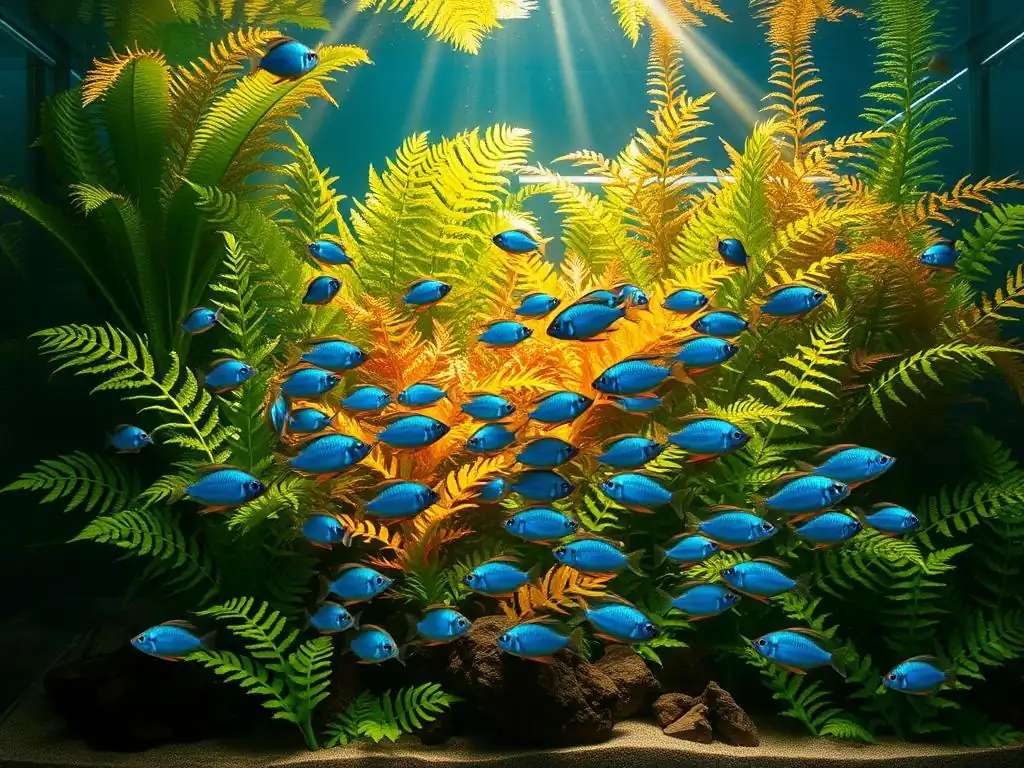
Emperor Tetras are known for their schooling behavior, preferring to be kept in groups of at least six to eight individuals to feel secure and exhibit their natural social dynamics. In their natural habitat, they inhabit clear, slow-moving waters with dense vegetation, which provides both shelter and spawning grounds.
Understanding these natural tendencies is crucial for successful Emperor tetra breeding, as replicating a similar environment within the aquarium significantly increases the chances of successful reproduction. Their omnivorous diet in the wild consists of small insects, larvae, and plant matter, which translates to a varied diet of high-quality flakes, pellets, and live or frozen foods in captivity to condition them for spawning.
Identifying Male and Female Emperor Tetras for Breeding
Distinguishing between male and female Emperor Tetras is relatively straightforward, especially when they are mature and in breeding condition, a key step in any Emperor tetra breeding guide. Male Emperor Tetras are generally larger, more slender, and exhibit more intense coloration, particularly the iridescent blue or purple sheen along their flanks. Their most distinctive feature is the elongated central ray of the caudal fin, which gives it a trident-like appearance, a trait less pronounced or absent in females. Males also tend to develop longer, more pointed dorsal and anal fins compared to their female counterparts.
Female Emperor Tetras, while still attractive, are typically rounder and plumper, especially when gravid (full of eggs). Their coloration is usually less vibrant, and their caudal fin lacks the dramatic central extension seen in males. Observing these morphological differences is essential for selecting a healthy breeding pair or group. For optimal Emperor tetra breeding success, it is often recommended to use a ratio of two males to three or four females, as this allows males to compete for female attention without excessive aggression, promoting more natural spawning behavior within the breeding tank.
Ideal Emperor Tetra Tank Setup for Breeding
Creating the ideal tank setup is paramount for successful Emperor tetra breeding. A dedicated breeding tank, rather than a community tank, is highly recommended to protect the eggs and fry from being consumed by adult fish. A tank size of 10 to 15 gallons (approximately 38-57 liters) is generally sufficient for a small breeding group.
The tank should be dimly lit and furnished with fine-leaved plants such as Java Moss, Water Sprite, or spawning mops, which provide ideal surfaces for egg deposition. The substrate, if any, should be dark and fine-grained, or ideally, the tank can be bare-bottomed to make egg collection easier.
Water parameters in the breeding tank are critical for stimulating spawning and ensuring egg viability for this Emperor tetra breeding guide. Emperor Tetras prefer soft, acidic water, with a pH range of 6.0 to 6.8 and a general hardness (GH) of 2-6 dGH (35-107 ppm). The temperature should be maintained slightly higher than in a typical community tank, ideally between 78-82°F (25.5-27.8°C), as elevated temperatures can encourage spawning. Filtration should be gentle, such as a sponge filter, to prevent accidental suction of delicate eggs or newly hatched fry, and to maintain stable water quality without strong currents.
Preparing for Emperor Tetra Spawning: Creating the Perfect Environment
Optimizing Water Parameters for Emperor Tetra Breeding Success
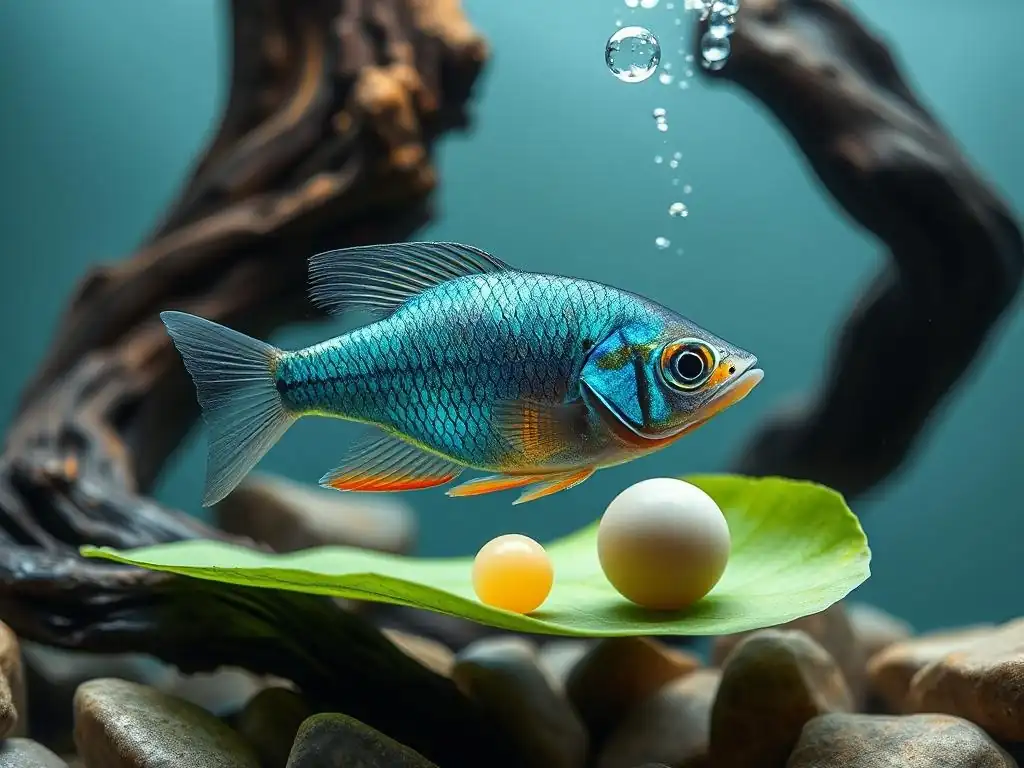
Optimizing water parameters is a cornerstone of any successful Emperor tetra breeding guide, as these conditions mimic their natural spawning environment. Emperor Tetras are soft, acidic water spawners, meaning they require a low pH and low mineral content for their eggs to be viable and for spawning to be triggered.
A pH between 6.0 and 6.8 is ideal, and general hardness (GH) should be kept very low, typically ranging from 2 to 6 dGH. This can often be achieved through the use of reverse osmosis (RO) water, blended with a small amount of tap water to reintroduce essential minerals, or by using peat filtration.
Temperature also plays a crucial role in inducing spawning. Gradually raising the water temperature in the breeding tank to 78-82°F (25.5-27.8°C) can act as a trigger, signaling to the fish that conditions are favorable for reproduction. Consistent water changes with properly conditioned water are vital to maintain pristine water quality and low nitrate levels, which are essential for the health of the breeding adults and the viability of their eggs. Regular monitoring of these parameters with reliable test kits is indispensable to ensure the optimal environment for Emperor tetra breeding success.
Selecting the Breeding Tank: Size and Setup Considerations
The selection and setup of the breeding tank are pivotal for a productive Emperor tetra breeding guide. As previously noted, a 10 to 15-gallon (38-57 liter) aquarium is generally sufficient, providing enough space for a small breeding group without being overly large, which can make locating eggs difficult. The tank should be meticulously cleaned and sterilized before use to eliminate any potential pathogens that could harm the delicate eggs or fry. A bare bottom is often preferred by experienced breeders as it simplifies the removal of unfertilized eggs and uneaten food, thus preventing water quality degradation.
Lighting in the breeding tank should be subdued, as Emperor Tetras are shy spawners and prefer a dimly lit environment. A simple LED light on a timer, set for 8-10 hours a day, is usually adequate. Crucially, the tank should be equipped with a gentle air-driven sponge filter.
This type of filter provides biological filtration without creating strong currents that could stress the fish or damage the eggs and fry. It also prevents the accidental suction of the minute fry, a common pitfall in Emperor tetra breeding. Ensuring the tank is isolated from high-traffic areas also helps reduce stress on the breeding pair.
Introducing Spawning Mops and Plants for Emperor Tetra Reproduction
Introducing appropriate spawning substrates is a critical step in facilitating Emperor tetra reproduction. Emperor Tetras are egg scatterers, meaning they will deposit their adhesive eggs randomly among fine-leaved plants or other surfaces. Fine-leaved plants like Java Moss ( Taxiphyllum barbieri), Water Sprite ( Ceratopteris thalictroides), or Hornwort ( Ceratophyllum demersum) are excellent choices as they provide numerous surfaces for the eggs to adhere to. These plants also offer cover and a sense of security for the breeding fish.
Alternatively, artificial spawning mops made from acrylic yarn are highly effective and often preferred by breeders because they are easy to sanitize and allow for simple egg collection. These mops can be anchored to the bottom of the tank or allowed to float freely.
Regardless of whether natural plants or artificial mops are used, it is essential to ensure they are clean and free of pests or diseases before introduction to the breeding tank. After spawning, these substrates, now laden with eggs, can be carefully removed and transferred to a separate hatching tank, protecting the precious eggs from predation by the adult Emperor tetras, a vital practice in any Emperor tetra breeding guide.
The Emperor Tetra Breeding Process: A Step-by-Step Guide
Conditioning Emperor Tetras for Breeding: Diet and Care
Proper conditioning is paramount for successful Emperor tetra breeding, ensuring the parent fish are healthy, robust, and ready to reproduce. A varied and high-quality diet is the cornerstone of this conditioning phase. For several weeks leading up to the intended spawning, feed the prospective breeding pair or group a rich diet of live and frozen foods, supplementing their regular high-quality flake or micro-pellet diet.
Excellent choices include brine shrimp, daphnia, bloodworms, and mosquito larvae, all of which are rich in protein and essential fatty acids. These foods simulate the abundance of nutrients found in their natural environment during breeding season, signaling to the fish that conditions are optimal for spawning.
In addition to diet, maintaining pristine water quality in their conditioning tank is crucial. Regular small water changes (10-20% every few days) with properly conditioned water help to keep nitrate levels low and provide a stable environment. Ensure the fish are not stressed by aggressive tank mates or fluctuating parameters. A healthy, stress-free environment, combined with a nutrient-rich diet, will encourage the females to become gravid with eggs and the males to develop vibrant colors and engage in courtship displays, indicating they are ready to participate in the Emperor tetra breeding guide.
Observing Spawning Behavior in Emperor Tetras
Once the Emperor Tetras are properly conditioned and introduced to the breeding tank with optimized water parameters and spawning substrates, observing their behavior becomes the next critical step in this Emperor tetra breeding guide. Spawning typically occurs in the early morning, often at dawn. Males will become more vibrant in color and begin to display to the females, often chasing them gently among the plants or spawning mops. They may engage in a "shivering" or "quivering" motion to entice the females.
When a female is ready, she will allow a male to swim alongside her, often pressing against her body. The pair will then swim into the spawning substrate (plants or mops), and the female will scatter her adhesive eggs while the male simultaneously fertilizes them. This process is repeated multiple times over several hours, with a single female potentially laying anywhere from 50 to 150 eggs. After spawning is complete, the adult Emperor Tetras should be promptly removed from the breeding tank, as they are opportunistic egg eaters and will consume their own progeny if left in the tank.
Emperor Tetra Egg Care and Incubation Techniques
After the Emperor Tetras have spawned and the adults are removed, meticulous egg care and incubation are essential for a high hatch rate. Emperor tetra eggs are small, clear, and slightly adhesive, typically attaching to the spawning substrate. Unfertilized eggs will turn opaque or white within a few hours and should be removed promptly using a pipette to prevent fungal growth, which can spread to healthy eggs. Some breeders add a very small amount of methylene blue to the water to act as an antifungal agent, though this should be used sparingly as it can stain equipment and plants.
The incubation period for Emperor tetra eggs is relatively short, usually lasting between 24 to 48 hours at a temperature of 78-82°F (25.5-27.8°C). During this time, it is crucial to maintain stable water parameters and ensure gentle aeration, possibly from a small air stone set to produce very fine bubbles, away from the eggs themselves.
Dim lighting is also beneficial during incubation. Once hatched, the tiny, almost transparent fry will absorb their yolk sac over the next 2-3 days, after which they will become free-swimming and require their first food, marking the transition to the next phase of this Emperor tetra breeding guide.
Raising Emperor Tetra Fry: From Hatching to Adulthood
First Foods for Emperor Tetra Fry: Infusoria and Beyond
The first few days after Emperor tetra fry become free-swimming are the most critical, as their mouths are incredibly small, requiring microscopic food sources. Infusoria, a collective term for various microscopic aquatic organisms, is the ideal first food. Infusoria can be cultured easily at home by placing decaying lettuce leaves, banana peels, or a few drops of milk in a jar of aged aquarium water and allowing it to sit for several days. A few drops of this culture can then be added to the fry tank multiple times a day.
As the Emperor tetra fry grow, typically within 4-7 days, they will be able to consume slightly larger foods. Newly hatched brine shrimp nauplii are an excellent next step, providing a highly nutritious and easily digestible food source. Feed the fry small amounts multiple times a day to ensure a constant supply of food. Within two to three weeks, they can usually transition to finely crushed high-quality flake food or specialized fry foods. Consistent feeding is vital for rapid growth and development, an essential aspect of any comprehensive Emperor tetra breeding guide.
Maintaining Water Quality for Healthy Emperor Tetra Fry Growth
Maintaining pristine water quality is paramount for the healthy growth and survival of Emperor tetra fry. Due to their tiny size and delicate nature, fry are extremely sensitive to fluctuations in water parameters and the presence of nitrates or other pollutants. Small, frequent water changes are necessary, often daily or every other day, to remove uneaten food and waste without stressing the fry. Use a small airline tubing to gently siphon out debris from the bottom of the tank, taking care not to suck up any fry.
When performing water changes, ensure the replacement water matches the temperature and parameters of the fry tank as closely as possible. Using aged or pre-conditioned water is highly recommended. Filtration should remain gentle, with a sponge filter being the most suitable option, as it provides biological filtration without creating strong currents that could harm the fry. Regular monitoring of pH, ammonia, and nitrite levels is crucial to prevent any spikes that could lead to mass fry loss, a common challenge in Emperor tetra breeding if not managed carefully.
Preventing Common Diseases in Young Emperor Tetras
Young Emperor Tetras, like all fry, are particularly susceptible to diseases due to their underdeveloped immune systems. Preventing diseases is far easier than treating them, making proactive measures a key component of this Emperor tetra breeding guide. The most effective preventative measure is maintaining impeccable water quality through diligent small, frequent water changes and careful feeding to avoid overfeeding and subsequent water fouling. High nitrate levels, fluctuating temperatures, and poor hygiene are primary triggers for disease outbreaks.
Common issues in fry tanks include bacterial infections, often indicated by lethargy, clamped fins, or white spots, and fungal infections, which might appear as cotton-like growths. To minimize risks, ensure all equipment introduced into the fry tank is sterilized. Avoid introducing any new fish or plants into the fry tank directly from other aquariums without proper quarantine. If disease does appear, identifying it early and treating with appropriate, fry-safe medications (often at reduced dosages) is crucial. However, the best defense is a consistently clean and stable environment, fostering robust growth and resilience in your young Emperor tetras.
Troubleshooting Emperor Tetra Breeding Challenges
Addressing Non-Spawning Behavior in Emperor Tetras
When Emperor Tetras fail to spawn, despite seemingly ideal conditions, it can be frustrating, but several factors can contribute to non-spawning behavior. One common issue is insufficient conditioning; if the fish are not receiving a high-quality, varied diet rich in live or frozen foods for an extended period, their bodies may not be physiologically ready to produce eggs or sperm. Increasing the frequency and quality of feeding for a few weeks can often stimulate readiness.
Another factor could be the male-to-female ratio; sometimes, having too many males can lead to stress or aggression, or too few males might not provide enough competition to trigger spawning. Adjusting the group dynamics may help.
Environmental triggers are also crucial for this Emperor tetra breeding guide. Ensure water parameters (pH, GH, temperature) are precisely within the recommended ranges for spawning. A slight drop in pH (to 6.0-6.5) or a gradual increase in temperature (to 80-82°F / 26.7-27.8°C) can often induce spawning by mimicking seasonal changes in their natural habitat.
Dim lighting and plenty of spawning media (fine-leaved plants or mops) are also essential for creating a secure and inviting environment. If fish are stressed by external disturbances or aggressive tank mates (if in a community setup), moving them to a dedicated, quiet breeding tank is vital to encourage natural Emperor tetra breeding behavior.
Dealing with Infertile Eggs or Low Hatch Rates
Encountering infertile eggs or experiencing low hatch rates can be disheartening for any Emperor tetra breeding enthusiast. One primary cause of infertility is the age or health of the breeding pair. Very young or very old fish may produce fewer viable gametes. Ensure the breeding adults are mature (typically 6-8 months old) and in peak physical condition. Nutritional deficiencies during conditioning can also lead to poor egg quality or sperm viability; re-evaluate and enhance their diet if this is suspected.
Water parameters during incubation are equally critical for a successful Emperor tetra breeding guide. If the pH or GH are too high, or if there are sudden temperature fluctuations, egg development can be hindered, leading to non-hatching eggs. Ensure the water in the hatching tank is soft, acidic, and stable.
Fungal infections are another significant cause of low hatch rates; unfertilized eggs often succumb to fungus, which can then spread to healthy eggs. Prompt removal of opaque, infertile eggs and, if necessary, the cautious use of an antifungal agent like methylene blue (in very dilute concentrations) can prevent widespread fungal outbreaks and improve the hatch rate of your Emperor tetra eggs.
Preventing Fry Loss: Common Mistakes and Solutions
Fry loss is a common challenge in Emperor tetra breeding, often due to a combination of factors, but many can be prevented with careful management. One of the most frequent mistakes is inadequate feeding or providing the wrong size of food. Newly hatched Emperor tetra fry have tiny mouths and require microscopic foods like infusoria for the first few days, transitioning to newly hatched brine shrimp nauplii as they grow. Insufficient or inappropriate food leads to starvation and high mortality. Ensure a constant supply of appropriate-sized food is available to the fry, feeding multiple times a day.
Another critical factor is poor water quality. Fry are extremely sensitive to ammonia, nitrite, and high nitrate levels. Infrequent water changes, overfeeding, and inadequate filtration (e.g., strong filters that suck up fry) are common culprits.
Implement daily small water changes (10-20%) using temperature-matched, properly conditioned water, and rely solely on gentle sponge filters. Finally, predation by other tank inhabitants or even the parent fish (if not removed promptly) will decimate fry populations. Always remove adult fish after spawning, and if raising fry in a separate tank, ensure no other fish or large invertebrates are present to guarantee the survival rate in your Emperor tetra breeding efforts.
Advanced Emperor Tetra Breeding Techniques: Reverse Osmosis and Blackwater Extract
Maintaining Genetic Diversity in Your Emperor Tetra Line
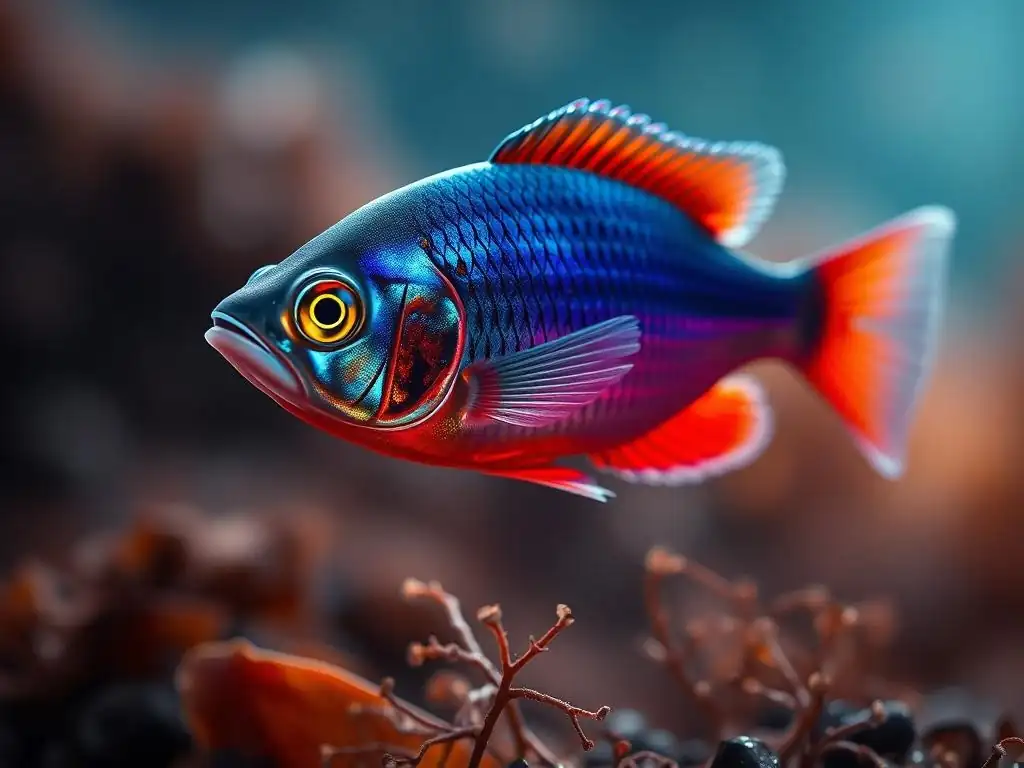
Maintaining genetic diversity is a crucial aspect for any serious Emperor tetra breeding guide aiming for long-term sustainability and vitality of the fish line. Continuously breeding from a small, closed group of fish can lead to inbreeding depression, resulting in weaker offspring, reduced fertility, increased susceptibility to disease, and loss of the desirable traits that make Emperor Tetras so attractive. To combat this, it's advisable to periodically introduce new, unrelated breeding stock from different sources. This infusion of new genes strengthens the line and helps maintain vigor.
When acquiring new stock, ensure they are healthy and quarantined properly to avoid introducing pathogens into your existing breeding setup. Keeping detailed records of breeding pairs and their offspring can help prevent accidental sibling-to-sibling breeding. For larger-scale Emperor tetra breeding operations, rotating breeding pairs and ensuring that offspring from different lineages are eventually bred together can significantly contribute to genetic health. This strategic approach ensures the long-term health, resilience, and beauty of your cultivated Emperor tetra population.
Emperor Tetra Breeding and Selling: Sustainable Practices
For those interested in Emperor tetra breeding beyond personal enjoyment, engaging in sustainable practices is essential for both the welfare of the fish and the reputation of the breeder. Sustainable breeding means prioritizing the health and well-being of the fish over sheer numbers. This includes providing optimal breeding conditions, ensuring proper nutrition for parents and fry, and maintaining excellent water quality throughout the entire breeding cycle. Over-breeding a single pair or group can lead to exhaustion and reduced lifespan for the parent fish; allowing them adequate rest periods between spawning cycles is vital.
When considering selling Emperor Tetras, ensure the fish are robust, healthy, and of a good size before offering them for sale. Providing clear care instructions to buyers promotes responsible pet ownership. Working with reputable local fish stores or a network of fellow hobbyists ensures that your Emperor tetra breeding efforts contribute positively to the aquarium community. This not only helps maintain a healthy supply of captive-bred fish, reducing reliance on wild-caught specimens, but also positions you as a responsible and ethical contributor to the hobby, aligning with the principles of a comprehensive Emperor tetra breeding guide.
Conclusion: Mastering Emperor Tetra Breeding for the Home Aquarist
Frequently Asked Questions
How difficult is it to breed Emperor Tetras in a home aquarium?
Breeding Emperor Tetras can be moderately challenging. They require specific water parameters and a separate breeding tank to increase the chances of successful spawning and fry survival due to the parents eating the eggs.
What are the ideal water parameters for Emperor Tetra breeding?
Ideal water parameters include a soft, acidic pH (around 6.0-6.5), a low KH, and a temperature of around 78-82°F. Maintaining excellent water quality is also crucial for success.
What type of breeding tank setup is recommended for Emperor Tetras?
A dimly lit, densely planted tank (with fine-leaved plants or spawning mops) is best. This setup provides hiding places for the eggs and fry, protecting them from the parents and helping to reduce stress.
What do Emperor Tetra fry eat?
Emperor Tetra fry require infusoria or liquid fry food as their initial food source. As they grow, they can be transitioned to baby brine shrimp and finely crushed flake food.
How can I tell if my Emperor Tetras are ready to breed?
Look for signs of gravid females (swollen bellies) and males displaying more intense coloration and courtship behavior, such as chasing and displaying fins. These are indicators that they are nearing breeding readiness.
Final Reflection: Nurturing Aquatic Majesty
The journey of breeding Emperor Tetras, as explored in this guide, is more than just a technical exercise; it’s a testament to our ability to cultivate beauty and complexity within the confines of our own homes. The meticulous care and dedication required mirror the respect these regal fish command, reminding us that even the smallest ecosystems deserve our utmost attention and understanding.
This endeavor, in a way, reflects our broader relationship with the natural world. The patience and observation demanded by Emperor tetra breeding have instilled in me a deeper appreciation for the delicate balance of life and the profound rewards of nurturing it. As Jacques Cousteau eloquently stated: The sea, once it casts its spell, holds one in its net of wonder forever.
This holds true for any carefully crafted aquatic environment; the wonder is endless.
Now, armed with the knowledge and insights shared in this guide, I encourage you to embark on your own journey of Emperor tetra breeding. Reflect on the lessons learned, not just about fishkeeping, but about patience, observation, and the profound satisfaction of nurturing life. Let the vibrant colors and graceful movements of these aquatic nobles inspire you to create a thriving ecosystem, a miniature world reflecting the beauty and complexity of the natural world around us.
Embark on Your Emperor Tetra Breeding Adventure!
Thank you for diving into the fascinating world of Emperor Tetra breeding. We hope you've gained valuable insights into cultivating these aquatic gems. Now, it's time to transform that knowledge into action!
Here's how to begin:
- Start small: Don't feel pressured to overhaul your whole aquarium; dedicate a small, manageable breeding tank specifically for Emperor Tetras.
- Consider a surprising step: Experiment with feeding unconventional live foods like fruit flies to condition your breeders.
- Share your journey: Post a picture of your setup on social media using #AquariumMastery and inspire fellow aquarists!
What small change will you make this week to support your Emperor Tetra breeding goals?