
Creating a Peaceful Angelfish Community Tank: Tips for Success

Welcome to Aquarium Mastery!
Ever dreamed of a thriving aquarium where graceful Angelfish reign supreme alongside a peaceful community? Wondering how to achieve that delicate balance? You've come to the right place. Dive in and discover the secrets to a successful Angelfish community tank setup, unlocking the potential for a vibrant and harmonious underwater world. Let's explore the essentials, from selecting compatible tank mates to mastering water parameters, ensuring your Angelfish thrive in a community environment. Ready to create your masterpiece?
- Creating a Peaceful Angelfish Community Tank
- Understanding Angelfish Temperament
- Planning Your Angelfish Tank Setup
- Choosing Suitable Tank Mates
- Introducing New Fish
- Feeding Your Angelfish Community
- Maintaining a Healthy Tank
- Troubleshooting Common Problems
- Advanced Angelfish Tank Techniques
-
Frequently Asked Questions
- How many Angelfish should I keep in a community tank?
- What tank size is recommended for an Angelfish community tank?
- What are some good tank mates for Angelfish in a community setting?
- What water parameters are ideal for an Angelfish community tank?
- How can I prevent aggression in my Angelfish community tank?
- Final Reflection: Cultivating Harmony in the Aquarium
- Cultivate Your Angelfish Sanctuary Today!
Creating a Peaceful Angelfish Community Tank
Understanding Angelfish Temperament
Angelfish Habitat and Behavior
Angelfish, scientifically known as Pterophyllum scalare, originate from the slow-moving, heavily vegetated waters of the Amazon basin, including parts of Peru, Colombia, and Brazil. In their natural habitat, these fish typically inhabit areas with dense plant growth, submerged roots, and driftwood, which provide ample hiding spots and a sense of security.
This natural environment shapes their behavior; while juveniles often form loose schools for protection, adult angelfish tend to become more territorial, especially when establishing breeding pairs or defending a specific area within the tank. Their vertical, disc-shaped bodies and long, flowing fins are perfectly adapted for navigating through dense aquatic vegetation, allowing them to glide gracefully and ambush small prey.
Understanding this natural behavior is crucial for a successful Angelfish community tank setup. In a home aquarium, angelfish will exhibit similar tendencies. They appreciate a well-decorated tank with plenty of vertical elements and hiding places that mimic their natural environment. While they can be peaceful, particularly when kept in groups of five or more to diffuse aggression, individual personalities can vary. Some angelfish may display more dominant or territorial behaviors, especially if the tank is too small or lacks sufficient visual breaks. Providing adequate space and structure helps mitigate potential conflicts and promotes a harmonious Angelfish community tank setup.
Assessing Angelfish Compatibility
Assessing angelfish compatibility involves understanding their social hierarchy and individual temperaments. When introducing angelfish into a community tank, it's often recommended to acquire a group of 5-6 juveniles. This allows them to grow up together, establish a natural pecking order, and reduces the likelihood of severe aggression compared to introducing new individuals to an established, territorial adult. While generally considered semi-aggressive, especially when breeding, their compatibility with other species largely depends on the tank size, the temperament of the other fish, and the overall setup of the Angelfish community tank.
Key factors for compatibility include size and fin characteristics of potential tank mates. Angelfish, with their long, flowing fins, can be targets for fin-nipping species like Tiger Barbs or certain Tetras. Conversely, angelfish themselves might prey on very small fish, such as Neon Tetras, if introduced when the angelfish are significantly larger.
Therefore, selecting tank mates that are neither overly aggressive nor small enough to be considered prey is vital for a peaceful Angelfish community tank setup. Observing the behavior of all fish closely after introduction and being prepared to separate individuals if persistent aggression occurs is a necessary part of successful angelfish keeping.
Planning Your Angelfish Tank Setup
Tank Size Requirements
The minimum tank size for a successful Angelfish community tank setup is a critical consideration, directly impacting the health and temperament of your fish. For a single adult angelfish, a 20-gallon (approximately 75 liters) tall tank is often recommended due to their vertical body shape and need for swimming space.
However, for a community setup, especially one aiming for multiple angelfish and compatible tank mates, a significantly larger tank is essential. A 55-gallon (approximately 208 liters) tank is generally considered the minimum for a small group of 3-5 angelfish, providing enough space for each fish to establish a territory without constant conflict.
Larger tanks, such as 75-gallon (284 liters) or 125-gallon (473 liters) setups, are ideal for a more robust Angelfish community tank. These larger volumes offer superior water stability, more swimming room, and greater opportunities for intricate aquascaping that provides visual barriers and hiding spots.
For instance, a 75-gallon tank can comfortably house 5-7 angelfish along with appropriate schooling fish, reducing stress and aggression within the group. Adequate tank size is paramount for preventing stunted growth, maintaining water quality, and ensuring that the angelfish have sufficient personal space, all of which contribute to a thriving and peaceful Angelfish community tank setup.
Water Parameters for Angelfish
Maintaining stable and appropriate water parameters is fundamental for the health and longevity of angelfish in a community tank setup. Angelfish thrive in soft, acidic to neutral water, mimicking their natural Amazonian habitat. The ideal pH range is typically between 6.0 and 7.5, with a general hardness (GH) of 3-8 dGH (50-150 ppm) and carbonate hardness (KH) of 3-6 dKH (50-100 ppm). Consistent water temperature is also vital, ideally maintained between 76°F and 82°F (24°C to 28°C). Fluctuations outside these ranges can cause significant stress, weakening their immune system and making them susceptible to diseases.
Regular testing of water parameters is non-negotiable for a successful Angelfish community tank setup. Ammonia and nitrite levels must always be at 0 ppm, as even trace amounts are highly toxic. Nitrate levels should be kept below 20 ppm through routine water changes and proper filtration. For example, a weekly water change of 25-30% in a well-stocked 55-gallon angelfish tank can effectively keep nitrates in check. Using a reliable liquid test kit is recommended over test strips for greater accuracy. Understanding and diligently maintaining these specific water parameters is a cornerstone of a healthy and vibrant Angelfish community tank.
Angelfish Tank Decor
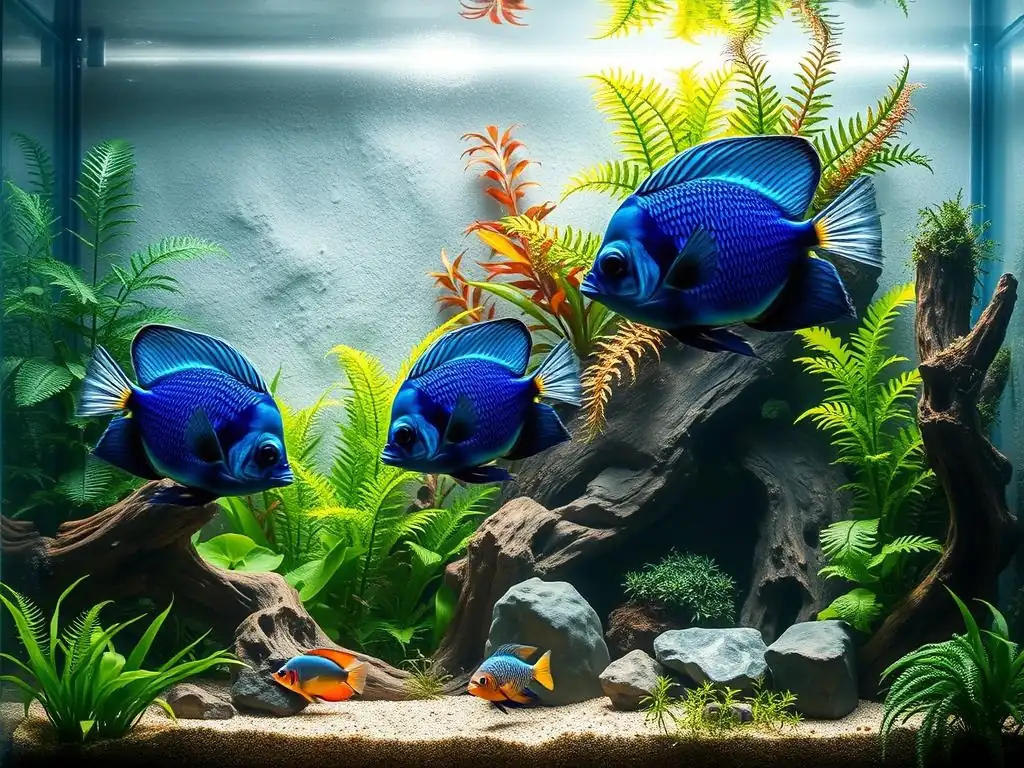
Appropriate tank decor is not just for aesthetics; it plays a crucial role in creating a comfortable and secure environment for angelfish in a community tank setup. Given their natural habitat, angelfish appreciate vertical elements and dense planting that offer both hiding spots and visual breaks. Tall, broad-leafed plants such as Amazon Swords ( Echinodorus amazonicus), Java Fern ( Microsorum pteropus), or Anubias varieties are excellent choices, providing cover and mimicking their native environment. Driftwood and smooth rocks can also be incorporated to create natural-looking structures and territories.
When arranging decor for an Angelfish community tank setup, consider creating distinct zones to help diffuse potential aggression, especially if you have multiple angelfish. For instance, a large piece of driftwood or a dense cluster of plants can serve as a natural divider, allowing individual angelfish or pairs to claim their own space. Ensure that all decor items are smooth and free of sharp edges to prevent damage to their delicate fins.
Substrates like fine gravel or sand are suitable, as angelfish do not typically dig. A thoughtfully decorated tank not only enhances the visual appeal but significantly contributes to the well-being and peaceful coexistence of your angelfish and their tank mates.
Choosing Suitable Tank Mates
Peaceful Fish Species
Selecting peaceful and compatible tank mates is paramount for a harmonious Angelfish community tank setup. The ideal companions are fish that share similar water parameter requirements, are not prone to fin-nipping, and are large enough not to be considered prey. Good choices often include various medium-sized tetras such as Congo Tetras ( Phenacogrammus interruptus), Diamond Tetras ( Moenkhausia pittieri), or even larger varieties of Neon Tetras like Cardinal Tetras ( Paracheirodon axelrodi) if the angelfish are still juvenile. These schooling fish provide activity without posing a threat.
Other excellent options for an Angelfish community tank setup include peaceful bottom-dwellers like Corydoras catfish ( Corydoras aeneus or Corydoras paleatus species are popular choices), which are diligent scavengers and rarely interfere with angelfish. Bristlenose Plecos ( Ancistrus cirrhosus) are also suitable algae eaters, reaching a manageable size and generally being non-aggressive. Rainbowfish species, such as Boeseman's Rainbowfish ( Melanotaenia boesemani) or Dwarf Neon Rainbowfish ( Melanotaenia praecox), also make vibrant and peaceful additions, thriving in similar conditions and adding a splash of color to the upper and middle water columns.
Avoiding Aggressive Tank Mates
To maintain a peaceful Angelfish community tank setup, it is crucial to avoid fish species known for aggression or fin-nipping tendencies. Certain barbs, like the notorious Tiger Barb ( Puntigrus tetrazona), are infamous fin-nippers and will almost certainly harass and damage the long, flowing fins of angelfish, leading to stress, injury, and potential secondary infections. Similarly, species like Red Tail Sharks ( Epalzeorhynchos bicolor) or Rainbow Sharks ( Epalzeorhynchos frenatum), while striking in appearance, can become highly territorial and aggressive as they mature, leading to constant harassment of angelfish and other tank inhabitants.
Furthermore, overly boisterous or fast-swimming fish can also be problematic in an Angelfish community tank setup, as they may outcompete the more graceful angelfish for food. Large, aggressive cichlids, even those from the same family, are generally unsuitable due to their territorial nature and potential to inflict serious harm. For example, African Cichlids from the Rift Lakes (e.g., Mbuna) have vastly different water parameter needs and aggressive temperaments that are incompatible with angelfish. Researching the specific temperament and needs of any potential tank mate before introduction is essential for the long-term success and tranquility of your angelfish aquarium.
Invertebrates and Angelfish
The compatibility of invertebrates with angelfish in a community tank setup is a nuanced topic, largely depending on the size of the invertebrate and the individual temperament of the angelfish. Small, ornamental shrimp species like Cherry Shrimp ( Neocaridina davidi) or Amano Shrimp ( Caridina multidentata) are often viewed as potential snacks by adult angelfish, especially if the angelfish are large or particularly opportunistic. While some aquarists report success with larger shrimp in heavily planted tanks providing ample hiding spots, it's a risk that many angelfish keepers are unwilling to take for their valuable shrimp colonies.
Conversely, larger invertebrates, such as Mystery Snails ( Pomacea bridgesii) or Nerite Snails ( Neritina natalensis), are generally safe additions to an Angelfish community tank setup. These snails are too large for angelfish to consume and provide beneficial algae control. While angelfish might occasionally peck at the snails' antennae, it rarely causes significant harm.
However, be mindful that angelfish may eat the eggs of snails if they are laid in accessible areas. If you wish to keep shrimp, it is often safer to do so in a dedicated shrimp tank or to introduce them when the angelfish are very small juveniles, hoping they grow accustomed to the shrimp as part of their environment.
Introducing New Fish
Quarantine Procedures
Implementing a strict quarantine procedure is perhaps the most critical step when introducing new fish to an established Angelfish community tank setup. New fish, even those appearing healthy, can carry diseases, parasites, or bacteria that could devastate your entire aquarium. A dedicated quarantine tank, typically 10-20 gallons (38-75 liters), with its own heater, filter, and basic decor, should be set up prior to purchasing new fish. This tank allows you to observe new arrivals for at least 2-4 weeks before introducing them to your main angelfish display.
During the quarantine period, closely monitor the new fish for any signs of illness, such as clamped fins, white spots (Ich), abnormal swimming, lethargy, or loss of appetite. This isolated environment allows for targeted treatment of any diseases without exposing your main Angelfish community tank setup to medication, which can harm beneficial bacteria or sensitive invertebrates. For instance, if Ich is observed, the fish can be treated with appropriate medication in the quarantine tank. Only after the quarantine period is complete, with no signs of disease, should the new fish be considered for introduction to your main angelfish aquarium.
Acclimation Techniques
Proper acclimation is essential to minimize stress when introducing new fish to your Angelfish community tank setup, especially after a quarantine period. The most common and recommended method is the drip acclimation technique. This method slowly equalizes the water parameters (temperature, pH, hardness) between the bag water and the tank water, preventing shock to the fish's delicate osmoregulation system. Begin by floating the bag containing the new fish in your tank for 15-20 minutes to equalize temperature.
After temperature equalization, open the bag and secure it to the side of the tank or place it in a clean bucket. Using an airline tubing and a control valve, siphon water from your main Angelfish community tank into the bag or bucket, allowing it to drip slowly at a rate of about 1-2 drops per second. Continue this process until the volume of water in the bag has tripled or quadrupled, which typically takes 45-60 minutes.
Once acclimated, gently net the fish and release it into the tank, discarding the original bag water, as it may contain ammonia or other undesirable substances. This careful process significantly reduces stress and increases the chances of a successful integration into your Angelfish community tank setup.
Monitoring Behavior
After introducing new fish to your Angelfish community tank setup, diligent monitoring of their behavior is crucial for the first few days and weeks. Observe how the new fish interact with the existing angelfish and other tank mates. Look for signs of stress in the new arrivals, such as hiding excessively, rapid breathing, or refusal to eat. Equally important is observing the reactions of the established angelfish; watch for excessive chasing, fin-nipping, or constant harassment directed at the newcomers.
Minor territorial disputes are normal as a new pecking order is established, but persistent or aggressive bullying can lead to injury, stress, and even death for the harassed fish. For example, if a dominant angelfish continually corners a new fish, preventing it from eating, intervention may be necessary.
Providing plenty of hiding spots and visual barriers in your Angelfish community tank setup can help diffuse aggression. If severe aggression persists, you may need to temporarily remove the aggressor to a separate tank for a few days to reset its territory, or, in extreme cases, rehome one of the fish to maintain peace within the Angelfish community tank.
Feeding Your Angelfish Community
Angelfish Diet
A balanced and varied diet is fundamental for the health, vibrant coloration, and breeding success of angelfish in a community tank setup. Angelfish are omnivores with a preference for meaty foods. High-quality flake or pellet food specifically formulated for cichlids or angelfish should form the staple of their diet, providing essential vitamins and minerals. Look for foods with a good protein content, ideally around 40-50%. For instance, premium angelfish flakes often contain ingredients like spirulina, fish meal, and various vitamins, ensuring a comprehensive nutritional profile.
Supplementing their staple diet with frozen or live foods is crucial for optimal health and to encourage natural foraging behaviors in your Angelfish community tank setup. Excellent choices include frozen bloodworms, brine shrimp, daphnia, and Mysis shrimp. These provide necessary protein and fat, enhancing their color and vitality. Live foods, such as blackworms or small feeder shrimp, can be offered occasionally but should be sourced from reputable suppliers to avoid introducing diseases. A varied diet not only ensures complete nutrition but also keeps the fish engaged and prevents them from becoming finicky eaters.
Feeding Schedule
Establishing a consistent feeding schedule is important for the health of your angelfish and the overall water quality in your community tank setup. Adult angelfish should typically be fed 2-3 times per day, offering small amounts that can be consumed within 2-3 minutes. This frequency ensures they receive adequate nutrition without overfeeding, which can lead to uneaten food decaying and fouling the water. For example, a morning feeding of quality flakes, an afternoon offering of frozen brine shrimp, and an evening serving of pellets can provide a balanced daily intake.
Juvenile angelfish, which are growing rapidly, may benefit from more frequent feedings, perhaps 3-4 times daily, still adhering to the "eat in 2-3 minutes" rule. This higher frequency supports their accelerated growth rate. It is crucial to observe your Angelfish community tank setup during feeding times to ensure all fish, especially shyer individuals, are getting enough food.
If you notice certain fish are consistently missing out due to competition, consider spreading the food across different areas of the tank or using multiple feeding points to ensure everyone gets their share. Adjust the portion sizes based on the number and size of your fish to prevent overfeeding and maintain pristine water conditions.
Addressing Food Competition
Food competition can be a significant issue in an Angelfish community tank setup, particularly when housing multiple angelfish or fast-moving tank mates. Dominant angelfish or more aggressive species can quickly consume most of the food, leaving less assertive or slower-eating fish undernourished. This can lead to stunted growth, weakened immune systems, and increased stress for the deprived individuals. One effective strategy to mitigate this is to distribute food across multiple areas of the tank simultaneously. For example, sprinkling flakes at both ends of the tank can allow more timid fish to access food away from the primary feeding frenzy.
Another approach for an Angelfish community tank setup is to use a combination of floating and sinking foods. While angelfish primarily feed from the surface and mid-water, adding some sinking pellets or wafers can ensure bottom-dwelling tank mates like Corydoras catfish get their share, reducing competition for surface foods. Feeding small amounts more frequently, rather than one large meal, can also help.
For instance, instead of one large feeding, offer two to three smaller portions throughout the day. Regularly observing feeding behavior is key; if you consistently notice a particular fish is not eating, it may require temporary isolation or more targeted feeding to ensure its nutritional needs are met within the Angelfish community tank.
Maintaining a Healthy Tank
Water Changes
Regular water changes are the cornerstone of maintaining a healthy Angelfish community tank setup and are critical for preventing the buildup of harmful nitrates and other dissolved organic compounds. While a robust filtration system removes physical debris and converts toxic ammonia and nitrite, it does not eliminate nitrates, which accumulate over time and can become detrimental to fish health at high concentrations. For an established angelfish tank, a weekly water change of 25-30% of the total tank volume is generally recommended. For example, on a 55-gallon tank, this would mean replacing approximately 14-17 gallons of water each week.
When performing water changes for your Angelfish community tank setup, always use dechlorinated water that is temperature-matched to the aquarium water to prevent temperature shock and chemical poisoning. A gravel vacuum should be used to thoroughly clean the substrate, removing uneaten food and fish waste that contribute to nitrate production. Consistent water changes not only dilute pollutants but also replenish essential trace elements that are consumed by fish and plants. Skipping water changes or performing insufficient ones can lead to stress, disease outbreaks, and a general decline in the health and vitality of your angelfish and their tank mates.
Filtration and Aeration
Effective filtration and adequate aeration are indispensable components of a thriving Angelfish community tank setup. A robust filtration system, typically a hang-on-back (HOB) filter, canister filter, or sumps for larger tanks, is essential for maintaining water quality.
These systems perform three types of filtration: mechanical (removing solid waste), chemical (removing dissolved pollutants like odors and discoloration using activated carbon), and biological (converting toxic ammonia and nitrite into less harmful nitrates via beneficial bacteria). For a 55-gallon angelfish tank, a filter rated for 75-100 gallons, providing a flow rate of 300-400 GPH (gallons per hour), is often recommended to ensure sufficient turnover and water clarity.
Aeration, provided by air stones connected to an air pump or the surface agitation from filter outflow, is equally vital in an Angelfish community tank setup. Adequate oxygen levels are crucial for the respiration of fish and beneficial bacteria. Angelfish, particularly, appreciate well-oxygenated water.
Surface agitation facilitates the gas exchange process, allowing carbon dioxide to escape and oxygen to dissolve into the water. Ensure that the filter flow is strong enough to create good surface movement but not so powerful that it creates excessive currents that stress the angelfish, which prefer calmer waters. A balanced approach to filtration and aeration creates a stable and healthy environment for your angelfish.
Disease Prevention and Treatment
Disease prevention in an Angelfish community tank setup relies heavily on maintaining pristine water quality, providing a balanced diet, avoiding overcrowding, and minimizing stress. Quarantine procedures for new fish, as previously discussed, are the first line of defense against introducing pathogens. Regular observation of your angelfish for any changes in behavior, appetite, or appearance (e.g., clamped fins, white spots, lesions, rapid breathing) allows for early detection and intervention, significantly increasing the chances of successful treatment.
Should a disease outbreak occur in your Angelfish community tank setup, accurate diagnosis is key. Common angelfish ailments include Ich (white spot disease), fin rot, velvet, and various bacterial infections. For instance, Ich, often appearing as small white dots resembling salt grains, is typically treated by raising the tank temperature slightly (to 82-84°F / 28-29°C) and using an appropriate Ich medication, often containing malachite green or formalin, as per product instructions.
Always remove activated carbon from the filter before medicating, as it will absorb the medication. Treating in a separate quarantine tank is always preferable to avoid medicating the main display, especially if it contains sensitive invertebrates or plants. Post-treatment, large water changes and carbon reintroduction help remove residual medication.
Troubleshooting Common Problems
Aggression and Bullying
Aggression and bullying are common challenges in an Angelfish community tank setup, particularly among angelfish themselves as they mature and establish territories or breeding pairs. While minor squabbles are normal, persistent chasing, fin-nipping, or preventing other fish from eating are clear signs of problematic aggression. Overcrowding is a primary trigger; a 55-gallon tank housing 7-8 angelfish might experience more aggression than one with 4-5. Insufficient hiding spots or visual barriers also exacerbate the issue, as submissive fish have nowhere to retreat.
To mitigate aggression in your Angelfish community tank setup, first, ensure the tank size is adequate for the number of angelfish and tank mates. Second, introduce plenty of vertical decor like tall plants (e.g., Amazon Swords) and driftwood to break up sight lines and create natural territories. For example, placing a large piece of driftwood in the center can divide the tank into distinct zones.
If a specific angelfish is consistently bullying others, temporarily removing the aggressor to a separate tank for a few days can sometimes reset its territorial behavior upon reintroduction. In severe cases, rehoming the most aggressive individual may be necessary to restore peace.
Fin Nipping
Fin nipping, characterized by torn or tattered fins, is a common issue in an Angelfish community tank setup, and it can be caused by either the angelfish themselves or their tank mates. Angelfish, with their long, flowing fins, are particularly susceptible to nipping, which can lead to stress, secondary bacterial infections like fin rot, and a general decline in health. Identifying the culprit is the first step: observe the tank closely, especially during feeding times or when fish are resting.
If angelfish are nipping each other, it often stems from aggression due to overcrowding, insufficient hiding spots, or the formation of a dominant pair that harasses others. Increasing tank size, adding more visual barriers (plants, driftwood), or ensuring a larger group (5-7 angelfish) to diffuse aggression can help. If tank mates are the culprits, evaluate their compatibility.
For instance, if you have Tiger Barbs, they are notorious fin-nippers and should be rehomed from an Angelfish community tank setup. Replacing them with peaceful schooling fish like Congo Tetras or Rainbowfish will prevent future fin damage and promote a healthier environment for your angelfish. Treating any fin damage with clean water and potentially an antibacterial medication is crucial to prevent secondary infections.
Common Angelfish Diseases
Angelfish, like all aquarium fish, are susceptible to various diseases, often exacerbated by poor water quality, stress, or improper diet in a community tank setup. One of the most common ailments is Ich ( Ichthyophthirius multifiliis), characterized by small white spots resembling salt grains on the body and fins. This highly contagious parasite thrives in unstable water conditions and sudden temperature fluctuations. Another frequent issue is Fin Rot, a bacterial infection that causes fins to fray and dissolve, often a secondary infection to fin nipping or poor water quality.
Other prevalent diseases in an Angelfish community tank setup include Velvet ( Oodinium), which appears as a dusty, yellowish-brown coating, and various internal parasites (e.g., Hexamita, causing "hole-in-the-head" disease). Dropsy, a symptom of severe internal bacterial infection or organ failure, characterized by a swollen body and protruding scales, is often a sign of a fish too far gone.
Prevention is key: maintain stable, pristine water parameters, provide a varied and nutritious diet, avoid overcrowding, and quarantine all new fish. Early detection and prompt treatment with appropriate medications, often in a hospital tank, significantly improve the chances of recovery for affected angelfish.
Advanced Angelfish Tank Techniques
Creating a Planted Angelfish Tank
Creating a heavily planted Angelfish community tank setup offers numerous benefits, enhancing both the aesthetic appeal and the overall well-being of your fish. Live plants provide natural filtration by absorbing nitrates, help oxygenate the water, and offer vital hiding spots and visual barriers that reduce stress and aggression among angelfish. For angelfish, tall, broad-leafed plants like Amazon Swords ( Echinodorus bleheri), Vallisneria ( Vallisneria spiralis), and Cryptocoryne species ( Cryptocoryne wendtii) are excellent choices as they mimic their natural riverine habitats and provide ample cover.
To establish a thriving planted Angelfish community tank setup, consider the specific needs of your chosen plants. A nutrient-rich substrate, such as a specialized planted tank substrate or root tabs, will support heavy root feeders like Amazon Swords. Adequate lighting, typically 8-10 hours per day, is crucial for photosynthesis, with LED lights offering adjustable intensity and spectrum.
While CO2 injection can significantly boost plant growth, many plants suitable for angelfish tanks can thrive without it, especially if the tank is not excessively high-tech. Regular fertilization with liquid plant fertilizers, combined with consistent water changes to replenish micronutrients, will ensure your planted Angelfish community tank remains lush and healthy, providing an ideal environment for your angelfish to flourish.
Frequently Asked Questions
How many Angelfish should I keep in a community tank?
Keeping a small group of Angelfish (3-5) is often best to minimize aggression as they mature. Avoid keeping only two, as this can lead to one being bullied.
What tank size is recommended for an Angelfish community tank?
A tank of at least 55 gallons is recommended, but 75 gallons or larger is ideal. This provides ample space for the Angelfish and their tankmates to swim and establish territories, reducing stress.
What are some good tank mates for Angelfish in a community setting?
Good tank mates include peaceful schooling fish like tetras and rasboras, as well as bottom dwellers like Corydoras catfish. Avoid fin-nipping species or overly aggressive fish.
What water parameters are ideal for an Angelfish community tank?
Angelfish thrive in slightly acidic water (pH 6.0-7.0) with a temperature of 78-84°F. Maintaining stable water parameters through regular testing and water changes is crucial.
How can I prevent aggression in my Angelfish community tank?
Provide plenty of hiding places with plants and decorations to break up sightlines. Ensure adequate space and food to minimize competition and stress among the fish.
Final Reflection: Cultivating Harmony in the Aquarium
The journey of creating a peaceful angelfish community tank, as we've explored, is more than just assembling fish; it's about crafting a balanced ecosystem. This pursuit of aquatic harmony mirrors our own societal aspirations for peaceful coexistence and understanding. Just as careful planning and consideration are vital for a thriving aquarium, so too are they essential for building a harmonious world.
This delicate balance within the glass box reflects, in miniature, the complexities of our own interconnectedness. The success of an angelfish community tank hinges on empathy – understanding the needs and behaviors of each species and creating an environment where they can all flourish. Peace is not merely the absence of war, but the presence of justice, of law, of order – in short, of government.
– Albert Einstein. This quote resonates deeply, reminding us that true harmony requires careful consideration and a structured approach, just like setting up the perfect angelfish community tank.
Now, consider the lessons learned from this aquatic endeavor. What steps can you take, in your own life and community, to foster a more peaceful and harmonious environment? Just as you've thoughtfully curated the perfect tank mates for your angelfish, I invite you to reflect on how you can cultivate understanding, empathy, and respect in your interactions with others. The principles of careful planning, thoughtful introduction, and consistent maintenance apply not only to aquariums, but also to building a more peaceful and compassionate world.
Cultivate Your Angelfish Sanctuary Today!
Thank you for diving into the world of peaceful Angelfish communities! Now that you're equipped with the knowledge, let's turn that inspiration into action.
Here are some steps you can take to create your own harmonious aquatic environment:
- Start Planning Your Dream Tank: Carefully select compatible tank mates and design a layout that promotes peace and reduces territorial disputes. Remember, early planning prevents later problems!
- Explore diverse plant species and decorations to provide ample hiding spots and visual barriers for your angelfish. Get creative and make their home feel natural and stress-free.
- Share this newfound knowledge with fellow aquarium enthusiasts! Help spread the word about creating peaceful angelfish communities and inspire others.
What specific plant combination are you most excited to try in your angelfish tank to create a sense of tranquility?