
Integrating Lighting, CO2, and Pumps with Aquarium Controllers for Total Synergy

Welcome to Aquarium Mastery!
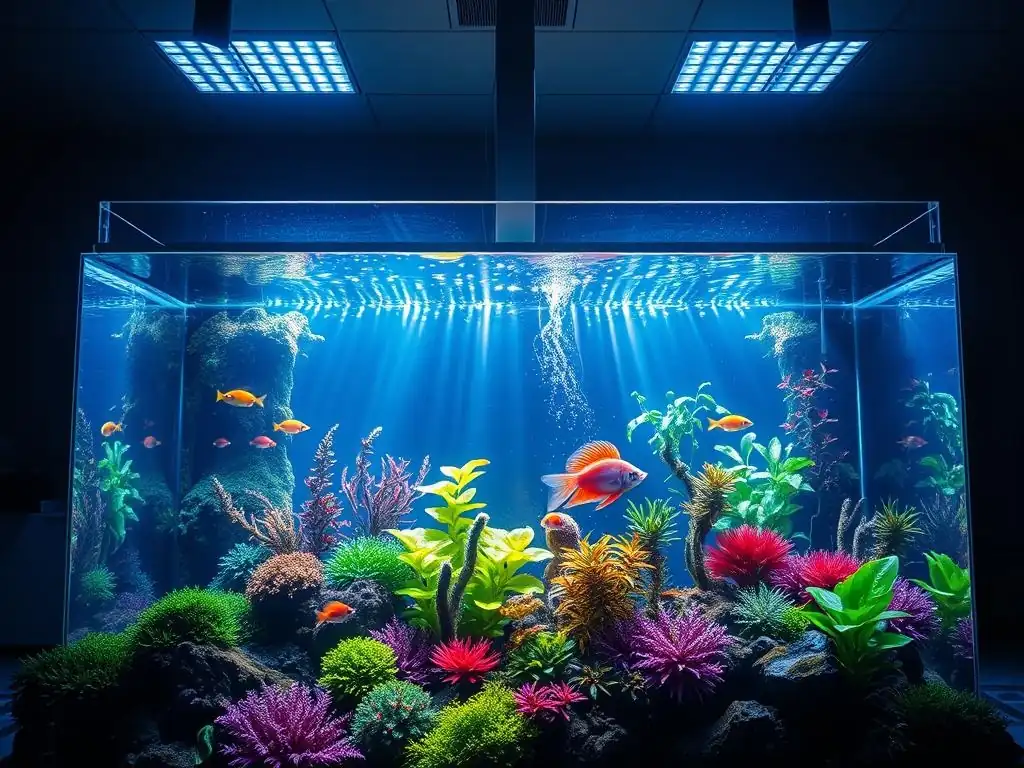
Ever wonder how to achieve total synergy in your aquarium ecosystem? Dive in and discover how integrating lighting, CO2, and pumps with aquarium controllers can revolutionize your setup. Unlocking optimal conditions for your aquatic life is easier than you think! Ready to master the art of aquarium control? Let's get started!
- Understanding Aquarium Controllers and Their Role in Optimizing Tank Ecosystems
-
The Power of Integrated Aquarium Lighting Control
- Optimizing Photosynthesis with Smart Aquarium Lighting Schedules
- Simulating Natural Light Cycles for Enhanced Fish and Plant Health
- Controlling Light Intensity and Spectrum Using Aquarium Controllers
- Dimming and Ramp-Up Features for Stress Reduction in Aquatic Life
- Integrating Lighting with CO2 Injection for Optimal Plant Growth
- Fine-Tuning CO2 Injection with Aquarium Controllers
- Pump and Circulation Control for a Healthy Aquarium Environment
- Step-by-Step Guide to Integrating Aquarium Equipment with a Controller
- Troubleshooting Common Issues with Integrated Aquarium Control Systems
- Advanced Aquarium Controller Applications for Experienced Aquarists
- Choosing the Right Aquarium Controller for Your Needs
- Maintaining Your Aquarium Controller and Integrated Systems
-
Frequently Asked Questions
- How can an aquarium controller help manage lighting in my aquarium?
- What are the benefits of using an aquarium controller to manage CO2 injection?
- Can an aquarium controller help me manage my aquarium pumps?
- Are aquarium controllers compatible with all types of lighting, CO2 systems, and pumps?
- What are the key factors to consider when choosing an aquarium controller for lighting, CO2, and pump management?
- Final Reflection: Cultivating Aquatic Harmony
- Ignite Your Reef: Dive Deeper Now!
Understanding Aquarium Controllers and Their Role in Optimizing Tank Ecosystems
What is an Aquarium Controller and Why Do You Need One?
An aquarium controller serves as the central nervous system for your aquatic ecosystem, providing a unified platform to manage various critical components like lighting, CO2 injection, and pumps. Essentially, it's a sophisticated computer designed specifically for aquariums, allowing for automated control, real-time monitoring, and proactive alerts. For instance, in a high-tech planted tank, manually adjusting light timers, CO2 solenoids, and multiple circulation pumps daily is not only time-consuming but also prone to human error, which can destabilize delicate aquatic environments.
The necessity of an aquarium controller becomes evident as tank setups grow in complexity, particularly for planted aquariums requiring precise CO2 and light management, or reef tanks with intricate filtration and dosing needs. These devices empower aquarists to maintain highly stable parameters, crucial for the health and vibrancy of both fish and plants. Imagine a 75-gallon planted aquarium where consistent CO2 levels around 25 ppm and a precise 9-hour photoperiod are vital; a controller ensures these conditions are met reliably, even when you're not physically present.
Benefits of Centralized Aquarium Control: Lighting, CO2, and Pumps
Centralized control through an aquarium controller offers a multitude of benefits, transforming aquarium management from a series of disjointed tasks into a cohesive, optimized system. Firstly, it significantly enhances efficiency by automating routines such as daily light cycles, CO2 dosing, and even water changes, reducing manual labor and the risk of forgotten tasks. This automation can lead to energy savings, as equipment like pumps and lights only operate when necessary, potentially reducing electricity consumption by 10-20% compared to independent timers.
Secondly, and perhaps most critically, a controller provides unparalleled stability for your tank's parameters. By constantly monitoring factors like pH, temperature, and ORP, and making real-time adjustments to integrated equipment, it prevents drastic fluctuations that can stress aquatic life. For example, if the pH in a planted tank starts to drop too rapidly due to excessive CO2, the controller can automatically shut off the CO2 solenoid, preventing a potentially fatal pH crash and safeguarding your fish. This integrated approach ensures that your aquarium controller lighting CO2 pumps work in perfect harmony, fostering a thriving environment.
Key Features to Look for in an Aquarium Controller for Planted Tanks
When selecting an aquarium controller for a planted tank, several key features are paramount to ensure comprehensive and effective management. High on the list is the number of controllable outlets or power ports, as a typical planted setup will require connections for lights, CO2 solenoid, heater, filter pump, and possibly additional circulation pumps. Many robust controllers offer 8 or more individually controllable outlets, allowing for granular control over each piece of equipment.
Another critical feature is the availability of dedicated sensor inputs, particularly for pH and temperature probes, which are indispensable for precise CO2 management and overall tank health monitoring. Advanced controllers might also support ORP (Oxidation-Reduction Potential) or PAR (Photosynthetically Active Radiation) sensors, offering even deeper insights into water quality and light intensity. Furthermore, look for controllers with flexible programmability, allowing for complex conditional logic (e.g., "IF pH < 6.8 THEN turn off CO2 solenoid") and remote connectivity via Wi-Fi or Ethernet, enabling monitoring and adjustments from a smartphone or computer.
The Power of Integrated Aquarium Lighting Control
Optimizing Photosynthesis with Smart Aquarium Lighting Schedules
Optimizing photosynthesis in a planted aquarium is paramount for lush, vibrant plant growth, and a smart aquarium controller plays a pivotal role in achieving this. Photosynthesis is the process by which plants convert light energy into chemical energy, utilizing CO2 and water. A controller allows for the precise scheduling of lighting periods, ensuring that plants receive adequate light duration – typically 8 to 10 hours of intense light for most planted tanks – without promoting excessive algae growth that often results from overly long or inconsistent photoperiods.
Beyond simple on/off timers, an advanced aquarium controller lighting CO2 pumps system enables the creation of complex, multi-stage lighting schedules. This means you can program different light intensities or spectrums throughout the day, mimicking natural light variations. For instance, a schedule might include a low-intensity "dawn" phase, followed by a high-intensity "mid-day" phase, and then a gradual "dusk" phase. This level of precision ensures that plants receive optimal light for photosynthesis during their peak absorption periods, leading to healthier growth and better nutrient uptake, while minimizing stress on the aquatic inhabitants.
Simulating Natural Light Cycles for Enhanced Fish and Plant Health
Simulating natural light cycles, often referred to as "ramp-up" and "ramp-down" features, is a significant advantage offered by integrated aquarium lighting control. Instead of an abrupt on/off transition, which can startle fish and shock plants, controllers can gradually increase and decrease light intensity over a set period, typically 30 to 90 minutes. This gentle transition mimics the natural sunrise and sunset, allowing fish to wake up and settle down gracefully, reducing stress levels, and encouraging more natural behaviors like schooling or foraging.
For plants, a gradual light increase allows them to acclimate to the full intensity, potentially reducing initial stress and enhancing their photosynthetic efficiency. Many high-quality LED fixtures are designed with 0-10V or PWM (Pulse Width Modulation) dimming capabilities, which an aquarium controller can fully leverage. This integration ensures that the lighting system becomes an active participant in creating a stable and naturalistic environment, rather than just a simple on/off switch, contributing significantly to the overall well-being of the entire aquatic ecosystem.
Controlling Light Intensity and Spectrum Using Aquarium Controllers
The ability to precisely control light intensity and spectrum is a hallmark of sophisticated aquarium controllers, particularly vital for planted tanks with diverse flora. Different plant species have varying light requirements, often measured in PAR (Photosynthetically Active Radiation) values, which typically range from 30-50 µmol/m²/s for low-light plants to 70-100+ µmol/m²/s for demanding carpeting plants. A controller allows aquarists to dial in the exact intensity needed for specific plants, preventing light burn on delicate species or ensuring sufficient energy for high-light plants.
Furthermore, many modern LED fixtures offer multiple color channels (e.g., red, green, blue, white) that can be individually controlled for spectrum manipulation. An aquarium controller can program these channels to optimize plant growth by emphasizing specific wavelengths (e.g., more red and blue for photosynthesis) or to enhance the visual appeal of fish and plants by adjusting the overall color temperature. This granular control over both intensity and spectrum ensures that the lighting system is not just illuminating the tank, but actively contributing to the health and aesthetics of the aquatic environment.
Dimming and Ramp-Up Features for Stress Reduction in Aquatic Life
The implementation of dimming and ramp-up features through an aquarium controller dramatically reduces stress in aquatic life, fostering a more serene and natural environment. Abrupt changes in light intensity can cause shock and fear in fish, leading to darting behaviors, hiding, or even long-term stress that compromises their immune systems. By programming a gradual "sunrise" effect, where lights slowly brighten over 30-60 minutes, fish are given time to adjust, reducing their fright response and promoting calmer behavior.
Similarly, a "sunset" effect, where lights gradually dim before turning off completely, allows fish to find their resting spots and transition into their nocturnal patterns without sudden darkness. This mimics their natural habitat where light changes are never instantaneous. For plants, this smooth transition also prevents light shock, allowing them to acclimate to changing light levels more effectively. The integration of these features via an aquarium controller lighting CO2 pumps system is a testament to how automation can profoundly improve the welfare of aquarium inhabitants.
Integrating Lighting with CO2 Injection for Optimal Plant Growth
The synergistic integration of lighting with CO2 injection is critical for maximizing plant growth in a high-tech planted aquarium, and an aquarium controller makes this seamless. Plants utilize light for photosynthesis, and CO2 is a vital carbon source in this process. Therefore, CO2 should only be injected when the lights are on and actively driving photosynthesis. Injecting CO2 during the dark cycle is not only wasteful but can also lead to dangerous CO2 accumulation, causing a significant drop in pH and potentially suffocating fish.
An aquarium controller lighting CO2 pumps setup ensures that the CO2 solenoid valve is activated only during the programmed photoperiod. A common practice is to have the CO2 turn on 30-60 minutes before the lights come on, allowing CO2 levels to reach optimal concentration (typically 20-30 ppm) by the time photosynthesis begins. Conversely, the CO2 is typically turned off 30-60 minutes before the lights go out, ensuring that all available CO2 is utilized and preventing CO2 buildup overnight. This precise coordination prevents CO2 waste and maintains a stable, healthy environment for both plants and fish.
Fine-Tuning CO2 Injection with Aquarium Controllers
Monitoring and Adjusting CO2 Levels for Planted Aquariums
Maintaining stable and optimal CO2 levels, generally between 20-30 ppm, is paramount for vigorous plant growth and preventing algae in planted aquariums. An aquarium controller facilitates this by integrating a pH probe, which acts as a proxy for CO2 concentration. As CO2 dissolves in water, it forms carbonic acid, thus lowering the water's pH. By monitoring the pH in real-time, the controller can infer the CO2 level and make precise adjustments. For instance, if your tank's alkalinity (kH) is 4 dKH, a pH of 6.8 would indicate approximately 30 ppm of CO2.
The controller constantly compares the current pH reading to a pre-set target pH range. If the pH rises above the desired upper limit, indicating insufficient CO2, the controller activates the CO2 solenoid valve to release more gas. Conversely, if the pH drops below the lower limit, signaling excessive CO2, the controller immediately shuts off the solenoid. This continuous monitoring and automatic adjustment ensure that plants always have access to adequate CO2 without risking harm to fish due to CO2 overdose.
CO2 Dosing Automation Based on pH and Lighting
The true power of an aquarium controller lighting CO2 pumps system lies in its ability to automate CO2 dosing based on both pH readings and the lighting schedule. This dual-condition automation is crucial for efficiency and safety. As previously mentioned, CO2 should only be injected when lights are on and plants are actively photosynthesizing. The controller ensures this by linking the CO2 solenoid's operation to the light cycle. For example, a common program dictates that the CO2 solenoid is only permitted to be active between 30 minutes before the lights turn on and 30 minutes before they turn off.
Within this permitted window, the controller then uses the pH probe to fine-tune the CO2 injection. If the pH rises, indicating a need for more CO2, the solenoid opens. If the pH drops to the target level, the solenoid closes. This prevents over-dosing during the day and completely halts CO2 injection at night, when plants respire and produce CO2, thus preventing dangerous overnight CO2 spikes that can suffocate fish. This intelligent automation removes the guesswork and manual intervention, ensuring consistent CO2 availability while maintaining critical water parameters.
Preventing CO2 Overdosing with Controller-Based Alarms and Shut-Offs
One of the most critical safety features offered by an aquarium controller for CO2 injection is its ability to prevent dangerous overdosing through integrated alarms and automatic shut-offs. Excessive CO2 in the water can rapidly deplete oxygen levels, leading to fish gasping at the surface, erratic behavior, and potentially mass fatalities. A controller mitigates this risk by allowing users to set a critical low pH threshold.
If the pH drops below this pre-set safety limit (e.g., 6.5 for a tank with 4 dKH alkalinity), the controller will immediately trigger an audible alarm, send a notification to your smartphone, and most importantly, automatically cut power to the CO2 solenoid, halting further injection. This fail-safe mechanism is invaluable, providing peace of mind and protecting your valuable aquatic inhabitants from the severe consequences of CO2 poisoning. It's a testament to how an aquarium controller lighting CO2 pumps setup prioritizes the safety of your tank.
Integrating CO2 Injection with Water Circulation for Even Distribution
Effective CO2 distribution throughout the aquarium is just as important as precise dosing for optimal plant growth. Without adequate water circulation, CO2 can stratify, leading to pockets of high concentration in some areas and insufficient levels in others. An aquarium controller can integrate CO2 injection with the control of circulation pumps or powerheads to ensure even diffusion.
For example, the controller can be programmed to briefly activate a powerhead or increase the flow of the main filter pump for a few minutes every hour during the CO2 injection period. This brief surge in flow helps to distribute the dissolved CO2 uniformly across the entire tank, ensuring that all plants, even those in less turbulent areas, receive adequate carbon for photosynthesis. This coordinated control, where the aquarium controller lighting CO2 pumps work in concert, maximizes the efficiency of your CO2 system and promotes balanced plant growth throughout the entire aquascape.
Pump and Circulation Control for a Healthy Aquarium Environment
Automating Water Changes with Programmable Aquarium Pumps
Automating water changes, traditionally one of the most laborious and time-consuming tasks in aquarium maintenance, becomes achievable with a programmable aquarium controller and integrated pumps. Dedicated water change pumps, or even the main return pump in a sump-based system, can be connected to the controller. This allows for scheduling precise, small daily or weekly water changes, which are often less stressful for tank inhabitants than large, infrequent changes.
For example, an aquarist could program the controller to activate a drain pump for 15 minutes every Sunday afternoon, removing approximately 10 gallons from a 100-gallon tank, followed by the activation of a refill pump to replace the water. Some advanced controllers can even monitor water levels and stop pumps if levels fall too low or rise too high, preventing overflows or dry-running. This level of automation ensures consistent water quality, reducing nitrate buildup and providing a stable environment with minimal manual effort.
Controlling Circulation Pumps for Optimal Nutrient Distribution
Optimal water circulation is vital for nutrient delivery to plants, gas exchange at the water surface, and the efficient removal of waste products. An aquarium controller provides precise control over circulation pumps, such as powerheads or wavemakers, allowing aquarists to create dynamic flow patterns that mimic natural aquatic environments. Instead of constant, unidirectional flow, the controller can alternate pump activation, vary flow intensity, or even create pulsing currents.
For instance, a controller can be programmed to turn two powerheads on opposite sides of the tank on and off alternately every 6 hours, or to pulse a wavemaker for 15 minutes every hour. This prevents dead spots where detritus can accumulate and ensures that dissolved CO2 and fertilizers are evenly distributed throughout the planted tank, reaching all plant leaves. Such precise management of aquarium controller lighting CO2 pumps ensures that the entire system works cohesively for a healthy ecosystem.
Integrating Pumps with Filtration Systems for Efficient Waste Removal
The integration of pumps with filtration systems through an aquarium controller significantly enhances their efficiency in waste removal and overall water clarity. In sump-based systems, the return pump is critical for moving water from the sump, through mechanical and biological filtration, and back into the main display tank. A controller can monitor the performance of this pump, ensuring consistent flow rates.
Some controllers can be equipped with flow sensors that detect if the pump's output drops below a critical threshold, indicating a potential clog in the filter media or tubing. In such cases, the controller can trigger an alarm, notifying the aquarist to inspect the filter. Furthermore, in the event of a power outage, the controller can be programmed to manage the restart sequence of pumps, preventing overflows or damage to equipment by ensuring proper water levels before full operation resumes.
Monitoring Flow Rates and Pump Performance via Aquarium Controller
Advanced aquarium controllers offer the capability to monitor flow rates and pump performance, providing valuable insights into the health and efficiency of your circulation systems. While not all controllers support direct flow sensors, many can infer pump performance by monitoring the electrical draw or by integrating with smart pumps that report their operational status. This allows aquarists to proactively identify issues before they escalate.
For example, a gradual decrease in a return pump's flow rate over several weeks, as logged by the controller, could indicate the buildup of detritus in the impeller or a failing motor bearing. This data allows for predictive maintenance, enabling cleaning or replacement before a complete pump failure occurs. Consistent monitoring of pump performance contributes to a stable environment by ensuring constant water movement and filtration, reinforcing the comprehensive capabilities of an aquarium controller lighting CO2 pumps setup.
Step-by-Step Guide to Integrating Aquarium Equipment with a Controller
Connecting Lights, CO2 Systems, and Pumps to Your Aquarium Controller
Integrating your aquarium equipment with a controller begins with careful physical connection, ensuring both functionality and safety. Start by identifying the appropriate power outlets on your controller's power bar or energy strip for each device: your aquarium lighting, the CO2 solenoid valve, and all pumps (filter pump, circulation pumps, dosing pumps). Always ensure you create a drip loop for every power cord to prevent water from traveling down the cord into the electrical outlet. For dimmable lights, connect the 0-10V or PWM control cables from the light fixture to the controller's dedicated dimming ports, if available.
For the CO2 system, the solenoid valve (which controls gas flow) typically plugs into a standard controlled outlet on the power bar. Ensure your CO2 regulator is securely attached to the CO2 tank and that the bubble counter and diffuser are properly installed in the tank. Pumps, whether they are submersible or external, simply plug into the controller's power outlets. If your controller uses specific communication protocols (e.g., Apex's Aquabus or GHL's Profilux bus), ensure any compatible devices are connected via their respective data cables.
Configuring Control Parameters for Optimal Performance
Once physically connected, the next step is to configure the control parameters within your aquarium controller's software interface, which is typically accessed via a web browser, a dedicated app, or an onboard LCD screen. For each connected device, you'll need to define its type and how it should operate. For lighting, this involves setting the exact on/off times, and if dimmable, programming the ramp-up/ramp-down durations and peak intensity levels. You might define a 9-hour photoperiod with a 60-minute sunrise and sunset effect.
For the CO2 system, you'll associate the CO2 solenoid with a specific pH probe. You then set your target pH range (e.g., 6.8 to 7.0 for a planted tank with 4 dKH alkalinity) and define the logic: "If pH rises above 7.0, turn on CO2; if pH drops below 6.8, turn off CO2."
For pumps, you'll program their schedules (e.g., filter pump always on, wavemaker on for 15 minutes every hour) or link them to other conditions (e.g., "If water level is low, turn off return pump"). This meticulous configuration ensures your aquarium controller lighting CO2 pumps operate precisely as needed.
Setting Up Automated Schedules and Alarms
Automated schedules are the backbone of an efficient aquarium controller system, dictating when and how your equipment operates. Beyond basic on/off times, you can create complex schedules. For instance, a lighting schedule might include a low-intensity moonlight phase for night viewing, or a feeding mode that dims lights and pauses circulation pumps for 15 minutes. For CO2, the schedule is typically tied to the lighting period, ensuring injection only occurs during photosynthesis. Pumps can be scheduled for various tasks, from consistent filtration to timed water changes.
Crucially, setting up alarms is a vital safety net. You should configure alarms for critical parameters such as temperature (e.g., alert if temp falls below 72°F or exceeds 82°F), pH (e.g., alert if pH drops below 6.6), and water level (e.g., alert for high or low sump levels). Most controllers can send notifications via email, text message, or push notification to your smartphone, providing immediate alerts to potential issues, allowing for prompt intervention and preventing catastrophic failures.
Calibrating Sensors for Accurate Readings
Accurate data is fundamental for an aquarium controller to function effectively, making regular calibration of its sensors—especially pH and temperature probes—an indispensable maintenance task. pH probes, in particular, are electrochemical devices that can drift over time, leading to inaccurate readings and subsequent incorrect CO2 dosing. It is recommended to calibrate pH probes every 2-4 weeks using fresh, certified pH calibration solutions (typically pH 7.0 and pH 4.0 or 10.0, depending on your target range).
Temperature probes generally require less frequent calibration, perhaps every 3-6 months, and can often be checked against a reliable mercury or digital thermometer. The calibration process typically involves immersing the probe in a specific calibration solution and adjusting the controller's reading to match the known value of the solution. Neglecting calibration can lead to critical errors in dosing or environmental control, undermining the very purpose of your aquarium controller lighting CO2 pumps setup and potentially harming your aquatic ecosystem.
Troubleshooting Common Issues with Integrated Aquarium Control Systems
Addressing Lighting Problems: Dimming, Flickering, and Spectrum Issues
When issues arise with your integrated aquarium lighting, such as unexpected dimming, flickering, or incorrect spectrum output, a systematic troubleshooting approach is essential. First, verify the physical connections: ensure all power cables are securely plugged into the controller's outlets, and that any 0-10V or PWM control cables are properly seated in their respective ports. Loose connections are a common culprit. Next, check the light fixture's power supply or driver; a failing driver can cause flickering or inconsistent output.
If the issue persists, access your aquarium controller's software interface. Review the lighting schedule and intensity settings to ensure they haven't been inadvertently altered. Confirm that the dimming percentages or color channel outputs are set as desired. Sometimes, a simple restart of the controller or the specific lighting module can resolve software glitches. If the problem is persistent spectrum deviation, it might indicate a failing LED diode within the fixture itself, requiring replacement or repair of the light unit.
Diagnosing CO2 Imbalances and Injection Problems
Diagnosing CO2 imbalances or injection problems in a planted tank controlled by an aquarium controller requires careful observation and logical deduction. If your pH is consistently too high despite the controller indicating CO2 is on, first check your CO2 tank's pressure gauge to ensure it's not empty. Next, listen for the click of the CO2 solenoid valve when the controller commands it to open; if there's no click, the solenoid might be faulty or not receiving power. Also, inspect the bubble counter for consistent bubble flow and the diffuser for proper CO2 dissolution.
Conversely, if the pH is too low, indicating excessive CO2, immediately check the controller's pH probe. It might need calibration or cleaning, as a fouled or uncalibrated probe can provide inaccurate readings, leading the controller to over-dose. Ensure the controller's safety shut-off for low pH is correctly configured and functioning. Verify that the CO2 solenoid is indeed closing when the controller commands it to; sometimes, older solenoids can stick open. These steps are crucial for maintaining the delicate balance managed by your aquarium controller lighting CO2 pumps system.
Resolving Pump Performance Issues and Flow Rate Fluctuations
Pump performance issues, such as reduced flow rates, inconsistent output, or complete failure, can severely impact filtration and circulation. Begin by physically inspecting the pump: check for any debris, plant matter, or detritus clogging the impeller or intake strainer. A dirty impeller is a very common cause of reduced flow. Disassemble and thoroughly clean the pump and its housing. Ensure the pump is fully submerged if it's a submersible model, and that air isn't being drawn into the intake.
Next, check the power connection to the aquarium controller. If the pump is connected to a controllable outlet, ensure the outlet is powered on and functioning correctly. If the controller supports flow rate monitoring, check the logged data for any significant drops that could indicate a problem. In cases of persistent low flow or unusual noises, the pump's motor or bearings might be failing, necessitating replacement. Regularly cleaning and inspecting your pumps, especially those integrated with your aquarium controller lighting CO2 pumps setup, will extend their lifespan and ensure consistent performance.
Addressing Connectivity Issues Between Devices and the Controller
Connectivity issues, whether wired or wireless, can disrupt the seamless operation of your integrated aquarium system. If your controller loses Wi-Fi connection, first check your home router and internet service. Try restarting both the router and the aquarium controller itself. Ensure the controller is within range of your Wi-Fi signal and that there are no physical obstructions or excessive interference. For wired connections (e.g., Ethernet, proprietary bus cables like Aquabus or Profilux bus), inspect the cables for damage and ensure they are securely plugged into both the device and the controller.
If a specific sensor (like a pH probe) is not reporting data, check its physical connection to the controller's probe port. Ensure the probe is clean and properly seated. Sometimes, a hard reset of the individual device or the controller itself can re-establish communication. If problems persist, consult the controller's manual or manufacturer's support; they often have specific troubleshooting steps for network and device communication issues. Maintaining stable connectivity is paramount for the continuous monitoring and control provided by your aquarium controller lighting CO2 pumps system.
Advanced Aquarium Controller Applications for Experienced Aquarists
Creating Custom Control Scenarios for Specific Needs
For experienced aquarists, aquarium controllers offer the powerful capability to create highly customized control scenarios that go beyond basic scheduling. This involves using advanced programming logic, often based on "IF/THEN/ELSE" statements, to automate complex sequences tailored to specific tank needs or daily routines. For example, you could program a "feeding mode" scenario: IF a specific button is pressed (or a scheduled time arrives), THEN dim the lights to 30%, turn off all circulation pumps for 15 minutes (to prevent food from being immediately sucked into filters), and THEN resume normal operation.
Another advanced scenario might involve a "maintenance mode" that, upon activation, turns off heaters, CO2, and specific pumps for a set duration, then sends a reminder notification to the user to perform a task like cleaning filter media. This level of customization allows aquarists to streamline labor-intensive tasks, enhance the well-being of their aquatic inhabitants by reducing stress during routine activities, and truly optimize the tank environment based on unique requirements.
Data Logging and Analysis for Long-Term Aquarium Monitoring
One of the most valuable, yet often underutilized, features of advanced aquarium controllers is their robust data logging and analysis capabilities. Controllers continuously record readings from all connected sensors (pH, temperature, ORP, salinity, etc.) and log the operational status of equipment. This data is typically stored internally and can be accessed and visualized through graphs and charts via the controller's web interface or app. This feature allows aquarists to identify trends, diagnose subtle issues, and proactively optimize their tank parameters over the long term.
For instance, by analyzing pH data logged over several weeks, an aquarist might notice a consistent pH drop at a certain time of day, indicating a need to adjust CO2 injection duration or intensity. Similarly, temperature logs can reveal fluctuations that might stress fish, prompting investigation into heater performance or ambient room temperature. This analytical power transforms reactive problem-solving into a proactive, data-driven approach, significantly enhancing the stability and health of the aquarium ecosystem managed by your aquarium controller lighting CO2 pumps setup.
Remote Aquarium Control and Monitoring Via Smartphone
The ability to remotely control and monitor your aquarium via a smartphone or tablet is a game-changer for modern aquarists, offering unparalleled convenience and peace of mind. Most advanced aquarium controllers provide cloud-based access or dedicated mobile applications that allow you to view real-time sensor data (e.g., current temperature, pH, light intensity), check the status of all connected equipment, and even make immediate adjustments from anywhere with an internet connection.
Imagine being on vacation and receiving a push notification on your phone indicating that your tank's temperature has dropped below the safe threshold. With remote access, you can immediately check the heater's status, troubleshoot, or even remotely activate a backup heater if one is connected. This capability ensures that you are always connected to your aquarium, allowing for prompt intervention in emergencies and providing the flexibility to manage your tank even when away from home.
Integrating with other Smart Home Devices for Seamless Automation
For the truly tech-savvy aquarist, some high-end aquarium controllers offer integration with popular smart home platforms like IFTTT (If This Then That), Google Home, or Amazon Alexa. This allows for an even greater level of seamless automation and convenience, extending control beyond the dedicated aquarium app. For example, you could set up an IFTTT applet that automatically turns on your living room lights if your aquarium controller detects a leak.
Voice commands add another layer of effortless control. Imagine saying, "Alexa, turn on the moonlights for the aquarium" or "Hey Google, activate feeding mode." This integration creates a truly connected home environment where your aquarium seamlessly becomes part of your smart ecosystem, simplifying daily tasks and enhancing the overall user experience. This advanced application highlights the transformative potential of a comprehensive aquarium controller lighting CO2 pumps system in a modern home.
Choosing the Right Aquarium Controller for Your Needs
Comparing Popular Aquarium Controller Brands and Models
The market for aquarium controllers offers a range of options, each with its strengths and target audience. Popular brands include Neptune Systems (known for their Apex controllers), GHL (with their Profilux series), and Hydros Control. Neptune Apex systems are renowned for their robust modularity, extensive third-party integration, and user-friendly Fusion cloud interface, making them a favorite for both reef and planted tank enthusiasts seeking comprehensive control.
GHL Profilux controllers, originating from Germany, are often praised for their deep customization options, precision, and reliable sensor technology, appealing to aquarists who desire granular control over every aspect of their tank. Hydros Control, a newer entrant, focuses on simplicity and ease of use, often at a more accessible price point, while still offering essential monitoring and automation features. Comparing these brands involves weighing factors like ecosystem expandability, user interface, and overall reliability to find the best fit for your specific needs.
Factors to Consider: Tank Size, Budget, and Level of Automation
Choosing the right aquarium controller involves a careful consideration of your specific needs, primarily dictated by your tank size, budget, and desired level of automation. For a small 20-gallon nano planted tank with basic lighting and CO2, a simpler, more affordable controller focusing on precise pH and light scheduling might suffice, costing perhaps a few hundred dollars. These entry-level controllers often provide essential functions without the complexity or high price tag of more advanced systems.
Conversely, a large 180-gallon display tank with complex planted aquascaping, multiple pumps, advanced filtration, and perhaps even automated dosing, would greatly benefit from a high-end, modular system like a Neptune Apex or GHL Profilux. While the initial investment for such systems can range from $700 to over $1,500, their expandability, sophisticated programming capabilities, and comprehensive monitoring provide unparalleled control and peace of mind.
Your budget will largely determine the features and brand you can consider, but investing in a controller that matches your tank's complexity will yield significant long-term benefits in stability and ease of maintenance for your aquarium controller lighting CO2 pumps setup.
Apex Systems Controller Review and Feature Breakdown
The Neptune Systems Apex controller is a leading choice for comprehensive aquarium automation, widely acclaimed for its modular design and user-friendly Fusion cloud platform. At its core, the Apex system consists of a head unit that processes data and a separate Energy Bar, providing multiple individually controllable 120V outlets (e.g., the Energy Bar 832 offers eight outlets). This modularity allows users to expand their system by adding various modules, such as those for pH, ORP, salinity, temperature probes, or dedicated dosing pumps.
Key features include real-time monitoring of critical parameters with customizable alarms, precise control over lighting schedules (including dimming and ramp-up/down), and automated CO2 management via pH probe integration. The Apex's conditional programming allows for complex "IF/THEN" logic, enabling scenarios like automatically turning off pumps if a leak is detected. Its robust cloud interface provides remote access from any device, allowing aquarists to monitor and control their aquarium controller lighting CO2 pumps and other equipment from anywhere in the world, making it a powerful tool for serious aquarists.
GHL Doser 2.2 Maxi Review and Feature Breakdown
The GHL Doser 2.2 Maxi is a highly precise and reliable dosing pump system that seamlessly integrates with GHL's Profilux aquarium controllers, enhancing the automation capabilities of a comprehensive setup. While not a controller itself, it is a crucial component for automating the delivery of liquid fertilizers, trace elements, or other additives vital for planted tanks. The Doser 2.2 Maxi is known for its exceptional accuracy, capable of dispensing liquids in increments as small as 0.1 mL, which is critical for sensitive aquarium environments.
It features multiple dosing heads (typically 4 or 8, depending on the model), allowing for the independent dosing of various solutions at precise times and volumes. When connected to a GHL Profilux controller, the Doser 2.2 Maxi can be programmed with complex dosing schedules, often linked to other parameters. For example, you could set it to dose a specific amount of liquid fertilizer daily after the lights turn on, ensuring consistent nutrient availability for your plants. This integration exemplifies how a powerful aquarium controller lighting CO2 pumps system can extend its reach to include precise chemical management.
Maintaining Your Aquarium Controller and Integrated Systems
Regular Calibration and Cleaning of Sensors
The accuracy of your aquarium controller's data relies heavily on the regular calibration and cleaning of its sensors, particularly pH, ORP, and temperature probes. pH probes, being electrochemical, can drift over time and accumulate biofilm, leading to inaccurate readings that can critically affect CO2 dosing or overall water chemistry management. It is generally recommended to calibrate pH probes every 2-4 weeks using fresh, certified calibration solutions (e.g., pH 7.0 and pH 4.0 or 10.0).
Cleaning probes is also essential. For pH and ORP probes, gently clean the tip with distilled water and, if necessary, soak them in a mild acid solution (like white vinegar) or a specialized probe cleaning solution for 15-30 minutes to remove mineral deposits and biological film. Temperature probes are more robust but should also be wiped clean periodically. Neglecting these maintenance steps can result in erroneous data, leading your aquarium controller lighting CO2 pumps system to make incorrect adjustments, potentially harming your aquatic inhabitants.
Software Updates and Firmware Management
Like any sophisticated electronic device, aquarium controllers periodically receive software updates and firmware revisions from their manufacturers. Keeping your controller's software current is crucial for several reasons: these updates often include bug fixes, performance enhancements, new features, and security patches. Running outdated firmware can lead to unexpected glitches, compatibility issues with newer modules, or even security vulnerabilities that could compromise your system.
Most modern controllers allow for relatively straightforward updates, typically performed via their dedicated mobile app, web interface, or by downloading a file from the manufacturer's website and transferring it to the controller. It's advisable to check for updates every few months or whenever a notification is released by the manufacturer. Before performing an update, always back up your controller's settings if the option is available, as this provides a safeguard in case of any unforeseen issues during the update process.
Replacing Components and Troubleshooting Hardware Issues
Even with diligent maintenance, certain components of an aquarium controller system are subject to wear and tear and may eventually need replacement. Probes (pH, ORP, salinity) are perhaps the most common items requiring replacement, as their membranes degrade over time; a pH probe typically has a lifespan of 12-18 months of continuous use before it starts to drift significantly and cannot be reliably calibrated. Power bar outlets or relays can also wear out, especially if frequently switching high-power devices.
Troubleshooting hardware issues often involves a process of elimination: if a specific outlet isn't working, try plugging a different device into it. If a probe isn't reading correctly, try cleaning and recalibrating it, and if that fails, consider replacing it. Manufacturers often provide diagnostic tools or error codes within the controller's interface to help pinpoint hardware problems. Knowing when to replace a failing component versus attempting a repair is key to maintaining the reliability and effectiveness of your aquarium controller lighting CO2 pumps setup.
Ensuring Longevity of Your Aquarium Controller Investment
Ensuring the longevity of your aquarium controller and its integrated systems requires proactive measures beyond routine maintenance. Proper installation is fundamental: always ensure the controller unit and its power bar are installed in a dry, well-ventilated area, away from direct splashes or high humidity. Using drip loops on all power cords is non-negotiable to prevent water from wicking into electrical outlets. Many aquarists opt for a dedicated waterproof enclosure for their controller, especially if it's located near the sump or tank.
Protecting your investment also involves safeguarding it against power fluctuations. Connecting your controller to a high-quality surge protector or, ideally, a UPS (Uninterruptible Power Supply) can protect it from power spikes and provide backup power during short outages, preventing stressful downtime for your tank and ensuring critical functions like filtration and heating continue. By diligently following these best practices, you can significantly extend the operational life of your aquarium controller lighting CO2 pumps system, ensuring years of reliable service for your aquatic masterpiece.
Frequently Asked Questions
How can an aquarium controller help manage lighting in my aquarium?
An aquarium controller allows for precise and automated control over your aquarium lighting schedule. You can simulate sunrise and sunset, adjust light intensity for different times of day, and even create custom lighting programs to optimize plant growth or fish behavior.
What are the benefits of using an aquarium controller to manage CO2 injection?
Controllers regulate CO2 injection by monitoring pH levels and adjusting the CO2 flow rate accordingly. This ensures a stable CO2 concentration, preventing harmful fluctuations and promoting healthy plant growth without harming livestock.
Can an aquarium controller help me manage my aquarium pumps?
Yes, controllers can manage pumps by creating wave maker simulations and automating water changes. They can also monitor pump performance and alert you to potential issues, like reduced flow rate or pump failure.
Are aquarium controllers compatible with all types of lighting, CO2 systems, and pumps?
Compatibility varies depending on the controller and the devices. It's crucial to check the controller's specifications and ensure it supports the voltages and protocols used by your lighting, CO2 system, and pumps before purchasing.
What are the key factors to consider when choosing an aquarium controller for lighting, CO2, and pump management?
Consider the number of devices you need to control, the types of control options offered (e.g., dimming, on/off, variable speed), and the controller's user interface and connectivity options (e.g., Wi-Fi, mobile app). Also, research the brand's reliability and customer support.
Final Reflection: Cultivating Aquatic Harmony
The intricate dance between lighting, CO2, and pumps within an aquarium ecosystem, orchestrated by a sophisticated controller, is no longer a futuristic fantasy but a tangible reality. Today, as we grapple with the delicate balance of our natural world, the lessons learned from meticulously managing a miniature aquatic environment resonate with a profound urgency. The precision and control we strive for in our aquariums mirror the responsibility we bear in safeguarding the larger ecosystems that sustain us.
This journey into the world of aquarium automation has deeply underscored the interconnectedness of life. Witnessing the flourishing of a vibrant underwater landscape, meticulously nurtured through technology, has instilled a profound appreciation for the delicate equilibrium that sustains all life. In nature, nothing exists alone.
- Rachel Carson. This quote perfectly encapsulates the core principle behind integrating these aquarium components; each element relies on the others to thrive, creating a symphony of life within a glass box.
Now, consider the power you hold to create a thriving ecosystem, both within your aquarium and beyond. Let the principles of balance, precision, and mindful intervention guide your actions, not just in the realm of aquascaping, but in every aspect of your life. Embrace the potential of technology to foster harmony, and strive to be a conscious steward of the world around you, cultivating a future where both miniature and monumental ecosystems flourish.
Ignite Your Reef: Dive Deeper Now!
Thanks for exploring the world of integrated aquarium control! We hope you've discovered how harmonizing lighting, CO2, and pumps can unlock a new level of stability and vibrancy in your reef tank. Ready to take control?
- Implement one small change to your light schedule to better match your coral's needs this week.
- Share your integration journey and challenges in the Aquarium Mastery community. Let's learn together!
- Consider running a small experiment: temporarily disconnect one component and observe the ripple effect on your aquarium. What did you learn?
What's the one integration breakthrough you're most excited to achieve in your aquarium?