
Aquarium Filter Media Mastery: Choosing the Right Bio, Mechanical & Chemical Mix (Guide & Reviews)

Welcome to Aquarium Mastery, where we help you transform your underwater vision into a thriving reality!
Ever wondered if you're really getting the most out of your filtration system? Dive in, because in this guide, "Aquarium Filter Media Mastery: Choosing the Right Bio, Mechanical & Chemical Mix," we're unlocking the secrets to crafting the best aquarium filter media mix to keep your aquatic friends happy and your water crystal clear. Ready to discover the perfect recipe for a healthy, vibrant aquarium? Let's get started!
- Aquarium Filter Media: A Guide to Clear & Healthy Water
- Understanding Aquarium Filter Media
- Mechanical Filtration: Removing Particulates
- Biological Filtration: Cultivating Beneficial Bacteria
- Chemical Filtration: Polishing and Purifying Water
- Creating an Effective Filter Media Mix
- Troubleshooting Filter Media Issues
- Advanced Filtration Techniques
- Maintaining a Healthy Aquarium
-
Frequently Asked Questions
- What is the best aquarium filter media mix for my tank?
- How often should I replace my aquarium filter media?
- What is the difference between mechanical, biological, and chemical filtration?
- Can I use different types of filter media in the same aquarium?
- What are some common mistakes people make when choosing aquarium filter media?
- Final Reflection: The Ever-Evolving Ecosystem of Aquarium Filtration
- Revitalize Your Aquarium: Unleash Crystal-Clear Waters!
Aquarium Filter Media: A Guide to Clear & Healthy Water
Understanding Aquarium Filter Media
The Importance of Filter Media
Filter media is the unsung hero of any thriving aquarium, acting as the primary line of defense against the accumulation of harmful pollutants. Without effective filtration, an aquarium quickly becomes a toxic environment, leading to stressed fish, disease outbreaks, and ultimately, fish loss. The right filter media mix is crucial for maintaining pristine water quality, which directly impacts the health, vibrancy, and longevity of your aquatic inhabitants.
Beyond just aesthetics, a robust filtration system, supported by the best aquarium filter media mix, actively processes the waste produced by fish, uneaten food, and decaying plant matter. This continuous purification prevents the buildup of ammonia and nitrite, compounds that are highly toxic even at low concentrations, ensuring a stable and safe habitat for your fish and invertebrates.
The Three Types of Filtration: Mechanical, Biological, and Chemical
Aquarium filtration is typically categorized into three distinct types, each playing a vital role in maintaining water clarity and chemical balance. Mechanical filtration physically removes particulate matter, preventing cloudy water and debris buildup. Biological filtration, arguably the most critical, uses beneficial bacteria to convert toxic ammonia and nitrite into less harmful nitrate.
Chemical filtration, the third pillar, employs specialized media to remove dissolved pollutants, odors, and discoloration that mechanical and biological methods cannot address. For optimal aquarium health, an effective filter media mix integrates all three types, working synergistically to create a stable and healthy aquatic environment. Achieving the best aquarium filter media mix involves understanding how these three components interact and complement each other.
Mechanical Filtration: Removing Particulates
What is Mechanical Filtration?
Mechanical filtration is the first stage in most aquarium filtration systems, designed to physically remove solid particles from the water column. This includes uneaten food, fish waste, decaying plant matter, and any other suspended debris that can make the water cloudy and contribute to organic load. Its primary function is to trap these visible impurities before they break down and release harmful compounds into the water.
This process is crucial for maintaining water clarity and preventing the biological and chemical filter media from becoming prematurely clogged. By removing larger particulates, mechanical filtration ensures that the subsequent stages of filtration can operate efficiently, prolonging the lifespan of other media and reducing the frequency of deep filter cleaning.
Types of Mechanical Filter Media
A variety of materials serve as effective mechanical filter media, each with different pore sizes to trap varying grades of particulates. Filter floss, often made from fine synthetic fibers, is excellent for polishing water and trapping very fine particles, though it clogs relatively quickly. Sponges, or filter foams, come in various porosities, from coarse (typically 20-30 PPI - pores per inch) for large debris to fine (50-70 PPI) for smaller particles, providing both mechanical filtration and a surface for biological colonization.
Other options include filter socks, which are highly efficient at removing microscopic particles (e.g., 100-micron or 200-micron ratings are common), and filter pads. The key to the best aquarium filter media mix for mechanical filtration is often layering different porosities, starting with coarser media and progressing to finer ones, to ensure comprehensive debris removal without rapid clogging.
Maintaining Mechanical Filter Media
Regular maintenance of mechanical filter media is paramount to its effectiveness and the overall health of the aquarium. As these media trap debris, they become saturated and can restrict water flow, reducing filter efficiency and potentially releasing trapped pollutants back into the water if left uncleaned for too long. For filter floss, replacement is often necessary every 1-2 weeks, as it's designed for single or limited use.
Sponges and filter pads, being more durable, can typically be rinsed and reused. It's vital to rinse them in old aquarium water removed during a water change, rather than tap water, to avoid killing beneficial bacteria that may have colonized their surfaces. Depending on the aquarium's bioload, sponges might require rinsing every 2-4 weeks and replacement every 3-6 months to maintain optimal performance.
Biological Filtration: Cultivating Beneficial Bacteria
The Nitrogen Cycle Explained
The nitrogen cycle is the cornerstone of a healthy aquarium, a natural biological process that converts highly toxic fish waste products into less harmful substances. It begins with ammonia (NH₃), which is excreted by fish and produced from decaying organic matter. Ammonia is incredibly toxic to aquatic life, even at concentrations as low as 0.02 mg/L.
Specialized nitrifying bacteria, primarily Nitrosomonas species, colonize the filter media and convert ammonia into nitrite (NO₂⁻), which is also highly toxic. Subsequently, Nitrobacter and similar species convert nitrite into nitrate (NO₃⁻), a much less toxic compound that can be safely removed through regular water changes or absorbed by live plants. This cycle is continuous, and a robust biological filter is essential to manage these conversions effectively.
What is Biological Filter Media?
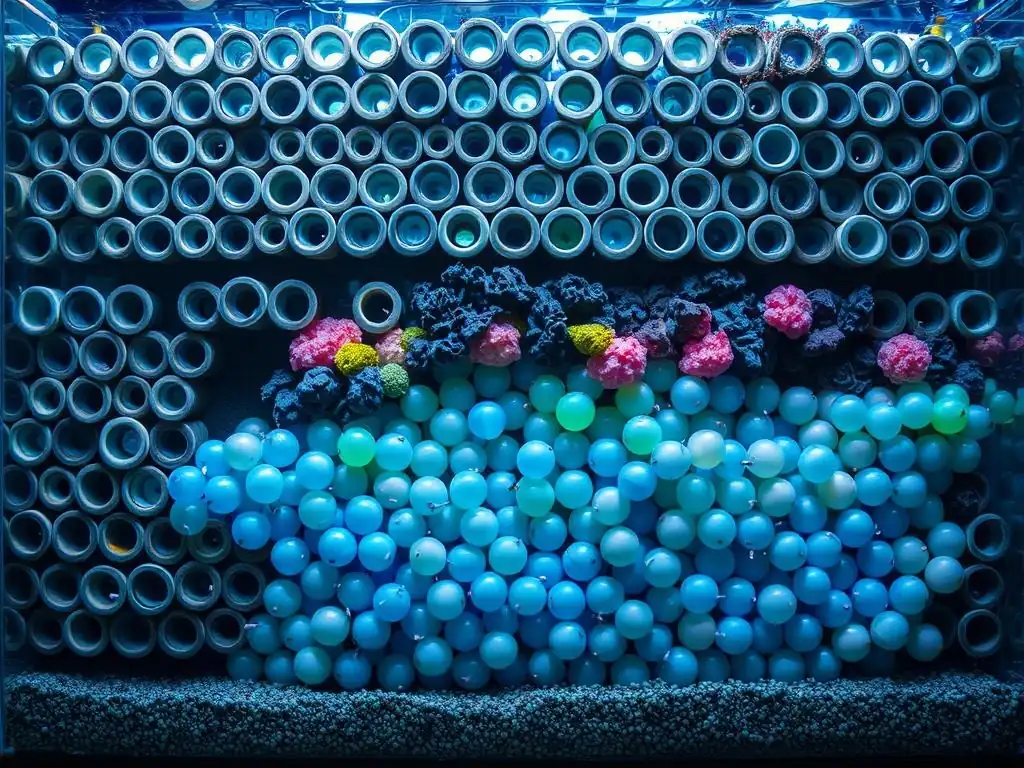
Biological filter media provides the vast surface area necessary for the colonization and proliferation of nitrifying bacteria, which are the workhorses of the nitrogen cycle. Unlike mechanical media that physically trap particles, biological media is designed to offer an optimal environment for these beneficial bacteria to thrive. Materials like ceramic rings, bio-balls, sintered glass, and specialized porous sponges are engineered with intricate structures to maximize their surface area.
For instance, a single liter of high-quality biological media can provide thousands of square feet of surface area, significantly more than simple mechanical sponges. This extensive surface allows a large population of bacteria to establish, ensuring efficient conversion of ammonia and nitrite into nitrate, which is critical for maintaining stable and non-toxic water parameters in an aquarium.
Optimizing Biological Filtration
Optimizing biological filtration involves several key factors to ensure the beneficial bacteria can perform their vital function efficiently. Firstly, adequate surface area is paramount; using high-quality biological media designed for maximum porosity and internal surface area will allow a larger colony of bacteria to establish. Secondly, these bacteria are aerobic, meaning they require a constant supply of oxygen. Ensuring good water flow through the biological media and proper aeration of the aquarium water (e.g., via air stones or surface agitation) is crucial for their survival and activity.
Furthermore, maintaining stable water parameters, particularly pH and temperature, within the optimal range for nitrifying bacteria (typically pH 7.0-8.5 and temperatures between 70-80°F or 21-27°C) will promote their growth and efficiency. Avoiding sudden large changes in these parameters, or the use of certain medications, can prevent significant die-offs in the bacterial colony. A well-established biological filter in a 50-gallon aquarium, for example, can process several milligrams per liter of ammonia daily, preventing dangerous spikes.
Cycling Your Aquarium
Cycling an aquarium is the process of establishing a mature and stable biological filter before introducing fish, ensuring that the nitrogen cycle is fully functional. This critical initial step prevents fish from being exposed to toxic ammonia and nitrite levels. The process typically involves adding an ammonia source (either pure ammonia, fish food, or hardy "starter" fish for a fish-in cycle) and regularly testing water parameters.
During a fishless cycle, which is generally recommended for its safety and efficiency, ammonia levels will initially rise, followed by a spike in nitrite, and finally, a rise in nitrate as the bacteria colonies establish. This process can take anywhere from 4 to 8 weeks, depending on temperature, pH, and the efficiency of ammonia dosing. Only once ammonia and nitrite consistently read zero, and nitrates are present, is the aquarium considered fully cycled and safe for fish.
Chemical Filtration: Polishing and Purifying Water
Understanding Chemical Filtration
Chemical filtration involves the use of specialized media that remove dissolved contaminants from aquarium water through processes like adsorption, ion exchange, or chemical reaction. Unlike mechanical filtration which removes visible particles, or biological filtration which processes nitrogenous waste, chemical filtration targets invisible pollutants that can cause odors, discoloration, and accumulate to harmful levels. These pollutants include tannins from driftwood, medications, heavy metals, phosphates, nitrates, and other organic compounds that contribute to poor water quality.
This type of filtration is particularly useful for "polishing" the water, making it crystal clear and free of yellowing, and for addressing specific water chemistry issues. It acts as a supplementary layer of purification, enhancing the overall effectiveness of the best aquarium filter media mix by tackling issues that mechanical and biological methods cannot.
Types of Chemical Filter Media
The range of chemical filter media available is diverse, each designed to target specific dissolved pollutants. Activated carbon is perhaps the most widely used, renowned for its ability to adsorb a broad spectrum of organic compounds, odors, and discolorations, making water sparkling clear. It's a staple in many an effective filter media mix.
Other specialized media include phosphate removers, which are granular ferric oxide (GFO) or aluminum-based products designed to bind excess phosphates, a primary cause of algae blooms. Zeolites are effective at adsorbing ammonia, particularly useful during emergencies or for new setups. Ion-exchange resins can target specific ions like nitrates or silicates, providing precise control over water chemistry. Each type offers a unique benefit, allowing aquarists to tailor their filtration to specific water quality challenges.
Activated Carbon: Uses and Considerations
Activated carbon is a highly porous material that excels at adsorbing dissolved organic compounds, odors, and discolorations from aquarium water. Its vast internal surface area, created through a high-temperature activation process, allows it to trap a wide array of pollutants, making it invaluable for maintaining crystal-clear water and eliminating unpleasant smells. It's frequently included in the best aquarium filter media mix for general water clarity.
However, activated carbon has a finite lifespan; once its pores are saturated with adsorbed compounds, it loses effectiveness and can even begin to leach some trapped pollutants back into the water. For this reason, it typically needs to be replaced every 2 to 4 weeks. It should also be removed when medicating the aquarium, as it will absorb the medication, rendering it ineffective. While highly beneficial for general maintenance, its limitations require regular attention and replacement.
Choosing the Right Chemical Media
Selecting the appropriate chemical filter media depends entirely on the specific water quality issues you are trying to address. If your aquarium water appears yellowish, has an unpleasant odor, or you've recently treated for a disease, activated carbon is an excellent choice for general purification and polishing. For persistent algae problems, testing your phosphate levels is advisable; if high, a phosphate-removing media like granular ferric oxide (GFO) would be highly effective.
If you are struggling with persistently high nitrate levels despite regular water changes and a healthy biological filter, specialized nitrate-reducing resins can be incorporated into your filter media mix. For emergency ammonia spikes or during the initial cycling phase, zeolite can provide temporary relief by adsorbing ammonia directly. The best aquarium filter media mix for your tank will be one that is tailored to its unique chemical profile and inhabitants' needs.
Creating an Effective Filter Media Mix
Assessing Your Aquarium's Needs
Before assembling the best aquarium filter media mix, it's essential to thoroughly assess the specific needs of your aquarium. This involves considering several factors: the tank's size and bioload (how many fish and how messy they are), the type of fish (e.g., high-waste producers like Oscars versus cleaner species), whether it's freshwater or saltwater, and the presence of live plants. A heavily stocked tank, for instance, will require more robust mechanical and biological filtration than a lightly stocked, heavily planted tank.
Water parameters also play a role; if you consistently struggle with high phosphates, then a dedicated phosphate remover should be a priority in your chemical filtration. Understanding these variables will guide your selection of media types and quantities, ensuring your filtration system is adequately equipped to handle the unique demands of your aquatic environment.
Combining Mechanical, Biological, and Chemical Media
The most effective aquarium filtration systems are those that strategically combine mechanical, biological, and chemical media to address all facets of water quality. Mechanical media, such as coarse sponges and fine filter floss, should always be the first line of defense, trapping large particles and preventing them from clogging subsequent media. This ensures optimal flow and efficiency for the entire filter.
Following mechanical filtration, biological media (e.g., ceramic rings, bio-balls, or high-porosity sponges) provides the critical surface area for nitrifying bacteria to thrive, converting toxic ammonia and nitrite. Finally, chemical media like activated carbon or specialized resins are placed last to polish the water, remove dissolved impurities, and address specific chemical imbalances. This layered approach creates a comprehensive and highly efficient filtration system, representing the best aquarium filter media mix for overall water health.
Layering Filter Media
The order in which filter media are layered within a filter is crucial for maximizing efficiency and prolonging media lifespan. The generally accepted and most effective layering strategy is to place mechanical filtration media first, followed by biological media, and finally chemical media. This sequence ensures that larger particulate matter is removed first by the mechanical media, preventing it from clogging the more delicate biological and chemical media.
For example, in a canister filter, water typically enters through a coarse sponge, then passes through a finer sponge or filter floss. After this mechanical pre-filtration, the water flows over biological media such as ceramic rings or bio-balls, allowing beneficial bacteria to thrive without being overwhelmed by debris. Lastly, the water passes through chemical media like activated carbon or specialized resins, which remove dissolved impurities and polish the water before it returns to the aquarium.
Filter Media Placement
The optimal placement of filter media varies depending on the type of filter being used, but the principle of flow and layering remains consistent. In hang-on-back (HOB) filters, media cartridges often come pre-loaded, but for customization, mechanical media (like a coarse sponge) should be placed where water first enters, followed by biological media (often integrated into the sponge or in a separate basket), and then chemical media (like activated carbon pouches).
For canister filters, which typically have multiple media baskets, the order is usually bottom-up or top-down depending on the filter's design, but always ensuring water passes through mechanical, then biological, then chemical. Sumps, popular in larger or saltwater setups, offer the most flexibility, allowing for dedicated chambers for mechanical filtration (e.g., filter socks), large volumes of biological media, and reactors for chemical media. Correct placement ensures that the water encounters each type of filtration in the most beneficial sequence.
Troubleshooting Filter Media Issues
Cloudy Water Solutions
Cloudy water is a common aquarium issue that often points to problems with mechanical filtration or an imbalance in the biological system. If the cloudiness is particulate (looks like dust or tiny floating debris), it typically indicates insufficient mechanical filtration or media that is saturated and needs cleaning or replacement. Upgrading to finer mechanical media, such as a finer micron filter sock or a denser filter floss, can often resolve this. Increasing the frequency of mechanical media cleaning (e.g., rinsing sponges weekly) can also help.
If the cloudiness is bacterial bloom (milky or hazy), it suggests an issue with the biological filter, often due to a new tank cycle, overfeeding, or a recent disruption. In such cases, ensure your biological media is healthy and not clogged, reduce feeding, and perform small, frequent water changes (e.g., 10-20% daily) to dilute ammonia/nitrite while the biological filter recovers. Avoid over-cleaning biological media with tap water, as this can worsen the bloom.
Addressing High Ammonia/Nitrite
Persistently high levels of ammonia or nitrite are critical indicators of a compromised biological filter and pose an immediate threat to fish health. The primary solution is to perform immediate and significant water changes (e.g., 25-50%) to dilute the toxins. Simultaneously, assess your biological filter media: ensure it's not clogged with debris, which can starve beneficial bacteria of oxygen. If mechanical media is excessively dirty, clean it, but avoid disturbing or cleaning biological media with tap water, as this can kill the bacteria.
Reducing the bioload by temporarily decreasing feeding (or stopping it for a day or two) will lessen the production of new ammonia. For severe spikes, consider adding an ammonia-neutralizing chemical additive, but understand this is a temporary fix, not a solution to the underlying biological filtration issue. In a new tank, high ammonia/nitrite simply means the tank is still cycling, and patience is key, along with careful monitoring and water changes.
Controlling Algae Blooms
Algae blooms, whether green water, hair algae, or brown diatoms, are often symptomatic of excess nutrients in the water, particularly nitrates and phosphates. While mechanical filtration can remove floating algae particles and biological filtration converts ammonia/nitrite to nitrate, chemical filtration plays a crucial role in nutrient export. Incorporating a phosphate-removing media into your filter media mix can significantly reduce the primary fuel for many algae types.
Additionally, ensuring your biological filter is robust and efficiently processing nitrogenous waste helps keep nitrates in check. Regular water changes (e.g., 25% weekly) are essential to dilute accumulated nitrates. Other strategies include controlling light intensity and duration (e.g., 8-10 hours daily), avoiding overfeeding, and ensuring all uneaten food and decaying plant matter are removed promptly, as these contribute to the nutrient load that fuels algae growth.
Advanced Filtration Techniques
Sumps for Enhanced Filtration
Sumps are external filtration systems, typically consisting of a separate tank located below the main aquarium, connected by plumbing that allows water to flow from the display tank to the sump and then be pumped back up. They offer significantly enhanced filtration capabilities compared to internal or hang-on-back filters due to their larger volume and customizable compartments. A typical 75-gallon marine aquarium might utilize a 20-gallon sump, providing substantial additional water volume and stability.
This increased space allows for much larger quantities of mechanical, biological, and chemical media, leading to superior water quality. Sumps can house filter socks for high-efficiency mechanical filtration, massive bio-blocks or media for extensive biological filtration, and dedicated sections for chemical media reactors (e.g., GFO or carbon reactors), protein skimmers, heaters, and auto top-off systems, keeping the main display tank clutter-free and visually appealing.
Protein Skimmers in Saltwater Aquariums
Protein skimmers are an indispensable component of filtration in most saltwater aquariums, particularly reef tanks. Their function is to remove dissolved organic compounds (DOCs) from the water before they can break down into ammonia and nitrite. They achieve this by creating a column of fine air bubbles within a reaction chamber; organic waste adheres to the surface of these bubbles and is then carried upwards into a collection cup, effectively removing pollutants from the water column.
A well-tuned protein skimmer in a 100-gallon reef tank, for example, can remove a significant amount of dark, foul-smelling skimmate daily, representing a substantial export of potential toxins. This proactive removal of organic waste helps to maintain low nitrate and phosphate levels, crucial for sensitive corals and invertebrates, and contributes significantly to the overall stability and clarity of marine water.
Nitrate Reduction Methods
While regular water changes are the most common method for reducing nitrates, several advanced techniques can further aid in nitrate control, especially in heavily stocked or larger aquariums. Live plants in freshwater aquariums are highly effective natural nitrate consumers, absorbing nitrates as a nutrient for growth. A heavily planted 50-gallon tank can maintain very low nitrate levels even with a moderate fish load.
For both freshwater and saltwater systems, specialized anaerobic zones can be created where denitrifying bacteria convert nitrate into harmless nitrogen gas. This can be achieved with deep sand beds (e.g., 4-6 inches deep), certain types of porous biological media designed to create anoxic zones internally, or dedicated nitrate reactors. These methods complement the standard filter media mix, providing a more comprehensive approach to long-term nitrate management.
Maintaining a Healthy Aquarium
Regular Water Testing
Regular water testing is a fundamental practice for maintaining a healthy and stable aquarium environment. It provides crucial insights into the effectiveness of your filter media mix and overall tank management, allowing you to identify and address potential issues before they escalate. Key parameters to test include ammonia, nitrite, nitrate, and pH. For a newly cycled tank, daily or every-other-day testing of ammonia and nitrite is essential until they consistently read zero.
For an established aquarium, weekly or bi-weekly testing is generally sufficient. Ammonia and nitrite should always be at zero. Nitrate levels should be kept low, ideally below 20 ppm for most freshwater tanks and even lower for sensitive marine setups (e.g., below 5 ppm for reef tanks). Consistent monitoring enables you to make informed decisions about water changes, feeding habits, and filter maintenance.
Consistent Filter Maintenance
Consistent and appropriate filter maintenance is critical for the long-term success of your aquarium and the efficacy of your filter media mix. Mechanical filter media, such as sponges and floss, should be rinsed or replaced regularly (e.g., weekly to monthly, depending on bioload) to prevent clogs and maintain optimal water flow. This step is vital to ensure that the biological and chemical media receive properly filtered water.
Biological media should be disturbed as little as possible during maintenance, ideally only rinsed gently in old tank water if flow becomes significantly impeded, perhaps every few months. Chemical media, like activated carbon, has a limited lifespan and typically needs replacement every 2-4 weeks to remain effective. Adhering to a consistent maintenance schedule ensures your filtration system operates at peak performance, contributing significantly to a stable and healthy aquatic environment.
Balanced Ecosystem for Long-Term Health
Achieving and maintaining a balanced ecosystem is the ultimate goal for long-term aquarium health, extending beyond just the filter media mix. It involves a holistic approach where filtration works in harmony with other critical factors: appropriate stocking levels (avoiding overpopulation), responsible feeding practices (not overfeeding), regular partial water changes (typically 10-25% weekly or bi-weekly), and proper lighting.
A well-chosen and maintained filter media mix provides the foundation for this balance by effectively managing waste products and ensuring clear, healthy water. However, it's the combination of all these elements—a robust filtration system, biological stability, chemical purity, and diligent husbandry—that allows an aquarium to thrive, creating a beautiful and sustainable aquatic habitat for its inhabitants for years to come.
Frequently Asked Questions
What is the best aquarium filter media mix for my tank?
There's no single "best" mix, as it depends on your aquarium's specific needs and inhabitants. A good starting point is a layered approach: mechanical filtration first, followed by biological, and then chemical, adjusting based on water parameters and fish load.
How often should I replace my aquarium filter media?
It varies by media type. Mechanical media like sponges should be rinsed regularly (weekly or bi-weekly) and replaced when they start to deteriorate. Biological media needs less frequent replacement, only when it becomes clogged or damaged. Chemical media has the shortest lifespan and needs regular replacement as per the manufacturer's instructions.
What is the difference between mechanical, biological, and chemical filtration?
Mechanical filtration removes particulate matter like uneaten food and debris. Biological filtration uses beneficial bacteria to convert harmful ammonia and nitrite into less toxic nitrate, essential for a healthy nitrogen cycle. Chemical filtration removes specific impurities like phosphates or tannins using adsorbents like activated carbon.
Can I use different types of filter media in the same aquarium?
Absolutely! In fact, using a combination of different media is highly recommended. This allows you to address all three aspects of filtration (mechanical, biological, and chemical) for optimal water quality and a thriving aquarium ecosystem.
What are some common mistakes people make when choosing aquarium filter media?
Overlooking the importance of biological filtration is a big one. Also, not tailoring the mix to the specific needs of their aquarium, or failing to maintain or replace media properly, can lead to water quality issues and harm to their fish.
Final Reflection: The Ever-Evolving Ecosystem of Aquarium Filtration
The quest for the best aquarium filter media mix is not merely about achieving crystal-clear water; it's about understanding and nurturing a thriving, miniature ecosystem. What we've explored in this guide highlights the delicate balance required to replicate nature's processes within the confines of a glass tank, a task that demands continuous learning and adaptation as our understanding of aquatic life deepens.
The impact of effective filtration extends far beyond aesthetic appeal. It's about the ethical responsibility we bear to provide a healthy and enriching environment for the creatures in our care. The choices we make regarding bio, mechanical, and chemical filtration directly influence their well-being and longevity. The best aquarium is not just a display of fish, but a testament to the keeper's understanding of their needs.
This quote encapsulates the essence of responsible aquascaping, reminding us that our actions have profound consequences for the lives entrusted to us.
So, as you embark on or continue your journey in aquarium keeping, remember that the "best aquarium filter media mix" is not a static formula, but a dynamic process of observation, experimentation, and refinement. Let the knowledge gained here inspire you to delve deeper into the science of aquatic ecosystems and to continuously strive for the optimal environment for your finned companions. Your dedication to their well-being will not only reward you with a beautiful and vibrant aquarium but also contribute to a greater appreciation for the intricate beauty of the natural world.
Revitalize Your Aquarium: Unleash Crystal-Clear Waters!
Thank you for diving into the world of aquarium filtration with us! We hope this guide has empowered you with the knowledge to choose the perfect filter media mix for a thriving aquatic environment. Now, it's time to put that knowledge into action and create a sparkling clean home for your fishy friends.
Here are some actionable steps you can take right away:
- Re-evaluate your current filter media: Based on what you've learned, are you using the optimal combination of mechanical, biological, and chemical filtration? Consider making adjustments to improve water quality.
- Share your filtration journey with other aquarium enthusiasts! Post a photo of your filter setup on social media and tag us @AquariumMastery. Let's learn from each other's experiences.
- Explore the science of aquarium keeping in more detail: Check out our other in-depth articles on water chemistry and specialized filtration techniques to deepen your understanding.
What innovative filtration strategies are you experimenting with in your aquarium? Share your tips and tricks in the comments below!