
Decoding Saltwater Angelfish Behavior: What Are They Telling You?

Welcome to Aquarium Mastery!
Ever wondered what your Saltwater Angelfish is really thinking? Dive in and unlock the Saltwater Angelfish Behavior Secrets they're trying to tell you! From subtle fin movements to complex social interactions, we'll help you decode their fascinating world. Curious to learn more? Let's explore!
- Understanding Saltwater Angelfish Behavior: An Introduction for Aquarists
- Deciphering Common Saltwater Angelfish Behavior Patterns
- Saltwater Angelfish Behavior Secrets: Identifying Subtle Cues
- Addressing Problematic Saltwater Angelfish Behavior
- Optimizing Your Aquarium for Positive Saltwater Angelfish Behavior
- Advanced Saltwater Angelfish Behavior: Observing and Learning
- Conclusion: Mastering the Art of Understanding Saltwater Angelfish Behavior
-
Frequently Asked Questions
- How can I identify if my saltwater angelfish is stressed?
- What are some common signs of aggression in saltwater angelfish?
- What is the typical social behavior of saltwater angelfish in a reef tank?
- What does it mean when my saltwater angelfish is constantly hiding?
- How do saltwater angelfish communicate with each other in the aquarium?
- Final Reflection: Unveiling the Ocean's Silent Language
- Unleash the Angelfish Whisperer Within!
Understanding Saltwater Angelfish Behavior: An Introduction for Aquarists
Why Understanding Angelfish Behavior is Crucial for Aquarium Success
Understanding the nuances of saltwater angelfish behavior is not merely an interesting academic exercise; it is fundamental to their long-term health and the overall success of a marine aquarium. These magnificent fish, known for their vibrant colors and regal swimming, are sensitive to their environment and tank mates.
Early detection of unusual saltwater angelfish behavior secrets can signal an impending health issue, such as parasitic infections or internal bacterial problems, allowing an aquarist to intervene before the condition becomes critical. A well-cared-for angelfish, whose behavioral cues are consistently observed, can live significantly longer, with species like the Emperor Angelfish (Pomacanthus imperator) potentially thriving for 15-20 years in a stable system, compared to just a few years for a stressed individual.
Furthermore, comprehending angelfish behavior is vital for maintaining tank harmony and preventing costly conflicts. Many angelfish species are known for their territoriality, and without proper understanding of their social dynamics, aggression can quickly escalate, leading to injuries, chronic stress, or even fatalities among tank inhabitants. By recognizing the subtle saltwater angelfish behavior secrets that indicate dominance displays or stress, aquarists can proactively adjust tank setups, introduce appropriate tank mates, or modify feeding strategies, fostering a peaceful and thriving community that benefits all fish.
Saltwater Angelfish Communication: Beyond the Obvious
Saltwater angelfish communicate in a multitude of ways that extend far beyond simple swimming patterns or obvious aggression. Their communication is a complex tapestry woven from subtle fin movements, rapid color changes, specific body postures, and even barely perceptible sounds. These are the true saltwater angelfish behavior secrets that discerning aquarists learn to decipher over time. For instance, a slight twitch of the dorsal fin might signal mild irritation, while a full flaring of fins indicates a strong territorial challenge.
Learning to interpret these subtle cues is paramount for effective husbandry. A healthy angelfish will exhibit consistent, predictable behaviors, but even minor deviations can be significant. A sudden, unexplained shift in swimming pattern, a reluctance to leave a hiding spot, or a subtle dulling of color can all be early warnings of stress, disease, or an imbalance in the aquarium environment. By paying close attention to these seemingly minor saltwater angelfish behavior secrets, aquarists gain invaluable insights into their fish's well-being and can respond promptly to their unspoken needs.
Deciphering Common Saltwater Angelfish Behavior Patterns
Interpreting Feeding Behaviors in Saltwater Angelfish
Aggressive Feeding vs. Timid Feeding: What it Means
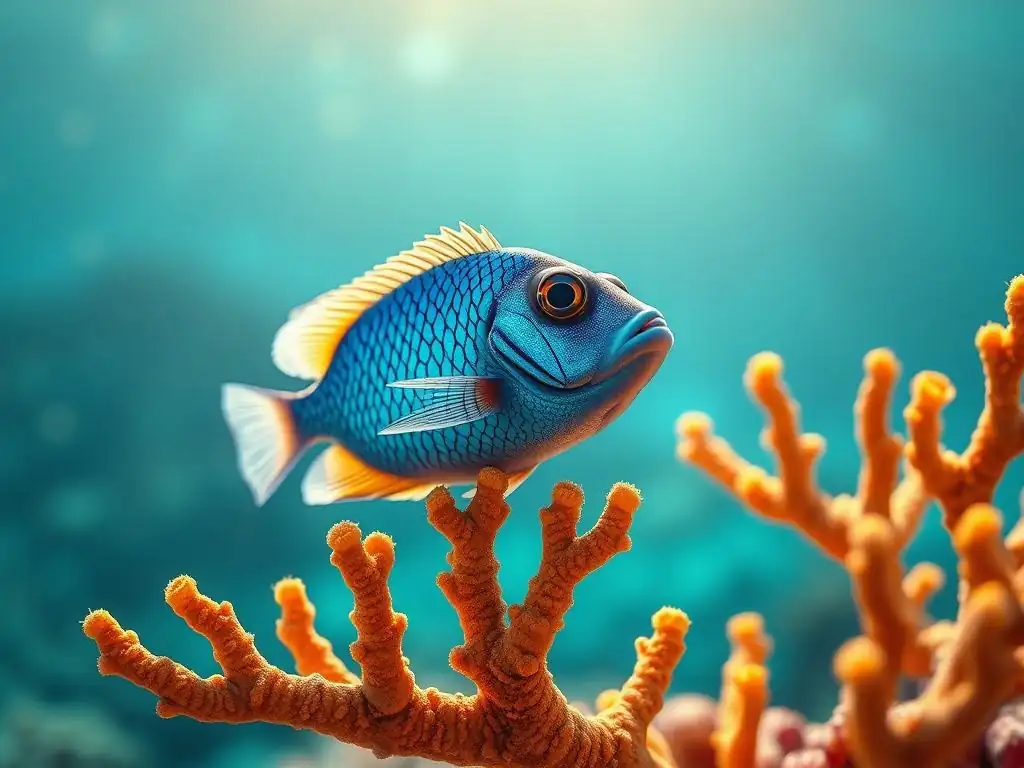
Observing feeding behavior provides critical insights into an angelfish's health and social standing. Aggressive feeding, characterized by rapid consumption, chasing other fish away from food, or guarding a specific feeding territory, can signify robust health and strong appetite. For example, a healthy Queen Angelfish (Holacanthus ciliaris) might consume its portion of frozen mysis shrimp in under 30 seconds, actively nudging away smaller tank mates to ensure it gets enough. While this can indicate good health, persistent aggression during feeding might also point to insufficient food quantity or an overly competitive tank environment, requiring adjustments to feeding schedules or amounts.
Conversely, timid feeding—where an angelfish approaches food hesitantly, waits for others to finish, or misses food entirely—is often a significant red flag. This behavior can stem from various issues, including stress due to a new environment, bullying from dominant tank mates, or the onset of illness. A newly introduced Emperor Angelfish (Pomacanthus imperator) might take several days to feed confidently, only nibbling at small amounts after the more established fish have had their fill. Such observations are crucial saltwater angelfish behavior secrets that prompt further investigation into water quality, tank mate compatibility, or potential health concerns.
Food Preferences and Their Impact on Angelfish Actions
Saltwater angelfish diets are highly varied, and understanding their specific food preferences is key to their health and behavior. Many species are omnivores with a significant herbivorous component, requiring a diet rich in algae and sponges.
A lack of preferred, nutritious foods can lead to detrimental behaviors such as picking at corals (especially for species like the Coral Beauty, Centropyge bispinosa, which can nip at stony corals if underfed) or increased aggression due to nutritional deficiencies. For instance, a Koran Angelfish (Pomacanthus semicirculatus) might become lethargic and refuse flake food if not regularly offered a varied diet including spirulina-based pellets, frozen marine preparations, and chopped seafood.
The active pursuit of specific food items or the rejection of previously accepted foods are important saltwater angelfish behavior secrets. A fish enthusiastically grazing on live rock for microalgae and sponges indicates natural, healthy foraging behavior. However, if an angelfish suddenly refuses its favorite food, it’s a strong indicator of stress, illness, or poor water quality. Observing these preferences and aversions allows aquarists to fine-tune their feeding regimen, ensuring not just satiety but also the nutritional completeness that underpins positive angelfish behavior and overall well-being.
Dominance Displays and Hierarchy in Angelfish Tanks
Within an aquarium, saltwater angelfish often establish a clear pecking order, particularly when multiple angelfish or similar-looking species are housed together. Dominance displays are common and can include fin flaring, rapid darting, chasing, body posturing, and even nipping. The dominant fish typically occupies prime swimming areas, the most desirable hiding spots, or controls access to food. For example, in a tank with multiple dwarf angelfish, the largest and most robust Flame Angelfish (Centropyge loriculus) might consistently chase a smaller Lemonpeel Angelfish (Centropyge flavissima) away from a preferred cave, asserting its superiority within that micro-territory.
While some level of dominance display is normal and helps maintain social structure, persistent or excessive aggression can be detrimental to the health of subordinate fish, leading to chronic stress, fin damage, or even death. Recognizing these saltwater angelfish behavior secrets early allows aquarists to intervene by adding more hiding spots, rearranging rockwork to break lines of sight, or, in severe cases, separating the aggressor. A healthy hierarchy sees minimal conflict once established, often just brief, ritualistic chases lasting only a few seconds, rather than continuous harassment.
Recognizing Signs of Stress and Bullying in Angelfish
Identifying signs of stress and bullying is crucial for the well-being of saltwater angelfish. Stressed angelfish often exhibit clamped fins (held tight against the body), rapid breathing (gilling), fading or dull colors, constant hiding, refusal to eat, or erratic swimming patterns. For instance, a normally vibrant Blueface Angelfish (Pomacanthus xanthometopon) might appear noticeably paler and spend all its time hiding behind rocks if its water parameters are unstable or it’s being harassed. These are critical saltwater angelfish behavior secrets that indicate distress and a weakened immune system, making the fish susceptible to diseases like Ich or Marine Velvet.
Signs of active bullying are often more overt and include torn fins, visible wounds, constant chasing by a dominant tank mate, and the bullied fish spending all its time confined to a small, undesirable area of the tank. If a smaller Coral Beauty Angelfish is perpetually cornered by a larger angelfish, or if its fins show consistent damage, it's a clear indication of bullying that requires immediate attention. Ignoring these behavioral cues can lead to severe health decline or even the loss of the bullied fish, underscoring the importance of understanding these saltwater angelfish behavior secrets.
Decoding Mating Rituals and Reproductive Behaviors of Angelfish
Courtship Displays: Identifying Potential Pairings
Observing courtship displays in saltwater angelfish is a fascinating aspect of their behavior, indicating potential pairings and readiness to spawn. These rituals often involve specific movements such as "shivering" or "quivering" motions, where the fish vibrates its body rapidly, fin extensions to display their full beauty, and synchronized swimming patterns like swimming in tight circles or figure-eights together.
Color intensification, where their hues become more vibrant and striking, is also a common part of the display. For instance, a pair of French Angelfish (Pomacanthus paru) might be observed swimming in parallel, pressing their bodies together and ascending towards the water surface, often in the late afternoon or early evening.
Many angelfish species, particularly dwarf angelfish, are sequential hermaphrodites, meaning they can change sex. Consistent paired behavior observed over several days or weeks, especially when two fish repeatedly engage in these synchronized displays, is a strong indicator of a developing male-female bond. While spawning is more common in large, established tanks with compatible pairs, recognizing these saltwater angelfish behavior secrets of courtship is the first step towards potentially witnessing successful reproduction in captivity.
Spawning Behavior in a Captive Aquarium Environment
Spawning behavior in saltwater angelfish, while relatively rare for large species in home aquariums, is a pinnacle of observing their reproductive saltwater angelfish behavior secrets. The actual spawning event typically occurs at dusk or dawn. The paired angelfish will swim upwards in the water column, often pressing their bodies together, and release eggs and sperm simultaneously at the apex of their ascent.
The eggs are generally pelagic, meaning they are buoyant and float upwards, drifting with the current. A single spawn can involve hundreds to thousands of microscopic eggs, although the vast majority will not survive in a community tank due due to predation or environmental factors.
For dwarf angelfish species like the Flame Angelfish (Centropyge loriculus) or Coral Beauty (Centropyge bispinosa), spawning in captivity is more frequently reported, particularly in dedicated breeding setups. Even if the eggs are not viable or are consumed by other tank inhabitants, the post-spawning behavior can be telling. The pair might exhibit increased territoriality around the general area where the eggs were released, or they might engage in further courtship displays the following evenings. Successfully observing these saltwater angelfish behavior secrets requires patience, a stable environment, and often, a bit of luck.
Saltwater Angelfish Behavior Secrets: Identifying Subtle Cues
Color Changes as Indicators of Angelfish Health and Mood
Color changes are among the most telling saltwater angelfish behavior secrets, providing immediate visual cues about a fish's health and emotional state. Vibrant, intense, and consistent coloration typically indicates a healthy, happy, and well-adjusted angelfish. The hues of a healthy Emperor Angelfish, for example, will be deep blue and bright yellow, consistently displayed across its body.
Conversely, fading, dull, patchy, or unusually dark colors often signal stress, illness, poor water quality, or fear. A Blueface Angelfish (Pomacanthus xanthometopon) might display noticeably paler blue and yellow hues if water parameters are off, such as a sudden drop in salinity or a spike in nitrates, or if it's being persistently bullied.
Beyond health, color shifts can also reflect an angelfish's mood or current activity. Some angelfish temporarily darken their colors when they are aggressive, excited during feeding, or when attempting to camouflage. Others might lighten their coloration when resting, feeling submissive to a dominant tank mate, or at night. Learning to recognize these subtle, temporary shifts versus prolonged dullness is key to decoding these saltwater angelfish behavior secrets. Establishing a baseline for your individual fish's coloration under various conditions allows you to quickly identify any deviation that might warrant further investigation.
Body Language Signals: Fin Positioning and Posture
The positioning of an angelfish's fins and its overall body posture offer a rich lexicon of saltwater angelfish behavior secrets. Fins held tightly clamped against the body are a classic sign of stress, illness, or discomfort due to unsuitable water temperatures. A healthy angelfish, conversely, typically swims with its fins broadly spread, using them for propulsion, balance, and display, especially the dorsal and anal fins, which will be erect and flowing. When a fish is alert and healthy, its pectoral fins will be actively sculling, providing fine control.
Beyond fin positioning, the entire body posture communicates volumes. A fish swimming normally, upright, and with purpose is generally healthy and content. Any deviation from this, such as listing to one side, swimming erratically, or remaining motionless at the bottom or surface for extended periods, are concerning saltwater angelfish behavior secrets that strongly signal a problem. For instance, a fish struggling with buoyancy issues due to an internal infection might struggle to maintain an upright posture, often floating head-up or head-down. Observing these subtle shifts in posture and fin usage is crucial for proactive care.
Sounds and Other Subtle Communication Methods
While not all saltwater angelfish produce sounds audible to the human ear without specialized equipment, some species, particularly larger ones, are known to produce grunting, clicking, or thumping noises. These sounds are often associated with territorial disputes, dominance displays, or courtship rituals, though they are rarely heard by the average aquarist. These acoustic signals, though subtle, are part of their complex communication repertoire and represent deeper saltwater angelfish behavior secrets.
Other subtle communication methods and behavioral cues include:
- Erratic Swimming: Sudden darting, twitching, or "flashing" (rubbing against tank decor or substrate) can indicate external parasites or skin irritation. A fish repeatedly scraping itself against a rock, for example, is often attempting to dislodge something irritating its skin.
- Yawning: While sometimes a normal stretching behavior, frequent or prolonged "yawning" (opening the mouth wide) can signal gill irritation, poor water quality, or even a respiratory issue.
- Shivering/Quivering: As mentioned in courtship, but can also be a sign of extreme cold or stress if not associated with breeding.
- Pacing: Repeatedly swimming back and forth along the front glass can indicate boredom, stress, or a desire for more space.
These saltwater angelfish behavior secrets require close and consistent observation to distinguish normal, fleeting behaviors from persistent patterns that signal underlying issues.
Addressing Problematic Saltwater Angelfish Behavior
Causes of Aggression and How to Mitigate It
Overcrowding and Territoriality Issues
One of the primary causes of aggression in saltwater angelfish is insufficient space, leading to overcrowding and exacerbated territoriality. Angelfish, especially larger species like the Emperor Angelfish (Pomacanthus imperator) or French Angelfish (Pomacanthus paru), require substantial territory to feel secure and prevent conflict.
When housed in a tank that is too small, their natural territorial instincts become amplified, leading to constant stress and aggression towards tank mates. For example, attempting to house two large angelfish in a 120-gallon tank, which is often considered the minimum for a single adult, will almost certainly result in severe and persistent aggression, as they lack the space to establish distinct territories.
Mitigating aggression stemming from overcrowding involves ensuring the aquarium is adequately sized for the adult angelfish species and its tank mates. A single large angelfish often requires a minimum of 180-200 gallons. Additionally, strategic aquascaping with ample live rock can help. Creating multiple caves, overhangs, and visual barriers breaks up lines of sight, allowing subordinate fish to retreat and hide from dominant individuals. Rearranging rockwork when introducing new fish or if aggression persists can also help "reset" territories, providing a fresh start for saltwater angelfish behavior secrets to normalize.
Incompatible Tank Mates and Their Impact
Another significant contributor to problematic angelfish aggression is the introduction of incompatible tank mates. Some fish species are simply not suitable companions for angelfish due to temperament, size disparities, or specific dietary needs. Fast-moving, fin-nipping species like certain damselfish can stress angelfish, while overly passive or small fish may become targets for bullying. Conversely, housing an angelfish with highly aggressive species like some triggerfish or large puffers can lead to the angelfish itself being intimidated or injured.
To prevent such conflicts, thorough research into species compatibility is essential before any new fish introduction. Generally, select tank mates that share similar water parameter requirements and a compatible temperament. Avoid pairing large, potentially aggressive angelfish with very small, docile fish that cannot defend themselves.
For instance, a large Queen Angelfish might view small gobies or blennies as food items. A good rule of thumb is to ensure tank mates are either too large to be bullied, too fast to be caught, or possess a temperament that complements the angelfish's. Understanding these saltwater angelfish behavior secrets regarding social dynamics is key to a peaceful community.
Dealing with Stress and Anxiety in Saltwater Angelfish
Identifying Stressors in the Aquarium Environment
Identifying stressors in the aquarium environment is the first step towards mitigating stress and anxiety in saltwater angelfish. Common culprits include fluctuating or poor water quality (e.g., ammonia or nitrite spikes, unstable pH, incorrect salinity), inappropriate temperatures, insufficient hiding spots, constant bright lighting, loud noises or vibrations near the tank, and, as discussed, aggressive tank mates. A sudden drop of 0.5 pH units or a nitrate level exceeding 40 ppm can immediately induce stress behaviors like clamped fins or loss of appetite in sensitive species.
Consistent observation of saltwater angelfish behavior secrets is crucial for pinpointing stressors. Notice if the fish exhibits stress behaviors only when a certain light is on, or when a specific tank mate approaches. Regular and accurate water testing (at least once a week for parameters like salinity, temperature, pH, ammonia, nitrite, and nitrate) allows for proactive adjustments, preventing the stress-inducing parameter swings that often precede illness. A detailed log of water parameters alongside behavioral observations can help identify correlations and patterns.
Implementing Strategies to Reduce Stress
Once stressors are identified, implementing appropriate strategies is vital for reducing stress and anxiety in saltwater angelfish. Maintaining stable and pristine water parameters is paramount; this includes consistent salinity (1.023-1.025 specific gravity), temperature (74-78°F or 23-26°C), pH (8.1-8.4), and undetectable ammonia and nitrite levels. Regular partial water changes (10-20% weekly or bi-weekly) are essential for keeping nitrates low (ideally below 20 ppm) and replenishing trace elements.
Beyond water quality, providing ample hiding spots (caves, overhangs, dense rockwork) allows angelfish to retreat when they feel threatened or need to rest, significantly reducing their stress levels. Ensuring an appropriate lighting cycle (typically 10-12 hours on, 12-14 hours off) and minimizing sudden loud noises or vibrations near the tank also contribute to a calm environment. A varied and nutritious diet boosts the fish's immune system, making them more resilient to stress. For social species, ensuring appropriate group sizes or a peaceful community can alleviate loneliness or bullying, fostering positive saltwater angelfish behavior secrets.
Optimizing Your Aquarium for Positive Saltwater Angelfish Behavior
Creating a Suitable Environment: Tank Size and Aquascaping
The cornerstone of positive saltwater angelfish behavior lies in providing an appropriately sized and thoughtfully aquascaped environment. Tank size is paramount; for large angelfish species like the Emperor Angelfish (Pomacanthus imperator) or French Angelfish (Pomacanthus paru), a minimum of 125-180 gallons is often recommended for a single adult, and significantly more for multiple individuals. Dwarf angelfish, such as Flame Angelfish (Centropyge loriculus), can thrive in smaller tanks, typically 30-70 gallons, but still benefit from larger volumes. An undersized tank is a leading cause of stress, stunted growth, and aggressive saltwater angelfish behavior secrets due to limited territory.
Aquascaping plays a crucial role in shaping angelfish behavior. Provide ample live rock arranged to create numerous caves, overhangs, and swim-throughs. These structures offer security, define territories, and provide grazing opportunities for species that feed on microalgae and sponges. Arranging rockwork to break up lines of sight is equally important, as it minimizes constant visual contact between tank inhabitants, thereby reducing confrontations and fostering a more peaceful environment. A well-designed aquascape encourages natural behaviors like foraging and exploration, contributing to a healthy and happy angelfish.
Maintaining Water Quality for a Healthy and Happy Angelfish
Pristine and stable water quality is non-negotiable for promoting positive saltwater angelfish behavior secrets. Angelfish are notoriously sensitive to fluctuations in water parameters. Consistent salinity (e.g., 1.023-1.025 specific gravity), stable temperature (74-78°F or 23-26°C), a steady pH (8.1-8.4), and undetectable levels of ammonia and nitrite are crucial. Any deviation from these ideal conditions can quickly lead to stress-related behaviors, suppressed immune function, and susceptibility to disease.
To achieve and maintain these conditions, robust filtration is essential, typically involving a sump, a high-quality protein skimmer, and a generous amount of live rock. Regular partial water changes (10-20% weekly or bi-weekly) are vital for diluting nitrates (aim for below 20 ppm) and replenishing essential trace elements. Consistent water testing, ideally at least once a week, allows aquarists to monitor parameters proactively and make timely adjustments, preventing the stress-inducing swings that can negatively impact saltwater angelfish behavior secrets and overall health.
Choosing Compatible Tank Mates for Saltwater Angelfish
Choosing compatible tank mates is a critical aspect of optimizing your aquarium for positive saltwater angelfish behavior. The wrong companions can lead to chronic stress, aggression, or even the demise of your angelfish. General principles for compatibility include selecting species that share similar water parameter requirements and temperaments. Avoid overly aggressive fish that might bully the angelfish, and conversely, avoid extremely timid or small species that the angelfish might intimidate or consume.
Specific examples of generally compatible tank mates for angelfish, depending on the angelfish species and tank size, can include certain tangs (if the tank is large enough), some clownfish, and various wrasses. However, it's crucial to research each specific angelfish species, as some large angelfish are known to be less "reef-safe" than others, meaning they might nip at corals or invertebrates. For instance, a Potters Angelfish (Centropyge potteri) is generally considered more reef-safe than a larger Emperor Angelfish.
Avoiding small, slow-moving invertebrates if your angelfish species is known to nip is also a wise precaution. Careful selection ensures a harmonious environment, allowing the angelfish to display its natural, positive saltwater angelfish behavior secrets.
Advanced Saltwater Angelfish Behavior: Observing and Learning
Keeping a Behavior Log: Documenting and Analyzing Angelfish Actions
For the dedicated aquarist, keeping a detailed behavior log is an advanced yet incredibly valuable technique for truly understanding saltwater angelfish behavior secrets. A log allows you to systematically document observations, track changes over time, and correlate specific behaviors with environmental factors or events. This goes beyond casual observation, providing a structured way to identify subtle patterns that might otherwise go unnoticed. You can record daily activity levels, feeding enthusiasm, specific interactions with tank mates, color vibrancy, and any unusual fin positioning or swimming patterns.
Over weeks or months, this documented data can reveal crucial insights. For example, you might notice that your angelfish displays a specific stress behavior only after a particular tank maintenance routine, or that courtship displays consistently occur at a certain time of day. This log becomes a powerful diagnostic tool, helping you pinpoint the exact triggers for problematic behaviors or confirm the success of new husbandry strategies. It transforms anecdotal observations into actionable data, deepening your mastery of saltwater angelfish behavior secrets.
Consulting with Experts: When to Seek Professional Advice
Even the most experienced aquarists encounter puzzling saltwater angelfish behavior secrets or health issues that challenge their knowledge. Recognizing the limitations of your own expertise and knowing when to seek professional advice is a sign of responsible fish keeping. If your angelfish exhibits prolonged abnormal behavior, shows signs of illness that do not respond to standard care, or displays severe, intractable aggression that threatens other tank inhabitants, it's time to consult an expert.
Sources of professional advice include experienced local fish store staff with a strong reputation for marine fish health, reputable online forums populated by veteran aquarists and experts, or, for serious health concerns, an aquatic veterinarian. These professionals can offer specialized insights, diagnostic assistance (such as identifying specific diseases from behavioral symptoms), or provide tailored treatment recommendations based on their extensive knowledge of fish behavior and health. Their expertise can be invaluable in decoding complex saltwater angelfish behavior secrets and ensuring the best possible outcome for your fish.
The Future of Angelfish Behavior Research in Aquariums
The understanding of saltwater angelfish behavior secrets is an evolving field, with scientific studies continually revealing new insights into their social structures, communication methods, and reproductive triggers in captive environments. Advances in technology, such as high-resolution underwater cameras, sophisticated behavioral tracking software, and genetic analysis, are contributing to a deeper scientific appreciation of these complex fish. Researchers are exploring how environmental enrichment affects angelfish welfare, and how specific cues influence their breeding success in aquaculture settings.
Beyond formal scientific research, the collective observations and data shared by hobbyist aquarists contribute significantly to this growing body of knowledge. Citizen science efforts, where enthusiasts document their findings and share them with the wider community, help expand our collective understanding of these fascinating creatures. This collaborative approach fosters a deeper appreciation for the intricate saltwater angelfish behavior secrets, ultimately leading to better care practices, more successful breeding programs, and a greater understanding of marine life in general.
Conclusion: Mastering the Art of Understanding Saltwater Angelfish Behavior
Mastering the art of understanding saltwater angelfish behavior secrets is an ongoing journey that transforms basic aquarium husbandry into a truly rewarding experience of animal welfare. It is the fundamental key to ensuring the health, longevity, and overall happiness of these magnificent marine inhabitants. By meticulously observing their feeding patterns, social interactions, subtle body language, and even the nuances of their coloration, aquarists gain an unparalleled insight into their fish's well-being, allowing for proactive interventions that prevent stress and disease.
Ultimately, every saltwater angelfish is an individual, and by dedicating time to continuous observation and learning, aquarists can decipher their unique cues and unspoken communication. This deep understanding allows for the creation of an optimal aquarium environment where these vibrant and intelligent fish can not only survive but truly thrive, showcasing their natural behaviors and enriching the lives of those who care for them.
Frequently Asked Questions
How can I identify if my saltwater angelfish is stressed?
Stressed saltwater angelfish often exhibit behaviors like erratic swimming, loss of appetite, and faded coloration. Observing these signs early is crucial for intervention.
What are some common signs of aggression in saltwater angelfish?
Aggression in angelfish can manifest as chasing, nipping at fins, and establishing dominant territories. Providing ample space and hiding places can mitigate these issues.
Saltwater angelfish exhibit varying social behaviors, from solitary existence to forming pairs or small groups, depending on the species and tank size. Researching the specific species is essential.
What does it mean when my saltwater angelfish is constantly hiding?
Constant hiding can indicate stress, illness, or bullying from other tank inhabitants. Check water parameters and observe tank dynamics closely.
How do saltwater angelfish communicate with each other in the aquarium?
Angelfish communicate through a combination of body language, fin displays, and color changes. Observing these subtle cues helps understand their interactions.
Final Reflection: Unveiling the Ocean's Silent Language
The insights shared in this article, revealing the saltwater angelfish behavior secrets, are more than just observations; they are a key to understanding the delicate balance within our coral reefs. In a time where these vibrant ecosystems face unprecedented threats, deciphering the nuances of angelfish communication becomes crucial for effective conservation efforts and responsible aquarium keeping. By understanding their signals, we can become better stewards of the ocean.
This journey into the world of angelfish has profoundly impacted my perspective, highlighting the interconnectedness of all life beneath the waves. Recognizing the complexity and intelligence behind their seemingly simple actions underscores the responsibility we have to protect their habitats. In the end, we will conserve only what we love; we will love only what we understand; and we will understand only what we are taught.
- Baba Dioum. This quote resonates deeply, reminding us that education and understanding are the cornerstones of conservation.
Now, armed with this newfound knowledge of saltwater angelfish behavior, I encourage you to look beyond the surface. Observe, learn, and connect with these magnificent creatures on a deeper level. Let the secrets you've uncovered inspire you to advocate for their protection and to contribute to a future where these vibrant fish continue to thrive in their natural environment. Let's all strive to become better listeners to the silent language of the ocean.
Unleash the Angelfish Whisperer Within!
Thanks for diving deep into the captivating world of Saltwater Angelfish! We hope you’ve gained valuable insights into deciphering their unique behaviors and creating a thriving aquarium environment. Now, let's put that knowledge into action!
Here are a few ways to further connect with these majestic creatures:
- Initiate a "Behavioral Log": Begin recording the daily behaviors of your Angelfish, noting any changes or patterns that emerge. This is the #1 way to turn knowledge into experience.
- Explore unconventional tank enrichment strategies: Try introducing new rock formations, challenging their natural foraging instincts and adding mental stimulation.
- Share your observations! Comment below on your biggest angelfish behavioral discovery.
What unique behavior has your saltwater angelfish exhibited that has surprised or intrigued you the most?