
Featherfin Cichlids of Tanganyika: An Introduction to Graceful Giants

Welcome to Aquarium Mastery, fellow aquarist!
Ever been captivated by the regal presence of a Featherfin Cichlid? Imagine these graceful giants thriving in your own aquarium. This guide unveils the secrets to a successful Featherfin cichlid tank setup, from water parameters to the perfect tank mates. Curious to learn how to create a slice of Lake Tanganyika in your living room? Let's dive in!
- Cyathopharynx furcifer: An Introduction to Featherfin Cichlids
- Understanding Cyathopharynx furcifer: An Overview for Aquarium Keepers
- Cyathopharynx furcifer Tank Setup: Creating the Ideal Habitat
- Choosing the Right Tank Mates for Cyathopharynx furcifer
- Cyathopharynx furcifer Care: Feeding, Maintenance, and Health
- Breeding Cyathopharynx furcifer: A Rewarding Challenge
- Different Color Variants of Cyathopharynx furcifer: Exploring the Varieties
- The Allure of Cyathopharynx furcifer: Why They Captivate Aquarists
-
Frequently Asked Questions
- What size tank is recommended for a Featherfin Cichlid tank setup?
- What are the ideal water parameters for a Featherfin Cichlid tank setup?
- What type of substrate and decorations should I use in a Featherfin Cichlid tank setup?
- What are some suitable tank mates for Featherfin Cichlids in a community tank setup?
- What should I feed Featherfin Cichlids in my tank setup?
- Final Reflection: Embracing the Featherfin's Majesty
- Dive Deeper into the World of Featherfins!
Cyathopharynx furcifer: An Introduction to Featherfin Cichlids
Understanding Cyathopharynx furcifer: An Overview for Aquarium Keepers
What are Cyathopharynx furcifer? A Tanganyika Native
Cyathopharynx furcifer, commonly known as the Featherfin Cichlid, is a magnificent species native to the vast depths of Lake Tanganyika in East Africa. These elegant fish are renowned for the distinctive, elongated, and often vibrantly colored dorsal and caudal fins of the males, which resemble delicate feathers, giving them their evocative common name. In their natural habitat, Featherfin cichlids typically inhabit open-water sandy or rocky-sandy transitional zones, often at depths ranging from 5 to 30 meters (16 to 98 feet), where they sift through the substrate for food.
Males of this species can reach an impressive size of 8 to 10 inches (20-25 cm) in length, while females remain somewhat smaller, usually growing to about 6 to 7 inches (15-18 cm). Their bodies exhibit striking iridescence, with males displaying a more intense palette of blues, yellows, and oranges, especially when mature and during breeding displays. While generally peaceful for their size, particularly when provided with an appropriate Featherfin cichlid tank setup, males can exhibit territorial behavior towards other males.
Why Choose Cyathopharynx furcifer for Your Aquarium?
Choosing Cyathopharynx furcifer for your aquarium offers a truly captivating experience for the dedicated aquarist. Their unique beauty, characterized by their graceful, undulating swimming style and the males' breathtaking finnage, makes them an undeniable centerpiece in a large display tank. Observing their intricate social interactions and elaborate courtship rituals is a constant source of fascination, distinguishing them from many other cichlid species.
Beyond their aesthetic appeal, Featherfin cichlids provide a rewarding challenge for intermediate to advanced keepers. Successfully maintaining a thriving Featherfin cichlid tank setup, tailored to their specific needs, allows aquarists to delve deeper into the nuances of Lake Tanganyika biotope aquariums. Their relatively peaceful disposition, compared to some other large cichlids, also opens up possibilities for carefully selected community tank arrangements, making them a highly desirable species for those seeking a majestic and engaging aquatic inhabitant.
Cyathopharynx furcifer Tank Setup: Creating the Ideal Habitat
Tank Size Requirements for Cyathopharynx furcifer
Establishing the correct tank size is the foundational step for any successful Featherfin cichlid tank setup. Due to their adult size, active swimming habits, and social dynamics, these fish require substantial space. A minimum tank size of 75 gallons (approximately 280 liters) is recommended for a small group consisting of one male and three to four females. However, for a larger community or to accommodate multiple males and a more extensive harem, a tank of 100 to 125 gallons (375-470 liters) or more is significantly better.
The length of the aquarium is often more crucial than its height for Featherfin cichlids, as they are open-water swimmers and need ample horizontal swimming space. A tank that is at least 48 inches (120 cm) long is a good starting point, with 60 to 72 inches (150-180 cm) being ideal for a mature group to ensure adequate territory and reduce potential aggression. Providing generous swimming lanes is paramount for a healthy and stress-free Featherfin cichlid tank setup.
Substrate and Decor for a Cyathopharynx furcifer Tank
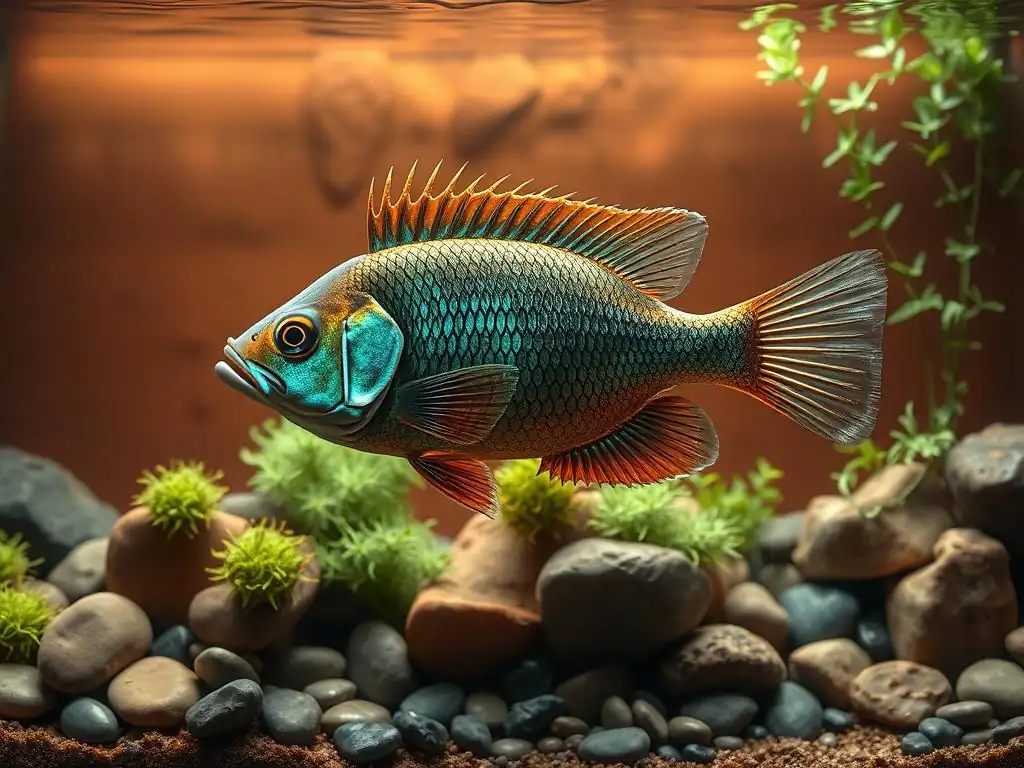
The choice of substrate is a critical element in a proper Featherfin cichlid tank setup. Fine, soft sand, such as play sand or pool filter sand, is absolutely essential. These cichlids are natural sifting mouthbrooders; they frequently sift through the sand in search of food particles and the males will dig depressions in the substrate as spawning sites. Coarse gravel can injure their delicate mouths and gills, leading to health issues. A sand bed of at least 2-3 inches (5-7.5 cm) deep allows for natural digging behaviors.
When it comes to decor, the aim is to replicate their natural environment while providing functional spaces. While Cyathopharynx furcifer are not primarily rock-dwelling cichlids, incorporating scattered rock formations or slate caves can provide visual breaks, offer secure hiding spots for females, and serve as potential territorial markers for males. Ensure that any rockwork is stable and securely placed directly on the tank bottom glass to prevent collapses from their digging activities. The overall design of your Featherfin cichlid tank setup should prioritize open swimming areas, allowing these graceful fish to display their natural movements.
Water Parameters: Replicating the Tanganyika Environment
Achieving the Correct pH and Hardness for Cyathopharynx furcifer
Replicating the unique water chemistry of Lake Tanganyika is fundamental for a thriving Featherfin cichlid tank setup. Lake Tanganyika water is famously hard and alkaline, and your aquarium should reflect these conditions. Maintain a stable pH level between 7.8 and 9.0, with an optimal range typically falling between 8.2 and 8.6. Achieving and maintaining this high pH can be done by using buffering substrates like crushed coral or aragonite sand, or by employing specialized cichlid buffers available in the aquarium trade.
Equally important are the general hardness (GH) and carbonate hardness (KH) levels. For Cyathopharynx furcifer, aim for a GH of 10-20 dGH (degrees of general hardness) and a KH of 10-15 dKH (degrees of carbonate hardness). These parameters contribute to the stability of the pH and provide essential minerals. While hitting these exact figures is ideal, consistency is key; avoid sudden fluctuations in water chemistry, as these can be more stressful to the fish than slightly off but stable parameters in your Featherfin cichlid tank setup.
Temperature and Water Circulation for Cyathopharynx furcifer
Maintaining the correct temperature is vital for the metabolic health and activity of Cyathopharynx furcifer. The ideal temperature range for these Tanganyikan cichlids is between 76-82°F (24-28°C), with a consistent 78°F (26°C) often considered optimal. For larger tanks required for a Featherfin cichlid tank setup, it is advisable to use two appropriately sized heaters, one at each end of the aquarium, to ensure even heat distribution and provide a backup in case one unit fails.
Regarding water circulation, Cyathopharynx furcifer do not typically inhabit areas with strong currents in the wild, preferring more moderate flow. However, good water movement is still beneficial for overall water quality, oxygenation, and preventing stagnant spots within the tank. The flow provided by robust filtration systems (canister filters or powerful HOB filters) is usually sufficient. Avoid creating turbulent areas, as this can stress these open-water swimmers.
Filtration and Lighting for Cyathopharynx furcifer Tank Setup
Robust and efficient filtration is non-negotiable for a healthy Featherfin cichlid tank setup. Given their size and the volume of waste they produce, a powerful external canister filter is highly recommended, or even multiple large hang-on-back (HOB) filters. The total filtration capacity should aim for a turnover rate of at least 5-10 times the tank volume per hour. This ensures effective mechanical filtration to remove particulate matter, ample biological filtration to process ammonia and nitrites, and chemical filtration (e.g., activated carbon) to maintain water clarity and remove odors.
Lighting for a Cyathopharynx furcifer tank setup should be moderate. While these fish display stunning colors, they do not require intense illumination. Standard LED aquarium lighting is perfectly adequate to observe their beauty and simulate a natural day/night cycle, typically 10-12 hours of light per day. Overly bright lighting can sometimes stress these fish, causing them to appear washed out or seek more cover. As live plants are generally not a feature in a Cyathopharynx furcifer biotope due to their digging habits, high-PAR plant lights are unnecessary.
Choosing the Right Tank Mates for Cyathopharynx furcifer
Compatible Fish Species for a Cyathopharynx furcifer Community Tank
Selecting appropriate tank mates is crucial for the harmony and success of your Featherfin cichlid tank setup. The best companions are other peaceful to semi-aggressive Tanganyikan cichlids that thrive in similar hard, alkaline water conditions and are of a comparable size or temperament. Excellent choices include other open-water Tanganyikans such as Cyprichromis species (e.g., Cyprichromis leptosoma), which occupy different swimming levels and add dynamic movement.
Larger, more robust Tanganyikan species like Cyphotilapia frontosa (Frontosa Cichlids) can also coexist peacefully, provided the tank is sufficiently large (125 gallons or more) to accommodate their size and territorial needs. Other suitable companions might include certain Julidochromis species or Altolamprologus species, which tend to be more rock-oriented and less likely to directly compete for space with the open-water swimming Featherfins. The key is to ensure all tank mates can tolerate the specific water parameters required for a thriving Featherfin cichlid tank setup.
Fish to Avoid: Incompatible Tank Mates
When planning your Featherfin cichlid tank setup, it's equally important to know which fish to avoid. Small, timid, or slow-moving species are generally not suitable, as they may be intimidated or even preyed upon by the larger Cyathopharynx furcifer. Conversely, highly aggressive or overly territorial cichlids, particularly many species from Lake Malawi (e.g., Mbuna), should be strictly avoided. Their aggressive nature and often differing dietary and territorial requirements make them incompatible.
Furthermore, any fish that requires soft, acidic water conditions, such as many South American cichlids or common community fish like tetras or guppies, will not thrive in the hard, alkaline environment necessary for Featherfin cichlids. Similarly, fin-nipping species should be excluded to protect the magnificent, flowing fins of the Cyathopharynx furcifer males. Maintaining a species-specific or carefully curated Tanganyikan biotope community will ensure the well-being of all inhabitants in your Featherfin cichlid tank setup.
Cyathopharynx furcifer Care: Feeding, Maintenance, and Health
Diet and Feeding Habits of Cyathopharynx furcifer
In their natural Lake Tanganyika habitat, Cyathopharynx furcifer are primarily micro-predators, sifting through sand for small invertebrates and zooplankton. To replicate this in your Featherfin cichlid tank setup, a varied and high-quality diet is essential. Offer a staple of premium cichlid pellets or flakes formulated for Tanganyikan species, ensuring they contain a good balance of protein and vegetable matter.
Supplementing their diet with frozen or live foods will significantly enhance their health and coloration. Excellent choices include mysis shrimp, brine shrimp, daphnia, and spirulina-enriched foods. It's beneficial to feed small amounts two to three times a day rather than one large meal, which mimics their natural grazing behavior and prevents overfeeding, thus reducing organic waste in the aquarium. A proper diet is crucial for preventing common health issues and maintaining vibrant fish in your Featherfin cichlid tank setup.
Water Changes and Tank Maintenance for Cyathopharynx furcifer
Regular and consistent water changes are the cornerstone of successful Cyathopharynx furcifer care and a healthy Featherfin cichlid tank setup. Due to their size and the volume of waste they produce, weekly water changes of 20-30% of the tank volume are highly recommended. This routine helps to dilute accumulated nitrates, replenish essential minerals consumed by the fish and buffering capacity, and maintain the stable, pristine water quality that these fish demand.
Beyond water changes, comprehensive tank maintenance includes regular gravel vacuuming, particularly in the sandy areas where debris can settle. For sand substrates, gently siphon off any detritus that accumulates on the surface. Filter media should be cleaned periodically, typically by rinsing in old tank water to preserve beneficial bacterial colonies, and replaced as needed. Wiping down the tank glass to remove algae and checking all equipment (heaters, filters) for proper function are also vital steps in maintaining an optimal Featherfin cichlid tank setup.
Common Diseases and Health Issues in Cyathopharynx furcifer
Like all aquarium fish, Cyathopharynx furcifer can be susceptible to common freshwater diseases if their environmental conditions are not ideal or if they experience prolonged stress. Issues such as Ich (white spot disease), various bacterial infections (e.g., fin rot, body sores), and fungal infections are often indicators of poor water quality, inadequate diet, or sudden fluctuations in water parameters. Recognizing early signs of illness, such as clamped fins, lethargy, or unusual spots, is crucial for timely intervention.
Prevention is always the best approach. Maintaining a meticulously clean Featherfin cichlid tank setup with stable, optimal water parameters is the primary defense against disease. A balanced, nutritious diet and avoiding overcrowding also contribute significantly to their immune health. When introducing new fish, a strict quarantine period of at least three to four weeks in a separate tank is highly advisable to prevent the introduction of pathogens into your main display aquarium.
Recognizing and Treating Bloat in Cyathopharynx furcifer
Cichlid bloat, or Malawi bloat, is a severe and potentially fatal condition that can affect Cyathopharynx furcifer, although it is more commonly associated with Mbuna cichlids. It is often linked to an improper diet (e.g., too high in protein, insufficient fiber) or internal parasites. Symptoms include a distended abdomen, loss of appetite, white and stringy feces, labored breathing, and general lethargy. If left untreated, the fish's internal organs can fail.
Immediate action is required if bloat is suspected. Isolate the affected fish in a hospital tank and begin treatment with an appropriate medication, such as Metronidazole, which targets internal parasites and bacterial infections. Prevention, however, is paramount: ensure your Featherfin cichlid tank setup provides a diet with adequate vegetable matter and avoid overfeeding. Maintaining excellent water quality and minimizing stress factors are also critical in preventing this devastating condition.
Breeding Cyathopharynx furcifer: A Rewarding Challenge
Creating Breeding Conditions for Cyathopharynx furcifer
Breeding Cyathopharynx furcifer can be a highly rewarding experience, provided the correct conditions are met in your Featherfin cichlid tank setup. A spacious, well-established aquarium with pristine and stable water parameters (high pH, high hardness, consistent temperature around 78-80°F or 26-27°C) is fundamental. A high-quality, varied diet rich in protein and spirulina will help condition the adults for spawning.
To encourage breeding, it is best to keep a group of one male with several females (e.g., a ratio of 1 male to 3-5 females) to disperse the male's attention and minimize stress on individual females. Males will establish territories, often clearing a patch of sand or choosing a flat rock as a spawning site. Providing ample open sand areas and a few scattered rocks for security will facilitate natural breeding behaviors within your Featherfin cichlid tank setup.
Spawning Behavior and Egg Care
Cyathopharynx furcifer are maternal mouthbrooders, meaning the female carries the eggs and fry in her mouth for protection. During courtship, the male will display his vibrant colors and elaborate fins, enticing the female to his chosen spawning site. The female will lay a small batch of eggs, immediately pick them up into her mouth, and then nudge the male's anal fin, which has egg spots, to stimulate him to release milt (sperm). She then takes the milt into her mouth to fertilize the eggs. This process repeats until all eggs are laid and collected.
Once the eggs are fertilized and safely in her buccal cavity, the female will become reclusive and may not eat for the duration of the brooding period, which typically lasts between 21 and 28 days, depending on the water temperature. It is crucial to minimize disturbance to the brooding female in your Featherfin cichlid tank setup, as stress can cause her to swallow or spit out the eggs prematurely. Some aquarists may choose to gently "strip" the female of her eggs after about 10-14 days for higher fry survival rates in a separate rearing tank.
Raising Cyathopharynx furcifer Fry: From Hatching to Juvenile
When the female Cyathopharynx furcifer releases her fry, they are relatively large and fully free-swimming, making them easier to raise compared to many other cichlid species. If left in the main Featherfin cichlid tank setup, some fry may survive, but many will likely be preyed upon by other tank inhabitants or even the parents. For optimal survival rates, it is highly recommended to move the brooding female (or the stripped eggs/fry) to a dedicated grow-out tank.
Once released, the fry can be fed finely crushed high-quality flake food, newly hatched brine shrimp, or specialized cichlid fry food multiple times a day. The grow-out tank should have pristine water conditions, requiring frequent small water changes (10-20% daily or every other day) and gentle filtration, such as a sponge filter, to prevent accidental intake of the tiny fry. With consistent care and abundant feeding, the fry will grow rapidly, transitioning from hatching to juvenile size within a few months, ready to eventually join a larger Featherfin cichlid tank setup.
Different Color Variants of Cyathopharynx furcifer: Exploring the Varieties
Cyathopharynx furcifer "Furcifer": Characteristics and Care
The term "Furcifer" often refers to the wild-type or nominal forms of Cyathopharynx furcifer found across various geographical locations within Lake Tanganyika. These variants display a broad spectrum of natural beauty, typically characterized by iridescent blue bodies, often with hints of yellow or orange in the fins, particularly in mature males. The "feather-like" dorsal and caudal fins, from which they derive their common name, are prominent and often exhibit stunning patterns and elongated rays.
Care for the "Furcifer" variant largely aligns with the general guidelines for a Featherfin cichlid tank setup: a spacious aquarium (minimum 75-100 gallons), a fine sand substrate, stable and high pH/hardness water parameters (pH 8.2-8.6, GH 10-20 dGH), and a varied diet. Their robust nature and adaptability, within their specific environmental needs, make them a popular and accessible choice for aquarists looking to experience the allure of these Tanganyikan giants.
Cyathopharynx furcifer "Zambia": Unique Traits and Tank Requirements
Among the many geographical variants of Cyathopharynx furcifer, the "Zambia" variant is particularly prized for its exceptionally vibrant and distinct coloration. Originating from the Zambian coast of Lake Tanganyika, these fish often showcase more intense yellow, orange, or even red hues in their fins, providing a striking contrast to their iridescent blue or purple bodies. The "Zambia" typically exhibits a more pronounced "feather" effect in the male's fins, making them a breathtaking addition to any cichlid collection.
While their aesthetic appeal is unique, the fundamental Featherfin cichlid tank setup requirements for the "Zambia" variant remain consistent with other C. furcifer populations. They still demand large tanks, pristine and hard alkaline water, and a diet rich in high-quality foods to maintain their intense coloration and overall health. Due to their heightened popularity and often higher market value, dedicated aquarists frequently provide even more meticulous care to ensure these magnificent specimens thrive and display their full, captivating beauty.
The Allure of Cyathopharynx furcifer: Why They Captivate Aquarists
The Graceful Movements and Striking Appearance of Cyathopharynx furcifer
The primary allure of Cyathopharynx furcifer lies in their extraordinary grace and captivating appearance. Unlike many bottom-dwelling or rock-hugging cichlids, Featherfin cichlids are open-water swimmers, displaying an elegant, almost balletic movement through the water. This graceful undulation, combined with the males' magnificent, flowing dorsal and caudal fins, creates a mesmerizing spectacle that few other freshwater fish can rival.
When mature, a male Cyathopharynx furcifer becomes a living jewel, with his body shimmering in iridescent blues, purples, and yellows, often accentuated by the vibrant hues in his expansive fins. This striking visual appeal, coupled with their unique swimming style, makes them an immediate focal point in any well-designed Featherfin cichlid tank setup. Observing their natural behaviors, from territorial displays to subtle social interactions, adds another layer of fascination, solidifying their status as one of the most desirable Tanganyikan cichlids.
Challenges and Rewards of Keeping Cyathopharynx furcifer
Keeping Cyathopharynx furcifer presents specific challenges that make them a species best suited for experienced aquarists. The foremost challenge involves providing the extensive space required for a proper Featherfin cichlid tank setup, typically 75 gallons or more, to accommodate their size and active nature. Meticulous water quality management, including maintaining precise and stable hard, alkaline water parameters, is also critical and demands consistent effort and monitoring.
Despite these demands, the rewards of successfully keeping and potentially breeding Cyathopharynx furcifer are immense. Witnessing their vibrant colors, intricate social behaviors, and the stunning courtship displays of the males provides an unparalleled sense of accomplishment. The opportunity to replicate a slice of Lake Tanganyika's unique ecosystem in your home, and perhaps even raise their graceful fry, makes the investment of time and effort into their specialized Featherfin cichlid tank setup truly worthwhile for dedicated enthusiasts.
Frequently Asked Questions
What size tank is recommended for a Featherfin Cichlid tank setup?
A minimum of 75 gallons is generally recommended for a small group, but larger tanks (125 gallons or more) are preferable to accommodate their size and natural behavior. This allows for adequate swimming space and territorial displays.
What are the ideal water parameters for a Featherfin Cichlid tank setup?
Featherfin Cichlids thrive in hard, alkaline water. Aim for a pH between 7.8 and 9.0, with a general hardness (GH) between 10-20 dGH. Consistent water changes are crucial.
What type of substrate and decorations should I use in a Featherfin Cichlid tank setup?
Use a sandy substrate to mimic their natural environment. Provide plenty of rock formations and caves for shelter and breeding sites, remembering to create stable structures.
What are some suitable tank mates for Featherfin Cichlids in a community tank setup?
Choose other Tanganyikan cichlids of similar size and temperament. Avoid overly aggressive or small, delicate species that may become prey. Research compatibility carefully.
What should I feed Featherfin Cichlids in my tank setup?
Offer a varied diet consisting of high-quality cichlid pellets, frozen foods (like mysis shrimp and brine shrimp), and occasional vegetable matter. This ensures proper nutrition and coloration.
Final Reflection: Embracing the Featherfin's Majesty
The journey into understanding the Featherfin Cichlid's unique needs underscores a broader truth: successful aquascaping isn't just about aesthetics; it's about creating thriving ecosystems. The meticulous planning required for a Featherfin cichlid tank setup, as we've explored, mirrors the dedication needed to nurture any complex environment, be it aquatic or terrestrial. The principles of water chemistry, territorial awareness, and appropriate tankmates are not merely guidelines for fishkeeping, but lessons in responsible stewardship.
This exploration has profoundly impacted my perspective on aquarium keeping, highlighting the responsibility we bear when bringing a piece of the wild into our homes. It's a constant reminder that these creatures are not decorations, but living beings with intricate needs and behaviors. In the end, we will conserve only what we love; we will love only what we understand; and we will understand only what we are taught.
- Baba Dioum. This quote perfectly encapsulates the spirit of responsible fishkeeping, urging us to learn and appreciate the delicate balance we strive to recreate.
Now, armed with this knowledge, I encourage you to reflect on your own relationship with the natural world. Consider how you can apply the principles of careful planning, responsible stewardship, and deep understanding, not just to your aquarium, but to every aspect of your life. Let the graceful giants of Lake Tanganyika inspire you to create environments, both literal and metaphorical, where life can flourish and beauty can thrive.
Dive Deeper into the World of Featherfins!
Thank you for exploring the fascinating world of Featherfin Cichlids with us! Now that you've discovered their unique charm and care requirements, it's time to take the next step.
Here are some ways to further your Featherfin journey:
- Start Planning Your Own Tanganyikan Paradise: Delve into researching tank mates and designing an environment that mimics Lake Tanganyika.
- Share Your Awe: Show one of your friends this article, and see if they find as much interest into the featherfins as you do!
- Explore Rare Variants: Research the different color variations and unique morphs of Featherfin Cichlids – you might just find your dream fish!
What aspect of Featherfin Cichlid care are you most excited to implement in your aquarium?