
Cardinal Tetra Unveiled: Richer Reds, Specific Needs – The Complete Care Guide

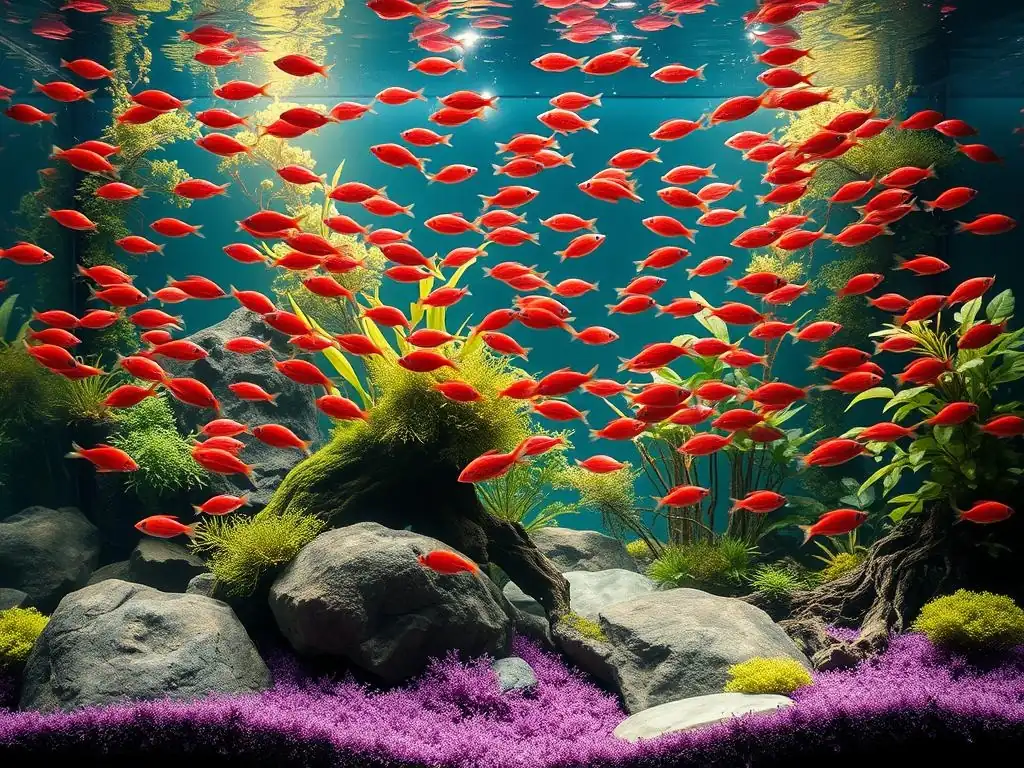
Welcome to Aquarium Mastery!
Ever wondered how to truly unlock the dazzling potential of your Cardinal Tetras? This isn't just another fish profile; it's your key to vibrant colors, thriving health, and a captivating underwater world. Dive into our Cardinal Tetra Care Guide and discover the secrets to creating the perfect habitat for these shimmering jewels. Ready to transform your aquarium? Let's get started!
- Introduction to Cardinal Tetras: A Vibrant Addition to Your Aquarium
- Optimizing Your Aquarium for Cardinal Tetra Health and Happiness
- Cardinal Tetra Diet and Feeding: Ensuring Optimal Nutrition
- Cardinal Tetra Tank Mates: Compatibility and Community Tank Dynamics
- Cardinal Tetra Health and Disease Prevention: A Proactive Approach
-
Breeding Cardinal Tetras: A Challenging but Rewarding Endeavor
- Creating a Breeding Tank: Mimicking Natural Spawning Conditions
- Identifying Male and Female Cardinal Tetras: Physical Characteristics
- Spawning Behavior: Observing the Cardinal Tetra Breeding Process
- Caring for Cardinal Tetra Fry: Ensuring Survival and Growth
- Raising Cardinal Tetra Fry: Food and Water Quality Requirements
- Troubleshooting Common Cardinal Tetra Problems
- Advanced Cardinal Tetra Care: Taking Your Expertise to the Next Level
- Conclusion: Mastering the Art of Cardinal Tetra Care
-
Frequently Asked Questions
- What are the ideal water parameters for Cardinal Tetras?
- What is the best food to feed Cardinal Tetras?
- How often should I perform water changes in a Cardinal Tetra tank?
- What tank size is recommended for a school of Cardinal Tetras?
- What are some common diseases that affect Cardinal Tetras and how can I prevent them?
- Final Reflection: The Enduring Allure of the Cardinal Tetra
- Ignite Your Aquarium: Rediscover Cardinal Tetra Splendor!
Introduction to Cardinal Tetras: A Vibrant Addition to Your Aquarium
Why Choose Cardinal Tetras for Your Freshwater Tank?
Cardinal Tetras (Paracheirodon axelrodi) are renowned for their striking beauty, making them a top choice for aquarists seeking to add a splash of vibrant color to their freshwater setups. Their most defining feature is the brilliant, iridescent blue stripe running horizontally above a vivid red stripe that extends the entire length of their body, from snout to tail. This intense coloration, often more pronounced than that of their close relatives, the Neon Tetras, makes them stand out, especially when kept in a healthy, thriving school.
Beyond their aesthetic appeal, Cardinal Tetras are celebrated for their peaceful demeanor, which makes them ideal inhabitants for a well-maintained community aquarium. They exhibit fascinating schooling behavior, moving in synchronized patterns that create a dynamic and visually captivating display. While they do have specific water parameter requirements, which are crucial for any comprehensive Cardinal tetra care guide, their hardiness once acclimated to a stable environment means they can be a rewarding long-term addition, often living for 3 to 5 years under optimal conditions.
Brief Overview of Cardinal Tetra Origins and Natural Habitat
Cardinal Tetras originate from the slow-moving, blackwater rivers and tributaries of the Amazon Basin, primarily found in the Rio Negro and Orinoco River systems in South America. These natural habitats are characterized by incredibly soft, acidic water, often stained dark brown by the tannins released from decaying leaves and wood. The dense canopy overhead, coupled with the tea-colored water, results in a dimly lit environment, which influences their natural coloration and behavior.
The substrate in their native waters typically consists of fine sand and a thick layer of leaf litter, providing ample hiding spots and a rich source of microorganisms. Mimicking these conditions in an aquarium is fundamental to a successful Cardinal tetra care guide. Understanding their origins highlights the importance of specific water chemistry, subdued lighting, and appropriate tank décor to ensure their well-being and encourage their natural behaviors, allowing them to display their richest hues.
Understanding the Difference: Cardinal Tetra vs. Neon Tetra
While often confused due to their similar appearance, Cardinal Tetras and Neon Tetras (Paracheirodon innesi) are distinct species with key differences that impact their care. The most prominent visual distinction lies in the red stripe: in Cardinal Tetras, the vibrant red stripe extends fully from the gill plate to the tail, whereas in Neon Tetras, the red stripe only runs from the middle of the body to the tail. Additionally, the blue stripe on a Cardinal Tetra tends to be a more intense, iridescent blue compared to the Neon Tetra's slightly duller blue.
In terms of size, Cardinal Tetras are generally slightly larger, reaching up to 2 inches (5 cm) in length, while Neon Tetras typically max out around 1.5 inches (3.8 cm). More critically for a Cardinal tetra care guide, Cardinals are often considered more sensitive to water parameter fluctuations and generally require softer, more acidic water conditions than their Neon counterparts, which are somewhat more adaptable. This sensitivity means that precise attention to water chemistry is even more paramount for the long-term health of Cardinal Tetras.
Optimizing Your Aquarium for Cardinal Tetra Health and Happiness
Tank Size and Setup: Creating the Ideal Cardinal Tetra Habitat
When planning for Cardinal Tetras, tank size is a critical consideration for their well-being and natural schooling behavior. A minimum tank size of 15 to 20 gallons (approximately 57-76 liters) is recommended for a small school of 6 to 10 individuals. However, providing a larger tank, such as a 30-gallon (113-liter) or even 40-gallon (151-liter) breeder tank, offers significantly more stability in water parameters and allows for a larger school, which reduces stress and enhances their vibrant coloration. The length of the tank is more important than its height, as it provides ample swimming space for their active schooling.
The setup should aim to replicate their natural Amazonian blackwater environment. This includes a dark substrate, such as fine-grained sand or dark gravel, which helps to bring out their colors and reduce glare. Dense planting, particularly with fine-leaved plants like Java Moss or stem plants that provide cover, is highly beneficial. Incorporating driftwood and Indian almond leaves (catappa leaves) not only adds to the aesthetic but also releases beneficial tannins, mimicking their native soft, acidic, and dimly lit waters. This careful setup is a cornerstone of any effective Cardinal tetra care guide.
Water Parameters: Maintaining Pristine Conditions for Cardinal Tetras
Maintaining stable and precise water parameters is arguably the most crucial aspect of Cardinal tetra care, directly impacting their health, vibrancy, and longevity. These fish are particularly sensitive to fluctuations, making consistent monitoring and adjustment essential. Their natural habitat dictates specific requirements for pH, general hardness (GH), and carbonate hardness (KH), which must be met to prevent stress and disease.
The Importance of Water Chemistry: pH, GH, and KH for Cardinal Tetras
For Cardinal Tetras, the ideal pH range is acidic, typically between 5.0 and 7.0, with an optimal sweet spot often cited between 5.5 and 6.5. This low pH helps to mimic the blackwater conditions they thrive in. General Hardness (GH) should be very soft to soft, ideally ranging from 1 to 5 dGH (degrees of General Hardness), which corresponds to approximately 18 to 90 ppm.
Carbonate Hardness (KH), which acts as a pH buffer, should also be very low, ideally 0 to 3 dKH. Maintaining these low hardness levels is vital because higher hardness can lead to osmotic stress, impacting their ability to regulate water balance within their bodies and making them more susceptible to illness. Regular testing with reliable aquarium test kits is indispensable for a comprehensive Cardinal tetra care guide.
Temperature Requirements for Cardinal Tetra Well-being
The water temperature for Cardinal Tetras should be kept stable and within a specific range to ensure their well-being. An ideal temperature range is generally between 73°F and 81°F (23°C to 27°C). Fluctuations outside this range, especially sudden drops or spikes, can cause significant stress, weaken their immune systems, and make them prone to common fish diseases like Ich.
Maintaining a consistent temperature is best achieved with a reliable aquarium heater sized appropriately for the tank volume. Monitoring the temperature daily with an accurate thermometer is a simple yet critical step in preventing health issues and ensuring these delicate fish thrive in their environment.
Substrate and Decoration: Mimicking the Cardinal Tetra's Natural Environment
The choice of substrate and decorations plays a significant role in creating a comfortable and secure environment for Cardinal Tetras, directly influencing their stress levels and color vibrancy. A dark, fine-grained substrate, such as sand or very fine gravel, is highly recommended. This not only enhances their natural coloration by providing a contrasting background that makes their red and blue stripes pop but also mimics the silty riverbeds of their native Amazonian habitats. A darker substrate also reduces the amount of light reflected back into the water column, contributing to the subdued lighting conditions they prefer.
Beyond the substrate, incorporating ample decorations that provide cover and hiding spots is crucial. Dense live plants are paramount; species like Amazon Swords, Cryptocoryne, Anubias, and especially Java Fern or various mosses (like Java Moss) are excellent choices as they thrive in similar water conditions and offer the necessary refuge. Driftwood pieces, roots, and Indian almond leaves should also be included. These elements release beneficial tannins that tint the water, replicating the blackwater environment, which not only makes the fish feel more secure but also provides mild antiseptic properties and helps maintain the desired soft, acidic water parameters.
Filtration and Aeration: Essential for a Healthy Cardinal Tetra Tank
Effective filtration and adequate aeration are non-negotiable components of a successful Cardinal tetra care guide, directly impacting water quality and the fish's respiratory health. For Cardinal Tetras, a gentle filtration system is preferred, as strong currents can stress these small, delicate fish. Sponge filters are an excellent choice, providing biological and mechanical filtration with minimal water flow.
Hang-on-back (HOB) filters can also be used, but it's often beneficial to baffle the output to reduce the current, perhaps with a piece of sponge or a plastic bottle. Canister filters are suitable for larger tanks, offering comprehensive filtration while allowing for adjustable flow rates.
In addition to mechanical and biological filtration, chemical filtration (e.g., activated carbon) can be used intermittently to remove discolorations and odors, though it should be removed when medicating. Aeration, while important for oxygen exchange, should also be gentle. The surface agitation created by the filter output is often sufficient, but if not, a small air stone with a controlled air pump can be used.
The key is to ensure sufficient oxygenation without creating turbulent water movement, which can exhaust Cardinal Tetras and inhibit their natural schooling behavior. Regular maintenance of filtration media is vital to prevent the buildup of harmful nitrates and ammonia.
Cardinal Tetra Diet and Feeding: Ensuring Optimal Nutrition
What Do Cardinal Tetras Eat? A Comprehensive Dietary Guide
Cardinal Tetras are omnivores, with a natural diet in the wild consisting primarily of small invertebrates, insect larvae, and some plant matter. To ensure their vibrant coloration, robust health, and longevity in an aquarium setting, a varied and high-quality diet is essential. Relying solely on one type of food will not provide them with all the necessary nutrients, potentially leading to dull colors, stunted growth, and increased susceptibility to disease.
A comprehensive Cardinal tetra care guide emphasizes the importance of offering a diverse range of foods. Their small mouths necessitate appropriately sized food particles. This includes a staple of high-quality flakes or micro-pellets formulated for small tropical fish, supplemented with a variety of frozen and live foods. Providing a varied diet mimics the nutritional diversity they would encounter in their natural Amazonian environment and is crucial for meeting their dietary needs.
Recommended Foods for Cardinal Tetras: Flakes, Pellets, and Live Foods
For a staple diet, high-quality, color-enhancing micro-pellets or flakes specifically designed for small tropical fish are excellent choices. Look for brands that list fish meal, shrimp meal, and spirulina high on the ingredient list, indicating a good protein and plant matter balance. These should be fed daily. To supplement this, frozen foods are highly beneficial and should be offered 2-3 times per week. Excellent options include frozen bloodworms (small pieces), daphnia, and brine shrimp, which provide essential proteins and help maintain their vibrant red and blue hues. Always thaw frozen foods before feeding to prevent digestive issues.
Live foods are the gold standard for conditioning Cardinal Tetras, especially if you're considering breeding, and significantly boost their overall health and color. Live daphnia, microworms, and newly hatched brine shrimp are particularly well-received. These foods not only provide superior nutrition but also stimulate their natural hunting instincts. For very young fry, infusoria is the initial food source. When introducing new foods, observe their reaction to ensure they are consuming it readily and that it does not foul the water. A varied diet is a cornerstone of a successful Cardinal tetra care guide.
Feeding Schedule: How Often and How Much to Feed Your Cardinal Tetras
Establishing a consistent feeding schedule is important for the health and routine of your Cardinal Tetras. It is generally recommended to feed them 2 to 3 small meals per day. This approach prevents overfeeding at any single instance and ensures they receive a continuous supply of nutrients throughout their active periods. Feeding smaller, more frequent meals also helps maintain better water quality by reducing the amount of uneaten food that can decay and pollute the tank.
When feeding, the crucial rule is to offer only what your school of Cardinal Tetras can consume within 2 to 3 minutes. Any food left uneaten beyond this timeframe should be promptly removed using a fine mesh net or a gravel vacuum. This practice prevents food from rotting in the substrate, which can lead to spikes in ammonia and nitrates, detrimental to these sensitive fish. Observing their feeding behavior will help you fine-tune the exact quantity needed for your specific school size and activity level, ensuring they are well-nourished without compromising water quality.
Avoiding Overfeeding: Preventing Health Problems in Cardinal Tetras
Overfeeding is one of the most common mistakes in aquarium keeping and can lead to a cascade of health problems for Cardinal Tetras and the entire aquatic ecosystem. When too much food is introduced, it often goes uneaten, sinks to the bottom, and begins to decompose.
This decomposition process rapidly increases the levels of ammonia and nitrites in the water, both of which are highly toxic to fish and can cause severe stress, gill damage, and ultimately, death. Even if fish consume the excess food, it can lead to digestive issues, bloat, and fatty liver disease, significantly shortening their lifespan.
Beyond direct harm to the fish, overfeeding also contributes to poor water quality, which fosters the growth of undesirable algae and harmful bacteria. This necessitates more frequent and larger water changes, increasing maintenance effort. To prevent these issues, adhere strictly to the "2-3 minute" rule for feeding, remove any uneaten food promptly, and avoid feeding more than a few times a day. A disciplined feeding regimen is a fundamental aspect of any effective Cardinal tetra care guide, safeguarding both the fish's health and the tank's overall balance.
Cardinal Tetra Tank Mates: Compatibility and Community Tank Dynamics
Best Tank Mates for Cardinal Tetras: Peaceful and Compatible Species
Choosing appropriate tank mates is crucial for the well-being of Cardinal Tetras, as their peaceful and somewhat timid nature makes them susceptible to stress from aggressive or overly boisterous fish. The best companions are other small, similarly peaceful, and non-aggressive community fish that thrive in soft, acidic water conditions. Ideal choices include other small schooling tetras such as Rummy Nose Tetras (Hemigrammus rhodostomus), which share similar water parameter preferences and schooling behaviors, enhancing the visual appeal of the tank.
Other excellent options for a Cardinal tetra care guide include dwarf gouramis (like Honey Gouramis or Sparkling Gouramis), small species of Corydoras catfish (e.g., Panda Corys, Pygmy Corys), and Otocinclus catfish, all of which are peaceful bottom dwellers or algae eaters that won't bother the Tetras. Harlequin Rasboras are also compatible, offering a different splash of color. When selecting tank mates, ensure they are not large enough to consider Cardinal Tetras as prey and that their temperament aligns with the Cardinal Tetra's docile disposition, fostering a harmonious and stress-free environment.
Fish to Avoid: Aggressive Tank Mates That Can Harm Cardinal Tetras
Just as important as choosing compatible tank mates is knowing which fish to avoid to protect your Cardinal Tetras. Their small size and delicate fins make them vulnerable to aggression and predation. Any large, predatory, or overly aggressive fish should be strictly avoided. This includes popular but unsuitable species like large cichlids (e.g., Oscars, Jack Dempseys, or even larger Angelfish), which will view Cardinal Tetras as food.
Fin-nipping species, such as Tiger Barbs (Puntigrus tetrazona) or some larger Barb species, are also poor choices as they can stress and injure Cardinal Tetras, leading to disease. Similarly, very boisterous or fast-swimming fish that might outcompete them for food or stress them with constant movement should be avoided. Examples include some larger rainbowfish species or certain types of Danios.
Even some larger gouramis or Bettas, if not given ample space and hiding spots in a very large tank, can exhibit aggression towards smaller, more delicate fish. A cardinal rule of any Cardinal tetra care guide is to prioritize peace and safety in the community tank.
Schooling Behavior: The Importance of Keeping Cardinal Tetras in Groups
Cardinal Tetras are obligate schooling fish, meaning they naturally live in large groups in the wild and absolutely require the presence of their own kind to thrive in an aquarium. Keeping them in insufficient numbers, typically fewer than 6 individuals, can lead to severe stress, shyness, and a noticeable dulling of their vibrant colors. A small group makes them feel vulnerable, causing them to hide more often, become lethargic, and be more susceptible to disease.
For optimal health and to truly appreciate their natural behavior, a school of at least 10 to 12 Cardinal Tetras is highly recommended. In larger groups, they exhibit more confident and active schooling patterns, darting around the tank in a synchronized display that is truly captivating. The safety in numbers allows them to feel secure, reducing stress-related issues and encouraging them to display their most brilliant red and blue hues. This fundamental aspect of their social needs is a cornerstone of any effective Cardinal tetra care guide.
Maintaining a Balanced Ecosystem: Cardinal Tetras and Invertebrates
Integrating invertebrates into a Cardinal Tetra tank can contribute to a balanced and diverse ecosystem, provided the choices are compatible. Small, peaceful invertebrates can act as excellent tank cleaners, helping to manage algae and detritus. Amano Shrimp (Caridina multidentata) are highly recommended due to their diligent algae-eating habits and their relatively larger size, which makes them less likely to be seen as food by even adult Cardinal Tetras. Nerite Snails (Neritina natalensis) are another superb choice, as they are excellent algae grazers and will not reproduce excessively in freshwater.
While Cherry Shrimp (Neocaridina davidi) can co-exist with Cardinal Tetras, it's important to note that very young or newly hatched shrimp fry might be seen as a snack by the Tetras, especially in tanks without dense plant cover. However, adult Cherry Shrimp are generally safe. Avoid larger, predatory invertebrates such as many types of crayfish or large freshwater crabs, as these can easily injure or predate upon Cardinal Tetras. Maintaining a balanced ecosystem with appropriate invertebrates can enhance the tank's natural cleaning crew and add another layer of interest to your Cardinal tetra care guide.
Cardinal Tetra Health and Disease Prevention: A Proactive Approach
Common Cardinal Tetra Diseases: Identification and Treatment
Cardinal Tetras, like many aquarium fish, can be susceptible to various diseases, often exacerbated by poor water quality, stress, or improper tank conditions. While generally hardy once acclimated, their delicate nature makes them prone to certain ailments. Common issues include parasitic infections like Ich (white spot disease), bacterial infections such as Fin Rot, and fungal infections. It is crucial for any Cardinal tetra care guide to emphasize proactive prevention through consistent water quality, a stable environment, and a nutritious diet, as these factors significantly bolster their immune systems.
Observing your fish daily for any changes in behavior, appetite, coloration, or physical appearance is the first line of defense. Early identification of symptoms vastly improves the chances of successful treatment. Diseases can spread rapidly in a closed system, so prompt action is essential. Understanding the specific symptoms and treatment protocols for common Cardinal Tetra diseases is vital for maintaining a healthy and thriving school.
Ich (White Spot Disease) in Cardinal Tetras: Symptoms and Treatment Options
Ich, or Ichthyophthirius multifiliis, commonly known as white spot disease, is a highly contagious parasitic infection that Cardinal Tetras are susceptible to, particularly when stressed or introduced to new environments. Symptoms include the appearance of small, white spots resembling grains of salt scattered across the fish's body, fins, and sometimes gills. Infected fish may also exhibit "flashing" (rubbing their bodies against objects), rapid gill movement, lethargy, and a loss of appetite.
Treatment for Ich typically involves a combination of methods. One common approach is to slowly raise the tank temperature to 82-86°F (28-30°C) over 24-48 hours, if compatible with other tank inhabitants, as higher temperatures speed up the parasite's life cycle, making it more vulnerable to treatment. Concurrently, adding aquarium salt (1 tablespoon per 5 gallons) can help, or using over-the-counter Ich medications containing ingredients like malachite green or formalin.
Always remove activated carbon from the filter during medication, as it will absorb the treatment. Continue treatment for at least 7-10 days, even after symptoms disappear, to ensure all life stages of the parasite are eradicated.
Fin Rot in Cardinal Tetras: Causes, Prevention, and Treatment
Fin Rot is a common bacterial infection that can affect Cardinal Tetras, often stemming from poor water quality, physical injury, or chronic stress. It is characterized by the fins appearing frayed, ragged, or clamped, sometimes with a white or reddish edge where the tissue is decaying. In advanced cases, the fins may completely erode, and the infection can spread to the body, leading to secondary infections or even death.
Prevention is primarily focused on maintaining pristine water conditions through regular water changes (at least 25-30% weekly) and ensuring the tank is not overcrowded. Providing adequate hiding spots and peaceful tank mates also reduces stress, which can trigger the disease. If Fin Rot occurs, the first step is to perform several large water changes (e.g., 50% daily for a few days) to improve water quality immediately.
Mild cases might resolve with just improved water conditions and the addition of aquarium salt (1 teaspoon per gallon). More severe cases may require broad-spectrum antibacterial medications, such as those containing Furan-2 or erythromycin, following manufacturer instructions carefully.
Quarantine Procedures: Protecting Your Aquarium from Disease Outbreaks
Implementing a strict quarantine procedure for all new fish, including Cardinal Tetras, is one of the most effective disease prevention strategies in aquarium keeping. A dedicated quarantine tank, typically 5-10 gallons, allows you to observe new arrivals for signs of illness without exposing your established display tank inhabitants to potential pathogens. The quarantine period should last for a minimum of 2 to 4 weeks, during which the fish can be monitored for any symptoms of disease, parasites, or unusual behavior.
During quarantine, maintain stable water parameters, provide appropriate food, and observe closely. If any signs of illness appear, the fish can be treated in the quarantine tank without medicating the main aquarium, which can be stressful for healthy fish and may harm beneficial bacteria. This practice significantly reduces the risk of introducing diseases like Ich, Velvet, or bacterial infections, protecting your existing fish population and saving considerable time and expense on full-tank treatments. A robust quarantine protocol is an indispensable part of any responsible Cardinal tetra care guide.
Maintaining Water Quality: The Key to Preventing Cardinal Tetra Diseases
Maintaining pristine and stable water quality is the single most critical factor in preventing diseases and ensuring the long-term health of Cardinal Tetras. These fish are highly sensitive to fluctuations in water parameters and the presence of harmful nitrogenous compounds. Neglecting water quality is the primary cause of stress, weakened immune systems, and susceptibility to nearly all common fish ailments.
The cornerstone of excellent water quality is regular and consistent water changes. Performing a 25-30% water change weekly is generally recommended for a Cardinal Tetra tank. This dilutes nitrates, replenishes essential minerals, and removes accumulated organic waste.
Beyond water changes, consistent monitoring of key parameters—ammonia (0 ppm), nitrite (0 ppm), nitrate (below 20 ppm), pH (5.5-6.5), GH (1-5 dGH), and temperature (73-81°F)—is essential. Avoid overfeeding, which contributes to waste, and ensure your filtration system is adequately sized and regularly maintained. A dedicated commitment to water quality management is the backbone of any successful Cardinal tetra care guide, providing a stress-free and healthy environment for your vibrant school.
Breeding Cardinal Tetras: A Challenging but Rewarding Endeavor
Creating a Breeding Tank: Mimicking Natural Spawning Conditions
Breeding Cardinal Tetras in captivity is considered challenging but highly rewarding due to their specific requirements for spawning. To succeed, a dedicated breeding tank is essential, typically a small 5 to 10-gallon (19-38 liter) aquarium. The water parameters in this tank must meticulously mimic their natural spawning grounds in the Amazon: extremely soft water (0-1 dGH), highly acidic (pH 5.0-5.5), and very low in carbonates (0-1 dKH). Achieving these conditions often requires the use of reverse osmosis (RO) water, deionized (DI) water, or rainwater, carefully re-mineralized to the desired hardness.
The breeding tank should be dimly lit, as Cardinal Tetras are light-sensitive during spawning. A bare bottom is preferred to make egg collection easier, or a layer of glass marbles can be used to protect eggs from being eaten by the parents. Providing spawning material is crucial; fine-leaved plants like Java Moss (Taxiphyllum barbieri) or artificial spawning mops made from nylon yarn offer ideal surfaces for egg deposition. A gentle sponge filter is sufficient for aeration and minimal filtration, ensuring no strong currents disturb the delicate eggs or fry.
Identifying Male and Female Cardinal Tetras: Physical Characteristics
Distinguishing between male and female Cardinal Tetras can be challenging outside of the breeding season, as there are no dramatically obvious sexual dimorphisms. However, subtle differences become more apparent when fish are mature and conditioned for spawning. Males typically appear more streamlined and slender in body shape, particularly when viewed from above.
Females, on the other hand, tend to have a noticeably fuller and rounder belly, especially when they are gravid (carrying eggs). This difference in body shape is the most reliable indicator. During conditioning, when fed a high-protein diet, a female's abdomen will become noticeably plumper. Observing these subtle physical characteristics is key to selecting a healthy breeding pair for your Cardinal tetra care guide.
Spawning Behavior: Observing the Cardinal Tetra Breeding Process
Once a conditioned pair of Cardinal Tetras is introduced to the prepared breeding tank, spawning typically occurs in the early morning hours, often at dawn. The process involves a delicate and somewhat elaborate courtship. The male will actively pursue the female, often nudging her towards the spawning site, which is usually dense vegetation like Java Moss or a spawning mop. The pair will then engage in a "shivering" or "quivering" dance, positioning themselves side-by-side or belly-to-belly.
During this process, the female will release small, clear, non-adhesive eggs, often only a few at a time, which the male simultaneously fertilizes. The eggs are tiny, approximately 1 millimeter in diameter, and will fall into the spawning material or onto the tank bottom. A single spawning event can result in 100 to 500 eggs, though typically fewer. Once spawning is complete, the adult fish should be promptly removed from the breeding tank, as they are notorious egg eaters. The eggs are highly light-sensitive and should be kept in near darkness to prevent fungal growth and ensure successful hatching.
Caring for Cardinal Tetra Fry: Ensuring Survival and Growth
Caring for Cardinal Tetra fry is a delicate and demanding process due to their minuscule size and extreme sensitivity to water conditions. After spawning, the eggs typically hatch within 24 to 36 hours, depending on temperature. The newly hatched fry are almost microscopic and remain attached to surfaces for the first 3 to 5 days, absorbing their yolk sacs. During this period, they are highly vulnerable and should be kept in complete darkness, as light can harm them.
Once the yolk sac is absorbed, the fry become free-swimming and will begin to search for food. At this stage, consistent water quality is paramount. Small, frequent water changes (e.g., 10-20% daily) using aged, temperature-matched, and precisely conditioned soft, acidic water are crucial to prevent the buildup of waste. Any fluctuations in parameters can be lethal to the fragile fry. Maintaining a stable temperature within their ideal range (around 78-80°F or 25-27°C) is also vital for their development and survival. This intensive care is a critical part of a successful Cardinal tetra care guide for breeding.
Raising Cardinal Tetra Fry: Food and Water Quality Requirements
The most challenging aspect of raising Cardinal Tetra fry is providing appropriate first foods due to their extremely small size. For the first few days after becoming free-swimming, the fry require infusoria – microscopic organisms found in aged aquarium water or cultured specifically for this purpose. Several drops should be administered multiple times a day. As they grow, typically after 3-5 days on infusoria, they can be transitioned to slightly larger live foods such as newly hatched brine shrimp nauplii or microworms. These nutrient-rich foods are essential for their rapid growth and development.
Maintaining pristine water quality remains paramount throughout the fry-rearing process. The small volume of the breeding tank, combined with frequent feedings, can quickly lead to water fouling. Therefore, daily partial water changes (10-20%) are absolutely necessary, using water that exactly matches the parameters of the fry tank (soft, acidic, and temperature-matched). A gentle sponge filter provides adequate filtration without posing a risk to the tiny fry. Keeping the tank dimly lit for the first few weeks also continues to benefit the light-sensitive young Cardinal Tetras, contributing to their survival and successful growth.
Troubleshooting Common Cardinal Tetra Problems
Cardinal Tetras Losing Color: Diagnosing and Addressing the Issue
One of the most disheartening issues for Cardinal Tetra keepers is observing their vibrant red and blue stripes fade. This loss of color is almost always an indicator of stress or underlying health problems, and addressing it promptly is crucial for their well-being. Common causes include poor water quality (high ammonia, nitrite, or nitrate levels, or incorrect pH/hardness), inadequate tank size or overcrowding, insufficient school size (leading to stress and shyness), aggressive tank mates, improper diet, or even excessive lighting.
To diagnose the issue, the first step is to perform a full battery of water tests (ammonia, nitrite, nitrate, pH, GH, KH, temperature). Correct any deviations immediately with partial water changes and proper chemical adjustments. Ensure your school size is at least 10-12 individuals, as small groups cause immense stress. Review tank mates for compatibility.
Provide a varied, high-quality diet rich in color-enhancing foods. Finally, assess your lighting; Cardinal Tetras prefer subdued lighting, so consider floating plants or dimming the lights. Addressing these factors proactively, as outlined in any good Cardinal tetra care guide, will typically restore their brilliant hues.
Cardinal Tetras Hiding: Possible Causes and Solutions
When Cardinal Tetras spend an excessive amount of time hiding, it's a clear sign of stress or discomfort in their environment. While they are naturally a bit shy, constant hiding indicates an underlying problem. Common causes include: an insufficient school size (they feel vulnerable alone), aggressive or overly boisterous tank mates, a lack of adequate hiding spots or cover in the tank, overly bright lighting, or poor water quality.
To address this, first, ensure your school comprises at least 10-12 individuals; a larger group provides security. Evaluate your tank mates to confirm they are peaceful and not intimidating the Tetras. Provide abundant live plants (especially dense, fine-leaved species like Java Moss or stem plants) and driftwood to create numerous hiding spots and shaded areas.
Consider using floating plants to diffuse overhead lighting, as they prefer a dimmer environment. Finally, conduct thorough water tests to rule out any issues with ammonia, nitrite, nitrate, pH, or temperature, which can cause significant stress. A comprehensive Cardinal tetra care guide emphasizes creating a secure and comfortable habitat.
Cardinal Tetras Not Eating: Identifying the Root Cause and Implementing Solutions
A Cardinal Tetra refusing to eat is a serious sign that something is amiss, as healthy fish are typically eager feeders. This behavior can stem from several underlying issues, including stress, disease, poor water quality, unsuitable food, or recent introduction to a new environment. Prompt investigation and intervention are essential to prevent further decline in health.
Begin by thoroughly testing all water parameters (ammonia, nitrite, nitrate, pH, GH, KH, temperature) and performing a partial water change if any readings are off. Observe the fish closely for any visible signs of disease, such as spots, clamped fins, labored breathing, or bloating. If disease is suspected, quarantine and treatment may be necessary.
Ensure you are offering a varied diet of high-quality, appropriately sized foods that are appealing to them; sometimes, a change in food type (e.g., offering live or frozen brine shrimp) can stimulate appetite. If new to the tank, they may just need a few days to acclimate before they start feeding confidently. Maintaining a stable, stress-free environment, as detailed in a Cardinal tetra care guide, is key to encouraging healthy eating habits.
Sudden Cardinal Tetra Deaths: Investigating Potential Problems
Sudden, unexplained deaths among Cardinal Tetras are alarming and necessitate immediate investigation, as they often point to severe underlying issues that can quickly decimate an entire school. The most common culprits are acute water quality problems, such as a sudden spike in ammonia or nitrite, the presence of chlorine or chloramines in tap water (if dechlorinator wasn't used), extreme and rapid fluctuations in pH or temperature, or the introduction of a highly virulent disease. Less common but possible causes include poisoning from heavy metals (e.g., copper from pipes) or accidental introduction of toxins.
Upon discovering sudden deaths, the very first action should be an immediate, large water change (50-70%) using dechlorinated, temperature-matched water. Simultaneously, conduct comprehensive water tests for ammonia, nitrite, nitrate, pH, and temperature. Review your water source and ensure proper dechlorination. Check for any signs of disease in remaining fish, which might indicate a rapid onset infection. Consider any new additions to the tank, including plants, decorations, or other fish, that might have introduced pathogens or harmful substances. A thorough and swift investigation is crucial to prevent further losses, making this a critical section of any Cardinal tetra care guide.
Advanced Cardinal Tetra Care: Taking Your Expertise to the Next Level
Planted Tank Considerations: Choosing the Right Plants for Cardinal Tetras
For aquarists looking to truly master Cardinal tetra care, integrating a densely planted aquarium is highly beneficial, as it closely mimics their natural habitat and contributes significantly to their well-being. When selecting plants, consider species that thrive in the soft, acidic water conditions preferred by Cardinal Tetras and can tolerate lower light levels. Low to moderate light plants are ideal, as they won't outcompete the Tetras for light and won't require excessively strong illumination, which can stress these light-sensitive fish.
Excellent plant choices include various species of Cryptocoryne (e.g., Cryptocoryne wendtii, Cryptocoryne undulata), which are adaptable and provide excellent cover. Anubias species (e.g., Anubias barteri, Anubias nana) and Java Fern (Microsorum pteropus) are hardy, low-maintenance options that can be attached to driftwood or rocks, providing naturalistic perching and hiding spots.
Stem plants like Rotala or Bacopa can create dense thickets, while floating plants such as Dwarf Water Lettuce (Pistia stratiotes) or Red Root Floaters (Phyllanthus fluitans) effectively diffuse overhead light, creating the subdued environment Cardinal Tetras prefer. A heavily planted tank also helps absorb nitrates, contributing to stable water quality.
CO2 Injection: Benefits and Risks for Cardinal Tetra Aquariums
For advanced planted tank enthusiasts, CO2 injection can significantly boost plant growth, leading to a lush, vibrant aquascape. This enhanced plant growth can indirectly benefit Cardinal Tetras by providing more natural hiding spots, improving oxygenation during the day, and helping to consume nitrates. A thriving planted environment closely replicates their dense, vegetated natural habitat, making the fish feel more secure and display better coloration.
However, CO2 injection comes with significant risks, especially for sensitive fish like Cardinal Tetras. The primary risk is a rapid and drastic drop in pH, known as a "pH crash," which can be lethal. As CO2 dissolves in water, it forms carbonic acid, lowering the pH. While Cardinal Tetras prefer acidic water, sudden or extreme pH shifts are highly stressful and dangerous.
Precise control via a pH controller and careful monitoring of CO2 levels are absolutely essential to prevent overdosing. Without meticulous management and continuous monitoring, the benefits of CO2 injection are outweighed by the potential harm to your Cardinal Tetra school. This requires a strong understanding of aquarium chemistry, making it an advanced topic within any comprehensive Cardinal tetra care guide.
Long-Term Cardinal Tetra Care: Ensuring a Healthy and Vibrant School
Mastering the art of Cardinal Tetra care extends beyond initial setup and disease treatment; it encompasses a commitment to long-term consistency and observation. With optimal conditions, Cardinal Tetras can live for 3 to 5 years, making them a rewarding long-term inhabitant of your aquarium. Ensuring their longevity and sustained vibrancy hinges on unwavering adherence to their specific water parameter requirements, which means regular testing and precise adjustments are not just initial steps but ongoing responsibilities.
This includes maintaining consistent temperatures, very soft and acidic water (pH 5.5-6.5, GH 1-5 dGH), and keeping nitrogenous waste products (ammonia, nitrite) at zero, with nitrates below 20 ppm. Regular weekly water changes (25-30%) are paramount. Beyond water chemistry, consistently providing a varied and high-quality diet, ensuring they are kept in a large school (10+ individuals), and maintaining a peaceful, heavily planted environment free from aggressive tank mates are all critical for their long-term health. Vigilant daily observation for subtle changes in behavior or appearance allows for early intervention, preventing minor issues from escalating into major health crises.
Optimizing Water Flow for Oxygenation and Waste Removal
Optimizing water flow in a Cardinal Tetra aquarium is a delicate balance between providing sufficient oxygenation and avoiding strong currents that can stress these small, delicate fish. While surface agitation is necessary for gas exchange and oxygen uptake, a powerful flow throughout the tank can exhaust Cardinal Tetras, prevent them from schooling comfortably, and even damage their fins. Their natural habitats are typically slow-moving waters, so replicating this calm environment is key to their comfort.
A gentle filter outflow, possibly baffled or directed towards the tank glass, is often sufficient to create adequate surface ripple without creating a turbulent current throughout the main swimming areas. Sponge filters are excellent for their gentle flow and effective biological filtration. For larger tanks with more powerful filters, spray bars can be used to distribute the flow evenly and reduce its intensity.
Proper water flow also aids in circulating nutrients to plants and carrying waste particles towards the filter intake, contributing to overall water clarity and health. Striking this balance is an important, though often overlooked, aspect of a detailed Cardinal tetra care guide.
Conclusion: Mastering the Art of Cardinal Tetra Care
Mastering the art of Cardinal Tetra care is a journey that rewards patience, attention to detail, and a deep appreciation for these incredibly vibrant fish. As this comprehensive Cardinal tetra care guide has outlined, their dazzling red and blue coloration, active schooling behavior, and peaceful nature make them a stunning addition to any freshwater aquarium. However, their true brilliance and longevity are only unlocked when their specific needs are meticulously met.
The cornerstone of their well-being lies in maintaining pristine, soft, and acidic water parameters, closely mimicking their Amazonian origins. Consistent water changes, a varied and high-quality diet, a spacious tank with ample hiding spots, and a thriving school of their own kind are all non-negotiable elements. While they present a unique set of challenges compared to some hardier species, the effort invested in understanding and providing for their specific requirements is profoundly rewarding. With dedicated attention to this Cardinal tetra care guide, you can enjoy a flourishing, healthy, and breathtakingly vibrant school of Cardinal Tetras for years to come.
Frequently Asked Questions
What are the ideal water parameters for Cardinal Tetras?
Cardinal Tetras thrive in soft, acidic water. Aim for a pH between 5.5 and 7.0 and a temperature range of 75°F to 82°F. Consistent water parameters are crucial for their health.
What is the best food to feed Cardinal Tetras?
Offer a varied diet of high-quality flake food, micro pellets, and small live or frozen foods like daphnia or brine shrimp. This ensures they receive all the necessary nutrients for vibrant color and overall health.
How often should I perform water changes in a Cardinal Tetra tank?
Regular water changes are essential. Aim for 25-50% water changes every 1-2 weeks, depending on your tank size and bioload. This helps maintain water quality and prevent the build-up of harmful substances.
What tank size is recommended for a school of Cardinal Tetras?
Cardinal Tetras are schooling fish and need space. A minimum of a 20-gallon tank is recommended for a school of 6-8 individuals. More space will allow them to exhibit their natural behaviors and reduce stress.
What are some common diseases that affect Cardinal Tetras and how can I prevent them?
Cardinal Tetras are susceptible to Ich and other parasitic infections. Maintaining excellent water quality, providing a stress-free environment, and quarantining new fish will help prevent diseases.
Final Reflection: The Enduring Allure of the Cardinal Tetra
The vibrant flash of a Cardinal Tetra, a living jewel in the aquatic world, remains as captivating today as when first discovered. This enduring appeal underscores the importance of responsible fishkeeping and the commitment to understanding the specific needs of these delicate creatures. Our journey through the intricacies of Cardinal Tetra care highlights not just the practical aspects of maintaining a healthy aquarium, but also the ethical responsibility we bear towards the animals we choose to share our lives with.
The Cardinal Tetra, more than just a beautiful fish, serves as a microcosm of the larger ecological challenges facing our planet. Understanding their specific needs – water parameters, diet, social dynamics – forces us to confront the interconnectedness of life and the impact of our choices. In the end, we will conserve only what we love; we will love only what we understand; and we will understand only what we are taught.
- Baba Dioum. This quote resonates deeply, reminding us that education and understanding are the cornerstones of conservation, even within the confines of our own aquariums.
Now, as you close this guide, consider the power you hold to create a thriving ecosystem for these magnificent fish. Reflect on the knowledge you've gained and the commitment you've made to providing the best possible care. Let this understanding extend beyond the Cardinal Tetra, inspiring you to become a more conscious and compassionate steward of the natural world. Embrace the challenge, and watch as your dedication transforms a simple aquarium into a vibrant testament to the beauty and fragility of life.
Ignite Your Aquarium: Rediscover Cardinal Tetra Splendor!
Thank you for diving deep into the vibrant world of Cardinal Tetras! Now that you're equipped with the knowledge to nurture these stunning fish, it's time to transform your aquarium into a thriving haven. Let's bring that crimson brilliance to life!
Here's how you can take your Cardinal Tetra care to the next level:
- Implement one key improvement to your aquarium's environment this week, focusing on water parameters or plant density. This will dramatically improve their health and coloration.
- Explore creating a biotope aquarium that replicates the Cardinal Tetra's natural South American habitat for unparalleled authenticity.
- Share your newfound Cardinal Tetra expertise! Post a picture of your Cardinal Tetras with a specific care tip on your social media and use #AquariumMastery.
What's the one thing you’re most excited to change in your tank to better support your Cardinal Tetras' well-being?