
The Vibrant World of Guppies: A Deep Dive into Their Behavior & Lifespan

Welcome to Aquarium Mastery!
Dive into the fascinating world of freshwater aquariums and unlock the secrets to a thriving aquatic ecosystem. Ever wondered about the intricate social dynamics and surprisingly short lives of those dazzling Guppies? Get ready to unravel the mysteries of Guppy behavior, lifespan, and care right here. We're just scratching the surface... Let's explore!
- Understanding Guppy Behavior: An Aquarium Mastery Guide
- Maximizing Guppy Lifespan: Essential Care Tips
- Guppy Breeding and Lifespan: The Connection
- Factors Influencing Guppy Lifespan: Genetics, Environment, and Care
- Advanced Guppy Care: Optimizing Conditions for a Thriving Community
- Common Misconceptions About Guppy Lifespan and Behavior
- Conclusion: Mastering Guppy Care for a Longer, Healthier Life
- Frequently Asked Questions
- Final Reflection: Embracing the Tiny Wonders
- Dive Deeper: Unleash Your Inner Guppy Guru!
Understanding Guppy Behavior: An Aquarium Mastery Guide
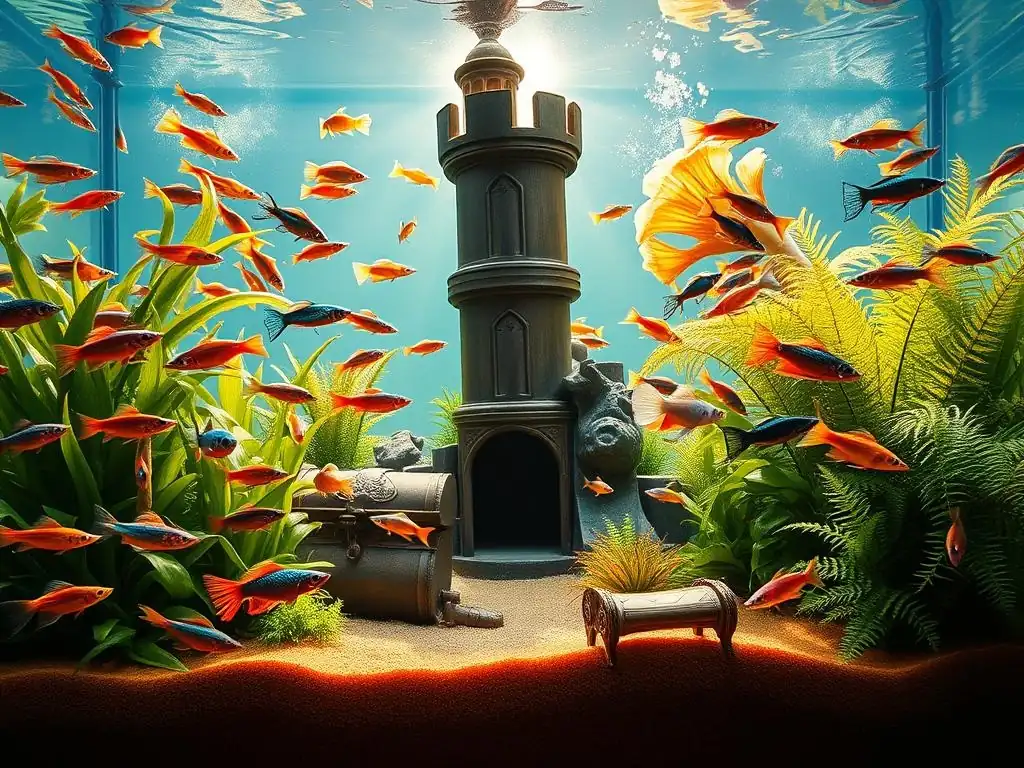
Guppies, renowned for their vibrant colors and active nature, are inherently social creatures that thrive in groups. Observing their natural guppy behavior reveals a fascinating social structure, primarily centered around shoaling. While they don't form strict hierarchies like some cichlids, subtle dominance can be observed, particularly among males vying for female attention. A typical healthy shoal of guppies, ideally comprising 6-8 individuals, will exhibit coordinated swimming patterns, moving together in a loose group, which serves as a natural defense mechanism against perceived threats and reduces individual stress.
This shoaling behavior is crucial for their well-being and directly impacts their guppy behavior lifespan. When kept in insufficient numbers, guppies can become stressed, leading to shy behavior, hiding, or even increased aggression directed at tank mates. Maintaining a proper male-to-female ratio, commonly recommended as 1 male to 2 or 3 females, is vital to disperse male attention and prevent excessive harassment of individual females. This thoughtful approach to their social environment fosters a more peaceful community and contributes significantly to their overall guppy behavior lifespan care.
Recognizing Common Guppy Behaviors: Signs of Health and Stress
Observing your guppies' daily activities is paramount for assessing their health and overall guppy behavior lifespan. Healthy guppies typically exhibit active swimming throughout the tank, exploring their environment, and readily foraging for food. Their fins should be fully extended, their colors vibrant and distinct, and their gills should show smooth, consistent movement. Males will frequently display their elaborate fins to females in a courtship ritual, a clear sign of their vitality and contentment within the aquarium. A robust appetite and prompt reaction to feeding are also strong indicators of a thriving guppy.
Conversely, changes in guppy behavior often serve as early warning signs of stress or illness, impacting their guppy lifespan. Lethargy, characterized by prolonged periods of resting at the bottom or surface of the tank, is a red flag. Clamped fins (held close to the body), rapid gill movement, faded coloration, rubbing against tank decorations, or erratic swimming patterns (like darting or spiraling) all suggest underlying issues such as poor water quality, disease, or bullying. Prompt identification of these stress signals allows for timely intervention, which is critical for successful guppy behavior lifespan care.
Guppy Aggression: Identifying and Managing Fin-Nipping
While generally peaceful, guppies can exhibit aggression, most commonly in the form of fin-nipping. This behavior is usually directed at other guppies, particularly males towards other males or overly harassed females, but can also extend to other long-finned tank mates. Common triggers for guppy aggression include overcrowding, which creates competition for space and resources, and an imbalanced male-to-female ratio, where too many males constantly pursue a limited number of females, leading to stress and frustration. Fin-nipping can cause significant stress and physical damage, predisposing the affected fish to secondary bacterial or fungal infections, thereby shortening their guppy lifespan.
Managing guppy aggression requires a multi-faceted approach to optimize their guppy behavior lifespan care. Ensuring adequate tank size is crucial; for instance, a minimum of a 10-gallon tank is recommended for a small group, with larger tanks (e.g., 20 gallons or more) providing ample space for a thriving community.
Adhering to the recommended male-to-female ratio of 1:2 or 1:3 helps distribute male attention and reduce stress on individual females. Furthermore, providing plenty of live plants or aquarium decorations offers hiding spots and visual barriers, allowing weaker or harassed individuals to escape and rest, promoting a more harmonious environment and a longer guppy lifespan.
Maximizing Guppy Lifespan: Essential Care Tips
Optimizing Guppy Tank Conditions for Longevity: Water Parameters and Temperature
Maintaining pristine and stable water conditions is the cornerstone of maximizing guppy lifespan and ensuring robust guppy behavior. Guppies thrive in slightly alkaline to neutral water with a pH range of 6.5 to 8.0, with an ideal target between 7.0 and 7.5. Water hardness (GH) should typically be in the range of 8-12 dGH (degrees of General Hardness).
Crucially, ammonia and nitrite levels must always be at zero parts per million (ppm), as even small concentrations can be highly toxic. Regular water testing, ideally weekly or bi-weekly, is essential to monitor these parameters and ensure they remain within optimal ranges, preventing stress and disease that could shorten guppy lifespan.
Temperature plays a significant role in guppy metabolism and immune function, directly influencing their guppy lifespan. The ideal temperature range for guppies is between 72-82°F (22-28°C), with many aquarists finding 76°F (24.5°C) to be optimal for consistent health and active guppy behavior. Fluctuations in temperature can cause immense stress, weakening their immune systems and making them susceptible to illnesses. Consistent water changes, typically 25% of the tank volume weekly, help replenish essential minerals, remove accumulated nitrates, and maintain overall water quality, providing a stable environment vital for long-term guppy behavior lifespan care.
Guppy Diet and Nutrition: Promoting Healthy Growth and Lifespan
A balanced and varied diet is fundamental for promoting healthy growth, vibrant coloration, and a long guppy lifespan. Guppies are omnivores, requiring a mix of plant and animal matter in their diet. High-quality nutrition strengthens their immune system, making them more resilient to diseases and environmental stressors. Inadequate feeding, either in quantity or nutritional balance, can lead to stunted growth, dull colors, lethargy, and increased susceptibility to illness, all of which compromise their guppy behavior lifespan.
When feeding guppies, the key is moderation. They should be fed small amounts 2-3 times a day, only what they can consume completely within 2-3 minutes. Overfeeding is a common mistake that not only leads to uneaten food decaying and polluting the water, thus harming water quality and guppy lifespan, but also causes digestive issues like bloating. A diverse diet, incorporating various food types, ensures they receive all necessary vitamins, minerals, and macronutrients for optimal guppy behavior lifespan care.
The Ideal Guppy Food: Flakes, Live Foods, and Supplements
The staple of a guppy's diet should be a high-quality flake food specifically formulated for tropical fish, rich in protein and spirulina for enhanced coloration and digestion. Look for flakes that list fish meal or shrimp meal as primary ingredients. For example, many reputable brands offer specialized "guppy flakes" that are finely ground and nutrient-dense, perfectly suited for their small mouths and active metabolism. This forms the foundation for excellent guppy behavior lifespan care.
To supplement flakes and provide essential variety, incorporating live or frozen foods is highly beneficial. Live foods like brine shrimp, daphnia, and bloodworms offer high protein content and stimulate natural hunting guppy behavior. Frozen equivalents are also excellent alternatives, providing similar nutritional benefits without the risk of introducing parasites. Additionally, blanched vegetables such as peas (shelled) or spinach, offered sparingly, can provide necessary fiber. This varied diet not only promotes robust health but also enhances their natural guppy behavior, contributing significantly to a longer guppy lifespan.
Preventing Guppy Diseases: Proactive Care for a Longer Life
Proactive disease prevention is far more effective than attempting to cure illnesses once they manifest, directly impacting guppy lifespan. The most crucial elements of disease prevention are maintaining excellent water quality, providing a balanced and nutritious diet, and minimizing stress. A strong immune system, bolstered by optimal guppy behavior lifespan care, is the best defense against pathogens. Regular maintenance routines, including consistent water changes (e.g., 25% weekly) and gravel vacuuming, remove harmful nitrates and detritus, preventing the build-up of disease-causing organisms.
Quarantining new fish is a critical, often overlooked step in preventing the introduction of diseases into your main tank. New guppies or other tank mates should be kept in a separate quarantine tank for at least 14-21 days. During this period, observe their guppy behavior closely for any signs of illness, such as lethargy, clamped fins, unusual spots, or abnormal swimming. This isolation period allows you to treat any emerging issues before they can spread to your established community, safeguarding the health and guppy lifespan of your existing fish.
Common Guppy Illnesses: Identification and Treatment
Despite best efforts, guppies can occasionally fall ill. Recognizing common guppy illnesses early is crucial for effective treatment and preserving guppy lifespan. Ich (White Spot Disease), caused by the parasite Ichthyophthirius multifiliis, presents as small, salt-like white spots on the body and fins, accompanied by scratching against surfaces. Fin Rot, a bacterial infection, manifests as frayed, discolored, or disintegrating fins. Fungal infections often appear as cotton-like growths on the body or fins, while Dropsy, a symptom of internal bacterial infection, causes severe bloating and scales to protrude.
Upon identifying symptoms, prompt action is vital for successful guppy behavior lifespan care. Isolate the affected fish in a hospital tank to prevent the spread of disease and allow for targeted treatment. For Ich, increasing the water temperature gradually (e.g., to 82°F/28°C) and using an Ich-specific medication containing malachite green or formalin can be effective. Bacterial infections like Fin Rot often respond to broad-spectrum antibiotics, while fungal infections require antifungal medications. Always follow medication instructions carefully and ensure optimal water parameters are maintained throughout the treatment period to support the guppy's recovery and enhance their guppy lifespan.
Guppy Breeding and Lifespan: The Connection
The Guppy Breeding Cycle: Understanding Reproduction and Fry Care
Guppies are renowned for their prolific breeding, a characteristic that often fascinates new aquarists. As livebearers, female guppies give birth to fully formed, free-swimming fry rather than laying eggs. The gestation period for a female guppy typically ranges from 21 to 30 days, with an average of around 28 days, though this can vary slightly based on water temperature and nutrition.
A single female can produce anywhere from 20 to 100 or more fry in a single birth, showcasing their remarkable reproductive capacity. Observing the "gravid spot" (a darkened area near the anal fin) on a female is a common way to anticipate an upcoming birth.
Once born, guppy fry are incredibly tiny and vulnerable. Without adequate protection, they are often seen as food by adult guppies, including their own parents. To ensure a higher survival rate, providing dense live plants like Java Moss, Guppy Grass, or floating plants offers crucial hiding spots.
Alternatively, dedicated breeding boxes or separate "fry tanks" can be used to isolate the pregnant female before birth or to house the fry immediately afterward. Feeding the fry finely crushed flake food, specialized fry food, or newly hatched brine shrimp multiple times a day (e.g., 3-5 times) is essential for their rapid growth and development, directly contributing to the survival and eventual guppy lifespan of the next generation.
How Breeding Frequency Impacts Guppy Lifespan
While the ability to reproduce frequently is a natural guppy behavior, continuous and uncontrolled breeding can significantly impact the female guppy's lifespan. Each pregnancy places a substantial physiological strain on the female, requiring considerable energy and nutrient reserves to develop and carry the fry. If a female is constantly pregnant without sufficient recovery periods, her body can become depleted, leading to weakened immunity, stunted growth, and increased susceptibility to stress and disease. This continuous reproductive cycle can effectively shorten her guppy lifespan compared to males or females that breed less frequently.
Aquarists aiming for optimal guppy behavior lifespan care might consider strategies to manage breeding frequency if they are not specifically breeding for production. Separating male and female guppies into different tanks, or maintaining a predominantly male tank with very few females, can reduce constant harassment and the frequency of pregnancies. If breeding is desired, allowing females adequate time to recover between births, coupled with a high-quality diet, can help mitigate some of the negative impacts. Understanding this physiological cost is crucial for providing comprehensive guppy behavior lifespan care.
Separating Guppy Fry: Protecting Young Guppies for Optimal Growth
The decision to separate guppy fry from adult fish is often critical for their survival and contributes significantly to their overall guppy lifespan. As mentioned, adult guppies, including the fry's parents, commonly predate on their offspring due to their small size and the adults' opportunistic feeding habits. Without protection, a significant percentage, if not all, of a new batch of fry may be consumed within hours of birth. This natural guppy behavior necessitates intervention if the goal is to raise a substantial number of young.
Utilizing a breeder box or a dedicated "fry tank" provides a safe haven where young guppies can grow without the threat of predation. A breeder box, typically a small, netted or plastic container that hangs inside the main aquarium, offers protection while maintaining water flow. A separate, fully cycled fry tank, however, provides more stable conditions and space for larger batches of fry to grow out.
Feeding the fry specialized, high-protein foods in this protected environment ensures they receive adequate nutrition for rapid growth, allowing them to reach a size where they are no longer viewed as prey by adults. This proactive guppy care directly enhances their survival rate and sets the foundation for a longer guppy lifespan.
Factors Influencing Guppy Lifespan: Genetics, Environment, and Care
The Role of Genetics in Guppy Longevity
Genetics play a profound role in determining a guppy's potential lifespan and overall robustness. In the hobby, guppies have been selectively bred for decades to enhance specific traits such as vibrant coloration, elaborate finnage (e.g., fantails, swordtails), and specific body shapes.
While this has resulted in the stunning diversity we see today, intensive inbreeding and selection for purely aesthetic traits can sometimes inadvertently lead to a reduction in genetic diversity and a weakening of the fish's natural resilience. Guppies from such lineages may be more susceptible to common diseases, have weaker immune systems, or exhibit shorter guppy lifespans compared to their wild counterparts or guppies from more diverse genetic pools.
Therefore, when acquiring guppies, sourcing them from reputable breeders or fish stores that prioritize health and genetic diversity over extreme aesthetics can significantly impact their guppy behavior lifespan. A strong genetic background translates to fish that are naturally more robust, less prone to common ailments, and capable of living closer to their maximum potential guppy lifespan of 2-3 years, or even slightly longer in ideal conditions. Understanding this genetic predisposition is a key aspect of advanced guppy behavior lifespan care.
Environmental Enrichment for Guppies: Promoting Natural Behaviors and Reducing Stress
Environmental enrichment is crucial for promoting natural guppy behavior and significantly reducing stress, thereby contributing to a longer guppy lifespan. A barren tank with minimal decorations offers little stimulation and can lead to boredom and apathy. Conversely, a thoughtfully aquascaped environment that mimics their natural habitat encourages exploration, provides security, and allows guppies to express their inherent behaviors. Live plants, such as Anubias, Java Fern, or water wisteria, offer vital hiding spots and visual barriers, reducing aggression and providing refuge for less dominant individuals or pregnant females.
Beyond plants, other elements like smooth river rocks, driftwood, and even ceramic caves can add to the complexity and interest of the environment. These additions provide additional hiding places and territories, which are particularly beneficial in community tanks. A stimulating environment not only reduces stress, which is a major factor in shortening guppy lifespan, but also encourages active foraging, courtship displays, and overall vibrant guppy behavior. Providing ample space for swimming, combined with areas for refuge, creates a balanced habitat that supports both mental and physical well-being, leading to a healthier guppy lifespan.
Impact of Tank Mates on Guppy Behavior and Lifespan
The choice of tank mates has a direct and significant impact on guppy behavior and, consequently, their guppy lifespan. Guppies are generally peaceful community fish, but they can be easily stressed by overly aggressive, large, or fin-nipping species. Unsuitable tank mates, such as certain cichlids, tiger barbs, or even some larger gouramis, can cause constant harassment, leading to chronic stress, physical injury (e.g., torn fins), and even death. This ongoing stress compromises the guppy's immune system, making them highly susceptible to diseases and drastically shortening their guppy lifespan.
Conversely, carefully selected peaceful tank mates can enhance the guppy's environment without causing undue stress. Ideal companions include other small, non-aggressive species like Corydoras catfish, Otocinclus catfish, small rasboras (e.g., Harlequin Rasboras), or peaceful tetras (e.g., Neon Tetras). These species typically occupy different parts of the water column and do not compete directly with guppies for food or space. A harmonious community tank, where guppies can exhibit their natural guppy behavior without fear, contributes to a less stressful existence and significantly extends their guppy lifespan through effective guppy behavior lifespan care.
Advanced Guppy Care: Optimizing Conditions for a Thriving Community
Understanding Guppy Behavior in Different Tank Setups
The dynamics of guppy behavior can vary significantly depending on the tank setup. In a species-only tank, guppies often display more pronounced shoaling patterns and intricate courtship rituals, as they are the dominant species without external stressors. Males will frequently engage in flamboyant displays for females, and the overall activity level might seem more relaxed and natural. This environment allows for a deeper observation of their inherent guppy behavior and can lead to a more predictable guppy lifespan, as external stressors are minimized.
In a community tank, guppy behavior is influenced by the presence of other species. While still social, they might be more cautious, especially if paired with slightly larger or more boisterous tank mates. They may spend more time hiding or schooling tightly for security. It's crucial to select tank mates that are equally peaceful and do not compete aggressively for food or space. Understanding these behavioral nuances helps in tailoring the environment to ensure optimal guppy behavior lifespan care, ensuring that even in a diverse setup, guppies remain comfortable and thrive, contributing to a healthy guppy lifespan.
Creating a Stress-Free Environment for Guppies: Plants, Hiding Places, and Lighting
A truly stress-free environment is paramount for encouraging natural guppy behavior and maximizing guppy lifespan. Dense live plants are perhaps the most effective element in achieving this. Fast-growing plants like Hornwort, Guppy Grass, or Water Wisteria provide not only essential oxygenation and natural filtration but also abundant hiding places for females to escape persistent male attention, for fry to avoid predation, and for any fish feeling stressed to find refuge. These visual barriers reduce overall aggression and promote a sense of security.
Beyond plants, strategically placed driftwood, smooth rocks, or ceramic caves offer additional structured hiding spots. These elements contribute to the complexity of the tank, allowing guppies to explore and establish territories, even if loosely defined. Lighting also plays a crucial role; a consistent photoperiod of 8-10 hours per day, mimicking natural daylight cycles, helps regulate their internal clock and reduces stress. Overly bright or inconsistent lighting can be unsettling. A well-designed, secure environment directly translates to a happier, healthier guppy, significantly extending their guppy lifespan through comprehensive guppy behavior lifespan care.
Monitoring Guppy Health: Recognizing Early Warning Signs
Diligent, daily monitoring of your guppies is an advanced yet fundamental aspect of guppy behavior lifespan care. By observing them closely each day, you can detect subtle changes in their guppy behavior or appearance that signal the onset of illness or stress, often before overt symptoms appear. Look for deviations from their normal routine: a fish that is usually active but is now lethargic, a change in appetite (refusing food or eating less), or a fish isolating itself from the group.
Physical changes are also critical indicators. Watch for clamped fins, rapid breathing (flared gills), faded or dull coloration, white spots, cottony growths, bloating, or any signs of physical injury. Early detection allows for immediate intervention, which can be as simple as a targeted water change to correct parameters, or the initiation of treatment if a disease is suspected.
Prompt action in response to these early warning signs can prevent minor issues from escalating into severe, life-threatening conditions, thereby preserving the guppy's health and extending their guppy lifespan. Regular testing of water parameters (e.g., nitrates, pH) complements visual checks, providing a complete picture of their environment.
Common Misconceptions About Guppy Lifespan and Behavior
Debunking Myths About Guppy Care and Breeding
One pervasive myth about guppies is that they are "indestructible" or "starter fish" that can tolerate any conditions. While guppies are indeed hardy compared to some more delicate species, this misconception often leads to neglect of basic guppy behavior lifespan care principles, resulting in shorter guppy lifespans. In reality, guppies are highly sensitive to poor water quality, particularly high ammonia and nitrite levels, and unstable water parameters. A small tank (e.g., less than 10 gallons for a group) can quickly become toxic and stressful, leading to disease and premature death.
Another common myth is that guppies will simply "breed to death" regardless of care. While continuous breeding is taxing for females, it is not solely the act of breeding that shortens their guppy lifespan, but rather the lack of proper care during this demanding period. Providing a nutrient-rich diet, excellent water quality, and opportunities for females to rest from constant male attention can significantly mitigate the physiological toll of reproduction. Understanding that guppies, like all living creatures, require consistent, high-quality care to thrive debunks these harmful myths and promotes responsible guppy behavior lifespan care.
Understanding the Realities of Guppy Genetics and Health
A prevalent misconception is that all guppies are equally robust, regardless of their origin or lineage. The reality is that intensive selective breeding for exaggerated finnage or specific color patterns can sometimes come at the cost of genetic health and resilience. Many commercially bred guppies may carry genetic predispositions to certain health issues, such as weakened immune systems or susceptibility to specific diseases, which can inherently limit their guppy lifespan. This means that even with excellent care, some guppies may not live as long as others due due to inherited factors.
Furthermore, there's a misunderstanding that health problems are always due to environmental factors. While water quality and diet are paramount, a guppy's inherent genetic makeup plays a significant role in its resistance to disease and overall longevity.
For instance, some lines of guppies might be more prone to conditions like scoliosis or swim bladder issues due to genetic factors. Recognizing that a healthy guppy behavior lifespan is a complex interplay of good genetics, optimal environmental conditions, and meticulous guppy care empowers aquarists to make more informed choices when selecting fish and provides a realistic perspective on their potential guppy lifespan.
Conclusion: Mastering Guppy Care for a Longer, Healthier Life
Frequently Asked Questions
What is the typical lifespan of a guppy in an aquarium?
The lifespan of a guppy in an aquarium is typically between 1 and 3 years. Proper water quality and a balanced diet are crucial for maximizing their lifespan.
What are some common signs of stress in guppies?
Common signs of stress include decreased activity, loss of appetite, and clamped fins. These are often linked to poor water conditions or aggression from other fish.
How should I care for guppy fry (baby guppies)?
Guppy fry require smaller food such as infusoria or commercially available fry food. It's also important to provide plenty of hiding places to protect them from adults.
What are some ideal tank mates for guppies?
Ideal tank mates for guppies are generally peaceful, small fish that won't nip at their fins. Examples include neon tetras, corydoras catfish, and harlequin rasboras.
What type of water chemistry is best for guppies?
Guppies thrive in slightly alkaline water with a pH between 7.0 and 7.8. Maintaining stable water parameters and performing regular water changes are essential.
Final Reflection: Embracing the Tiny Wonders
The journey into the vibrant world of guppies, as we've explored, reveals a microcosm of life teeming with complexity and beauty. Understanding guppy behavior, lifespan, and care is not just about keeping these fish alive; it's about appreciating the intricate ecosystems they represent and the delicate balance of nature itself. This understanding becomes increasingly vital as we face environmental challenges that impact even the smallest creatures.
This exploration has undeniably deepened my appreciation for the often-overlooked details of the natural world. Observing the guppy's social dynamics, their vibrant colors, and their surprisingly short lifespan serves as a constant reminder of the preciousness and fragility of life. In every walk with nature, one receives far more than he seeks.
- John Muir. This quote perfectly encapsulates the profound lessons we can learn from observing even the smallest inhabitants of our planet.
Now, as we conclude, I invite you to carry this newfound appreciation with you. Consider the lessons learned about guppy behavior, lifespan, and care, and apply them to your own understanding of the world around you. Let the vibrant world of guppies inspire you to cultivate a deeper respect for all living things and to actively participate in preserving the delicate balance of our shared planet.
Dive Deeper: Unleash Your Inner Guppy Guru!
Thank you for exploring the fascinating world of guppies! We hope you’ve gained valuable insights into their behavior and lifespan. Now, let's put that knowledge into action and continue the journey.
Here’s how you can further connect with these vibrant little fish:
- Start a Guppy Journal: Record your guppies’ behaviors, breeding cycles, and unique characteristics. This will deepen your understanding and help you troubleshoot any issues.
- Explore different tank setups: Consider experimenting with live plants, substrate types, and decor to find the best environment for your guppies' happiness and health.
- Share your guppy experiences: Engage with the Aquarium Mastery community by sharing your own guppy keeping stories, photos, or videos on social media using #AquariumMasteryGuppies!
What's the most surprising thing you've learned about guppies, and how will you apply it to your aquarium keeping practices?