
Maximizing Your HOB: Tips for Optimal Performance and Custom Media Setups

Welcome to Aquarium Mastery, where we dive deep into the fascinating world of aquariums!
Ever wonder if you're really getting the most out of your Hang-On-Back (HOB) filter? This week, we're unlocking the secrets to HOB filter media setup, showing you how to optimize performance and even customize your media for crystal-clear water. Are you ready to take your filtration to the next level? Let's get started!
- Maximizing Your HOB Filter: A Guide to Optimal Performance and Media Selection
- Understanding HOB Filters: A Comprehensive Guide for Aquarium Filtration
- Optimizing HOB Filter Performance: Key Strategies for Clear Water
- HOB Filter Media: The Foundation of Effective Aquarium Filtration
-
Customizing Your HOB Filter Media: Meeting Specific Aquarium Needs
- HOB Filter Media for Freshwater Aquariums: General Filtration Strategies
- HOB Filter Media for Planted Aquariums: Nutrient Management and CO2 Compatibility
- HOB Filter Media for Saltwater Aquariums: Protein Skimmer Considerations and Trace Element Removal
- HOB Filter Media for Reef Tanks: Maintaining Water Parameters and Supporting Corals
- Setting Up Your HOB Filter Media: A Step-by-Step Guide
- Advanced HOB Filter Techniques: Enhancing Filtration Capabilities
- HOB Filter Media Maintenance: Maintaining Optimal Performance
- HOB Filter Media Recommendations: Brands and Options
-
Frequently Asked Questions
- How does the order of media in my HOB filter affect its performance?
- What types of media can I use in my HOB filter to improve water quality?
- How often should I replace or clean the media in my HOB filter?
- Can I customize the media setup in my HOB filter to target specific water parameters?
- What are some common mistakes people make when setting up their HOB filter media?
- Final Reflection: The Flow of a Thriving Ecosystem
- Ignite Your HOB Filter's Potential!
Maximizing Your HOB Filter: A Guide to Optimal Performance and Media Selection
Understanding HOB Filters: A Comprehensive Guide for Aquarium Filtration
What is a Hang-On-Back (HOB) Filter and Why Use It?
A Hang-On-Back (HOB) filter, also known as a power filter, is a common external aquarium filtration device designed to hang on the back rim of an aquarium. It operates by drawing water from the tank through an intake tube, processing it through various filter media housed within the unit, and then returning the purified water back into the aquarium via a waterfall-like spillway.
This design makes it a popular choice for aquarists due to its ease of installation, relatively low cost, and efficient filtration capabilities for a wide range of tank sizes, from small desktop aquariums of 5 gallons up to larger community tanks of 75 gallons or more.
The primary appeal of using a HOB filter lies in its ability to provide comprehensive mechanical, biological, and often chemical filtration in a single, compact unit. For instance, a typical HOB filter setup for a 20-gallon freshwater tank might process approximately 100-150 gallons per hour (GPH), effectively turning over the tank's entire volume multiple times an hour. This rapid water movement ensures that free-floating debris, toxins, and dissolved impurities are constantly being removed, contributing significantly to water clarity and the overall health of the aquatic inhabitants.
HOB Filter Advantages: Simplicity, Accessibility, and Cost
HOB filters are renowned for their user-friendly design, making them an excellent choice for beginners and experienced aquarists alike. Their setup typically involves simply hanging the unit on the tank rim, filling it with water to prime the pump, and plugging it in. This simplicity contrasts with more complex systems like canister filters, which often require tubing connections and internal tank placement. Furthermore, their external placement means that maintenance, such as cleaning or replacing filter media, can be performed without submerging hands deep into the aquarium, reducing stress for both the aquarist and the fish.
Economically, HOB filters offer significant value. A basic HOB filter for a 20-gallon tank can range from $20 to $50, making it one of the most affordable primary filtration options available. Their accessibility extends to their wide availability in pet stores and online retailers, ensuring that replacement parts and a variety of HOB filter media setup options are always within reach. For example, a common practice for a 30-gallon community tank using a HOB filter might involve weekly replacement of filter floss and monthly replacement of activated carbon, both readily available and inexpensive.
HOB Filter Limitations: Flow Rate and Media Capacity
Despite their many advantages, HOB filters do present certain limitations, particularly concerning flow rate and media capacity. While adequate for many setups, the maximum flow rate of even larger HOB units, typically topping out around 400 GPH for tanks up to 75 gallons, may not be sufficient for heavily stocked aquariums or those requiring extremely high turnover rates, such as certain high-flow reef tanks. In such cases, the water might not be processed quickly enough to effectively remove all suspended particles or toxins, potentially leading to reduced water clarity or increased ammonia levels.
Furthermore, the physical size of HOB filters inherently limits the volume of filter media they can hold. Unlike large canister filters that can accommodate several liters of biological media, most HOB filters are restricted to smaller, pre-packaged cartridges or a modest amount of bulk media. This can be a challenge for maintaining robust biological filtration in heavily populated tanks or for specialized chemical filtration needs. For example, a standard HOB filter might only hold enough activated carbon to be effective for 2-4 weeks in a 50-gallon tank before it becomes saturated, necessitating frequent replacement to maintain optimal water quality.
Optimizing HOB Filter Performance: Key Strategies for Clear Water
HOB Filter Maintenance: Cleaning for Optimal Flow and Efficiency
Regular maintenance is paramount to ensuring your HOB filter operates at its peak efficiency, directly impacting water clarity and overall aquarium health. Over time, mechanical filter media, such as sponges and floss, can become clogged with detritus, uneaten food, and fish waste, significantly reducing the filter's flow rate.
A noticeable drop in the water output from the filter's spillway is a clear indicator that cleaning is overdue. For instance, in a 29-gallon community tank, a HOB filter's intake tube and impeller should be cleaned monthly to prevent blockages and maintain consistent flow, while mechanical media may require rinsing weekly or bi-weekly depending on the bioload.
The cleaning process for HOB filters is straightforward: first, unplug the filter to prevent damage. Then, carefully remove the filter media. Mechanical media like sponges or filter floss should be rinsed thoroughly in discarded aquarium water (not tap water, as chlorine can kill beneficial bacteria) to preserve the beneficial bacterial colonies. The impeller and its housing should also be cleaned to remove any accumulated slime or debris that can impede its rotation and reduce flow. Skipping this crucial step can lead to reduced filtration effectiveness, increased noise, and even premature pump failure, ultimately compromising your HOB filter media setup.
Selecting the Right HOB Filter Size: Matching Filter to Tank Volume
Choosing the correct HOB filter size is critical for effective filtration and is often determined by the tank's volume and bioload. A general rule of thumb suggests that a filter should be capable of processing the aquarium's entire volume at least 4-6 times per hour. For example, a 20-gallon aquarium would optimally require a filter with a flow rate of at least 80-120 GPH. Undersizing a filter can lead to insufficient water turnover, allowing waste to accumulate and water quality to decline, potentially causing stress to inhabitants and promoting algae growth.
Conversely, oversizing a HOB filter, while providing excellent water turnover, can create excessive current, which may be stressful for certain fish species, especially those native to calm waters like Betta fish or gouramis. It can also disrupt planted aquariums by uprooting delicate plants.
Therefore, balancing the need for robust filtration with the specific needs of your aquarium's inhabitants and aquascape is essential. For a heavily stocked 55-gallon tank, opting for a HOB filter rated for a 75-gallon tank (e.g., 300-400 GPH) might be beneficial to handle the increased bioload, perhaps with a flow diffuser at the output to mitigate strong currents.
Addressing Common HOB Filter Issues: Noise, Clogging, and Overflow
HOB filters, while reliable, can sometimes develop common issues such as excessive noise, clogging, or even overflow. Noise often stems from a dirty or misaligned impeller. If your filter starts making a grinding or rattling sound, the first step is to unplug it and inspect the impeller for debris (like snail shells or plant matter) or wear. Cleaning the impeller and its shaft, and ensuring it's properly seated, can often resolve the issue. If the noise persists, the impeller itself may need replacement, a common wear-and-tear item.
Clogging is primarily a mechanical filtration issue, where the filter media, especially sponges or floss, becomes saturated with particulate matter. This reduces water flow and can lead to water bypassing the media or even overflowing the filter box. Regular rinsing or replacement of mechanical media, typically weekly or bi-weekly depending on the bioload, is the best preventative measure.
If an overflow occurs, it's usually due to severely clogged media or a blocked output. Immediately unplug the filter, clean the media, and ensure the output is clear. A properly maintained HOB filter media setup will minimize these issues, ensuring consistent performance.
HOB Filter Media: The Foundation of Effective Aquarium Filtration
The Role of Filter Media: Achieving Mechanical, Biological, and Chemical Clarity
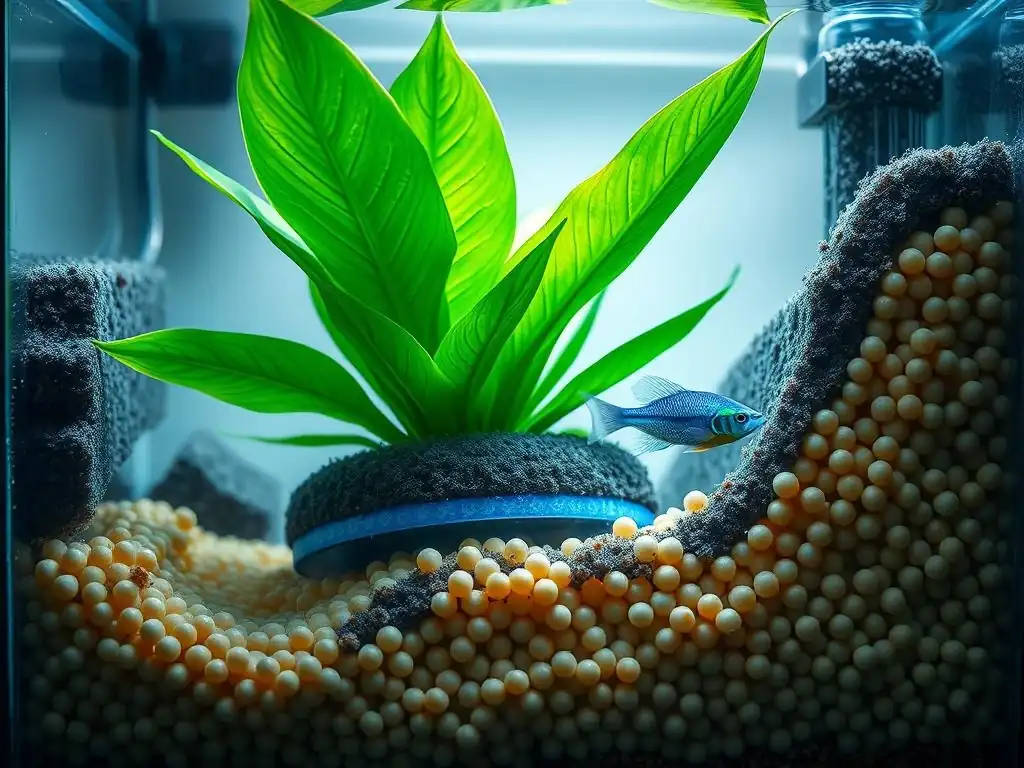
Filter media are the unsung heroes of any aquarium filtration system, acting as the primary agents for transforming murky, toxin-laden water into a pristine, life-sustaining environment. In a HOB filter media setup, these materials are strategically placed to perform three distinct, yet interconnected, types of filtration: mechanical, biological, and chemical. Mechanical filtration physically removes particulate matter, contributing to water clarity. Biological filtration processes harmful nitrogenous waste through beneficial bacteria. Chemical filtration targets dissolved impurities, odors, and discolorations.
The synergistic operation of these media ensures a comprehensive approach to water quality management. For instance, in a 40-gallon freshwater tank, the mechanical media might trap fish waste and uneaten food, preventing it from decomposing and adding to the bioload. Subsequently, the biological media converts toxic ammonia and nitrite into less harmful nitrate. Finally, chemical media, such as activated carbon, might remove tannins that cause discoloration or residual medications. Understanding the specific role of each type of media is fundamental to designing an effective HOB filter media setup tailored to your aquarium's needs.
Mechanical Filtration: Removing Particulates for Clearer Water
Mechanical filtration is the first line of defense in any effective HOB filter media setup, primarily responsible for the physical removal of suspended particles from the water column. These particles can include uneaten food, fish waste, decaying plant matter, and general detritus, all of which contribute to cloudy water and, if left to decompose, can elevate ammonia and nitrite levels. By trapping these solids, mechanical media significantly improves water clarity and reduces the organic load on the biological filter, extending its efficiency.
The efficiency of mechanical filtration is largely dependent on the density and pore size of the media used. Coarser media will trap larger particles, while finer media can capture microscopic debris, leading to crystal-clear water. However, finer media also clog more quickly, necessitating more frequent cleaning or replacement. A common strategy for a 50-gallon community tank might involve using a coarse sponge as a pre-filter, followed by a layer of fine filter floss, ensuring both large and small particulates are effectively removed before water passes to other media.
Mechanical Media Options: Sponges, Filter Floss, and Prefilter Pads
A variety of materials serve as excellent mechanical filter media, each with unique characteristics suited for different filtration needs. Sponges, often made of foam, are durable and reusable, available in various pore sizes (coarse, medium, fine). They are excellent for trapping larger debris and also provide some surface area for beneficial bacteria, though their primary role is mechanical. For example, a coarse sponge might be placed at the intake or as the first layer in a HOB filter to catch the bulk of detritus.
Filter floss, typically made from polyester or similar synthetic fibers, is exceptionally effective at trapping very fine particles, leading to polished, clear water. It's often used as the final mechanical filtration stage in a HOB filter media setup due to its high density.
However, filter floss clogs quickly and is generally considered disposable, requiring frequent replacement (e.g., weekly or bi-weekly for a 30-gallon tank) to prevent reduced flow and filter bypass. Prefilter pads, similar to floss but often more rigid, can be cut to size and offer a good balance of particle removal and reusability, often rinsed and reused multiple times before replacement.
Mechanical Filtration Strategies: Placement, Cleaning, and Replacement
Effective mechanical filtration hinges on strategic placement, diligent cleaning, and timely replacement. In most HOB filters, mechanical media should be positioned as the first stage that water encounters after entering the filter chamber. This ensures that larger debris is removed before reaching subsequent biological or chemical media, preventing their premature clogging and maintaining their efficiency. For instance, an intake sponge pre-filter can significantly extend the life of internal HOB mechanical media by trapping a large percentage of suspended solids before they even enter the filter housing.
Regular cleaning is crucial for maintaining optimal flow and preventing nitrate buildup from decomposing waste trapped in the media. Sponges can be rinsed weekly or bi-weekly in old aquarium water during water changes. Filter floss, due to its tendency to quickly become saturated with fine particles, often requires more frequent replacement, perhaps every 1-2 weeks for a moderately stocked 20-gallon tank. Ignoring these schedules can lead to reduced flow, decreased water clarity, and an increased organic load on the entire system, undermining the effectiveness of your HOB filter media setup.
Biological Filtration: Cultivating Beneficial Bacteria for a Healthy Ecosystem
Biological filtration is arguably the most critical component of any aquarium filtration system, as it directly addresses the toxic nitrogenous waste produced by fish respiration, uneaten food, and decaying organic matter. This process, known as the nitrogen cycle, relies on beneficial bacteria (specifically Nitrosomonas and Nitrobacter) that colonize surfaces within the filter and convert highly toxic ammonia (NH₃) into less toxic nitrite (NO₂⁻), and then nitrite into relatively harmless nitrate (NO₃⁻). Without robust biological filtration, ammonia and nitrite levels would quickly rise to lethal concentrations for aquatic life.
The success of biological filtration is directly proportional to the surface area available for bacterial colonization and adequate water flow over that surface. High-quality biological media are designed with intricate porous structures to maximize this surface area within a compact space. For example, a healthy biological filter in a 75-gallon tank can process several milligrams of ammonia per liter per day, effectively keeping nitrogenous compounds at safe levels, typically less than 0.1 ppm for ammonia and nitrite, and below 40 ppm for nitrate in freshwater systems.
Biological Media Options: Ceramic Rings, Bio-Balls, and Porous Rock
The market offers a diverse range of biological media, each engineered to provide maximum surface area for beneficial bacteria. Ceramic rings are a popular choice, featuring a porous structure that offers significant internal and external surface area. They are durable, long-lasting, and do not degrade over time, making them a one-time investment.
Bio-Balls, typically made of plastic, provide a large external surface area and are excellent for high-flow applications, as their open structure allows water to pass through easily without clogging. While they offer less internal pore space than ceramic rings, they are very effective at gas exchange and preventing anaerobic spots.
Porous rock, such as lava rock or specific types of sintered glass media, also offers vast surface areas due to their microscopic pores. These media are particularly effective because their intricate internal structures allow for both aerobic (oxygen-rich) and potentially anoxic (low-oxygen) zones, which can support different types of bacteria, including those that may convert nitrate into nitrogen gas, further reducing nitrate levels. When designing a HOB filter media setup for a 29-gallon tank, using a small bag of high-quality ceramic rings or porous media can establish a robust bacterial colony crucial for the nitrogen cycle.
Biological Filtration Strategies: Surface Area, Water Flow, and Maturation
Optimizing biological filtration involves understanding the interplay of surface area, water flow, and the critical maturation period. The primary strategy is to provide sufficient high-quality biological media to support the bioload of your aquarium. For instance, a 50-gallon tank with a moderate fish population might require 0.5 to 1 liter of highly porous biological media to effectively process waste. The media should be placed after mechanical filtration to prevent clogging, ensuring water flows freely over its surface so that oxygen and ammonia can reach the bacteria.
Crucially, biological filtration does not happen instantly. It requires a "cycling" period, typically 4-6 weeks, during which beneficial bacteria colonies establish and multiply. During this time, ammonia and nitrite levels will spike and then gradually fall to zero as the bacteria mature. It is vital not to disturb or replace biological media unless absolutely necessary, as this can crash the bacterial colonies. When cleaning, only rinse biological media lightly in discarded aquarium water to avoid killing the beneficial bacteria with chlorinated tap water, thus preserving the integrity of your HOB filter media setup.
Chemical Filtration: Removing Dissolved Impurities for Water Quality
Chemical filtration is the third pillar of a comprehensive HOB filter media setup, focusing on the removal of dissolved impurities, odors, and discolorations that mechanical and biological filtration cannot address. These impurities can include tannins from driftwood, residual medications, heavy metals, phosphates, nitrates, and other organic compounds that contribute to poor water quality, algae growth, and an unpleasant appearance. By selectively adsorbing or reacting with these dissolved substances, chemical media help maintain pristine water clarity and optimal parameters.
While not always necessary for every aquarium, chemical filtration can be invaluable for specific situations, such as after medication treatments, to remove yellowing water, or to control specific nutrient levels like phosphates in a planted or reef tank. The effectiveness of chemical media is finite; they become saturated over time and must be replaced regularly to continue functioning. Failing to replace saturated chemical media can lead to the release of adsorbed pollutants back into the water, potentially causing more harm than good.
Chemical Media Options: Activated Carbon, Ammonia Removers, and Phosphate Reducers
The most common chemical filter media is activated carbon, a highly porous material that adsorbs a wide range of organic pollutants, odors, and discolorations. It is excellent for "polishing" water and removing residual medications after treatment. However, activated carbon becomes saturated relatively quickly, typically within 2-4 weeks for a 30-gallon tank, and should then be replaced. Once saturated, it can leach trapped pollutants back into the water, although this is generally a slow process and not a major concern unless left in the filter for many months.
Other specialized chemical media target specific pollutants. Ammonia removers, often zeolites, are useful for emergency situations or during the initial cycling phase of a new tank to temporarily bind ammonia, providing a buffer until the biological filter matures. Phosphate reducers, such as ferric oxide hydroxide (GFO), are crucial for planted tanks and reef aquariums where excess phosphates can fuel nuisance algae growth. For example, a reef tank might use a small bag of GFO in its HOB filter media setup to keep phosphates below 0.03 ppm, essential for coral health.
Chemical Filtration Strategies: Targeting Specific Pollutants and Replacement Frequency
Effective chemical filtration involves a targeted approach, selecting media that addresses specific water quality issues rather than using all types indiscriminately. For general water polishing and odor removal, activated carbon is the go-to choice. It should be placed after mechanical and biological media to ensure water is free of particulates and nitrogenous waste before reaching the carbon, preventing premature clogging and maximizing its lifespan. For a 40-gallon freshwater tank, a standard 100-gram pouch of activated carbon might be effective for about 3 weeks.
Replacement frequency is paramount for chemical media, as their effectiveness diminishes once they become saturated. Activated carbon typically needs replacement every 2 to 4 weeks. Phosphate reducers might last longer, 1-3 months, depending on the phosphate input (e.g., from food, tap water). Ammonia removers are generally for temporary use and should be removed once the biological filter is established. Neglecting to replace chemical media on schedule renders them useless and, in some cases, can lead to the release of adsorbed substances. Maintaining a precise HOB filter media setup schedule ensures consistent water quality.
Customizing Your HOB Filter Media: Meeting Specific Aquarium Needs
HOB Filter Media for Freshwater Aquariums: General Filtration Strategies
For a general freshwater aquarium, the HOB filter media setup typically prioritizes robust mechanical and biological filtration, with chemical filtration used as needed. A common configuration involves a coarse sponge or pre-filter pad at the intake or as the first layer inside the filter to trap large debris. This is followed by a layer of fine filter floss for polishing the water. Crucially, the largest compartment or dedicated slot within the HOB filter should be reserved for high-quality biological media, such as ceramic rings or porous bio-media, to establish and maintain a healthy nitrogen cycle.
Activated carbon is a popular choice for freshwater tanks to remove odors, discolorations (e.g., from driftwood tannins), and residual medications. It can be placed in a media bag after the biological media. For example, in a 29-gallon community tank with live plants, maintaining a clear water column and healthy fish is achieved by weekly rinsing of the sponge, bi-weekly replacement of filter floss, and monthly replacement of activated carbon, alongside regular water changes. This balanced approach ensures clear water and a stable environment.
HOB Filter Media for Planted Aquariums: Nutrient Management and CO2 Compatibility
Customizing a HOB filter media setup for planted aquariums requires careful consideration of nutrient management and CO2 compatibility. Unlike fish-only tanks, planted tanks benefit from the presence of nitrates and phosphates, which are essential plant nutrients. Therefore, chemical media that aggressively remove these nutrients, such as nitrate or phosphate reducers, should be used sparingly or avoided entirely unless specific nutrient imbalances are identified (e.g., persistent algae issues despite adequate plant mass). The primary focus remains on mechanical and biological filtration.
When using a HOB filter in a planted tank, it's also important to minimize surface agitation, as excessive agitation can lead to significant CO2 off-gassing, depriving plants of this essential nutrient. This can be mitigated by using a flow diffuser or positioning the filter's output just below the water surface. For a 55-gallon planted tank, a typical HOB filter media setup might include a coarse sponge, fine filter floss, and a generous amount of biological media. Activated carbon might be used briefly after a medication treatment, but otherwise, avoided to retain beneficial organic compounds for plants.
HOB Filter Media for Saltwater Aquariums: Protein Skimmer Considerations and Trace Element Removal
For saltwater aquariums, particularly fish-only with live rock (FOWLR) setups, the HOB filter media setup plays a supporting role, often complementing a primary protein skimmer. While mechanical and biological filtration remain important, the emphasis shifts slightly. Mechanical media (sponges, floss) are used to capture detritus, but should be cleaned extremely frequently (daily to every other day) to prevent nitrate buildup, as nitrates are more problematic in saltwater than in freshwater. Biological media is essential for the nitrogen cycle, but live rock within the tank often provides the bulk of biological filtration.
Chemical filtration becomes more critical in saltwater. Activated carbon is widely used to remove yellowing compounds and toxins released by corals or fish, typically replaced every 2-3 weeks. Phosphate reducers are vital to control nuisance algae and maintain optimal water parameters for corals and invertebrates. Some aquarists might also use specialty resins for trace element removal, although this is less common for HOB filters and more for advanced setups. For a 40-gallon FOWLR tank, a HOB filter might include a coarse sponge, bio-rings, and a media bag with activated carbon and GFO, with the sponges cleaned daily.
HOB Filter Media for Reef Tanks: Maintaining Water Parameters and Supporting Corals
For reef tanks, which house sensitive corals and invertebrates, the HOB filter media setup is highly specialized and often minimalist, prioritizing stability and specific parameter control. The main filtration in a reef tank is typically provided by a robust protein skimmer and live rock, which serve as the primary biological filter. HOB filters in reef tanks are primarily used for mechanical filtration to remove detritus quickly and for chemical filtration to maintain specific water parameters and remove impurities that could harm corals.
Mechanical media like filter floss or poly-pads are often used and changed daily to export detritus before it breaks down and contributes to nitrates and phosphates, which can fuel nuisance algae and stress corals. Biological media is generally minimized or avoided in the HOB filter itself, relying on the live rock. Chemical media, however, are paramount.
Activated carbon is used continuously (changed every 1-2 weeks) to remove dissolved organics and yellowing. Phosphate reducers (GFO) are crucial for maintaining ultra-low phosphate levels (e.g., less than 0.03 ppm), which are critical for coral health and preventing algae outbreaks. This precise HOB filter media setup supports a stable reef environment.
Setting Up Your HOB Filter Media: A Step-by-Step Guide

Preparation: Cleaning and Inspecting Your HOB Filter
Before installing any media, it is crucial to prepare your HOB filter. If it's a new filter, unpack all components and rinse them thoroughly with clean, dechlorinated water to remove any manufacturing residues or dust. For an existing filter that has been in storage or is being reconfigured, disassemble it completely, remove any old media, and clean all parts—the motor, impeller, intake tube, and filter housing—with a brush to remove algae, slime, and debris. This ensures optimal flow and prevents any contaminants from entering your aquarium.
Inspect all components for damage, such as cracks in the plastic housing, kinks in the intake tube, or frayed power cords. Pay particular attention to the impeller and its shaft; ensure they spin freely and are not worn. A worn impeller can cause noise or reduced flow. Confirm that all seals are intact and properly seated to prevent leaks. This preparatory step is vital for the long-term reliability and efficiency of your HOB filter media setup, preventing common issues like reduced flow or excessive noise from the outset.
Installing Mechanical Media: Placement and Securing
Installing mechanical media is the first step in assembling your HOB filter media setup, as it forms the initial barrier against particulate matter. In most HOB filters, the mechanical media (e.g., sponge, filter floss, or a pre-filter pad) should be placed in the compartment where the water first enters the filter chamber after being drawn up the intake tube. This ensures that large debris is trapped before it can clog subsequent media layers. If your HOB filter uses cartridge-style media, the cartridge typically combines mechanical filtration (floss) with chemical filtration (carbon) and is simply dropped into its designated slot.
For custom HOB filter media setups, cut a coarse sponge to fit snugly into the initial chamber, ensuring water cannot bypass it. Follow this with a layer of fine filter floss, if desired, to polish the water further. Ensure these media are firmly, but not overly tightly, packed to allow proper water flow. For example, in a small HOB filter for a 10-gallon tank, a single piece of cut-to-size poly-filter floss might serve as both mechanical and chemical (if impregnated with carbon) media, requiring careful placement to maximize surface exposure to water.
Installing Biological Media: Ensuring Proper Water Flow
Biological media should be installed after the mechanical filtration stage to protect the beneficial bacteria from excessive clogging by large particulates. In many HOB filters, there's a dedicated basket or chamber for biological media. If using bulk media like ceramic rings or porous rock, place them in a mesh media bag to prevent them from falling into the impeller chamber and to facilitate easy removal for maintenance. This also allows for optimal water flow through the media without it becoming too densely packed.
Ensure that the biological media is positioned so that water flows through it, not just around it. Good water flow is critical for delivering oxygen and ammonia to the nitrifying bacteria. For example, in a HOB filter with multiple media baskets, the biological media typically occupies the second or third basket, receiving water that has already passed through the mechanical filter. Avoid packing biological media too tightly, as this can restrict flow and create anaerobic (oxygen-depleted) zones, which are detrimental to aerobic nitrifying bacteria. A well-designed HOB filter media setup allows for unimpeded water flow across all media.
Installing Chemical Media: Placement and Monitoring
Chemical media, such as activated carbon or phosphate removers, should generally be installed as the final stage in your HOB filter media setup, after both mechanical and biological filtration. This placement prevents the chemical media from becoming prematurely clogged by particulates and ensures that water is free of ammonia and nitrite before chemical treatment. Like biological media, chemical media should ideally be placed in a mesh media bag, especially if using loose granules, to contain them and allow for easy replacement.
Position the chemical media bag in the final compartment or in a designated slot where water exits the filter chamber. For instance, in a HOB filter for a 20-gallon tank, a small bag of activated carbon might sit just before the water returns to the tank. It is crucial to monitor the effectiveness of chemical media and adhere to replacement schedules, as their adsorptive capacity is finite. For example, activated carbon typically needs replacement every 2-4 weeks, while phosphate removers might last 1-3 months depending on the phosphate levels in the tank.
Startup: Priming and Observing Filter Function
Once all HOB filter media is correctly installed, the final step is to prime and start the filter. Most HOB filters are not self-priming and require manual priming to fill the motor housing and intake tube with water before the pump can draw water from the tank. To prime, ensure the filter is securely hung on the tank rim, then fill the filter box with aquarium water (using a cup or small pitcher) until the water level is above the motor intake. Once filled, plug in the filter.
The filter should immediately begin drawing water from the tank and discharging it back into the aquarium. Observe the flow rate and listen for any unusual noises. A strong, steady flow indicates proper function.
If the filter makes a loud grinding noise or fails to draw water, unplug it immediately, check for airlocks, ensure the impeller is properly seated, and re-prime. For example, a new HOB filter on a 10-gallon tank might take a few seconds to establish full flow and settle into quiet operation. Allow the filter to run for at least an hour, monitoring for leaks or flow issues, to ensure your HOB filter media setup is functioning optimally.
Advanced HOB Filter Techniques: Enhancing Filtration Capabilities
Refugiums and HOB Filters: Creating Additional Biological Filtration
Integrating a HOB filter with a small, external refugium can significantly enhance the biological filtration capabilities of an aquarium, particularly for larger or more demanding setups. A refugium is a separate compartment, often a small acrylic box or a modified HOB filter itself, where macroalgae (like Chaetomorpha) or live rock can grow without being disturbed by fish.
Water is typically diverted from the main tank, passes through the refugium, and then returns to the display. This setup provides additional surface area for beneficial bacteria and allows macroalgae to absorb nitrates and phosphates, effectively "exporting" these nutrients when the algae are harvested.
While a traditional HOB filter might have limited space for a large biological media load, a HOB-style refugium modification can dedicate its entire internal volume to macroalgae or biological media. For example, a small 2.5-gallon aquarium or a purpose-built HOB refugium can be plumbed to receive water from the main tank's HOB filter output or a separate small pump.
This allows for a much larger volume of biological filtration than the HOB filter alone could provide, effectively supporting a higher bioload in a 75-gallon reef tank or a densely stocked freshwater system, and enhancing the overall HOB filter media setup.
DIY HOB Filter Modifications: Enhancing Flow and Media Capacity
DIY modifications to HOB filters are a popular way for aquarists to enhance their performance, particularly in terms of flow rate and media capacity, beyond their stock configurations. One common modification involves replacing the stock filter cartridges with bulk media.
This allows for greater customization of the HOB filter media setup, enabling aquarists to use higher quality, more effective media like specialized porous biological rings or a larger volume of activated carbon tailored to their specific needs. For example, removing a stock cartridge and replacing it with a mesh bag containing 200 grams of premium biological media can drastically improve the biological filtration capacity of a HOB filter designed for a 30-gallon tank.
Other modifications can include modifying the intake tube for better debris collection, such as adding a pre-filter sponge, or altering the internal baffling to optimize water flow through custom media. Some advanced DIYers might even modify the filter box itself to accommodate additional media compartments or to integrate small heaters or CO2 diffusers. While these modifications require some technical skill, they can transform a standard HOB filter into a highly efficient and versatile filtration unit, significantly improving water quality and supporting more demanding aquarium environments.
Pre-Filters: Extending Media Lifespan and Reducing Clogging
Pre-filters are simple, yet highly effective, additions to any HOB filter media setup, designed to extend the lifespan of internal filter media and significantly reduce the frequency of clogging. A pre-filter typically consists of a sponge or foam block placed directly over the intake tube of the HOB filter. As water is drawn into the filter, the pre-filter sponge traps larger particulate matter, such as fish waste, uneaten food, and plant debris, before it even enters the main filter housing. This prevents these larger particles from reaching and prematurely clogging the internal mechanical, biological, and chemical media.
The benefits of using a pre-filter are manifold. For a 50-gallon community tank, a pre-filter sponge can reduce the need to clean the internal HOB mechanical media from weekly to bi-weekly or even monthly. This not only saves time but also maintains more consistent flow through the filter, ensuring optimal performance of all media.
Pre-filters are easy to clean; they can simply be squeezed out in discarded aquarium water during routine water changes. They are particularly beneficial in tanks with high bioloads or those prone to detritus accumulation, such as heavily planted tanks or tanks with messy eaters, providing a simple yet powerful upgrade to any HOB filter.
HOB Filter Media Maintenance: Maintaining Optimal Performance
Mechanical Media: Cleaning and Replacement Schedules
Maintaining mechanical media is crucial for consistent water clarity and preventing the buildup of organic waste within the filter. The frequency of cleaning or replacement depends heavily on the aquarium's bioload and the type of mechanical media used. For example, in a moderately stocked 29-gallon freshwater tank, a coarse sponge pre-filter might need rinsing weekly during water changes, while the fine filter floss inside the HOB filter might require replacement every 1 to 2 weeks. Tanks with higher bioloads or those prone to debris (e.g., tanks with large, messy fish) may necessitate more frequent attention.
When cleaning reusable mechanical media like sponges, always rinse them in discarded aquarium water to avoid killing beneficial bacteria with chlorinated tap water. If the sponge becomes too degraded or difficult to clean, it should be replaced. Disposable media like filter floss must be replaced regularly once they become visibly soiled or when the filter's flow rate noticeably diminishes. Neglecting these schedules will lead to reduced filtration efficiency, potential nitrate spikes from decomposing trapped waste, and ultimately, cloudy water, undermining the entire HOB filter media setup.
Biological Media: Monitoring and Avoiding Disturbances
Biological media is the most stable component of your HOB filter media setup and requires the least frequent maintenance, as disturbing it can disrupt the beneficial bacterial colonies vital for the nitrogen cycle. Unlike mechanical media, biological media should rarely, if ever, be replaced unless it is physically damaged or completely degraded (which is rare for quality bio-media like ceramic rings). The primary form of maintenance is gentle rinsing.
If biological media becomes visibly clogged with slime or debris, it can be gently rinsed in a bucket of old aquarium water during a water change. This removes obstructions without stripping away the essential bacterial colonies. For a 75-gallon tank with a mature HOB filter, this might only be necessary every 6-12 months, or never, if mechanical filtration is highly effective.
It is critical to avoid using tap water, hot water, or harsh chemicals, which will kill the bacteria. Consistent clean water flow over the biological media, ensured by effective mechanical filtration, is the best way to maintain its long-term health and efficiency.
Chemical Media: Replacement Frequency and Water Quality Monitoring
The effectiveness of chemical media is finite, as they adsorb pollutants until their capacity is exhausted. Therefore, regular replacement is paramount to ensure they continue to perform their intended function. The replacement frequency varies depending on the type of chemical media, the water parameters, and the specific needs of the aquarium. For instance, activated carbon typically becomes saturated within 2 to 4 weeks in a standard 40-gallon freshwater tank and should be replaced monthly to maintain water clarity and remove odors.
Phosphate reducers (like GFO) might last longer, from 1 to 3 months, depending on the phosphate input from food and tap water, and the desired phosphate levels in the tank (e.g., maintaining <0.03 ppm in a reef tank). Ammonia-binding zeolites are generally for temporary use and should be removed once the biological filter is established, or replaced as needed in emergency situations. Monitoring water parameters, such as nitrate, phosphate, and general water clarity, can help determine the optimal replacement schedule for your specific HOB filter media setup, ensuring you replace the media before it becomes ineffective.
HOB Filter Media Recommendations: Brands and Options
Recommended Media Brands: Quality and Performance
When selecting HOB filter media, opting for reputable brands known for their quality and performance can significantly impact the effectiveness and longevity of your filtration system. For mechanical filtration, brands like Fluval, AquaClear, and Marineland offer excellent pre-cut sponges and filter floss designed to fit their respective HOB filters, often with high pore density for superior particle removal. For those seeking bulk mechanical media, Poly-Filter pads are highly regarded for their ability to trap fine particulates and even absorb some dissolved organics.
For biological filtration, brands such as Seachem Matrix, Fluval BioMax, and Eheim Substrat Pro are top-tier choices. These media are engineered with extremely porous structures, providing vast surface areas for beneficial bacteria colonization. For example, Seachem Matrix boasts a surface area of approximately 700 square meters per liter, far exceeding many generic ceramic rings.
For chemical filtration, Seachem Purigen is highly recommended for its ability to remove dissolved organic waste and polish water without affecting trace elements, while Activated Carbon from brands like API or Boyd Enterprises (Chemi-Pure Elite for a blend) offers excellent adsorption capabilities. Investing in these quality brands ensures a robust and efficient HOB filter media setup.
Comparing Media Options: Cost, Longevity, and Effectiveness.
When choosing HOB filter media, aquarists often weigh cost against longevity and effectiveness to find the best balance for their needs.
- Mechanical Media:
- Filter Floss: Very effective at fine particle removal, low initial cost (e.g., a large roll for $5-$10). However, it has a short lifespan (1-2 weeks for a 30-gallon tank) and needs frequent replacement, leading to higher long-term costs.
- Sponges/Foam Pads: Moderate initial cost (e.g., $5-$15 per pad), but highly reusable and long-lasting (months to years with regular rinsing). Offers excellent value over time despite slightly less fine particulate removal than floss.
- Biological Media:
- Ceramic Rings/Bio-Balls: Moderate to high initial cost (e.g., $10-$30 per liter), but effectively last indefinitely, making them a one-time investment. Their effectiveness is high due to vast surface area, offering excellent long-term value.
- Porous Sintered Glass Media (e.g., Seachem Matrix): Higher initial cost (e.g., $15-$40 per liter), but superior effectiveness due to extreme porosity. Also lasts indefinitely, providing the best long-term biological filtration per dollar.
- Chemical Media:
- Activated Carbon: Low initial cost (e.g., $5-$15 per bag/container). However, it has a short effective lifespan (2-4 weeks for a 20-gallon tank) and requires frequent replacement, contributing to ongoing expenses. Its effectiveness in removing odors and discoloration is high but limited in scope.
- Specialized Resins (e.g., Seachem Purigen, Phosphate Removers): Higher initial cost (e.g., $10-$30 per pouch/container). Some, like Purigen, are rechargeable, offering better longevity and value. Others, like GFO, are disposable but highly effective for specific issues (e.g., phosphate control in a reef tank at $15-$25 for a 2-month supply).
Ultimately, a balanced HOB filter media setup often combines cost-effective reusable mechanical media with durable, high-performance biological media, and specific chemical media used as needed, replaced on a regular schedule.
Frequently Asked Questions
How does the order of media in my HOB filter affect its performance?
The order is crucial! Generally, you want mechanical filtration first to remove large debris, followed by chemical filtration (like activated carbon) to remove impurities, and finally biological filtration to cultivate beneficial bacteria.
What types of media can I use in my HOB filter to improve water quality?
There are many options! Popular choices include mechanical sponges for debris, activated carbon for removing odors and toxins, and bio-rings or ceramic noodles for biological filtration. You can also consider phosphate removers and nitrate reducers depending on your tank's needs.
How often should I replace or clean the media in my HOB filter?
It varies depending on the media type and your tank load. Mechanical media should be rinsed regularly (every 1-2 weeks) to remove debris. Chemical media needs replacement (typically every 2-4 weeks), while biological media should only be rinsed gently in old tank water to avoid killing beneficial bacteria.
Can I customize the media setup in my HOB filter to target specific water parameters?
Absolutely! Customization is key. For example, if you have high ammonia, focus on maximizing your biological media. If you're struggling with algae, consider adding a phosphate remover. Tailor your media to your specific needs.
What are some common mistakes people make when setting up their HOB filter media?
Over-cleaning is a frequent error. Avoid replacing all media at once, as this can crash your biological filter. Also, failing to rinse mechanical media regularly can reduce its efficiency. Lastly, not understanding the purpose of each media type can lead to ineffective filtration.
Final Reflection: The Flow of a Thriving Ecosystem
The principles of a well-optimized HOB filter media setup, as explored in this article, extend far beyond the confines of a glass aquarium. The pursuit of balance and efficiency, the careful layering of elements to create a thriving ecosystem, mirrors the challenges and rewards of nurturing any complex system, be it personal, professional, or environmental. Just as a poorly maintained filter can lead to stagnation and decay, neglecting the foundational elements of any endeavor can lead to similar consequences.
The impact of understanding these principles resonates deeply, influencing not only how we maintain our aquariums but also how we approach problem-solving and resource management in our daily lives. This understanding fosters a greater appreciation for the interconnectedness of all things, reminding us that even seemingly small adjustments can have profound effects. The best time to plant a tree was 20 years ago. The second best time is now.
This ancient proverb perfectly encapsulates the proactive approach required for maintaining a healthy aquarium and, by extension, a healthy life.
Now, consider how you can apply these lessons of careful planning, layered functionality, and consistent maintenance to your own life. Just as you meticulously arrange your HOB filter media for optimal performance, what "layers" can you add to your routines, your relationships, or your projects to create a more balanced and thriving environment? Embrace the power of thoughtful design and proactive care, and watch as your own "ecosystem" flourishes.
Ignite Your HOB Filter's Potential!
Thanks for diving deep into the world of HOB filters! We hope this article has illuminated new ways to optimize your filtration system for a healthier, more vibrant aquarium. Ready to take your filter to the next level?
Here's how to get started:
- Immediately inspect your current HOB filter. Is it operating at peak efficiency? Make a list of potential improvements based on what you've learned.
- Experiment with different filter media combinations. Try incorporating less common options like lava rock or activated carbon alternatives to see what works best for your specific aquarium needs.
- Share your HOB filter setup and any innovative modifications on social media with #AquariumMasteryHOB and inspire other aquarists!
What unique media combination are you most excited to try in your HOB filter?