
The Nocturnal World: Observing Your Pleco & Ancistrus After Lights Out

Welcome to Aquarium Mastery!
Ever wondered what your Pleco is really up to after the lights go out? Dive into the fascinating world of "Pleco night behavior secrets" and uncover the hidden activities of these fascinating bottom-dwellers. Get ready to unlock the mysteries of your aquarium's nocturnal inhabitants and discover surprising insights that will help you better understand and care for your Pleco. Intrigued? Keep reading to find out more!
- The Nocturnal World: Observing Your Pleco & Bristlenose Pleco After Lights Out
- Unveiling Pleco Night Behavior Secrets: A Guide to After-Dark Observation
- Why Observe Plecos and Bristlenose Plecos at Night?
- Setting Up Your Aquarium for Nighttime Pleco & Bristlenose Pleco Viewing
- Deciphering Common Pleco & Bristlenose Pleco Nighttime Behaviors
- Identifying Unusual Nighttime Behaviors in Plecos & Bristlenose Plecos
- Tips for Capturing Pleco & Bristlenose Pleco Nighttime Activity
- Enhancing Your Pleco and Bristlenose Pleco Habitat for Optimal Nighttime Exploration
- Understanding the Importance of a Consistent Light Cycle for Plecos & Bristlenose Plecos
- Troubleshooting Common Nighttime Pleco & Bristlenose Pleco Issues
- Conclusion: Appreciating the Nocturnal Life of Your Pleco and Bristlenose Pleco
-
Frequently Asked Questions
- What is the typical nocturnal behavior of a Pleco in an aquarium?
- Why is my Pleco more active at night, and should I be concerned?
- How can I best observe my Pleco's nighttime activities without disturbing it?
- What kind of food should I provide to support my Pleco's nocturnal feeding habits?
- Are there any specific tank conditions that can affect my Pleco's nocturnal behavior?
- Final Reflection: Unveiling the Secrets of the Night
- Unlock the Secrets of Your Pleco's Nightlife!
The Nocturnal World: Observing Your Pleco & Bristlenose Pleco After Lights Out
Unveiling Pleco Night Behavior Secrets: A Guide to After-Dark Observation
For many aquarists, the aquarium transforms into a serene, almost static display once the lights dim. However, for those keeping nocturnal species like Plecos and Bristlenose Plecos (Ancistrus spp. ), the night truly brings the tank to life. These fascinating bottom-dwellers, often shy during daylight hours, emerge from their hiding spots to engage in a range of activities, offering a unique glimpse into their natural routines. Understanding these pleco night behavior secrets is not only a source of endless fascination but also a crucial aspect of responsible fish keeping, providing insights into their health, well-being, and environmental needs.
Observing your Pleco or Bristlenose Pleco after the main aquarium lights are off can reveal an entirely different side of their personality and habits. From their dedicated foraging to intricate social interactions, much of their natural behavior unfolds under the cover of darkness. This guide aims to equip aquarists with the knowledge and techniques required to safely and effectively observe these captivating catfish, ensuring both the fish's comfort and the observer's enjoyment. Delving into the nocturnal world of your Plecos can significantly deepen your appreciation for these remarkable aquatic inhabitants and their intricate pleco nighttime habits.
Why Observe Plecos and Bristlenose Plecos at Night?
Understanding Natural Pleco & Bristlenose Pleco Nocturnal Activity
Plecos and Bristlenose Plecos are predominantly nocturnal or crepuscular, meaning they are most active during the night or twilight hours of dawn and dusk. This natural inclination is a survival mechanism, allowing them to avoid diurnal predators and compete less with other fish for food resources during the day.
Observing them in their active period provides an authentic understanding of their natural behaviors, such as their grazing patterns, exploratory movements, and even subtle social cues that are rarely seen when the tank is brightly lit. For instance, a Bristlenose Pleco might spend a significant portion of the night, perhaps three to five hours, actively rasping algae from surfaces or sifting through substrate for detritus, a stark contrast to its daytime stillness.
This nighttime activity is vital for their health and well-being. A healthy Pleco or Bristlenose Pleco will be actively foraging, moving around the tank, and exhibiting natural curiosity. Observing these pleco night behavior secrets helps confirm that their environment is stimulating enough and that they are getting adequate nutrition. It's during these hours that they truly express their innate instincts, from seeking out new food sources to establishing territories among their own kind. Without nighttime observation, an aquarist might mistakenly assume a Pleco is inactive or unhealthy, missing the vibrant life it leads once the lights go out.
Identifying Potential Problems Through Nighttime Observation
Nighttime observation offers a unique diagnostic window into the health and stress levels of your Plecos and Bristlenose Plecos. Many issues, such as parasitic infections, bacterial diseases, or even signs of bullying, might manifest differently or become more apparent when the fish are active and less inhibited by light.
For example, a Pleco struggling with internal parasites might exhibit unusual lethargy even during its active hours, or show a lack of interest in food that it would normally consume readily after dark. Similarly, fin clamping, rapid gill movement, or unusual swimming patterns might be more discernible when the fish are moving freely throughout the tank.
Furthermore, monitoring pleco nighttime habits can help detect subtle environmental stressors. If a Pleco consistently hides in an unusual spot, or shows signs of aggression towards tank mates that are typically docile during the day, it could indicate overcrowding, insufficient hiding places, or even fluctuating water parameters that are causing discomfort. Catching these subtle signs early, perhaps a slight discoloration or a persistent twitch, can prevent minor issues from escalating into serious health problems, allowing for timely intervention and adjustment of tank conditions or treatment protocols.
Setting Up Your Aquarium for Nighttime Pleco & Bristlenose Pleco Viewing
Minimizing Light Disturbance: Using Red or Moon Lights
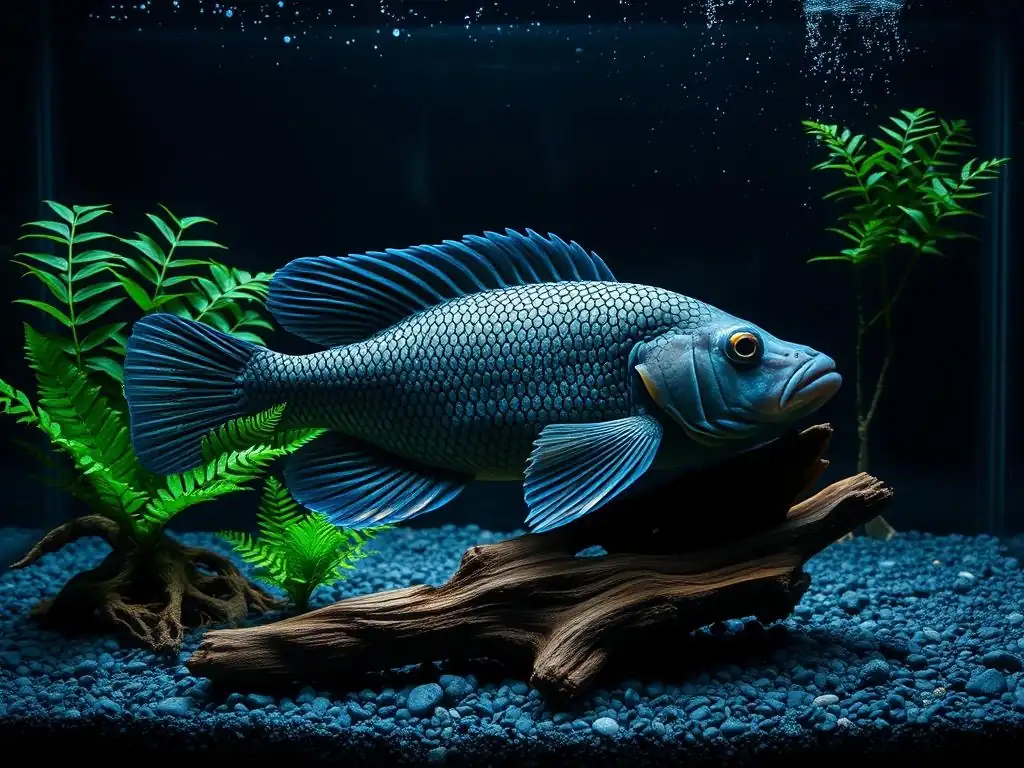
To truly observe pleco night behavior secrets without causing stress, it's crucial to minimize light disturbance. Plecos and Bristlenose Plecos have sensitive eyes and are adapted to low-light conditions. A sudden burst of white light can startle them, causing them to hide or exhibit unnatural behavior.
The ideal solution is to use a dedicated "moon light" or a light source that emits a dim, red spectrum. Red light is minimally disruptive to most fish, as many species, including Loricariids, have photoreceptors that are less sensitive to red wavelengths. A small LED moon light, typically emitting a soft blue or red glow, can provide just enough illumination to observe without startling your fish.
When implementing these lights, ensure they are positioned to cast a gentle, even glow over the tank, avoiding direct, harsh beams. Some smart aquarium light systems offer programmable lunar cycles, gradually dimming and brightening to simulate natural moon phases, which can further enhance a natural environment for your nocturnal inhabitants. Avoid leaving even these dim lights on for excessively long periods; typically, 30 minutes to an hour of observation is sufficient to gather insights without disrupting their natural circadian rhythm.
Positioning Your Observation Point for Optimal Viewing
Strategic positioning is key to successful nighttime observation of your Pleco and Bristlenose Pleco. Choose a viewing angle that offers a clear line of sight to their favorite hiding spots, such as driftwood, caves, or dense plant thickets, as these are often their initial points of emergence. Sitting quietly a few feet away from the tank before the moon light comes on allows your eyes to adjust to the darkness and minimizes the chance of startling the fish when they first emerge. Avoid sudden movements or tapping on the glass, as vibrations can easily alarm these sensitive creatures.
Consider using a comfortable chair and positioning yourself where reflections on the tank glass are minimal. Reflections from room lights or windows can obscure your view and create a barrier between you and the fish. Sometimes, placing a dark cloth behind the tank can reduce glare and enhance visibility into the depths of the aquarium. Patience is paramount; it may take several minutes, or even longer, for your Plecos to feel secure enough to venture out and display their true pleco night behavior secrets.
Ensuring Water Parameters are Ideal for Nighttime Activity
Maintaining stable and ideal water parameters is foundational for encouraging natural pleco nighttime habits and ensuring their overall health. Just as during the day, water quality directly impacts a Pleco's activity levels and well-being after dark. For most common Plecos and Bristlenose Plecos, a consistent temperature range between 72-80°F (22-27°C) is preferred, with a pH level typically between 6.5 and 7.5. Ammonia and nitrite should always be at zero parts per million (ppm), and nitrates kept below 20 ppm through regular water changes.
Before initiating a nighttime observation session, it's beneficial to confirm these parameters are within optimal ranges. Unstable or poor water quality can lead to stress, which manifests as lethargy, unusual hiding, or even erratic swimming, even during their active hours. A Pleco that is stressed by high nitrates, for example, might remain hidden or exhibit clamped fins, even if it's naturally nocturnal. Ensuring pristine water conditions not only promotes healthy pleco night behavior secrets but also strengthens their immune system, making them more resilient to potential health issues.
Deciphering Common Pleco & Bristlenose Pleco Nighttime Behaviors
Feeding Habits: What Plecos & Bristlenose Plecos Eat After Dark
One of the most prominent pleco night behavior secrets is their feeding activity. Plecos and Bristlenose Plecos are primarily herbivorous or omnivorous scavengers, and much of their foraging occurs under the cover of darkness. They will actively rasp algae from tank glass, decorations, and plant leaves, using their specialized suckermouths.
It's common to see distinct "trails" on the glass in the morning, indicating where a Pleco has been grazing throughout the night. Beyond algae, they will also search for uneaten fish food, detritus, and biofilm on surfaces. Many aquarists offer sinking algae wafers, spirulina tabs, or blanched vegetables (like zucchini or cucumber slices) just before lights out to ensure these nocturnal feeders receive adequate nutrition.
A healthy Bristlenose Pleco, for instance, might spend several hours actively consuming algae and biofilm from driftwood, a crucial part of their diet that also aids digestion. They will also sift through the substrate, searching for any small food particles that have settled. Observing this dedicated foraging can confirm that your fish are receiving enough food and that their digestive systems are functioning properly. A lack of interest in food, even when offered during their active period, can be an early indicator of stress or illness.
While often perceived as solitary, Plecos and Bristlenose Plecos do exhibit social interactions, particularly when kept in groups or with other bottom-dwellers, and these pleco night behavior secrets are often more evident after dark. Bristlenose Plecos, especially males, might engage in territorial displays, pushing or nudging each other away from preferred feeding spots or hiding places. These interactions are usually non-violent, involving subtle body language or brief chases, rather than aggressive fin nipping. Observing these dynamics can provide insights into their hierarchy and ensure that tank mates are compatible.
In larger tanks with multiple Plecos or Bristlenose Plecos, you might witness them sharing a large piece of driftwood, or even gathering in specific areas to graze. However, if aggression is observed, such as persistent chasing or attempts to ram, it could indicate insufficient space, too few hiding spots, or an imbalanced male-to-female ratio. For example, a dominant male Bristlenose Pleco might patrol a specific cave or log, actively deterring other males from entering its perceived territory. Understanding these nocturnal social cues is vital for maintaining a harmonious aquatic environment and preventing chronic stress among your fish.
Exploring the Tank: Mapping Pleco & Bristlenose Pleco Movement Patterns
During the day, Plecos and Bristlenose Plecos often remain stationary, nestled in caves or clinging to driftwood. However, after dark, their exploratory nature comes to the forefront, revealing fascinating pleco night behavior secrets related to their movement patterns. They will traverse the entire tank, from the substrate to the water's surface, seeking out new food sources, investigating changes in decor, and simply exploring their environment. You might observe a Pleco slowly "walking" across the bottom, using its pectoral and pelvic fins, or clinging to the glass as it moves vertically up and down the tank walls.
These nocturnal journeys are essential for their physical and mental well-being. A healthy and comfortable Pleco will utilize all available space, demonstrating curiosity and confidence. Mapping these movement patterns can reveal preferred routes, resting spots, and even areas of the tank that might be underutilized or require more enrichment.
For instance, if a Bristlenose Pleco consistently avoids a certain area, it might indicate a strong current, lack of cover, or an unsuitable substrate in that spot. Observing their full range of movement confirms they are comfortable and thriving in their habitat, actively engaging with their surroundings rather than simply hiding away.
Identifying Unusual Nighttime Behaviors in Plecos & Bristlenose Plecos
Signs of Stress: Recognizing Abnormal Pleco & Bristlenose Pleco Activity
While observing pleco night behavior secrets is generally a fascinating endeavor, it's equally important to recognize when activity deviates from the norm, signaling potential stress. A healthy Pleco or Bristlenose Pleco should be actively foraging, exploring, and exhibiting natural movements. Signs of stress during their active nocturnal period include unusual lethargy, where the fish remains motionless for extended periods even when food is available, or conversely, frantic, erratic swimming. Rapid gill movement, even in well-oxygenated water, can also indicate stress.
Another common stress indicator is hiding excessively, even more than their usual daytime reclusiveness. If a Pleco, which typically emerges to feed at night, remains completely hidden or constantly attempts to escape the tank's visible areas, it's a cause for concern. Pale coloration, particularly if it's a persistent change rather than a temporary camouflage adjustment, can also be a sign of chronic stress.
For example, a Bristlenose Pleco that typically has vibrant patterns might appear washed out or blotchy when stressed. These deviations from normal pleco nighttime habits warrant immediate investigation into water parameters, tank mate compatibility, or environmental enrichment.
Potential Health Issues: Nighttime Symptoms to Watch For
Nighttime observation is particularly valuable for detecting early symptoms of health issues that might be masked during the day. Beyond general stress, specific pleco night behavior secrets can point to underlying diseases. For instance, "flashing" – where the fish rapidly rubs its body against surfaces like substrate or decor – is a common sign of external parasites such as ich or velvet.
While they might flash during the day, it's often more pronounced when they are actively moving at night. Similarly, clamped fins, where the fins are held close to the body rather than spread normally, can indicate bacterial infections or poor water quality.
Other symptoms to watch for include unusual growths, white spots, or fungal patches that become more visible under dim light. A Pleco struggling with an internal bacterial infection might show a lack of appetite even for their favorite nocturnal foods, or exhibit unusual bloating. Observing their breathing – rapid or labored gill movements – is crucial, as it can indicate oxygen deprivation or gill parasites.
For example, a Bristlenose Pleco might show small, fuzzy white patches on its fins or body, which are often fungal infections, that are easier to spot when it's actively moving around at night. Prompt identification of these symptoms through careful nocturnal monitoring allows for quicker diagnosis and intervention, significantly improving the chances of successful treatment.
Addressing Aggression: Monitoring and Resolving Nocturnal Conflicts
While Plecos and Bristlenose Plecos are generally peaceful, inter-species or intra-species aggression can occur, especially in overcrowded tanks or those with insufficient hiding spots. These pleco night behavior secrets related to aggression are often more pronounced after dark when competition for resources like food and territory intensifies. Common signs of aggression include chasing, nipping at fins (though less common with their suckermouths, they can still barge), or actively defending a specific cave or food item. Male Bristlenose Plecos, in particular, can be territorial, especially if there are multiple males in a relatively small tank.
If nocturnal aggression is observed, immediate action is necessary to prevent injury and chronic stress. This might involve adding more hiding places (such as caves, driftwood, or dense plants) to create more defined territories and break up lines of sight. Increasing the frequency of feeding or distributing food in multiple locations can reduce competition for resources.
In severe cases, it might be necessary to separate aggressive individuals or re-evaluate the tank's stocking levels. For example, if you notice a larger Common Pleco consistently bullying a smaller Bristlenose Pleco away from its preferred feeding area, adding multiple sinking food items distributed across the tank can help alleviate this conflict. Addressing these nocturnal conflicts ensures a safer and less stressful environment for all tank inhabitants.
Tips for Capturing Pleco & Bristlenose Pleco Nighttime Activity
Using a Camera with Night Vision Capabilities
Capturing pleco night behavior secrets on camera can be incredibly rewarding, allowing you to review and analyze behaviors more closely and share your observations. Standard cameras often struggle in low light, producing grainy or underexposed images. A camera with true night vision capabilities, or at least excellent low-light performance (high ISO sensitivity), is ideal. Many modern smartphones have surprisingly good low-light modes, but a dedicated mirrorless or DSLR camera with a fast lens (low f-number) will yield the best results. Some action cameras also offer decent low-light or night lapse modes.
When using a night vision camera, ensure any auxiliary illumination it uses is infrared (IR) rather than visible light, as IR is invisible to fish and won't disturb them. Position the camera on a stable tripod to prevent blur from long exposure times. Experiment with different angles and settings to find what works best for your specific tank setup and light conditions. Remember, the goal is to capture natural behavior, so avoid anything that might startle your fish.
Avoiding Flash Photography: Protecting Sensitive Eyes
While tempting to use a flash for brighter photos, it's crucial to avoid flash photography when observing pleco nighttime habits. Plecos and Bristlenose Plecos, being nocturnal, have eyes highly adapted to low light. A sudden, bright flash of light can be incredibly startling, disorienting, and potentially damaging to their sensitive eyes. It can cause immense stress, leading to hiding, erratic swimming, or even long-term behavioral changes. The momentary gain of a clear photo is not worth the potential harm to your fish.
Instead of flash, rely on the dim moon light or red light you've set up for observation. Adjust your camera settings (e.g., increase ISO, widen aperture, slow shutter speed) to compensate for the low light. While this might result in slightly noisier or less sharp images, it prioritizes the well-being of your fish. Patience and proper lighting techniques are far more effective than a disruptive flash when trying to capture authentic pleco night behavior secrets.
Documenting Observations: Keeping a Pleco & Bristlenose Pleco Behavior Log
To truly understand and appreciate pleco night behavior secrets, maintaining a detailed behavior log can be invaluable. This isn't just for capturing photos or videos, but for systematically recording what you observe. A simple notebook or a digital document can serve this purpose. For each observation session, note the date, time, duration of observation, and any specific behaviors you witnessed.
Consider including:
- Activity Level: Was the Pleco actively foraging, exploring, or mostly sedentary?
- Location: Where in the tank was it observed (e.g., driftwood, glass, substrate, specific cave)?
- Interactions: Any social interactions with other Plecos or tank mates? Were they positive, neutral, or aggressive?
- Feeding: Did it consume any food offered? What type of food?
- Unusual Signs: Any signs of stress, illness, or abnormal behavior (e.g., flashing, clamped fins, pale color)?
- Environmental Notes: Any changes in water parameters, tank temperature, or new additions to the tank.
Over time, this log will allow you to identify patterns, track changes in behavior, and quickly recognize when something is amiss. For example, consistently noting a Bristlenose Pleco's active feeding on zucchini every night confirms its good health, whereas a sudden cessation of feeding would be an immediate red flag. This systematic approach transforms casual observation into a powerful tool for fish health management and deeper appreciation of your aquatic companions.
Enhancing Your Pleco and Bristlenose Pleco Habitat for Optimal Nighttime Exploration
Providing Hiding Places: Caves, Wood, and Plant Cover
For Plecos and Bristlenose Plecos, adequate hiding places are not just a luxury; they are a fundamental requirement for their well-being, especially for encouraging natural pleco night behavior secrets. During the day, these fish seek refuge from light and potential perceived threats. At night, these same hiding spots serve as secure bases from which they emerge to explore. Without sufficient cover, a Pleco can become chronically stressed, leading to suppressed activity even after dark. Provide a variety of hiding options:
- Caves: Ceramic, PVC, or natural rock caves offer dark, enclosed spaces. Ensure openings are large enough for your Pleco to enter and exit comfortably.
- Driftwood: Large pieces of driftwood offer numerous crevices and overhangs, perfect for clinging and hiding. They also provide essential cellulose for digestion.
- Dense Plant Cover: Live plants, especially those with broad leaves or forming dense thickets (like Anubias, Java Fern, or Amazon Swords), offer excellent natural cover and a sense of security.
Aim for at least one primary hiding spot per Pleco, plus several secondary options, especially if keeping multiple individuals. This reduces competition and ensures every fish has a safe retreat, promoting bolder nocturnal exploration.
Creating a Natural Environment: Simulating a Riverbed Habitat
To truly encourage authentic pleco nighttime habits, strive to replicate their natural riverbed or stream habitat as closely as possible. This involves more than just hiding places; it's about the overall tank layout and substrate. A soft, sandy substrate is ideal, as many Plecos enjoy sifting through it for detritus. Avoid sharp gravel that could injure their sensitive undersides or mouthparts. Incorporate smooth river rocks and plenty of driftwood, mimicking the natural debris found in their native waters.
Consider the flow dynamics; many Plecos originate from fast-flowing rivers. While your tank doesn't need to be a torrent, a moderate current provided by filters or powerheads can be stimulating. Arrange decor in a way that creates natural pathways and broken lines of sight, encouraging exploration and establishing territories. This thoughtful aquascaping not only enhances the aesthetic appeal but significantly boosts the confidence of your Plecos, making them more likely to display their full range of pleco night behavior secrets, from active foraging to complex exploratory routes.
Optimizing Water Flow: Ensuring Adequate Oxygenation for Nighttime Activity
Adequate water flow and oxygenation are critical for the health and activity of Plecos and Bristlenose Plecos, particularly during their active nocturnal periods. As they are bottom-dwellers, they rely on well-oxygenated water, and a lack of dissolved oxygen can lead to stress and lethargy, even if other parameters are ideal. While filters provide some flow, additional circulation pumps or strategically placed powerheads might be beneficial, especially in larger tanks.
Ensure that the water surface is agitated to facilitate gas exchange, which helps maintain high dissolved oxygen levels. This can be achieved through filter outlets pointed towards the surface or with air stones. During nighttime, fish respiration increases, and plants stop producing oxygen and start consuming it, making good oxygenation even more vital. A well-oxygenated tank promotes robust pleco night behavior secrets, ensuring they have the energy for active foraging and exploration, rather than gasping at the surface or remaining inactive due to insufficient oxygen.
Understanding the Importance of a Consistent Light Cycle for Plecos & Bristlenose Plecos
Simulating Dawn and Dusk: Gradual Light Transitions
A consistent and natural light cycle is paramount for the well-being of Plecos and Bristlenose Plecos, directly influencing their pleco night behavior secrets. Abrupt changes from bright light to complete darkness can be highly stressful for these nocturnal fish, as it doesn't mimic their natural environment. In nature, dawn and dusk involve gradual transitions, allowing fish to adjust their vision and activity levels. Replicating this in the aquarium minimizes stress and encourages natural behavioral patterns.
Many modern aquarium lighting systems offer programmable features that simulate dawn and dusk, gradually dimming or brightening over a period of 30 minutes to an hour. If you don't have such a system, you can manually achieve a similar effect by turning off some lights before the main ones, or by using a room light that provides ambient illumination for a short period after the tank lights go out. This smooth transition allows Plecos to slowly emerge from their daytime hiding spots, feeling secure as the light fades, and initiating their pleco nighttime habits more naturally.
Avoiding Sudden Light Changes: Minimizing Stress for Nocturnal Fish
The primary reason to implement gradual light transitions is to avoid sudden light changes, which are a major stressor for nocturnal species like Plecos and Bristlenose Plecos. A sudden switch from bright illumination to pitch black can disorient them, causing them to dart around erratically, potentially injuring themselves by colliding with decor or tank walls. This shock can lead to chronic stress, suppressing their immune system and making them more susceptible to disease. It can also disrupt their natural circadian rhythm, impacting their feeding, breeding, and overall activity.
Consistent pleco night behavior secrets rely on a predictable environment. If the lights suddenly turn off at varying times each day, or if they are frequently turned on unexpectedly during the night, it prevents the fish from establishing a stable routine. This unpredictability keeps them in a state of alert, diminishing their confidence to explore and forage actively. By maintaining a fixed schedule for light cycles and incorporating gradual transitions, aquarists provide a stable, low-stress environment that allows Plecos to thrive and exhibit their full range of natural nocturnal behaviors.
Managing Algae Growth: Balancing Light and Algae Control
While light is essential for plant growth and the overall aesthetic of an aquarium, it also plays a critical role in managing algae growth, which directly impacts the pleco night behavior secrets related to their diet. Plecos and Bristlenose Plecos are excellent algae eaters, and a certain amount of algae is beneficial as a natural food source. However, excessive light can lead to an explosion of undesirable algae types (e.g., hair algae, black beard algae) that can overwhelm the tank and potentially harm plants or other inhabitants.
A balanced light cycle, typically 8-10 hours of consistent light per day, is crucial. Too much light can lead to rampant algae growth, making it difficult for your Pleco to keep up, and potentially necessitating chemical algae removers which can be harmful. Too little light, conversely, might not support healthy plant growth or provide enough natural algae for your Pleco's grazing.
Regular observation of your Pleco's feeding activity after dark, combined with monitoring algae levels, allows you to fine-tune your lighting schedule. For example, if your Bristlenose Pleco is barely making a dent in the algae on the glass, it might indicate an imbalance between light duration and the tank's bioload, requiring adjustment of the light cycle or introduction of more algae-eating companions.
Troubleshooting Common Nighttime Pleco & Bristlenose Pleco Issues
Inactivity: Determining the Cause of Reduced Movement
Observing reduced movement or complete inactivity during the nocturnal period is a significant deviation from normal pleco night behavior secrets and warrants investigation. While Plecos are often still during the day, they should be active at night. If your Pleco or Bristlenose Pleco remains hidden or motionless even after the main lights are off and moon lighting is on, several factors could be at play:
- Water Quality Issues: The most common culprit. Test for ammonia, nitrite, and nitrates immediately. High levels of any of these can cause lethargy.
- Temperature Fluctuations: Sudden drops or rises in temperature can stress fish.
- Lack of Food: If they aren't finding enough food, they might conserve energy. Ensure they are receiving sinking pellets or blanched vegetables after dark.
- Illness: Early stages of disease might manifest as lethargy. Look for other subtle symptoms like clamped fins or labored breathing.
- Stress from Tank Mates: Overly aggressive tank mates, even if not directly interacting at night, can cause chronic stress leading to inactivity.
- Insufficient Hiding Places: A lack of security can make them too timid to emerge.
Address water quality first, then consider environmental enrichment and diet. Consistent inactivity is a red flag that should not be ignored.
Hiding: Understanding Normal and Abnormal Hiding Behavior
Plecos and Bristlenose Plecos are naturally reclusive during daylight hours, so some hiding is normal. However, understanding the nuances of their pleco nighttime habits related to hiding is key. Normal hiding involves retreating to established caves or under driftwood during the day, then emerging confidently at night to forage. Abnormal hiding, especially after dark, means the fish remains hidden even during its active period, or seeks unusual, less secure hiding spots.
Reasons for abnormal nocturnal hiding often overlap with inactivity:
- New Environment: Recently introduced fish may hide more until they feel secure.
- Overcrowding: Too many fish in a tank can lead to a sense of insecurity.
- Lack of Cover: Not enough suitable hiding spots forces them to constantly seek refuge.
- Bullying: If a Pleco is being harassed by tank mates, it will seek constant concealment.
- Illness/Stress: As with inactivity, this can be an early symptom.
If your Pleco is consistently hiding at night, assess its environment for stressors. Adding more caves or dense plant cover can often alleviate this behavior, as can reducing stocking levels or addressing aggression from other fish.
Flashing: Identifying and Addressing the Issue
"Flashing" is a distinct pleco night behavior secret that is almost always a sign of irritation or parasites. It involves the fish rapidly rubbing or scraping its body against the substrate, decorations, or tank walls, as if trying to scratch an itch. While occasional, isolated flashes might occur as part of grooming, persistent or frequent flashing, especially at night when they are most active, indicates a problem.
The most common causes of flashing are:
- External Parasites: Ich (white spot disease), velvet, or gill flukes are common culprits. These parasites irritate the fish's skin or gills.
- Poor Water Quality: High levels of ammonia, nitrite, or even high nitrates can irritate a fish's slime coat, leading to flashing.
- pH Shock: Sudden changes in pH can also cause irritation.
If you observe flashing, immediately test your water parameters. If they are ideal, closely inspect the fish for visible signs of parasites (e.g., white spots). Treatments for parasites vary, so accurate identification is crucial. Quarantine new fish to prevent introduction of parasites. Addressing the underlying cause promptly is essential to prevent the condition from worsening.
Clamped Fins: Identifying and Addressing the Issue
Clamped fins are another critical pleco night behavior secret to watch for, indicating stress or illness. A healthy Pleco or Bristlenose Pleco, especially when active at night, should hold its fins spread naturally, allowing for proper movement and balance. Clamped fins mean the fins are held tightly against the body, rather than extended. This is a general symptom, not specific to one disease, but it always signals that something is wrong.
Common causes of clamped fins include:
- Poor Water Quality: High ammonia, nitrite, or nitrates are very common causes.
- Incorrect Water Parameters: pH or temperature outside the ideal range for the species.
- Stress: From bullying, overcrowding, or sudden environmental changes.
- Bacterial Infections: Early stages of bacterial diseases can cause fish to clamp their fins.
- Parasites: External parasites that irritate the skin can also lead to clamped fins.
Upon noticing clamped fins during nocturnal observation, immediately perform a comprehensive water test and a partial water change. Observe for other symptoms like lethargy, loss of appetite, or visible spots. If the condition persists after water quality is addressed, consider a broader spectrum antibiotic or anti-parasitic treatment, ideally after consulting with an experienced aquarist or veterinarian. Early intervention is key to recovery.
Conclusion: Appreciating the Nocturnal Life of Your Pleco and Bristlenose Pleco
The world of your aquarium doesn't simply go dark when the lights switch off; for your Pleco and Bristlenose Pleco, it truly comes alive. Unveiling pleco night behavior secrets offers a profound insight into their natural instincts, from their diligent foraging and exploratory movements to their subtle social interactions.
This after-dark observation is not merely a source of fascination but a vital practice for responsible aquarists, providing invaluable clues about their health, stress levels, and overall well-being. By understanding and catering to their nocturnal needs, from providing ample hiding places and optimal water parameters to ensuring a consistent light cycle, you create an environment where these captivating catfish can truly thrive.
Embracing the opportunity to witness these pleco nighttime habits enriches the aquarium experience, transforming a seemingly quiet tank into a vibrant, active ecosystem once the sun sets. It fosters a deeper connection with your aquatic companions and equips you with the knowledge to proactively address any issues that may arise. So, next time the main lights dim, resist the urge to immediately turn away. Instead, grab a moon light, find a comfortable spot, and prepare to be amazed by the hidden, bustling world of your Pleco and Bristlenose Pleco, revealing the true magic of their nocturnal lives.
Frequently Asked Questions
What is the typical nocturnal behavior of a Pleco in an aquarium?
Plecos are primarily nocturnal fish, meaning they are most active at night. You'll often observe them grazing on algae and scavenging for food scraps after the aquarium lights are turned off.
Why is my Pleco more active at night, and should I be concerned?
This is perfectly normal! Plecos are naturally crepuscular and nocturnal. It's their instinctual behavior to forage and explore when it's darker, offering them protection from predators (or perceived threats).
How can I best observe my Pleco's nighttime activities without disturbing it?
Use a red or blue light specifically designed for aquariums. These colors are less disruptive to fish than white light, allowing you to observe their natural behaviors without stressing them.
What kind of food should I provide to support my Pleco's nocturnal feeding habits?
Offer sinking algae wafers or other bottom-feeder pellets just before turning off the lights. This ensures they have a reliable food source available during their active hours.
Are there any specific tank conditions that can affect my Pleco's nocturnal behavior?
Yes, factors like water quality and the presence of other fish can influence their activity. Ensure proper filtration, regular water changes, and a peaceful environment to encourage natural behavior.
Final Reflection: Unveiling the Secrets of the Night
The journey into the nocturnal world of our Plecos and Ancistrus, as we've explored, reveals a hidden dimension of their existence, a world often overlooked. Understanding their night behavior is not just about aquarium keeping; it's about appreciating the complexity and adaptability of life itself. This deeper understanding allows us to provide more enriching environments and truly connect with these fascinating creatures.
The subtle shifts in behavior after lights out, the intensified foraging, the territorial displays – these are all whispers of a primal rhythm that continues to shape their lives. Witnessing this firsthand has deepened my appreciation for the delicate balance within our aquariums and the responsibility we have to maintain it. In the dark, the smallest light can make all the difference.
This holds true not only for our Plecos but also for our understanding of the natural world around us.
As the artificial sun sets on this exploration, I invite you to carry the insights gained into your own aquariums and beyond. Observe, learn, and adapt. Embrace the darkness as an opportunity to uncover the hidden wonders that surround you. By understanding the "Pleco night behavior secrets," you're not just becoming a better aquarist, you're becoming a more attentive observer of life itself.
Unlock the Secrets of Your Pleco's Nightlife!
Thank you for diving into the fascinating world of nocturnal pleco behavior! Now that you're equipped with insights into their after-dark activities, let's turn knowledge into action. Here's how you can deepen your understanding and connection with your aquatic companions:
- Observe with Intention: Dedicate at least 30 minutes this week to patiently observing your pleco after lights out. Note any surprising behaviors or feeding patterns you didn't notice before. This is your primary mission!
- Document Your Discoveries: Start a pleco journal or use a notes app to record your observations. Include details like time, specific behaviors, and anything unique you see.
- Share Your Discoveries: Post a picture of your pleco after lights out on social media and tag Aquarium Mastery with your findings about their nocturnal behavior and use the hashtag #PlecoNightlife.
What unexpected midnight snack did you catch your pleco enjoying tonight?