
Decoding Discus Behavior: From Shy Hiding to Confident Schooling


Welcome to Aquarium Mastery!
Ever wondered why your majestic Discus fish are hiding instead of displaying their vibrant colors? Dive into our comprehensive guide, "Decoding Discus Behavior: From Shy Hiding to Confident Schooling," and unlock the secrets to understanding and addressing Discus fish shy behavior. Discover the reasons behind their timidity and learn proven techniques to create a thriving, stress-free environment where your Discus can truly flourish. Ready to transform your timid Discus into confident stars? Let's get started!
- Understanding Discus Fish Behavior in the Aquarium
- Identifying the Root Causes of Stress in Discus Fish
- Recognizing the Signs of a Healthy vs. Stressed Discus
- Solutions to Alleviate Discus Fish Stress
- Promoting Natural Behavior in Discus
- Advanced Discus Behavior: Beyond the Basics
- Preventing Future Instances of Discus Stress
- Conclusion: A Thriving Discus Aquarium Through Understanding and Care
-
Frequently Asked Questions
- What are the primary reasons why Discus fish exhibit shy behavior in a new aquarium?
- How can I create a more comfortable environment to reduce shyness in my Discus?
- What are some potential signs that my Discus's shyness is related to illness rather than just acclimation?
- Is it better to keep Discus fish in a larger group to reduce their shyness?
- How long should I typically wait before becoming concerned about a Discus fish's persistent shyness?
- Final Reflection: Unveiling the Secrets of Discus Harmony
- Ignite Your Discus Passion!
Understanding Discus Fish Behavior in the Aquarium
Discus fish, often hailed as the "King of the Aquarium," are renowned for their majestic disc-shaped bodies, vibrant colors, and graceful movements. Originating from the Amazon basin, these cichlids are highly sought after by aquarists for their captivating beauty. Beyond their aesthetic appeal, Discus are social creatures that exhibit complex behaviors, including forming intricate social hierarchies within a group. A healthy Discus aquarium thrives when their social needs are met, typically requiring a minimum group size to foster natural schooling and interaction.
Understanding the social structure and inherent sensitivities of Discus is paramount for their well-being. These fish can grow quite large, typically reaching 6 to 10 inches in diameter, and can live for 10 to 15 years with proper care. Their long lifespan means that any prolonged stress or inadequate conditions can lead to chronic health issues and a persistent "Discus fish shy behavior." Observing their natural interactions and subtle cues is key to maintaining a thriving, confident group, rather than a collection of stressed, hiding individuals.
Why is My Discus Hiding? Understanding Stress and Fear
One of the most common and concerning behaviors observed in new or struggling Discus fish is persistent hiding. When a Discus retreats to a corner, behind decorations, or dark areas of the tank, it is a clear indication of stress or fear. Unlike some other fish that might hide due to natural instincts or sleep, chronic hiding in Discus is a red flag, signaling that something in their environment is amiss. This "Discus fish shy behavior" is often a direct response to perceived threats, poor water quality, or an unsuitable tank setup.
Stress can manifest in various ways, but hiding is often the first and most obvious sign. A confident, healthy Discus will actively swim throughout the tank, interact with its tank mates, and show curiosity towards its surroundings. Conversely, a stressed Discus will exhibit "Discus fish shy behavior," appearing withdrawn, lethargic, and often refusing food. Identifying the underlying cause of this fear and stress is crucial for transforming a timid, hiding Discus into a vibrant, active member of the aquarium community.
Identifying the Root Causes of Stress in Discus Fish
Water Quality Issues and Discus Fish Stress
Water quality is arguably the single most critical factor in Discus health and behavior. These fish are exceptionally sensitive to fluctuations and impurities in their aquatic environment, far more so than many other freshwater species. Poor water conditions can lead to chronic stress, weakened immune systems, and a range of diseases, all of which contribute to "Discus fish shy behavior" and overall decline.
Maintaining pristine water parameters is not merely a recommendation; it is a fundamental requirement for keeping Discus. Even slight deviations from their preferred conditions can trigger significant stress responses. For instance, a sudden drop in temperature or a spike in harmful compounds can immediately cause a Discus to darken, clamp its fins, and retreat, exhibiting classic signs of fear and discomfort.
Ammonia, Nitrite, and Nitrate Levels: Toxicity and Prevention
The nitrogen cycle is fundamental to aquarium health, and its byproducts—ammonia, nitrite, and nitrate—are particularly dangerous for Discus. Ammonia (NH3) and nitrite (NO2) are highly toxic, even at very low concentrations. For Discus, levels of both ammonia and nitrite must be consistently at 0 parts per million (ppm). Even 0.25 ppm of ammonia can cause severe gill damage and internal organ stress, leading to immediate "Discus fish shy behavior" and gasping at the surface.
Nitrate (NO3), while less acutely toxic than ammonia or nitrite, can still cause chronic stress and health issues if allowed to accumulate. For Discus, nitrate levels should ideally be kept below 20 ppm, and certainly never exceed 40 ppm. Regular water changes are the primary method for preventing nitrate buildup, while a well-established biological filter is essential for converting ammonia and nitrite into less harmful nitrates. Without diligent monitoring and proactive prevention, these toxic compounds will inevitably lead to a stressed, hiding Discus.
Maintaining Optimal Water Parameters: Temperature, pH, and Hardness
Discus fish thrive in specific and stable water parameters that mimic their native Amazonian habitats. Temperature is crucial, with an optimal range of 82-86°F (28-30°C). Temperatures below this range can suppress their immune system, making them susceptible to illness, while excessively high temperatures can reduce oxygen levels and accelerate metabolism, causing stress. Stability is key; even minor daily temperature swings can induce "Discus fish shy behavior."
The ideal pH for Discus is slightly acidic, generally ranging from 6.0 to 7.0, though stability within this range is more important than hitting an exact number. Wild Discus are often found in water with pH as low as 5.0, but in captivity, a stable pH near neutral is often easier to maintain and equally beneficial.
Water hardness (GH and KH) should also be kept low, typically 1-4 dGH (18-70 ppm) for general hardness and 1-3 dKH (18-53 ppm) for carbonate hardness. Harder water can lead to osmotic stress and make them more prone to issues like "hole-in-the-head" disease, contributing to overall discomfort and a reluctance to engage with their surroundings.
Tank Size and Overcrowding: Impact on Discus Health
An appropriately sized aquarium is fundamental for the well-being of Discus fish. These fish, despite their generally peaceful nature, require ample space to thrive, establish territories, and avoid chronic stress. Housing Discus in tanks that are too small is a common mistake that leads directly to stunted growth, aggression among tank mates, and persistent "Discus fish shy behavior" in subordinate individuals.
Overcrowding not only exacerbates social tensions but also makes it incredibly difficult to maintain stable water quality. A higher bioload in a smaller volume of water means faster accumulation of nitrates and a greater risk of ammonia/nitrite spikes. This constant battle against declining water parameters adds another layer of stress, further contributing to a fish that spends most of its time hiding rather than displaying its natural beauty.
The Importance of Space for Territoriality and Hierarchy
Discus fish, even in a peaceful school, establish a social hierarchy. This "pecking order" involves dominant individuals and more subordinate ones. In a tank that is too small, the dominant fish can relentlessly bully the weaker ones, preventing them from accessing food and forcing them into constant hiding. This chronic stress can lead to stunted growth, fin nipping, and even premature death for the bullied fish, making "Discus fish shy behavior" a survival mechanism.
A general guideline for Discus tank size is a minimum of 55 gallons for a group of 3-4 juvenile Discus, with at least 10-15 gallons added for each additional adult. For a thriving group of 5-6 adult Discus, a 75-gallon or even 90-gallon aquarium is much more suitable.
For example, trying to keep six adult Discus in a 55-gallon tank will almost certainly result in intense bullying, leading to severe "Discus fish shy behavior" and potential starvation for the less dominant fish, whereas the same group in a 75-gallon tank would have enough space to establish territories and diffuse aggression more effectively.
Incompatible Tank Mates and Discus Stress
The choice of tank mates is critical for a peaceful Discus aquarium. Discus are generally slow-moving, peaceful, and easily intimidated. Introducing fast-moving, aggressive, or fin-nipping species can turn a serene environment into a constant source of stress, resulting in chronic "Discus fish shy behavior" and a reluctance to feed. Even otherwise peaceful fish that are simply too boisterous can outcompete Discus for food, leading to malnutrition.
The delicate nature of Discus means they require companions that share similar water parameter preferences and temperaments. Ignoring this can lead to a tank where Discus are constantly on edge, hiding from perceived threats, and unable to display their natural behaviors. This chronic stress not only impacts their well-being but also makes them more susceptible to disease.
Identifying and Avoiding Fin-Nippers and Aggressive Species
When selecting tank mates for Discus, it is crucial to avoid any species known for aggression, fin-nipping, or overly boisterous behavior. Common culprits to steer clear of include most species of Barbs (like Tiger Barbs), larger or more aggressive Tetras (such as Serpae Tetras or Black Skirt Tetras, which can be nippy), and many other types of Cichlids that are not specifically known for their peaceful demeanor (e.g., Convict Cichlids or Jack Dempseys). Even some Gouramis can be too territorial.
These incompatible species will harass Discus, nip at their long dorsal and anal fins, and hog food, exacerbating "Discus fish shy behavior." For instance, a group of Tiger Barbs might constantly chase and nip at a Discus's fins, causing physical injury and immense stress, forcing the Discus to hide and become withdrawn. Instead, focus on peaceful, non-competitive species like Cardinal Tetras, Rummy Nose Tetras, Harlequin Rasboras, peaceful Corydoras catfish, or Otocinclus catfish, which are generally good companions that won't contribute to Discus stress.
New Tank Syndrome and Discus Acclimation
Introducing Discus fish into an uncycled aquarium or failing to acclimate them properly are common pitfalls that lead to immediate and severe stress, often resulting in profound "Discus fish shy behavior." "New Tank Syndrome" refers to the period in a newly set up aquarium when the beneficial bacteria necessary for the nitrogen cycle have not yet established themselves. Without these bacteria, ammonia and nitrite quickly accumulate to toxic levels, which are lethal to sensitive fish like Discus.
Even in a perfectly cycled tank, the transition from one environment (e.g., a fish store or breeder's tank) to another can be incredibly stressful for Discus. Sudden changes in water parameters, temperature, or lighting can overwhelm their delicate systems, leading to shock and a prolonged period of hiding and discomfort. Proper preparation and careful introduction are non-negotiable for their survival and well-being.
The Importance of a Properly Cycled Aquarium and Gradual Introduction
A properly cycled aquarium is one where the nitrogen cycle is fully established, meaning beneficial bacteria are present in sufficient numbers to convert toxic ammonia into nitrite, and then nitrite into less harmful nitrate. This process typically takes 4-6 weeks to complete without fish, or longer with a fish-in cycle (which is not recommended for Discus due to their sensitivity).
Before adding any Discus, ammonia and nitrite levels must consistently read 0 ppm, and nitrates should be present but manageable. Skipping this crucial step guarantees acute stress and likely fatalities, resulting in any surviving fish exhibiting extreme "Discus fish shy behavior."
Once the tank is cycled, the introduction of new Discus must be gradual and meticulous. Drip acclimation is the preferred method: slowly adding tank water to the bag or container holding the new fish over a period of 1-2 hours. This gradual adjustment minimizes the shock from differences in pH, temperature, and hardness, significantly reducing the initial stress and preventing immediate "Discus fish shy behavior." Furthermore, a quarantine period of 4-6 weeks in a separate tank for new fish is highly recommended to observe for diseases and prevent their introduction into the main display tank.
Recognizing the Signs of a Healthy vs. Stressed Discus
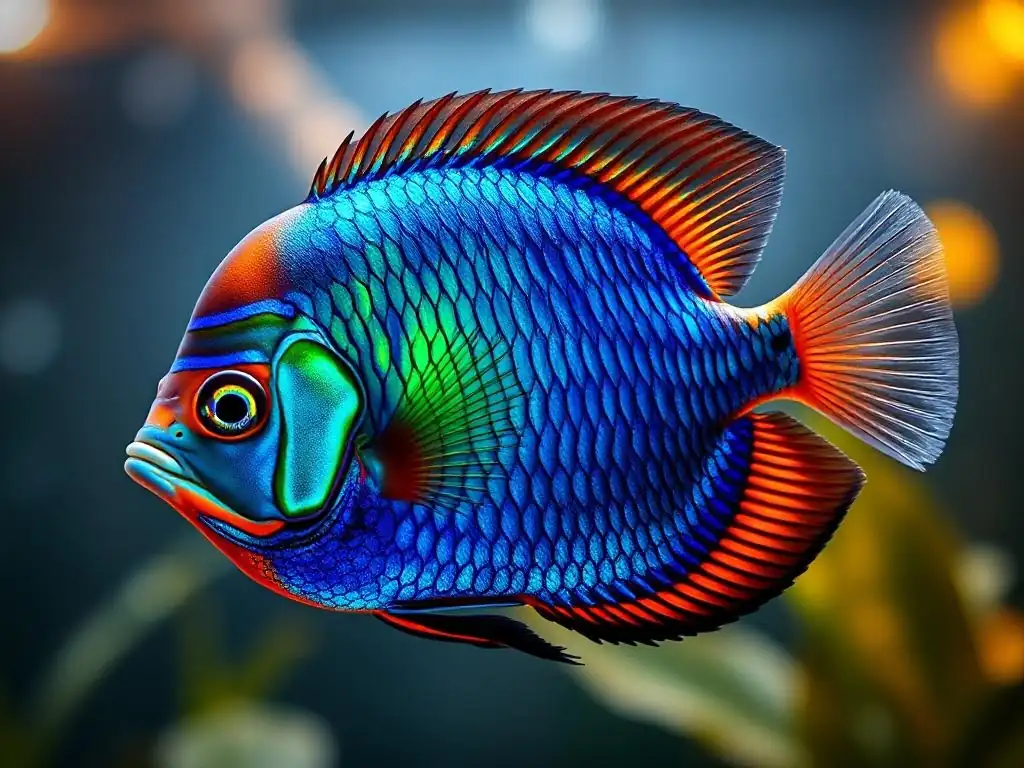
Physical Indicators of a Healthy Discus
Observing the physical appearance of your Discus is often the first step in assessing their health and comfort. A healthy Discus displays a robust and vibrant presence, reflecting its optimal living conditions and lack of stress. These physical cues are direct indicators of their internal state and provide immediate insight into their well-being.
Understanding these indicators allows aquarists to proactively address any potential issues before they escalate. A proactive approach based on visual assessment can prevent a healthy fish from developing "Discus fish shy behavior" due to undetected underlying problems.
Vibrant Colors and Erect Fins
One of the most striking signs of a healthy Discus is its vibrant and consistent coloration. Each Discus strain has its characteristic hues, and in a healthy specimen, these colors will be intense, clear, and evenly distributed across the body. For instance, a healthy Blue Diamond Discus will exhibit a deep, uniform blue, while a Pigeon Blood will show bright reds and oranges without dullness or patchy areas. Any fading, darkening, or appearance of vertical "stress bars" (unless part of their natural pattern) can indicate stress or illness.
Equally important are the fins. Healthy Discus will have all their fins—dorsal, anal, caudal (tail), and pelvic—fully extended and erect, moving gracefully with their swimming. They should not be clamped tightly against the body, frayed, or show signs of tears. Erect fins signify comfort and confidence, while clamped fins are a classic sign of discomfort, illness, or "Discus fish shy behavior."
Healthy Body Shape and Clear Eyes
A healthy Discus should possess a full, round, disc-like body shape, characteristic of the species. The body should appear robust, without any noticeable indentations, sunken bellies, or abnormal swellings. Their slime coat should be smooth and transparent, not cloudy or excessively thick, which can indicate parasitic infections or stress. A well-fed Discus will have a slightly convex forehead curve, showing good muscle development.
Their eyes should be bright, clear, and alert, without any cloudiness, haziness, or sunken appearance. Clear eyes are a strong indicator of overall health and hydration. Conversely, dull, cloudy, or sunken eyes often point to internal issues, poor water quality, or chronic stress. A Discus with clear, alert eyes is more likely to be observing its environment and engaging in normal social behaviors, rather than exhibiting "Discus fish shy behavior."
Behavioral Indicators of a Healthy Discus
Beyond physical appearance, the behavior of Discus fish provides crucial insights into their comfort levels and overall health. A truly thriving Discus will exhibit confident, engaged behaviors that reflect its natural instincts and social structure within the aquarium. These behavioral patterns are a testament to a well-maintained environment and a happy fish.
Observing these positive behaviors regularly helps to establish a baseline. Any deviation from this baseline can then be quickly identified as a potential issue, allowing for early intervention before "Discus fish shy behavior" becomes chronic.
Active Swimming and Social Interaction
A healthy Discus is not a static fish; it actively and gracefully swims throughout the entire tank, not just confined to one corner or hiding spot. They should explore decorations, navigate through plants, and generally appear at ease in their environment. While they are not hyperactive, their movements should be fluid and purposeful, demonstrating confidence.
Furthermore, Discus are schooling fish, and in a healthy group, they will interact with each other. This includes swimming together in a loose school, engaging in gentle chases (part of their social hierarchy), and occasionally displaying fin-flaring. They should not be constantly isolated or hiding from their tank mates. A group that confidently schools together, occasionally breaking off to explore, indicates a low-stress environment and an absence of severe "Discus fish shy behavior."
Exploring the Tank and Responding to Feeding
A healthy Discus exhibits curiosity and engagement with its surroundings. It will investigate new decorations, cautiously approach the front of the tank when its owner is near, and generally show an awareness of its environment. This exploratory behavior is a strong sign of comfort and a lack of fear. They should not be constantly retreating or startled by normal movements outside the tank.
Perhaps the most telling behavioral indicator is their response to feeding. Healthy Discus will eagerly come to the surface or feeding area when food is introduced, demonstrating a strong appetite. They should actively compete for food, though not aggressively to the point of bullying. A Discus that hesitates, hides during feeding, or completely refuses food is almost certainly under stress or ill. A confident Discus will readily accept a varied diet, showing no "Discus fish shy behavior" when it comes to mealtime.
Signs of Stress in Discus Fish
Recognizing the signs of stress in Discus fish is paramount for timely intervention and preventing the escalation of health problems. Unlike some hardier species, Discus often show clear indicators when something is wrong in their environment. These signs range from subtle changes in appearance to overt behavioral shifts, all pointing to discomfort or illness.
Ignoring these warning signs can lead to chronic stress, weakened immune systems, and susceptibility to various diseases. Early detection of these symptoms, including "Discus fish shy behavior," allows aquarists to diagnose and rectify issues before they become life-threatening.
Hiding, Clamped Fins, and Darkened Colors
The most common and immediate sign of stress, directly linking to "Discus fish shy behavior," is persistent hiding. A stressed Discus will retreat to the darkest corners of the tank, behind filters, heaters, or dense plant cover, remaining there for extended periods. This hiding is a self-preservation instinct, indicating fear or discomfort. If a Discus that was previously active suddenly starts hiding, it's a clear signal that something is amiss.
Simultaneously, stressed Discus often exhibit clamped fins, holding their dorsal, anal, and pelvic fins tightly against their body rather than extended. This is a general sign of discomfort across many fish species. Furthermore, their body coloration often darkens significantly, sometimes appearing almost black, especially if they are light-colored strains. They may also display prominent vertical "stress bars" that are usually faint or absent. For example, a vibrant Red Melon Discus might turn a dull, almost brownish-red with distinct vertical bars when highly stressed, losing its characteristic glow.
Erratic Swimming and Rapid Gill Movement
Beyond hiding, a stressed Discus may exhibit abnormal or erratic swimming patterns. This can include darting quickly around the tank, twitching, shivering, or rubbing their bodies against tank decorations or the substrate. These movements are often an attempt to relieve irritation from parasites or poor water quality, or simply a manifestation of extreme discomfort. In severe cases, they might appear disoriented or even swim erratically near the surface.
Another critical indicator of stress is rapid gill movement, or increased respiration. This suggests that the fish is struggling to breathe, often due to low oxygen levels in the water, gill parasites, or irritation from high ammonia/nitrite concentrations. A healthy Discus breathes calmly and rhythmically. If your Discus is gasping at the surface or its gill movements are noticeably faster than normal, it is a serious sign of distress requiring immediate attention. This labored breathing, combined with "Discus fish shy behavior," indicates a fish in urgent need of intervention.
Solutions to Alleviate Discus Fish Stress
Improving Water Quality for Healthy Discus
Addressing water quality issues is the most impactful step in alleviating Discus fish stress and reversing "Discus fish shy behavior." Given their extreme sensitivity to water parameters, consistent and meticulous water management is non-negotiable for their long-term health and vibrant display. Ignoring this aspect will inevitably lead to a cycle of stress, illness, and a perpetually timid fish.
Implementing a rigorous water quality regimen is not just about reacting to problems but proactively preventing them. This involves not only regular maintenance but also understanding the chemistry of your aquarium water and having the tools to monitor it effectively.
Regular Water Changes and Efficient Filtration
Regular and substantial water changes are the cornerstone of excellent Discus care. Given their high metabolism and the relatively warm temperatures they require, nitrates can accumulate quickly. Performing 25-50% water changes 2-3 times per week is often necessary for adult Discus, depending on the bioload and tank size. For example, in a 75-gallon Discus tank with 6 adults, changing 30-40 gallons of water every 2-3 days is a common practice to keep nitrates below 20 ppm. This regular dilution removes harmful nitrates and replenishes essential minerals.
Alongside water changes, efficient and robust filtration is vital. A combination of mechanical, chemical, and biological filtration is ideal. Canister filters are often preferred for Discus tanks due to their large media capacity and powerful flow rates, which ensure thorough water circulation and removal of particulate matter. Biological media provides ample surface area for beneficial bacteria to thrive, efficiently converting ammonia and nitrite. Regular cleaning of mechanical filter media (sponges, filter floss) is also essential to prevent nitrate buildup.
Monitoring and Adjusting Water Parameters with Testing Kits
Consistent monitoring of water parameters is crucial for preventing stress and maintaining optimal conditions. Reliable liquid test kits (such as the API Freshwater Master Test Kit) are indispensable for regularly checking ammonia, nitrite, nitrate, pH, and temperature. For new tanks or when issues arise, daily testing may be necessary; for established, healthy tanks, weekly or bi-weekly checks are sufficient. Keeping a log of readings helps identify trends and potential problems early.
If tap water parameters are unsuitable (e.g., too hard, too high pH, or containing chlorine/chloramines), using reverse osmosis (RO) or deionized (DI) water, then remineralizing it to the ideal Discus parameters, is often necessary. Water conditioners that neutralize chlorine and chloramines are always required for tap water. Adjusting pH should be done cautiously and gradually, ideally by using buffering substrates or adding RO water, as sudden pH swings are highly detrimental and will immediately cause "Discus fish shy behavior."
Optimizing Tank Setup for Discus
Beyond water quality, the physical setup of the Discus aquarium plays a significant role in their comfort and behavior. A well-designed tank provides security, reduces social stress, and encourages natural behavior, effectively minimizing "Discus fish shy behavior." The environment should mimic their natural habitat as much as possible, focusing on their specific needs for space and shelter.
Careful consideration of decorations, lighting, and substrate can transform a stressful environment into a thriving sanctuary for these magnificent fish. These elements collectively contribute to a sense of security that allows Discus to feel confident and explore.
Providing Ample Space and Vertical Structures
As discussed, tank size is critical. Ensuring your Discus have ample swimming space (e.g., a 75-gallon minimum for a small group of adults) is the first step in optimizing their setup. This reduces territorial disputes and allows subordinate fish to escape dominant ones, preventing chronic "Discus fish shy behavior."
In addition to horizontal space, providing vertical structures is highly beneficial. Tall live plants like Amazon Swords, large pieces of driftwood, or smooth rock formations offer crucial visual barriers and hiding spots. These structures break up lines of sight, allowing less dominant fish to retreat and feel secure without being constantly exposed. This sense of security significantly reduces stress and encourages them to be more outgoing.
Creating a Natural Environment with Dim Lighting and Dark Substrate
Discus fish naturally inhabit dim, often tannin-stained waters in their wild habitat. Therefore, strong, bright lighting can be a significant source of stress for them, leading to "Discus fish shy behavior" and hiding. Subdued lighting is generally preferred. This can be achieved by using lower wattage lights, placing floating plants on the surface to diffuse light, or utilizing lighting systems with dimming capabilities.
The choice of substrate also impacts their comfort. A dark, fine-grained substrate (such as black sand or very fine gravel) is recommended. Dark substrates not only make the Discus's colors pop but also absorb light and reduce reflections, making the fish feel more secure. Light-colored or reflective substrates can cause stress by mimicking open, exposed areas and reflecting light into their sensitive eyes, leading to increased "Discus fish shy behavior."
Choosing Compatible Tank Mates for Discus
The selection of tank mates is a crucial aspect of creating a harmonious Discus aquarium. Incompatible species can cause immense stress, leading to "Discus fish shy behavior," fin damage, and a constant state of anxiety for your Discus. The goal is to choose companions that are peaceful, non-competitive, and thrive in similar water parameters.
Thoughtful consideration of each potential tank mate's temperament, adult size, and activity level is essential to ensure they will not negatively impact the delicate Discus. A peaceful community leads to confident, healthy fish.
Selecting Peaceful and Similarly Sized Species
The best tank mates for Discus are peaceful, non-aggressive species that do not nip fins, are not overly boisterous, and will not outcompete Discus for food. Ideal choices include small, schooling tetras like Cardinal Tetras, Rummy Nose Tetras, and Lemon Tetras. These fish are generally calm, stay in schools, and add dynamic movement without stressing the Discus.
Other suitable companions include peaceful bottom dwellers such as Corydoras catfish (e.g., Panda Corydoras, Sterbai Corydoras) and Otocinclus catfish, which help with algae control without bothering the Discus. Dwarf Cichlids, such as German Blue Rams or Bolivian Rams, can also coexist peacefully if the tank is sufficiently large and offers enough territory for all. Avoiding any species that are known for aggression or fast, darting movements is key to preventing "Discus fish shy behavior" and promoting a calm environment.
Acclimating New Discus Fish Properly
The initial introduction of new Discus fish to an aquarium is a critical period that can significantly impact their long-term health and behavior. Improper acclimation is a major cause of stress, shock, and subsequent "Discus fish shy behavior." A rushed or careless introduction can lead to weakened immune systems, susceptibility to disease, and even death.
Implementing a meticulous acclimation process, combined with a quarantine period, is paramount for ensuring the successful integration of new Discus into your existing setup. These steps minimize the shock of a new environment and safeguard the health of both new and established fish.
Quarantine and Drip Acclimation
Before introducing any new Discus (or any new fish, for that matter) into your main display tank, a quarantine period is strongly recommended. This involves housing the new fish in a separate, smaller quarantine tank for 4-6 weeks. During this time, you can observe them for any signs of disease, parasites, or stress without risking the health of your established fish. This proactive measure prevents the introduction of pathogens that could decimate your entire Discus collection.
Once the quarantine period is complete and the fish appear healthy, drip acclimation is the safest method for introducing them to the main tank. This process involves slowly dripping water from the main aquarium into the bag or container holding the new fish, typically over a period of 1-2 hours. This gradual mixing allows the fish to slowly adjust to the main tank's temperature, pH, and hardness, minimizing the shock of sudden parameter changes. This careful approach significantly reduces initial stress and helps prevent "Discus fish shy behavior" in their new home.
Promoting Natural Behavior in Discus
Discus fish are inherently social animals, and their well-being is deeply tied to being kept in appropriate group sizes. Keeping a single Discus or too few individuals is a common mistake that almost invariably leads to chronic stress, fear, and profound "Discus fish shy behavior." These fish thrive on the security and social interaction that a larger group provides.
A larger group size helps to distribute aggression, dilute the social hierarchy, and reduce stress on individual fish. When there are more individuals, no single fish bears the brunt of dominant behavior, and the overall dynamic becomes more stable and peaceful.
A minimum of 5-6 Discus is generally recommended to establish a stable school. In a group of this size, they are more likely to exhibit natural schooling behavior, interact confidently, and display their full range of colors. For instance, a group of three Discus might see one dominant fish constantly chasing the other two, leading to severe "Discus fish shy behavior" in the subordinates.
However, adding two or three more fish to make a group of 5-6 often dilutes this aggression, allowing all individuals to feel more secure and reducing the overall stress level. A confident group of Discus will explore the tank together, feed eagerly, and show minimal "Discus fish shy behavior."
Creating a Comfortable and Stimulating Environment
Beyond basic water parameters and tank size, the specific elements within the aquarium contribute significantly to a Discus's sense of security and their willingness to exhibit natural behaviors. A comfortable and stimulating environment reduces stress, encourages exploration, and helps to overcome any existing "Discus fish shy behavior." The goal is to replicate aspects of their natural habitat that provide both security and visual interest.
Thoughtful placement of decor and consideration of lighting contribute directly to a Discus's psychological well-being. These elements foster a sense of safety, allowing the fish to feel confident enough to emerge from hiding and display their inherent beauty.
Plants, Driftwood, and Substrate for Security
Live plants, particularly tall species like Amazon Swords (Echinodorus amazonicus) or Cryptocorynes, are excellent additions to a Discus tank. They provide natural hiding spots and visual barriers, offering a sense of security for less dominant or newly introduced fish. This allows them to retreat when feeling stressed, reducing "Discus fish shy behavior" and encouraging them to venture out more when they feel safe. Plants also help to absorb nitrates and oxygenate the water, contributing to overall water quality.
Driftwood is another beneficial element. It provides additional hiding places, breaks up lines of sight, and releases tannins, which can slightly lower the pH and tint the water a tea-like color. This mimics the blackwater conditions of their natural Amazonian habitat, which can make Discus feel more at home and reduce stress. Furthermore, a dark, fine substrate (e.g., black sand) is highly recommended. It prevents reflections, makes the fish feel more secure by resembling a natural riverbed, and often helps to enhance their vibrant colors.
Providing a Varied and Nutritious Diet
A high-quality, varied, and consistent diet is fundamental to the health, vitality, and robust behavior of Discus fish. Malnutrition or a monotonous diet can lead to stunted growth, faded colors, weakened immune systems, and lethargy, all of which can contribute to "Discus fish shy behavior." Discus require a diet rich in protein, vitamins, and minerals to thrive.
Feeding routines also play a role in their comfort. Regular feeding times and a consistent approach can help reduce stress and encourage them to come out for meals, reinforcing positive behavior and reducing any "Discus fish shy behavior" associated with feeding time.
High-Quality Flakes, Pellets, and Live/Frozen Foods
A balanced diet for Discus should consist of a mix of high-quality dry foods (flakes, pellets) and nutritious live or frozen foods. High-quality Discus-specific pellets or flakes should form the base of their diet, as they are often fortified with essential vitamins and minerals. Look for brands that list fish meal, spirulina, and various vitamins as primary ingredients.
Supplementing dry foods with frozen or live options significantly boosts their health and appetite. Popular choices include frozen bloodworms, brine shrimp, Mysis shrimp, and a specially prepared beef heart mix (used sparingly, as it can be messy). Feeding small portions 2-3 times a day is generally recommended, as Discus have relatively small stomachs.
For example, relying solely on a cheap dry flake food might lead to nutritional deficiencies over time, making your Discus more prone to illness and less active, ultimately contributing to "Discus fish shy behavior." A varied diet ensures they receive all necessary nutrients for optimal growth, vibrant coloration, and confident behavior.
Advanced Discus Behavior: Beyond the Basics
Within a group of Discus, a distinct social hierarchy or "pecking order" naturally forms. This hierarchy is not necessarily aggressive but rather a system of dominance that dictates access to food, prime territories, and breeding opportunities. Typically, one or two dominant fish will emerge, often larger and more vibrant, while others take on more subordinate roles. Understanding this dynamic is crucial for interpreting their interactions and ensuring a healthy group.
In a well-balanced tank with sufficient space and group size, this hierarchy manifests as occasional, brief chases or subtle displays of dominance, rather than constant bullying. However, if the tank is too small or the group is too few, the hierarchy can become overly rigid and stressful, leading to chronic "Discus fish shy behavior" in the less dominant individuals. Observing these interactions helps aquarists determine if their setup is adequately supporting their Discus's social needs.
Recognizing Discus Breeding Behavior
Discus fish are known for their unique breeding behaviors and dedicated parental care. Recognizing these behaviors is fascinating for aquarists interested in breeding or simply observing the full spectrum of Discus life. Breeding behavior typically begins with a pair forming within the group, often indicated by them isolating themselves from the others.
The pair will then meticulously clean a vertical surface, such as a breeding cone, a broad plant leaf, a filter tube, or even the glass itself, using their mouths to vigorously "mop" the area. This cleaning activity is a prelude to egg laying. During spawning, the female will lay rows of eggs, which the male then fertilizes.
Both parents take turns fanning the eggs to provide oxygen and prevent fungus. Eggs typically hatch in about 3 days at 82°F (28°C), and the fry become free-swimming roughly 3 days later, at which point they famously feed off a nutritious slime coat secreted by their parents. This unique parental care is a hallmark of Discus breeding.
Dealing with Discus Aggression and Dominance
While Discus are generally peaceful, aggression and dominance can become problematic, especially in suboptimal conditions. Occasional chasing is normal within a healthy hierarchy, but persistent bullying, fin nipping, or preventing a subordinate fish from eating requires intervention. This kind of excessive aggression often leads to severe "Discus fish shy behavior" in the bullied fish, stunting, and increased susceptibility to disease.
If aggression is a consistent problem, several solutions can be explored. Increasing the tank size or adding more Discus to the group (to dilute the aggression among more individuals, aiming for 8-10 fish) can often alleviate the issue. Adding more visual barriers and hiding spots (plants, driftwood) can also help by breaking lines of sight and providing escape routes. In rare cases, if a specific individual is overly aggressive and consistently harms others, it may be necessary to remove that fish from the group to ensure the well-being of the rest.
Preventing Future Instances of Discus Stress
Consistent Monitoring and Maintenance
Preventing future instances of Discus stress, including "Discus fish shy behavior," hinges on consistent and proactive care. Discus are not fish that can be neglected; their delicate nature demands ongoing vigilance. Regular monitoring of both the fish and their environment is far more effective than reacting to problems after they have become severe.
Establishing a routine for tank maintenance and observation is key. This consistent effort ensures that any potential issues are identified and addressed promptly, maintaining a stable and healthy environment that allows your Discus to thrive confidently.
Proactive Problem Solving and Early Intervention
A proactive approach to Discus care involves anticipating potential problems and intervening at the earliest signs of trouble. This means not waiting for a Discus to develop severe "Discus fish shy behavior" or visible illness before taking action. For example, if you notice a slight darkening of color or a slight increase in gill movement, instead of waiting for it to worsen, immediately test your water parameters and consider a small water change.
Keeping a small supply of essential aquarium medications on hand (e.g., for common parasites or bacterial infections) can also be beneficial for early treatment, though proper diagnosis is always crucial. Furthermore, understanding the specific needs of Discus and regularly reviewing your care practices ensures that you are always adapting to their evolving requirements and preventing stress before it takes hold.
Reviewing Discus Care Practices and Adapting to Needs
The world of Discus keeping is one of continuous learning and adaptation. What works perfectly for one group of Discus or one tank setup might need slight adjustments for another. Regularly reviewing your Discus care practices involves staying informed about best practices, troubleshooting common issues, and being open to modifying your routine based on observations.
This might mean adjusting your water change schedule as your Discus grow larger and produce more waste, experimenting with different foods to ensure a balanced diet, or re-evaluating your tank mates if new behavioral issues arise. By consistently assessing and refining your approach, you can ensure that your Discus aquarium remains a stable, stress-free environment, promoting confident schooling behavior and completely eliminating "Discus fish shy behavior" for the long term.
Conclusion: A Thriving Discus Aquarium Through Understanding and Care
Keeping Discus fish is a rewarding experience that offers aquarists the chance to witness some of the most beautiful and charismatic freshwater fish. However, their unique needs and sensitivities mean that success is not accidental; it is the direct result of understanding their complex behaviors and providing meticulous, consistent care. The journey from observing "Discus fish shy behavior" to witnessing confident schooling is a testament to dedicated husbandry.
By prioritizing pristine water quality, providing ample space with compatible tank mates, ensuring proper acclimation, and fostering a stimulating environment, aquarists can transform timid, hiding Discus into vibrant, active members of their aquatic community. Proactive monitoring, early intervention, and a continuous commitment to learning are the pillars upon which a thriving Discus aquarium is built. When all these elements align, the "King of the Aquarium" will truly reign supreme, displaying its full majesty and natural behaviors for all to admire.
Frequently Asked Questions
What are the primary reasons why Discus fish exhibit shy behavior in a new aquarium?
Discus fish are often shy initially due to stress from the new environment and water parameter fluctuations during acclimation. They may also be stressed from being moved and introduced to new tank mates.
How can I create a more comfortable environment to reduce shyness in my Discus?
To help them feel more comfortable, ensure stable water parameters, provide plenty of hiding places like plants and driftwood, and keep the lighting subdued.
If shyness is accompanied by loss of appetite, clamped fins, rapid breathing, or white stringy feces, it could indicate a health problem requiring immediate attention.
Is it better to keep Discus fish in a larger group to reduce their shyness?
Yes, Discus are schooling fish. Keeping them in a group of five or more often makes them feel more secure and encourages more confident behavior. Solitary Discus are more likely to remain shy.
How long should I typically wait before becoming concerned about a Discus fish's persistent shyness?
While initial shyness is normal, if a Discus remains consistently hidden and stressed for more than a week or two despite stable conditions, further investigation and adjustments to the tank environment are warranted.
Final Reflection: Unveiling the Secrets of Discus Harmony
The journey into understanding Discus fish shy behavior has revealed more than just the causes of their timidity; it has illuminated the delicate balance required to create a thriving aquatic ecosystem. The insights gained are particularly relevant today, as the popularity of Discus keeping continues to grow, demanding a deeper commitment to their well-being and a more nuanced approach to their care.
This exploration has underscored how profoundly our actions impact these sensitive creatures. Witnessing a Discus fish transition from a state of fear to one of confident schooling is a truly rewarding experience, highlighting the power of patient observation and informed intervention. As the saying goes: The best way to observe a fish is to become the water.
This sentiment encapsulates the need for empathy and understanding when caring for these magnificent fish.
Now, armed with a deeper understanding of Discus behavior, I invite you to reflect on your own role in creating a harmonious environment for these aquatic gems. Consider the subtle cues they offer, the delicate balance of their ecosystem, and the profound impact your actions can have on their well-being. By embracing a mindful approach to Discus keeping, you can unlock their full potential and witness the breathtaking beauty of a truly thriving school.
Ignite Your Discus Passion!
Thanks for diving into the fascinating world of discus behavior! We hope you've gained valuable insights to better understand your finned friends. Now, it's time to put that knowledge into action.
Here's how you can take your discus keeping to the next level:
- Implement one of the suggested environmental enrichment techniques you learned about today to see how it can impact your discus's confidence.
- Share this article with fellow discus enthusiasts to spark engaging discussions and help others improve their discus keeping skills.
- Monitor your discus closely over the next week. Keep a journal and note any behavioral changes you observe.
What specific environmental change will you implement first to enrich your discus's habitat, and how do you think it will affect their schooling behavior?