
Upgrading Your Aquarium Lighting: When and How to Make the Switch for Better Results

Welcome to Aquarium Mastery!
Ready to illuminate the hidden potential of your underwater world? Dive in to our expert guide on aquarium lighting upgrades! Thinking about making the switch but unsure where to start? Discover everything you need to know in our Best aquarium lighting upgrade guide, and unlock vibrant colors, healthier plants, and a thriving ecosystem. Let's brighten your aquarium journey together!
- Is It Time for an Aquarium Lighting Upgrade? Identifying the Need
- Choosing the Best Aquarium Lighting Upgrade: A Comprehensive Guide
-
Step-by-Step Guide: How to Upgrade Your Aquarium Lighting
- Planning Your Aquarium Lighting Upgrade: Research, Budget, and Compatibility
- Removing Your Old Aquarium Light Fixture: Safety Precautions and Disconnection
- Installing Your New Aquarium Light: Mounting, Wiring, and Testing
- Acclimating Your Aquarium to the New Lighting: Preventing Shock and Algae Blooms
- Optimizing Your Aquarium Lighting for Best Results
- Maintaining Your Aquarium Lighting System for Longevity
- Advanced Aquarium Lighting Techniques
- Conclusion: Achieving a Thriving Aquarium with the Best Aquarium Lighting Upgrade
-
Frequently Asked Questions
- What are the key benefits of upgrading my aquarium lighting?
- How do I know when it's time to upgrade my aquarium lighting?
- What type of lighting is best for my specific aquarium setup?
- How do I choose the right wattage and spectrum for my aquarium lighting upgrade?
- Is the installation process for new aquarium lighting difficult?
- Final Reflection: Illuminating the Future of Your Aquatic World
- Illuminate Your Aquarium's Potential!
Is It Time for an Aquarium Lighting Upgrade? Identifying the Need
Recognizing the Signs: When Your Aquarium Lighting Needs Replacing
Observing your aquarium inhabitants and the light fixture itself can reveal clear indicators that an upgrade is overdue. Visible signs include noticeable dimness, flickering, or a significant shift in the light's color, perhaps appearing yellowish or dull. For older fluorescent tubes, it's common for their intensity to degrade by 20-30% within 9-12 months of use, even if they still appear to be working. A complete lack of illumination from individual bulbs or LED clusters is an obvious sign, but subtle changes often precede total failure.
Beyond the fixture itself, your aquarium's inhabitants will also signal a need for a better aquarium lighting upgrade. For plants, signs might include stunted growth, leggy stems, pale or yellowing leaves (chlorosis), or even melting. Corals in a reef tank may exhibit reduced polyp extension, faded coloration, or even tissue recession and bleaching if light levels are insufficient or inappropriate. Fish, while less directly affected by light intensity, can appear dull or stressed if their environment lacks suitable light cycles or spectrum, impacting their natural behaviors and vibrant colors.
Understanding the Limitations of Your Current Aquarium Light
Many aquarists start with basic lighting systems that come bundled with their tanks, which often have significant limitations. Older technologies like standard fluorescent (T8) or compact fluorescent (CFL) bulbs are notoriously inefficient, converting a large portion of energy into heat rather than usable light. These bulbs typically have a functional lifespan of only 6-9 months before their spectral output degrades significantly, impacting photosynthesis in plants and corals. Even older LED fixtures might lack the advanced spectrum control or intensity needed for demanding setups.
Such limitations mean your current light might not be delivering the Photosynthetically Active Radiation (PAR) levels required for specific plants or corals to thrive. For instance, a basic 10-watt LED strip might only provide 15-20 PAR at 12 inches deep, which is suitable for low-light plants like Anubias or Java Fern, but completely insufficient for demanding species like Rotala or most SPS corals that require 50-150+ PAR. Without the correct spectrum, vital processes like photosynthesis and coral calcification are hindered, preventing your aquarium from reaching its full potential.
Impact of Inadequate Lighting on Fish, Plants, and Coral Health
Inadequate lighting can profoundly affect the entire aquatic ecosystem. For fish, an insufficient or inconsistent light cycle can lead to chronic stress, suppressed immune systems, and increased susceptibility to diseases like Ich. Fish may also exhibit faded colors, become more reclusive, or show reduced natural behaviors, including breeding patterns, as their circadian rhythms are disrupted. A proper light spectrum, particularly in freshwater setups, can significantly enhance the vibrant coloration of species like Discus or Neon Tetras, making a good aquarium lighting upgrade crucial for visual appeal.
For plants, insufficient light leads to poor growth, often resulting in leggy, pale, or melting leaves as they struggle to photosynthesize. This can also create an imbalance in the tank's ecosystem, as plants cannot effectively outcompete algae for nutrients, leading to unsightly algae blooms. In reef tanks, corals are particularly sensitive; low light can cause them to expel their symbiotic zooxanthellae (bleaching), leading to starvation and eventual death. For example, an SPS coral needing 200 PAR might bleach within weeks if only exposed to 50 PAR, while an LPS coral needing 80 PAR might simply fail to thrive.
Choosing the Best Aquarium Lighting Upgrade: A Comprehensive Guide
Evaluating Different Types of Aquarium Lights: LED, Fluorescent, Metal Halide
LED Aquarium Lights: Efficiency, Spectrum Control, and Longevity
LED (Light Emitting Diode) aquarium lights are widely considered the gold standard for a best aquarium lighting upgrade due to their unparalleled efficiency, versatility, and long lifespan. They consume significantly less power, often up to 70% less than equivalent fluorescent or metal halide fixtures, leading to substantial energy savings over time. High-quality LED units boast lifespans exceeding 50,000 hours, which translates to 5-10 years of typical use before significant output degradation, minimizing the need for frequent bulb replacements.
Modern LED fixtures offer extensive spectrum control, allowing users to precisely tune light intensity and color channels (e.g., white, blue, red, green, UV) to meet the specific needs of various plants and corals. Features like programmable sunrise/sunset simulations, cloud cover effects, and moonlight modes provide a natural and stress-free environment for tank inhabitants. Brands like Kessil, AquaIllumination (AI), and Chihiros are popular choices among aquarists for their robust features and ability to deliver high PAR values precisely where needed.
Fluorescent Aquarium Lights: T5 vs. Compact Fluorescent Bulbs
Fluorescent lighting, particularly T5 High Output (HO) bulbs, were once the go-to for planted tanks and many reef aquariums before the widespread adoption of LEDs. T5HO bulbs offer a good balance of intensity and light spread for their cost, making them a viable option for some setups. They are available in various spectrums, from daylight (6500K) to actinic blue (420nm), allowing for custom combinations. A typical T5HO bulb can provide 2-3 times more PAR than a standard T8 bulb of the same length, making them effective for medium to high-light planted tanks.
However, fluorescent bulbs have several drawbacks. They require frequent replacement, typically every 6-12 months, as their intensity and spectral quality degrade significantly over time, even if they still illuminate. They also generate more heat than LEDs, which can necessitate cooling solutions for enclosed canopies or warmer climates. Compact Fluorescent (CFL) bulbs, often found in older hood-style fixtures, are even less efficient and have a shorter effective lifespan, generally offering limited light penetration and spectrum options, making them less suitable for a comprehensive aquarium lighting upgrade.
Metal Halide Aquarium Lights: Intensity and Deep Penetration (Considerations)
Metal Halide (MH) lights were once the dominant choice for large, deep reef tanks dueating to their immense intensity and ability to penetrate water depths beyond 30 inches effectively, delivering high PAR values (e.g., 200+ PAR at 24 inches). Their powerful, concentrated light beam is excellent for demanding SPS (Small Polyp Stony) corals that thrive under very high light conditions, promoting robust growth and vibrant coloration. The "shimmer" effect created by MH lights is also highly prized by many aquarists for its natural appearance.
Despite their intensity, metal halides come with significant drawbacks that have led to their decline in popularity for a best aquarium lighting upgrade. They produce a substantial amount of heat, often requiring the use of chillers to maintain stable water temperatures, especially in warmer climates. Their energy consumption is high, and bulbs need to be replaced every 9-12 months due to spectral shift and intensity degradation, adding to the ongoing operational costs. The high heat and energy consumption make them less practical for the average aquarist compared to modern LED alternatives.
Matching Lighting to Your Aquarium Type: Freshwater, Planted, Reef
Best Lighting for Freshwater Aquariums: Plant Growth and Fish Coloration
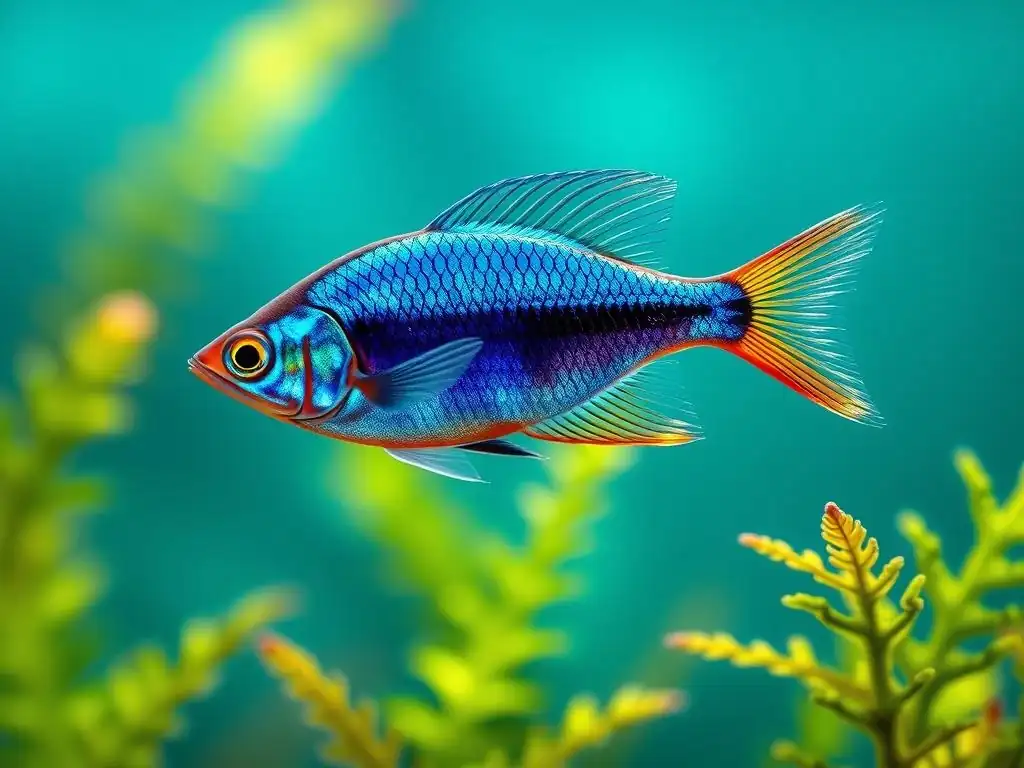
For freshwater aquariums, the primary considerations for lighting are often aesthetic enhancement of fish colors and, if applicable, supporting plant growth. For a fish-only tank, a lower PAR range of 10-30 µmol·m⁻²·s⁻² is generally sufficient, focusing on a color temperature between 6500K and 7500K to mimic natural daylight. This spectrum enhances the vibrant reds of cardinal tetras, the blues of discus, and the shimmering scales of many other freshwater species, providing a clear and visually appealing display.
Even in tanks without live plants, a well-chosen light can reduce fish stress by providing a consistent day-night cycle and allowing their natural colors to fully develop. A full-spectrum LED light with adjustable white and RGB channels offers the flexibility to fine-tune the visual appearance and ensure the well-being of your aquatic inhabitants, making it an excellent choice for a versatile freshwater aquarium lighting upgrade.
Optimal Lighting for Planted Aquariums: Achieving Lush Plant Growth
Achieving lush plant growth in a planted aquarium requires specific light intensity and spectrum. Low-light plants like Anubias or Java Fern can thrive with 20-40 PAR, while medium-light plants such as Cryptocorynes or Swords often require 30-50 PAR. High-light demanding stem plants like Rotala or carpeting plants like Glossostigma need 50-100+ PAR, often accompanied by CO2 injection and comprehensive fertilization. The spectrum should include strong peaks in the red (around 660nm) and blue (around 450nm) wavelengths, which are crucial for chlorophyll absorption and photosynthesis.
Many planted tank enthusiasts opt for specialized "plant growth" LED fixtures or combinations of T5HO bulbs that blend daylight (6500K) with a pink/red spectrum bulb to optimize plant health and coloration. A well-executed planted tank aquarium lighting upgrade will provide the necessary energy for vigorous growth, allowing plants to outcompete algae for nutrients and create a balanced, vibrant ecosystem.
Selecting the Right Lighting for Reef Aquariums: Coral Health and Color
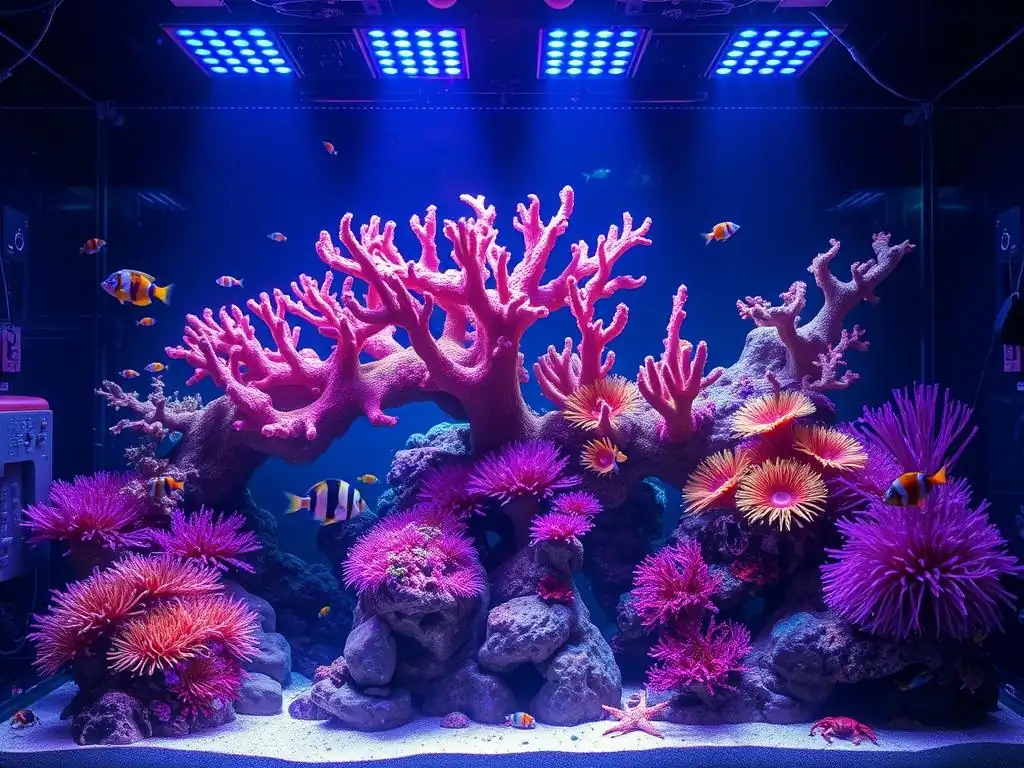
Reef aquariums have the most demanding lighting requirements, as corals depend on light for photosynthesis by their symbiotic zooxanthellae. The specific PAR needs vary significantly by coral type: soft corals typically require 30-100 PAR, LPS (Large Polyp Stony) corals need 50-150 PAR, and demanding SPS corals thrive in 250-450+ PAR. The spectrum is equally crucial, with strong emphasis on blue and actinic wavelengths (420-470nm) to promote coral fluorescence and zooxanthellae health, mimicking deeper ocean light.
A successful reef aquarium lighting upgrade often involves advanced LED fixtures with multiple, independently controllable color channels. These typically include deep blue, royal blue, cool white (10,000K-20,000K), red, green, and often UV/violet channels. This allows aquarists to fine-tune the light to enhance specific coral colors, encourage optimal growth, and provide the precise energy spectrum required for a thriving reef ecosystem.
Understanding PAR, PUR, and Kelvin: Key Metrics for Aquarium Lighting
PAR (Photosynthetically Active Radiation): Measuring Light Intensity
PAR, or Photosynthetically Active Radiation, is a crucial metric that quantifies the amount of light within the 400-700 nanometer range that is available for photosynthesis. It is measured in micromoles per square meter per second (µmol·m⁻²·s⁻¹). Unlike lumens or watts, PAR specifically measures the light usable by plants and corals, making it the most relevant intensity measurement for photosynthetic organisms. The only accurate way to measure PAR in your tank is with a dedicated PAR meter.
Understanding PAR values is essential for a best aquarium lighting upgrade. For example, low-light aquarium plants like Anubias or Java Fern can thrive with PAR values between 15-30 µmol·m⁻²·s⁻¹. Medium-light plants such as Cryptocoryne or Valisneria often require 30-50 PAR. High-light demanding plants like dwarf hairgrass or many stem plants need 50-100+ PAR. For corals, soft corals generally need 30-80 PAR, LPS corals 80-150 PAR, and SPS corals 150-450+ PAR, depending on the species and depth.
PUR (Photosynthetically Usable Radiation): Light Utilization by Plants and Corals
While PAR measures the total amount of photosynthetically active light, PUR, or Photosynthetically Usable Radiation, takes it a step further by focusing on the specific wavelengths that are most efficiently absorbed and utilized by photosynthetic organisms. Chlorophyll A and B, the primary pigments in plants and zooxanthellae, absorb light most effectively in the blue (around 430-450nm) and red (around 640-660nm) spectrums. Light outside these peaks, even if within the PAR range, is less efficiently used.
Although PUR is much harder to measure directly without highly specialized spectroradiometers, understanding its concept helps in selecting lights with a tailored spectral output. A high-quality aquarium lighting upgrade will often boast a spectrum that emphasizes these crucial blue and red peaks, ensuring that the light provided is not just intense but also highly efficient for the biological processes of plants and corals, leading to better growth and coloration.
Kelvin (Color Temperature): Achieving the Desired Aesthetic and Biological Effects
Kelvin (K) is a unit of measurement that describes the color temperature of light, indicating how "warm" (yellowish-red) or "cool" (bluish-white) the light appears. Lower Kelvin values, such as 2,700K, produce a warm, yellowish light often associated with incandescent bulbs. As the Kelvin value increases, the light becomes whiter, then bluer. For instance, 6,500K is often considered "daylight" and appears crisp white, while 10,000K-20,000K lights have a distinct bluish tint.
The chosen Kelvin temperature significantly impacts both the aesthetic appeal of your aquarium and the biological response of its inhabitants. For freshwater planted tanks, 6,500K-7,500K is typically ideal, as it closely mimics natural sunlight and supports robust plant growth while enhancing fish colors. For marine and reef aquariums, higher Kelvin values (10,000K-20,000K) are preferred. These bluer lights penetrate deeper into the water column and help promote the vibrant fluorescent colors of corals, making them an essential consideration for a comprehensive aquarium lighting upgrade.
Step-by-Step Guide: How to Upgrade Your Aquarium Lighting
Planning Your Aquarium Lighting Upgrade: Research, Budget, and Compatibility
Thorough planning is the cornerstone of a successful aquarium lighting upgrade. Begin with extensive research into specific light models, reading reviews from other aquarists, and comparing specifications to ensure the chosen light meets the precise PAR and spectral requirements for your tank's inhabitants. For instance, a high-end reef light capable of delivering 400 PAR at 24 inches might cost upwards of $1,000, while a robust planted tank light delivering 80 PAR might be in the $200-$400 range. Define your budget early to narrow down options.
Beyond performance, assess compatibility with your existing setup. Consider your tank's dimensions (length, width, and height) to ensure proper coverage and mounting. Most fixtures offer various mounting options such as adjustable legs, hanging kits from the ceiling or a stand, or arm mounts that clamp onto the tank. Verify the power requirements and ensure you have adequate outlets and surge protection. A well-researched plan prevents costly mistakes and ensures the best aquarium lighting upgrade for your specific needs.
Removing Your Old Aquarium Light Fixture: Safety Precautions and Disconnection
Safety is paramount when dealing with electrical equipment and water. Before touching any part of your old light fixture, always ensure it is completely unplugged from the power source. This eliminates any risk of electrical shock. Make sure your hands are dry, and if the light is integrated into a hood, carefully detach it from the tank rim or canopy structure.
Gently unfasten any mounting hardware, clips, or suction cups that secure the old light. Be mindful of any wires that might be intertwined with other aquarium equipment, such as heaters or filters, and carefully separate them. Have a designated, dry, and safe place to temporarily store or dispose of the old fixture, ensuring it's out of the way to prevent accidental damage or tripping hazards during the installation of your best aquarium lighting upgrade.
Installing Your New Aquarium Light: Mounting, Wiring, and Testing
Follow the manufacturer's instructions meticulously for installing your new aquarium light. Mounting methods vary significantly: some lights use adjustable legs that rest on the tank rim, others come with hanging kits that suspend the fixture above the tank, and some utilize arm mounts that clamp onto the tank's edge. Ensure the light is level, centered, and securely positioned over the aquarium to provide even light distribution and prevent accidental falls.
Once mounted, connect the power supply and any associated controllers or dimmers according to the manual. Before fully integrating the light into your daily schedule, perform a preliminary test. Plug it in and ensure all LEDs or bulbs illuminate correctly, and that any dimming, color controls, or programmable features function as expected. Double-check all electrical connections to ensure they are secure and free from moisture, completing this critical step of your aquarium lighting upgrade.
Acclimating Your Aquarium to the New Lighting: Preventing Shock and Algae Blooms
This is a critical step for a successful aquarium lighting upgrade. A sudden increase in light intensity can severely shock fish, melt plants, or bleach corals. To prevent this, begin by running your new light at a significantly reduced intensity, typically 30-50% of your target PAR, and/or for a shorter photoperiod (e.g., 4-6 hours initially). This gradual introduction allows your tank's inhabitants to adjust to the new light spectrum and intensity without adverse effects.
Over the next several weeks, slowly increase the light intensity (e.g., by 10% each week) or gradually extend the photoperiod (e.g., by 30 minutes every few days) until you reach your desired settings. During this acclimation period, closely monitor your fish, plants, and corals for any signs of stress, such as faded colors, excessive hiding, or bleaching. Also, watch for any sudden outbreaks of algae, which can indicate that the light is being increased too quickly for the system to adapt.
Optimizing Your Aquarium Lighting for Best Results
Adjusting Light Intensity and Duration: Finding the Sweet Spot
After the initial acclimation, fine-tuning your light intensity and duration is key to optimizing your aquarium's health and aesthetics. If you have a PAR meter, use it to accurately measure light levels at various depths and locations within your tank, especially for demanding planted or reef setups. Adjust the intensity based on the specific needs of your plants and corals; too much light can lead to bleaching or algae, while too little will result in stunted growth.
The optimal photoperiod for most aquariums ranges from 8 to 12 hours per day. Longer durations can increase the risk of algae blooms, while shorter periods may not provide sufficient energy for photosynthetic organisms. Experiment within this range, observing the response of your inhabitants. For example, if you notice green spot algae on glass, your light duration or intensity might be too high, indicating a need for adjustment in your best aquarium lighting upgrade.
Utilizing a Lighting Timer: Automating Your Aquarium Lighting Schedule
A reliable lighting timer is indispensable for maintaining a stable and consistent aquarium environment. Automating your light schedule ensures that your fish, plants, and corals receive light at the same time and for the same duration every day. This consistency is crucial for their biological rhythms, reducing stress and promoting healthier growth patterns. Erratic light periods can lead to unstable conditions that favor algae growth over desirable organisms.
Many modern LED fixtures come with sophisticated built-in controllers that allow for complex programming, including multi-channel control, dimming, and even sunrise/sunset simulations. For simpler setups, a basic digital timer that plugs into an outlet is sufficient. Consistent light cycles are a fundamental component of a well-maintained aquarium and are vital for maximizing the benefits of your aquarium lighting upgrade.
Monitoring Plant and Coral Health After the Lighting Upgrade
Ongoing monitoring of your plants and corals is essential to gauge the success of your aquarium lighting upgrade and make any necessary adjustments. For plants, look for signs of vigorous new growth, healthy leaf color (absence of yellowing or melting), and an overall robust appearance. For corals, observe polyp extension, tissue integrity, and the vibrancy of their colors. Documenting these changes, perhaps with weekly photos, can help you track progress and identify trends.
Conversely, be vigilant for negative indicators. Excessive algae growth, particularly green spot algae or hair algae, can signal too much light or a nutrient imbalance. Plant melt, coral bleaching (loss of color), or tissue recession are clear signs that the light intensity might be too high or the acclimation period was insufficient. These observations will guide further adjustments to your lighting schedule, ensuring your system remains optimized.
Troubleshooting Common Issues After Upgrading Aquarium Lighting
Algae Blooms After Lighting Upgrade: Causes and Solutions
One of the most common issues after an aquarium lighting upgrade is an increase in algae blooms. This often occurs because the sudden availability of higher PAR overwhelms the system, especially if nutrient levels (nitrates, phosphates) are elevated or, in planted tanks, if CO2 and nutrient dosing are insufficient to match the increased light. The algae, being opportunistic, quickly take advantage of the new energy source.
To combat algae blooms, first, reduce the light intensity or duration to a more moderate level. Increase the frequency of water changes (e.g., 20-30% every few days) to lower nutrient concentrations. For planted tanks, ensure CO2 levels are stable and adequate (e.g., 20-30 ppm) and that macronutrients (NPK) and micronutrients are dosed consistently. Adding fast-growing plants can also help outcompete algae. In severe cases, a 2-3 day blackout period can effectively reset the tank.
Plant or Coral Bleaching: Adjusting Light Intensity
Plant or coral bleaching is a clear and immediate sign of excessive light intensity or a too-rapid increase in light. In plants, bleaching manifests as leaves turning pale, white, or translucent, signifying the destruction of chlorophyll. For corals, bleaching occurs when they expel their symbiotic zooxanthellae, leading to a loss of color and a translucent appearance, leaving behind only the coral's white skeleton. This is a severe stress response that can lead to coral death if not addressed promptly.
If you observe bleaching, immediately reduce the light intensity by 20-50% and re-initiate a slower acclimation process. Monitor the affected organisms closely and gradually increase intensity over several weeks as they recover. For corals, ensure stable water parameters, particularly alkalinity, calcium, and magnesium, as these play a role in their ability to tolerate light. Providing shade or moving affected corals to lower-light areas of the tank can also aid in recovery.
Maintaining Your Aquarium Lighting System for Longevity
Regular Cleaning and Maintenance: Preventing Light Diminishment
Consistent cleaning and maintenance are crucial for preserving the efficiency and longevity of your aquarium lighting system. Over time, dust, salt creep (in marine tanks), and hard water spots can accumulate on the light fixture's lenses, reflectors, and cooling fins. This buildup can significantly diminish light output, often reducing PAR by 10-20% or more, directly impacting the light available to your plants and corals.
Make it a habit to gently wipe down the light's external surfaces and lenses weekly with a damp, lint-free cloth. For LED fixtures, regularly check that cooling fins and fans are free of dust and debris, as proper heat dissipation is vital for extending LED lifespan. In humid environments, inspect electrical contacts for any signs of corrosion and clean them carefully if necessary, ensuring your best aquarium lighting upgrade continues to perform optimally.
Replacing Bulbs and LEDs: When and How to Do It
For fluorescent lighting systems, bulb replacement is a regular maintenance task. T5HO and compact fluorescent bulbs should typically be replaced every 6-12 months. Even if they still illuminate, their spectral output and intensity degrade significantly over this period, becoming less effective for photosynthesis and color rendition. It's a good practice to mark the installation date on each bulb with a permanent marker to track its age accurately.
While LEDs boast a much longer lifespan (often 50,000+ hours, equating to many years of use), their output can still diminish over time, especially after 3-5 years of continuous operation. If you notice a significant drop in PAR, a shift in color, or a decline in the health of your light-demanding organisms, it may be time to consider replacing the entire fixture or, if possible, individual LED clusters. Investing in a quality LED fixture as your aquarium lighting upgrade often means less frequent replacement than traditional bulbs.
Ensuring Proper Ventilation: Preventing Overheating
Proper ventilation is paramount for the longevity and efficient operation of any aquarium lighting system, particularly those that generate significant heat like metal halides or older, less efficient LEDs. Overheating can drastically shorten the lifespan of light components, degrade their output, and even pose a fire risk in extreme cases. Enclosed canopies are especially prone to heat buildup, which can also raise your aquarium's water temperature, potentially stressing inhabitants.
Ensure there is adequate airflow around your light fixture. If your light is in an enclosed canopy, consider installing small, quiet cooling fans to actively draw hot air out and pull cooler air in. Monitor the temperature of the fixture itself; if it feels excessively hot to the touch, it's a clear indication that ventilation is insufficient. Investing in proper airflow management is a small but critical step in protecting your best aquarium lighting upgrade.
Advanced Aquarium Lighting Techniques
Using Dimmers and Controllers: Fine-Tuning Your Lighting
Modern aquarium lighting, particularly advanced LED fixtures, offers sophisticated dimmers and controllers that allow for unparalleled fine-tuning. Dimmers enable precise adjustment of light intensity, which is invaluable for gradual acclimation of new inhabitants, simulating natural cloud cover, or providing different PAR levels to specific zones within the tank (e.g., lower light for foreground plants, higher for background corals).
High-end controllers take this a step further, offering multi-channel control over various LED colors (e.g., white, blue, red, green, UV). This allows aquarists to customize the light spectrum throughout the day, emphasizing specific wavelengths that enhance particular pigments in corals, promote red coloration in plants, or simply achieve a desired aesthetic. This level of control is a hallmark of the best aquarium lighting upgrade for serious aquarists.
Implementing Sunrise/Sunset Simulations: Creating a Natural Environment
Implementing sunrise and sunset simulations is an advanced lighting technique that significantly benefits aquarium inhabitants by mimicking natural light cycles. Instead of a sudden "on" and "off," the light gradually increases in intensity and changes in color temperature over a period (e.g., 30 minutes to 2 hours) at dawn, and then gradually decreases at dusk. This smooth transition reduces stress on fish, preventing "photo shock" and encouraging more natural behaviors.
Many advanced LED controllers feature this capability, often allowing for customization of the duration and specific color shifts during these transitions. Some even include moonlight settings for nighttime viewing, providing a very low-intensity blue light that can influence nocturnal fish activity and add to the aesthetic appeal. Creating such a natural light environment is a key feature of a truly comprehensive aquarium lighting upgrade.
Utilizing Different Light Spectrums: Enhancing Plant and Coral Growth
Beyond basic intensity, understanding and utilizing different light spectums can dramatically enhance plant and coral growth and coloration. For planted aquariums, specific red wavelengths (around 660nm) are crucial for promoting stem elongation and flowering, while blue wavelengths (around 450nm) are vital for compact growth and overall photosynthesis. Adding a small amount of green light can improve visual appeal without significantly impacting plant growth, as green light penetrates deeper into the water column.
For reef aquariums, deep blue (420-470nm) and UV (380-400nm) wavelengths are paramount for coral health and the vibrant fluorescence they exhibit. These specific wavelengths stimulate the production of fluorescent proteins within coral tissues, leading to brighter blues, greens, and reds. Experimenting with the balance of these different color channels allows aquarists to fine-tune the visual output and maximize the health and aesthetic potential of their corals, making it a critical aspect of the best aquarium lighting upgrade.
Conclusion: Achieving a Thriving Aquarium with the Best Aquarium Lighting Upgrade
Upgrading your aquarium lighting is far more than a simple aesthetic choice; it's a fundamental investment in the health and vitality of your aquatic ecosystem. By recognizing the signs of inadequate lighting, carefully choosing the best aquarium lighting upgrade for your specific tank type, and meticulously planning its installation and acclimation, you empower your fish, plants, and corals to thrive. The advancements in LED technology, offering unparalleled efficiency, spectrum control, and longevity, make now the ideal time for such a transition.
Consistent maintenance, coupled with advanced techniques like dimmers and sunrise/sunset simulations, ensures that your lighting system continues to deliver optimal results for years to come. A well-executed aquarium lighting upgrade transforms your tank from merely surviving to truly flourishing, showcasing vibrant colors, robust growth, and a balanced, healthy environment that is a joy to behold.
Frequently Asked Questions
What are the key benefits of upgrading my aquarium lighting?
Upgrading your aquarium lighting can significantly improve the growth of live plants, enhance the colors of your fish, and even help control algae growth.
How do I know when it's time to upgrade my aquarium lighting?
Signs it's time to upgrade include poor plant growth, faded fish coloration, excessive algae blooms, or simply when your current lights are old and inefficient.
What type of lighting is best for my specific aquarium setup?
The best lighting depends on your tank's inhabitants. Live plant tanks often benefit from full-spectrum LEDs, while fish-only tanks may need less intense lighting. Consider the needs of your specific livestock.
How do I choose the right wattage and spectrum for my aquarium lighting upgrade?
Wattage depends on tank size and plant needs. Spectrum is crucial: full-spectrum LEDs are versatile, while specific wavelengths can enhance plant growth or fish coloration. Research your plants' requirements.
Is the installation process for new aquarium lighting difficult?
Installation difficulty varies. Most LED fixtures are relatively easy to install, but some may require additional wiring or mounting. Always follow manufacturer instructions carefully.
Final Reflection: Illuminating the Future of Your Aquatic World
The journey of upgrading aquarium lighting, as we've explored, is not merely about replacing a bulb; it's about cultivating a thriving ecosystem within the glass walls of your aquarium. The principles of understanding your tank's needs, researching the best options, and implementing the upgrade correctly are more relevant than ever as aquascaping and reef keeping become increasingly popular and sophisticated. This commitment to informed decision-making directly translates to healthier fish, vibrant corals, and a more aesthetically pleasing aquatic display.
The impact of proper aquarium lighting extends far beyond the visual appeal. It's a crucial element in mimicking the natural environment and supporting the delicate balance of life within the tank. The choices we make in lighting directly affect the health and well-being of our aquatic inhabitants, influencing their growth, coloration, and overall vitality. In nature, light is the driving force behind life. In the aquarium, it's our responsibility to replicate that power.
This quote underscores the profound responsibility we bear as aquarists to provide the optimal conditions for our underwater companions.
Now, as you consider the information presented in this guide, I encourage you to reflect on your own aquarium and its unique needs. Are you providing the best possible light for your inhabitants to flourish? Take the time to assess your current setup, research the available options, and embark on the journey of upgrading your aquarium lighting. By doing so, you're not just improving the aesthetics of your tank; you're investing in the health and happiness of your aquatic world, illuminating a brighter future for all its inhabitants.
Illuminate Your Aquarium's Potential!
Thank you for exploring the world of aquarium lighting with us! We hope you've gained valuable insights into optimizing your setup for a thriving aquatic environment. Ready to take the next step?
Here are a few things you can do now:
- Assess your current lighting system's PAR (Photosynthetically Active Radiation) output. Understanding the light intensity your corals or plants receive is crucial for optimal growth.
- Share your aquarium lighting journey! Post a picture of your upgraded aquarium on social media and tag us @AquariumMastery to inspire other enthusiasts.
- Dive deeper! Explore our forum and contribute a thread discussing your lighting preferences or ask us to help you troubleshoot existing issues.
What's one lighting adjustment you're planning to make to see significant improvements in your aquarium's health and vibrancy this week?