
Conditioning Discus for Spawning: The Path to Successful Breeding

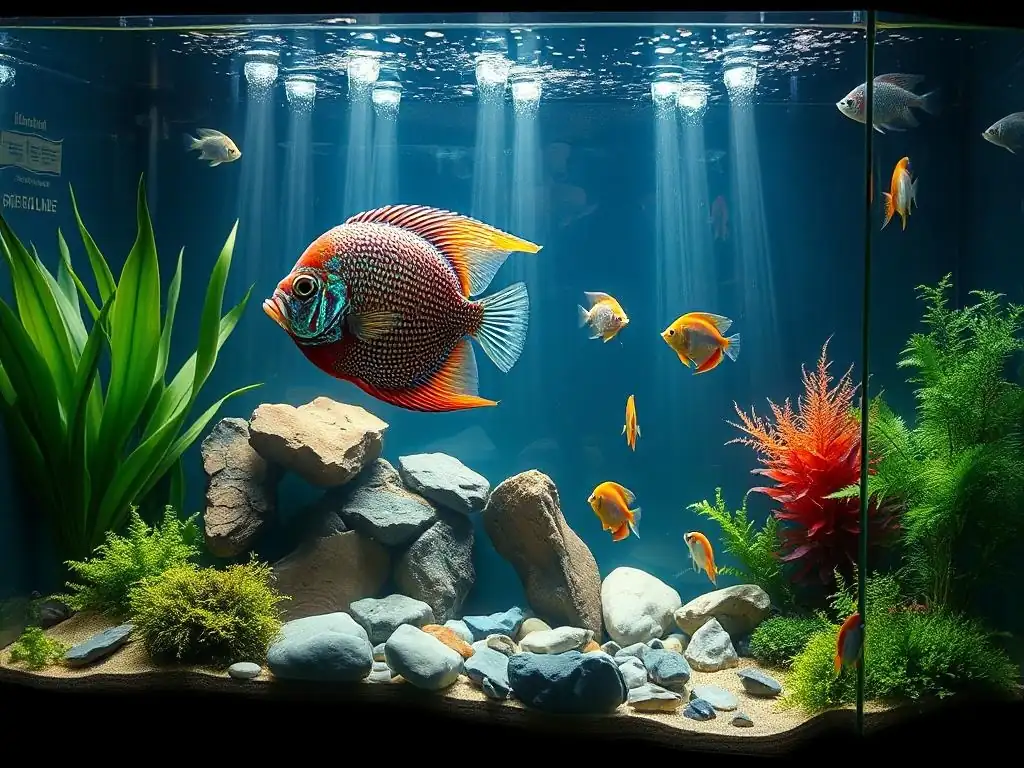
Welcome to Aquarium Mastery!
Ever dreamt of witnessing the mesmerizing dance of Discus spawning in your own aquarium? Conditioning Discus for spawning isn't just about feeding them well – it's about understanding their intricate needs and creating the perfect environment for breeding success. Curious how to unlock their breeding potential? Dive in and discover our expert Discus breeding success tips and transform your aquarium into a haven for these magnificent creatures!
- Understanding Discus Breeding: A Foundation for Success
- Selecting and Preparing Your Discus Breeding Pair
- Water Parameters: The Key to Triggering Discus Spawning
- Diet and Nutrition: Fueling Discus Reproduction
- Conditioning Techniques for Spawning Discus
- Monitoring and Managing the Discus Spawning Process
- Troubleshooting Common Discus Breeding Problems
- Achieving Discus Breeding Success: Long-Term Strategies and Best Practices
-
Frequently Asked Questions
- How important is water quality when conditioning Discus for breeding?
- What is the ideal diet for conditioning Discus for spawning?
- What temperature range is best for encouraging Discus to spawn?
- How long does it typically take to condition Discus for spawning?
- What type of spawning site should I provide for Discus?
- Final Reflection: Nurturing Life, Cultivating Success
- Ignite Your Discus Breeding Journey!
Understanding Discus Breeding: A Foundation for Success
The Allure of Breeding Discus: Why it's a Rewarding Challenge
Breeding Discus, often dubbed the "King of the Aquarium," is a deeply rewarding endeavor that transcends mere fish keeping. The process of witnessing these majestic cichlids court, lay eggs, and then meticulously care for their fry is a testament to their complex social behaviors and parental instincts, rarely seen in other aquarium species. The satisfaction derived from successfully raising a batch of healthy fry from tiny eggs to free-swimming juveniles is immense, offering a unique connection to the natural life cycle within your home aquarium.
Beyond the personal fulfillment, Discus breeding also contributes significantly to the hobby. Successful breeders can help introduce new bloodlines, maintain genetic diversity, and even develop unique color strains, enriching the options available to other aquarists. While challenging, mastering the intricacies of Discus reproduction provides invaluable experience and a deep understanding of aquatic husbandry, making the journey itself a series of practical Discus breeding success tips for dedicated hobbyists.
Essential Factors for Discus Spawning: Water Parameters, Diet, and Environment
Successful Discus spawning hinges on a delicate balance of interconnected factors: precise water parameters, a high-quality diet, and a stable, stress-free environment. Discus originate from the Amazon basin, where water is typically soft, acidic, and warm. Replicating these conditions is paramount; for instance, maintaining a pH range of 5.5-6.5, a general hardness (GH) of 1-5 dGH (17.9-89.5 ppm), and a temperature of 82-86°F (28-30°C) is critical. Deviations from these ranges can inhibit spawning or lead to infertile eggs.
Equally vital is a nutrient-rich diet, providing the energy and building blocks for gonad development and egg production. A varied feeding regimen, incorporating high-protein foods, is indispensable. Lastly, the breeding environment itself must be quiet, dimly lit, and free from external disturbances. A bare-bottom tank with minimal decor reduces stress and allows for easier cleaning, ensuring optimal conditions for a successful spawn. Addressing these foundational elements forms the core of effective Discus breeding success tips.
Discus Breeding Success Tips: A Comprehensive Overview
Achieving Discus breeding success is a marathon, not a sprint, demanding patience, meticulous attention to detail, and a commitment to maintaining optimal conditions. The overarching strategy involves providing pristine water quality, which often means daily or every-other-day water changes using reverse osmosis (RO) water remineralized to the specific parameters. This constant influx of fresh, clean water not only keeps nitrates at bay but also simulates the natural rainy season, a known spawning trigger.
Beyond water, a diverse and high-protein diet, often including live or frozen foods like bloodworms and beef heart, fuels the reproductive process. Observation is another key Discus breeding success tip; closely monitoring your fish for courtship behaviors, signs of stress, or changes in appetite can provide early indicators of readiness to spawn or potential issues. Finally, an adaptable approach is essential, as each Discus pair may have slightly different preferences or requirements, necessitating adjustments to your routine for consistent results.
Selecting and Preparing Your Discus Breeding Pair
Choosing Healthy Discus for Breeding: Identifying Key Characteristics
The foundation of any successful Discus breeding program begins with selecting robust and healthy parent stock. Look for fish that exhibit vibrant, intense coloration, indicative of good health and proper nutrition. Their fins should be fully extended, without tears or clamping, and their eyes clear and bright. Active swimming and a strong appetite are also excellent indicators of a fish's overall vitality and readiness to breed. Avoid any individuals showing signs of disease, such as faded colors, labored breathing, or abnormal growths.
Age is another critical factor; Discus typically reach sexual maturity and are ready to breed between 12 to 18 months of age, though some may start earlier or later. Younger pairs might produce smaller spawns or exhibit less developed parental care initially. Observing their behavior for signs of pairing, such as a male and female consistently staying together, "shaking" at each other, or cleaning a potential spawning site, is also a strong indicator that they are forming a bond and could become a productive breeding pair, enhancing your Discus breeding success tips.
Quarantine and Acclimation: Ensuring a Disease-Free Breeding Program
Before introducing any new Discus into your main breeding setup, a strict quarantine protocol is non-negotiable. A dedicated quarantine tank, ideally 20-30 gallons, should be set up with a heater, sponge filter, and basic decor. New fish should be kept in this tank for a minimum of 4 to 6 weeks, allowing ample time to observe for any signs of disease or parasites. During this period, gradual acclimation to your water parameters should occur, and a prophylactic treatment for common parasites might be considered, though it should be done cautiously.
This period serves multiple purposes: it prevents the introduction of pathogens that could devastate an entire breeding program, allows the fish to de-stress from transport, and enables them to adjust to their new environment without the added pressure of immediate breeding. A healthy, stress-free pair is far more likely to spawn successfully and produce viable offspring. This critical step significantly minimizes risks and lays a strong foundation for consistent Discus breeding success tips.
Setting Up the Breeding Tank: Creating an Ideal Environment for Discus Spawning
The breeding tank itself should be specifically designed to minimize stress and maximize hygiene for the spawning pair. A 20-30 gallon bare-bottom aquarium is generally ideal for a single pair. The bare bottom facilitates easy cleaning and prevents the accumulation of detritus that can harbor bacteria and fungi detrimental to eggs and fry. Filtration should be gentle, typically provided by one or two air-driven sponge filters, which create minimal current while providing excellent biological filtration.
A reliable heater capable of maintaining a stable temperature between 82-86°F (28-30°C) is essential. Lighting should be dim and consistent, and the tank should be placed in a quiet area of the home, away from high traffic or sudden movements. A ceramic spawning cone, a piece of PVC pipe, or a slate tile positioned vertically provides the preferred egg-laying surface for Discus. Minimal decor helps reduce hiding spots for the fish, encouraging them to focus on spawning and making observation easier, all contributing to effective Discus breeding success tips.
Water Parameters: The Key to Triggering Discus Spawning
Achieving Optimal Water Chemistry for Discus Breeding
The precise manipulation of water chemistry is arguably the single most critical factor in stimulating and sustaining Discus spawning. Discus naturally inhabit soft, acidic waters in the Amazon, and replicating these conditions is fundamental. Hard water can cause eggshells to harden, preventing successful fertilization and hatching, while unstable pH levels create undue stress. Many breeders achieve the desired parameters by utilizing reverse osmosis (RO) water, which is essentially pure water, and then remineralizing it with specific buffers and mineral salts to target the ideal ranges.
The goal is to maintain a stable pH between 5.5 and 6.5, with very low general hardness (GH) of 1-5 dGH (17.9-89.5 ppm) and negligible carbonate hardness (KH) of 0-3 dKH (0-53.7 ppm). The low KH is important as it ensures the water is not overly buffered, allowing for subtle pH shifts that can mimic natural spawning triggers. Consistent monitoring with reliable test kits is essential to ensure these parameters are maintained without drastic fluctuations, which are detrimental to Discus breeding success tips.
Temperature, pH, and Water Hardness: Fine-Tuning the Breeding Tank
Temperature plays a direct role in triggering spawning and ensuring proper egg development. Maintaining a stable temperature within the 82-86°F (28-30°C) range is optimal. Some breeders may slightly raise the temperature by 1-2°F over a few days to simulate seasonal changes and encourage spawning, then stabilize it. However, rapid or extreme temperature shifts must be avoided as they can cause significant stress.
Adjusting pH and water hardness requires a careful approach. If using RO water, specific products designed to buffer pH and add essential minerals for Discus can be used. Peat filtration or Indian almond leaves can also naturally lower pH and add beneficial humic substances, contributing to a more natural environment. The key is to make any adjustments gradually over several hours or days, as sudden changes can shock the fish and inhibit breeding. Precision in these parameters is a hallmark of effective Discus breeding success tips.
Water Changes and Filtration: Maintaining Pristine Conditions for Spawning
Frequent and substantial water changes are paramount in a Discus breeding tank, even more so than in a display tank. Daily or every-other-day water changes of 25-50% are common practice among successful breeders. This rigorous schedule serves multiple purposes: it removes nitrates and other metabolic wastes, replenishes essential trace elements, and, most importantly, simulates the influx of fresh rainwater in their natural habitat, which is a powerful spawning trigger. The fresh water also helps maintain low bacterial counts, crucial for egg health.
Filtration in a breeding tank should be gentle yet effective. Air-driven sponge filters are preferred because they provide excellent biological filtration without creating strong currents that could disturb the eggs or fry. These filters are also easy to clean and maintain. Regular cleaning of the sponge filters is necessary to prevent the buildup of detritus and maintain optimal water quality. Consistency in water changes and filter maintenance are non-negotiable Discus breeding success tips for high hatch rates and healthy fry.
Diet and Nutrition: Fueling Discus Reproduction
The Importance of a Varied Diet for Breeding Discus
A superior, varied diet is fundamental to conditioning Discus for spawning. It ensures that both male and female fish receive all the necessary macronutrients, vitamins, and minerals required for optimal gonad development, egg production, and sperm viability. A monotonous diet, even if high in protein, can lead to deficiencies that hinder reproductive success, resulting in infertile eggs, smaller spawns, or even a complete lack of spawning activity.
The goal is to provide a balanced nutritional profile that mimics what they might consume in their natural environment, rich in protein and essential fats. This prepares the female for producing nutrient-rich eggs and ensures the male is capable of fertilizing them effectively. A well-conditioned pair, showing good body mass and vibrant coloration, is far more likely to engage in spawning behavior and produce a successful clutch, making dietary excellence a top-tier among Discus breeding success tips.
Live Foods, Frozen Foods, and High-Quality Flakes: A Balanced Approach
To provide a varied and rich diet, a combination of live, frozen, and high-quality prepared foods is recommended. Live foods such as bloodworms, white worms, grindal worms, and brine shrimp are excellent for stimulating appetite and providing natural, easily digestible nutrients. For example, feeding live blackworms daily can significantly boost conditioning. Frozen foods like beef heart mix (often containing spirulina and vitamins), mysis shrimp, and various types of frozen bloodworms offer a convenient and nutritious staple. A homemade beef heart mix, for instance, can be formulated with 40-50% protein content, providing a dense nutrient source.
These should be supplemented with high-quality Discus pellets or flakes that are specifically formulated to meet their dietary needs, often fortified with essential vitamins. Feeding small amounts several times a day (e.g., 3-5 times) is more beneficial than one large meal, as it aids digestion and keeps the fish well-fed without overfeeding and polluting the water. This comprehensive feeding strategy is a cornerstone of effective Discus breeding success tips.
Supplementation for Enhanced Fertility: Vitamins and Minerals for Discus
While a varied and high-quality diet provides most necessary nutrients, targeted supplementation can sometimes give an edge, particularly for pairs that are slow to spawn or have shown fertility issues. Vitamins, especially Vitamin E, are known to play a crucial role in reproductive health and fertility in many species, including fish. Vitamin A and D are also important for overall health and development. These can be added to homemade food mixes or provided through commercial supplements designed for aquatic animals.
Minerals like calcium are vital for egg shell development and overall fish health. If using RO water, ensuring proper remineralization with a balanced mineral supplement is critical. However, caution is advised against over-supplementation, as excessive levels of certain vitamins or minerals can be detrimental. It's often best to ensure a robust, varied diet first, and only consider specific supplements if a deficiency is suspected or breeding progress is stagnant. Judicious use of supplements can be a subtle but effective addition to your Discus breeding success tips.
Conditioning Techniques for Spawning Discus
Gradual Temperature Adjustments: Mimicking Natural Spawning Triggers
One of the most effective conditioning techniques involves subtly manipulating the water temperature to mimic natural environmental cues that trigger spawning in the wild. In their native Amazonian habitat, Discus often spawn during the rainy season, characterized by influxes of slightly cooler, fresh water. To simulate this, you can gradually raise the tank temperature by 1-2°F (0.5-1°C) over a few days, bringing it to the higher end of the breeding range (e.g., from 82°F to 84-86°F).
This slight increase, combined with other conditioning efforts, can signal to the fish that conditions are optimal for reproduction. Once the target temperature is reached, maintaining it consistently is crucial. This method, while subtle, often prompts the pair to begin courtship behaviors and prepare for spawning, making it a valuable tool in your arsenal of Discus breeding success tips.
Simulated Rainy Seasons: A Proven Method for Inducing Breeding
The simulated rainy season technique is perhaps the most widely used and successful method for inducing Discus spawning. It involves performing large, frequent water changes with water that is slightly cooler than the tank water and precisely conditioned to the soft, acidic parameters (e.g., 50% daily water changes with water 1-2°F cooler). The constant influx of fresh, clean water not only dilutes nitrates and other pollutants but also mimics the heavy rainfall that signals the breeding season in the Amazon.
This method often triggers a spawning response within a few days to a few weeks. The increased water flow and pristine conditions encourage the pair to clean a spawning site and begin their courtship rituals. Many breeders have reported consistent success with this approach, with pairs spawning regularly once this routine is established. This consistent environmental cue is one of the most powerful Discus breeding success tips for reliable reproduction.
Introducing a Spawning Cone or Surface: Providing a Suitable Egg-Laying Site
Providing an appropriate and stable spawning surface is a simple yet effective conditioning technique. Discus typically prefer to lay their eggs on a vertical or slightly angled surface. Common choices include ceramic spawning cones, pieces of PVC pipe (approximately 4-6 inches in diameter), or smooth slate tiles. These should be thoroughly cleaned and placed securely in the breeding tank.
The presence of a dedicated spawning site gives the pair a clear focus for their courtship and egg-laying activities. They will often spend considerable time cleaning the chosen surface with their mouths, a clear sign that a spawn is imminent. Placing the cone in a quiet, low-traffic area of the tank, away from the filter outflow, can also help reduce stress and encourage its use. This simple provision of a suitable site significantly contributes to successful Discus breeding success tips by eliminating one potential barrier to spawning.
Monitoring and Managing the Discus Spawning Process
Recognizing the Signs of an Approaching Spawn: Courtship Behaviors and Egg Preparation
Observing your Discus pair for specific courtship behaviors is crucial for anticipating a spawn. The most common signs include intense "shaking" or "dancing" where the fish rapidly vibrate their bodies near each other, often accompanied by lip-locking or fin-nipping, which are displays of dominance and pair bonding. Both fish will actively clean the chosen spawning site – whether it's a cone, a filter tube, or the tank glass – meticulously removing any debris with their mouths.
As the female approaches spawning, her ovipositor (a small, tube-like organ) will become visible and more extended, appearing blunt and rounded. The male's genital papilla will also become pointed. These physical and behavioral changes indicate that spawning is often just hours away. Recognizing these cues allows you to ensure the environment remains undisturbed and optimal, adding to your Discus breeding success tips.
Protecting the Eggs from Predators and Fungus: Ensuring High Hatch Rates
Once eggs are laid, protecting them is paramount for high hatch rates. In a dedicated breeding tank, the primary threat is often fungus. Unfertilized eggs are particularly susceptible to fungal growth, which can then spread to healthy, fertilized eggs. To combat this, maintaining pristine water quality through regular small water changes is essential. Some breeders also use a very mild dose of methylene blue or a commercial anti-fungal treatment in the water, though this should be done with caution as it can stain silicone.
Parental care is critical; healthy Discus parents will fan the eggs with their fins, providing oxygenation and removing debris, which also helps prevent fungal growth. If other fish are in the tank (which is not recommended for breeding), they must be removed immediately to prevent them from predating on the eggs. Ensuring a clean, stable environment and attentive parents are key Discus breeding success tips for maximizing the number of viable fry.
Caring for the Fry: From Hatching to Free-Swimming
Discus eggs typically hatch within 2-3 days at a temperature of 82-86°F (28-30°C). Initially, the fry will appear as tiny wrigglers, clinging to the spawning surface or the parents' bodies, absorbing their yolk sacs. During this stage, the parents continue to fan and guard them diligently. After another 3-4 days post-hatch, the fry will become free-swimming, at which point they begin to feed exclusively on the parents' nutrient-rich slime coat.
This period of feeding on parental slime coat is critical for the fry's initial growth and development. It's vital to ensure the parents are well-fed and healthy to produce sufficient slime. Around 5-7 days after becoming free-swimming, the fry will be large enough to start accepting their first external foods, such as newly hatched brine shrimp nauplii. Successfully navigating this delicate phase, from initial hatch to free-swimming and first feeding, is the ultimate measure of Discus breeding success tips.
Troubleshooting Common Discus Breeding Problems
Infertile Eggs: Identifying Causes and Solutions
One of the most common frustrations in Discus breeding is a spawn of infertile eggs, which typically turn white and opaque within 24-48 hours. The causes can be varied: the pair might be too young or too old, unconditioned, or simply incompatible. Water parameters that are not precisely dialed in, such as excessively hard water or incorrect pH, can also prevent fertilization. Sometimes, an inexperienced male may not be effectively fertilizing the eggs as the female lays them.
Solutions involve a systematic approach. Re-evaluate your conditioning regimen, ensuring a high-protein diet and optimal water parameters are consistently maintained. If the pair is young, patience is key, as first-time breeders often improve with subsequent spawns. Observing the male during spawning can confirm if he is actively fertilizing. In some cases, a different male or female might be needed to form a more compatible and fertile pair. Addressing these issues systematically are vital Discus breeding success tips.
Parental Care Issues: Addressing Problems with Fanning and Fry Care
Discus are renowned for their exceptional parental care, but sometimes issues arise. Problems can include parents eating their eggs or fry, not fanning the eggs adequately, or failing to produce sufficient slime coat for the fry to feed on. These issues often stem from stress, inexperience (especially with first-time parents), poor health, or even being startled by external disturbances.
To address this, first, ensure the breeding tank is in a quiet, low-traffic area. Provide privacy by using a dark background or covering the sides of the tank. Maintain impeccable water quality and a consistent feeding schedule to keep the parents healthy and reduce stress. For first-time parents, patience is crucial; many will improve their care with subsequent spawns. If parents consistently fail to care for their fry, artificial rearing (removing eggs to a separate tank for hatching and raising) may be considered, though natural parenting is always preferred for long-term Discus breeding success tips.
Disease Outbreaks in the Breeding Tank: Prevention and Treatment Strategies
Disease outbreaks in a breeding tank can be devastating, as the stress of breeding can lower a fish's immune system, and fry are highly susceptible to pathogens. Prevention is paramount: strict quarantine for all new fish, maintaining pristine water quality through frequent water changes, and providing a high-quality, varied diet are your best defenses. Any signs of illness, such as clamped fins, loss of appetite, or abnormal breathing, must be addressed immediately.
If a disease does occur, rapid and accurate diagnosis is critical. Treatment often requires the use of appropriate medications, which may necessitate moving the sick fish to a separate hospital tank to avoid medicating the main breeding tank, especially if eggs or fry are present, as many medications can harm them. Maintaining a stable, clean, and low-stress environment is the most effective proactive measure against disease and forms a crucial part of comprehensive Discus breeding success tips.
Achieving Discus Breeding Success: Long-Term Strategies and Best Practices
Maintaining Genetic Diversity: Preventing Inbreeding and Promoting Healthy Offspring
While the initial excitement of spawning Discus is high, long-term Discus breeding success tips emphasize the importance of maintaining genetic diversity within your breeding lines. Repeatedly breeding closely related fish (inbreeding) can lead to several undesirable outcomes over generations, including reduced vigor, increased susceptibility to disease, deformities, smaller size, and decreased fertility. This compromises the overall health and quality of your stock.
To prevent inbreeding, it's crucial to periodically introduce new, unrelated bloodlines into your breeding program. Keep meticulous records of your fish's lineage to avoid breeding siblings or very closely related individuals for multiple consecutive generations. By carefully selecting new breeding stock from reputable sources, you can ensure robust, healthy offspring with strong genetic traits, contributing significantly to the long-term vitality of your Discus breeding efforts.
Record Keeping and Selective Breeding: Improving Your Discus Breeding Line
Meticulous record keeping is an invaluable practice for any serious Discus breeder. Document details for each spawn, including the parentage, spawn date, number of eggs laid, hatch rate, fry survival rate at different stages, specific water parameters during spawning, and any notable parental behaviors. This data provides critical insights into what works best for your specific fish and setup.
Armed with this information, you can engage in selective breeding. This involves choosing the best offspring from each spawn to become future breeding stock. Select individuals that exhibit desirable traits such as vibrant coloration, good body shape, strong growth rates, and excellent parental instincts. By consistently breeding the highest quality fish, you can systematically improve your Discus breeding line over generations, leading to more consistent and impressive Discus breeding success tips.
Continuous Learning and Improvement: Staying Up-to-Date on the Latest Discus Breeding Techniques
The world of Discus breeding is dynamic, with new insights and techniques constantly emerging. To achieve sustained Discus breeding success, it's essential to adopt a mindset of continuous learning and improvement. Stay informed by reading articles from reputable sources, participating in online forums and communities dedicated to Discus, and connecting with experienced breeders. These interactions can provide valuable perspectives and practical advice.
Be open to experimenting with slight variations in your routine, such as minor adjustments to temperature, diet, or water change schedules, to see if they yield better results for your specific pairs. Patience and persistence are perhaps the most important virtues; not every spawn will be a success, but learning from each experience, adapting your methods, and continually striving to refine your approach will ultimately lead to greater mastery and consistent Discus breeding success tips.
Frequently Asked Questions
How important is water quality when conditioning Discus for breeding?
Water quality is absolutely critical for successful Discus breeding. Pristine water conditions, achieved through frequent water changes and proper filtration, are essential to trigger spawning and healthy egg development.
What is the ideal diet for conditioning Discus for spawning?
A varied and nutritious diet is key. Focus on high-quality foods rich in protein, such as beef heart mixes, bloodworms, and brine shrimp, to promote gonadal development and overall health.
What temperature range is best for encouraging Discus to spawn?
Maintain a stable water temperature between 82-86°F (28-30°C). This temperature range mimics their natural breeding environment and stimulates spawning behavior.
How long does it typically take to condition Discus for spawning?
Conditioning can take several weeks or even months, depending on the fish's age, health, and environment. Patience and consistent care are key to achieving successful breeding.
What type of spawning site should I provide for Discus?
Discus prefer smooth, vertical surfaces like spawning cones or slate. Ensure the surface is clean and free of algae to encourage them to lay their eggs successfully.
Okay, here's a final reflection designed to close your article, "Conditioning Discus for Spawning: The Path to Successful Breeding," optimized for the keyword "Discus breeding success tips" and following your requested structure:
Final Reflection: Nurturing Life, Cultivating Success
The journey of conditioning Discus for spawning, as we've explored, is more than just a technical process; it's a testament to the dedication and patience required to nurture life. Achieving Discus breeding success hinges not only on understanding the specific needs of these magnificent fish but also on fostering an environment that mirrors their natural habitat and stimulates their innate reproductive instincts. This intricate dance between science and art is what ultimately separates a hopeful attempt from a thriving success.
This endeavor has profoundly shaped my understanding of the delicate balance within aquatic ecosystems. Witnessing the transformation from carefully prepared conditions to the miracle of spawning is a humbling experience that reinforces the importance of responsible fishkeeping. It's a reminder that our role is not merely to control, but to understand and facilitate the natural processes of life. The best way to find yourself is to lose yourself in the service of others.
- Mahatma Gandhi. In this context, serving the needs of your Discus is the path to unlocking their breeding potential and, in turn, enriching your own understanding of the natural world.
Now, armed with these Discus breeding success tips, I invite you to reflect on your own approach. Consider the dedication you're willing to invest, the environment you're prepared to create, and the patience you can muster. The path to successful Discus breeding is not always easy, but the rewards – the vibrant colors, the intricate behaviors, and the sheer wonder of new life – are immeasurable. Embrace the challenge, learn from your experiences, and contribute to the thriving community of Discus enthusiasts. Your journey towards breeding success starts now.
Ignite Your Discus Breeding Journey!
Thank you for exploring the world of discus conditioning with us! We hope this article has provided valuable insights into preparing your discus for successful spawning. Now, let's put that knowledge into action.
Here's how you can further enhance your discus breeding efforts:
- Prioritize water quality. Immediately test and adjust your breeding tank's water parameters to match the ideal conditions outlined in the article. This is the most crucial step!
- Document your observations. Keep a detailed log of your discus's behavior, feeding habits, and water parameters. This will help you identify patterns and optimize your breeding strategies over time.
- Share your conditioning techniques and challenges on your favorite online discus forums! Discuss what's working for you, and learn from the experiences of others.
What specific aspect of discus conditioning are you most excited to experiment with, and what results are you hoping to achieve?