
Fish to Avoid with Guppies: Protecting Your FinFlowing Friends

Welcome to Aquarium Mastery!
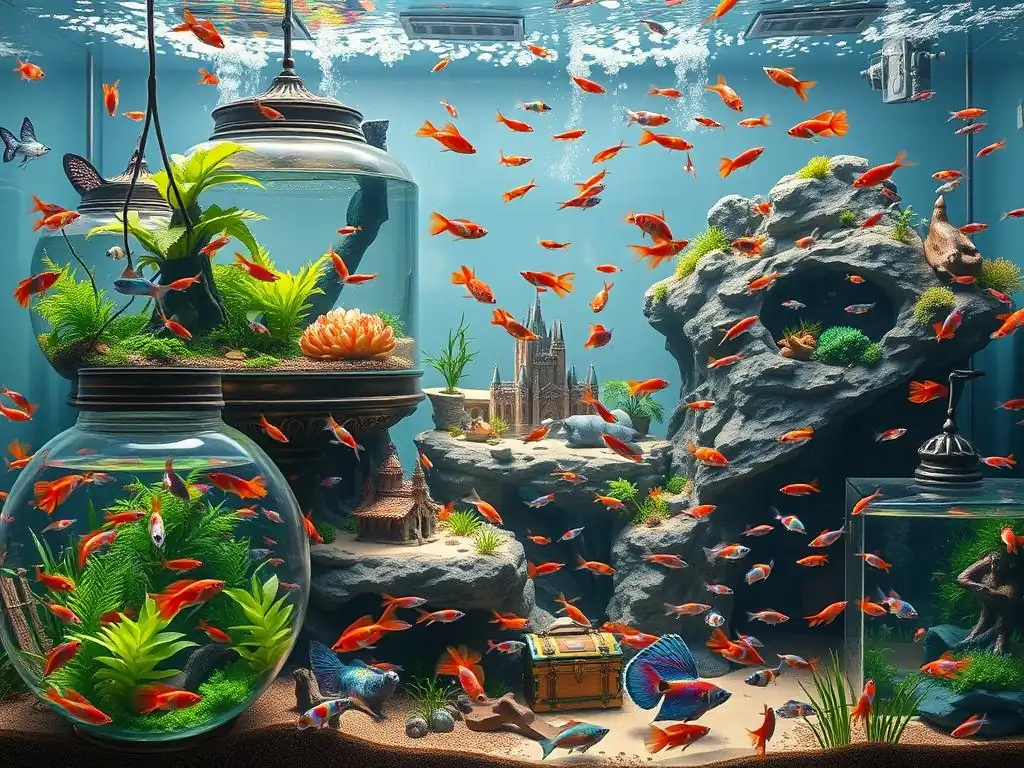
Ever wondered if your guppies are truly living their best lives? Protecting your fin-flowing friends begins with understanding their needs. Dive into our guide on Guppy Tank Compatibility Issues and discover which fish might be more foe than friend to these vibrant little creatures. Unlock the secrets to a harmonious aquarium and ensure your guppies thrive! Ready to learn more?
- Understanding Guppy Tank Compatibility Issues
- Incompatible Fish Species for Guppy Tanks: A Comprehensive Guide
- Specific Fish to Absolutely Avoid with Guppies
- Creating a Peaceful Guppy Community Tank: Best Practices
- Recognizing Signs of Stress and Aggression in Your Guppy Tank
- Alternative Tank Mates for Guppies: Building a Harmonious Ecosystem
- Conclusion: Ensuring a Safe and Thriving Environment for Your Guppies
-
Frequently Asked Questions
- What are some common signs of guppy tank incompatibility with other fish?
- Why is tank mate selection so crucial for guppies?
- What types of fish are generally considered unsafe to keep with guppies?
- How does aquarium size impact guppy compatibility issues?
- Besides aggression, what other factors contribute to guppy incompatibility?
- Final Reflection: Nurturing Harmony in the Guppy Galaxy
- Dive Deeper: Nurture a Thriving Guppy Haven!
Understanding Guppy Tank Compatibility Issues
Why Choosing the Right Tank Mates for Guppies is Crucial
Guppies are renowned for their vibrant colors, active nature, and relatively peaceful demeanor, making them a popular choice for both beginner and experienced aquarists. However, their small size and long, flowing fins, particularly on males, make them vulnerable to stress, injury, and disease if housed with unsuitable tank mates. A harmonious environment is not just about aesthetics; it directly impacts their well-being, growth, and breeding success. Improper selection can lead to chronic stress, fin nipping, and even premature death, turning what should be a thriving community into a source of constant guppy tank compatibility issues.
The consequences of poor tank mate choices extend beyond visible harm. Constant stress from aggressive or overly boisterous companions weakens a guppy's immune system, making them highly susceptible to common freshwater diseases such as Ich (white spot disease) or various bacterial infections like fin rot. While a healthy guppy can live for 2-3 years, a stressed one might only survive a few months, succumbing to illness or injuries that are entirely preventable with careful planning.
Factors Affecting Guppy Compatibility: Size, Temperament, and Water Parameters
Three primary factors dictate guppy compatibility: size, temperament, and water parameters. Guppies are relatively small fish, with males typically reaching 1 to 1.5 inches and females up to 2.5 inches. Any fish large enough to fit a guppy in its mouth, or even a guppy fry, poses an immediate predatory threat. Temperament is equally vital; guppies are peaceful and easily intimidated, so aggressive, territorial, or highly active fish can stress them out or actively harass them.
Finally, water parameters are non-negotiable. Guppies thrive in specific conditions: a pH range of 6.8 to 7.8, moderate to hard water with a general hardness (GH) of 8-18 dGH, and temperatures between 72-82°F (22-28°C). Tank mates requiring vastly different conditions, such as very soft, acidic water or significantly higher temperatures, will either stress the guppies or themselves, leading to health problems for all inhabitants and exacerbating guppy tank compatibility issues.
Incompatible Fish Species for Guppy Tanks: A Comprehensive Guide
Aggressive Fish to Avoid: Ensuring Guppy Safety
Identifying Aggressive Fish Behaviors in the Aquarium
Aggressive fish exhibit a range of behaviors that can be detrimental to peaceful species like guppies. These actions include relentless chasing, nipping at fins or bodies, territorial displays such as flaring gills or fins, and even direct physical confrontations like ramming. While some aggression might appear subtle initially, it creates a constant state of fear and anxiety for the guppies, preventing them from feeding properly, resting, or engaging in natural behaviors.
Even if an aggressive fish doesn't directly injure a guppy, the chronic stress it induces can have severe long-term health consequences. Guppies subjected to constant harassment may become lethargic, lose their vibrant coloration, or hide continuously. This ongoing stress compromises their immune system, making them highly vulnerable to common diseases. For example, a fish that repeatedly darts at guppies during feeding times can lead to malnutrition and stunted growth over several weeks.
Examples of Aggressive Fish Unsuitable for Guppies (e.g., Tiger Barbs)
Tiger Barbs (Puntigrus tetrazona) are a prime example of aggressive fish that are completely unsuitable for guppy tanks. Known for their boisterous and semi-aggressive nature, they are notorious fin-nippers, particularly targeting the long, flowing fins of male guppies. A single Tiger Barb can cause significant fin damage to a guppy within a few hours, leading to stress, infection, and often, death.
Other aggressive fish to avoid include certain larger Barbs, some species of Cichlids (even smaller ones if highly territorial), and certain types of Gouramis known for their pugnacious tendencies. These species will relentlessly harass guppies, preventing them from feeding and resting, thereby creating severe guppy tank compatibility issues that compromise the entire tank's harmony.
Fin-Nipping Fish and Guppy Vulnerability
Why Fin-Nipping is a Problem for Guppies
Guppies, especially the males, are characterized by their elaborate, flowing caudal (tail) and dorsal fins. These beautiful fins, while attractive to aquarists, are also irresistible targets for fin-nipping fish. When a guppy's fins are repeatedly nipped, they become frayed, torn, and damaged. This not only impairs their ability to swim efficiently but also leaves them highly susceptible to secondary bacterial and fungal infections, such as fin rot, which can quickly spread and become fatal.
Beyond the physical damage, fin-nipping causes immense stress to guppies. A fish with damaged fins struggles to maintain balance, escape from perceived threats, and even compete for food. This constant state of vulnerability can lead to chronic stress, loss of appetite, and a weakened immune system, often resulting in a significantly shortened lifespan. A guppy that has suffered severe fin damage often becomes withdrawn and may succumb to stress-related complications within a few days.
Fish Known for Fin-Nipping That Should Be Avoided (e.g., Serpae Tetras)
Serpae Tetras (Hyphessobrycon eques) are frequently cited as fin-nippers, making them a poor choice for guppy tanks. While they can be kept in large, species-specific schools to dilute their aggression, when housed with long-finned, slow-moving fish like guppies, their nipping tendencies become pronounced. They are fast-moving and can overwhelm guppies, causing significant stress and fin damage.
Other fish known for fin-nipping include some species of Danios (though not all), certain species of larger Tetras if not kept in very large schools, and even some larger Gouramis like Opaline Gouramis, particularly in smaller tanks. For instance, a small school of Serpae Tetras in a 10-gallon tank with guppies can cause visible fin fraying on multiple guppies within 24 hours, leading to significant guppy tank compatibility issues.
Large Fish That May Prey on Guppies
The Threat of Predatory Fish to Small Guppies
The simplest rule of thumb in fishkeeping is: if a fish can fit another fish in its mouth, it will likely try to eat it. Guppies, being small and slender, are particularly vulnerable to larger, predatory species. This threat is not limited to just adult guppies; their fry, which are born live and typically measure around 0.2 to 0.3 inches, are an easy meal for almost any fish larger than themselves. Introducing predatory fish into a guppy tank creates an immediate and often fatal guppy tank compatibility issue.
Even seemingly "peaceful" large omnivores can become opportunistic predators if presented with small, bite-sized tank mates. This makes it crucial to research the adult size and dietary habits of any potential tank mate thoroughly. The presence of a predator causes immense stress even if no direct predation occurs, as guppies will constantly live in fear, impacting their feeding, growth, and overall health.
Examples of Large Fish That May Eat Guppies (e.g., Oscars)
Oscars (Astronotus ocellatus) are a classic example of a large, predatory fish that will undoubtedly consume guppies. Growing up to 12-14 inches in length, Oscars are formidable predators with powerful jaws, and they view small fish like guppies as a natural food source. Housing them together is not a guppy tank compatibility issue; it's a guaranteed meal for the Oscar.
Other large fish that pose a direct predatory threat include Arowanas, many larger Cichlid species (such as Jack Dempseys or Green Terrors), and even some large Plecostomus species if they develop carnivorous tendencies. A mature Oscar can easily consume multiple adult guppies in a single feeding, making any attempt to house them together futile and cruel.
Fish with Conflicting Water Parameter Needs
Understanding Ideal Water Conditions for Guppies
Guppies are remarkably adaptable, but they thrive best in specific water conditions that mimic their natural habitats. They generally prefer hard, alkaline water with a pH between 7.0 and 8.0, and a general hardness (GH) ranging from 10 to 20 dGH. The ideal temperature range for guppies is 72-82°F (22-28°C). Maintaining stable parameters within these ranges is crucial for their long-term health, vibrant coloration, and successful breeding. Fluctuations or prolonged exposure to unsuitable conditions can lead to chronic stress and susceptibility to disease.
Consistent water quality, including low ammonia, nitrite (ideally 0 ppm), and nitrate levels (below 20 ppm), is also paramount. Guppies are sensitive to poor water conditions, which can lead to problems like fin rot, bacterial infections, or even 'shimmying' – a stress response where the fish shakes its body without moving forward. Ensuring stable and appropriate water parameters is fundamental to avoiding guppy tank compatibility issues related to environmental stress.
Fish Requiring Different Water Parameters That Are Incompatible (e.g., Discus)
Discus (Symphysodon spp.) are a prime example of fish with vastly different water parameter requirements from guppies, making them completely incompatible. Discus demand very soft, acidic water (pH 5.5-6.5, GH 1-5 dGH) and significantly higher temperatures (82-86°F or 28-30°C) to thrive. These conditions are the opposite of what guppies prefer.
Housing guppies with Discus would severely compromise the health of both species. The hard, alkaline water preferred by guppies would stress Discus, leading to stunted growth, weakened immune systems, and 'hole-in-the-head' disease. Conversely, the soft, acidic water optimal for Discus would cause mineral deficiencies and osmotic stress in guppies. Attempting to mix these species guarantees significant guppy tank compatibility issues and poor health outcomes for all inhabitants.
Specific Fish to Absolutely Avoid with Guppies
Detailed Profiles of Incompatible Fish Species
Tiger Barb: Why it's a Bad Match for Guppies
The Tiger Barb (Puntigrus tetrazona) is a vibrant, active schooling fish, but its reputation as a fin-nipper precedes it. These fish are known for their boisterous behavior and tendency to harass slower-moving, long-finned tank mates. Male guppies, with their elaborate tails, are particularly irresistible targets. Tiger Barbs are relentless and will continuously nip at guppy fins, causing severe damage, stress, and opening the door for secondary bacterial or fungal infections like fin rot.
Even when kept in large schools of 6-8 individuals or more, which can sometimes dilute their aggression amongst themselves, Tiger Barbs remain a significant threat to guppies. Their high energy levels and natural instinct to chase and nip are fundamentally incompatible with the guppy's peaceful and delicate nature. Introducing Tiger Barbs into a guppy tank almost guarantees a decline in guppy health and well-being within a matter of days.
Betta: Potential Problems and Risks
Betta fish (Betta splendens), particularly male Bettas, are famously known for their aggressive and territorial nature. While beautiful, they are often referred to as "Siamese Fighting Fish" for a reason. Male Bettas are highly aggressive towards other male Bettas and can also view other fish with long, flowing fins, such as male guppies, as rivals or threats. This can lead to attacks, fin damage, and extreme stress for the guppies.
Even female Bettas, or male Bettas with a supposedly "peaceful" temperament, can pose a risk. The primary concern remains the Betta's aggression towards the guppies, which can result in severe fin damage, stress-induced illness, or even death for the guppies. A single Betta can inflict substantial harm on a guppy's delicate fins during an aggressive encounter, creating significant guppy tank compatibility issues.
Cichlids: Temperament and Tank Size Considerations
The Cichlid family is vast and diverse, ranging from small, peaceful dwarf cichlids to large, highly aggressive predators. Generally, most Cichlids are unsuitable tank mates for guppies due to their territorial nature, potential for aggression, and often, their predatory instincts. Large Cichlids such as Oscars (Astronotus ocellatus), Jack Dempseys (Rocio octofasciata), or Green Terrors (Andinoacara rivulatus) will undoubtedly view guppies as live food and consume them without hesitation.
Even smaller Cichlids, such as some Convict Cichlids (Amatitlania nigrofasciata) or certain Mbuna Cichlids, are highly territorial and aggressive, especially during breeding. While they might not eat adult guppies, they will relentlessly harass them, leading to extreme stress, injury, and eventual death. Attempting to house guppies with almost any Cichlid species, beyond a few very specific and carefully selected dwarf varieties, will inevitably lead to severe guppy tank compatibility issues.
Creating a Peaceful Guppy Community Tank: Best Practices
Choosing Compatible Tank Mates for Guppies: Focus on Temperament and Size
To ensure a peaceful and thriving guppy community tank, the most crucial step is to select tank mates that share similar temperaments, are of comparable size, and do not exhibit aggressive or fin-nipping behaviors. Prioritize species that are known to be peaceful, non-predatory, and prefer similar water parameters. Ideal companions are often other small, schooling fish that occupy different levels of the water column, minimizing competition for space and resources.
Focus on species that are calm and will not intimidate the guppies. For example, a school of 6-10 Neon Tetras in a 10-gallon tank or larger can coexist harmoniously with guppies, as they are peaceful, active in the mid-water, and generally ignore their tank mates. This careful selection process is the foundation for avoiding common guppy tank compatibility issues.
Maintaining Ideal Water Parameters for Guppy Health and Happiness
Consistent and stable water parameters are fundamental to the health and happiness of guppies and their tank mates. Regular partial water changes, typically 25-30% weekly, are essential to keep nitrate levels below 20 ppm and maintain stable pH (7.0-8.0) and hardness (GH 10-20 dGH). Utilizing a reliable liquid test kit to monitor ammonia, nitrite, and nitrate levels is crucial for early detection of any imbalances.
Maintaining a stable water temperature within the optimal range of 72-82°F (22-28°C) is also vital, as sudden fluctuations can stress guppies and make them susceptible to disease. Proper filtration, adequate aeration, and the avoidance of overfeeding further contribute to pristine water quality, ensuring a healthy environment where guppies can thrive and minimizing environmental guppy tank compatibility issues.
Providing Ample Hiding Places and Plants for Guppy Fry
Guppies are prolific breeders, and if you wish to see fry survive in a community tank, providing ample hiding places is absolutely essential. Dense live plants, such as Java Moss, Hornwort, Anacharis, and various stem plants, offer excellent refuge for newborn guppy fry, protecting them from adult guppies and other potential predators. These plants also provide natural foraging grounds and contribute to overall water quality.
Beyond fry protection, hiding spots reduce stress for adult guppies by offering safe zones to retreat to if they feel threatened or need a break from active tank mates. A heavily planted tank can significantly increase fry survival rates from less than 10% to over 50% in a community setting. This provision of cover is a key element in creating a secure environment and mitigating guppy tank compatibility issues within the tank.
Recognizing Signs of Stress and Aggression in Your Guppy Tank
Identifying Symptoms of Stress in Guppies
Recognizing the signs of stress in guppies is critical for prompt intervention. Stressed guppies often exhibit clamped fins, holding them tightly against their bodies instead of displaying them openly. They may also show rapid gill movement, indicating difficulty breathing or high ammonia levels, or become lethargic and hide excessively, often near the bottom or in corners of the tank. Loss of vibrant coloration, refusal to eat, or erratic, jerky swimming patterns are also common indicators of stress.
In some cases, chronically stressed guppies may display 'shimmying' – a peculiar behavior where they shake their bodies back and forth rapidly without moving forward. This is often a sign of poor water quality or environmental stress. If multiple guppies show these symptoms, it's crucial to immediately check water parameters and assess potential guppy tank compatibility issues that might be causing distress.
How to Address Aggression Issues in Your Aquarium
If aggression is observed in your guppy tank, immediate action is necessary to prevent further harm. First, identify the aggressor and the target. Solutions may include re-arranging tank decor to break up established territories and create new visual barriers, or adding more hiding places to provide refuge for the harassed guppies. For schooling fish that are nippy due to insufficient numbers, increasing their school size (e.g., to 8-10 individuals) can sometimes dilute their aggression, though this is rarely recommended for guppies.
In severe cases of guppy tank compatibility issues, it might be necessary to rehome the aggressive fish or, as a temporary measure, move the harassed guppies to a separate "hospital" or "time-out" tank. Sometimes, simply adding tall plants or driftwood strategically can break line of sight and significantly reduce confrontations, leading to a calmer and more harmonious environment for your guppies.
Alternative Tank Mates for Guppies: Building a Harmonious Ecosystem
Recommended Peaceful Fish for Guppy Tanks
Examples of Good Guppy Tank Mates (e.g., Neon Tetras)
When building a harmonious guppy community, selecting truly peaceful and compatible fish is paramount. Neon Tetras (Paracheirodon innesi) are an excellent choice. These small, schooling fish are known for their calm demeanor and vibrant colors. They primarily inhabit the mid-water column, generally ignoring guppies, and thrive in similar water conditions, making them ideal companions. A school of 6-10 Neon Tetras can add dynamic movement and color to a guppy tank without introducing guppy tank compatibility issues.
Other highly recommended peaceful fish include other Livebearers like Platies and Swordtails (though Swordtails can get quite large), peaceful Corydoras catfish (e.g., Panda Corys or Pygmy Corys) for the bottom, Otocinclus catfish for algae control, and small Rasboras such as Harlequin Rasboras or Chili Rasboras. These species are generally non-aggressive, don't nip fins, and fit well into a guppy's preferred water parameters.
Invertebrates That Can Thrive with Guppies
Safe and Beneficial Invertebrates for a Guppy Tank (e.g., Cherry Shrimp)
Invertebrates can be a fantastic addition to a guppy tank, providing both aesthetic appeal and practical benefits as part of the clean-up crew. Cherry Shrimp (Neocaridina davidi) are a popular and safe choice. These colorful dwarf shrimp are peaceful, diligent algae eaters, and will consume leftover food, helping to keep the tank clean. They are too small to bother adult guppies, and guppies typically won't bother them, especially if there are plenty of hiding places like Java Moss.
Other suitable invertebrates include Amano Shrimp (Caridina multidentata), which are slightly larger and excellent algae eaters, and various snail species such as Nerite Snails or Mystery Snails. These snails are superb at controlling algae growth on glass and decor, and they pose absolutely no threat to guppies. A colony of 20-30 Cherry Shrimp can thrive in a 10-gallon guppy tank, adding diversity and utility without creating guppy tank compatibility issues.
Conclusion: Ensuring a Safe and Thriving Environment for Your Guppies
Creating a safe and thriving environment for your guppies hinges entirely on careful planning and diligent tank mate selection. Understanding the specific needs of guppies—their size, peaceful temperament, and preferred water parameters—is crucial to avoiding common guppy tank compatibility issues. By actively steering clear of aggressive, fin-nipping, or predatory fish, and those with conflicting environmental requirements, you lay the foundation for a harmonious aquatic community.
A well-planned guppy tank, populated with compatible species and maintained with consistent, high-quality water, will result in a vibrant and peaceful ecosystem. Your "Fin Flowing Friends" will display their natural behaviors, thrive, breed successfully, and live out their full, healthy lifespans, providing endless enjoyment and a testament to responsible aquarism.
Frequently Asked Questions
What are some common signs of guppy tank incompatibility with other fish?
Signs include fin nipping, aggression towards guppies, or guppies appearing stressed and hiding frequently. Observe your tank regularly for any concerning behaviors.
Why is tank mate selection so crucial for guppies?
Guppies are small and peaceful, making them vulnerable to more aggressive or larger fish. Proper selection ensures their safety and well-being within the aquarium.
What types of fish are generally considered unsafe to keep with guppies?
Larger predatory fish like cichlids and fin-nipping fish like tiger barbs are generally unsuitable. They pose a significant threat to guppies' survival.
How does aquarium size impact guppy compatibility issues?
A smaller tank can exacerbate compatibility problems, as fish have less space to escape aggressive tank mates. Adequate space is crucial for peaceful cohabitation.
Besides aggression, what other factors contribute to guppy incompatibility?
Factors such as water parameter requirements (pH, temperature) and feeding habits can also lead to incompatibility. Ensure all tank inhabitants have compatible needs.
Final Reflection: Nurturing Harmony in the Guppy Galaxy
The insights shared throughout this article underscore the critical importance of thoughtful planning and informed decision-making when creating a thriving guppy community. Understanding guppy tank compatibility issues isn't just about avoiding disaster; it's about actively cultivating an environment where these vibrant fish can flourish, free from stress and predation. A well-researched and carefully curated tank is a testament to our commitment to responsible fishkeeping.
This journey into the world of guppy compatibility has highlighted how deeply our choices impact the delicate balance of an aquatic ecosystem. Witnessing the vibrant colors and playful energy of guppies in a harmonious tank is a reward in itself, a constant reminder of the beauty that responsible stewardship can create. The greatness of a nation and its moral progress can be judged by the way its animals are treated.
- Mahatma Gandhi. This quote, though often applied to larger animals, resonates deeply with the care we extend to even the smallest creatures in our aquariums.
Now, armed with this knowledge, I invite you to reflect on your own aquariums and the choices you make. Are you actively fostering an environment of peace and prosperity for your guppies? Are you willing to learn and adapt to ensure their well-being? Let this article be a catalyst for positive change, inspiring you to create a truly harmonious and thriving guppy galaxy, where every fin flows freely and every life is valued.
Dive Deeper: Nurture a Thriving Guppy Haven!
Thank you for exploring the world of guppy care with us! Now that you're equipped with knowledge about fish to avoid keeping with your guppies, let's turn that understanding into action.
Here are a few things you can do right now:
- Re-evaluate your aquarium's inhabitants and remove any fish known to be aggressive or unsuitable tank mates for guppies. Your guppies will thank you for it!
- Share this article with fellow aquarists who might be unknowingly jeopardizing their guppies' well-being. Spread the knowledge, save the fins!
- Research unique, peaceful tank mates that can create a vibrant and harmonious community in your aquarium.
What steps will you take today to ensure a peaceful and thriving aquatic environment for your guppies?