
The Gentle Giant Myth? Debunking Severum Temperament Misconceptions

Welcome to Aquarium Mastery!
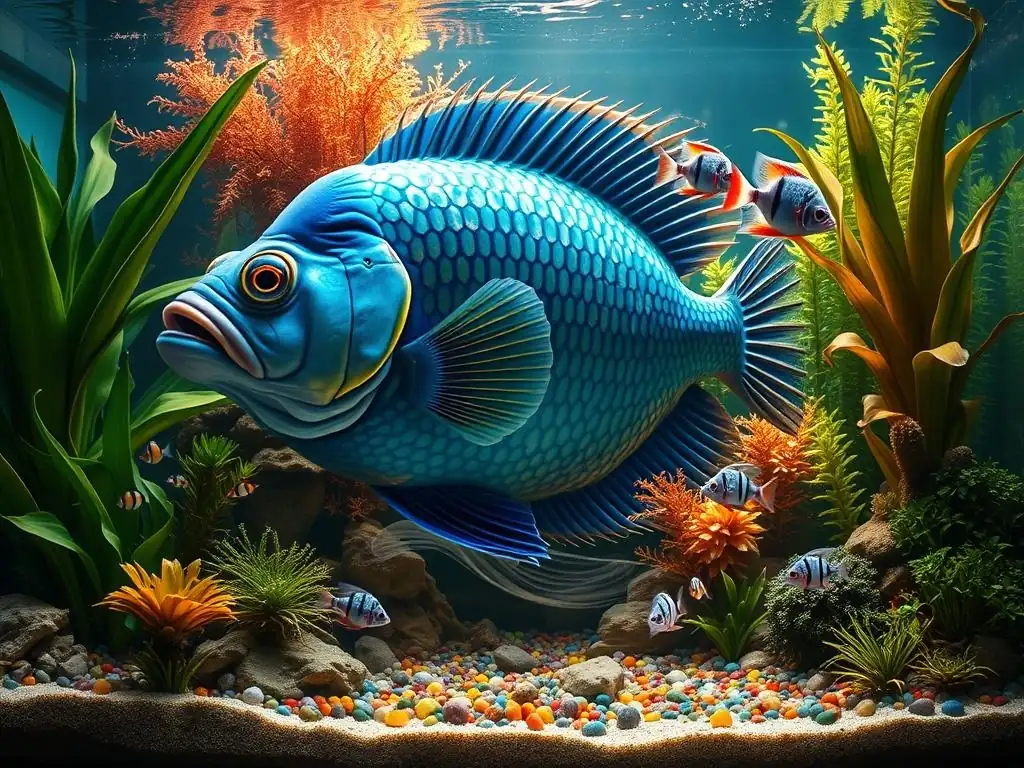
Ever heard Severums described as the 'gentle giants' of the aquarium world? Think again! We're diving deep to debunk common misconceptions about Severum fish temperament, separating fact from fiction. Prepare to uncover the surprising truth about their personality, tank mate compatibility, and what really makes them tick. Ready to challenge what you thought you knew? Let's get started!
- Understanding the Severum Fish: Beyond the "Gentle Giant" Label
-
Severum Fish Temperament Myths: Separating Fact from Fiction
- Myth 1: Severums are Always Peaceful and Docile
- Reality: Understanding Severum Aggression Levels
- Myth 2: Severums are Ideal Community Tank Fish
- Reality: Choosing Appropriate Severum Tank Mates
- Myth 3: Severums Never Display Aggression Towards Their Own Kind
- Reality: Severum Aggression Within the Species
- Factors Influencing Severum Behavior: More Than Just Temperament
- Recognizing Signs of Stress and Aggression in Severums
- Building a Thriving Severum Tank: A Holistic Approach
- Conclusion: Reassessing the Severum Temperament and Responsible Fishkeeping
-
Frequently Asked Questions
- ### Are Severum fish truly as peaceful as often claimed?
- ### What factors influence a Severum's temperament in an aquarium?
- ### How do I identify if my Severum is displaying aggressive behavior?
- ### What tank mates are generally unsuitable for Severums, given their potential for aggression?
- ### What steps can I take to mitigate aggression issues with my Severum?
- Final Reflection: Beyond the Gentle Giant Myth
- Unveil the True Severum Keeper in You!
Understanding the Severum Fish: Beyond the "Gentle Giant" Label
Introducing the Severum Cichlid: A Profile for Aquarists
The Severum cichlid, scientifically known as Heros severus, is a captivating freshwater fish native to the vast river basins of South America, primarily the Amazon and Orinoco. These attractive fish are characterized by their oval, disc-shaped bodies and can reach an impressive size of 8 to 10 inches (20-25 cm) in a well-maintained aquarium.
With proper care, Severums boast a considerable lifespan, often living for 10 to 15 years, making them a long-term commitment for aquarists. Their diverse color morphs, including the popular Green Severum, Gold Severum, and the striking Rotkeil Severum, add to their visual appeal, making them a centerpiece in many freshwater setups.
As a New World Cichlid, the Severum exhibits a level of intelligence and interactive behavior that appeals to many fish keepers. They are omnivores, requiring a balanced diet of high-quality pellets, frozen foods, and vegetable matter to thrive. Despite their often-touted "gentle giant" moniker, their true Severum fish temperament is more nuanced and influenced by various environmental and social factors. Understanding these complexities is crucial for successful long-term care and managing expectations regarding their behavior in a community tank.
The Allure of Severums: Why They're Popular Aquarium Fish
Severums hold a significant appeal for aquarists, primarily due to their striking beauty and impressive size. Their vibrant colors and distinct patterns, such as the reddish-orange markings on the Rotkeil variety or the iridescent greens of the Green Severum, make them highly desirable display fish. Unlike some of the more overtly aggressive large cichlids, Severums are often perceived as a more "manageable" large cichlid, offering the impressive presence of a bigger fish without the extreme territoriality.
This perception of a relatively calm disposition, especially when compared to species like Oscars or Flowerhorns, contributes heavily to the "gentle giant" myth surrounding their Severum fish temperament. Their potential for interaction with their owners, often recognizing and even "begging" for food, further endears them to hobbyists. Furthermore, their longevity and the possibility of breeding them in a home aquarium add another layer of fascination, solidifying their place as a popular choice among those looking for a substantial and engaging freshwater fish.
Severum Fish Temperament Myths: Separating Fact from Fiction
Myth 1: Severums are Always Peaceful and Docile
One of the most pervasive myths surrounding Severums is that they are universally peaceful and docile, earning them the affectionate nickname "gentle giants." While it is true that Severums are generally less overtly aggressive than some of their more notorious cichlid cousins, this generalization can be highly misleading. Many new aquarists, relying on this myth, are often surprised when their seemingly calm Severum suddenly displays aggressive behaviors, such as chasing, fin nipping, or even territorial disputes within the tank.
The reality is that the Severum fish temperament is far from uniformly tranquil. Their behavior can fluctuate significantly based on various factors, including tank size, tank mates, breeding cycles, and individual personality. For instance, a Severum that appears peaceful for months might suddenly become highly territorial and aggressive when it pairs off to breed, or if its living space becomes too confined. Ignoring these potential shifts can lead to stress for all tank inhabitants and ultimately, an unstable aquarium environment.
Reality: Understanding Severum Aggression Levels
The truth about Severum fish temperament is that they possess a moderate level of aggression, which can manifest in various ways depending on the specific circumstances. While they typically won't engage in the constant, overt aggression seen in some other cichlid species, they are perfectly capable of defending their territory, establishing dominance, and asserting themselves over perceived threats or rivals. This aggression often presents as chasing, nipping at fins, or intimidating displays rather than constant physical attacks, but it can escalate if not addressed.
Unlike truly peaceful community fish such as rasboras or small tetras, Severums require careful consideration of their potential for aggression, especially as they mature. Their size alone can be intimidating to smaller tank mates, and their territorial instincts become more pronounced in cramped conditions or when competing for resources. Understanding these nuanced aggression levels is vital for successful long-term tank management, ensuring a harmonious environment for all inhabitants, and debunking the pervasive "gentle giant" Severum fish temperament myth.
Factors Influencing Severum Temperament: Tank Size and Environment
Tank size is arguably the most critical factor influencing Severum fish temperament and aggression levels. A single adult Severum requires a minimum of 75 gallons (approximately 280 liters) to thrive, with 125 gallons (around 470 liters) or more being ideal for a pair or a small group. Inadequate space directly contributes to stress, which in turn amplifies aggressive tendencies. When confined to a smaller tank, Severums lack sufficient territory, leading to heightened competition for resources and personal space, resulting in increased chasing and territorial disputes among tank mates.
Beyond mere volume, the aquascaping of the environment also plays a significant role. A well-designed tank should include plenty of hiding spots, caves, and visual barriers created by driftwood, rocks, or sturdy plants. These elements help to break up lines of sight and provide refuge for subordinate fish, diffusing potential aggression. A barren tank or one with insufficient hiding places leaves weaker fish exposed, concentrating the aggression of dominant Severums and exacerbating their natural territorial instincts.
The Role of Individual Personality in Severum Behavior
While tank size and environment are crucial, it's also important to acknowledge that individual Severums, like many intelligent fish species, possess unique personalities. This means that even under optimal conditions, the Severum fish temperament can vary from one individual to another. Some Severums might naturally be more dominant, assertive, or prone to territorial displays, while others could remain remarkably docile and tolerant throughout their lives. This inherent variability makes a blanket statement about their temperament challenging.
Observing your specific fish is key. For example, in a group of three Severums housed in a 180-gallon tank, one individual might consistently display more assertive behavior towards its tank mates, despite adequate space and resources, while the other two remain relatively calm. This highlights that while general guidelines apply, a Severum's individual character can significantly influence its behavior. Recognizing these individual nuances helps aquarists understand and manage their specific fish's Severum fish temperament more effectively.
Myth 2: Severums are Ideal Community Tank Fish
The myth that Severums are ideal community tank fish often stems from their "gentle giant" reputation, leading many aquarists to believe they can be safely housed with a wide variety of species. While it is true that Severums can coexist with certain tank mates, they are far from suitable for a typical community setup that includes small, delicate, or slow-moving fish. Their potential for aggression, combined with their substantial adult size, makes them a significant risk to many common aquarium inhabitants.
This misconception frequently leads to disastrous outcomes, where smaller fish are harassed, injured, or even consumed. Severums, despite their generally peaceful reputation relative to other large cichlids, are still cichlids with predatory instincts. They will readily prey on any fish small enough to fit into their mouths, especially if they are hungry or perceive the smaller fish as a threat or food item. Therefore, careful selection of tank mates is paramount, rather than assuming their compatibility with just any community fish.
Reality: Choosing Appropriate Severum Tank Mates
The reality of choosing appropriate Severum tank mates involves careful consideration of size, temperament, and water parameter compatibility. Ideal tank mates for Severums are robust, similarly sized fish that can hold their own or are fast enough to evade potential aggression. They should also thrive in the same soft to moderately hard water conditions and temperatures that Severums prefer (around 75-82°F or 24-28°C). The goal is to select species that won't be easily intimidated or become targets of territorial disputes.
A good rule of thumb is to avoid any fish that can fit into a Severum's mouth. Even if a Severum isn't actively hunting, opportunistic feeding can occur. For instance, a Severum might mistake a small Neon Tetra as a snack, even if it's generally well-fed. Therefore, focusing on larger, more resilient species that share similar environmental needs is essential for a harmonious and safe Severum community tank.
Compatible Tank Mates for Severums: Species to Consider
When selecting tank mates for Severums, prioritize species that are comparable in size, robust, and capable of defending themselves or quickly escaping.
- Other large, peaceful to semi-aggressive cichlids: Certain species like Keyhole Cichlids ( Cleithracara maronii), some larger Geophagus species, or even less aggressive Oscar cichlids (only in very large tanks, 200+ gallons, where space is abundant for all) can sometimes work.
- Large, fast-swimming schooling fish: These can act as dither fish, making the Severums feel more secure and less prone to aggression. Examples include Silver Dollars ( Metynnis argenteus) or larger Giant Danios ( Devario aequipinnatus). A school of 6-8 Silver Dollars in a 125-gallon tank provides both visual appeal and a natural distraction for Severums.
- Armored catfish: Plecostomus species (e.g., Common Pleco, Bristlenose Pleco – ensuring they grow large enough not to be intimidated), Synodontis catfish, or larger Corydoras catfish can coexist peacefully as bottom dwellers.
- Large Gouramis: Some larger gourami species, like the Pearl Gourami ( Trichopodus leerii), can sometimes be compatible in very spacious tanks, though their long fins might be targets for fin nipping if the Severum's temperament is on the more aggressive side.
Incompatible Tank Mates: Fish to Avoid with Severums
To prevent conflict and ensure the safety of all inhabitants, several types of fish should be avoided as tank mates for Severums:
- Small Tetras and Rasboras: Species like Neon Tetras, Cardinal Tetras, or Harlequin Rasboras are far too small and will almost certainly be seen as food. A common scenario is a Severum in a 55-gallon tank with a school of 20 Neon Tetras; within a few weeks, the tetra population will likely dwindle significantly.
- Small Livebearers: Guppies, Mollies, and Platies are also too small and delicate to be housed with Severums. Their slow swimming and small size make them easy targets.
- Delicate, Long-Finned Fish: Angelfish, especially smaller ones, or Betta fish are often incompatible. Their long, flowing fins are irresistible targets for fin nipping, leading to stress, injury, and potential disease.
- Slow-Moving or Bottom-Dwelling Fish: Any fish that cannot quickly escape or defend itself from a larger cichlid is at risk. This includes certain types of dwarf cichlids or very docile bottom feeders.
- Small Invertebrates: Shrimp or small snails will likely be eaten by Severums.
Myth 3: Severums Never Display Aggression Towards Their Own Kind
Another common misconception is that Severums are always harmonious when housed with their own species. While they may not exhibit the same level of intense intraspecific aggression as some other cichlid species, the belief that they never display aggression towards their own kind is inaccurate. Severums, like many cichlids, are territorial and will establish a social hierarchy within a group. This process often involves displays of dominance and, at times, direct aggression, especially between males or during breeding.
Such intraspecific aggression can range from subtle chasing and fin flaring to more serious physical altercations, particularly if tank conditions are not optimal. In undersized tanks or environments lacking sufficient hiding spots, this aggression can lead to severe stress, injury, or even death for the weaker or subordinate fish. Therefore, understanding the nuances of Severum fish temperament within a group is crucial for successful multi-Severum setups.
Reality: Severum Aggression Within the Species
The reality is that Severums do exhibit intraspecific aggression, particularly when establishing a pecking order or during breeding periods. In a group setting, a hierarchy will naturally form, with one or more dominant individuals asserting control over the others. This can manifest as chasing, nipping, or blocking access to food and prime territories. While often less violent than aggression seen in other large cichlids, it can still be detrimental to the health and well-being of subordinate fish.
During breeding, a pair of Severums will become intensely territorial, aggressively defending their chosen spawning site (often a flat rock or piece of driftwood) from any other fish, including other Severums. They will chase away any perceived intruders with vigor, sometimes inflicting damage if the intruder cannot escape quickly. This heightened Severum fish temperament during spawning is a natural parental instinct but must be managed in a community setting.
Establishing a Severum Hierarchy: Understanding Social Dynamics
When introducing multiple Severums, particularly juveniles, into a spacious tank, some initial skirmishes are to be expected as they establish their social hierarchy. This involves dominant individuals asserting their position through various displays, such as fin flaring, body quivering, and chasing. In a well-sized tank with ample hiding spots, this process typically resolves itself without severe injury, as the aggression is diffused among multiple targets and weaker fish can retreat.
For instance, introducing a group of 5-6 juvenile Severums (each around 2-3 inches) into a 150-gallon tank simultaneously allows them to grow up together and establish a more stable hierarchy. This approach often leads to less concentrated aggression compared to adding one or two new Severums to an established tank, where the existing fish will already have claimed territories. Providing visual barriers, such as large pieces of driftwood or rock formations, helps to create distinct territories and reduce direct line-of-sight confrontations, further mitigating potential conflicts arising from the natural Severum fish temperament.
Managing Aggression Between Severums: Tips and Strategies
Managing intraspecific aggression among Severums requires proactive planning and observation.
- Adequate Tank Size: This is paramount. For a group of 3-5 Severums, a tank of 150-200 gallons (560-750 liters) or more is essential. This provides enough space for each fish to establish a territory without constant encroachment.
- Visual Barriers: Arrange driftwood, rocks, and hardy plants (like Anubias or Java Fern attached to decor) to create numerous hiding spots and break up lines of sight. This allows subordinate fish to escape and reduces the frequency of direct confrontations.
- Simultaneous Introduction: If possible, introduce all Severums at the same time into a new tank. This prevents a single fish from becoming overly territorial before others are added.
- Monitor Closely: Observe interactions, especially during feeding times, which can be a source of competition. Look for signs of bullying, such as clamped fins, faded colors, or constant hiding by one individual.
- Target Feeding: Ensure all fish are getting enough food. Underfeeding can increase competition and aggression. Consider target feeding weaker individuals if necessary.
- Intervention: If severe bullying occurs, rearrange the tank decor to disrupt established territories. As a last resort, temporarily remove the aggressor or the bullied fish to a separate tank to allow time for recovery and reassessment. For example, if a dominant male is relentlessly harassing a smaller female, moving the female to a 40-gallon hospital tank for a week can allow her to recover and might reset the dynamics when she is reintroduced.
Factors Influencing Severum Behavior: More Than Just Temperament
Tank Size and Aquascaping: Creating a Suitable Environment
Beyond merely mitigating aggression, tank size and thoughtful aquascaping are fundamental to the overall well-being and natural expression of Severum fish temperament. While a 75-gallon tank is often cited as the bare minimum for a single adult Severum, this size primarily serves to prevent stunting and severe stress.
To truly see a Severum thrive, grow to its full potential (up to 10 inches), and exhibit natural behaviors, a larger tank of 100-125 gallons or more is highly recommended, especially for a pair or small group. Insufficient space leads to chronic stress, weakened immune systems, and invariably, heightened aggression due to perceived territorial infringements.
Aquascaping should provide a balance of open swimming areas and secure territories. Severums appreciate a substrate of fine to medium-grain sand or smooth gravel, as they enjoy sifting through it. Incorporate large, stable pieces of driftwood and rocks to create caves, overhangs, and visual barriers. While Severums may uproot plants, hardy species like Anubias, Java Fern, and larger Amazon Swords (often attached to decor) can be successfully used to enhance the environment, offering additional cover and contributing to a more natural and less stressful habitat, which positively impacts their overall Severum fish temperament.
Water Parameters and Health: Impact on Severum Behavior
Stable and optimal water parameters are paramount for maintaining the health and calm Severum fish temperament. These New World Cichlids thrive in soft to moderately hard water with a slightly acidic to neutral pH, ideally ranging from 6.0 to 7.0. The preferred temperature range is between 75-82°F (24-28°C). Any significant deviation or fluctuation in these parameters can induce severe stress, making the fish more susceptible to disease and more prone to erratic or aggressive behavior. For instance, a sudden drop in temperature or a spike in ammonia can cause a normally calm Severum to become irritable and defensive.
Regular water changes and robust filtration are non-negotiable. Weekly water changes of 25-30% are crucial to keep nitrate levels low and replenish essential minerals. A high-quality canister filter or a powerful hang-on-back filter rated for at least twice the tank's volume is recommended to handle the bioload of these large fish. Consistent monitoring of ammonia, nitrite, nitrate, and pH levels using a reliable test kit (e.g., API Freshwater Master Test Kit) is essential. A healthy Severum, free from the stress of poor water quality, is far more likely to exhibit its desirable, more placid Severum fish temperament.
Diet and Feeding Habits: How Food Affects Temperament
The diet and feeding habits of your Severum fish can significantly influence their temperament and overall behavior. As omnivores, Severums require a varied and nutritious diet to maintain optimal health and reduce stress-induced aggression. A high-quality cichlid pellet or flake should form the staple of their diet, supplemented regularly with protein-rich foods such as frozen bloodworms, brine shrimp, and chopped earthworms. Equally important is the inclusion of vegetable matter, which can be provided through spirulina flakes, blanched spinach, or peas.
Underfeeding or providing an unbalanced diet can lead to nutritional deficiencies, weakened immune systems, and increased competition among tank mates, all of which can contribute to a more agitated Severum fish temperament. Feeding small amounts multiple times a day (e.g., 2-3 times) rather than one large meal can also reduce feeding aggression, ensuring all fish get adequate nutrition without intense competition. A well-nourished Severum is generally a healthier and more content fish, less prone to displaying aggressive or irritable behaviors.
Recognizing Signs of Stress and Aggression in Severums
Identifying Early Warning Signs: Fin Nipping and Chasing
Recognizing the early warning signs of stress and aggression in Severums is crucial for proactive intervention and maintaining tank harmony. One of the most common early indicators is persistent chasing, where one Severum repeatedly pursues another, often attempting to block its path or drive it into a corner. Fin nipping, particularly targeting the caudal (tail) or anal fins, is another clear sign that aggression is escalating. These behaviors, if left unaddressed, can quickly lead to severe stress, injury, and even death for the bullied fish.
Other subtle cues include gill flaring, where a Severum extends its gill covers as a display of dominance or intimidation, even without direct physical contact. Changes in swimming patterns, such as a fish constantly hiding, darting erratically, or staying pressed against the tank glass, can indicate it is being bullied or experiencing high stress. Conversely, a dominant Severum might constantly patrol the tank, displaying vibrant colors as a show of its status. Observing these nuances helps an aquarist identify potential issues with Severum fish temperament before they become critical.
Understanding Body Language: Interpreting Severum Behavior
Severums communicate extensively through their body language, and understanding these signals is key to interpreting their behavior and overall Severum fish temperament. When a Severum is feeling aggressive or challenged, it may flare its fins, particularly the dorsal and caudal fins, making itself appear larger. A lowered head posture and a slight shimmy of the body can also indicate a challenge or an impending attack. Rapid color changes are also significant: a Severum might darken its colors to signal dominance or excitement, or conversely, pale significantly if it is stressed, fearful, or ill.
Beyond aggression, other body language cues can indicate stress or poor health. Clamped fins (fins held tightly against the body), rapid gill movements (indicating labored breathing), or rubbing against tank decorations can signal illness, poor water quality, or high stress levels. A healthy, content Severum typically displays bright, vibrant colors, active and fluid swimming, and alert, curious behavior. Any deviation from these norms warrants close observation and potential intervention to address underlying issues affecting the Severum fish temperament.
Addressing Aggression Issues: Solutions and Prevention
Addressing aggression in Severums involves both preventative measures and reactive solutions. Prevention is always the best approach:
- Provide Adequate Space: Ensure the tank is large enough for all inhabitants, allowing each Severum sufficient territory. A 150-gallon tank for a small group of Severums significantly reduces the likelihood of severe aggression compared to a 75-gallon setup.
- Strategic Aquascaping: Create plenty of visual barriers and hiding spots using driftwood, rocks, and sturdy plants. This breaks up lines of sight and provides refuge for weaker fish.
- Compatible Tank Mates: Carefully select tank mates that are similar in size and temperament, and avoid very small or delicate species.
- Maintain Optimal Conditions: Consistent water quality, appropriate temperature, and a balanced diet minimize stress, which can trigger aggression.
When aggression issues do arise, solutions include:
- Water Parameter Check: First, re-check all water parameters (ammonia, nitrite, nitrate, pH) to rule out water quality as a stressor.
- Rearrange Decor: If aggression persists, rearrange the tank decor. This disrupts established territories and can "reset" the social dynamics.
- Introduce Dither Fish: Adding a school of fast-swimming, larger dither fish (e.g., Giant Danios) can distract the aggressor and make them feel more secure, reducing their focus on internal aggression.
- Temporary Removal: In severe cases, temporarily remove the aggressor or the bullied fish to a separate tank. This allows the bullied fish to recover and can break the cycle of aggression. For instance, moving a severely bullied Severum to a 40-gallon quarantine tank for a week can allow it to regain strength and reduce stress before reintroduction.
- Increase Group Size (for Severums): Sometimes, adding more Severums (if tank size allows, e.g., increasing a pair to a group of 4-5 in a 200-gallon tank) can diffuse aggression by spreading it among more targets, rather than concentrating on just one or two individuals.
Building a Thriving Severum Tank: A Holistic Approach
Choosing the Right Tank Size and Equipment
Building a thriving Severum tank begins with selecting the appropriate tank size and robust equipment. For a single adult Severum, a minimum of 75 gallons (280 liters) is necessary to accommodate their growth and provide adequate swimming space. However, for a pair or a small group, a tank of 125 gallons (470 liters) or larger is highly recommended, with 150-200 gallons (560-750 liters) being ideal for a harmonious group. This generous space is crucial for mitigating potential aggression and allowing the Severum fish temperament to express itself without undue stress.
Beyond the tank itself, reliable filtration is paramount. A high-quality canister filter, rated for at least twice the tank's volume (e.g., an FX6 filter for a 125-gallon tank), provides excellent mechanical, chemical, and biological filtration necessary to handle the significant bioload of these large cichlids. Additionally, a powerful and reliable heater (or two smaller heaters for redundancy in larger tanks) is essential to maintain a stable water temperature between 75-82°F (24-28°C), which is vital for their health and stable Severum fish temperament.
Creating a Natural Environment: Plants, Rocks, and Substrate
To foster a natural and comfortable environment for Severums, careful consideration of aquascaping elements is essential. A substrate of fine to medium-grain sand or smooth gravel is ideal, as Severums enjoy sifting through it in search of food. Incorporate sturdy decorations such as large, smooth rocks and substantial pieces of driftwood. These elements are not just aesthetic; they are crucial for creating territories, providing hiding spots, and breaking up lines of sight, all of which contribute to a more stable Severum fish temperament. Ensure all decor is securely placed to prevent collapses, as Severums can be quite active.
While Severums are known to nibble on or uproot live plants, hardy species can be successfully integrated. Anubias, Java Fern, and large Amazon Swords are good choices, especially if they are rooted in pots or securely attached to driftwood or rocks. These plants not only enhance the tank's natural aesthetic but also offer additional cover and contribute to water quality by absorbing nitrates. A well-designed environment that mimics their natural habitat significantly reduces stress and encourages positive behaviors.
Maintaining Optimal Water Quality: The Key to Happy Severums
Consistent and optimal water quality is arguably the most critical factor in ensuring the long-term health and placid Severum fish temperament. Regular maintenance is non-negotiable. Weekly water changes of 25-30% are essential to dilute nitrates, replenish trace elements, and remove accumulated waste. Always use a high-quality water conditioner to neutralize chlorine and chloramines from tap water. Neglecting water changes can lead to a rapid buildup of harmful substances, causing severe stress and making Severums more susceptible to disease and aggression.
Monitoring water parameters weekly is also crucial. Use a reliable freshwater test kit to check for ammonia, nitrite, and nitrate levels, as well as pH. The goal is 0 ppm ammonia, 0 ppm nitrite, and nitrate levels consistently below 20 ppm. The pH should remain stable within the 6.0-7.0 range. Any significant fluctuations or elevated levels indicate a problem that needs immediate attention. A stable, clean, and well-oxygenated environment is the bedrock of a healthy Severum tank, directly influencing their overall well-being and promoting a calm Severum fish temperament.
Conclusion: Reassessing the Severum Temperament and Responsible Fishkeeping
The "gentle giant" label often applied to Severum cichlids, while endearing, is ultimately a myth that can lead to misunderstandings and challenges for aquarists. While they are generally less aggressive than some other large cichlid species, their Severum fish temperament is complex and highly influenced by numerous factors, including tank size, aquascaping, water quality, diet, and individual personality. They are capable of displaying significant aggression, particularly when establishing territories, breeding, or if housed in suboptimal conditions.
Responsible fishkeeping for Severums demands a holistic approach that goes beyond simply providing a tank. It requires thorough research into their specific needs, a commitment to providing a generously sized and appropriately aquascaped environment, careful selection of compatible tank mates, and diligent maintenance of pristine water quality. By understanding the true Severum fish temperament and addressing their specific requirements, aquarists can ensure these beautiful and intelligent fish not only survive but truly thrive, exhibiting their best behaviors and becoming a source of long-term enjoyment in the home aquarium.
Frequently Asked Questions
### Are Severum fish truly as peaceful as often claimed?
No, Severums are often labeled as peaceful, but their temperament can vary greatly. While generally less aggressive than cichlids like Oscars, they can still be territorial, especially during breeding or when space is limited.
### What factors influence a Severum's temperament in an aquarium?
Several factors play a role, including tank size, the presence of other fish (especially similar species), and individual personality. A Severum in a crowded tank is far more likely to be aggressive.
### How do I identify if my Severum is displaying aggressive behavior?
Watch for behaviors like chasing, nipping fins, or cornering other fish. These are clear signs of aggression and indicate a need for intervention, such as re-arranging the tank or rehoming a fish.
### What tank mates are generally unsuitable for Severums, given their potential for aggression?
Avoid housing Severums with smaller, docile fish that can easily become targets. Also, be cautious with other cichlids of similar size and temperament, as they may compete for territory and resources, leading to constant conflict.
### What steps can I take to mitigate aggression issues with my Severum?
Ensure your tank is large enough to provide ample space for all inhabitants, offering plenty of hiding spots to reduce stress. Regular water changes and a balanced diet can also help maintain a healthy and less aggressive fish.
Final Reflection: Beyond the Gentle Giant Myth
This exploration of Severum fish temperament has revealed a reality far more nuanced than the commonly held "gentle giant" myth. Understanding the true nature of these cichlids, including their potential for aggression and the importance of proper tank setup, is crucial for responsible fishkeeping. We've moved beyond simplistic labels to embrace a more informed perspective, one that prioritizes the well-being of these fascinating creatures.
The perpetuation of the "gentle giant" myth has undoubtedly led to countless Severums being placed in unsuitable environments, contributing to stress and potentially shortened lifespans. This deeper understanding of their complex social dynamics and individual personalities is paramount to fostering a more compassionate and informed approach to their care. The greatness of a nation and its moral progress can be judged by the way its animals are treated.
- Mahatma Gandhi. This quote reminds us that our responsibility extends to all living beings, including the Severums we choose to keep.
Now, armed with this knowledge, I encourage you to reflect on your own approach to fishkeeping. Are you relying on outdated myths or actively seeking a deeper understanding of your aquatic companions? Let's move forward with a commitment to responsible research, careful observation, and a genuine desire to provide the best possible lives for the Severums, and all the fish, in our care.
Unveil the True Severum Keeper in You!
Thank you for diving into the world of Severums with us! We hope this article has shed light on their fascinating personalities and helped dispel some common misconceptions. Now, it's time to take the next step in understanding and appreciating these remarkable fish.
Here are some actions you can take right now:
- Dive Deeper: Observe your Severum closely for a week.: Pay attention to their interactions, feeding habits, and any unique behaviors you might have missed.
- Share your newfound knowledge! Tell a fellow aquarium enthusiast about a surprising fact you learned about Severums.
- Start a discussion! Research compatible tank mates and consider expanding your Severum's community.
What unique personality trait have you observed in your Severum that challenges the "gentle giant" stereotype?