
Aiptasia Annihilation: Are Butterflyfish Worth the Reef Risk? Exploring Alternatives

Welcome to Aquarium Mastery!
Ever dreamed of a vibrant reef tank teeming with the elegance of butterflyfish, but worried about their notorious appetite for corals? This article dives deep into the fascinating world of Butterflyfish reef tank alternatives, exploring whether these captivating fish can truly coexist with your precious reef. Discover the potential pitfalls, and uncover surprising solutions to achieve a harmonious and stunning aquarium. Intrigued? Let's explore!
- Aiptasia Control: Balancing Reef Health and Effective Solutions
- Understanding Aiptasia: The Reef Tank Pest
- Natural Predators: Aiptasia-Eating Options
- Reef Compatibility: Considerations for Choosing Control Methods
- Aiptasia Control Methods: A Detailed Comparison
- Choosing the Best Strategy for Your Reef Tank
- Maintaining an Aiptasia-Free Reef: Prevention is Key
- Conclusion: Responsible Reef Keeping
-
Frequently Asked Questions
- How effective are Butterflyfish at controlling Aiptasia in a reef tank?
- What are the main risks of introducing Butterflyfish to a reef tank environment?
- Besides Butterflyfish, what are some other reliable methods for Aiptasia control in a reef tank?
- Are there any "reef-safe" Butterflyfish species that are less likely to damage corals?
- Why is it important to consider "Butterflyfish reef tank alternatives" when dealing with an Aiptasia infestation?
- Final Reflection: Balancing Beauty and Reef Health
- Dive Deeper: Transform Your Aiptasia Battle into Reef Brilliance!
Aiptasia Control: Balancing Reef Health and Effective Solutions
Understanding Aiptasia: The Reef Tank Pest
Identifying Aiptasia Anemones
Aiptasia anemones, scientifically known as Aiptasia pallida or Aiptasia pulchella, are a common and often unwelcome sight in saltwater aquariums. They are characterized by their translucent, brownish, or tan bodies and long, slender tentacles that can extend several inches from a small, adhesive pedal disc. These opportunistic hitchhikers can range in size from a mere pinhead to several centimeters (over an inch) in diameter, making smaller individuals particularly challenging to spot. They possess stinging cells (nematocysts) that can harm other tank inhabitants.
These resilient anemones often appear unexpectedly, typically introduced as hitchhikers on new live rock, coral frags, or even the shells of snails. They commonly establish themselves in crevices within live rock, on the undersides of coral bases, or along the aquarium glass. Their ability to retract quickly into their base when disturbed makes them elusive and can complicate early detection, allowing them to establish a foothold before a hobbyist becomes aware of their presence.
The Spread and Impact of Aiptasia Infestation
Aiptasia anemones are notorious for their rapid proliferation, employing both sexual and asexual reproduction. Asexual methods, such as pedal laceration (leaving behind fragments of their foot that regenerate into new anemones) and budding, allow a single Aiptasia to quickly multiply into dozens or even hundreds of individuals. Sexual reproduction, involving the release of larvae, can lead to widespread dispersal throughout the entire aquarium system.
The detrimental effects of an Aiptasia infestation on a reef ecosystem are significant. Their potent nematocysts can sting and damage desirable corals, leading to tissue recession, bleaching, and in severe cases, outright coral death. They aggressively compete for space, light, and nutrients with sessile invertebrates, often outcompeting slower-growing or more delicate species. A severe outbreak can drastically reduce the aesthetic appeal of a reef tank and compromise the health and vitality of its inhabitants.
Why Aiptasia Control is Crucial
Uncontrolled Aiptasia populations pose a severe threat to the long-term health and stability of a reef aquarium. For instance, in a 75-gallon mixed reef tank, a seemingly minor initial infestation of 2-3 Aiptasia can escalate to over 50 individuals within two to three months if left unaddressed. This rapid growth can quickly overwhelm delicate corals, particularly sensitive small polyp stony (SPS) corals like Acropora, which are highly susceptible to Aiptasia stings.
Proactive and decisive control of Aiptasia is therefore paramount. Ignoring even a few small anemones can lead to a costly and time-consuming battle, potentially necessitating the removal of infested live rock, extensive chemical treatments, or in extreme scenarios, a complete tank breakdown and restart. Early detection and immediate intervention are the most effective strategies to prevent a minor nuisance from becoming a catastrophic problem for your reef.
Natural Predators: Aiptasia-Eating Options
Peppermint Shrimp (Lysmata wurdemanni) for Aiptasia Control
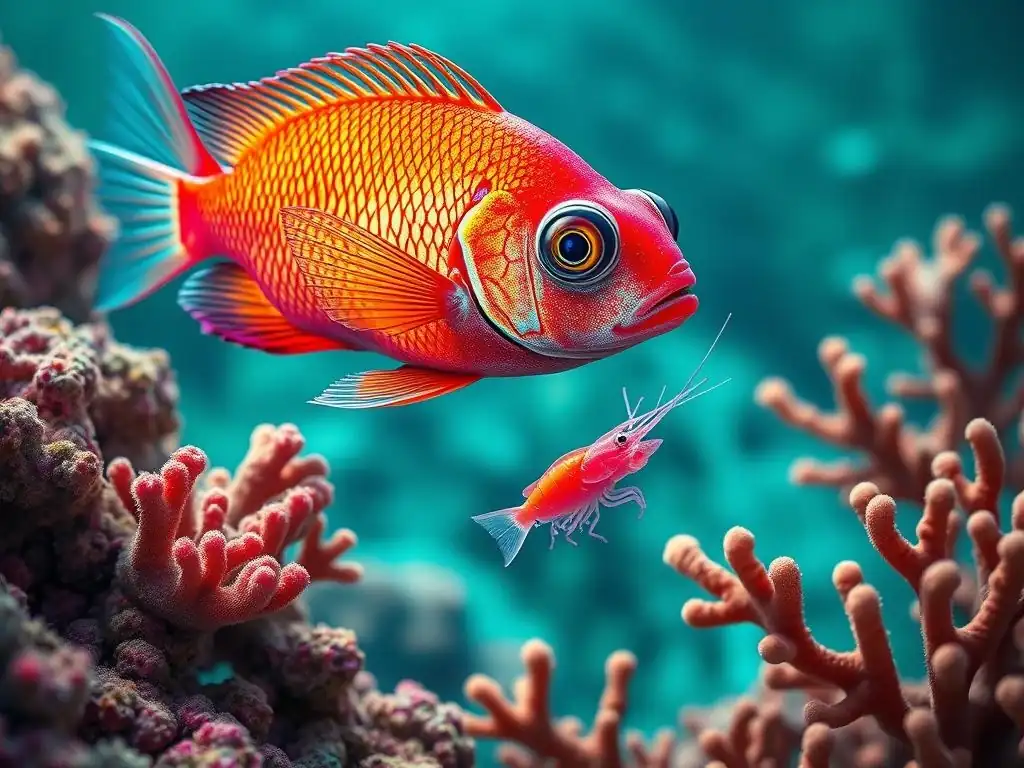
Peppermint Shrimp ( Lysmata wurdemanni) are a popular biological control option for Aiptasia in reef aquariums. These attractive shrimp are characterized by their translucent bodies adorned with reddish-brown stripes, typically reaching a size of about 2 inches (5 cm). They are generally considered reef-safe, posing minimal threat to corals, fish, or other invertebrates, making them a widely adopted Butterflyfish reef tank alternative for managing Aiptasia.
Their effectiveness, however, can be variable. While some individual Peppermint Shrimp are voracious Aiptasia eaters, others may show little interest, especially if alternative food sources are readily available in the tank. They are generally most effective on smaller Aiptasia and for managing minor infestations. For a 50-gallon tank experiencing a mild Aiptasia outbreak, introducing 3-5 Peppermint Shrimp is a common recommendation, with anecdotal success rates in consuming Aiptasia reported to be between 60% and 90% in suitable conditions.
Berghia Nudibranchs: Specialized Aiptasia Predators
Berghia Nudibranchs ( Berghia stephanieae, formerly Aeolidiella stephanieae) are highly specialized, obligate predators of Aiptasia anemones. These small, cryptic sea slugs, typically growing to less than 1 inch (2.5 cm), exclusively feed on Aiptasia. Their diminutive size allows them to navigate into tight crevices and small spaces where Aiptasia often hide, making them an exceptionally targeted and effective Butterflyfish reef tank alternative for complete eradication.
The application of Berghia Nudibranchs requires patience and a specific strategy. They are slow-acting and relatively expensive, often costing between $25-$50 per individual. A common guideline suggests introducing 1 Berghia per 10-15 gallons for a moderate infestation, implying a 100-gallon tank might require 7-10 individuals for effective control. A critical consideration is their diet; Berghia will starve once all Aiptasia are consumed, necessitating their removal or a continuous supply of Aiptasia to sustain them in a separate system if long-term breeding is desired.
Filefish (Acreichthys tomentosus): A Potential Solution
The Bristletail Filefish ( Acreichthys tomentosus) is another biological control agent sometimes considered for Aiptasia eradication. These unique-looking fish, which can grow up to 4 inches (10 cm), are known for their ability to consume Aiptasia. They are occasionally explored as a Butterflyfish reef tank alternative due to their similar predatory behavior towards nuisance anemones, although their reef-safety profile is generally more favorable than many true Butterflyfish species.
Despite their potential utility in Aiptasia control, the reef compatibility of Filefish varies significantly between individuals. While many Bristletail Filefish will effectively consume Aiptasia and completely ignore corals, there is always an inherent risk that some individuals may develop a taste for large polyp stony (LPS) corals, soft corals, or even clam mantles. For example, in observational studies, approximately 70-80% of Bristletail Filefish individuals may prove to be reef-safe and effective Aiptasia predators, while the remaining 20-30% might nip at corals. Therefore, careful observation is essential if this option is chosen for a mixed reef.
Reef Compatibility: Considerations for Choosing Control Methods
Coral Compatibility: Avoiding Damage
When selecting an Aiptasia control method, the paramount consideration must be the safety of your desirable corals. Chemical treatments, if not applied with extreme precision or if overdosed, can cause significant damage to nearby coral tissues, leading to bleaching, tissue recession, or even complete loss of a colony. For instance, even a small amount of a strong Aiptasia-killing solution drifting onto a delicate Zoanthid colony can cause it to close up for days or suffer irreversible damage.
Biological control agents generally offer a safer alternative for corals, though caveats exist. Peppermint Shrimp and Berghia Nudibranchs are widely regarded as reef-safe and pose virtually no threat to corals. However, certain fish, including some species often considered as Butterflyfish reef tank alternatives for Aiptasia control (e.g., some Filefish or certain true Butterflyfish like the Copperband), have a documented tendency to occasionally nip at or consume coral polyps, particularly those of LPS corals such as Favia or Blastomussa. This inherent risk must be carefully weighed against the benefit of Aiptasia removal.
Invertebrate Compatibility: Protecting Tank Mates
Beyond corals, the safety of other beneficial invertebrates is a critical factor in choosing an Aiptasia control method. Snails, hermit crabs, cleaner shrimp, and various microfauna are essential components of a healthy reef ecosystem. Some chemical treatments, if not precisely targeted or if they leach into the water column, can be highly toxic to these sensitive invertebrates. For example, any copper-based treatment, while effective against anemones, is universally lethal to all invertebrates and must be strictly avoided in a reef tank.
Biological control methods typically present fewer risks to the general invertebrate population. Berghia Nudibranchs are exclusively Aiptasia predators and will not harm other invertebrates. Peppermint Shrimp are also generally safe for most clean-up crew members, though very small, slow-moving snails might occasionally be bothered. While the Bristletail Filefish is primarily focused on Aiptasia, there's a minimal, anecdotal risk of them bothering ornamental shrimp or smaller, non-sessile invertebrates, though this is far less common than coral nipping. Thorough research into the specific habits of any potential Butterflyfish reef tank alternative is crucial to protect your entire clean-up crew.
Impact on Other Reef Inhabitants
The overall welfare of all fish and the delicate balance of the reef ecosystem must be considered when implementing Aiptasia control. Aggressive chemical treatments can sometimes lead to transient changes in water parameters, such as localized pH swings or the introduction of trace elements, which can stress fish and compromise their immune systems, making them more susceptible to disease. For instance, treating a large number of Aiptasia chemically in a small tank without adequate ventilation or water changes can temporarily elevate dissolved organic compounds.
Long-term reliance on chemical solutions can also potentially impact the beneficial bacterial populations in the live rock and sand bed, which are vital for nitrogen cycling. Opting for natural Butterflyfish reef tank alternatives like Berghia Nudibranchs or Peppermint Shrimp generally supports a more stable and resilient ecosystem. These biological methods integrate with the tank's natural processes, reducing the need for drastic interventions and promoting a healthier, more balanced environment over time, which benefits all reef inhabitants.
Aiptasia Control Methods: A Detailed Comparison
Chemical Treatments: A Detailed Comparison
Pros and Cons of Chemical Treatments
Chemical treatments offer a rapid and targeted approach to Aiptasia eradication, making them appealing for isolated or newly emerging individuals. Products like Aiptasia-X, Red Sea Aiptasia Gone, or DIY solutions such as kalkwasser paste (calcium hydroxide), boiling RO/DI water, or concentrated lemon juice, can effectively kill Aiptasia on contact, often causing them to disintegrate within minutes. This direct method provides immediate visual satisfaction and can be very effective for small, accessible outbreaks.
However, chemical treatments come with significant drawbacks. The primary concern is the risk of collateral damage to surrounding corals and beneficial invertebrates if the solution drifts or is improperly applied. If an Aiptasia is not completely destroyed, it can react by releasing planulae larvae, potentially worsening the infestation in other areas of the tank. Furthermore, repeated or large-scale chemical applications can introduce undesirable residues or alter water parameters, such as increasing dissolved solids or phosphates, which might trigger other nuisance algae blooms.
Proper Application Techniques
Precise application is crucial for the safe and effective use of chemical Aiptasia treatments. Begin by turning off all powerheads, return pumps, and protein skimmers to halt water flow, preventing the solution from dispersing prematurely. Use a fine-tipped syringe (e.g., a 1ml insulin syringe) with a needle or a specialized applicator to inject the chosen solution directly into the oral disc (mouth) of the Aiptasia. The goal is to deliver the chemical internally, ensuring a complete kill and minimizing the chance of the anemone releasing larvae.
After successful injection, observe the Aiptasia as it shrivels and disintegrates. Once it has completely dissolved, it is advisable to carefully siphon out any remaining debris or chemical residue from the immediate area to prevent it from dissolving into the water column. For larger infestations, it is safer to treat only a few Aiptasia at a time over several days or weeks, rather than attempting to eradicate a large number simultaneously, as this could lead to significant and potentially harmful fluctuations in water chemistry.
Manual Removal: Precision Techniques
Injecting Aiptasia
The injection method of manual removal involves delivering a substance directly into the Aiptasia's body using a syringe. Common substances include a thick paste of kalkwasser (calcium hydroxide mixed with RO/DI water), concentrated lemon juice, or commercial Aiptasia-killing solutions. The syringe, often fitted with a fine needle (such as a 23-gauge needle), allows for precise targeting, injecting the substance directly into the anemone's oral disc or pedal disc (base).
This technique works by chemically burning or dissolving the Aiptasia from the inside out, causing it to disintegrate. It is highly effective for individual, accessible Aiptasia. However, the success of this method hinges on completely destroying the anemone. If only partially hit, the Aiptasia may retract and, in some cases, release spores or fragments, potentially leading to new growth. For instance, injecting too little kalkwasser might only irritate the Aiptasia, causing it to retreat and reappear larger days later.
Covering Aiptasia
The covering method involves physically smothering the Aiptasia to deprive it of light and oxygen. This can be achieved by applying a thick layer of reef-safe epoxy putty, cyanoacrylate super glue gel, or a very dense kalkwasser paste directly over the Aiptasia. The aim is to encapsulate the entire anemone, ensuring it cannot photosynthesize or respire, leading to its demise.
This technique is most effective for Aiptasia located on flat, easily accessible surfaces of live rock or on the aquarium glass. It offers the advantage of minimizing the risk of chemical leaching into the water column, as the substance is contained. However, it is impractical for Aiptasia hidden deep within rock crevices or those situated on delicate coral bases. For example, covering a 1-inch Aiptasia might require a small, marble-sized blob of epoxy, which while effective, might be visually intrusive for a short period.
Combining Methods for Comprehensive Control
For optimal and long-lasting Aiptasia control, an integrated pest management approach that combines multiple methods is often the most effective strategy. This synergistic approach leverages the strengths of different techniques to address various aspects of an infestation. For instance, manual injection or covering can be used to eliminate large, visible Aiptasia, while the introduction of biological controls like Peppermint Shrimp or Berghia Nudibranchs can target smaller, cryptic individuals or those in hard-to-reach areas.
This multi-pronged strategy significantly enhances the chances of long-term success and reduces the likelihood of recurring outbreaks. A hobbyist might, for example, manually remove 70-80% of the visible Aiptasia population, then introduce Berghia Nudibranchs to seek out and eradicate the remaining hidden anemones, followed by a small clean-up crew of Peppermint Shrimp for ongoing maintenance and prevention of new sprouts. This comprehensive approach is generally more robust and sustainable than relying solely on a single method or a specific Butterflyfish reef tank alternative.
Choosing the Best Strategy for Your Reef Tank
Evaluating Infestation Severity
The scale and severity of the Aiptasia infestation are critical factors in determining the most appropriate control strategy. For a newly established tank with just one or two small Aiptasia, a precise manual method such as injection with kalkwasser or covering with super glue might be the most straightforward and least disruptive approach. This targeted intervention can prevent the problem from escalating without introducing additional biological agents or widespread chemical treatments.
Conversely, for a moderate to severe infestation, where dozens or hundreds of Aiptasia are spread throughout a 75-gallon or larger tank, a multi-faceted approach becomes essential. This could involve an initial phase of manual removal for the largest and most accessible Aiptasia, followed by the introduction of specialized predators like Berghia Nudibranchs, and possibly a few Peppermint Shrimp for ongoing maintenance. Relying solely on a limited number of Butterflyfish reef tank alternatives in a widespread outbreak is unlikely to provide comprehensive control.
Considering Your Reef Ecosystem
The specific inhabitants and overall composition of your reef tank must heavily influence your choice of Aiptasia control. If your aquarium houses delicate small polyp stony (SPS) corals, such as Acropora or Montipora, you must prioritize methods with the absolute lowest risk of coral damage. In such sensitive environments, highly specialized and reef-safe options like Berghia Nudibranchs are often preferred over potentially coral-nipping fish, even those considered Butterflyfish reef tank alternatives like certain Filefish species.
Furthermore, evaluate the presence of other sensitive invertebrates, including ornamental shrimp, various snails, and filter feeders. Chemical treatments, especially if not precisely applied, can pose a significant threat to these beneficial organisms. Biological controls like Peppermint Shrimp are generally safe for most invertebrates, making them a more harmonious choice for a diverse reef community. A 120-gallon mixed reef with a robust clean-up crew and a variety of coral types would greatly benefit from methods that pose minimal risk to its varied inhabitants.
Balancing Control with Reef Stability
Ultimately, the chosen Aiptasia control strategy must strike a balance between immediate eradication and the long-term stability and health of the entire reef ecosystem. Aggressive, widespread chemical treatments, while offering quick eradication, can sometimes lead to undesirable fluctuations in water chemistry, stress tank inhabitants, or even harm beneficial bacterial colonies within the live rock and sand bed. Sustainable, gradual approaches often yield more robust and lasting results.
Incorporating natural predators as Butterflyfish reef tank alternatives (e.g., Peppermint Shrimp, Berghia Nudibranchs) can contribute to a more balanced and resilient biological control system. This approach reduces the reliance on constant chemical interventions and promotes a thriving, self-regulating aquarium environment. Regular monitoring, proactive measures, and a willingness to combine methods are key to maintaining an Aiptasia-free reef without compromising the delicate equilibrium of your cherished aquatic ecosystem.
Maintaining an Aiptasia-Free Reef: Prevention is Key
Quarantine Procedures
Implementing rigorous quarantine procedures for all new live rock, corals, and invertebrates is the single most critical preventative measure against Aiptasia infestations. A dedicated quarantine tank allows for thorough inspection and, if necessary, treatment of potential hitchhikers in a controlled, isolated environment. Dipping new corals in an appropriate coral dip solution, such as an iodine-based dip, can also help dislodge or kill small Aiptasia before they ever enter the main display tank.
By observing new additions in quarantine for a period of several weeks (e.g., 2-4 weeks), hobbyists can identify and address any nascent Aiptasia outbreaks in a contained setting. This proactive step can save significant time, effort, and money compared to battling a widespread infestation in the main reef system. It minimizes the risk of introducing these resilient pests, thereby reducing the future need for aggressive control measures or the introduction of Butterflyfish reef tank alternatives.
Nutrient Management
Strict nutrient management is paramount in preventing the proliferation of Aiptasia. These opportunistic anemones, much like nuisance algae, thrive in environments with elevated levels of nitrates and phosphates. Maintaining ultra-low nutrient levels through effective filtration methods—such as robust protein skimming, the use of refugiums with macroalgae, and granular ferric oxide (GFO) reactors—deprives Aiptasia of their primary food sources.
Consistent practices like regular water changes (e.g., 10-15% weekly or bi-weekly depending on bioload) and responsible feeding (avoiding overfeeding fish and corals) are also crucial. Aiming for nitrate levels consistently below 5 ppm and phosphate levels below 0.03 ppm significantly inhibits Aiptasia growth and reproduction. A clean, nutrient-poor tank is inherently less hospitable to these pests, making it far less likely that you will ever need to resort to drastic measures or seek out Butterflyfish reef tank alternatives for control.
Regular Monitoring and Intervention
Consistent and regular monitoring of the reef tank is a cornerstone of Aiptasia prevention and early intervention. Daily visual inspections, particularly around the bases of live rock, in crevices, and on the undersides of coral frags, can help detect new Aiptasia individuals when they are still small and easiest to remove. Early detection is paramount; a 2-millimeter Aiptasia is exponentially simpler to eliminate than a 2-centimeter colony that has already begun to reproduce.
As soon as an Aiptasia is spotted, immediate action should be taken using a targeted manual method like injection or covering. Delaying intervention, even for a few days, allows Aiptasia to grow larger and potentially reproduce, making eradication significantly more challenging and time-consuming. For example, if 1-2 new Aiptasia appear each week in a 60-gallon tank, prompt removal prevents them from multiplying to 10-20 within a month, thereby maintaining a manageable situation.
Conclusion: Responsible Reef Keeping
Emphasizing Reef-Safe Solutions
In the ongoing battle against Aiptasia, the overarching principle for responsible reef keeping must be the prioritization of reef-safe solutions. While the desire for quick and complete eradication is understandable, methods that pose a significant risk to corals, beneficial invertebrates, or the overall water quality should be approached with extreme caution. The long-term health, stability, and biodiversity of the delicate reef ecosystem must always be the guiding consideration in any pest management strategy.
Effective Butterflyfish reef tank alternatives exist that are generally safer for mixed reef environments. Options such as Berghia Nudibranchs and Peppermint Shrimp offer targeted biological control with minimal collateral damage, promoting a balanced and thriving aquarium. Responsible reef keeping entails choosing methods that effectively address the pest while safeguarding the cherished inhabitants and the intricate biological processes that define a successful reef tank.
Further Resources
Frequently Asked Questions
How effective are Butterflyfish at controlling Aiptasia in a reef tank?
Butterflyfish are known Aiptasia predators, but their effectiveness varies greatly by species and individual. Some may completely eradicate Aiptasia, while others ignore them entirely.
What are the main risks of introducing Butterflyfish to a reef tank environment?
The primary risk is their potential to nip at corals and other invertebrates. This can cause stress, damage, or even death to sensitive reef inhabitants.
Besides Butterflyfish, what are some other reliable methods for Aiptasia control in a reef tank?
Several alternatives exist, including using peppermint shrimp, Berghia nudibranchs, and chemical treatments like Aiptasia-X. These methods offer targeted Aiptasia control with less risk to corals.
Are there any "reef-safe" Butterflyfish species that are less likely to damage corals?
While no Butterflyfish is guaranteed reef-safe, some species, like the Copperband Butterflyfish, are often considered less aggressive towards corals when properly fed. However, individual behavior varies.
Why is it important to consider "Butterflyfish reef tank alternatives" when dealing with an Aiptasia infestation?
Because introducing a Butterflyfish can create a larger problem than the Aiptasia itself if it begins to prey on desirable reef inhabitants. Alternatives offer safer and more targeted solutions.
Final Reflection: Balancing Beauty and Reef Health
The exploration of butterflyfish and their impact on reef ecosystems, as highlighted throughout this article, underscores the critical need for responsible reef keeping practices in the modern aquarium hobby. Understanding the potential devastation these beautiful creatures can inflict on a reef, and actively seeking Butterflyfish reef tank alternatives, is no longer a niche concern, but a fundamental ethical consideration for anyone invested in the long-term health of our planet's coral reefs.
This delicate balance between aesthetic desire and ecological responsibility has profoundly shaped, and continues to shape, the aquarium hobby. The growing awareness of the impact of our choices, from the fish we select to the methods we employ, is a testament to the increasing maturity of the reef keeping community. We are all connected; To despair is to refuse to be part of the solution.
- Isabel Allende. This quote reminds us that even small actions, like choosing appropriate fish for our tanks, contribute to a larger effort in preserving our natural world.
As you consider the information presented here, I encourage you to reflect on your own role in this ecosystem. Are you making informed decisions that prioritize the health of the reef? Are you actively seeking out and promoting sustainable practices? The future of our reefs depends on the collective choices we make today. Let us strive to be informed, responsible, and compassionate stewards of these fragile and vital ecosystems, ensuring their beauty and biodiversity endure for generations to come.
Dive Deeper: Transform Your Aiptasia Battle into Reef Brilliance!
Thanks for exploring the world of aiptasia control with us! We hope this article has given you a fresh perspective on tackling these pests while prioritizing the health of your reef. Now it's time to put that knowledge into action.
Here's how you can continue your reef-keeping journey:
- Take decisive action against aiptasia by trying our recommended Kalkwasser paste technique. Document the process and share your experience.
- Expand your understanding of reef inhabitants. Research one lesser-known aiptasia predator and share your findings with the Aquarium Mastery community.
- Share this article with fellow reefers! Help them make informed decisions for a healthier and more balanced aquarium.
What innovative aiptasia control method are you most eager to explore in your own reef tank?