
Raising Wrasse Fry: An Ambitious Endeavor for the Dedicated Aquarist

Welcome to Aquarium Mastery!
Dive into the fascinating world of marine aquariums, where vibrant colors and intricate ecosystems await. Ever wondered how to successfully raise the elusive Wrasse fry? Unlocking the secrets of Wrasse fry rearing techniques is no easy feat, but with the right knowledge and dedication, you can embark on this rewarding journey. Ready to learn how? Let's explore the intricacies of this ambitious endeavor together!
- Introduction to Wrasse Fry Rearing: A Challenging but Rewarding Experience
- Understanding Wrasse Reproduction and Larval Development
- Essential Wrasse Fry Rearing Techniques: A Step-by-Step Guide
- Addressing Common Challenges in Wrasse Fry Culture
- Advanced Techniques for Enhancing Wrasse Fry Survival
- Documenting Your Wrasse Fry Rearing Journey: Tips for Success
- Conclusion: The Future of Wrasse Aquaculture and Conservation
-
Frequently Asked Questions
- What are some initial challenges in rearing Wrasse fry?
- What type of food is most suitable for newly hatched Wrasse fry?
- How important is water quality when raising Wrasse fry?
- What specific environmental conditions are ideal for Wrasse fry development?
- Are there any common diseases or health issues to watch out for in Wrasse fry?
- Final Reflection: The Enduring Allure of the Uncharted
- Embark on Your Wrasse Breeding Adventure!
Introduction to Wrasse Fry Rearing: A Challenging but Rewarding Experience
Why is Raising Wrasse Fry Considered Difficult?
Raising wrasse fry presents a formidable challenge primarily due to the incredibly small size of their eggs and newly hatched larvae, which typically measure less than 2-3 millimeters in total length. This diminutive stature necessitates microscopic live foods, such as rotifers and copepod nauplii, which must be cultured continuously and enriched to provide adequate nutrition. Furthermore, wrasse larvae are exceptionally sensitive to water quality fluctuations, requiring pristine, stable conditions with zero ammonia and nitrite, and very low nitrates, which is difficult to maintain in the small volumes typically used for fry rearing.
Another significant hurdle lies in the pelagic nature of many wrasse species' larvae, meaning they drift in the water column and are highly susceptible to strong currents or inadequate water flow that can exhaust or injure them. The high mortality rates in the crucial first week post-hatch, often exceeding 90% for inexperienced breeders, underscore the complexity. Unlike more commonly bred marine fish like clownfish, comprehensive research and established protocols for many wrasse species are still limited, demanding extensive trial and error from aquarists attempting these advanced wrasse fry rearing techniques.
The Appeal of Successfully Rearing Wrasse Fry
Despite the inherent difficulties, the successful rearing of wrasse fry offers immense rewards for the dedicated aquarist. From a conservation standpoint, it significantly reduces the reliance on wild-caught specimens, helping to alleviate pressure on natural reef populations that are already facing numerous environmental threats. This contribution to sustainable aquarium practices provides deep personal satisfaction, knowing one is directly aiding in the preservation of these vibrant fish.
Beyond conservation, the process of observing the intricate larval development of wrasses from a microscopic egg to a juvenile fish is an unparalleled educational experience. It offers unique insights into marine biology and the delicate life cycles of reef inhabitants. Furthermore, for those who master these advanced wrasse fry rearing techniques, there's the potential to develop hardier, disease-resistant strains adapted to aquarium life, and even to discover novel color morphs through selective breeding, which can be highly sought after within the hobby.
Understanding Wrasse Reproduction and Larval Development
Wrasse Spawning Behavior in the Aquarium Environment
Wrasses exhibit diverse spawning behaviors, but many species commonly kept in aquariums, such as those from the Halichoeres or Pseudocheilinus genera, engage in pair spawning or group spawning. This often involves a characteristic "spawning rush" where a male and female ascend rapidly towards the surface, releasing gametes at the apex of their ascent. Environmental triggers, including consistent light cycles, stable temperatures typically ranging from 78-82°F (25.5-27.8°C), and a rich diet, are crucial for inducing spawning in a captive environment.
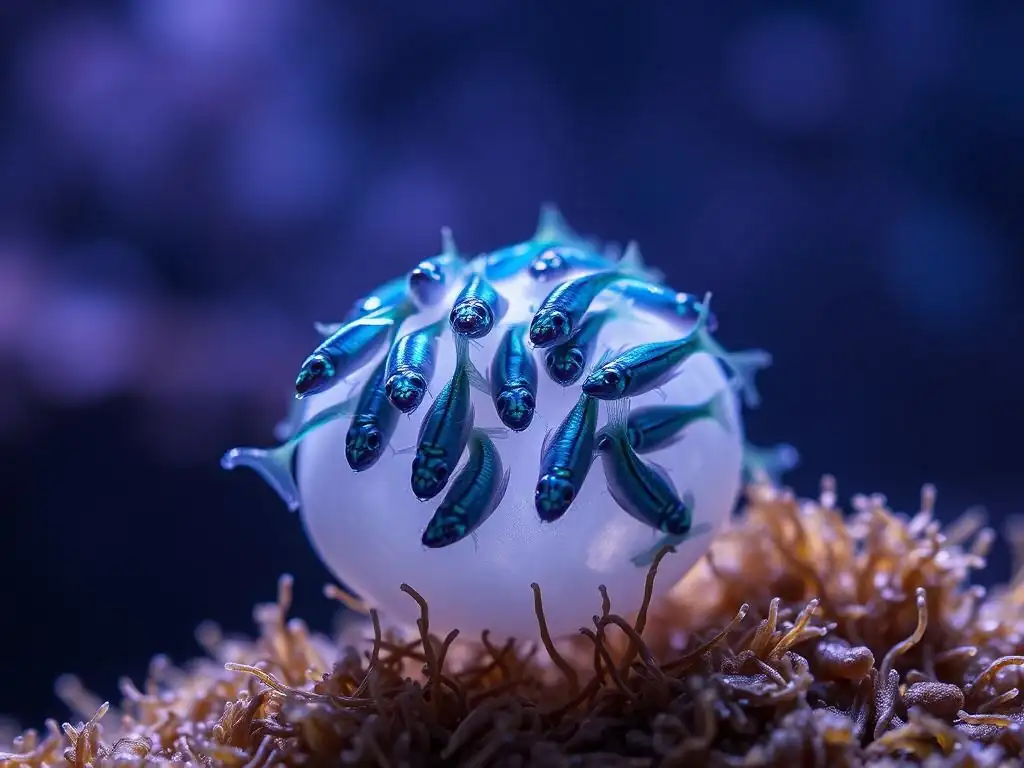
The eggs of most wrasse species are pelagic, meaning they are buoyant and float in the water column, usually near the surface. They are typically very small, often measuring between 0.5 to 1.0 millimeters in diameter, and are highly transparent. Depending on the species and water temperature, these eggs usually hatch within 24 to 48 hours of being laid. A single spawning event can yield anywhere from a few hundred to several thousand eggs, though survival rates to adulthood are naturally very low in the wild and present a significant challenge in captivity.
The Unique Characteristics of Wrasse Larvae and Early Development Stages
Newly hatched wrasse larvae are incredibly minute, often measuring just 1.5 to 3.0 millimeters in total length. At this stage, their digestive systems are largely undeveloped, and their mouth gape is extremely small, typically less than 100 microns. This necessitates the provision of live foods that are correspondingly tiny, such as rotifers (50-200 microns) or copepod nauplii (50-150 microns), as their first food source. For the first 1-2 days post-hatch, they rely on a small yolk sac for sustenance.
The early developmental stages are characterized by rapid and critical changes. Within the first week, the larvae must successfully inflate their swim bladders—a process often dependent on surface access and specific light conditions—and transition from yolk sac absorption to active feeding. Failure to inflate the swim bladder or to find appropriate first foods within a critical "point of no return" window (often 2-4 days post-hatch) leads to inevitable starvation and mortality. Subsequent development involves the gradual formation of fins, eye development, and the differentiation of internal organs, all while remaining highly sensitive to environmental stressors.
Identifying Wrasse Eggs and Newly Hatched Fry
Identifying wrasse eggs requires careful observation, as they are typically transparent, spherical, and buoyant, floating just beneath the water surface or gently circulating with minimal flow. After a known spawning event, aquarists can use a flashlight directed across the water surface to illuminate these tiny, shimmering spheres, making them easier to spot against a dark background or tank walls. Gentle siphoning or the use of a wide-mouthed container is necessary for collection to avoid damaging the delicate eggs.
Newly hatched wrasse fry are even more challenging to detect due to their almost translucent bodies and minuscule size. They often appear as tiny specks, exhibiting erratic, darting movements or sometimes remaining almost motionless. Observing them typically requires magnification or a very keen eye. Once spotted, extreme care must be taken during transfer to a dedicated rearing tank; a small, soft net or careful siphoning with an air line tube is often employed to minimize stress and prevent injury to these fragile organisms, which are highly susceptible to physical trauma.
Essential Wrasse Fry Rearing Techniques: A Step-by-Step Guide
Setting Up a Dedicated Wrasse Fry Tank: Optimizing the Environment
Tank Size and Design Considerations for Wrasse Fry
For initial wrasse fry rearing, small, bare-bottom tanks ranging from 5 to 20 gallons are highly recommended. This compact size allows for the concentration of live food organisms, making it easier for the tiny fry to locate and consume them, which is a crucial aspect of successful wrasse fry rearing techniques. A dark background or painted sides can help reduce stress on the fry and make it easier for the aquarist to observe them and monitor food density. A secure lid is essential to prevent any potential jumping, especially as the fry grow.
The design should also consider a shallow water column, typically 6-10 inches (15-25 cm) deep. This reduced depth is beneficial for optimal swim bladder inflation, as it minimizes the distance the fry must travel to reach the surface for their initial gulp of air. Furthermore, shallow water facilitates easier food accessibility and allows for more precise control over water parameters. Smooth, non-abrasive surfaces throughout the tank are paramount to prevent any physical injury to the delicate and easily damaged larval wrasses.
Water Quality Parameters: Maintaining Pristine Conditions for Wrasse Larvae
Maintaining pristine and stable water quality is arguably the most critical factor for the survival of wrasse larvae. Ideal parameters include a salinity of 1.023-1.025 specific gravity, a stable temperature between 78-80°F (25.5-26.7°C), and a pH range of 8.0-8.2. The absolute necessity of zero ammonia and nitrite cannot be overstated, as even trace amounts can be lethal to the highly sensitive fry. Nitrate levels should be kept below 5 ppm, ideally closer to 0 ppm, requiring diligent monitoring and frequent water changes.
Wrasse fry are extremely susceptible to even minor fluctuations in water parameters. Therefore, daily monitoring with accurate test kits is imperative. Any water used for changes must be pre-mixed and aged to the exact parameters of the fry tank to prevent osmotic shock. The use of high-quality salt mix and RO/DI water is non-negotiable to avoid introducing harmful contaminants. Consistency in these parameters is a cornerstone of effective wrasse fry rearing techniques, minimizing stress and promoting healthy development.
Filtration and Water Circulation: Gentle Flow for Delicate Fry
The filtration system for a wrasse fry tank must be exceptionally gentle to prevent the tiny, fragile larvae from being sucked into or injured by equipment. Simple sponge filters powered by an air pump are often the preferred choice, as they provide biological filtration and gentle aeration without creating strong currents. Alternatively, a finely diffused air stone can provide sufficient oxygenation and minimal circulation. Power filters or hang-on-back filters are generally unsuitable due to their strong intake and potential to harm fry.
Minimal water circulation is key to keeping live food organisms suspended in the water column where fry can access them, without dispersing them too widely or creating turbulent conditions. Strong currents can quickly exhaust or even physically damage the delicate wrasse larvae, leading to high mortality rates. The goal is to achieve just enough flow to prevent dead spots and ensure even distribution of food and oxygen, without causing any visible stress to the fry. This careful balance is a vital component of successful wrasse fry rearing techniques.
The Critical First Food: Meeting the Nutritional Needs of Wrasse Fry
Live Food Cultures: Rotifers, Copepods, and Artemia
The initial days of wrasse fry development are entirely dependent on a continuous supply of the correct live foods. Rotifers, specifically Brachionus plicatilis or Brachionus rotundiformis, are indispensable as the first food due to their small size (50-200 microns) and ease of culture. They are essential for the first 1-2 weeks. Copepod nauplii, particularly species like Tisbe or Tigriopus, are also crucial for many wrasse species, often introduced a few days post-hatch, as they provide a superior nutritional profile, particularly in highly unsaturated fatty acids (HUFAs), compared to rotifers.
As the wrasse fry grow and their mouthparts enlarge, typically around 7-14 days post-hatch, they can transition to consuming newly hatched Artemia nauplii (brine shrimp). It is critical that these Artemia are enriched with HUFA supplements (e.g., Selco, Nannochloropsis paste) for at least 6-12 hours prior to feeding, as unenriched Artemia are nutritionally deficient for marine fish larvae. Providing a varied diet of enriched live foods tailored to the fry's specific developmental stage is a cornerstone of effective wrasse fry rearing techniques.
Culturing Rotifers and Copepods: A Practical Guide
Culturing rotifers requires a dedicated setup, often involving 1-5 gallon buckets or containers, continuous aeration, and a consistent food source such as live phytoplankton ( Nannochloropsis or Tetraselmis) or specialized liquid rotifer food. Maintaining a density of 10-30 rotifers per milliliter in the culture vessel ensures a sufficient supply for daily feeding. Harvested rotifers should be rinsed with clean saltwater before being introduced to the fry tank to minimize nutrient transfer.
Copepod culture can be more challenging but is highly beneficial for the long-term health and survival of wrasse fry. Starting with a live culture from a reputable supplier, copepods can be maintained in similar vessels to rotifers, fed live phytoplankton, and provided with a substrate like rubble or bio-balls for certain species. Maintaining multiple culture vessels for both rotifers and copepods is a practical wrasse fry rearing technique, ensuring a continuous and stable supply of high-quality live food, crucial for the demanding early life stages.
Feeding Schedules and Densities: Ensuring Adequate Food Availability
For the first several weeks of wrasse fry development, continuous feeding is often necessary to ensure that the tiny larvae always have access to food. This can be achieved through automated drip-feeding systems that slowly introduce live food cultures into the fry tank, or by manual additions every 2-4 hours, even overnight. The goal is to maintain a consistent density of food organisms in the water column without overfeeding to the point of fouling the water.
Target food densities vary but typically range from 5-10 rotifers per milliliter in the fry tank for newly hatched larvae. As the fry grow and transition to copepods and then Artemia, the density can be gradually increased. It's a delicate balance: underfeeding is a major cause of mortality, as wrasse fry have high metabolic rates and limited energy reserves, while overfeeding can rapidly degrade water quality, leading to toxic ammonia and nitrite spikes. Careful observation and adjustment of feeding rates are essential wrasse fry rearing techniques.
Gradual Weaning of Wrasse Fry Onto Prepared Foods
Introducing Powdered and Micro-Pellet Diets
The process of weaning wrasse fry onto prepared foods typically begins when they are several weeks old and have grown sufficiently to accept larger particle sizes, often around 10-15 millimeters in length. This transition should be gradual. Begin by introducing high-quality, finely powdered dry foods or specialized micro-pellets designed for marine fish larvae. These diets should be nutritionally complete and formulated to mimic the nutritional profile of the live foods they have been consuming.
To introduce prepared foods, mix a small amount with a few drops of tank water to create a slurry, then gently disperse it into the fry tank. This helps prevent the dry particles from floating on the surface and ensures better distribution. Initially, offer prepared foods alongside live foods, slowly increasing the proportion of the dry diet over several days to weeks. This careful, incremental approach is a key wrasse fry rearing technique, allowing the fry to adapt to new textures and flavors without experiencing nutritional deficiencies.
Monitoring Growth and Adjusting Feeding Strategies
Consistent monitoring of wrasse fry growth and behavior is crucial during the weaning phase. Healthy fry will exhibit steady growth, active swimming, and a consistent feeding response. If growth appears stunted or fry are lethargic, it may indicate insufficient food intake or an issue with the nutritional quality of the diet. In such cases, it's important to re-evaluate the size and quantity of the prepared food, or temporarily increase the live food offerings.
As the fry continue to grow, the particle size of the prepared foods should be progressively increased. For example, transition from a 50-micron powder to a 100-micron powder, and then to 200-micron micro-pellets. This ensures that the fry receive adequate nutrition as their mouths and digestive systems develop. Adjusting feeding frequency and quantity based on observed consumption and remaining food particles is also important, preventing both underfeeding and water quality degradation, thus optimizing these wrasse fry rearing techniques for long-term success.
Maintaining Optimal Water Quality During Wrasse Fry Development
Regular Water Changes and Monitoring Parameters
Maintaining impeccable water quality is non-negotiable for the successful development of wrasse fry. Small, frequent water changes are essential, typically 10-20% daily or every other day, to dilute waste products and replenish essential trace elements without causing shock to the delicate fry. These changes should be performed using a slow drip method or a small airline tubing to gently siphon out water and then slowly refill with pre-mixed, temperature-matched, and parameter-matched saltwater.
Daily testing for ammonia, nitrite, and nitrate is paramount. Even slight elevations in these nitrogenous compounds can be detrimental or fatal to wrasse larvae. Salinity and temperature should also be monitored daily to ensure stability. Consistency in these parameters is a key wrasse fry rearing technique, as sudden fluctuations can cause immense stress, leading to compromised immune systems and increased susceptibility to disease.
Dealing with Ammonia, Nitrite, and Nitrate Buildup
In a densely stocked wrasse fry tank with continuous feeding, waste products accumulate rapidly, making ammonia and nitrite buildup a constant threat. If ammonia or nitrite is detected, immediate action is required. This typically involves a larger, emergency water change (e.g., 30-50%) to quickly dilute the toxins, coupled with a temporary reduction in feeding to lessen the bioload. It is crucial to perform these changes as gently as possible to avoid stressing the fry further.
Preventative measures are always superior to reactive ones. Strategies include ensuring adequate, albeit gentle, biological filtration, managing feeding quantities precisely to minimize uneaten food, and maintaining the rigorous water change schedule. Some aquarists cautiously use beneficial bacteria additives to boost nitrification, but the primary focus for effective wrasse fry rearing techniques should always be on meticulous husbandry and maintaining a clean, stable environment.
Addressing Common Challenges in Wrasse Fry Culture
Preventing and Treating Diseases in Wrasse Fry
Identifying Signs of Illness in Larval Wrasses
Identifying signs of illness in wrasse larvae is incredibly challenging due to their minute size and often translucent bodies. However, keen observation can reveal subtle indicators. These include lethargy, abnormal or erratic swimming patterns (e.g., spiraling, swimming on their side), loss of buoyancy control (floating at the surface or sinking to the bottom), fin clamping, and visible lesions or discoloration, although these are rare and difficult to spot. Any deviation from active, uniform swimming and feeding behavior should raise concern.
Prevention remains the most effective strategy, as treating diseases in such small, delicate organisms is exceedingly difficult and often results in high mortality. Maintaining pristine water quality, providing a highly nutritious and varied diet of enriched live foods, and avoiding any sudden environmental changes are crucial preventative measures. Stress from poor conditions is a primary precursor to disease in larval wrasses, making rigorous husbandry a critical wrasse fry rearing technique.
Quarantine and Treatment Protocols
Strict quarantine protocols are essential to prevent the introduction of pathogens into the wrasse fry tank. Any new live food cultures should ideally be sourced from clean, reputable suppliers or, if possible, sterilized (e.g., UV sterilization of culture water) before introduction. Introducing wild-caught live foods or water from other tanks without proper precautions is highly risky. Due to their extreme sensitivity, wrasse fry cannot tolerate most conventional aquarium medications.
If disease is strongly suspected, improving water quality through increased water changes and reducing feeding are often the first and only viable "treatments." Isolation of affected fry is ideal but often impractical due to their size. Formalin dips or extremely dilute copper treatments might be considered as a last resort for specific external parasites, but their toxicity to wrasse larvae is very high, and the risk of further mortality is significant. The focus of wrasse fry rearing techniques must always be on maintaining optimal conditions to prevent disease rather than attempting cures.
Minimizing Mortality Rates in Wrasse Fry Tanks
Understanding the Critical Period After Hatching
The period immediately following hatching, typically the first 3 to 7 days, is the most critical phase in wrasse fry development and often accounts for the highest mortality rates. During this time, the fry must absorb their yolk sac, successfully inflate their swim bladder (often by gulping air at the surface), and initiate active feeding on microscopic live foods. Failure in any of these crucial steps, coupled with their undeveloped immune systems, leads to rapid decline and death. Mortality rates during this initial phase can easily exceed 90% if conditions are not perfectly met.
Success during this critical window hinges on precise control over food availability, ensuring a continuous supply of appropriately sized and enriched live foods. Water quality must be absolutely pristine, with zero ammonia and nitrite, and stable temperature and salinity. Any abrupt changes in light, temperature, or water parameters can induce fatal stress. Mastering the conditions during this period is paramount for effective wrasse fry rearing techniques.
Providing a Stress-Free Environment
Minimizing stress is fundamental to reducing mortality rates in wrasse fry tanks. This involves creating a quiet, stable environment with minimal external disturbances. The tank should be located in a low-traffic area, away from sudden movements, loud noises, or vibrations. Lighting should be consistent, avoiding sudden changes in intensity, with a reliable photoperiod (e.g., 16 hours light, 8 hours dark) to support natural rhythms.
Furthermore, ensure that water flow within the tank is extremely gentle, as strong currents can exhaust or injure the tiny fry. Handling of the fry should be avoided whenever possible, and when necessary (e.g., during transfers), it must be done with utmost care using soft, fine-meshed nets or careful siphoning. A calm, consistent environment is a key component of successful wrasse fry rearing techniques, allowing the delicate larvae to develop without undue physiological strain.
Successfully Weaning Wrasse Fry to Larger Food Items
Successfully weaning wrasse fry from live foods to larger, prepared diets is a gradual process that requires patience and careful observation. Once fry are consistently accepting small, enriched live foods and have reached a sufficient size (e.g., 10-15 mm), begin by offering a mix of live food and finely powdered dry foods or micro-pellets. Gradually, over several days to weeks, increase the proportion of the prepared diet while slowly reducing the live food offerings. It's crucial to observe their acceptance and consumption rates closely.
If wrasse fry show resistance to prepared foods, try different brands or particle sizes, as texture and palatability can vary. Sometimes, re-introducing a very small amount of live food just before offering the prepared diet can stimulate a feeding response, after which the prepared food can be introduced. Persistence is key; some wrasse species may take longer to wean than others. This systematic approach to transitioning their diet is a vital wrasse fry rearing technique for ensuring their continued growth and development into juveniles.
Advanced Techniques for Enhancing Wrasse Fry Survival
Utilizing Probiotics and Prebiotics in Fry Culture
Advanced wrasse fry rearing techniques often incorporate the use of probiotics and prebiotics to enhance survival and growth. Probiotics, which are beneficial microorganisms like certain Bacillus species, can be added directly to the rearing water or incorporated into live food enrichment products. These probiotics work by improving the gut health of the wrasse fry, enhancing nutrient absorption, and competing with pathogenic bacteria, thereby reducing the incidence of disease. For instance, studies in other marine larvae have shown that Bacillus supplementation can increase survival rates by 10-20% by modulating the larval gut microbiome.
Prebiotics are non-digestible food ingredients that selectively stimulate the growth or activity of beneficial bacteria already present in the fry's gut or the rearing environment. While direct research on wrasse fry is still emerging, incorporating specific types of fibers or oligosaccharides into live food enrichment protocols or specialized prepared diets could foster a healthier gut microbiota. This approach aims to build a robust internal defense system, making the fry more resilient to stressors and pathogens, thus significantly contributing to overall survival rates.
Implementing Specific Light Cycles and Intensities for Optimal Growth
Light plays a critical role in the development, feeding behavior, and swim bladder inflation of wrasse fry. Implementing a consistent light cycle, such as a 16-hour light and 8-hour dark photoperiod, is generally recommended to mimic natural conditions and support healthy biological rhythms. However, the intensity of the light is equally important and can be a nuanced aspect of wrasse fry rearing techniques.
Too high an intensity can stress delicate fry and potentially inhibit proper swim bladder inflation, while too low an intensity might make it difficult for them to locate microscopic food particles. A moderate intensity, typically ranging from 500-1000 lux at the water surface, is often a good starting point. Some specific wrasse species, particularly during the initial swim bladder inflation phase, may benefit from slightly lower light intensities, around 200-300 lux, for the first 24-48 hours post-hatch, gradually increasing thereafter to optimize feeding efficiency and growth. Careful experimentation and observation are needed to fine-tune light parameters for specific species.
Halichoeres chrysus Fry Rearing Considerations
Rearing Halichoeres chrysus (Yellow Coris Wrasse) fry, like many other Halichoeres species, requires very specific considerations due to their exceptionally small size and pelagic larval stage. Their newly hatched larvae are typically less than 2 mm and require a continuous supply of small, highly nutritious live foods, primarily rotifers and copepod nauplii, for the first 2-3 weeks post-hatch. Enriching these live foods with HUFA supplements is non-negotiable for their survival and healthy development.
Specific wrasse fry rearing techniques for Halichoeres chrysus emphasize extremely gentle water flow, often achieved with minimal aeration, to prevent the delicate larvae from being swept away or injured. Maintaining pristine water quality with zero ammonia and nitrite is critical, as these fry are highly sensitive to even trace amounts. While documented survival rates for Halichoeres chrysus in hobbyist settings are limited, dedicated efforts employing these precise methods have shown potential for survival rates of 5-10% to the juvenile stage, typically after 30-45 days of intensive care and gradual weaning onto micro-pellets.
Documenting Your Wrasse Fry Rearing Journey: Tips for Success
Keeping Detailed Records of Water Parameters, Feeding, and Growth
Maintaining meticulous records is a non-negotiable aspect of successful wrasse fry rearing techniques. A detailed logbook should include daily entries for all critical water parameters: temperature, salinity, pH, ammonia, nitrite, and nitrate levels. Beyond water chemistry, consistently record the type, quantity, and frequency of all food offered, noting any uneaten portions. This data helps in fine-tuning feeding schedules and preventing water quality issues.
Furthermore, document observations on fry behavior, activity levels, and any signs of stress or illness. Record the number of mortalities daily and, if possible, estimate the growth of the fry over time by comparing their size to a known reference. This comprehensive data allows aquarists to identify patterns, troubleshoot problems effectively, and refine their wrasse fry rearing techniques for future attempts, transforming anecdotal experience into actionable knowledge.
Sharing your wrasse fry rearing journey, whether successes or failures, is invaluable to the broader aquarium community. Documenting and publishing your findings on online forums, dedicated marine breeding websites, or social media groups contributes significantly to the collective knowledge base. This open exchange of information accelerates the development of more effective wrasse fry rearing techniques for species that are currently challenging or rarely bred in captivity.
By detailing your methods, challenges encountered, and solutions implemented, you provide crucial insights that can guide other aspiring aquarists. This collaborative approach fosters innovation in marine aquaculture, potentially leading to breakthroughs in understanding the specific requirements for different wrasse species' larval development. Ultimately, sharing experiences benefits not only individual hobbyists but also contributes to the sustainability of the aquarium trade and the conservation of wild populations.
Conclusion: The Future of Wrasse Aquaculture and Conservation
The Importance of Captive Breeding Programs for Wrasses
Captive breeding programs for wrasses are of paramount importance for the long-term sustainability of the marine aquarium hobby and the health of natural reef ecosystems. By mastering wrasse fry rearing techniques, aquarists can significantly reduce the demand for wild-caught specimens, thereby easing the immense pressure on vulnerable reef populations. Many wrasse species play vital ecological roles, such as controlling parasites on larger fish, making their conservation particularly critical.
Furthermore, captive-bred wrasses often exhibit superior hardiness, adaptability to aquarium life, and are typically free from diseases and parasites commonly found in wild-caught fish. This translates to healthier, longer-lived fish for hobbyists, reducing losses and contributing to a more ethical and responsible trade. Expanding these breeding efforts is crucial for securing a future where the beauty of wrasses can be enjoyed without compromising natural habitats.
Contributing to Sustainable Aquarium Practices Through Fry Rearing
Every successful batch of wrasse fry reared in captivity directly contributes to the broader goal of establishing sustainable aquarium practices. By engaging in these advanced wrasse fry rearing techniques, individual aquarists become active participants in a global effort to transition away from unsustainable wild collection methods. It represents a tangible step towards ensuring that the hobby can thrive responsibly for generations to come.
While the endeavor of raising wrasse fry is undoubtedly challenging, the rewards—both personal and for the marine environment—are profound. It offers a unique opportunity to deepen one's understanding of marine life, push the boundaries of aquaculture, and directly contribute to the conservation of these magnificent reef inhabitants. The dedication required for wrasse fry rearing techniques embodies the pinnacle of responsible aquarism, paving the way for a more ethical and environmentally conscious future for the hobby.
Frequently Asked Questions
What are some initial challenges in rearing Wrasse fry?
The initial challenges often revolve around providing the correct food size and maintaining pristine water quality. Wrasse fry are notoriously small and delicate, demanding specific care.
What type of food is most suitable for newly hatched Wrasse fry?
Live food such as rotifers and copepods are essential for the early stages. These provide the necessary nutrients and are small enough for the fry to consume. Enriching these live foods is also beneficial.
How important is water quality when raising Wrasse fry?
Maintaining exceptional water quality is paramount. Regular, small water changes are crucial to prevent ammonia and nitrite buildup, which are lethal to fry.
What specific environmental conditions are ideal for Wrasse fry development?
Stable temperature and salinity levels are vital. A consistent temperature around 80°F (27°C) and a specific gravity appropriate for the species are generally recommended to minimize stress on the fry.
Are there any common diseases or health issues to watch out for in Wrasse fry?
Yes, bacterial infections and parasitic infestations can be problematic. Proactive monitoring for signs of illness and early intervention are key to successful rearing.
Final Reflection: The Enduring Allure of the Uncharted
The journey of raising wrasse fry, as we've explored, is undeniably demanding, yet profoundly rewarding. The meticulous attention to detail, the unwavering dedication, and the sheer patience required highlight the unyielding spirit of the dedicated aquarist. This endeavor, far from being a mere hobby, represents a commitment to understanding and preserving the delicate intricacies of marine life, a commitment that resonates deeply in a world increasingly aware of the fragility of our oceans.
The impact of successful wrasse fry rearing extends beyond the individual aquarium. It contributes to our collective knowledge of these fascinating creatures and offers potential solutions to conservation efforts. Witnessing the transformation from a microscopic larva to a vibrant juvenile is a humbling experience, a reminder of the power and resilience of nature. In the end, we will conserve only what we love; we will love only what we understand; and we will understand only what we are taught.
- Baba Dioum. This quote encapsulates the essence of why such ambitious projects are so vital; they foster understanding, which in turn fuels conservation.
Now, consider the lessons learned from this exploration of wrasse fry rearing techniques. The patience, the dedication, the meticulous observation – these are qualities that transcend the aquarium and enrich our lives in countless ways. Let us carry this spirit of inquiry and commitment into our own endeavors, embracing challenges with open minds and unwavering resolve. Dare to explore the uncharted territories of your own passions, and you too will discover the profound satisfaction of nurturing growth and contributing to a world of greater understanding.
Embark on Your Wrasse Breeding Adventure!
Thanks for diving deep into the fascinating world of raising wrasse fry! We hope you found valuable insights and are now inspired to take the next step. It's time to turn that newfound knowledge into action.
Here are a few things you can do right now:
- Start culturing live food! This is the single most important step to successfully raising wrasse fry.
- Connect with fellow aquarists on forums or social media groups dedicated to marine breeding to share experiences and troubleshoot challenges.
- Research specific wrasse species you are interested in breeding and document their unique requirements for future reference.
What's the first small action you will take today to prepare for your wrasse breeding journey?