
Saltwater TopOffs: Maintaining Stable Salinity & Why It's Crucial

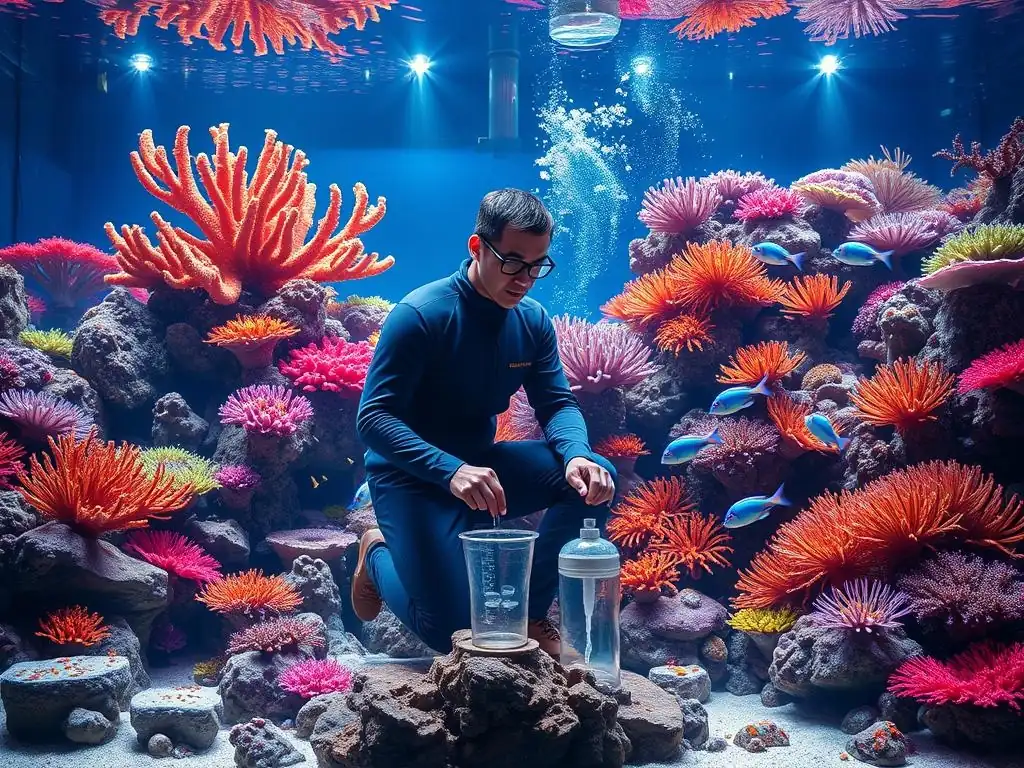
Welcome to Aquarium Mastery! Ever wonder why consistent salinity is the unsung hero of a thriving saltwater aquarium? Jump into our Saltwater Tank Top Off Guide and discover the secrets to maintaining perfect water parameters. Learn how to keep your aquatic ecosystem balanced and flourishing – the devil's in the details, and we're here to help you master them!
- Maintaining Stable Salinity in Reef Aquariums: The Importance of Top-Offs
- Understanding Evaporation and Its Impact on Salinity
- Reef Tank Top-Off Guide: A Comprehensive Approach
- Methods for Performing Top-Offs
- Implementing an Automated Top-Off System: Step-by-Step Guide
- Preventing Salinity Swings: Best Practices
- Troubleshooting Common Top-Off Issues
- Long-Term Benefits of Consistent Top-Offs
- Frequently Asked Questions
- Final Reflection: The Unseen Harmony of Stability
- Dive Deeper: Master Your Saltwater Stability!
Maintaining Stable Salinity in Reef Aquariums: The Importance of Top-Offs
Understanding Evaporation and Its Impact on Salinity
The Natural Process of Evaporation in Reef Aquariums
Evaporation is an unavoidable and continuous natural process in any open aquarium system, particularly prominent in reef tanks due to factors like high water flow, powerful lighting that generates heat, and open-top designs. This process involves water molecules at the surface gaining enough energy to escape into the air as vapor. The rate of evaporation is influenced significantly by ambient room temperature, humidity levels, and the amount of surface agitation within the tank, which increases the surface area exposed to air.
For instance, a typical 75-gallon reef aquarium, especially one with a high-flow sump and intense metal halide or LED lighting, can experience a daily evaporation rate ranging from 0.75 gallons to over 1.5 gallons. In drier climates or homes with air conditioning, this rate can be even higher, sometimes exceeding 2 gallons per day for larger systems. Understanding this constant water loss is the first step in mastering a consistent saltwater tank top off guide strategy.
How Evaporation Increases Salinity and Affects Water Chemistry
Unlike the salts and minerals dissolved in the aquarium water, only pure H₂O molecules evaporate. This means that as water escapes into the atmosphere, the concentration of the remaining dissolved solids, including salts, trace elements, and buffering compounds, steadily increases within the tank. This direct concentration effect leads to a rise in the water's specific gravity (SG) or salinity.
If left unaddressed, this increase in salinity can become significant over a short period. For example, if a 50-gallon reef tank with a starting salinity of 1.025 SG evaporates 1 gallon of water in 24 hours, its salinity could easily climb to 1.0265 SG or higher. Over several days, without replenishment, the salinity could reach levels detrimental to marine life, creating osmotic stress for inhabitants and throwing off the delicate balance of essential water parameters like alkalinity and calcium, which become artificially concentrated.
Why Stable Salinity is Crucial for Reef Health
Maintaining a stable salinity is paramount for the health and survival of all reef aquarium inhabitants. Marine fish, corals, and invertebrates are highly sensitive to fluctuations in their surrounding environment, as they have evolved to thrive within a very narrow range of salinity, typically between 1.024 and 1.026 specific gravity (or 33-35 parts per thousand, ppt). Significant or rapid changes in salinity impose severe osmotic stress, forcing organisms to expend vital energy to regulate their internal fluid balance.
For corals, especially sensitive stony corals (SPS), consistent salinity is vital for calcification, the process by which they build their calcium carbonate skeletons. A sudden drop or rise of even 0.002 SG can trigger stress responses, leading to tissue recession, bleaching, or compromised growth. Fish may exhibit labored breathing, erratic swimming, or develop health issues due to osmotic shock. Therefore, a consistent saltwater tank top off guide is not merely about convenience, but about preserving the delicate physiological balance of your reef ecosystem.
Reef Tank Top-Off Guide: A Comprehensive Approach
What is a Top-Off and Why is it Necessary for Reef Aquariums?
A "top-off" refers to the process of adding purified freshwater to a reef aquarium to replace the water lost solely due to evaporation. It is a critical, distinct maintenance task that should not be confused with a water change, where a portion of the old saltwater is removed and replaced with newly mixed saltwater. The primary and indispensable purpose of performing regular top-offs is to prevent the steady increase in salinity caused by evaporation, thereby maintaining the stable specific gravity that marine organisms require for their well-being.
Without consistent top-offs, the salinity in a reef tank would continually rise, creating an increasingly hyper-saline environment that is detrimental to fish, corals, and invertebrates. For example, a 100-gallon system evaporating 1 gallon per day would see its salinity increase by approximately 0.0002 SG daily if left unaddressed. Over a week, this could result in a dangerous 0.0014 SG increase, pushing parameters outside the safe zone. Therefore, integrating top-offs into your routine is a fundamental aspect of any comprehensive saltwater tank top off guide.
Choosing the Right Water for Top-Offs: Reverse Osmosis Deionized (RO/DI) Water
The quality of water used for top-offs is as crucial as the act of topping off itself. The universally recommended water for reef aquarium top-offs is Reverse Osmosis Deionized (RO/DI) water. This highly purified water has undergone a multi-stage filtration process that effectively removes nearly all impurities, including chlorine, chloramines, heavy metals, nitrates, phosphates, and total dissolved solids (TDS). Using tap water, even if it appears clear, is highly discouraged because it contains various contaminants that can accumulate in the closed system of a reef tank.
These hidden impurities, particularly nitrates and phosphates, act as fuel for nuisance algae outbreaks, such as hair algae, diatoms, and cyanobacteria, which can quickly overrun a reef tank and compete with corals for light and nutrients. Furthermore, heavy metals and other chemicals present in tap water can be directly toxic to sensitive marine inhabitants over time, leading to unexplained livestock losses or chronic health issues. A reliable saltwater tank top off guide always emphasizes the use of pristine RO/DI water.
The Importance of RO/DI Water for Reef Stability and Preventing Algae Blooms
Using RO/DI water with a Total Dissolved Solids (TDS) reading of 0 ppm is paramount for maintaining long-term chemical stability in a reef aquarium. By introducing only pure water, you ensure that no new, undesirable substances are added to the system, thereby preventing the gradual accumulation of pollutants that can destabilize water parameters or trigger unwanted biological growth. This purity directly contributes to a healthier environment for sensitive corals and fish, allowing them to thrive without the constant stress of fluctuating or contaminated water.
Consider a reef tank that requires 1 gallon of top-off water daily. If tap water with a modest 150 ppm TDS is used, over a single month, this introduces 4,500 ppm of accumulated impurities into the tank. While diluted, this constant influx of nutrients and unknown compounds will inevitably contribute to persistent nuisance algae problems, cloudy water, and potentially even inhibit coral growth by binding with essential trace elements. Thus, the commitment to RO/DI water is a foundational element for any effective saltwater tank top off guide aimed at fostering a clean, stable, and vibrant reef ecosystem.
Methods for Performing Top-Offs
Manual Top-Offs: Simplicity and Monitoring
Manual top-offs involve the aquarist regularly adding RO/DI water to the tank or sump by hand. This method is straightforward and requires minimal initial investment, making it a popular choice for smaller tanks or those with very low evaporation rates. The process typically involves visually monitoring the water level daily or every other day, and then pouring in the necessary amount of purified water from a reservoir. This approach allows for direct observation of the tank's conditions and water level fluctuations, providing an immediate opportunity to notice any changes in evaporation rates or tank health.
However, manual top-offs come with inherent drawbacks. They are time-consuming and prone to human error; forgetting a daily top-off, adding too much water, or adding too little can lead to undesirable salinity swings. For example, if a 30-gallon nano reef evaporates 0.3 gallons daily, a missed top-off for two days could result in a 0.0015 SG increase, causing stress to corals. For busy aquarists or larger systems, maintaining consistent salinity through manual methods can be a significant challenge, often leading to less stable parameters compared to automated solutions.
Automated Top-Off Systems (ATO): Convenience and Stability
Automated Top-Off (ATO) systems revolutionize salinity management by automatically replenishing evaporated water as needed, without human intervention. These systems typically consist of a water level sensor, a small pump, and a reservoir of RO/DI water. When the water level in the sump or display tank drops below a preset point, the sensor activates the pump, which then draws water from the reservoir and adds it to the tank until the desired level is restored. This continuous, small-volume replenishment is far superior to manual methods for maintaining rock-solid salinity stability.
The primary benefit of an ATO system is the unparalleled consistency it provides. By adding water frequently and in small increments, it minimizes the daily salinity fluctuations that are common with manual top-offs, creating a much more stable environment for sensitive marine life. This hands-free operation also frees up the aquarist's time, allowing them to focus on other aspects of tank maintenance. While requiring an initial investment, the long-term benefits in terms of stability and reduced stress on inhabitants make an ATO an indispensable part of any advanced saltwater tank top off guide.
Selecting an ATO System: Float Valves, Optical Sensors, and Controllers
When choosing an ATO system, understanding the different sensor technologies is key. The most common types are float switches and optical sensors. Float switches are mechanical devices that activate a pump when a float rises or falls with the water level. They are generally reliable and cost-effective, with basic models starting around $50. However, they can be susceptible to calcium buildup or snail interference, which may cause them to stick and malfunction over time, potentially leading to overfilling or underfilling.
Optical sensors, on the other hand, use infrared light to detect water levels and are non-mechanical, making them less prone to issues like calcium buildup. They offer precise detection and are often found in more advanced systems, ranging from $100 to $400 for a complete unit.
Many high-end ATO controllers incorporate multiple sensors (e.g., dual optical sensors or an optical sensor paired with a float switch) for redundancy, significantly reducing the risk of failure and preventing costly overflows. Some controllers also include timers and high-level alarms, providing an extra layer of security and making them the preferred choice for a comprehensive saltwater tank top off guide.
Implementing an Automated Top-Off System: Step-by-Step Guide
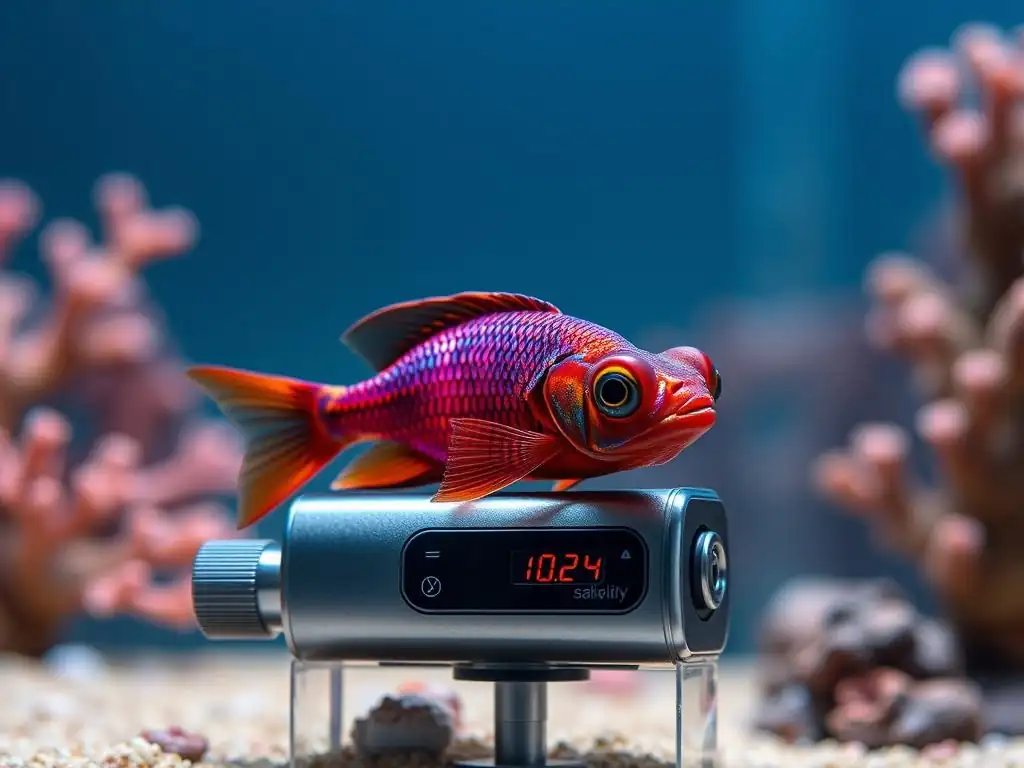
Step 1: Selecting ATO Components: Reservoir, Pump, and Sensor
The first crucial step in setting up an automated top-off system is selecting the right components tailored to your aquarium's needs. Begin by choosing an RO/DI water reservoir. Its size should be determined by your tank's average daily evaporation rate; a common recommendation is a reservoir large enough to hold 5 to 7 days' worth of evaporated water, minimizing the frequency of refills. For a 100-gallon tank evaporating 1 gallon daily, a 5-7 gallon reservoir would be suitable.
Next, select a submersible pump with an appropriate flow rate for your system. A small, quiet pump (e.g., 50-150 GPH) is usually sufficient for top-off purposes, as it only needs to move water from the reservoir to the sump or display tank. Finally, choose your sensor type (float, optical, or a combination) based on reliability, budget, and desired redundancy. Ensure all components are marine-grade and resistant to saltwater corrosion.
Step 2: Setting Up the ATO Reservoir and Plumbing
Once your components are selected, the physical setup begins. Position the RO/DI water reservoir in a convenient location, ideally below or beside your aquarium stand, ensuring it's easily accessible for refilling. Next, route the tubing from the reservoir's pump to the desired water input point in your sump or display tank. It's crucial to create a "drip loop" in the tubing above the water level to prevent potential back-siphoning, which could drain your reservoir into the tank unintentionally.
Secure the tubing firmly to prevent kinks or accidental disconnections. For instance, if adding to a sump, ensure the tubing outlet is positioned so that the incoming water doesn't create excessive splashing, which can interfere with sensor readings or cause salt creep. Many aquarists opt to run the tubing through existing bulkheads or over the sump wall, securing it with clamps or zip ties to maintain a neat and safe setup, aligning with best practices in any detailed saltwater tank top off guide.
Step 3: Calibrating the Water Level Sensor for Accurate Top-Offs
Accurate sensor placement and calibration are vital for the proper functioning of your ATO system. The sensor should be positioned at the precise water level you wish to maintain in your sump or display tank. For sumps, this typically means setting the sensor to a level that optimizes the performance of your protein skimmer and ensures your return pump's intake remains submerged, preventing it from sucking air.
To calibrate, fill your tank or sump to the desired operational water level. Then, carefully position the ATO sensor so that it detects this level. For float switches, ensure the float moves freely and triggers the pump at the exact point you want the water to be replenished. For optical sensors, confirm they register the water presence correctly. After initial placement, monitor the system for a few hours, or even a full day, to observe its cycles and make minor adjustments to the sensor's height until the water level remains consistently stable at your target.
Step 4: Monitoring ATO Performance and Adjusting Settings
After the initial setup, continuous monitoring of your ATO system's performance is essential. For the first few days, closely observe the water level in your tank or sump to ensure it remains consistently stable. Check the RO/DI water reservoir daily to gauge how quickly water is being consumed; this provides a real-world measure of your tank's evaporation rate and helps confirm the ATO is operating as expected.
If you notice the water level fluctuating more than desired, or if the reservoir is depleting too slowly or too quickly, you may need to adjust the sensor's position slightly. For example, if the water level tends to drop too low before the ATO kicks in, lower the sensor by a millimeter or two.
Conversely, if it's overfilling, raise the sensor. Regularly inspect the pump and tubing for any blockages or leaks, and clean the sensor periodically (especially float switches) to prevent calcium buildup from affecting its operation, which is a key maintenance tip in any comprehensive saltwater tank top off guide.
Preventing Salinity Swings: Best Practices
Regular Salinity Testing: Refractometers and Calibration
Consistent and accurate salinity testing is the cornerstone of preventing salinity swings, even with an ATO system in place. The most common and reliable tool for aquarists is a refractometer, which measures the bending of light through a water sample to determine specific gravity or parts per thousand (ppt). While hydrometers are available, they are generally less accurate and more prone to reading errors. Advanced hobbyists might use digital conductivity meters, which offer precise readings directly in ppt or microsiemens.
Regardless of the tool, regular calibration is absolutely critical for accuracy. Refractometers should be calibrated with a specific 35 ppt (or 1.026 SG) calibration solution, not RODI water, at least once a month, or more frequently if you suspect inaccurate readings. This ensures that your measurements are consistently precise, allowing you to detect even subtle changes in salinity before they become problematic. For example, if your refractometer reads 1.025 SG but is off by 0.001 SG due to lack of calibration, you might unknowingly be maintaining your tank at 1.026 SG or 1.024 SG, impacting sensitive inhabitants.
Determining Your Aquarium's Evaporation Rate
Understanding your aquarium's specific evaporation rate is crucial for effective salinity management, whether you're using manual or automated top-offs. The evaporation rate is influenced by several factors, including tank temperature, air flow over the water surface, humidity in the room, and the intensity of your lighting system. To determine this rate, simply measure the volume of RO/DI water your tank consumes over a 24-hour period.
For ATO users, this is straightforward: note the starting volume in your reservoir, and after 24 hours, measure how much has been used. For manual top-offs, measure the amount you add daily to bring the water level back to your desired mark.
For instance, a 150-gallon reef tank might evaporate 1.5 gallons per day in a typical home environment, but this could double to 3 gallons per day if it has an open top, strong flow, and is located in a very dry, air-conditioned room. Knowing this rate helps you size your top-off reservoir appropriately and anticipate your RO/DI water needs.
Adjusting Top-Off Frequency and Volume
For manual top-offs, the goal is to add smaller volumes of water more frequently rather than large volumes infrequently. For example, if your tank evaporates 1 gallon per day, adding 0.5 gallons twice a day is significantly better than adding 1 gallon once every two days. This minimizes the "sawtooth" effect of salinity fluctuations, where salinity gradually rises and then drops sharply with each top-off.
With automated top-off systems, the adjustments are typically more about sensor placement and reservoir size. An ATO system naturally performs small, frequent top-offs, often adding just ounces of water at a time, which is ideal for maintaining ultra-stable salinity. However, if you notice your ATO running excessively or too infrequently, you might need to slightly adjust the sensor's position to fine-tune the water level. The ultimate aim of any saltwater tank top off guide is to achieve a consistent salinity that rarely deviates by more than ±0.0005 SG from your target.
Troubleshooting Common Top-Off Issues
ATO System Failures: Identifying and Resolving Problems
Even the most reliable ATO systems can encounter issues. One common problem is a pump failure, often due to a clogged impeller from detritus in the reservoir or simply wear and tear. If your ATO isn't adding water, check if the pump is running and if there are any obstructions. Sensor malfunctions are another frequent culprit; float switches can get stuck due to calcium buildup or snails, while optical sensors can be affected by bubbles or slime. Cleaning the sensor regularly with a soft brush and vinegar solution can often resolve these issues.
A seemingly empty reservoir is a simple yet common reason for ATO failure. Always ensure your RO/DI reservoir has enough water. Furthermore, check the tubing for kinks or clogs that could impede water flow. For example, if your ATO pump runs continuously but no water reaches the tank, a kinked line or a clogged output nozzle is a likely cause. Addressing these issues promptly is critical to preventing prolonged salinity fluctuations that can stress your reef inhabitants.
Salinity Fluctuations: Causes and Solutions
Despite using an ATO, aquarists may still experience unexpected salinity fluctuations. One primary cause is an ATO system malfunction, such as a stuck-on pump that continuously adds water, leading to a dangerous drop in salinity. Conversely, a stuck-off sensor or empty reservoir will cause salinity to rise. Inaccurate salinity testing is another significant contributor; a poorly calibrated refractometer can lead you to believe your salinity is stable when it's actually drifting.
To troubleshoot, first, recalibrate your salinity testing equipment. Then, thoroughly inspect your ATO system: check the sensor for proper function and cleanliness, ensure the pump is operating correctly, and verify the reservoir is not empty. If a sudden drop in salinity occurs, immediately check for a continuous-running pump or a siphon effect from the top-off line. If salinity is rising, ensure the ATO is indeed activating and adding water. Implementing a robust saltwater tank top off guide involves proactive monitoring and quick problem-solving.
Preventing Overflow: Sensor Redundancy and Fail-Safes
Preventing an aquarium overflow due to ATO malfunction is paramount, as it can cause significant damage to property and stress to tank inhabitants. The most effective strategy is to employ sensor redundancy. Many advanced ATO controllers incorporate a secondary float switch or optical sensor placed slightly above the primary sensor's activation point. If the primary sensor fails and the water level continues to rise, the secondary sensor acts as a fail-safe, shutting off the pump.
Additionally, some ATO systems include a built-in timer that will shut off the pump if it runs continuously for an unusually long period (e.g., more than 5 minutes), indicating a potential sensor failure or siphon. It's also wise to ensure your sump has sufficient emergency volume to contain a small overflow should a sensor fail. For example, if your sump's operating level is 10 inches, ensure there's at least an inch or two of freeboard before water would spill over. Regularly testing your fail-safe mechanisms, if present, is a crucial step in a responsible saltwater tank top off guide.
Long-Term Benefits of Consistent Top-Offs
Healthier Inhabitants: Reducing Stress and Disease
The long-term benefits of maintaining consistent salinity through diligent top-offs are profound for the health of your aquarium inhabitants. A stable environment significantly reduces stress on fish, corals, and invertebrates. When organisms are not constantly expending energy to regulate their internal osmotic balance due to fluctuating salinity, their immune systems are stronger and more resilient to diseases and parasites.
For example, fish in a tank with stable salinity (e.g., variations of no more than ±0.0005 SG daily) are less prone to issues like Ich (white spot disease) or bacterial infections, as their natural defenses are not compromised by environmental stress. Corals, freed from osmotic pressure, can allocate more energy towards growth and maintaining tissue integrity, leading to a more robust and disease-resistant colony. This consistent stability, achieved through a precise saltwater tank top off guide, is foundational for a thriving and low-stress reef.
Optimal Coral Growth and Coloration
For coral enthusiasts, consistent top-offs are directly linked to optimal coral growth and vibrant coloration. Corals, particularly stony corals, depend on precise and stable water parameters, including salinity, for efficient calcification. When salinity fluctuates, corals divert energy from building their skeletons and producing pigments towards coping with osmotic stress, leading to slower growth rates and muted colors.
In a tank with consistently stable salinity, corals can grow at their maximum potential. For instance, fast-growing SPS corals like Acropora species can exhibit growth rates of 0.5 to 1 inch per month under ideal, stable conditions, developing intense and striking coloration. This is because their metabolic processes are optimized, allowing them to absorb and utilize essential elements efficiently without the physiological burden of adapting to changing osmotic pressures. A detailed saltwater tank top off guide is therefore essential for unlocking the full aesthetic and biological potential of your reef.
A Stable and Thriving Reef Ecosystem
Ultimately, the consistent application of a reliable saltwater tank top off guide contributes to the overall stability and long-term success of the entire reef ecosystem. Beyond the direct benefits to individual inhabitants, a stable salinity fosters a balanced microbial environment, including beneficial nitrifying bacteria that are crucial for nutrient cycling. When parameters are stable, the entire biological filtration system functions more efficiently, reducing the likelihood of ammonia or nitrite spikes.
This comprehensive stability minimizes the need for emergency interventions or frequent parameter corrections, allowing the aquarist to enjoy a healthier, more resilient, and visually stunning reef. A well-maintained system, supported by automated top-offs, becomes a self-sustaining miniature ocean, where all components work in harmony, leading to a truly thriving and long-lived reef aquarium.
Frequently Asked Questions
What is a "saltwater tank top off" and why is it necessary?
A saltwater tank top off is the process of replenishing water lost through evaporation in your saltwater aquarium. It's crucial to maintain a stable salinity level, which is vital for the health of your marine life.
How does evaporation affect salinity in a saltwater aquarium?
Evaporation removes pure water from the tank, leaving the salt behind. This causes the salinity (salt concentration) to steadily increase, potentially harming sensitive marine organisms.
What type of water should I use for topping off my saltwater tank?
Always use RO/DI (Reverse Osmosis/Deionized) water for topping off. Tap water contains minerals and other substances that can accumulate and negatively impact water quality over time.
How often should I top off my saltwater tank?
The frequency depends on factors like tank size, climate, and equipment, but daily or every other day is common. Regularly monitor your salinity with a refractometer to determine the appropriate frequency.
What happens if I don't top off my saltwater tank properly?
Failure to top off correctly can lead to fluctuating salinity levels, stressing your fish and invertebrates. This can cause illness, reduced growth, and, in severe cases, death of your aquarium inhabitants.
Final Reflection: The Unseen Harmony of Stability
The principles outlined in this Saltwater Tank Top Off Guide are more than just technical instructions; they represent a commitment to the delicate balance of a thriving aquatic ecosystem. Understanding the importance of maintaining stable salinity through consistent top-offs is not merely about preventing fluctuations; it's about fostering an environment where marine life can flourish, mirroring the stability they experience in their natural oceanic habitats.
The subtle, yet profound, impact of consistent top-offs extends beyond the immediate health of our corals and fish. It reflects a deeper understanding of our responsibility as stewards of these miniature oceans, a realization that even the smallest adjustments can have cascading effects. As Jacques Cousteau so eloquently stated, The sea, once it casts its spell, holds one in its net of wonder forever.
This "net of wonder" demands our respect and diligent care, reminding us that the health of our tanks is inextricably linked to the health of the oceans themselves.
Now, as you consider the information presented in this guide, take a moment to reflect on your own role in maintaining this delicate balance. Let the principles of consistent top-offs serve as a reminder that even seemingly small acts of dedication can contribute to a world of vibrant life and enduring beauty. Embrace the responsibility, and witness the transformative power of stability within your own saltwater sanctuary.
Dive Deeper: Master Your Saltwater Stability!
Thanks for exploring the importance of stable salinity! Now that you understand how crucial it is for your aquarium's health, it's time to take action and ensure your reef thrives.
Here’s what you can do right now:
- Invest in an Automatic Top-Off System (ATO). It's the easiest way to maintain stable salinity and prevent drastic changes.
- Share this guide with a fellow reef enthusiast! Help them understand the importance of consistent salinity.
- Experiment with different evaporation rates in a controlled setting to better understand your specific aquarium's needs.
What small change will you implement today to ensure more stable salinity in your saltwater aquarium?