
Aquascaping for Destructive Beauties: Oscars, Severums & Creating Resilient Tank Decor

Welcome to Aquarium Mastery!
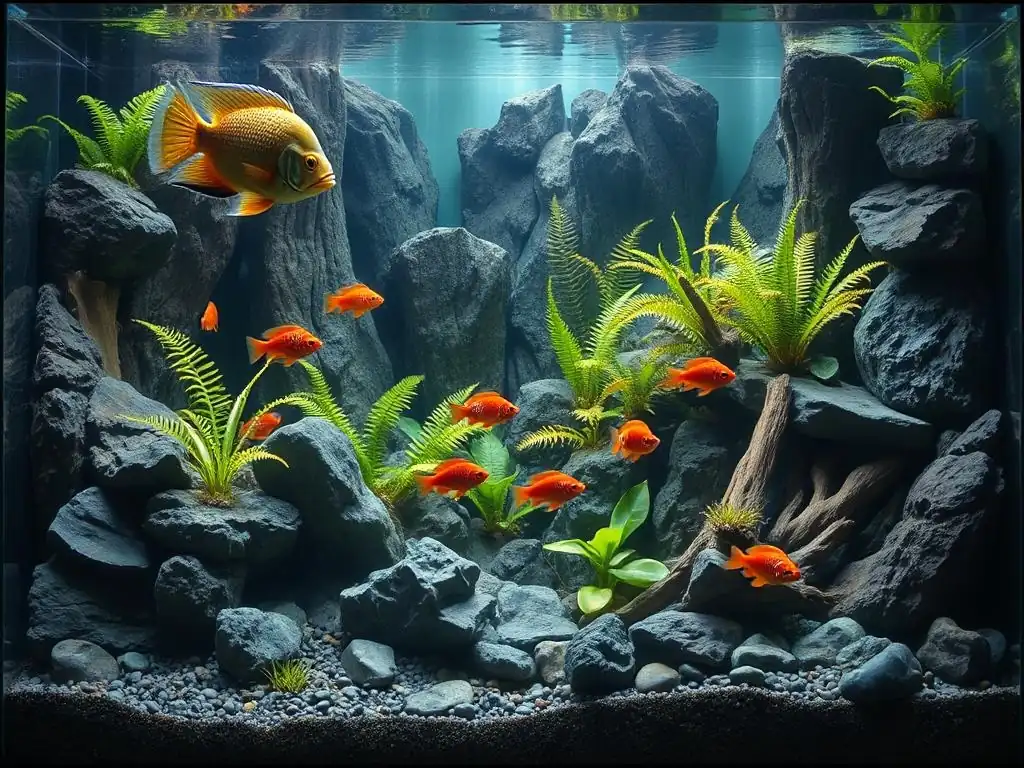
Ever wondered how to create a stunning aquascape that can withstand the playful chaos of an Oscar or Severum? Dive in and explore our guide to Oscar tank aquascaping design, where we reveal the secrets to crafting a beautiful and durable underwater world for your destructive beauties. Ready to build an Oscar tank that's both gorgeous and resilient? Let's get started!
- Aquascaping for Large Cichlids: Oscars, Severums & Creating Resilient Tank Decor
- Understanding Large Cichlid Aquascaping Challenges
-
Large Cichlid Tank Aquascaping Design: A Step-by-Step Guide
- 1. Planning Your Large Cichlid Tank Layout: Space and Fish Behavior
- 2. Choosing Substrate for Large Cichlid Tanks: Durability and Functionality
- 3. Selecting Rocks and Hardscape for Large Cichlid Aquariums: Safety and Stability
- 4. Plant Selection for Large Cichlid Tanks: Tough Plants That Can Survive
- 5. Incorporating Driftwood into Large Cichlid Tank Aquascapes: Benefits and Considerations
- 6. Filtration and Water Flow in Heavily Stocked Cichlid Tanks
- Creating a Species-Specific Aquascape
- Resilient Tank Decor Ideas for Large Cichlids
- Maintaining Your Large Cichlid Aquascape
- Troubleshooting Common Aquascaping Problems in Large Cichlid Tanks
- Advanced Large Cichlid Aquascaping Techniques
- Conclusion: Mastering Large Cichlid Tank Aquascaping Design for a Beautiful and Healthy Aquarium
-
Frequently Asked Questions
- How can I create an aquascape that an Oscar won't destroy?
- What types of plants are best suited for an Oscar tank aquascape?
- Is it possible to have any substrate plants with Oscars, or are they guaranteed to be uprooted?
- What kind of hardscape should I avoid when designing an Oscar tank aquascape?
- How important is water quality in an Oscar tank aquascape, especially with live plants?
- Final Reflection: Cultivating Harmony in the Face of Chaos
- Unleash Your Inner Aquascaping Artist!
Aquascaping for Large Cichlids: Oscars, Severums & Creating Resilient Tank Decor
Understanding Large Cichlid Aquascaping Challenges
The Destructive Nature of Large Cichlids: Why Standard Aquascaping Fails
Large New World cichlids such as Oscars ( Astronotus ocellatus) and Severums ( Heros severus) are renowned for their intelligence, personality, and unfortunately, their propensity for redecorating their environment. Unlike many community fish that gently navigate through planted aquascapes, these robust species often engage in significant substrate displacement, uprooting plants, and even moving smaller decorative elements. An adult Oscar, which can reach up to 12-14 inches (30-35 cm) in length, possesses considerable strength, making traditional, delicate aquascaping designs impractical and short-lived.
This inherent behavior stems from their natural instincts, where they might dig to search for food, create spawning pits, or simply assert dominance within their territory. A typical aquascape featuring finely detailed plant arrangements or lightly placed rocks will quickly be dismantled. This isn't merely an aesthetic issue; dislodged decor can fall, potentially injuring fish or even cracking the tank glass. Therefore, any effective Oscar tank aquascaping design must prioritize durability and safety over conventional aesthetic fragility.
Key Considerations for a Resilient Large Cichlid Tank Aquascape
Designing an aquascape for large cichlids requires a fundamental shift in approach, focusing on resilience and functionality. The primary consideration is the long-term stability of all decor elements. This means selecting heavy, immovable hardscape materials and securing them against the fish's powerful digging and pushing behaviors. For instance, a 75-gallon tank housing a pair of adult Oscars will need rocks weighing several pounds each, securely placed directly on the tank bottom to prevent undermining.
Another critical factor is the choice of substrate and plants. Fine, light substrates are easily displaced, creating constant mess and potential filtration issues. Similarly, delicate stem plants or those with shallow root systems will not survive. An effective Oscar tank aquascaping design will incorporate either robust, well-rooted plants or those that attach firmly to hardscape. The overall layout must also provide ample swimming space while offering essential hiding spots and territorial boundaries without risking collapse.
Large Cichlid Tank Aquascaping Design: A Step-by-Step Guide
1. Planning Your Large Cichlid Tank Layout: Space and Fish Behavior
Effective large cichlid tank aquascaping design begins with a thorough understanding of the fish's adult size and natural behaviors. Oscars, for example, are highly active swimmers and require significant open space for movement, especially when establishing territories or during breeding periods. A minimum tank size of 75 gallons for a single Oscar is often recommended, with larger tanks (125 gallons or more) preferred for pairs or community setups, ensuring enough room for both swimming and decor. The layout should account for their tendency to patrol boundaries and occasionally chase tank mates.
Beyond open swimming areas, it's crucial to incorporate structured zones that offer hiding places and visual breaks. These can be created with large, stable rocks or driftwood. While Oscars are known for their boldness, accessible retreats reduce stress and provide a sense of security. Observe your fish's natural habits; some may prefer open spaces, while others might favor specific caves or sheltered spots. A balanced layout for your Oscar tank aquascaping design will provide both expansive swimming lanes and secure, easily accessible retreats.
2. Choosing Substrate for Large Cichlid Tanks: Durability and Functionality
When selecting substrate for large cichlid tanks, durability and functionality are paramount due to their inherent digging behaviors. Fine sands, while aesthetically pleasing, are easily disturbed and can be kicked up into the water column, potentially clogging filtration systems. Moreover, some cichlids may ingest fine sand, which can lead to impaction issues. Instead, consider using a heavier, coarser substrate such as large-grain gravel (e.g., 2-3 mm diameter) or heavier, coarser sand. This type of substrate is more resistant to displacement and less likely to be ingested.
The depth of the substrate also plays a role in the overall Oscar tank aquascaping design. While a uniform depth of 2-3 inches (5-7.5 cm) is common for many aquariums, large cichlids may still rearrange it significantly. Deeper substrate beds (up to 4-5 inches in certain areas) can be used to anchor very robust plants, but be prepared for continuous re-sculpting by your fish. Regardless of the type chosen, ensure it is inert and will not alter water chemistry, which is especially important for fish like Severums that prefer stable parameters around a pH of 6.5-7.5.
3. Selecting Rocks and Hardscape for Large Cichlid Aquariums: Safety and Stability
The choice of rocks and hardscape is a cornerstone of resilient large cichlid tank aquascaping design, with safety and stability being the absolute priorities. All rocks must be inert, meaning they won't leach minerals or chemicals into the water that could alter parameters or harm fish. Common inert options include lava rock, slate, river stones, and granite. Avoid rocks with sharp edges that could injure your fish during their active movements or digging, and always inspect pieces thoroughly before adding them to the tank. Porous rocks might trap detritus, requiring more frequent cleaning.
Beyond inertness, the stability of the hardscape is critical. Large cichlids are powerful and can easily dislodge unsecured rocks, leading to potential tank damage or injury to the fish. Therefore, any significant rock structure should be placed directly on the bare glass bottom of the tank before adding substrate. This prevents the fish from digging underneath and compromising the structure's integrity. For complex or tall rock formations, consider using aquarium-safe silicone or epoxy to bond pieces together, creating a solid, immovable unit.
Types of Aquarium Rocks Suitable for Large Cichlids
Several types of rocks are well-suited for a durable Oscar tank aquascaping design. Lava rock, while lightweight, can be used for its porous surface which provides ample area for beneficial bacteria; however, ensure any sharp edges are smoothed down. Slate is an excellent choice due to its flat, stackable nature, allowing for the creation of secure shelves and caves. Large river stones and smooth granite are also ideal, being dense, inert, and generally free of sharp edges, making them safe for active fish.
Conversely, rocks like limestone or marble, which are calcium-carbonate based, are generally best avoided in tanks with large cichlids that prefer softer, more acidic water (like many New World species). These rocks will slowly dissolve, buffering the water's pH upwards and increasing hardness, which can be detrimental to species adapted to different conditions. Always perform an acid test (drip a few drops of muriatic acid or vinegar on the rock; if it fizzes, it's not inert) on any new rock before introducing it to your aquarium.
Creating a Secure and Stable Rockscape
Creating a secure and stable rockscape for large cichlids requires foresight and deliberate construction techniques. The most fundamental rule is to place all heavy hardscape elements directly on the glass bottom of the aquarium before adding any substrate. This prevents fish from digging underneath the rocks and causing them to shift or collapse, a common issue in Oscar tank aquascaping design. For example, a large, flat piece of slate can serve as a stable base for a stack of smaller river stones, distributing weight evenly.
For more elaborate structures, such as caves or arches, using aquarium-safe silicone sealant or epoxy to bond rocks together is highly recommended. Apply the adhesive liberally at contact points and allow it to cure completely, typically 24-48 hours, before filling the tank. This bonding technique provides an unparalleled level of stability, ensuring that even the most determined Oscar cannot dismantle the structure. Consider the overall weight distribution to prevent excessive pressure on any single point of the tank glass.
4. Plant Selection for Large Cichlid Tanks: Tough Plants That Can Survive
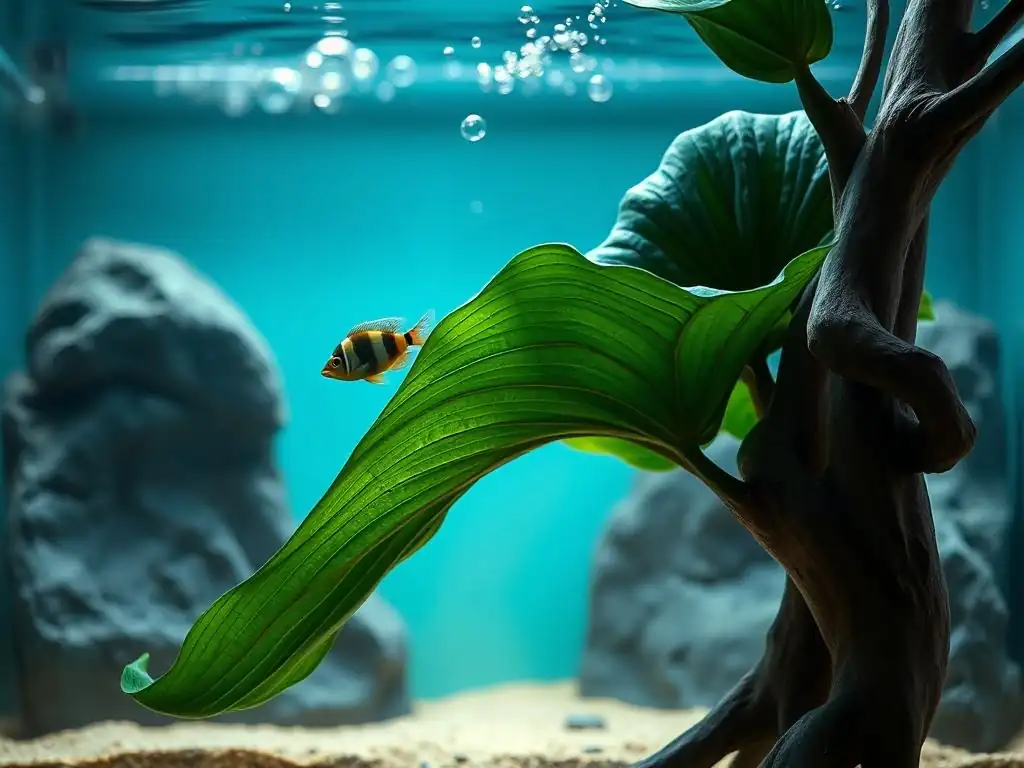
The challenge of incorporating live plants into a large cichlid tank aquascaping design is significant, as most delicate aquatic plants simply won't survive the digging, uprooting, and occasional nipping behaviors of fish like Oscars and Severums. Therefore, plant selection must focus on exceptionally hardy species that can withstand rough treatment. Even with the toughest plants, success is not guaranteed and often depends on the individual temperament of your fish.
The key to successful planting lies in choosing species with robust root systems or rhizomes that can be firmly anchored. Plants that are rooted into the substrate will need significant protection, while those that attach to hardscape offer a greater chance of survival. Consider the adult size of your cichlids; a 10-inch Oscar can easily uproot a plant that a 2-inch community fish would ignore. Therefore, a resilient Oscar tank aquascaping design will prioritize plant durability over intricate arrangement.
Low-Maintenance Plant Options for Large Cichlid Aquariums
For large cichlid aquariums, low-maintenance and durable plant options are essential. Anubias species (e.g., Anubias barteri, Anubias nana, Anubias coffeefolia) are top contenders. These plants have tough, leathery leaves and a rhizome that should not be buried in the substrate; instead, they attach to rocks or driftwood using fishing line or aquarium-safe super glue (cyanoacrylate gel). Once established, their strong root systems grip the hardscape, making them difficult for even the most determined Oscar to dislodge.
Another excellent choice is Java Fern ( Microsorum pteropus). Like Anubias, Java Fern is a rhizome plant that thrives when attached to hardscape. Its leaves are also robust enough to withstand some curiosity from large cichlids. While not always successful, some hobbyists have had luck with very large, established Cryptocoryne species ( Cryptocoryne wendtii or Cryptocoryne spiralis) if planted deeply and surrounded by heavy rocks. Vallisneria species can also survive if their extensive root systems are allowed to establish, though their long, flowing leaves might invite playful nipping.
Protecting Plants from Large Cichlid Destruction
Even with the selection of tough plant species, active protection measures are often necessary in a large cichlid tank aquascaping design. For rooted plants, one effective method is to plant them within small, heavy terracotta or ceramic pots, which are then buried in the substrate. This encases the root ball, making it much harder for the fish to dig up the entire plant. Surrounding these potted plants with immovable, heavy rocks can add an extra layer of defense, creating a "plant fortress."
For rhizome plants like Anubias and Java Fern, ensuring they are securely attached to heavy driftwood or rocks is paramount. Use fishing line to tie them firmly in place until their roots naturally grip the surface, which can take several weeks. Alternatively, a few drops of aquarium-safe super glue gel can provide an instant, strong bond. Placing these plant-adorned hardscape pieces in areas less frequented by the cichlids, or within crevices that limit access, can also significantly improve their chances of survival.
5. Incorporating Driftwood into Large Cichlid Tank Aquascapes: Benefits and Considerations
Driftwood is an invaluable addition to a large cichlid tank aquascaping design, offering both aesthetic appeal and significant functional benefits. It provides natural-looking cover, hiding places, and visual barriers, which can help reduce aggression among tank inhabitants and provide security for the fish. Types like Malaysian driftwood, Mopani wood, and Manzanita are popular choices due to their density and durability. Many types of driftwood also release tannins, which can slightly lower pH and add a natural, "blackwater" tint to the water, mimicking the native habitats of some New World cichlids.
However, incorporating driftwood requires careful preparation and consideration for stability. New driftwood often floats and can release significant amounts of tannins, staining the water. It's crucial to pre-soak new pieces for several days to weeks, changing the water regularly, until they become waterlogged and sink, and the tannin release diminishes to an acceptable level.
Boiling driftwood can expedite this process and also sterilize the wood. Once prepared, large pieces of driftwood must be securely placed, either by their sheer weight, by being wedged firmly between other hardscape elements, or by being anchored to slate bases with screws to prevent them from being dislodged by powerful cichlids.
6. Filtration and Water Flow in Heavily Stocked Cichlid Tanks
Given the large bioload produced by Oscars, Severums, and other big cichlids, robust filtration is not merely a recommendation but a necessity in any successful large cichlid tank aquascaping design. These fish are messy eaters and produce significant waste, which can rapidly degrade water quality if not adequately managed. An oversized filtration system is paramount; typically, an external canister filter or a sump system that can turn over the tank volume at least 4 to 6 times per hour is recommended. For a 125-gallon Oscar tank, this means a filter capable of processing 500-750 gallons per hour (GPH).
The filtration system should provide comprehensive mechanical, biological, and chemical filtration. Mechanical filtration removes particulate waste, preventing cloudy water and reducing the organic load. Biological filtration, provided by media like ceramic rings or bio-balls, converts harmful ammonia and nitrite into less toxic nitrate.
Chemical filtration, often using activated carbon or specialized resins, removes dissolved organic compounds and odors. While strong filtration is needed, the water flow should be optimized to create gentle but effective circulation throughout the tank, avoiding overly turbulent areas that could stress the fish. Regular maintenance of the filter, including media cleaning and replacement, is critical to maintaining stable water parameters (e.g., ammonia and nitrite at 0 ppm, nitrates below 20 ppm).
Creating a Species-Specific Aquascape
Adapting General Principles for Specific Large Cichlids
While the general principles of resilience and stability apply across all large cichlid tank aquascaping design, adapting these for specific species can significantly enhance the well-being and natural behaviors of your fish. For instance, Oscars are known for their active swimming and powerful digging. Their aquascape should prioritize large open swimming areas and extremely secure, heavy decor that can withstand their redecorating efforts. Substrate should be robust gravel or coarse sand, and any plants must be exceptionally hardy and well-anchored, such as large Anubias or Java Fern on driftwood.
In contrast, Severums, while still large cichlids, tend to be less destructive than Oscars and are often more inclined towards grazing on soft plant matter. Their aquascape can, therefore, incorporate a slightly wider range of hardy plants, such as well-established Amazon Swords or Cryptocorynes, provided they are securely planted. Severums also appreciate more vertical structures, like tall pieces of driftwood or slate, to explore and establish territories. Understanding these subtle behavioral differences allows for a more tailored and effective Oscar tank aquascaping design, promoting both fish health and aesthetic appeal.
Species Tank Aquascaping: Plant Choices and Decor Preferences
For a dedicated species tank, tailoring the aquascape to the specific preferences and natural habitat of the large cichlid can lead to a more enriched environment. For an Oscar tank aquascaping design, mimicking their South American river basin origins often means incorporating large, smooth river stones and substantial pieces of driftwood. While live plants are challenging, very large, hardy species like Amazon Swords ( Echinodorus bleheri) might be attempted if securely weighed down or planted in pots, though success varies. The emphasis should be on providing ample open space for their active swimming and robust, immovable hiding spots.
For Severums, which are often found in areas with more vegetation, a species tank might include more plant elements. Large, well-rooted plants like Java Ferns, Anubias, or even some Cryptocorynes attached to driftwood or rocks can thrive, provided the Severum's individual temperament isn't overly destructive. Incorporating tall driftwood branches or roots can also simulate their natural preference for vertical structures. Both species benefit from a substrate of medium-to-large gravel, allowing for some natural digging behavior without excessive mess.
Maintaining a Healthy Aquarium Environment
Beyond the initial aquascaping, maintaining a healthy environment for large cichlids is crucial and directly impacts the longevity and aesthetics of your Oscar tank aquascaping design. Given their significant bioload, regular and substantial water changes are non-negotiable. For a typical Oscar tank, weekly water changes of 25-50% are often necessary to keep nitrate levels in check (ideally below 20 ppm) and replenish essential minerals. Consistent water parameters, including temperature (74-80°F or 23-27°C) and pH (6.5-7.5 for most New World cichlids), are vital for their long-term health.
Proper feeding practices also contribute significantly to water quality; avoid overfeeding, and remove any uneaten food promptly to prevent decomposition and ammonia spikes. A robust filtration system, as previously discussed, is the backbone of water quality management. Regularly cleaning filter media and performing scheduled maintenance on pumps ensures optimal performance. Monitoring water parameters with a reliable test kit for ammonia, nitrite, and nitrate will provide early warnings of potential issues, allowing for proactive adjustments to maintain a pristine and stable environment for your large cichlids.
Resilient Tank Decor Ideas for Large Cichlids
DIY Cichlid-Proof Decorations
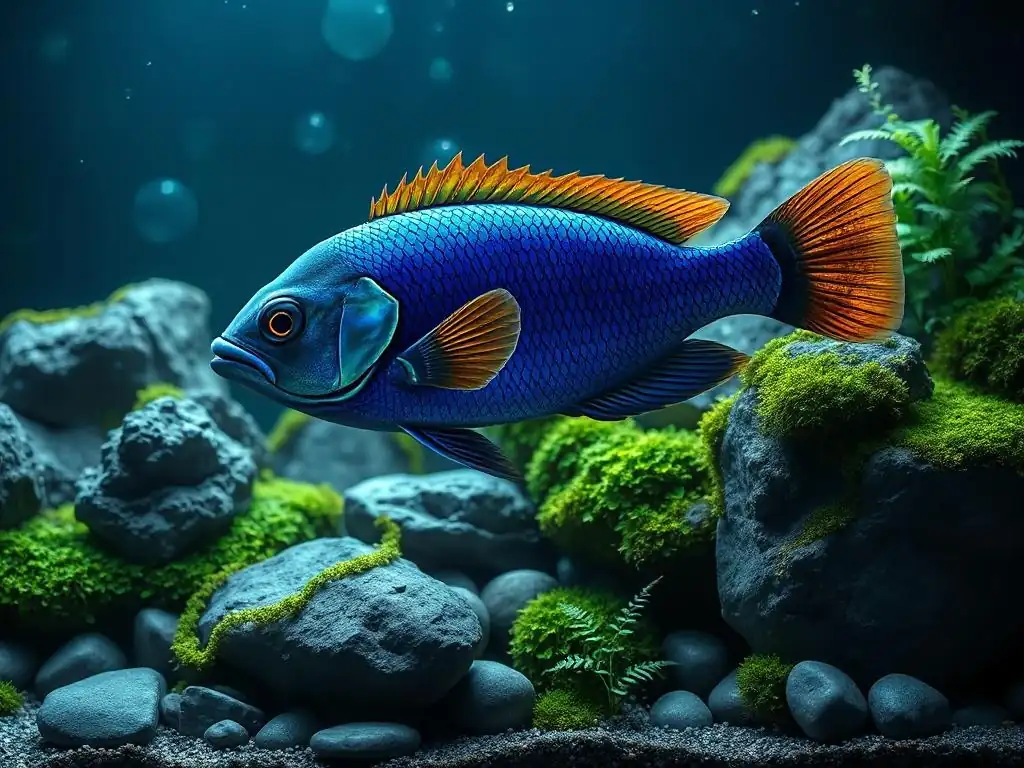
Creating DIY cichlid-proof decorations for your Oscar tank aquascaping design allows for customization while ensuring durability. One popular approach is to construct caves or tunnels from PVC pipes. Standard PVC pipes, typically 4-6 inches (10-15 cm) in diameter for adult Oscars, can be cut to desired lengths and arranged to form secure hiding spots. These can then be camouflaged by gluing inert rocks or slate tiles onto their exterior using aquarium-safe silicone, creating a natural look that is virtually indestructible by the fish. Ensure all edges are smooth to prevent injury.
Another effective DIY method involves using large, inert ceramic tiles or flagstone pieces to build stable structures. These can be stacked and secured with aquarium-safe silicone to form multi-tiered platforms or enclosed caves. For example, a base of 12x12 inch (30x30 cm) ceramic tiles can support smaller, bonded pieces, creating a robust and heavy structure. Always allow ample curing time for silicone (at least 24-48 hours) in a well-ventilated area before introducing it to the aquarium, ensuring all volatile compounds have dissipated.
Commercial Decor Options for Cichlid Tanks
While DIY options offer customization, several commercial decor options are specifically designed for the robust nature of large cichlids, making them suitable for an Oscar tank aquascaping design. Heavy, solid resin or ceramic ornaments are excellent choices as they are typically too heavy for cichlids to move. Look for pieces labeled "cichlid-safe" or "heavy duty," often featuring integrated caves or tunnels. Examples include large resin logs, rock formations, or archaeological ruins that provide both aesthetic appeal and functional hiding spots.
Another commercial option is artificial plants made from durable, fish-safe plastics or silks. While not offering the same biological benefits as live plants, they provide visual breaks and cover without the risk of being uprooted or destroyed. Opt for plants with heavy bases that can be buried deep in the substrate or secured under rocks to prevent them from floating away. Always thoroughly rinse any new commercial decor before placing it in the tank to remove manufacturing residues.
Creating Caves and Hiding Places for Stress Reduction
Caves and hiding places are fundamental elements in any effective large cichlid tank aquascaping design, serving a critical role in stress reduction and promoting natural behaviors. Large cichlids, even dominant ones, require secure retreats where they can feel safe, especially during periods of perceived threat, aggression from tank mates, or even just for resting. Without adequate hiding spots, fish can become stressed, leading to suppressed immune systems and increased susceptibility to disease.
These hiding places can be formed from various materials, including natural rock formations (bonded for stability), large pieces of driftwood, or purpose-built ceramic or PVC structures. For Oscars, caves should be large enough to allow the fish to comfortably turn around inside, typically with openings at least 6-8 inches (15-20 cm) wide. For Severums, slightly smaller, more intricate crevices might be appreciated. Providing multiple hiding spots ensures that all fish, regardless of their position in the pecking order, have access to a safe haven, contributing significantly to a harmonious and healthy aquarium environment.
Maintaining Your Large Cichlid Aquascape
Regular Maintenance Tasks for Cichlid Tanks
Maintaining a large cichlid aquascape involves a consistent routine to ensure both the well-being of the fish and the longevity of your Oscar tank aquascaping design. Weekly water changes are paramount, typically 25-50% of the tank volume, depending on stocking levels and feeding habits. This helps keep nitrate levels low (ideally below 20 ppm) and replenishes essential minerals. During water changes, use a gravel vacuum to remove detritus from the substrate, paying extra attention to areas where food or waste might accumulate, such as around decor.
Filter maintenance is another critical task. Depending on the filter type and tank bioload, mechanical filter media (pads, sponges) should be rinsed weekly or bi-weekly in old tank water to preserve beneficial bacteria. Biological media typically requires less frequent cleaning, perhaps every few months, and should also be rinsed gently in tank water. Chemical media, like activated carbon, usually needs replacement every 2-4 weeks. Regularly inspecting your hardscape for any shifts or instability, especially after vigorous digging by your cichlids, will prevent potential accidents.
Dealing with Algae in High-Nutrient Aquariums
High-nutrient levels, often a byproduct of heavily stocked large cichlid tanks, can lead to persistent algae growth, impacting the aesthetics of your Oscar tank aquascaping design. Manual removal is the first line of defense: regularly scrape algae from glass using an aquarium-safe scraper. For algae on rocks and driftwood, a stiff brush can be effective. While some algae is natural, excessive amounts indicate an imbalance.
To combat algae more broadly, focus on addressing the root causes: excess nutrients and light. Ensure consistent weekly water changes to export nitrates and phosphates. Avoid overfeeding your fish, and promptly remove any uneaten food. Optimize your lighting schedule; 8-10 hours per day is generally sufficient, and too much light can fuel algae blooms. In some cases, introducing algae-eating fish that are compatible with large cichlids, such as certain species of Plecos (e.g., Bristlenose Pleco, if tank size permits), can help, but ensure they won't be bullied or outcompeted for food.
Adjusting Your Aquascape as Your Fish Grow
As large cichlids like Oscars and Severums mature, their size, strength, and behavioral patterns can change, necessitating adjustments to your Oscar tank aquascaping design. A fish that was relatively docile as a juvenile might become more territorial or destructive as an adult reaching 12-14 inches (30-35 cm). This growth means that hiding spots that were once adequate may become too small, and previously stable decor might now be easily dislodged.
Be prepared to re-evaluate and modify your aquascape. You might need to replace smaller rocks with larger, heavier ones, or add more secure hiding places. If plants are consistently being uprooted, consider removing them or investing in even more robust, securely anchored options. The layout itself might need to be reconfigured to provide more open swimming space if the fish are becoming cramped. Proactive adjustment ensures that your aquascape remains safe, functional, and aesthetically pleasing throughout your cichlids' lifespan.
Troubleshooting Common Aquascaping Problems in Large Cichlid Tanks
Plants Being Uprooted: Solutions and Prevention
One of the most common and frustrating problems in large cichlid tank aquascaping design is plants being uprooted. This typically occurs due to the cichlids' natural digging behavior or their tendency to playfully tug at foliage. The primary solution lies in selecting only the toughest, most resilient plant species, such as Anubias or Java Fern, which have strong rhizomes that can be attached to hardscape. For rooted plants, use heavy pots buried in the substrate, or surround the plant's base with large, immovable rocks to create a protective barrier.
Prevention is key. Before planting, ensure the substrate is heavy enough (e.g., coarse gravel) to offer some resistance to digging. When attaching plants to wood or rock, use strong fishing line or aquarium-safe super glue gel, ensuring a firm bond. Consider the placement of plants in less active areas of the tank, away from primary digging zones or high-traffic swimming paths. While complete elimination of uprooting may be impossible with highly active cichlids, these strategies can significantly reduce its frequency and impact.
Substrate Displacement: Maintaining a Clean Look
Substrate displacement is an inherent aspect of large cichlid behavior, as they enjoy digging and rearranging their environment, leading to an uneven and sometimes messy Oscar tank aquascaping design. While it's impossible to stop this natural behavior entirely, there are ways to manage it and maintain a cleaner look. Using a heavier, larger-grained substrate (e.g., 2-3 mm gravel) makes it more difficult for fish to move large quantities, compared to fine sand.
Regular maintenance, such as using a gravel vacuum during weekly water changes, can help redistribute substrate and remove accumulated detritus from displaced areas. For areas you wish to keep pristine, such as around the front glass, consider placing heavy, flat rocks or slate pieces to create a barrier that discourages digging. Embracing a slightly "natural" or "unruly" look, rather than a perfectly manicured one, can also reduce frustration, as the fish's activity will inevitably alter the landscape.
Water Quality Issues in Heavily Planted/Decorated Tanks
Heavily decorated large cichlid tanks, especially those with substrate and intricate hardscape, can sometimes contribute to water quality issues if not managed correctly. Complex aquascapes provide more surfaces for detritus to accumulate, and if not adequately cleaned, this decomposing organic matter can lead to elevated nitrates, phosphates, and even ammonia/nitrite spikes. This is particularly true if the substrate is too deep or not regularly vacuumed, creating anaerobic pockets.
To mitigate these risks, ensure your filtration system is adequately oversized for your tank's bioload, providing strong mechanical filtration to remove particulates before they settle. Implement a rigorous maintenance schedule that includes frequent and substantial water changes (e.g., 25-50% weekly) and thorough gravel vacuuming. When designing your Oscar tank aquascaping design, aim for structures that are easy to clean around, avoiding excessive nooks and crannies where waste can become trapped. Good water circulation throughout the tank will also help prevent dead spots where detritus can settle and decompose.
Advanced Large Cichlid Aquascaping Techniques
Biotope Aquascaping: Replicating Natural Habitats
For the advanced aquarist, biotope aquascaping offers a compelling way to create an Oscar tank aquascaping design that not only looks stunning but also profoundly benefits the fish by replicating their natural habitat. A biotope focuses on accurately mimicking a specific geographical location, including water parameters, substrate type, hardscape elements, and even specific plant species found there. For Oscars, this would typically involve a South American river or flood plain environment.
A true Oscar biotope might feature a sandy or fine gravel substrate, large river stones, and substantial pieces of driftwood, perhaps mimicking submerged tree roots or fallen branches. Water parameters would be soft (GH 2-8 dGH) and slightly acidic (pH 6.5-7.5), possibly with a "blackwater" tint from tannins released by the wood. Live plants would be sparse and extremely hardy, or perhaps absent, reflecting the often-turbid and dynamic nature of their wild homes. This approach requires extensive research into the fish's specific origins but results in a highly authentic and enriching environment.
Creating a Visually Stunning and Functional Cichlid Aquarium
Creating a visually stunning and functional large cichlid aquarium involves balancing aesthetic appeal with the practical needs and behaviors of the fish. The key is to design an Oscar tank aquascaping design that is both robust enough to withstand the cichlids' activity and arranged in a way that is pleasing to the eye. Utilize the "rule of thirds" or "golden ratio" in your hardscape placement to create natural focal points, even with large, simple elements. For instance, a dominant piece of driftwood or a large rock formation placed off-center can draw the eye.
Varying the size and texture of hardscape elements adds visual interest. Combine smooth river stones with textured lava rock or rugged driftwood. While live plants can be challenging, a few strategically placed, well-anchored Anubias or Java Ferns can add a touch of green without compromising durability. Adequate lighting, while not the primary focus for the fish, will highlight the colors of your fish and decor, making the entire aquascape pop. The goal is a cohesive, natural-looking environment that supports the fish's well-being while being a joy to behold.
The Role of Lighting in Large Cichlid Tank Aquascapes
While lighting in a large cichlid tank aquascaping design is often secondary to filtration and hardscape, it plays an important role in both the aesthetics and the biological health of the aquarium. For tanks with live plants, appropriate light spectrum and intensity are crucial for photosynthesis. Even in tanks with minimal or no live plants, proper lighting enhances the vibrant colors of Oscars, Severums, and other cichlids, making them more visually appealing.
Modern LED lighting systems offer excellent control over intensity, spectrum, and even programmable light cycles (e.g., dawn-dusk simulations). A general recommendation for a fish-only or sparsely planted cichlid tank is a light duration of 8-10 hours per day. Too much light can encourage excessive algae growth, especially in high-nutrient cichlid tanks. The right lighting can also highlight the textures of your hardscape and create dramatic shadows, adding depth and dimension to your resilient Oscar tank aquascaping design.
Conclusion: Mastering Large Cichlid Tank Aquascaping Design for a Beautiful and Healthy Aquarium
Frequently Asked Questions
How can I create an aquascape that an Oscar won't destroy?
You need to focus on resilient materials and securely anchoring everything. Consider using heavy rocks, driftwood that's too large to move, and plants that are either very tough or attached to hardscape.
What types of plants are best suited for an Oscar tank aquascape?
Avoid delicate plants that Oscars will easily uproot or eat. Anubias, Java Fern, and Amazon Sword are good choices as they are hardy and can be attached to rocks or driftwood.
Is it possible to have any substrate plants with Oscars, or are they guaranteed to be uprooted?
While challenging, it's possible with careful planning. Use heavy root tabs to encourage strong root growth and consider covering the substrate with a layer of large pebbles or rocks to prevent digging.
What kind of hardscape should I avoid when designing an Oscar tank aquascape?
Avoid anything sharp or fragile. Oscars can be clumsy, so you want to prevent injuries. Steer clear of delicate decorations and anything with sharp edges.
How important is water quality in an Oscar tank aquascape, especially with live plants?
Water quality is crucial. Oscars produce a lot of waste, so regular water changes are essential. Maintaining stable water parameters is key to the health of both the fish and any plants you include in your aquascape.
Final Reflection: Cultivating Harmony in the Face of Chaos
The principles of Oscar tank aquascaping design, as explored in this article, are not merely about aesthetics; they represent a broader understanding of creating resilient ecosystems in the face of powerful forces. Just as we strive to build aquascapes that can withstand the boisterous nature of Oscars and Severums, so too must we cultivate resilience in our own lives and communities, adapting and thriving amidst inevitable challenges. The lessons learned in designing a tank for these "destructive beauties" translate to a philosophy of embracing change and building strength through adversity.
This journey into Oscar tank aquascaping has underscored the importance of mindful design and the delicate balance between beauty and functionality. It's a constant reminder that even in seemingly controlled environments, nature's inherent power must be respected and accommodated. The ability to create a thriving ecosystem for these fish, despite their destructive tendencies, is a testament to the power of thoughtful planning and adaptable execution. The best way to predict the future is to design it.
- Buckminster Fuller. This quote resonates deeply, highlighting the proactive role we play in shaping our environments, both aquatic and terrestrial.
Now, I invite you to consider how you can apply these principles of resilience and mindful design to your own life. Just as we carefully select plants and structures to withstand the force of Oscars, what "aquascaping" can you do in your own life to foster strength, adaptability, and beauty in the face of challenges? Embrace the power of thoughtful planning, adapt to changing circumstances, and cultivate an environment where you, too, can thrive, even amidst the "destructive beauties" of life.
Unleash Your Inner Aquascaping Artist!
Thanks for diving into the world of resilient aquascaping! We hope you've gained some valuable insights into creating a thriving underwater paradise, even with the most enthusiastic inhabitants. Ready to put your knowledge to the test?
Here's how you can get started:
- Design Your Oscar-Proof Paradise: Sketch out your aquascape design, focusing on robust plants and secure hardscape elements. It's time to bring your vision to life!
- Share your aquascaping successes (and learning experiences) with fellow hobbyists on social media using #AquariumMastery.
- Consider experimenting with floating plants to provide shade and a different dimension to your tank environment.
What's the first hardy plant you're adding to your Oscar's kingdom?