
Water Parameters for Radiant Featherfins: Replicating Lake Tanganyika

Welcome to Aquarium Mastery!
Ever wondered how to unlock the secret to keeping your Radiant Featherfins thriving like they're back in Lake Tanganyika? Dive into our detailed Radiant Featherfin water parameter guide and discover the crucial elements that will transform your aquarium into their perfect underwater paradise. Prepare to be amazed by the vibrant colors and playful personalities you'll unlock with just a few simple adjustments. Ready to learn more?
- Radiant Featherfin Water Parameter Guide: Replicating Lake Tanganyika
- Introduction to Radiant Featherfins and Their Native Habitat
- Key Water Parameters for Radiant Featherfins
- Setting Up Your Tank to Replicate Lake Tanganyika
- Achieving and Maintaining Ideal Water Parameters
- Troubleshooting Common Water Parameter Issues
- The Impact of Water Parameters on Radiant Featherfin Health and Breeding
- Advanced Techniques for Water Parameter Control
- Conclusion: Mastering Water Parameters for Thriving Radiant Featherfins
-
Frequently Asked Questions
- What are the ideal temperature ranges for a Radiant Featherfin aquarium, and why is it important to maintain them?
- What specific pH levels are necessary to mimic Lake Tanganyika conditions for Radiant Featherfins?
- Why is water hardness (GH and KH) so important for Radiant Featherfins, and what are the recommended levels?
- What are the recommended levels of ammonia, nitrite, and nitrate in a Radiant Featherfin aquarium, and how can I achieve them?
- How frequently should I perform water changes for a Radiant Featherfin aquarium, and what percentage of the water should I change each time?
- Final Reflection: The Living Essence of Tanganyika
- Dive Deeper: Unleash the Full Potential of Your Featherfins!
Radiant Featherfin Water Parameter Guide: Replicating Lake Tanganyika
Introduction to Radiant Featherfins and Their Native Habitat
Understanding Cyathopharynx furcifer: The Radiant Featherfin
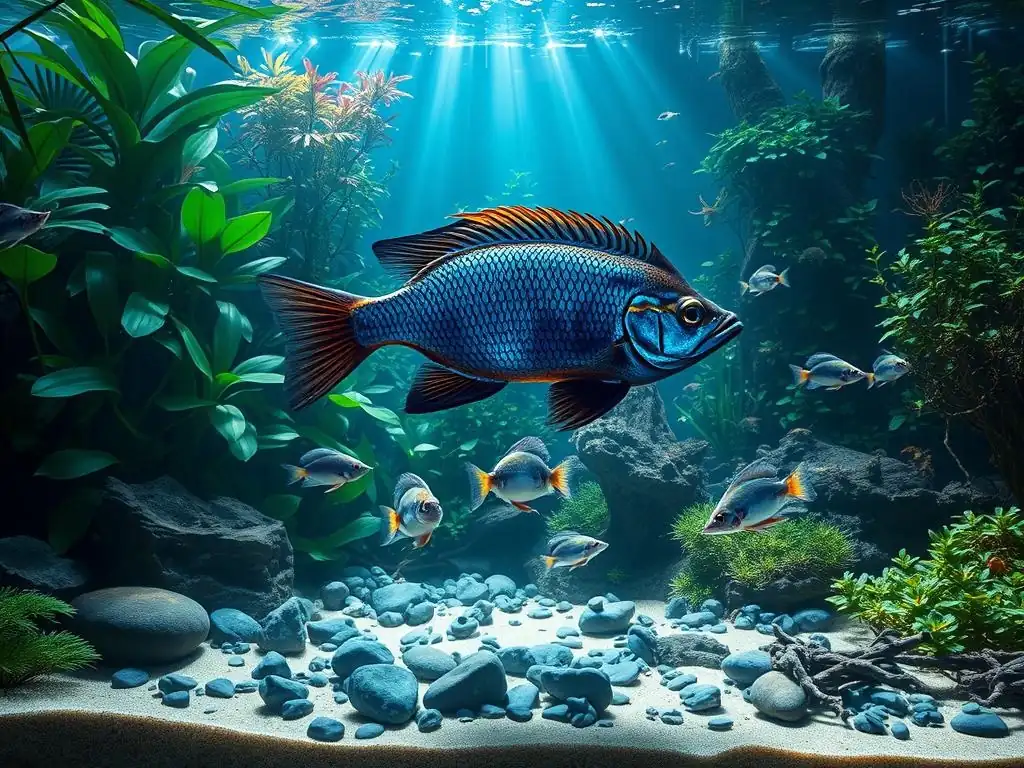
Cyathopharynx furcifer, commonly known as the Radiant Featherfin or Furcifer, is a captivating cichlid species endemic to the deep, ancient waters of Lake Tanganyika in East Africa. Males are particularly striking, boasting elongated dorsal fin rays that resemble a flowing feather, alongside vibrant iridescent blues, yellows, and oranges that intensify during breeding. These pelagic cichlids are known for their open-water schooling behavior in their natural habitat, primarily feeding on plankton. Their elegant swimming style and dazzling appearance make them a prized addition to specialized cichlid aquariums.
With proper care, Radiant Featherfins can reach a respectable size, with males typically growing to about 6-8 inches (15-20 cm) and females remaining slightly smaller, around 5-6 inches (12-15 cm). Their lifespan can extend from 8 to 10 years in a well-maintained captive environment. While generally peaceful for a cichlid, males can exhibit territoriality, especially when establishing breeding sites. Understanding their natural behaviors and the unique chemistry of Lake Tanganyika is the cornerstone of providing optimal care and appreciating the full splendor of this species.
The Importance of Mimicking Lake Tanganyika's Conditions for Featherfin Health
Replicating the precise water chemistry of Lake Tanganyika is not merely a suggestion but a critical requirement for the long-term health and vitality of Radiant Featherfins. Lake Tanganyika is renowned for its remarkably stable and unique parameters: consistently high pH, significant hardness, and a narrow temperature range. Any deviation from these conditions can induce severe stress in these delicate fish, compromising their immune systems and making them highly susceptible to various diseases, including potentially fatal digestive issues.
Ignoring the specific needs outlined in a comprehensive Radiant Featherfin water parameter guide can lead to a cascade of negative effects. Fish may exhibit stunted growth, faded coloration, lethargy, and an increased vulnerability to common aquarium ailments. Furthermore, improper parameters often inhibit natural behaviors such as foraging and breeding, preventing aquarists from experiencing the full beauty and fascinating social dynamics of Cyathopharynx furcifer. Therefore, meticulous attention to water quality is paramount for their thriving existence.
Key Water Parameters for Radiant Featherfins
Temperature: Maintaining Optimal Warmth
The ideal temperature range for Radiant Featherfins closely mirrors the stable conditions found in Lake Tanganyika. The lake's surface temperatures typically hover between 76-80°F (24-27°C) year-round. To replicate this consistency in the home aquarium, a reliable submersible heater, accurately monitored by a quality thermometer, is essential. Fluctuations of more than 2-3°F (1-1.5°C) within a day should be avoided, as sudden temperature shifts are a significant source of stress for these sensitive cichlids.
Maintaining temperature within this optimal range is crucial for the metabolic processes of Radiant Featherfins. Temperatures below 76°F (24°C) can slow their metabolism, leading to reduced activity, poor digestion, and a weakened immune response, making them more prone to infections. Conversely, temperatures consistently above 80°F (27°C) can decrease dissolved oxygen levels and accelerate metabolism to an unhealthy degree, potentially shortening their lifespan. A consistent 78°F (25.5°C) is often considered the sweet spot for general health and activity.
pH Level: Achieving Ideal Alkalinity
Lake Tanganyika is famously known for its highly alkaline water, with pH values typically ranging from 8.0 to 9.0. For Radiant Featherfins, a target pH of 8.2-8.6 is considered ideal to ensure their physiological well-being. This high alkalinity is attributed to the unique geological composition of the lake basin and the abundance of dissolved mineral salts, which naturally buffer the water against pH drops.
Operating outside this specific pH window can have detrimental effects on Cyathopharynx furcifer. A pH consistently below 8.0 can lead to severe physiological stress, impacting gill function and the fish's ability to excrete ammonia, potentially causing ammonia poisoning even at low concentrations. While less common in home setups, a pH consistently above 9.0 can also be harmful. The emphasis in any effective Radiant Featherfin water parameter guide is not just on achieving the target pH, but on maintaining its stability, as rapid fluctuations are far more dangerous than a slightly off but consistent reading.
Water Hardness (GH): Understanding General Hardness
General Hardness (GH) measures the concentration of dissolved calcium and magnesium ions in the water, which are vital minerals for fish health. Lake Tanganyika is characterized by very hard water, with GH values frequently recorded between 10-18 dGH (degrees of General Hardness), which translates to approximately 179-322 ppm. For optimal health and to truly mimic their natural environment, a GH of 12-16 dGH is recommended for Radiant Featherfins in captivity.
These minerals play a critical role in various biological processes, including osmoregulation (the balance of salts and water in the fish's body), bone and fin development, and the proper functioning of enzymes. Insufficient GH can lead to osmotic stress, poor skeletal formation, and issues with egg development in breeding females. While excessively high GH can sometimes lead to mineral precipitation or scale buildup on heaters, maintaining the recommended range is crucial for the overall robust health of your Radiant Featherfins.
Carbonate Hardness (KH): Buffering pH
Carbonate Hardness (KH), also known as alkalinity, measures the concentration of bicarbonate and carbonate ions in the water. These ions are crucial because they act as natural buffers, preventing drastic and sudden shifts in pH. Lake Tanganyika exhibits a high KH, typically ranging from 16-20 dKH (degrees of Carbonate Hardness), or approximately 286-358 ppm. For Radiant Featherfins, maintaining a KH of 14-18 dKH is highly advisable to ensure pH stability.
Without adequate KH, the pH of the aquarium water can "crash" rapidly. This can occur due to the natural production of acids from biological processes like nitrification (the conversion of ammonia to nitrate) or from the CO2 released by fish respiration, especially overnight. A sudden pH drop can be fatal to Tanganyikan cichlids, which are highly sensitive to such changes. Therefore, a robust KH level is a cornerstone of any successful Radiant Featherfin water parameter guide, providing the necessary buffering capacity to keep the pH consistently within the ideal alkaline range.
Ammonia, Nitrite, and Nitrate: Managing the Nitrogen Cycle
The nitrogen cycle is fundamental to aquarium health, and managing its byproducts is paramount for Radiant Featherfins. Ammonia (NH3) and nitrite (NO2) are highly toxic compounds produced from fish waste and decaying organic matter. For the health and survival of your fish, ammonia and nitrite levels must always be at 0 ppm. Even trace amounts can cause severe gill damage, organ failure, and lead to rapid fatalities in these sensitive cichlids.
Nitrate (NO3), the final product of the nitrogen cycle, is less toxic than ammonia or nitrite but should still be kept at low concentrations. For Radiant Featherfins, nitrate levels should ideally be below 10 ppm and certainly not exceed 20 ppm. Chronic exposure to high nitrates can cause long-term stress, suppress the immune system, stunt growth, and diminish coloration. Regular water changes and robust biological filtration are the primary methods for managing nitrates, forming an indispensable part of any effective Radiant Featherfin water parameter guide.
Setting Up Your Tank to Replicate Lake Tanganyika
Tank Size Considerations
Selecting an appropriately sized aquarium is crucial for the well-being and natural behavior of Radiant Featherfins. Due to their active, open-water swimming nature and potential for group dynamics, a minimum tank size of 75 gallons (approximately 284 liters) is recommended for a small group, such as one male and two or three females. This volume provides ample swimming space and helps to maintain stable water parameters more effectively than smaller tanks.
For larger groups, mixed cichlid communities, or to accommodate the full adult size and territorial needs of multiple males, a 125-gallon (approximately 473 liters) or even larger aquarium is highly preferable. The increased water volume contributes significantly to diluting waste products, thus enhancing water quality and stability—a key factor for Lake Tanganyika cichlids. Ample space also allows for the establishment of territories, reducing aggression and stress among tank inhabitants, which is vital for replicating their natural social structure.
Substrate Selection: Creating a Natural Environment
The choice of substrate is an important element in replicating the natural habitat of Radiant Featherfins. Fine sand is the ideal substrate, with options like silica sand or aragonite sand being excellent choices. Coarse gravel should be avoided as it does not mimic their natural environment and can trap detritus. A light-colored sand substrate, approximately 1-2 inches (2.5-5 cm) deep, best replicates the sandy bottom prevalent in many areas of Lake Tanganyika where these fish reside.
The benefits of a fine sand substrate extend beyond aesthetics. Many Tanganyikan cichlids, including Featherfins, naturally sift through sand in search of food particles, a behavior that is both enriching and beneficial for their health. Sand also helps to prevent food and waste from accumulating in hard-to-reach crevices, a common issue with gravel, which can lead to anaerobic pockets and contribute to poor water quality. Aragonite sand, in particular, offers the added advantage of slowly dissolving over time, contributing to the desired high pH and hardness levels, further supporting the goals of this Radiant Featherfin water parameter guide.
Rockwork and Decor: Providing Shelter and Territory
While Radiant Featherfins are primarily open-water swimmers, appropriate rockwork and decor are still essential for their psychological comfort and to facilitate natural behaviors. Utilize large, stable, inert rocks such as Texas Holey Rock, lava rock, or limestone to create various structures, including caves, crevices, and vertical elements. These formations should be arranged to provide distinct territories and visual breaks, especially important for reducing aggression among males or providing refuge for females. Always ensure that any rock structures are securely placed and cannot topple over.
The purpose of this decor is to mimic the rocky shorelines and deeper rocky structures found in Lake Tanganyika, offering essential hiding spots for subdominant fish or females seeking refuge after spawning. These structures also serve as natural territorial markers. It is crucial to avoid using driftwood, as it can leach tannins and humic acids into the water, which would lower the pH and soften the water—conditions entirely contrary to the requirements outlined in this Radiant Featherfin water parameter guide.
Filtration: Maintaining Water Quality
A robust and efficient filtration system is non-negotiable for maintaining the pristine water quality required by Radiant Featherfins. External canister filters are highly recommended due to their large media capacity, allowing for comprehensive mechanical, biological, and chemical filtration. It is often beneficial to "over-filter" the tank, potentially even running two canister filters on larger aquariums to provide redundancy and significantly enhance biological filtration.
Each type of filtration plays a vital role. Biological media, such as ceramic rings or bio-balls, provides extensive surface area for beneficial bacteria to colonize, crucial for establishing and maintaining the nitrogen cycle by converting toxic ammonia and nitrite. Mechanical filtration, typically sponges or filter floss, removes particulate matter, keeping the water clear. Chemical filtration, such as activated carbon or specialized resins, can remove dissolved organic pollutants and improve water clarity, although regular water changes remain the primary method for nutrient export. A powerful and well-maintained filtration system is a cornerstone of any effective Radiant Featherfin water parameter guide.
Achieving and Maintaining Ideal Water Parameters
Regular Water Testing: Monitoring Key Parameters
Consistent and accurate water parameter testing is paramount for the health of your Radiant Featherfins. It is crucial to perform weekly tests for pH, KH, GH, ammonia, nitrite, and nitrate. Investing in reliable liquid test kits is highly recommended, as they offer greater accuracy compared to test strips. Keeping a detailed log of your readings allows you to identify trends, anticipate potential issues, and make proactive adjustments before parameters deviate to critical levels.
The data gathered from regular testing informs your maintenance routine. For instance, the presence of any ammonia or nitrite indicates a problem with the biological filter or overfeeding, requiring immediate attention. A steady decline in KH suggests that the buffering capacity of the water is being depleted, signaling the need for buffer replenishment. By consistently monitoring these parameters, you can ensure that the water conditions remain within the ideal range specified in this comprehensive Radiant Featherfin water parameter guide, preventing stress and promoting long-term well-being.
Water Changes: A Crucial Part of Care
Regular water changes are arguably the single most important maintenance task for maintaining optimal water parameters for Radiant Featherfins. It is recommended to perform weekly or bi-weekly water changes of 20-30% of the total tank volume. This routine is the most effective method for removing accumulated nitrates and other dissolved organic pollutants, while simultaneously replenishing essential minerals and buffering capacity. Always ensure that the fresh water added is thoroughly dechlorinated and temperature-matched to the aquarium water to prevent thermal shock.
Beyond nitrate removal, water changes contribute significantly to overall water quality and stability. They help to maintain consistent pH and hardness levels by introducing fresh, appropriately buffered water, counteracting the natural depletion of buffers over time. For a large aquarium housing active Radiant Featherfins, the consistent removal of waste products through regular water changes is fundamental to preventing stress, maintaining fish health, and ensuring the long-term success of your Tanganyikan setup.
Buffering Agents: Maintaining Stable pH and KH
To consistently achieve and maintain the high pH and KH levels characteristic of Lake Tanganyika, the use of specific buffering agents is often necessary. Products specifically formulated for African cichlids or Lake Tanganyika setups are readily available, such as Seachem Tanganyika Buffer. Additionally, incorporating crushed coral or aragonite into the substrate or filtration system can provide a slow, continuous release of minerals, thereby contributing to the desired alkalinity and hardness.
When utilizing buffering agents, it is crucial to introduce them gradually and monitor water parameters closely to avoid sudden and potentially harmful shifts. While these buffers are excellent tools for maintaining stability, they should not be viewed as a substitute for regular water changes, which are essential for nutrient export. For example, a well-established bed of crushed coral can contribute approximately 1-2 dKH per month in a typical aquarium, depending on water flow and its age, providing a consistent boost to the buffering capacity as detailed in this Radiant Featherfin water parameter guide.
Choosing the Right Salt Mix
While Lake Tanganyika is a freshwater lake, its unique geology results in water that is rich in specific mineral salts, distinct from marine (saltwater) aquariums. To accurately replicate this unique ionic composition, specialized "cichlid salts" or "Tanganyika salts" can be added to your tap water or purified RO/DI water. These mixes are designed to provide the precise balance of minerals that contribute to the desired GH, KH, and pH levels, crucial for the health of Radiant Featherfins.
These specialized salt mixes provide essential electrolytes and minerals that support the fish's osmoregulation, enzyme function, and overall vitality. They also play a significant role in buffering the pH and maintaining the high hardness required.
A common approach among experienced aquarists is to create a custom blend using pharmaceutical-grade magnesium sulfate (Epsom salt), sodium bicarbonate (baking soda), and calcium chloride, carefully dosed to achieve target parameters. For instance, a ratio of 4 parts magnesium to 1 part calcium and 1 part sodium bicarbonate can closely mimic the lake's ionic profile, providing a tailored solution as part of your Radiant Featherfin water parameter guide.
Troubleshooting Common Water Parameter Issues
Fluctuating pH: Causes and Solutions
Rapid and significant fluctuations in pH are a common issue that can severely stress Radiant Featherfins. The most frequent causes include insufficient buffering capacity (low KH), which allows acids from biological processes to easily lower pH; overfeeding, leading to excess organic waste buildup; or large, infrequent water changes where the new water has a vastly different pH from the tank water. Additionally, CO2 buildup from heavy plant respiration during the night can cause temporary pH dips if KH is not high enough.
To stabilize pH, the primary solution is to increase the carbonate hardness (KH) using appropriate buffering agents or by adding crushed coral to the substrate or filter. Implementing smaller, more frequent water changes (e.g., 10-15% every 3-4 days) rather than large, infrequent ones can help prevent dramatic shifts. Ensuring adequate aeration, especially overnight, helps to off-gas excess CO2. Always test your source water to understand its inherent parameters and adjust accordingly. A stable pH, even if slightly off the ideal, is preferable to a fluctuating one for the health of Radiant Featherfins.
High Nitrate Levels: Identifying and Addressing the Problem
Consistently elevated nitrate levels are a clear indicator of insufficient nutrient export and can pose a chronic threat to the health of Radiant Featherfins. The most common culprits for high nitrates are infrequent or inadequate water changes, overstocking the aquarium with too many fish, or overfeeding, which introduces excess organic waste. Levels consistently above 20 ppm can lead to chronic stress, faded coloration, compromised immune systems, and increased susceptibility to various diseases in these sensitive cichlids.
The most direct and effective solution for high nitrates is to increase the frequency and/or volume of your water changes. For example, instead of a 20% weekly change, consider a 30% weekly change or even two 20% changes per week if levels remain high. Reducing the amount of food offered at each feeding and ensuring all food is consumed within a few minutes can significantly reduce waste.
Review your tank stocking levels to ensure they are appropriate for the size of your aquarium. Enhancing the biological filtration capacity by adding more media can also help process waste more efficiently, as part of a robust Radiant Featherfin water parameter guide.
Cloudy Water: Diagnosing and Resolving the Issue
Cloudy water can be a distressing sight for any aquarist and usually signals an underlying water quality issue. The most common causes include bacterial blooms, often seen in new tanks undergoing the nitrogen cycle or after large disturbances; suspended particulate matter due to inadequate mechanical filtration or substrate disturbance; or algae blooms, which typically result in a green tint. Each type of cloudiness requires a specific approach to resolve.
For bacterial blooms, which often appear milky white, the best course of action is to ensure the nitrogen cycle is fully established and avoid overfeeding. Performing a few small, frequent water changes (e.g., 10-15% daily for a few days) can help. For particulate matter, clean or replace mechanical filter media (like sponges or filter floss) more frequently and ensure your filter flow is adequate to circulate the water.
Green algae blooms usually indicate excess nutrients (nitrates and phosphates) and too much light; reduce lighting duration and perform water changes to export nutrients. A well-maintained tank, adhering to the principles of this Radiant Featherfin water parameter guide, rarely experiences persistent cloudiness.
The Impact of Water Parameters on Radiant Featherfin Health and Breeding
Water Quality and Disease Prevention
Stable and ideal water parameters are the bedrock of a strong immune system for Radiant Featherfins. When these fish are subjected to fluctuating or incorrect water chemistry—such as sudden pH swings, low KH, or the presence of ammonia/nitrite—they experience significant stress. This stress directly compromises their immune response, making them highly vulnerable to opportunistic pathogens that cause common aquarium diseases like Ich (white spot disease), bacterial infections, and specific digestive issues often associated with poor water quality, sometimes referred to as "bloat."
For example, fish consistently exposed to even low levels of ammonia or nitrite will suffer from irreversible gill damage, leading to respiratory distress and often succumbing to secondary bacterial infections. Similarly, a pH that is too low or unstable can impair the fish's osmoregulation, leading to lethargy, loss of appetite, and eventually organ failure. A proactive and consistent approach to maintaining the specific water parameters detailed in this Radiant Featherfin water parameter guide is not just about keeping fish alive; it is the most effective strategy for preventing illness and ensuring a robust, healthy population.
Optimal Water Conditions for Breeding
While Radiant Featherfins may occasionally breed in conditions that are slightly outside their ideal range, achieving optimal water parameters significantly boosts their reproductive success rates. For successful spawning and fry development, maintaining a stable pH of 8.2-8.6, a carbonate hardness (KH) of 14-18 dKH, a general hardness (GH) of 12-16 dGH, and a consistent temperature around 78-80°F (25.5-27°C) provides the most conducive environment. These precise conditions mimic their natural breeding grounds in Lake Tanganyika.
These specific water conditions are not merely preferences; they have direct physiological impacts on the breeding process. Optimal alkalinity and hardness promote egg viability and proper fertilization by influencing sperm motility. Stable temperatures cue spawning behaviors and ensure successful incubation. Females are more likely to hold their clutches to full term, and the developing embryos are more resilient when water parameters are precisely aligned with their evolutionary adaptations to Lake Tanganyika's unique environment.
Raising Fry: Maintaining Ideal Water Parameters for Juveniles
The successful rearing of Radiant Featherfin fry hinges on maintaining pristine and stable water parameters, which are even more critical for juveniles than for adults. While the overall target parameters for fry are similar to those for adult fish, their smaller size and undeveloped systems make them exquisitely sensitive to any sudden changes in pH, temperature, or the presence of toxic nitrogen compounds. Small, frequent water changes, often as much as 10% daily in dedicated fry tanks, are highly recommended to ensure consistently high water quality without inducing shock.
Consistent, high-quality water, as meticulously outlined in this Radiant Featherfin water parameter guide, is absolutely essential for the rapid and healthy growth of fry. Poor water quality, even transiently, can lead to stunted growth, developmental deformities, and significantly reduce survival rates. Ensuring that ammonia and nitrite levels remain at an absolute 0 ppm and that nitrates are kept at extremely low concentrations (below 5 ppm) is paramount. Regular monitoring and proactive adjustments are key to raising robust and vibrant juvenile Radiant Featherfins.
Advanced Techniques for Water Parameter Control
Using RO/DI Water for Precise Control
Reverse Osmosis/De-ionized (RO/DI) water is a highly purified form of water from which virtually all minerals, dissolved solids, and impurities have been removed. While it does not naturally occur in Lake Tanganyika, RO/DI water serves as an invaluable "blank slate" for advanced aquarists. It allows for the precise recreation of specific water parameters from scratch, offering unparalleled control over the GH, KH, and pH of the aquarium water.
For those seeking the utmost precision in water chemistry, particularly for sensitive species, breeding projects, or addressing specific tap water challenges, mixing RO/DI water with carefully selected mineral salts is the preferred method. By adding specific compounds such as calcium chloride, magnesium sulfate, and sodium bicarbonate, or using high-quality commercial cichlid salt mixes, aquarists can build the exact ionic profile of Lake Tanganyika. This method provides the most accurate and stable environment, making it a cornerstone for an advanced Radiant Featherfin water parameter guide.
Implementing a Drip System
An advanced technique for maintaining exceptionally stable water parameters and minimizing nitrate accumulation is the implementation of a continuous drip system. This setup involves a slow, constant drip of fresh, pre-conditioned water into the aquarium, coupled with an overflow mechanism that removes an equal volume of old water. This continuous exchange results in incredibly consistent water chemistry, eliminating the sharp parameter shifts associated with large, infrequent water changes.
The benefits of a drip system for sensitive fish like Radiant Featherfins are significant. It virtually eliminates parameter fluctuations, provides constant replenishment of essential minerals, and continuously exports dissolved organic compounds and nitrates, often keeping nitrate levels below 5 ppm. While setting up a drip system requires careful planning to ensure consistent flow rates and proper conditioning of the incoming water, it offers a highly effective method for maintaining pristine and stable conditions, allowing Radiant Featherfins to truly thrive without the stress of periodic environmental shifts.
Live Plants: Benefits and Considerations
While Lake Tanganyika itself is not characterized by dense aquatic vegetation, some hardy live plants can be incorporated into a Radiant Featherfin aquarium. Plants offer several benefits, most notably their ability to absorb nitrates, which helps in maintaining lower nutrient levels. However, it's crucial to select plants that can tolerate the high pH and hardness of a Tanganyikan setup, as most common aquarium plants prefer more acidic and softer water conditions.
Suitable plant choices that can adapt to the specific parameters of a Tanganyikan cichlid tank include species like Anubias, Java Fern, and certain types of Vallisneria. These plants are generally robust and do not require CO2 injection. It is vital to remember that plants respire at night, releasing CO2, which can temporarily lower pH.
Therefore, ensuring adequate carbonate hardness (KH) is even more critical in a planted Tanganyikan tank to buffer against these nightly pH dips. Avoid plants that necessitate CO2 supplementation, as injecting CO2 would drastically reduce the pH, counteracting the primary goal of this Radiant Featherfin water parameter guide.
Conclusion: Mastering Water Parameters for Thriving Radiant Featherfins
Mastering the precise water parameters for Radiant Featherfins is not merely a task but an art that unlocks the full potential of these magnificent cichlids. Replicating the unique, stable conditions of Lake Tanganyika—characterized by high pH (8.2-8.6), significant hardness (GH 12-16 dGH, KH 14-18 dKH), and consistent temperatures (76-80°F)—is fundamental to their long-term health, vibrant coloration, and successful breeding. Diligence in maintaining zero ammonia and nitrite, alongside very low nitrates, forms the bedrock of their well-being.
By faithfully adhering to the principles outlined in this comprehensive Radiant Featherfin water parameter guide, aquarists can create a thriving aquatic environment that allows Cyathopharynx furcifer to display its full natural beauty and fascinating behaviors. The effort invested in meticulous water parameter control is immensely rewarding, culminating in a robust, active, and truly radiant population of these captivating Tanganyikan cichlids.
Frequently Asked Questions
What are the ideal temperature ranges for a Radiant Featherfin aquarium, and why is it important to maintain them?
The ideal temperature range is between 78-82°F (25-28°C). Maintaining this range is crucial for their metabolic processes and to prevent stress and disease.
What specific pH levels are necessary to mimic Lake Tanganyika conditions for Radiant Featherfins?
Radiant Featherfins thrive in alkaline conditions with a pH between 8.0 and 9.0. This high pH is essential for their long-term health and coloration.
Why is water hardness (GH and KH) so important for Radiant Featherfins, and what are the recommended levels?
Water hardness, both GH and KH, provides essential minerals and buffers the pH. Aim for a GH between 10-20 dGH and a KH between 12-18 dKH for optimal conditions.
What are the recommended levels of ammonia, nitrite, and nitrate in a Radiant Featherfin aquarium, and how can I achieve them?
Ammonia and nitrite should always be at 0 ppm. Nitrate should be kept below 20 ppm through regular water changes and a well-established biological filter.
How frequently should I perform water changes for a Radiant Featherfin aquarium, and what percentage of the water should I change each time?
Perform water changes of 25-50% weekly or bi-weekly, depending on your tank's bioload. This helps maintain stable water parameters and remove accumulated waste.
Okay, here's a final reflection crafted to fit your article, aiming for inspiration, reflection, and a lasting impression, while keeping SEO in mind:
Final Reflection: The Living Essence of Tanganyika
The meticulous pursuit of optimal water parameters, as detailed in this guide, transcends mere aquarium keeping; it's an act of bringing a fragment of Lake Tanganyika's vibrant ecosystem into our homes. Understanding and replicating these conditions isn't just about keeping Cyprichromis leptosoma alive; it's about fostering their natural behaviors, showcasing their breathtaking beauty, and contributing to their long-term well-being in captivity.
The dedication to recreating the specific environment of these Radiant Featherfins speaks volumes about our growing appreciation for the delicate balance of nature. This journey into the chemistry and biology of Lake Tanganyika has profoundly deepened my own respect for the interconnectedness of life. In every drop of water, there lives a secret world, waiting to be discovered.
This quote perfectly encapsulates the wonder and responsibility we embrace when we strive to understand and replicate the natural habitats of these magnificent fish.
Now, I invite you to consider how you can apply this same level of dedication and understanding to other aspects of your life. Whether it's nurturing a garden, supporting a local ecosystem, or simply appreciating the beauty of the natural world around you, let the lessons learned from creating a thriving Radiant Featherfin habitat inspire you to become a more conscious and engaged steward of our planet.
Let the vibrant colors of your Cyprichromis leptosoma serve as a constant reminder of the power of knowledge and the importance of preserving the delicate balance of life, both within our aquariums and beyond.
Dive Deeper: Unleash the Full Potential of Your Featherfins!
Thank you for exploring the fascinating world of Radiant Featherfins and the secrets to replicating Lake Tanganyika in your aquarium. Now that you're armed with this knowledge, let's put it into action and create a thriving habitat for these incredible fish!
Here are some actionable steps you can take right now:
- Implement your water testing strategy: Immediately test your aquarium water using a reliable test kit to get a baseline reading of pH, GH, KH, ammonia, nitrite, and nitrate.
- Start a journal. Begin documenting your journey to replicate Lake Tanganyika's water parameters. Note changes, challenges, and your fish's reactions to the water conditions.
- Share your experiences. Join the Aquarium Mastery community forums and share your journey with other cichlid enthusiasts, helping them benefit from your insights and learn from theirs!
What's one small adjustment you can make to your water parameters today to bring your aquarium closer to the ideal Tanganyika environment?