
Pearl Gourami Bubble Nests: Witnessing a Delicate Breeding Ritual

Welcome to Aquarium Mastery!
Ever wondered how to witness the mesmerizing dance of Pearl Gourami breeding right in your own aquarium? From selecting the perfect spot to the intricate construction of their bubble nest, the process is nothing short of breathtaking. Dive in to uncover the secrets of successful Pearl Gourami breeding and unlock the joy of observing this delicate ritual firsthand. What fascinating secrets will you discover?
- Understanding Pearl Gourami Breeding Behavior
- The Pearl Gourami Breeding Nest: A Detailed Look
- Triggering Pearl Gourami Breeding: Creating the Ideal Environment
- The Pearl Gourami Breeding Process: A Step-by-Step Guide
- Post-Spawning Care: Ensuring Fry Survival
- Common Issues and Solutions in Pearl Gourami Breeding
- Enhancing Your Pearl Gourami Breeding Success
- Pearl Gourami Bubble Nests: A Rewarding Aquarium Experience
-
Frequently Asked Questions
- How does a Pearl Gourami male prepare for breeding?
- What materials do Pearl Gouramis typically use when building their bubble nests?
- How large does a Pearl Gourami bubble nest typically get?
- What water parameters are ideal for encouraging Pearl Gourami breeding nest building?
- How can I encourage my Pearl Gouramis to breed and build a nest?
- Final Reflection: The Fragile Beauty of Creation
- Foster New Life: Cultivate Your Own Aquatic Ecosystem!
Understanding Pearl Gourami Breeding Behavior
Introduction to Pearl Gourami Breeding Habits
Pearl Gouramis (Trichopodus leerii), renowned for their beautiful iridescent spots and flowing fins, exhibit a fascinating and intricate breeding behavior centered around the construction of a bubble nest. As anabantoid fish, like bettas and other gouramis, they possess a labyrinth organ that allows them to breathe atmospheric oxygen, a crucial adaptation for their breeding strategy in oxygen-poor shallow waters. This unique physiological feature directly influences their reproductive process, where the male takes on the primary responsibility of building and maintaining a foam nest at the water's surface to house the developing eggs and fry.
The breeding ritual of the Pearl Gourami is a delicate dance, often commencing with the male displaying his vibrant colors and attempting to entice the female towards his meticulously crafted Pearl Gourami breeding nest. Unlike some other fish species that scatter eggs or bury them, Pearl Gouramis ensure their offspring's survival by suspending them within a protective foamy structure. This process is not only a testament to their natural instincts but also offers a profoundly rewarding experience for aquarists dedicated to observing and facilitating this natural phenomenon in their home aquariums.
The Significance of Bubble Nests in Pearl Gourami Reproduction
The bubble nest is far more than just a collection of bubbles; it serves as a critical life-ain for the Pearl Gourami's progeny. Constructed from countless tiny air bubbles coated with the male's saliva or mucus, these nests provide a stable, buoyant platform for the eggs. This unique structure ensures that the eggs, which are lighter than water, remain suspended at the surface, preventing them from sinking into potentially oxygen-depleted or dirty substrate. The sticky secretions also help to bind the bubbles together, creating a surprisingly durable and cohesive mass.
Furthermore, the bubble nest plays a vital role in providing a stable microenvironment with adequate oxygenation for the developing embryos. While the labyrinth organ allows adult Pearl Gouramis to breathe air, the newly hatched fry are initially dependent on dissolved oxygen in the water. The male's constant maintenance of the Pearl Gourami breeding nest, involving adding new bubbles and retrieving fallen eggs or fry, ensures a continuous supply of fresh air. This dedicated parental care significantly increases the survival rate of the delicate fry, making the bubble nest an indispensable element of Pearl Gourami reproduction.
The Pearl Gourami Breeding Nest: A Detailed Look
Bubble Nest Construction: The Male Gourami's Role
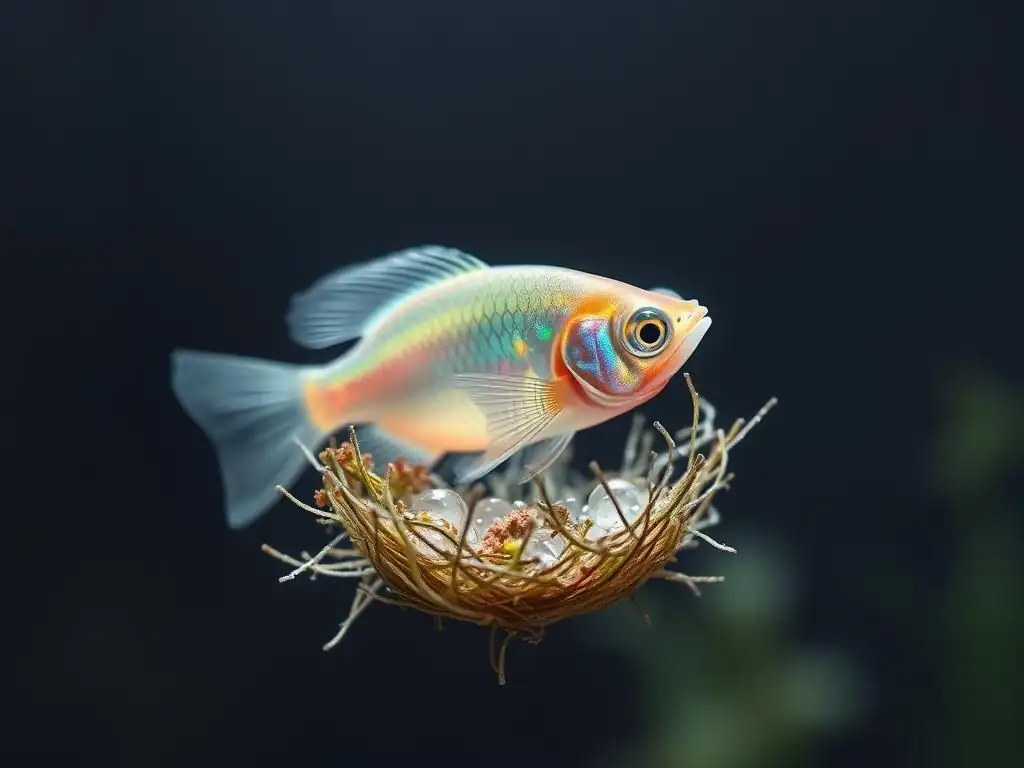
The construction of the Pearl Gourami breeding nest is an impressive feat performed solely by the male gourami, showcasing his readiness and dedication to reproduction. This process typically begins when the male feels the urge to breed and suitable conditions are present in the aquarium. He positions himself near the water surface, often in a calm corner or under a piece of floating vegetation, and begins to draw in air with his mouth. He then expels these bubbles, coated with a special mucus or saliva, which prevents them from popping immediately.
The male meticulously arranges these mucus-coated bubbles into a cohesive, often dome-shaped structure that can range from 5 to 10 centimeters (2 to 4 inches) in diameter and several layers thick. This Pearl Gourami breeding nest building can take several hours, sometimes even a full day, as the male tirelessly works to create a robust and secure foundation for the eggs. His dedication ensures the nest is strong enough to hold hundreds of buoyant eggs and provide a safe haven for the initial stages of fry development.
Materials Used in Pearl Gourami Bubble Nest Building
The primary "materials" for the Pearl Gourami breeding nest are surprisingly simple yet incredibly effective: air and the male gourami's own buccal secretions. The air bubbles are trapped at the water's surface, and the key to their longevity and structural integrity lies in the sticky, protein-rich mucus produced by the male. This biological "glue" coats each bubble, increasing its surface tension and preventing it from bursting, allowing the bubbles to adhere to one another and form a stable foam.
In addition to the fundamental air and mucus, male Pearl Gouramis often incorporate small pieces of floating plant material into their Pearl Gourami breeding nest. These plant fragments, such as bits of duckweed or roots from water lettuce, can serve multiple purposes: they provide additional structural support, help to anchor the nest in place, and offer a degree of camouflage from potential disturbances. This natural incorporation of available materials further demonstrates the male's instinctive ingenuity in creating the optimal environment for his offspring.
Location, Location, Location: Preferred Nesting Sites in the Aquarium
The choice of location for the Pearl Gourami breeding nest is crucial for its success and reflects the male's instinctual drive to protect his future progeny. Male gouramis typically prefer quiet, undisturbed areas of the aquarium surface, often in a corner or alongside the tank wall where water flow is minimal. These sheltered spots offer stability, preventing the delicate nest from being disrupted by strong currents from filters or air stones.
Furthermore, male Pearl Gouramis often seek out locations under or among broad-leafed floating plants such as Water Lettuce (Pistia stratiotes), Amazon Frogbit (Limnobium laevigatum), or Water Sprite (Ceratopteris thalictroides). These plants provide excellent anchors for the Pearl Gourami breeding nest, offering both physical support and a natural canopy that helps to conceal the nest from perceived threats. The presence of ample floating vegetation is a significant factor in encouraging successful Pearl Gourami breeding nest building, as it mimics their natural habitat and provides the security the male instinctively seeks.
Triggering Pearl Gourami Breeding: Creating the Ideal Environment
Water Parameters for Optimal Pearl Gourami Breeding
To encourage successful Pearl Gourami breeding nest building and subsequent spawning, precise and stable water parameters are paramount. Pearl Gouramis thrive in slightly acidic to neutral water, with a pH range of 6.0 to 7.5. The water should be soft to moderately hard, ideally within a General Hardness (GH) range of 4-8 dGH (70-140 ppm). Temperature is a critical trigger; a gradual increase to 26-29°C (79-84°F) often stimulates spawning behavior, mimicking the warmer conditions of their natural breeding season.
Maintaining pristine water quality is also essential. Regular, small water changes (10-15% every few days) with aged, temperature-matched water can help to signal to the fish that conditions are favorable for breeding. Ensuring low levels of nitrates and zero ammonia or nitrite is crucial, as poor water quality can stress the fish and inhibit any attempts at Pearl Gourami breeding nest building or spawning. Consistent parameters create a secure and healthy environment, encouraging the fish to reproduce.
Setting up a Breeding Tank for Pearl Gouramis
A dedicated breeding tank is highly recommended for Pearl Gouramis to maximize breeding success and fry survival. A tank size of at least 75-110 liters (20-30 gallons) for a single pair provides ample space. The setup should be minimalistic, often with a bare bottom to simplify fry retrieval and tank cleaning. Crucially, the tank must have plenty of floating plants, such as Water Lettuce, Dwarf Water Lettuce, or Amazon Frogbit, which serve as crucial anchors and support for the Pearl Gourami breeding nest.
Filtration should be gentle, preferably using a sponge filter or a very low-flow internal filter, to avoid disrupting the water surface and the delicate bubble nest. Strong currents can easily destroy the male's hard work. Hiding spots for the female, such as ceramic caves or dense artificial plants, are also important, as the male can become quite aggressive towards her after spawning. A cover is necessary to maintain high humidity above the water surface, which is beneficial for the labyrinth organ and the stability of the Pearl Gourami breeding nest.
Conditioning Pearl Gouramis for Breeding
Proper conditioning is a vital step in preparing Pearl Gouramis for successful breeding, ensuring both the male and female are in peak health and reproductive readiness. A high-quality, varied diet rich in protein should be provided for at least one to two weeks prior to attempting to breed. This intensive feeding regime boosts their energy reserves and promotes egg development in the female.
Excellent conditioning foods include live options such as bloodworms, brine shrimp, daphnia, and mosquito larvae, which mimic their natural diet and stimulate breeding instincts. Frozen versions of these foods are also highly effective. Supplementing with high-quality flakes or pellets specifically formulated for omnivores can round out their diet. Feeding 2-3 times daily in smaller portions ensures they receive ample nutrition without overfeeding, significantly increasing the likelihood of successful Pearl Gourami breeding nest building and spawning.
The Pearl Gourami Breeding Process: A Step-by-Step Guide
Courtship Rituals: Observing the Pair's Behavior
The courtship of Pearl Gouramis is a captivating display that precedes the actual spawning. Once the male has successfully constructed his Pearl Gourami breeding nest, he will begin to actively court the female. This involves flaring his fins, displaying his most vibrant colors, and often swimming in a circular dance around the female, attempting to entice her towards the nest. He may gently nudge her or lead her towards the bubble structure.
The female's response will indicate her readiness: a receptive female will gradually follow the male towards the nest, sometimes exhibiting a darker coloration or a more submissive posture. If she is not ready, she may ignore him or swim away, at which point the male might become persistent or even slightly aggressive. This intricate "dance" under the Pearl Gourami breeding nest can last for several hours, with the male repeatedly guiding the female until she is fully prepared to spawn.
The Embrace: Egg Deposition and Fertilization
Once the female is receptive, the pair will position themselves directly beneath the Pearl Gourami breeding nest. The male will then initiate the characteristic "embrace," wrapping his body tightly around the female, often upside down. During this embrace, the female releases a clutch of buoyant eggs, which immediately float upwards into the bubble nest. A single spawn can yield anywhere from 100 to 300 eggs, though highly prolific pairs may produce up to 500-800 eggs.
As the eggs are released, the male simultaneously fertilizes them. He then carefully guides any stray eggs that might fall out of the Pearl Gourami breeding nest back into it, using his mouth. This process of embracing, egg deposition, and fertilization is repeated multiple times over a period of an hour or two until the female has released all her eggs. The male's diligent work ensures that nearly all the eggs are securely placed within the protective confines of the Pearl Gourami breeding nest.
Male Gourami's Role in Protecting the Eggs and Fry
Following the egg deposition, the male Pearl Gourami assumes full responsibility for the care and protection of the eggs and subsequently, the fry. His dedication is remarkable; he tirelessly guards the Pearl Gourami breeding nest, often becoming aggressive towards anything that approaches, including the female. For this reason, the female should be removed from the breeding tank immediately after spawning to prevent injury and allow her to recover.
The male meticulously maintains the bubble nest, adding new bubbles as needed, repairing any damage, and retrieving any eggs or newly hatched fry that fall out. He fans the nest to ensure proper oxygenation and removes any unfertilized or fungused eggs. This intensive parental care continues for approximately 3-5 days after hatching, until the fry become free-swimming and absorb their yolk sacs. His unwavering vigilance is crucial for the survival of the delicate Pearl Gourami fry.
Post-Spawning Care: Ensuring Fry Survival
Removing the Female Gourami After Spawning
Once spawning is complete and the male has carefully placed all the eggs into the Pearl Gourami breeding nest, it is critical to promptly remove the female from the breeding tank. The male's protective instincts intensify significantly after egg deposition, and he can become extremely aggressive towards the female, potentially causing her severe stress or even injury. Her presence in the tank is no longer beneficial for the breeding process and only poses a risk to her well-being.
Gently net the female out and transfer her to a separate, established recovery tank. This allows her to rest and recuperate from the strenuous spawning process without further harassment. Providing her with a nutritious diet and clean water in her recovery tank will help her regain her strength, ensuring she is healthy for future breeding attempts if desired.
Caring for the Male Gourami Post-Breeding
After the female has been removed, the male Pearl Gourami continues his dedicated role as the sole caretaker of the Pearl Gourami breeding nest and the developing eggs. During this period, it's crucial to minimize disturbances to the tank. Avoid sudden movements, loud noises, or bright lights near the aquarium, as these can stress the male and potentially cause him to abandon or even destroy the nest.
Continue to feed the male, but do so carefully to avoid disturbing the surface or the nest itself. Small, sinking pellets or frozen foods can be placed away from the nest area. The male will diligently guard and maintain the Pearl Gourami breeding nest until the fry become free-swimming, which typically occurs 3 to 5 days after hatching. Once the fry are actively swimming horizontally and have absorbed their yolk sacs, the male's parental duties conclude, and he should also be removed to prevent him from preying on the tiny fry.
Feeding Pearl Gourami Fry: First Foods and Growth
Pearl Gourami fry are exceptionally small upon hatching and require microscopic food sources for their initial survival and growth. For the first 2-3 days after hatching, or until they become free-swimming, their primary food source should be infusoria, which are microscopic organisms that can be cultured at home or purchased. These tiny organisms are small enough for the newly hatched fry to consume.
Once the fry are free-swimming and have absorbed their yolk sacs, typically around day 3-5, they can be transitioned to slightly larger, highly nutritious foods. Newly hatched brine shrimp nauplii are an excellent next step, providing vital protein for rapid growth. Microworms are another suitable option. Feeding should be frequent, at least 4-6 times a day, in very small amounts to prevent water fouling. Maintaining pristine water quality through tiny, daily water changes (e.g., 10-15% with temperature-matched, aged water) is critical for minimizing fry mortality and ensuring healthy development.
Common Issues and Solutions in Pearl Gourami Breeding
Bubble Nest Destruction: Causes and Prevention
The destruction of a Pearl Gourami breeding nest can be disheartening for an aquarist, but understanding the causes can help prevent it. One common reason is strong water currents from filters or air stones; the delicate nature of the bubble nest makes it highly susceptible to disruption. Ensuring minimal surface agitation and using gentle filtration, such as sponge filters, is paramount. Another significant factor is stress to the male gourami, which can be induced by aggressive tank mates, excessive light, or frequent disturbances. Isolating the breeding pair in a dedicated tank with a quiet environment can mitigate this.
Poor water quality, including fluctuations in temperature or high levels of nitrates, can also lead the male to abandon or destroy the Pearl Gourami breeding nest. Maintaining stable, optimal water parameters is crucial. In some cases, if the female is not receptive to spawning, the male may become frustrated and tear down the nest. Providing ample hiding spots for the female and ensuring she is well-conditioned can help facilitate a smoother courtship. Patience is key, as sometimes a male may build and destroy several nests before a successful spawn.
Unsuccessful Spawning Attempts: Troubleshooting Tips
If your Pearl Gouramis are not spawning despite the male building a Pearl Gourami breeding nest, several factors could be at play. First, meticulously re-check your water parameters: ensure the temperature is consistently elevated (26-29°C), the pH is within the optimal 6.0-7.5 range, and the water is soft to moderately hard (4-8 dGH). Even slight deviations can inhibit breeding. Second, assess the conditioning of your fish. Are they receiving a high-protein, varied diet of live and frozen foods for at least 1-2 weeks? Well-fed, healthy fish are more likely to breed.
Third, consider the age and maturity of your fish. Pearl Gouramis typically reach sexual maturity around 6-8 months of age. Younger fish may not be ready, and older fish might have reduced fertility. Fourth, observe the compatibility of your pair. Sometimes, a specific male and female may simply not be compatible, and trying a different partner from a group of healthy fish can yield better results. Finally, stress from external factors like excessive noise, vibrations, or even the presence of other fish (if not in a dedicated breeding tank) can prevent spawning. Reducing all potential stressors is vital.
Fry Mortality: Minimizing Losses
High fry mortality is a common challenge in Pearl Gourami breeding, primarily due to their minuscule size and delicate nature. The most significant cause of early fry loss is often the lack of appropriate first foods. Newly hatched fry require infusoria for the first 2-3 days before they are large enough to consume newly hatched brine shrimp or microworms. If these microscopic food sources are not readily available in sufficient quantities, the fry will starve.
Another major contributor to fry mortality is poor water quality. The tiny fry are extremely sensitive to ammonia, nitrite, and even high nitrate levels. Performing small, daily water changes (e.g., 10-15%) using aged, temperature-matched water is crucial to maintain pristine conditions. Sudden temperature fluctuations can also be fatal; ensure a stable temperature within the breeding tank. Lastly, while the male Pearl Gourami is a diligent parent initially, he will eventually view the free-swimming fry as food. Removing the male once the fry are free-swimming (typically 3-5 days post-hatch) is essential to prevent predation and maximize survival rates.
Enhancing Your Pearl Gourami Breeding Success
Providing Ample Floating Plants for Nest Support
One of the most effective ways to encourage and support successful Pearl Gourami breeding nest building is to provide an abundance of floating plants in the breeding tank. Plants such as Water Lettuce (Pistia stratiotes), Amazon Frogbit (Limnobium laevigatum), Duckweed (Lemna minor), or even dense patches of Water Sprite (Ceratopteris thalictroides) left to float freely, offer invaluable support. These plants create a natural, stable framework for the male to anchor his Pearl Gourami breeding nest.
The broad leaves and intricate root systems of these floating plants provide ideal surfaces for the male to build his foamy structure, preventing it from drifting or breaking apart. Furthermore, they offer a sense of security and cover, making the male feel more comfortable and less stressed, which directly encourages him to initiate the Pearl Gourami breeding nest building process. The shade provided by these plants can also help to reduce surface agitation and maintain a calm environment conducive to successful spawning.
Maintaining Stable Water Conditions During Breeding
Consistency in water parameters is paramount for successful Pearl Gourami breeding. Fluctuations in temperature, pH, or hardness can stress the fish, potentially leading to abandoned nests or unsuccessful spawning attempts. Utilize a reliable aquarium heater to maintain a steady temperature, ideally within the 26-29°C (79-84°F) range, and monitor it with an accurate thermometer. Sudden drops or spikes in temperature can be detrimental to both the parents and the delicate eggs and fry.
Regular, small water changes are beneficial for water quality, but they must be performed with great care. Use aged, dechlorinated water that is precisely temperature-matched to the tank water to avoid shocking the fish. Frequent testing of pH, ammonia, nitrite, and nitrate levels ensures that the water remains pristine and within the optimal breeding parameters. Stable and consistent water conditions provide a secure and healthy environment, significantly increasing the chances of successful Pearl Gourami breeding nest building and the subsequent development of healthy fry.
Observing and Adjusting: Learning from Each Breeding Attempt
Successful Pearl Gourami breeding often involves a process of observation, learning, and adjustment. Every pair of fish can behave slightly differently, and what works perfectly for one pair might not for another. Keep a detailed log of your breeding attempts: note the water parameters, feeding regimen, the male's Pearl Gourami breeding nest building efforts, courtship behaviors, spawning times, and fry survival rates. This record will become an invaluable tool for identifying patterns and understanding what triggers success or leads to failure.
Pay close attention to the fish's behavior. Is the male showing interest in the female? Is the female receptive? Are there any signs of stress? Based on your observations, be prepared to make minor adjustments to your setup or routine. This might involve slightly increasing the temperature, offering a different live food, or adding more floating plants. Patience and a willingness to adapt your strategy are crucial. Each breeding attempt, regardless of its immediate outcome, provides valuable insights that will enhance your overall Pearl Gourami breeding success.
Pearl Gourami Bubble Nests: A Rewarding Aquarium Experience
The Joy of Witnessing Natural Breeding Behavior
Observing the intricate process of Pearl Gourami breeding, from the meticulous Pearl Gourami breeding nest building by the male to the delicate embrace and the subsequent care of the eggs and fry, is an incredibly rewarding experience for any aquarist. It offers a unique window into the natural world, allowing you to witness complex instincts and parental dedication firsthand within your own home. The vibrant colors of the male as he proudly guards his foamy creation, and the subsequent emergence of hundreds of tiny, shimmering fry, are moments of profound satisfaction.
This experience goes beyond mere pet ownership; it fosters a deeper connection to the aquatic life you keep. Understanding and facilitating the natural reproductive cycle of Pearl Gouramis provides immense joy and a sense of accomplishment. It transforms your aquarium into a dynamic ecosystem, showcasing the beauty and wonder of life unfolding, driven by ancient instincts of survival and propagation.
Contributing to Pearl Gourami Conservation Through Responsible Breeding
Engaging in responsible Pearl Gourami breeding contributes positively to the broader aquatic hobby and, in a small but significant way, to conservation efforts. By successfully breeding these beautiful fish in captivity, you help to reduce the demand for wild-caught specimens, thereby alleviating pressure on their natural populations and ecosystems. This is particularly important for species that may face habitat degradation or over-collection in their native environments.
Furthermore, responsible breeding practices help to maintain healthy, genetically diverse captive populations of Pearl Gouramis. Sharing your knowledge and excess fry with other hobbyists promotes wider appreciation and understanding of the species. This active participation in the life cycle of your fish not only enriches your own experience but also plays a role in ensuring the availability and well-being of Pearl Gouramis for future generations of aquarists.
Frequently Asked Questions
How does a Pearl Gourami male prepare for breeding?
The male Pearl Gourami meticulously constructs a bubble nest at the water's surface. He utilizes saliva and plant matter to create a stable platform for egg deposition during the breeding process. He will also become more colorful to attract a mate.
What materials do Pearl Gouramis typically use when building their bubble nests?
Pearl Gouramis primarily use their own saliva to bind air bubbles together. They also incorporate floating plants, small bits of debris, and other organic matter to reinforce and anchor the nest. This provides a more stable and secure environment for the eggs.
How large does a Pearl Gourami bubble nest typically get?
While size can vary, a Pearl Gourami bubble nest is typically several inches in diameter. Larger nests indicate a stronger, healthier male and potentially a more successful breeding attempt. The size is also dependant on the availability of materials.
What water parameters are ideal for encouraging Pearl Gourami breeding nest building?
Optimal water parameters include a temperature of around 80-82°F (26-28°C), soft, slightly acidic water (pH 6.5-7.0), and very gentle water flow. Maintaining excellent water quality is crucial for successful breeding.
How can I encourage my Pearl Gouramis to breed and build a nest?
Provide a calm and quiet environment with plenty of floating plants and minimal water movement. Maintain pristine water conditions and offer a diet rich in live and frozen foods. A separate breeding tank is often recommended.
Final Reflection: The Fragile Beauty of Creation
The intricate dance of the Pearl Gourami, culminating in the construction of its ephemeral bubble nest, serves as a powerful reminder of the dedication and instinct that drive life's most fundamental processes. Even within the confines of our aquariums, we are privileged to witness a microcosm of the natural world, a testament to the enduring power of reproduction and the delicate balance of ecosystems.
This observation of Pearl Gourami breeding behavior has profoundly impacted my understanding of the interconnectedness of life. It underscores the importance of providing suitable environments for all creatures, fostering not only their survival but also their ability to express their natural behaviors. In nature, nothing exists alone.
- Rachel Carson. This quote resonates deeply, reminding us that even the smallest act of observation can reveal profound truths about the world around us and our responsibility to protect it.
As you consider the dedication and artistry displayed by the Pearl Gourami in building its bubble nest, I invite you to reflect on the creative forces within your own life. What are you building, nurturing, and protecting? Let the Pearl Gourami's unwavering commitment inspire you to cultivate your own passions and contribute to the delicate beauty of the world around you.
Foster New Life: Cultivate Your Own Aquatic Ecosystem!
Thank you for diving deep into the fascinating world of Pearl Gourami breeding! We hope you’ve found inspiration and practical knowledge to enhance your aquarium experience. Now, let's translate that knowledge into action.
- Take the Plunge: Start preparing your breeding tank today – consider a separate, gently heated environment for your Pearl Gouramis to encourage bubble nest construction and spawning.
- Share the Wonder: Post a picture of your gourami's habitat setup on social media using #AquariumMastery, and let's inspire others with the beauty of responsible breeding.
- Explore the Unseen: Keep a detailed journal of your gourami's behavior during courtship and spawning. You might uncover unique insights into their breeding habits that you can share with other hobbyists.
What's the first step you'll take to create the perfect environment for your Pearl Gouramis to thrive and reproduce?