
Smart Aquarium Lighting: AppControlled Illumination for the Modern Aquarist

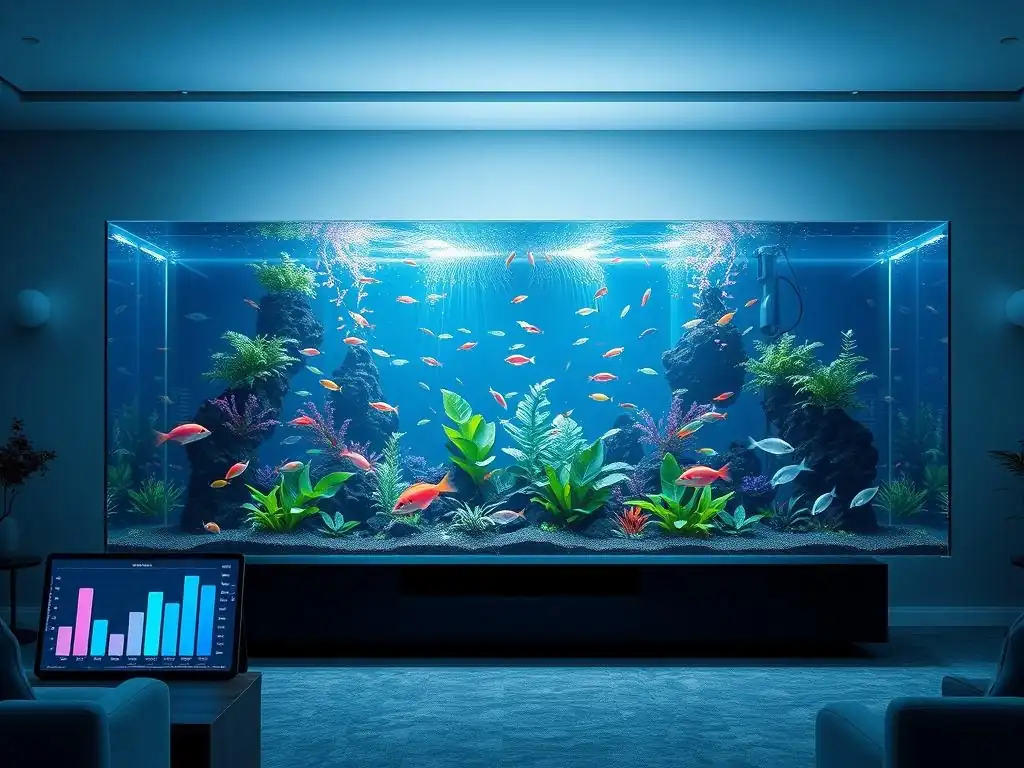
Welcome to Aquarium Mastery, where your underwater world comes to life!
Ever wished you could fine-tune your aquarium's lighting with the touch of a button? Dive in and explore our guide to Smart Aquarium Lighting Control, and discover how app-controlled illumination can revolutionize your aquatic setup. Curious about creating the perfect sunrise and sunset for your finned friends? Let's illuminate the possibilities!
- Understanding Smart Aquarium Lighting and its Benefits
- Setting Up Your Smart Aquarium Lighting System
- Mastering Smart Aquarium Lighting Control: Features and Customization
- Troubleshooting Common Smart Aquarium Lighting Issues
- Advanced Smart Aquarium Lighting Techniques
- Maintaining Your Smart Aquarium Lighting System
- Smart Aquarium Lighting: A Cost-Benefit Analysis
- Conclusion: The Future of Aquarium Lighting is Smart
-
Frequently Asked Questions
- How does smart aquarium lighting control benefit my fish?
- What types of lighting can be controlled with a smart aquarium lighting control system?
- Can I automate lighting schedules with smart aquarium lighting control?
- How do I choose the right smart aquarium lighting control system for my tank?
- What are some common troubleshooting tips for smart aquarium lighting control?
- Final Reflection: Illuminating the Future of Aquascaping
- Illuminate Your Aquarium Journey!
Understanding Smart Aquarium Lighting and its Benefits
What is Smart Aquarium Lighting? Definition for Enhanced Aquarium Management
Smart aquarium lighting refers to advanced illumination systems for aquariums that can be controlled and customized digitally, typically via a smartphone application or dedicated software. Unlike traditional on/off timers or basic dimmers, these systems offer precise control over light intensity, color spectrum, and duration, allowing aquarists to simulate natural light cycles and tailor conditions to specific aquatic inhabitants. This level of sophisticated smart aquarium lighting control transforms basic illumination into a powerful tool for environmental management within the tank.
These intelligent lighting solutions integrate microprocessors and wireless connectivity (like Wi-Fi or Bluetooth) to provide unprecedented flexibility. An aquarist can, for instance, program a gradual sunrise and sunset effect, mimic lunar cycles, or even replicate specific weather patterns such as cloud cover. This dynamic control significantly enhances aquarium management by allowing for real-time adjustments and pre-programmed routines that foster a more stable and natural environment for fish, invertebrates, and plants, reducing manual intervention and increasing overall system efficiency.
Advantages of App-Controlled Aquarium Lights for Fish & Plant Health
App-controlled aquarium lights offer significant advantages for the well-being of both aquatic flora and fauna by mimicking natural light conditions more accurately than conventional setups. For fish, a gradual transition from dark to light and back again, rather than abrupt on/off cycles, significantly reduces stress, leading to more natural behaviors and potentially improved immune responses. Studies on certain cichlid species, for example, have shown a reduction in timid behavior by up to 20% when exposed to a simulated sunrise/sunset cycle compared to sudden light changes.
For aquatic plants, precise smart aquarium lighting control over spectrum and intensity is crucial for optimal photosynthesis and growth. App-controlled systems allow aquarists to deliver the exact Photosynthetically Active Radiation (PAR) levels and specific wavelengths (e.g., red and blue light for chlorophyll production) needed for vigorous plant development, minimizing the risk of algae outbreaks often associated with imbalanced lighting. High-tech planted tanks utilizing such control can see plant growth rates increase by 15-25% compared to tanks with less sophisticated lighting, leading to lush, vibrant aquascapes and a healthier overall ecosystem due to enhanced nutrient uptake by the plants.
Key Features: Spectrum Control, Scheduling, and Connectivity
One of the most powerful features of smart aquarium lighting is its advanced spectrum control, which allows users to adjust individual color channels (e.g., red, green, blue, white, UV) to create a custom light blend. This capability is vital for supporting specific biological processes; for instance, a higher proportion of blue light (450-470 nm) is beneficial for coral coloration and growth in saltwater reefs, while a balanced full spectrum with peaks in red (630-660 nm) and blue is ideal for freshwater plant photosynthesis.
This granular control ensures that the light emitted perfectly matches the needs of the tank's inhabitants, leading to healthier growth and more vibrant displays.
Programmable scheduling is another core feature, enabling aquarists to automate daily light cycles that closely replicate natural day/night patterns, including sunrise, sunset, and even lunar phases. Users can set multiple on/off points, specify intensity ramps, and define color temperatures for different times of the day, all managed through an intuitive app interface.
Furthermore, the connectivity aspect, typically via Wi-Fi or Bluetooth, allows for seamless smart aquarium lighting control from a smartphone or tablet, often from anywhere in the world. This remote access not only provides convenience but also enables real-time adjustments and monitoring, making it easier to maintain optimal lighting conditions even when away from home.
Setting Up Your Smart Aquarium Lighting System
Choosing the Right Smart Aquarium Light for Your Tank
Selecting the appropriate smart aquarium light is a crucial first step, as the right fixture can significantly impact the health and aesthetics of your aquatic environment. Considerations include tank size, depth, the type of inhabitants (e.g., low-light plants, high-light corals), and your budget. For a standard 20-gallon planted tank, a fixture capable of delivering approximately 30-50 PAR at the substrate level might be sufficient, while a deep 120-gallon reef tank with demanding SPS corals could require fixtures producing over 200 PAR to ensure adequate light penetration.
Researching brands and models is essential, focusing on user reviews, the quality of the app interface, and the availability of features like advanced spectrum control and multiple customizable channels. Some popular brands known for their robust smart aquarium lighting control include Chihiros for planted tanks and Ecotech Marine Radions or AI Hydras for reef systems, each offering varying levels of sophistication and price points. Always ensure the chosen light's dimensions and mounting options are compatible with your specific aquarium setup to avoid future installation hurdles.
Considering PAR (Photosynthetically Active Radiation) for Planted Aquariums
For planted aquariums, PAR (Photosynthetically Active Radiation) is arguably the most critical metric when choosing a smart lighting system. PAR measures the amount of light in the spectral range of 400 to 700 nanometers that is available for photosynthesis, directly impacting plant growth. For low-light plants like Anubias or Java Fern, a PAR value of 15-30 µmol/m²/s at the substrate level is generally adequate. However, for medium-light plants such as Cryptocoryne species, 30-50 µmol/m²/s is often preferred, while demanding high-light plants like colorful Rotala species or carpeting plants often require 50-100+ µmol/m²/s.
Achieving the correct PAR distribution across the tank ensures uniform plant growth and prevents issues like leggy stems or stunted development. High-quality smart lights often provide PAR maps or specifications that indicate light intensity at various depths and distances, allowing aquarists to select a fixture that can deliver the target PAR values throughout their aquascape. This precise smart aquarium lighting control over PAR helps prevent algae by ensuring plants can effectively outcompete it for nutrients, leading to a healthier and more balanced planted tank ecosystem.
Selecting Spectrum and Color Temperature for Optimal Growth and Aesthetics
The spectrum and color temperature of your smart aquarium light play a dual role: supporting biological processes and enhancing the visual appeal of your tank. For freshwater planted aquariums, a full-spectrum light with peaks in blue (450-470nm) and red (630-660nm) wavelengths is ideal for chlorophyll absorption and robust plant growth. A color temperature around 6500K often provides a natural daylight look, making greens vibrant, but some aquarists prefer cooler temperatures (7000K-9000K) for a crisper, "whiter" appearance or warmer temperatures (4000K-5500K) to bring out red hues in plants.
In saltwater coral reef tanks, the spectrum is even more critical. Blue light in the 450-470nm range is essential for the photosynthesis of zooxanthellae (symbiotic algae within corals) and for enhancing coral fluorescence, making colors pop. Many reef aquarists use a combination of cool white (around 10,000K-14,000K) and heavy blue supplementation, often with actinic blue (420-440nm) or royal blue (450-460nm) channels. Advanced smart aquarium lighting control allows for fine-tuning these channels independently, enabling users to create specific "pop" settings for viewing and optimal growth spectrums for corals, preventing bleaching or inadequate growth often seen with imbalanced lighting.
Installation Guide: Mounting and Connecting Your Smart Light
Proper installation of your smart aquarium light is crucial for both functionality and safety. Most smart lights come with various mounting options, including tank-mount brackets that clip onto the rim, suspension kits for hanging from the ceiling, or adjustable legs that rest on the tank edges. When mounting, ensure the light is securely positioned and level to distribute light evenly across the tank surface. For tank-mounted fixtures, verify that the brackets are snug and stable, preventing accidental slippage, which could damage the light or tank.
Once physically mounted, the next step is connecting the light to its power source and, if applicable, any external controllers or hubs. Follow the manufacturer's instructions meticulously regarding power supply connections, ensuring all cables are routed neatly and securely to prevent tripping hazards or water exposure. Many smart lights use low-voltage DC power, but always confirm the correct voltage and amperage to avoid damaging the unit. This initial physical setup provides the stable foundation for successful smart aquarium lighting control through its app interface.
App Setup and Initial Configuration: Connecting to Wi-Fi and Setting Schedules
After physically installing your smart aquarium light, the next critical step is downloading its dedicated mobile application and initiating the setup process. Most smart lights connect via Wi-Fi, so ensure your home network is stable and within range of the fixture. The app will typically guide you through a pairing process, often involving putting the light into a "pairing mode" (e.g., by holding a button or cycling power) and then connecting to its temporary Wi-Fi network before integrating it into your main home network. This initial connection establishes the backbone for remote smart aquarium lighting control.
Once connected, the app will allow you to access the light's full range of features. The first configuration typically involves setting up a basic daily schedule, including the main on/off times and a gradual intensity ramp for sunrise and sunset. You can usually choose from pre-set programs designed for specific tank types (e.g., planted, reef, fish-only) or begin customizing your own. Test the basic schedule to ensure the light responds as expected, and verify that the time zone and daylight saving settings within the app are correct to prevent timing discrepancies.
Mastering Smart Aquarium Lighting Control: Features and Customization
Programmable Lighting Schedules: Simulating Natural Day/Night Cycles
Programmable lighting schedules are the cornerstone of effective smart aquarium lighting control, allowing aquarists to meticulously replicate the natural photoperiods found in aquatic environments. Instead of abrupt on/off transitions, these systems facilitate gradual sunrise and sunset effects, typically ramping up intensity over 30-90 minutes in the morning and similarly dimming down in the evening. This gentle change significantly reduces stress on fish, preventing the "startle" response often observed with sudden light changes, and encourages more natural behaviors like spawning or foraging.
Beyond the basic day/night cycle, advanced scheduling features allow for the inclusion of lunar cycles, where a very low intensity blue light might simulate moonlight during nocturnal hours, providing ambient light for nocturnal species without disrupting the rest cycle of diurnal inhabitants. Some systems also permit mid-day "siesta" periods, where light intensity is briefly reduced, which can help mitigate algae growth in planted tanks by breaking up the continuous photosynthetic period. This level of precise scheduling flexibility ensures that the aquarium environment is constantly optimized for its inhabitants' biological rhythms.
Fine-Tuning Light Intensity and Color Spectrum for Different Aquarium Types
One of the most powerful aspects of smart aquarium lighting control is the ability to fine-tune both light intensity and color spectrum, tailoring the output precisely to the unique requirements of different aquarium types. This granular control allows aquarists to provide the exact Photosynthetically Active Radiation (PAR) levels and specific wavelengths needed for optimal growth and coloration, whether for freshwater plants, saltwater corals, or simply enhancing the visual appeal of a fish-only tank.
For instance, a beginner planted tank might thrive with a balanced spectrum around 6500K and moderate intensity, whereas a high-tech reef tank requires intense blue light for coral fluorescence and growth. The ability to adjust individual color channels (e.g., red, green, blue, white, UV) independently means you can create a custom light recipe that promotes specific biological processes and brings out the natural vibrancy of your aquatic inhabitants without guesswork. This level of customization ensures that light is a dynamic tool rather than a static fixture.
Optimizing Lighting for Freshwater Planted Tanks
Optimizing lighting for freshwater planted tanks using smart control involves balancing intensity, spectrum, and duration to promote robust plant growth while minimizing algae. For most planted tanks, a full spectrum light is ideal, with an emphasis on red (around 630-660 nm) and blue (around 450-470 nm) wavelengths, which are crucial for chlorophyll absorption. A common strategy is to run the main light cycle for 8-10 hours, with a gradual sunrise and sunset period of 60-90 minutes each. For example, a 60-gallon planted tank with demanding stem plants might aim for a peak PAR of 60-80 µmol/m²/s at the substrate.
Through smart aquarium lighting control, aquarists can program specific light recipes. For a tank with a mix of red and green plants, one might increase the red and green channels slightly during peak viewing hours to enhance coloration, while maintaining a balanced spectrum for the rest of the day. If algae begin to appear, the intensity can be slightly reduced, or the photoperiod shortened by an hour or two, demonstrating the flexibility to respond to tank conditions without needing to manually adjust the fixture itself.
Perfecting Lighting for Saltwater Coral Reef Tanks
Perfecting lighting for saltwater coral reef tanks with smart systems requires a deep understanding of coral biology and light requirements, as different coral types have varying needs. Small Polyp Stony (SPS) corals, such as Acropora and Montipora, demand high PAR levels, often exceeding 200 µmol/m²/s at the coral's surface, with a heavy emphasis on blue wavelengths (450-470 nm) for zooxanthellae photosynthesis and vibrant coloration. Large Polyp Stony (LPS) corals like Euphyllia and Favia are typically less demanding, thriving with PAR values between 50-150 µmol/m²/s.
A common approach for reef tanks is to program a "blue-dominant" spectrum for the majority of the day, often with a color temperature ranging from 14,000K to 20,000K, and then introduce white light for 4-6 hours during peak viewing. For example, a schedule might start with a 90-minute blue ramp-up, followed by 5 hours of a mixed blue/white spectrum, then 90 minutes of blue dim-down, and finally a few hours of very low intensity moonlight.
This precise smart aquarium lighting control allows reefers to encourage optimal coral growth, enhance fluorescence, and prevent issues like bleaching or browning by carefully managing the light intensity and spectrum throughout the day.
Weather Simulation: Creating Realistic Sunrise, Sunset, and Cloud Effects
Weather simulation is an advanced feature found in many smart aquarium lighting systems that adds a dynamic and realistic dimension to the aquatic environment. Beyond simple sunrise and sunset ramps, these systems can mimic more complex natural phenomena like rolling clouds, lightning storms, or even lunar phases. Cloud effects are typically achieved by randomly and gradually dimming and brightening the lights across the spectrum, creating fleeting shadows and varying light levels that replicate a cloudy day passing overhead.
This capability not only enhances the aesthetic appeal of the aquarium but can also provide subtle environmental enrichment for the inhabitants. While the impact on fish and plant biology is less understood than regular light cycles, the visual effect for the aquarist is undeniably captivating. Some high-end smart aquarium lighting control apps allow users to customize the frequency and intensity of these weather effects, ensuring they are subtle enough not to stress inhabitants but present enough to add visual interest, making the aquarium feel more alive and connected to nature.
Monitoring and Adjusting Lighting Parameters: Data-Driven Aquarium Care
Many advanced smart aquarium lighting systems offer robust monitoring capabilities, allowing aquarists to track and review lighting parameters over time. This data-driven approach moves beyond simple scheduling to provide insights into the actual light exposure received by the tank's inhabitants. Some systems can log daily light intensity, spectrum usage, and even energy consumption, which can be invaluable for diagnosing issues or optimizing performance.
For instance, if a planted tank is experiencing slow growth, reviewing the light logs might reveal that the PAR levels are consistently lower than optimal, prompting an adjustment to intensity or photoperiod. Similarly, in a reef tank, if corals are showing signs of stress, the data can help confirm if they are receiving too much or too little light. The ability to monitor and make precise, data-informed adjustments through smart aquarium lighting control transforms aquarium keeping from guesswork into a more scientific and predictable endeavor, leading to healthier and more stable aquatic ecosystems.
Troubleshooting Common Smart Aquarium Lighting Issues
Connectivity Problems: Resolving Wi-Fi and App Issues
Connectivity problems are among the most common issues encountered with smart aquarium lighting systems, often manifesting as the light not responding to app commands or failing to connect to the home Wi-Fi network. The first step in troubleshooting is to ensure the light is within range of your Wi-Fi router and that the signal strength is adequate; obstructions like thick walls or other electronics can interfere. Restarting both the smart light (by unplugging and re-plugging) and your Wi-Fi router can often resolve temporary network glitches.
If the issue persists, verify that your smartphone or tablet is connected to the correct Wi-Fi network (2.4 GHz is typically required for most smart devices, not 5 GHz). Check if the light's firmware or the app itself requires an update, as outdated software can lead to compatibility issues. If all else fails, a factory reset of the smart light, followed by re-pairing it with the app and Wi-Fi, often resolves persistent connectivity issues, allowing you to regain smart aquarium lighting control. Consult the manufacturer's specific instructions for reset procedures.
Light Malfunctions: Identifying and Addressing Hardware Problems
Hardware malfunctions in smart aquarium lighting can range from individual LEDs failing to the entire unit not powering on. If a section of LEDs stops working, it could indicate a localized circuit issue or a burnt-out diode. While some advanced users might attempt component-level repairs, for most, this signals a need for professional repair or replacement, especially if the unit is still under warranty. Check for any visible signs of damage, such as corrosion on connectors or frayed wires, which could indicate water ingress or physical stress.
If the entire light fails to power on, first verify the power source: ensure the outlet is working, the power adapter is securely plugged in, and any inline switches are in the "on" position. Test the power adapter with another compatible device if possible to rule out a faulty adapter.
Overheating can also cause a light to shut down; ensure the cooling fins are clear of dust and debris and that the fan (if present) is operational. Persistent hardware issues, particularly those that aren't power-related, generally require contacting the manufacturer's support for warranty claims or repair options, as internal components are not typically user-serviceable without voiding the warranty.
Algae Blooms: Adjusting Lighting to Prevent Unwanted Growth
Algae blooms are a common frustration in aquariums, and often, improper lighting is a primary culprit. If you observe an increase in green or brown algae, your smart aquarium lighting settings might be providing too much intensity, an imbalanced spectrum, or an excessively long photoperiod. For instance, too much red light can fuel green hair algae, while excessive blue light might encourage cyanobacteria in saltwater tanks. A common misconception is that more light is always better for plants; however, excess light without sufficient CO2 and nutrients will simply lead to algae outcompeting the plants.
To combat algae with smart aquarium lighting control, begin by reducing the light intensity by 10-20% and shortening the photoperiod to 6-8 hours for a week or two. For planted tanks, ensure you are providing adequate CO2 and macronutrients (Nitrogen, Phosphorus, Potassium) to allow plants to effectively utilize the light. In reef tanks, excessive light can stress corals and lead to browning or bleaching; reducing intensity or adjusting the blue-to-white ratio can help. Gradually reintroduce light intensity and duration while monitoring the algae's response, finding the sweet spot where plants or corals thrive without fueling unwanted algal growth.
Advanced Smart Aquarium Lighting Techniques
Integrating Smart Lighting with Other Aquarium Automation Systems
Integrating smart lighting with other aquarium automation systems unlocks a new level of environmental control and efficiency. Many high-end smart lights are designed to communicate with central aquarium controllers, such as Neptune Systems Apex or GHL Profilux. This integration allows for synchronized actions; for example, when the light dims for the "moonlight" phase, the controller might simultaneously reduce the flow of a powerhead to simulate calmer night-time currents, or turn off the CO2 system in a planted tank during the dark period.
This interconnectedness provides a holistic approach to aquarium management. For instance, a controller might monitor water temperature; if it rises above a set threshold, the smart aquarium lighting control could be programmed to dim automatically to reduce heat input from the lights, preventing overheating. Similarly, linking to water parameter monitoring systems could trigger alerts or adjustments if, for example, a high nitrate reading suggests a need to reduce light intensity to curb algae growth. This seamless communication creates a truly automated and responsive aquatic ecosystem.
Linking Lighting to CO2 Systems for Optimal Plant Growth
For high-tech planted aquariums, linking smart lighting to CO2 systems is a cornerstone of optimal plant growth and algae prevention. Plants require CO2 for photosynthesis, and their uptake rates are directly proportional to light intensity. Therefore, the CO2 system should only be active when the lights are on and delivering sufficient PAR.
With smart aquarium lighting control, you can program your CO2 solenoid to turn on 30-60 minutes before the lights reach their peak intensity and turn off 30-60 minutes before the lights completely dim for the night. This ensures CO2 levels are stable and available when plants can utilize them most effectively, preventing harmful pH swings for fish and maximizing plant health.
Some advanced controllers even allow for more nuanced integration, where a pH probe can dynamically adjust CO2 injection based on the water's acidity, while also considering the current light intensity. This ensures that CO2 levels remain within a safe range (e.g., pH drop of 0.8-1.0 from baseline) and are always sufficient to prevent carbon limitation under high light. This synergistic approach drastically reduces the risk of algae blooms caused by insufficient CO2 during high light periods, leading to significantly healthier and more vigorous plant growth.
Connecting Lighting to Water Parameter Monitoring for Real-Time Adjustments
Connecting smart aquarium lighting to water parameter monitoring systems provides a powerful layer of real-time, responsive aquarium care. Advanced monitoring devices can track crucial parameters like pH, temperature, alkalinity, and even specific nutrient levels (e.g., nitrates, phosphates). When integrated with smart aquarium lighting control, these systems can trigger automated adjustments based on deviations from ideal conditions. For example, if a pH probe detects a sudden drop, indicating a potential CO2 overdose or system malfunction, the lighting system could be programmed to dim or shut off temporarily, reducing plant photosynthesis and thus CO2 consumption, thereby helping to stabilize the pH.
Similarly, if a nitrate sensor detects an unexpected spike, which often correlates with potential algae issues, the lighting system could automatically reduce its intensity or shorten the photoperiod to curb future algae growth. While full automation is still evolving, the ability to receive alerts and make immediate, data-driven adjustments to lighting based on real-time water chemistry provides aquarists with an unprecedented level of control and proactive problem-solving, significantly enhancing the stability and health of complex aquatic environments.
Creating Customized Lighting Presets for Different Aquarium Scenarios
Creating customized lighting presets is a powerful feature of smart aquarium lighting control that allows aquarists to quickly switch between different illumination profiles for various scenarios. Instead of manually adjusting individual channels every time, a preset captures a specific combination of intensity, spectrum, and duration. For example, you might create a "Photo Mode" preset that maximizes blues and whites for vibrant coral or fish photography, or a "Viewing Mode" that enhances certain colors for aesthetic appreciation during the evening.
Another practical application is a "Maintenance Mode" preset, which could set the lights to a low, neutral white spectrum (e.g., 5000K at 10% intensity) for 30-60 minutes. This provides enough light for cleaning, feeding, or performing water changes without dazzling your eyes or stressing the inhabitants with full brightness. These presets save time, ensure consistency, and allow aquarists to optimize their tank's appearance and conditions with a single tap, adapting the lighting to specific needs throughout the day or week.
The ability to share and import lighting profiles is an increasingly popular feature in the smart aquarium lighting community, fostering collaboration and simplifying setup for new users. Many manufacturers or app platforms allow aquarists to export their meticulously crafted lighting schedules and spectrum settings as a downloadable file or unique code. This means a reef aquarist who has perfected a schedule for SPS corals in a 50-gallon tank could share their "SPS Growth Profile" with another user who has a similar setup.
Conversely, new users or those looking to try different approaches can import these shared profiles directly into their own smart aquarium lighting control app. This eliminates the steep learning curve of programming from scratch and provides a proven starting point, which can then be fine-tuned to their specific tank conditions and preferences. This feature builds a valuable knowledge base within the community, allowing aquarists to leverage collective experience for optimal lighting outcomes and accelerate their learning process.
Maintaining Your Smart Aquarium Lighting System
Cleaning and Maintenance Tips for Long-Term Performance
Regular cleaning and maintenance are essential for ensuring the long-term performance and efficiency of your smart aquarium lighting system. Dust, salt creep (in saltwater tanks), and mineral deposits can accumulate on the light's lenses or LED array, significantly reducing light output and potentially causing hotspots or uneven illumination. It's recommended to gently wipe the lens with a soft, lint-free cloth dampened with distilled water or a mild glass cleaner specifically designed for acrylic or polycarbonate surfaces at least once a month. Avoid abrasive cleaners that can scratch the lens.
For fixtures with cooling fans, regularly check that the vents are clear of dust and debris, as restricted airflow can lead to overheating and reduced LED lifespan. In saltwater environments, inspect the housing for salt creep buildup, especially around seams and electrical connections, which can cause corrosion over time. A small brush or cotton swab can be used to carefully remove deposits. Adhering to these simple cleaning routines will ensure your smart aquarium lighting control system continues to deliver optimal light output and maintains its aesthetic appeal for years.
Software Updates: Keeping Your Smart Light Up-To-Date
Keeping your smart aquarium light's software (firmware) up-to-date is crucial for optimal performance, security, and access to new features. Manufacturers frequently release updates that address bugs, improve stability, enhance existing functionalities, or introduce entirely new capabilities like additional weather simulations or improved spectrum profiles. These updates are typically delivered wirelessly through the dedicated mobile application.
It is advisable to check for and install available updates regularly, usually prompted directly within the app. Before initiating an update, ensure your light has a stable power connection and your device has sufficient battery life to prevent interruptions that could corrupt the firmware. Neglecting updates can lead to connectivity issues, reduced performance, or even security vulnerabilities, hindering your ability to fully utilize smart aquarium lighting control and potentially impacting the health of your aquarium.
Bulb Replacement and Longevity
Unlike traditional fluorescent or incandescent bulbs, smart aquarium lights predominantly use LEDs (Light Emitting Diodes), which boast significantly longer lifespans. While conventional bulbs might last 6-12 months, high-quality LEDs are typically rated for 50,000 to 70,000 hours of operation, equating to 5-7 years of continuous use at 10-12 hours per day. This means that "bulb replacement" as a routine maintenance task is largely obsolete for most smart LED fixtures.
However, over time, individual LED diodes can degrade, leading to a phenomenon known as "lumen depreciation," where the light output gradually diminishes. This process is slow and often imperceptible to the naked eye until a significant drop occurs (e.g., 30% reduction). For high-demand setups like reef tanks, some aquarists might consider replacing their fixture or individual LED clusters (if serviceable) after 3-5 years to ensure optimal PAR output.
For less demanding tanks, the light may perform adequately for even longer. Monitoring light output with a PAR meter can help determine when replacement is truly necessary, ensuring your smart aquarium lighting control continues to provide sufficient light.
Smart Aquarium Lighting: A Cost-Benefit Analysis
Initial Investment vs. Long-Term Savings and Benefits
The initial investment in smart aquarium lighting systems is undeniably higher than traditional fluorescent or basic LED fixtures. A high-quality smart light can range from $200 to over $1000, depending on tank size, features, and brand, whereas a basic LED strip might cost $50-$150. However, this upfront cost is often offset by significant long-term savings and benefits that accrue over the lifespan of the product.
One major saving comes from energy efficiency. Smart LEDs consume considerably less power than older technologies like metal halides or T5/T8 fluorescents, leading to lower electricity bills. For example, replacing a 400W metal halide fixture with a 150W smart LED could save hundreds of dollars annually in energy costs.
Furthermore, the extended lifespan of LEDs (50,000+ hours) drastically reduces bulb replacement costs, which can be substantial for traditional setups. Beyond financial savings, the enhanced health of fish, corals, and plants due to precise smart aquarium lighting control translates into fewer losses, reduced medication costs, and a more stable, beautiful aquarium, offering invaluable intangible benefits.
Comparing Different Smart Aquarium Lighting Brands and Models
When comparing different smart aquarium lighting brands and models, aquarists should consider several key factors beyond just price. The quality and spectrum of the LEDs are paramount; look for fixtures that use reputable LED chips (e.g., Cree, Osram, Samsung) and offer a full, customizable spectrum suitable for your tank type (e.g., high blue for reef, balanced white/red/blue for planted). The user interface of the mobile app is also critical; an intuitive, stable, and feature-rich app (e.g., Chihiros, Kessil, Ecotech Marine, AI, GHL) will significantly enhance the user experience and ease of smart aquarium lighting control.
Heat dissipation is another important aspect, as efficient cooling prolongs LED lifespan; look for robust heatsinks and quiet, effective fans if present. Warranty and customer support should not be overlooked, as these systems are a significant investment. Finally, consider connectivity options (Wi-Fi vs. Bluetooth), integration capabilities with other smart aquarium devices, and the availability of community support or shared lighting profiles. Researching detailed reviews and comparing PAR maps for different models can help make an informed decision tailored to specific aquarium needs.
Case Studies: Demonstrating Smart Lighting Success
Numerous real-world case studies demonstrate the transformative impact of smart aquarium lighting on tank health and aesthetics. For instance, a 75-gallon freshwater planted tank struggling with stunted growth and persistent green spot algae under basic LED strips saw remarkable improvement after upgrading to a smart lighting system. By precisely controlling the PAR to 60 µmol/m²/s at the substrate and programming a 9-hour photoperiod with a 6500K spectrum, the aquarist observed a 25% increase in plant growth rate within two months and a significant reduction in algae due to balanced light and nutrient uptake.
In another example, a 180-gallon mixed reef tank experienced improved coral coloration and growth after switching from older T5HO fixtures to app-controlled LED units. The ability to fine-tune the blue spectrum (450-470nm) and gradually ramp up intensity to 200+ PAR for SPS corals resulted in noticeably brighter fluorescence in various Acropora species within three months, alongside an average of 1 cm per month growth in key colonies. These examples highlight how precise smart aquarium lighting control allows aquarists to unlock the full potential of their aquatic ecosystems, leading to more vibrant and thriving tanks.
Conclusion: The Future of Aquarium Lighting is Smart
Embracing Technology for Healthier and More Beautiful Aquariums
Embracing smart aquarium lighting technology represents a significant leap forward in the hobby, moving beyond static illumination to dynamic, responsive, and highly customizable environments. The ability to precisely control light intensity, spectrum, and duration through intuitive smartphone applications empowers aquarists to mimic natural conditions with unprecedented accuracy. This leads to healthier fish that exhibit more natural behaviors, thriving plants with vibrant coloration, and corals that display optimal growth and fluorescence, far surpassing what was achievable with traditional lighting methods.
The continuous innovation in smart aquarium lighting control promises even more sophisticated features, such as AI-driven adjustments based on real-time tank parameters or even more seamless integration with other smart home devices. By investing in and utilizing these advanced systems, aquarists are not only enhancing the well-being and beauty of their aquatic ecosystems but also embracing a future where aquarium keeping is more efficient, less prone to common issues, and ultimately, more rewarding for hobbyists of all levels.
Frequently Asked Questions
How does smart aquarium lighting control benefit my fish?
Smart lighting allows for precise control over light spectrum and intensity, mimicking natural conditions. This promotes better fish health and coloration and can reduce stress.
What types of lighting can be controlled with a smart aquarium lighting control system?
Most systems can control LED fixtures, which are increasingly popular due to their energy efficiency and programmability. Some systems also support dimmable fluorescent lighting.
Can I automate lighting schedules with smart aquarium lighting control?
Absolutely! One of the key benefits is the ability to create customized lighting schedules. This can simulate sunrise and sunset, crucial for plant growth and fish well-being.
How do I choose the right smart aquarium lighting control system for my tank?
Consider your aquarium size, the types of plants and animals you keep, and your budget. Look for systems with good reviews, reliable apps, and comprehensive features.
What are some common troubleshooting tips for smart aquarium lighting control?
Check your Wi-Fi connection first if the app isn't working. Also, ensure the lighting fixture is compatible with the control system and properly connected.
Final Reflection: Illuminating the Future of Aquascaping
The journey from basic aquarium lighting to smart aquarium lighting control reflects a broader trend of technological integration into every facet of our lives, even our hobbies. What was once a simple on/off switch is now a sophisticated system capable of mimicking natural light cycles, optimizing plant growth, and enhancing the vibrant colors of our aquatic ecosystems. This evolution underscores our increasing desire for precision, control, and a deeper connection with the natural world, even within the confines of a glass tank.
This shift towards smart aquarium lighting isn't just about convenience; it's about fostering healthier and more sustainable aquatic environments. It's about understanding the delicate balance of light, life, and technology, and using that knowledge to create thriving underwater landscapes. In the end, we will conserve only what we love; we will love only what we understand; and we will understand only what we are taught.
- Baba Dioum. This quote resonates deeply, highlighting the importance of understanding the needs of our aquatic inhabitants and leveraging technology to meet those needs responsibly.
As you consider the possibilities of smart aquarium lighting, I encourage you to reflect on the broader implications of technological advancement in our relationship with nature. How can we use these tools not just to control, but to truly understand and appreciate the delicate ecosystems we strive to recreate? Let the light within your aquarium be a beacon, illuminating a path towards a more sustainable and harmonious future for all.
Illuminate Your Aquarium Journey!
Thank you for diving into the world of smart aquarium lighting! We hope you've gained valuable insights into creating the perfect aquatic environment for your finned friends. Now, let's take those insights and turn them into action.
Here are a few things you can do next:
- Plan your dream lighting setup: Take time to sketch out your ideal aquarium lighting scheme, considering the specific needs of your plants and fish.
- Share your lighting plans! Post a picture of your aquarium's existing setup in the comments, alongside a description of what lighting changes you're planning to make.
- Explore lesser-known aquatic plants: Research a new, fascinating aquatic plant that thrives under specific light conditions and consider adding it to your tank!
What's one small lighting adjustment you're excited to make that could significantly improve your aquarium's health and beauty?