
Filtration for Angelfish: Ensuring Crystal Clear Water & Healthy Fish

Welcome to Aquarium Mastery!
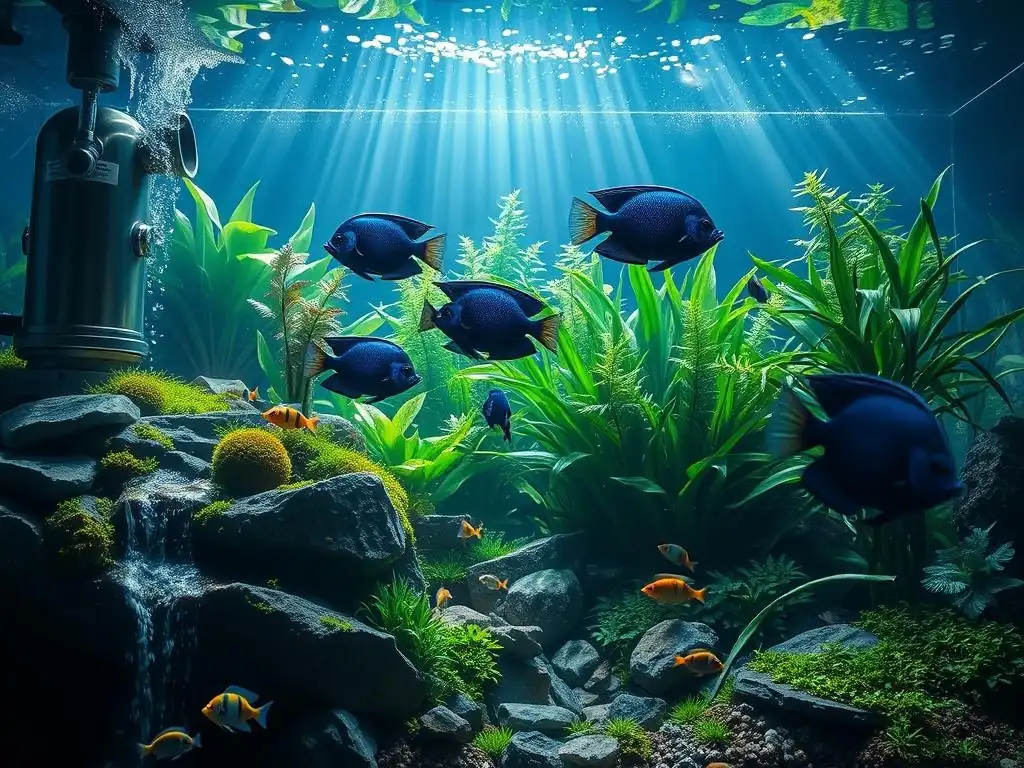
Ever wondered how to achieve that perfectly pristine, crystal-clear water your Angelfish deserve? We're diving deep into the essentials of Angelfish tank filter setup, unraveling the secrets to a thriving aquatic environment. Get ready to unlock the key to happy, healthy Angelfish and a dazzling aquarium! Let's explore...
- Understanding the Importance of Angelfish Tank Filter Setup
- Selecting the Right Angelfish Tank Filter: A Comprehensive Guide
- Setting Up Your Angelfish Tank Filter: A Step-by-Step Guide
- Maintaining Your Angelfish Tank Filter for Long-Term Performance
- Troubleshooting Common Angelfish Tank Filter Problems
- Optimizing Angelfish Tank Filtration for Breeding
- Choosing the Best Filter Media for Angelfish: A Detailed Look
- Angelfish Tank Filter Setup: Avoiding Common Mistakes
- Conclusion: Ensuring a Healthy Environment for Your Angelfish with Proper Filtration
-
Frequently Asked Questions
- How crucial is proper filtration for Angelfish in an aquarium setting?
- What type of filter is generally recommended for an Angelfish tank filter setup?
- What filter media should I prioritize for an Angelfish tank filter setup?
- How often should I clean or maintain my Angelfish tank filter?
- Can an inadequate filter setup negatively impact my Angelfish's health?
- Final Reflection: The Clarity of Care
- Transform Your Angelfish Tank Today!
Understanding the Importance of Angelfish Tank Filter Setup
Why Proper Filtration is Crucial for Angelfish Health
Angelfish (Pterophyllum scalare), renowned for their elegant appearance and flowing fins, are particularly sensitive to water quality fluctuations. Unlike some hardier species, angelfish are highly susceptible to stress and disease when exposed to even low levels of ammonia or nitrite. Poor filtration can quickly lead to deteriorated water conditions, manifesting as fin rot, bacterial infections, or systemic stress that weakens their immune system, making them vulnerable to common aquarium ailments like Ich. A robust filtration system is the cornerstone of their well-being, directly impacting their longevity and vibrant coloration.
Maintaining consistent water parameters through effective filtration prevents the accumulation of harmful toxins that can burn gills and damage delicate tissues. For instance, a persistent ammonia level of just 0.5 ppm can cause irreversible gill damage and significantly shorten an angelfish's lifespan, whereas zero ammonia and nitrite are essential for their health. Proper filtration, therefore, acts as a continuous life support system, safeguarding these show fish from the invisible threats lurking in an unmanaged aquatic environment.
The Role of Angelfish Filtration in Maintaining Water Quality
The primary role of angelfish filtration is to facilitate the nitrogen cycle, a biological process that converts toxic fish waste into less harmful substances. This involves mechanical removal of solid particles, biological conversion of ammonia and nitrites by beneficial bacteria, and sometimes chemical absorption of dissolved impurities. Without adequate filtration, uneaten food and fish excretions rapidly break down, releasing ammonia, which is highly toxic to angelfish.
A well-designed angelfish tank filter setup actively processes these compounds. For example, a healthy biological filter in a 55-gallon angelfish tank can effectively process the daily ammonia output from 4-6 adult angelfish, ensuring that ammonia and nitrite levels remain at zero parts per million (ppm).
Beyond biological processing, mechanical filtration keeps the water clear by removing particulate matter, which not only enhances visual appeal but also reduces the organic load that would otherwise decompose and contribute to toxins. Chemical filtration, when used, further polishes the water by removing odors and discolorations, creating a pristine habitat that minimizes stress for these sensitive fish.
Selecting the Right Angelfish Tank Filter: A Comprehensive Guide
Types of Aquarium Filters Suitable for Angelfish Tanks
Hang-On-Back (HOB) Filters for Angelfish: Pros and Cons
Hang-on-back (HOB) filters are a popular choice for many aquarists due to their ease of installation and maintenance. They typically offer mechanical, chemical, and some biological filtration, making them a versatile option for angelfish tanks ranging from 20 to 55 gallons. Their design allows for convenient media replacement and quick access for cleaning, which is beneficial for maintaining crystal clear water and reducing the bioload in a busy angelfish environment. Many models, such as the AquaClear series, offer customizable media baskets, allowing aquarists to tailor the filtration to their specific needs.
However, HOB filters have limitations. Their relatively small media volume means less space for biological filtration compared to canister filters, potentially requiring more frequent maintenance or a lighter stocking density for angelfish. They can also create significant surface agitation, which might be stressful for angelfish that prefer calmer waters. While some HOBs offer adjustable flow, a powerful model on a smaller tank (e.g., a 70 GPH HOB on a 20-gallon angelfish tank) might still create too much current, leading to clamped fins and hiding behavior in the fish.
Canister Filters for Angelfish Aquariums: When to Choose Them
Canister filters are generally considered the most powerful and versatile filtration option, making them an excellent choice for larger angelfish aquariums, typically 55 gallons and above, or heavily stocked tanks. Their sealed design allows for a much larger volume of filter media, providing superior mechanical, biological, and chemical filtration capacities. This robust filtration ensures highly stable water parameters and crystal clear water, which is paramount for the health and longevity of angelfish.
The advantages of canister filters for angelfish are numerous. They operate very quietly as they sit outside the tank, and their customizable media trays allow for precise layering of various media types, from coarse sponges to highly porous biological rings. Maintenance is less frequent, often only every 3-6 months, compared to weekly or bi-weekly for HOB filters. For example, an Eheim Classic 600 (2217) canister filter on a 75-gallon angelfish tank can provide comprehensive filtration for 6-8 adult angelfish, effectively managing their bioload and maintaining consistent water quality over extended periods.
Sponge Filters for Angelfish: Ideal for Breeding Tanks and Fry
Sponge filters are simple, air-driven filters that excel in providing gentle biological and mechanical filtration. They are particularly ideal for angelfish breeding tanks, fry grow-out tanks, and quarantine tanks due to their unique benefits. The slow, gentle current produced by a sponge filter prevents delicate angelfish fry from being sucked into the filter intake, a common concern with more powerful filtration systems. Furthermore, their large surface area provides an excellent substrate for beneficial bacteria, crucial for processing the high bioload of rapidly growing fry.
These filters are also very cost-effective and easy to maintain. They are commonly used as supplemental filtration in larger angelfish display tanks to boost biological capacity or as the sole filtration in smaller setups like a 10-gallon angelfish fry tank. A single large sponge filter can effectively manage the waste from over 100 angelfish fry, ensuring ammonia and nitrite remain at zero ppm, which is critical for their survival and development. Their simplicity and safety make them indispensable for dedicated angelfish breeders.
Undergravel Filters: Why They Are Generally Not Recommended for Angelfish
Undergravel filters (UGFs) work by drawing water down through the substrate, effectively turning the gravel bed into a large biological filter. While once popular, they are generally not recommended for angelfish tank filter setup due to several significant drawbacks that can negatively impact these sensitive fish. The primary issue is their tendency to trap detritus, uneaten food, and fish waste beneath the filter plates, leading to the formation of anaerobic pockets over time. These pockets can release toxic hydrogen sulfide gas, which is highly detrimental to angelfish health.
Furthermore, UGFs are notoriously difficult to clean thoroughly without dismantling the entire aquarium, which causes significant stress to angelfish and disrupts the beneficial bacterial colonies. The buildup of organic matter under the plates contributes to steadily rising nitrate levels, which, while less toxic than ammonia, can still stress angelfish at concentrations above 20 ppm. Many experienced angelfish keepers avoid UGFs entirely, opting for more efficient and easier-to-maintain external filters that provide better water clarity and stability without the risk of accumulated toxins.
Angelfish Tank Filter Size: Calculating GPH (Gallons Per Hour)
Determining the appropriate filter size for an angelfish tank involves calculating the Gallons Per Hour (GPH) rating needed to adequately circulate and filter the water. A general rule of thumb for most freshwater aquariums is to select a filter that can process the entire tank volume 4-6 times per hour.
However, for angelfish, which prefer calmer water, a slightly lower turnover rate of 3-5 times per hour is often more suitable. For instance, a 55-gallon angelfish tank would ideally benefit from a filter with a GPH rating between 165 GPH (55 gallons x 3) and 275 GPH (55 gallons x 5).
It's crucial to remember that a filter's advertised GPH rating is often its maximum flow under ideal conditions, without any filter media or tubing restrictions. The actual flow rate in a fully operational angelfish tank filter setup will be lower. Therefore, it is often advisable to select a filter with a slightly higher GPH rating than your calculated minimum, especially if it features an adjustable flow rate. Over-filtering slightly with an adjustable filter provides a buffer and ensures robust water movement without creating excessive current that could stress your angelfish.
Essential Features to Look for in an Angelfish Filter
Adjustable Flow Rate: Minimizing Stress for Angelfish
An adjustable flow rate is a highly beneficial feature for any angelfish tank filter setup. Angelfish are known to prefer calm, slow-moving water, unlike many other active aquarium inhabitants. A strong, turbulent current can cause significant stress, leading to behaviors such as clamped fins, difficulty swimming, hiding, and even reduced appetite. The ability to control the water flow allows aquarists to create an environment that mimics their natural slow-moving habitat, promoting comfort and reducing anxiety.
Many modern Hang-On-Back (HOB) and canister filters offer adjustable flow mechanisms, ranging from simple dials on HOBs to multi-stage flow controls on advanced canister units. For example, a canister filter with a maximum flow of 300 GPH might be too powerful for a 50-gallon angelfish tank if run at full capacity. However, if it can be dialed down to 180-200 GPH, it provides excellent biological and mechanical filtration without creating an overwhelming current, thus ensuring a serene environment for your angelfish.
Biological Filtration Capacity: Crucial for Angelfish Waste Management
Biological filtration is the cornerstone of a healthy angelfish aquarium, as it is responsible for breaking down highly toxic ammonia and nitrites into less harmful nitrates through the process of the nitrogen cycle. This process relies on beneficial nitrifying bacteria (Nitrosomonas and Nitrobacter) that colonize porous surfaces within the filter media. A filter with ample biological filtration capacity ensures that these bacteria have sufficient surface area to thrive, effectively processing the bioload produced by angelfish.
Angelfish, especially adults, produce a considerable amount of waste, making robust biological filtration non-negotiable. Filters designed with large media baskets, such as canister filters, or those with dedicated bio-wheels/bio-sponges, offer superior biological capacity. For instance, a canister filter packed with 2-3 liters of high-quality ceramic rings or bio-balls can effectively manage the waste from a group of 6-8 adult angelfish in a 75-gallon tank, preventing dangerous ammonia or nitrite spikes that can be lethal at concentrations as low as 0.25 ppm.
Mechanical Filtration: Removing Particulate Matter for Clear Water
Mechanical filtration is the physical removal of solid waste particles from the water column, including uneaten food, fish waste, and plant debris. This process is essential for maintaining crystal clear water in an angelfish tank, which not only enhances the aesthetic appeal but also contributes to the overall health of the fish by reducing the amount of decaying organic matter that can pollute the water. Without effective mechanical filtration, these particles would break down, adding to the ammonia load and clouding the water.
Common mechanical filter media include filter floss, sponges, and coarse filter pads, each designed to trap particles of varying sizes. Regular cleaning or replacement of these media (e.g., weekly or bi-weekly depending on tank bioload) is vital to prevent clogging and maintain optimal water flow through the filter. For example, in a densely planted angelfish tank, filter floss might need to be rinsed or replaced more frequently due to the accumulation of decaying plant matter, ensuring the water remains pristine and the filter operates at peak efficiency.
Chemical Filtration: Utilizing Activated Carbon and Other Media
Chemical filtration involves the use of specialized media to remove dissolved organic compounds, odors, discolorations, and specific toxins from the aquarium water. Activated carbon is the most widely used chemical filter media, highly effective at adsorbing a broad range of impurities that mechanical and biological filtration cannot remove. While not always necessary for continuous operation in a well-maintained angelfish tank, chemical filtration can be invaluable for specific situations.
For angelfish, activated carbon can be particularly useful for "polishing" the water, removing any lingering yellowing or odors, and ensuring the water remains optically clear. It is also highly effective at removing medications after a treatment period or neutralizing residual chlorine/chloramine if tap water is used for water changes.
Activated carbon typically becomes saturated and ineffective after 3-4 weeks, at which point it should be replaced to prevent it from potentially leaching absorbed compounds back into the water. Other chemical media, like ammonia removers (e.g., zeolite), are generally used only in emergencies or during tank cycling, as a robust biological filter should handle ammonia naturally.
Setting Up Your Angelfish Tank Filter: A Step-by-Step Guide
Unboxing and Inspecting Your New Angelfish Filter
The initial step in any angelfish tank filter setup is to carefully unbox and inspect all components of your new filter. Remove all packing materials and lay out each part, referring to the manufacturer's instruction manual. This crucial pre-assembly check allows you to identify any shipping damage, such as cracks in the housing, missing O-rings, or bent impellers, before you begin the installation process. Ensuring all parts are present and undamaged will prevent frustration and potential leaks later on.
Thoroughly review the parts list provided in the manual to confirm that every piece, including hoses, clamps, media baskets, and power cords, is accounted for. For canister filters, pay close attention to the integrity of all seals and gaskets, as these are vital for preventing leaks. Discovering a missing or damaged part at this stage allows for a quick replacement or return, saving significant time and effort compared to realizing an issue once the filter is partially or fully assembled.
Preparing the Filter Media for Optimal Performance
Rinsing Filter Media: The Correct Procedure
Preparing your filter media correctly is a vital step in ensuring optimal performance and preventing immediate water quality issues in your angelfish tank. New filter media, particularly mechanical media like sponges and filter floss, often contain manufacturing dust or fine particulate matter. If not rinsed, this dust can be released into your aquarium upon startup, causing immediate cloudiness and potentially irritating your angelfish's delicate gills.
Always rinse new mechanical filter media thoroughly under dechlorinated tap water or, ideally, in a bucket of aged, dechlorinated tank water. Rinse until the water runs clear and no visible dust is present. For biological media like ceramic rings or bio-balls, a gentle rinse in dechlorinated water is also advisable to remove any loose debris, but avoid excessive scrubbing which could damage their porous surfaces. It is paramount that once biological media has been colonized by beneficial bacteria, it is never rinsed with chlorinated tap water, as chlorine will instantly kill the vital bacterial colonies.
Installing the Filter in Your Angelfish Aquarium
Positioning the Filter for Optimal Circulation
Strategic positioning of your angelfish tank filter components is crucial for achieving optimal water circulation and filtration efficiency. For Hang-On-Back (HOB) filters, they are typically placed on the back rim of the tank. For canister filters, the placement of the intake and output tubes within the aquarium requires more consideration. The goal is to create a gentle, yet comprehensive water flow that reaches all areas of the tank, preventing dead spots where detritus can accumulate.
In a typical 55 or 75-gallon angelfish tank, positioning the filter intake at one end of the aquarium and the output at the opposite end, often angled slightly towards the front glass, can create a desirable circular flow pattern. This design effectively pushes water and suspended particles towards the intake, maximizing the filter's ability to remove solid waste. Ensuring good circulation helps distribute heat evenly and prevents localized build-up of waste, contributing to a consistently healthy environment for your angelfish.
Priming the Filter: A Guide for Different Filter Types
Priming the filter is the process of filling the filter with water and expelling air before turning it on, which is essential for proper operation and preventing damage to the pump. The priming method varies depending on the type of filter. For Hang-On-Back (HOB) filters, priming usually involves simply filling the filter box with tank water before plugging it in; this creates a siphon that draws water from the tank. Some modern HOBs have self-priming designs that automatically draw water once powered on.
Canister filters, being external and sealed, typically require manual priming to remove all air from the system. This is often achieved using a built-in primer button or lever that, when pumped, siphons water from the tank into the filter body. Alternatively, some aquarists will manually fill the intake hose with water before connecting it. It is critical to ensure the canister is completely full of water and free of air bubbles before plugging it in, as running the pump dry can cause significant damage to the impeller and motor, compromising your angelfish tank filter setup.
Maintaining Your Angelfish Tank Filter for Long-Term Performance
Regular Filter Cleaning: Preventing Clogging and Maintaining Efficiency
How Often to Clean Your Angelfish Tank Filter
The frequency of filter cleaning in an angelfish tank largely depends on the type of filter, the stocking density, and the bioload. Mechanical filter media, such as sponges and filter floss, should be rinsed or replaced every 1 to 2 weeks. This prevents clogging, maintains optimal water flow, and ensures efficient removal of particulate matter, which is crucial for clear water and reducing the organic load. In a heavily stocked angelfish tank, weekly cleaning of mechanical media might be necessary.
Biological filter media, on the other hand, should be disturbed as little as possible to preserve the beneficial bacterial colonies. A gentle rinse in old tank water (removed during a water change) is only recommended every 3 to 6 months, or when a noticeable reduction in flow indicates significant clogging. Activated carbon, if used, should be replaced every 3 to 4 weeks, as its adsorptive capacity becomes exhausted and it can begin to leach impurities back into the water. Consistent adherence to this cleaning schedule ensures the longevity and effectiveness of your angelfish tank filter setup.
Cleaning Different Types of Filter Media: Best Practices
Cleaning filter media correctly is paramount to maintaining the delicate biological balance in your angelfish tank. For mechanical media like filter sponges and floss, the best practice is to gently squeeze and rinse them in a bucket of old tank water that has been siphoned out during a water change. This removes trapped detritus without exposing beneficial bacteria (which may also reside on these media) to chlorinated tap water, which would kill them. Filter floss, being a finer medium, often needs to be replaced rather than just rinsed, typically every 2-4 weeks depending on how quickly it clogs.
Biological media, such as ceramic rings, bio-balls, or highly porous sponges, should be handled with extreme care. These media house the majority of your tank's beneficial bacteria. If they become heavily clogged and require cleaning, gently swish them in a bucket of old tank water to dislodge debris, but avoid scrubbing or using tap water. The goal is to remove physical obstructions without destroying the bacterial colonies. Chemical media like activated carbon should simply be replaced at the recommended intervals (e.g., monthly) as they become saturated and cannot be "cleaned."
Water Changes and Their Impact on Angelfish Tank Filtration
Regular water changes are an indispensable component of maintaining a healthy angelfish tank and work synergistically with your filtration system. While filters effectively process ammonia and nitrite, they do not remove nitrates, which are the end product of the nitrogen cycle. Nitrates accumulate over time and, at high concentrations (typically above 20 ppm for angelfish), can lead to stress, suppressed immune systems, and overall poor health. Weekly water changes, typically 20-30% of the tank volume, dilute these accumulated nitrates and other dissolved pollutants.
By performing consistent water changes, you significantly reduce the overall bioload on your filtration system, allowing the beneficial bacteria to operate more efficiently without being overwhelmed. For example, in a 55-gallon angelfish tank, a weekly 25% water change removes approximately 14 gallons of nitrate-rich water, directly contributing to a lower nitrate baseline. This proactive approach ensures that your angelfish always live in pristine conditions, complementing the work of your angelfish tank filter setup and promoting their long-term vitality.
Monitoring Water Parameters: Key Indicators of Filter Health
Testing Ammonia, Nitrite, and Nitrate Levels
Regularly testing your angelfish tank's water parameters is critical for assessing the health and effectiveness of your filtration system. In a properly cycled and maintained angelfish tank, both ammonia and nitrite levels should consistently read zero parts per million (ppm). Any detectable levels, even as low as 0.25 ppm, indicate a problem with your biological filtration, such as an overloaded system, a crashed cycle, or insufficient beneficial bacteria. Weekly testing using a reliable liquid test kit is highly recommended, especially in new setups or after any significant tank disturbances.
Nitrate levels, while less toxic than ammonia and nitrite, should also be monitored closely. While acceptable levels can vary, it is generally advised to keep nitrates below 20 ppm for angelfish, with many advanced aquarists aiming for under 10 ppm. High nitrate levels indicate an accumulation of the nitrogen cycle's end product and suggest a need for more frequent or larger water changes. Consistent monitoring provides real-time feedback on your angelfish tank filter setup's performance and the overall stability of your aquatic environment.
Troubleshooting Common Angelfish Tank Filter Problems
Clogged Filters: Identifying and Resolving Blockages
Clogged filters are one of the most common issues in aquarium maintenance, directly impacting the efficiency of your angelfish tank filter setup. The primary signs of a clogged filter include a noticeable reduction in the water flow from the filter's output, unusual rattling or grinding noises from the impeller, or a general decline in water clarity despite the filter running. Most blockages occur in the mechanical filter media (sponges, floss) or within the impeller assembly itself due to accumulated detritus, uneaten food, or plant debris.
To resolve a clogged filter, the first step is to safely shut off and unplug the unit. For HOB filters, remove the filter box and impeller. For canister filters, disconnect the hoses and open the filter housing. Thoroughly clean all mechanical media by rinsing them in old tank water.
Inspect the impeller and its housing for any debris (e.g., snail shells, plant fragments) and clean them meticulously. Ensure the intake strainer and tubing are also clear. For example, if a canister filter's flow drops by 50% within a week, the intake pre-filter sponge is often heavily laden with debris and requires immediate cleaning.
Reduced Flow Rate: Causes and Solutions
A reduced flow rate from your angelfish tank filter is a clear indication that the filter is not operating at its optimal capacity, potentially compromising water quality. The causes are typically straightforward: the most common is clogged filter media, especially the mechanical layers like sponges and filter floss. Other culprits include kinked or obstructed hoses (particularly with canister filters), air trapped within the filter housing, or a worn, dirty, or damaged impeller.
To address a reduced flow rate, begin by checking and cleaning all filter media, starting with the coarsest mechanical layers. Ensure all hoses are straight and free of kinks or blockages. If using a canister filter, re-prime the unit to expel any trapped air, which can significantly impede water flow. Finally, inspect the impeller for any signs of wear, damage, or debris lodged within its housing; a small piece of gravel or a snail can drastically reduce performance. Replacing a worn impeller can often fully restore the filter's original flow rate, ensuring your angelfish tank filter setup functions effectively.
Noisy Filters: Diagnosing and Fixing the Problem
A noisy filter can be a source of frustration for aquarists and indicates a potential issue with your angelfish tank filter setup. The type of noise often provides clues to the problem: a rattling or grinding sound usually points to the impeller, while a persistent humming or gurgling might suggest trapped air. Other sources of noise can include vibrating components or improper seating of the filter lid or parts.
To diagnose and fix a noisy filter, first, unplug the unit for safety. If it's a rattling or grinding noise, remove and thoroughly clean the impeller and its housing, checking for any debris (e.g., sand, small snails) or signs of wear on the impeller shaft or magnet. If the impeller is damaged, it will need replacement.
If the noise is a gurgling or humming, especially with canister filters, it often indicates air trapped within the filter. Try gently tilting the filter side-to-side or re-priming it to expel air bubbles. Ensure all filter components, including the lid and media baskets, are properly seated and sealed, as loose parts can also cause vibrations and noise.
Cloudy Water Despite Filtration: Possible Causes and Remedies
Cloudy water in an angelfish tank, even with a seemingly operational filter, can be a frustrating problem and often indicates an underlying issue with your angelfish tank filter setup or overall tank health. Common causes include a bacterial bloom (often seen in new tanks or after significant disturbances), overfeeding, decaying organic matter (like uneaten food or dead plant leaves), insufficient mechanical filtration, or, paradoxically, a problem with biological filtration leading to ammonia/nitrite spikes.
To remedy cloudy water, begin by testing your water parameters for ammonia, nitrite, and nitrate. If ammonia or nitrite are present, perform an immediate water change (25-50%) and ensure your biological filter media is healthy and not over-cleaned. Reduce feeding significantly to prevent excess organic waste.
Enhance mechanical filtration by adding finer filter floss or cleaning existing media more frequently. Ensure proper water circulation to prevent dead spots where debris can accumulate. For instance, a persistent white cloudiness often points to a bacterial bloom triggered by excess nutrients, which can be resolved by reducing food input and ensuring robust filtration.
Optimizing Angelfish Tank Filtration for Breeding
Specialized Filtration for Angelfish Fry
When breeding angelfish, specialized filtration is absolutely critical to ensure the survival and healthy development of delicate angelfish fry. Unlike adult angelfish, fry are extremely tiny, often no larger than a pinhead initially, making them highly susceptible to being sucked into standard filter intakes. Furthermore, they are highly sensitive to water quality, with even minute traces of ammonia or nitrite proving lethal. Therefore, the filtration system must be exceptionally gentle yet highly effective at maintaining pristine water conditions.
The goal of filtration for angelfish fry is to provide excellent biological and mechanical filtration without creating strong currents or physical hazards. This often means relying on air-driven systems that produce minimal flow while still processing waste. Many breeders also employ frequent, small water changes in fry tanks (e.g., 20-30% daily) to keep nitrate levels near zero, further reducing the bioload on the filter and ensuring optimal water parameters for the fragile fry.
Sponge Filters: Protecting Delicate Angelfish Fry
Sponge filters are overwhelmingly the filter of choice for angelfish breeding tanks and fry grow-out setups, offering unparalleled protection for delicate angelfish fry. Their air-driven operation creates a very gentle, diffuse current that is safe for even the smallest fry, eliminating the risk of them being sucked into an intake. The porous sponge material provides an expansive surface area for beneficial bacteria to colonize, offering excellent biological filtration essential for processing the high bioload of a rapidly growing batch of fry.
Beyond safety, sponge filters also act as a grazing surface for angelfish fry, allowing microorganisms to grow on their surface, which can serve as an additional food source. They are easy to install, inexpensive, and simple to clean by gently squeezing them in a bucket of old tank water. For example, using two medium-sized sponge filters in a 20-gallon long angelfish breeding tank provides redundant filtration and ensures consistent water quality, which is crucial for maximizing the survival rate of angelfish fry.
Maintaining Pristine Water Quality for Successful Breeding
Maintaining pristine water quality is the single most critical factor for successful angelfish breeding, encompassing both the health of the adult pair and the survival of their offspring. While sponge filters provide gentle filtration, they must be complemented by rigorous water quality management. Angelfish require stable parameters for spawning, typically a pH between 6.5 and 7.0, and soft water, with temperatures maintained consistently at 80-82°F (27-28°C). Filtration helps stabilize these parameters by preventing sudden fluctuations.
For fry, ammonia and nitrite must remain at absolute zero, and nitrates should be kept as low as possible, ideally below 5 ppm. This is often achieved through a combination of gentle sponge filtration and very frequent, small water changes. Many successful angelfish breeders perform 10-20% water changes daily on fry tanks to dilute nitrates and replenish essential minerals. This diligent angelfish tank filter setup and maintenance routine significantly reduces stress on both parents and fry, leading to higher spawning rates and significantly improved fry survival.
Choosing the Best Filter Media for Angelfish: A Detailed Look
Mechanical Filtration Media Options
Filter Floss and Sponges
Mechanical filtration media are the first line of defense in any angelfish tank filter setup, physically removing particulate matter from the water column. Filter floss, typically a fine, fibrous synthetic material, is highly effective at trapping very small particles, polishing the water to a sparkling clarity. It is often used as the final mechanical stage in a filter. However, due to its fine nature, filter floss clogs quickly and requires frequent replacement, usually weekly, to maintain optimal flow and prevent it from becoming a source of nitrates as trapped debris decomposes.
Sponges, available in various porosities (coarse, medium, fine), are another essential mechanical media. Coarse sponges are typically placed first in the filter to trap larger debris, protecting finer media from premature clogging. Medium and fine sponges provide both excellent mechanical filtration and a significant surface area for beneficial bacteria to colonize, thus contributing to biological filtration as well. Unlike floss, sponges are reusable and can be rinsed during routine maintenance, making them a durable and cost-effective component of angelfish filtration.
Biological Filtration Media Options
Ceramic Rings and Bio-Balls
Biological filtration media provide the necessary surface area for beneficial nitrifying bacteria to colonize, which are essential for converting toxic ammonia and nitrite into less harmful nitrates in your angelfish tank. Ceramic rings, such as Seachem Matrix or Eheim Substrat Pro, are highly porous, offering an immense internal surface area for bacterial growth.
They are durable, do not break down over time, and are often placed as the primary biological media in canister filters or filter sumps due to their efficiency. A single liter of high-quality ceramic rings can provide enough surface area to support a significant bioload in an angelfish aquarium.
Bio-balls, typically plastic spheres with a large external surface area, are another option for biological filtration. While they provide good surface area, they are generally less efficient per volume than highly porous ceramic media because they lack internal pore structure. Bio-balls are commonly used in wet/dry filters or sumps where they benefit from exposure to both water and air. For a compact angelfish tank filter setup, especially in canister filters, highly porous ceramic rings are generally preferred due to their superior biological filtration capacity within a limited space.
Chemical Filtration Media Options
Activated Carbon and Ammonia Removers
Chemical filtration media are used to remove dissolved organic compounds, odors, discolorations, and specific toxins from the water in your angelfish tank. Activated carbon is the most common and versatile chemical media, working by adsorbing a wide range of impurities onto its porous surface. It is excellent for "polishing" the water, removing any yellowing, and neutralizing odors, which contributes to the pristine environment angelfish thrive in. However, activated carbon has a finite capacity and becomes saturated, typically after 3-4 weeks, at which point it should be replaced to prevent it from leaching adsorbed compounds back into the water.
Ammonia removers, such as zeolite-based products, are another type of chemical media. These media work by binding ammonia through an ion-exchange process. They are primarily used in emergency situations (e.g., an unexpected ammonia spike), during the initial cycling of a new tank, or for transporting fish. Ammonia removers are not a long-term solution for managing ammonia, as a healthy biological filter should handle this naturally. They also become saturated quickly and require regeneration or replacement. For a stable angelfish tank, reliance should be on robust biological filtration rather than continuous use of chemical ammonia removers.
Angelfish Tank Filter Setup: Avoiding Common Mistakes
Over-Cleaning the Filter: Disrupting the Biological Balance
One of the most detrimental mistakes in angelfish tank filter setup and maintenance is over-cleaning the filter, particularly the biological media. Many new aquarists mistakenly believe that a "clean" filter is a "better" filter. However, beneficial bacteria, which are crucial for the nitrogen cycle and converting toxic ammonia and nitrite, primarily reside on the surfaces of your biological filter media. Aggressively cleaning or replacing all filter media at once, especially with chlorinated tap water, will decimate these vital bacterial colonies.
The consequence of over-cleaning is a "mini-cycle" or even a full crash of the nitrogen cycle, leading to dangerous spikes in ammonia and nitrite. These spikes are highly toxic to angelfish, causing severe stress, gill damage, and potentially death. To avoid this, only rinse mechanical media regularly, and always use old tank water (removed during a water change) for any filter media cleaning. Biological media should be disturbed as little as possible, perhaps only a gentle swirl in old tank water every few months if flow is significantly impeded.
Using Tap Water to Clean Filter Media: Killing Beneficial Bacteria
A critical mistake that can quickly lead to a catastrophic crash of your angelfish tank's nitrogen cycle is using untreated tap water to clean filter media, especially biological media. Tap water in most municipal areas contains chlorine or chloramine, disinfectants added to make it safe for human consumption. While harmless to humans, these chemicals are lethal to the beneficial bacteria that colonize your filter media and perform the vital process of converting ammonia and nitrite.
Rinsing biological sponges, ceramic rings, or bio-balls under chlorinated tap water will effectively kill off the established bacterial colonies, rendering your biological filter inert. This immediate destruction of beneficial bacteria will result in a rapid and severe surge of highly toxic ammonia and nitrite in your angelfish tank, posing an immediate and grave threat to your fish. Always use aged, dechlorinated tank water (removed during a water change) for any filter media cleaning to preserve these essential microorganisms.
Neglecting Regular Water Changes: Overloading the Filter
A common misconception is that a powerful filter can entirely negate the need for regular water changes in an angelfish tank. While a robust filter efficiently processes ammonia and nitrite, it does not remove nitrates, the end product of the nitrogen cycle. Nitrates accumulate over time and, at elevated levels (e.g., consistently above 20 ppm), can cause chronic stress, suppress the immune system, and negatively impact the long-term health and vibrancy of angelfish.
Neglecting regular water changes (typically 20-30% weekly) means that the filter is constantly working against a rising tide of nitrates and other dissolved organic compounds that it cannot remove. This not only puts a continuous strain on the filter's capacity but also exposes your angelfish to suboptimal water quality. Regular water changes are crucial for diluting nitrates, replenishing essential minerals, and reducing the overall bioload, thereby ensuring the longevity and effectiveness of your angelfish tank filter setup and promoting a truly healthy environment.
Conclusion: Ensuring a Healthy Environment for Your Angelfish with Proper Filtration
Establishing and maintaining an effective angelfish tank filter setup is paramount to the health, longevity, and vibrant beauty of these elegant cichlids. From understanding the vital role of filtration in detoxifying waste to meticulously selecting the right filter type and media, every step contributes to a stable and pristine aquatic environment. Whether opting for the comprehensive power of a canister filter, the simplicity of a Hang-On-Back unit, or the gentle safety of a sponge filter for breeding, the core principle remains consistent: provide robust mechanical, biological, and, when needed, chemical filtration.
The success of your angelfish tank filter setup hinges not just on initial installation but on diligent, ongoing maintenance, including regular cleaning of media in old tank water and consistent partial water changes. By avoiding common pitfalls like over-cleaning or neglecting water changes, you ensure that your filtration system continuously supports the delicate biological balance required for angelfish to thrive. Ultimately, a well-planned and maintained filtration system is the invisible guardian of your angelfish's well-being, guaranteeing crystal clear water and healthy, thriving fish for years to come.
Frequently Asked Questions
How crucial is proper filtration for Angelfish in an aquarium setting?
Proper filtration is absolutely crucial for Angelfish. It maintains water quality by removing waste and toxins, preventing diseases, and ensuring a healthy environment for your fish to thrive.
What type of filter is generally recommended for an Angelfish tank filter setup?
For Angelfish, a powerful canister filter or a hang-on-back (HOB) filter rated for a larger tank than your actual aquarium size is generally recommended. They provide excellent mechanical, chemical, and biological filtration.
What filter media should I prioritize for an Angelfish tank filter setup?
Prioritize mechanical filtration (sponge or filter floss) to remove debris, biological filtration (ceramic rings or bio-balls) to establish beneficial bacteria, and chemical filtration (activated carbon) to remove odors and toxins.
How often should I clean or maintain my Angelfish tank filter?
Filter maintenance frequency depends on the filter type and tank size, but generally, clean the mechanical filter media every 2-4 weeks. Avoid cleaning all filter media at once to preserve beneficial bacteria.
Can an inadequate filter setup negatively impact my Angelfish's health?
Yes, an inadequate filter setup can lead to poor water quality, causing stress, weakened immune systems, and increased susceptibility to diseases like fin rot or ich in your Angelfish.
Final Reflection: The Clarity of Care
The journey to understanding the ideal Angelfish tank filter setup is more than just a technical exercise; it's a commitment to the well-being of these majestic creatures. The principles of effective filtration, from mechanical to biological, resonate far beyond the aquarium glass, mirroring the importance of maintaining a balanced and healthy environment in all aspects of life.
This exploration into Angelfish care has profoundly underscored the delicate balance between technology and nature. We strive for pristine water, not just for aesthetic appeal, but to nurture a thriving ecosystem. The best aquarium is not just a container for fish, but a miniature ecosystem where all the inhabitants can thrive.
This quote encapsulates the essence of responsible fishkeeping, reminding us that our actions have a direct impact on the lives we choose to care for.
Now, consider how the lessons learned about filtration and balance can be applied beyond the aquarium. How can you create a clearer, healthier environment in your own life, filtering out negativity and nurturing growth? Let the dedication you invest in your Angelfish tank inspire you to cultivate clarity and well-being in all that you do.
Transform Your Angelfish Tank Today!
Thank you for diving into the world of angelfish filtration with us! We hope you've gained valuable insights into maintaining a healthy and vibrant aquarium environment for your finned friends. Now, let's put that knowledge into action!
Here are some steps you can take to enhance your angelfish tank right now:
- Implement a dedicated filtration system tailored to your tank's size and angelfish population. This is the single most important step for crystal clear water.
- Share this article with fellow angelfish enthusiasts to spread the knowledge and help improve fishkeeping practices.
- Experiment with different filter media combinations to optimize your water parameters and create a truly pristine environment.
What specific filtration challenge are you tackling in your angelfish tank this week, and how do you plan to overcome it?