
From Dawn to Dusk: Mastering Your Aquarium's Ambiance with Advanced Light Controllers

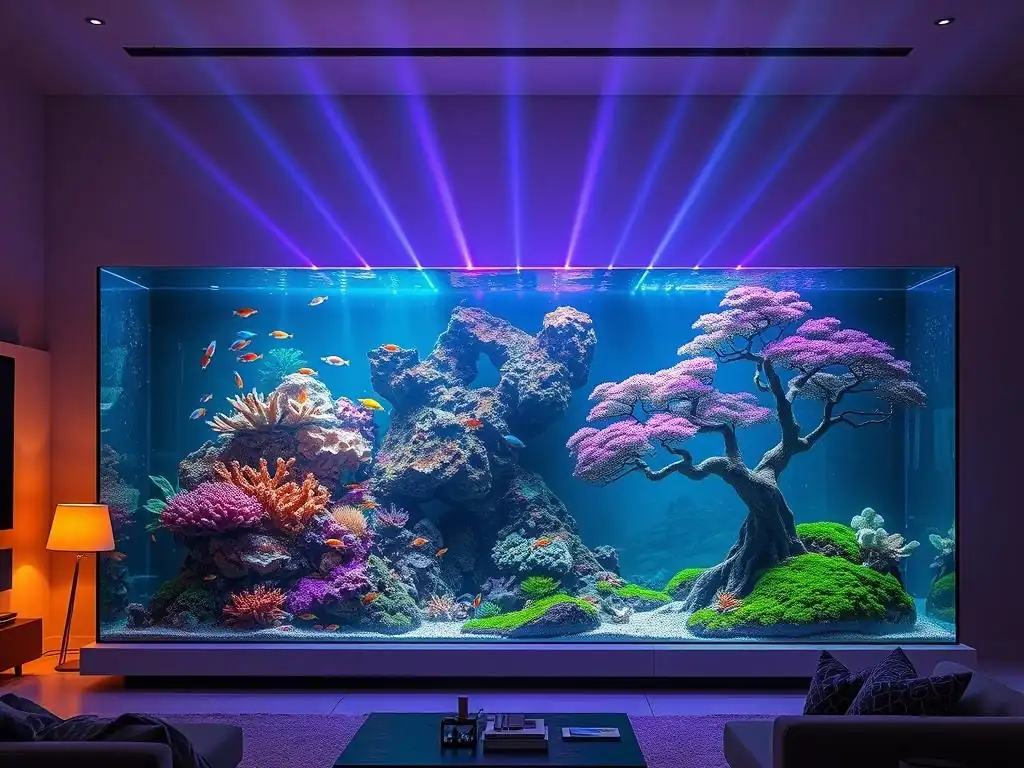
Welcome to Aquarium Mastery!
Ever wondered how to truly unlock the potential of your aquarium's beauty? Dive deep into the secrets of creating a thriving aquatic ecosystem with our comprehensive guide. In this article, we'll be exploring the fascinating world of advanced aquarium light controller settings, revealing how to mimic natural light cycles and optimize your tank's health and vibrancy. Get ready to transform your underwater world! Intrigued? Let's illuminate the possibilities...
- Understanding Advanced Aquarium Lighting Control: Why Upgrade?
-
Key Features to Look for in an Advanced Aquarium Light Controller
- Spectral Control: Fine-Tuning Your Aquarium's Light Spectrum
- Ramp-Up and Ramp-Down Timers: Mimicking Natural Light Transitions
- Cloud Simulation and Weather Effects: Adding Realism to Your Aquarium
- Wireless Connectivity and App Control: Managing Your Lights Remotely
- Programmable Light Schedules: Automating Your Aquarium Lighting
- Top Advanced Aquarium Light Controllers: A Comparative Review
- Advanced Aquarium Light Controller Settings: A Step-by-Step Guide
- Maximizing the Benefits of Your Advanced Light Controller
- Choosing the Right Advanced Aquarium Light Controller for Your Needs
- Conclusion: Achieving Aquarium Ambiance Mastery with Advanced Light Control
-
Frequently Asked Questions
- How do advanced aquarium light controllers improve the health of my aquarium?
- What types of lighting schedules can I create with advanced aquarium light controllers?
- Can advanced aquarium light controllers help reduce algae in my tank?
- Are advanced aquarium light controllers compatible with all types of aquarium lights?
- How difficult is it to set up and program an advanced aquarium light controller?
- Final Reflection: Illuminating the Depths
- Ignite Your Aquarium's True Potential!
Understanding Advanced Aquarium Lighting Control: Why Upgrade?
The Importance of Simulated Sunrise and Sunset for Aquarium Health
In their natural habitats, aquatic organisms experience a gradual transition from darkness to light and back again. The sun doesn't simply "turn on" or "turn off." This slow, natural change is crucial for their circadian rhythms and overall well-being. Abrupt light changes can induce significant stress in fish, leading to darting behaviors, increased hiding, and even weakened immune systems. For corals and aquatic plants, sudden shifts can cause polyp retraction or stunt growth as they struggle to adapt to instantaneous light intensity changes.
Implementing simulated sunrise and sunset, a core feature of advanced aquarium light controller settings, helps mitigate these stresses. By gradually increasing light intensity over a period of 30 minutes to 2 hours in the morning, and gradually decreasing it in the evening, aquarists can mimic natural conditions. This smooth transition allows fish to wake up and settle down naturally, reduces the likelihood of "night fright" in startled fish, and permits corals to extend and retract their polyps at a natural pace, promoting healthier, more stable environments within the aquarium.
Benefits of Advanced Aquarium Light Controllers: Beyond Basic On/Off
Basic timers offer only rudimentary on/off functionality, which, as discussed, can be detrimental to aquarium inhabitants. Advanced aquarium light controllers, however, provide precise command over light intensity, spectrum, and duration, allowing for a level of environmental replication that basic timers simply cannot achieve. This sophisticated control is not merely a convenience but a vital tool for cultivating thriving aquatic ecosystems.
These advanced systems offer multifaceted advantages, contributing significantly to the health and aesthetics of a well-maintained aquarium. From preventing nuisance algae to enhancing the vibrant hues of corals, the benefits extend far beyond simple illumination, making them indispensable for serious aquarists seeking optimal conditions for their aquatic life.
-
Reduced Algae Growth with Optimized Light Schedules
Nuisance algae, such as green hair algae or diatoms, often proliferate due to excessive or improperly timed light exposure. Advanced aquarium light controller settings enable aquarists to precisely manage the photoperiod and intensity, ensuring that organisms receive adequate light without over-illuminating the tank. By tailoring the Photosynthetically Active Radiation (PAR) output to the specific needs of the aquarium's inhabitants, controllers can prevent the energy surplus that fuels rapid algae growth, leading to a cleaner and more visually appealing aquascape.
-
Enhanced Coral Coloration Through Spectral Control
Coral coloration is largely influenced by the light spectrum they receive, particularly specific wavelengths like blue (450-470nm) and violet (400-420nm) which are crucial for the zooxanthellae living within coral tissues. Advanced aquarium light controller settings allow for fine-tuning individual color channels, enabling aquarists to emphasize these critical wavelengths. This precise spectral manipulation promotes the production of fluorescent proteins in corals like Acropora and Montipora, resulting in more vibrant blues, greens, and reds, and ultimately showcasing the corals' full genetic potential for color.
-
Improved Fish Health and Behavior with Natural Light Cycles
Natural light cycles, facilitated by the ramp-up and ramp-down capabilities of advanced aquarium light controllers, are essential for supporting the endogenous circadian rhythms of fish. Consistent, gentle transitions reduce stress, which in turn strengthens the fish's immune response and encourages more natural behaviors, such as schooling, feeding, and even breeding. For instance, species like Discus or Angelfish exhibit greater comfort and less anxiety when their environment mimics the gradual light changes of their native habitats, contributing to their longevity and overall vitality.
Key Features to Look for in an Advanced Aquarium Light Controller
Spectral Control: Fine-Tuning Your Aquarium's Light Spectrum
Spectral control is arguably one of the most powerful features of an advanced aquarium light controller. It allows aquarists to go beyond simple brightness adjustments and precisely manipulate the individual wavelengths of light emitted. Different aquatic organisms have varying light requirements: corals and plants depend on specific wavelengths for photosynthesis and growth, while fish benefit from a balanced spectrum for optimal vision and health. This granular control means you can dial in the perfect "color recipe" for your specific ecosystem.
For instance, a reef tank heavily populated with SPS (Small Polyp Stony) corals will thrive under a spectrum rich in blue and violet light (often 70-80% blue/violet during peak hours) to maximize coral growth and fluorescence. Conversely, a freshwater planted tank requires a spectrum with a stronger emphasis on red (620-660nm) and blue (450-470nm) to promote robust plant photosynthesis. Advanced aquarium light controller settings enable these precise adjustments, ensuring every inhabitant receives the specific light it needs to flourish.
-
Adjustable Color Channels (e.g., Red, Green, Blue, White, UV)
Advanced controllers typically feature multiple independent LED channels, each controlling a specific color or wavelength range. Blue channels (e.g., 450-470nm) are vital for coral coloration and simulating deep-water environments. Red (e.g., 620-660nm) and Green (e.g., 520-530nm) enhance plant growth and visual aesthetics. White channels provide overall brightness, while UV (e.g., 380-400nm) can further boost coral fluorescence and specific biological processes.
-
Pre-Programmed Spectral Presets for Different Aquarium Types (e.g., Reef, Planted)
Many advanced aquarium light controllers come with pre-set spectral programs tailored for specific aquarium types. For example, a "SPS Reef" preset might automatically configure a blue-heavy spectrum with high intensity, while a "Planted" preset would prioritize red and blue wavelengths at a moderate intensity. These presets simplify the initial setup for new users while still providing optimized lighting conditions, offering a convenient starting point before fine-tuning individual advanced aquarium light controller settings.
Ramp-Up and Ramp-Down Timers: Mimicking Natural Light Transitions
Ramp-up and ramp-down timers allow the light intensity to gradually increase at dawn and decrease at dusk, rather than switching abruptly. This feature is crucial for replicating the natural sunrise and sunset cycles experienced by aquatic life in the wild. Instead of an instantaneous "on" or "off," the light intensity slowly brightens over a customizable period, such as 30 minutes to 2 hours, before reaching peak intensity, and then gradually dims again in the evening.
This smooth transition significantly reduces stress on fish and corals, preventing the shock often associated with sudden light changes. Fish are less likely to be startled or exhibit erratic behavior, and corals can naturally extend or retract their polyps without abrupt environmental shifts. The ability to program the duration of these sunrise and sunset periods is a hallmark of advanced aquarium light controller settings, allowing aquarists to tailor the transitions to their specific tank's needs and inhabitants.
-
Smooth Transitions to Reduce Stress on Fish and Corals
Abrupt light changes can cause fish to dart erratically, hide excessively, or even jump from the tank. Corals might retract their polyps rapidly, impacting their feeding or overall health. Gradual ramp-up and ramp-down cycles prevent these stressful reactions, promoting calm behavior in fish and allowing corals to adjust gracefully, which ultimately contributes to a more stable and thriving aquatic environment.
-
Programmable Sunrise and Sunset Durations
Advanced aquarium light controller settings provide the flexibility to set the exact duration for both the sunrise and sunset periods. An aquarist might choose a 45-minute sunrise for a planted tank to gently stimulate photosynthesis, or a 90-minute sunset for a deep reef tank to mimic the prolonged twilight of a natural ocean environment. This customization ensures that the light transitions perfectly align with the specific needs and natural rhythms of the aquarium's inhabitants.
Cloud Simulation and Weather Effects: Adding Realism to Your Aquarium
Cloud simulation and other weather effects introduce a dynamic, natural element to your aquarium's lighting. This feature mimics the intermittent dimming and brightening caused by clouds passing overhead or even the brief, intense flashes of lightning during a storm. These effects are not merely aesthetic; they add a layer of realism that can make your aquarium feel more like a slice of the natural world.
Beyond the visual appeal, these dynamic lighting changes can subtly benefit your aquarium's inhabitants. Brief periods of reduced light can provide a momentary respite from peak intensity, potentially mitigating light stress on sensitive corals or plants. While the biological impact might be subtle, the added realism contributes to a more engaging and visually stimulating display, showcasing the sophisticated capabilities of advanced aquarium light controller settings.
-
Dynamic Lighting Effects to Mimic Natural Weather Patterns
Beyond simple cloud cover, some advanced controllers can simulate lightning storms with sudden, bright flashes, or even lunar cycles that provide very low blue light during the night. These effects create a more immersive experience, making the aquarium environment more dynamic and visually interesting for both the aquarist and the fish.
-
Adjustable Cloud Cover Intensity and Frequency
Users can typically adjust how often clouds appear and how significantly they dim the light. This allows for personalization, from a subtle, occasional flicker to more frequent and noticeable dimming. This level of control within advanced aquarium light controller settings ensures that the weather effects enhance rather than detract from the aquarium's overall ambiance.
Wireless Connectivity and App Control: Managing Your Lights Remotely
Wireless connectivity and app control revolutionize how aquarists interact with their lighting systems. Instead of fumbling with physical buttons or complex on-unit menus, users can conveniently manage and monitor their aquarium lights from a smartphone or tablet, often from anywhere with an internet connection. This remote access liberates aquarists from being physically present to make adjustments or check on their lighting schedule.
The convenience extends to real-time monitoring and immediate adjustments. Imagine being on vacation and needing to slightly reduce light intensity due to a heatwave, or simply wanting to check if your lights are running as programmed. This seamless interaction, powered by advanced aquarium light controller settings, provides peace of mind and unparalleled flexibility in managing your aquarium's crucial lighting parameters.
-
Convenient Control from Your Smartphone or Tablet
Through dedicated mobile applications, users can easily change light intensity, modify existing schedules, activate weather effects, or even create entirely new programs with a few taps. This intuitive interface makes managing complex advanced aquarium light controller settings accessible and user-friendly.
-
Real-Time Monitoring of Light Intensity and Spectrum
Many apps provide real-time feedback on the current light output, including intensity percentages for each color channel. This allows aquarists to instantly verify that their lights are operating as intended and to make immediate, informed adjustments if they notice any discrepancies or need to fine-tune the environment for their inhabitants.
Programmable Light Schedules: Automating Your Aquarium Lighting
Programmable light schedules are the backbone of advanced aquarium light controller settings, allowing aquarists to create highly customized and automated lighting routines. This capability goes far beyond simple on/off timers, enabling the creation of complex photoperiods that precisely mimic natural daily light cycles, including dawn, peak intensity, midday siestas, and dusk, followed by moonlight phases.
With this feature, you can set multiple intensity points and spectral shifts throughout the day, ensuring that your aquarium inhabitants receive the exact light conditions they need at every hour. This automation not only reduces the daily chore of manual adjustments but also provides consistent and stable lighting, which is paramount for the long-term health and stability of any aquatic ecosystem.
-
Customizable Light Schedules to Match Your Aquarium's Needs
Whether you have a high-light SPS reef tank requiring an 8-hour peak intensity period or a low-light planted tank that benefits from a 6-hour peak with a midday siesta, advanced aquarium light controller settings allow for tailoring the schedule to the specific requirements of your inhabitants. This precision helps optimize growth, coloration, and overall well-being.
-
Different Schedules for Weekdays and Weekends
Some advanced controllers offer the flexibility to program different lighting schedules for weekdays versus weekends. This can be useful for minor adjustments to accommodate observation times, maintenance routines, or simply to introduce slight variations that mimic natural environmental fluctuations without disrupting core biological rhythms.
Top Advanced Aquarium Light Controllers: A Comparative Review
EcoTech Marine Radion G6 Pro: The High-End Performance Leader
The EcoTech Marine Radion G6 Pro stands as a benchmark in high-end aquarium lighting, renowned for its sophisticated HEI (Hemispherical Edge Illumination) optics that ensure exceptional light spread and uniform PAR (Photosynthetically Active Radiation) distribution. This flagship fixture incorporates a comprehensive array of LEDs, including specialized UV and deep red diodes, meticulously chosen to optimize coral health, growth rates, and vibrant coloration. Many reef keepers report noticeable improvements in SPS coral growth, with some observing a 10-15% increase in frag growth over a few months compared to less advanced lighting solutions.
Control of the Radion G6 Pro is seamlessly managed via the intuitive Mobius app, offering incredibly granular advanced aquarium light controller settings across over 10 independent LED channels. This unparalleled level of customization allows professional aquarists and serious hobbyists to precisely dial in the spectrum for demanding SPS and LPS coral displays. A single G6 Pro fixture can effectively cover a footprint of approximately 30x30 inches for high-light corals, making it a top choice for those seeking industry-leading performance and unmatched spectral control.
- Features: Advanced spectral control, wireless connectivity, wide PAR output.
- Pros: Industry-leading performance, excellent coral growth, customizable.
- Cons: Higher price point, typically ranging from $700-$1000 per fixture.
AI Prime 16HD: The Compact and Powerful Option
The AI Prime 16HD is a remarkably compact yet powerful LED fixture, making it a popular choice for nano reef tanks or as supplementary lighting for larger aquariums. Despite its small footprint, it delivers significant PAR, often registering 200-300 PAR at an 18-inch depth, which is sufficient for a wide range of corals, including many LPS (Large Polyp Stony) and even some SPS corals in shallower setups. Its efficient design ensures robust illumination without excessive heat generation.
Managing the AI Prime 16HD's advanced aquarium light controller settings is straightforward through the user-friendly MyAI app. This application provides intuitive control over 16 individual LED clusters, including dedicated moonlight channels, allowing for easy customization of light schedules and spectrums. Its affordability and ease of use, typically priced around $250-$300, make it an excellent entry point for aquarists seeking high performance and advanced features without a steep learning curve or a substantial investment.
- Features: Compact design, powerful output, customizable light schedules.
- Pros: Affordable, easy to use, suitable for smaller tanks.
- Cons: Limited spectral control compared to higher-end models like the Radion (fewer distinct LED types/channels).
Hydra TwentySix HD: Versatile and Feature-Rich
The Hydra TwentySix HD strikes an impressive balance between features, performance, and cost, often considered a mid-range powerhouse within the AI lineup. It boasts a robust feature set, including a broad spectrum with 13 different LED types distributed across 7 distinct channels. This extensive spectral range allows for highly customizable advanced aquarium light controller settings, making it exceptionally versatile for diverse setups, from mixed reef tanks with demanding corals to heavily planted freshwater aquariums.
This fixture is capable of effectively illuminating a footprint of approximately 24x24 inches for demanding coral species, delivering ample PAR for healthy growth and vibrant coloration. Its seamless integration with the MyAI app provides access to advanced features such as realistic cloud simulation and programmable lunar cycles, enhancing the aquarium's natural ambiance. With a price point typically ranging from $400-$500, the Hydra TwentySix HD offers significant value for aquarists looking for advanced capabilities and strong performance without committing to the most premium options.
- Features: Wide range of spectral control, weather simulation, app control.
- Pros: Offers a good balance of features and price, versatile.
- Cons: Can be complex to program initially for users new to advanced lighting systems.
Neptune Systems Apex: Complete Aquarium Management System with Lighting Control
The Neptune Systems Apex is far more than just an advanced aquarium light controller; it is a comprehensive, centralized aquarium life support and management system. Its core strength lies in its ability to integrate and control virtually every piece of aquarium equipment, from pumps, heaters, and dosing systems to, crucially, your lighting. This unparalleled level of integration allows for sophisticated automation and continuous monitoring, often reducing daily manual maintenance tasks by an estimated 30-40% for many users.
While Neptune Systems does not manufacture its own LED fixtures, the Apex acts as the central brain, seamlessly communicating with popular lighting brands like EcoTech Radion and AI Hydra via dedicated accessory modules (e.g., the Apex AWM module). This integration allows users to manage all advanced aquarium light controller settings, alongside critical water parameters like pH, temperature, and salinity, from a single, unified interface. The system provides remote access and critical alerts, offering unparalleled control, though the total system cost can range from $800 to over $1500 depending on the modules and probes required.
- Features: Comprehensive aquarium management, integrated lighting control, remote access.
- Pros: Full control over all aspects of your aquarium, including lighting.
- Cons: Higher cost, steeper learning curve due to the complexity of the full system.
Fluval Plant 3.0 LED: Optimized for Planted Aquariums
The Fluval Plant 3.0 LED is specifically engineered to meet the unique lighting demands of freshwater planted aquariums. It provides a full spectrum of light, with a particular emphasis on wavelengths crucial for plant photosynthesis, such as red (620-660nm) and blue (450-470nm). Its intelligent design ensures a balanced and even distribution of light, promoting lush, vibrant plant growth and enhancing the natural coloration of fish in planted tanks up to 48 inches in length.
Control is intuitively handled via the FluvalSmart App, which offers a range of advanced aquarium light controller settings tailored for plant growth. This includes convenient pre-set lighting schedules like "Lake Malawi," "Planted," and "Daylight," simplifying the initial setup for aquarists. It also features a programmable 24-hour cycle with gradual ramp-up and ramp-down phases, and adjustable color channels, making it an excellent and user-friendly choice for anyone focused on cultivating a thriving aquatic garden. Pricing typically ranges from $100-$300 depending on the fixture size.
- Features: Pre-set lighting schedules optimized for plant growth, adjustable spectrum.
- Pros: Excellent for planted tanks, easy to use, promotes vibrant plant growth.
- Cons: Not ideal for reef aquariums due to insufficient blue/UV spectrum and intensity for most corals.
Advanced Aquarium Light Controller Settings: A Step-by-Step Guide
Setting Up Your Initial Light Schedule: A Starting Point
When first setting up your advanced aquarium light controller, it's crucial to begin with a conservative light schedule to avoid shocking your inhabitants or triggering an immediate algae bloom. For a new reef tank, a good starting point is 6-8 hours of peak intensity (mid-day), preceded and followed by 2-3 hours each of ramp-up and ramp-down. For planted freshwater tanks, a total photoperiod of 8-10 hours, including gradual transitions, is generally appropriate. Less light is almost always better initially, as you can always increase it slowly.
During the first few days and weeks, meticulously observe your fish, corals, and plants for any signs of stress. Look for fish hiding excessively, corals bleaching (turning white), or plants showing signs of melt. Conversely, note positive signs like active fish, extended coral polyps, or plant pearling (small oxygen bubbles on leaves). This initial observation phase is paramount before making more aggressive or specific advanced aquarium light controller settings.
Fine-Tuning Your Spectrum for Optimal Coral Growth and Coloration
To fine-tune your light spectrum for reef tanks, focus on gradually adjusting the blue and violet channels (typically 420-470nm) to enhance coral fluorescence and support the symbiotic zooxanthellae. Many successful reef aquarists operate their lights with a spectrum that is predominantly blue/violet during peak hours—often around 70-80% blue/violet, 10-15% white, and minimal red/green—to mimic deep-water conditions and maximize coral "pop."
Experimentation is key, but always make small, incremental changes, perhaps increasing a specific channel's intensity by no more than 5% per week. Observe how your corals respond over several days; changes in polyp extension, tissue puffiness, or coloration are critical indicators. For instance, a slight increase in red (620-660nm) can sometimes make red pigments in corals like Montipora digitata more vibrant, but too much can quickly lead to nuisance algae, underscoring the delicate balance required in advanced aquarium light controller settings.
Adjusting Light Intensity for Different Aquarium Inhabitants
The Photosynthetically Active Radiation (PAR) requirements vary significantly among different aquarium inhabitants. SPS corals, for example, typically thrive in PAR levels ranging from 250-450 at the coral surface, while LPS corals often do well in 50-150 PAR. Soft corals and anemones usually prefer lower intensities, around 30-100 PAR. For planted tanks, low-light plants may need only 30-80 PAR, whereas high-light plants often require 80-150 PAR for robust growth.
Ideally, use a PAR meter to precisely measure light levels at various depths and locations in your tank. If a PAR meter is unavailable, rely on visual cues and manufacturer guidelines for your specific lighting fixture. Signs of too much light include coral bleaching (turning white), tissue necrosis, or excessive algae growth. Conversely, corals browning out or plants exhibiting stunted growth might indicate insufficient light. Adjusting the overall intensity or individual channel intensities within your advanced aquarium light controller settings should always be done gradually, in small increments.
Troubleshooting Common Lighting Issues: Algae Blooms and Coral Bleaching
Persistent algae blooms, particularly green hair algae or diatoms, are often a strong indicator of excessive light intensity or an overly long photoperiod. If you notice a significant increase in nuisance algae, consider reducing your peak light intensity by 10-20% or shortening your total photoperiod by 1-2 hours for a period of one to two weeks. It's crucial to ensure your light schedule, managed by your advanced aquarium light controller settings, is balanced with your tank's nutrient levels, as light often acts as a catalyst for algae growth when nutrients are present.
Coral bleaching, characterized by corals losing their vibrant colors and turning white, is a severe symptom of light stress, most commonly due to excessive intensity or a sudden, drastic change in lighting. If bleaching occurs, immediately reduce your light intensity by 30-50% and then gradually ramp it back up over several weeks, observing the coral's recovery.
Conversely, if corals appear to be browning out, it could indicate insufficient light (though nutrient issues are also a common cause); in such cases, a slight, gradual increase in overall intensity or a shift in the blue spectrum might be beneficial, highlighting the critical role of precise advanced aquarium light controller settings in maintaining coral health.
Maximizing the Benefits of Your Advanced Light Controller
Integrating Your Light Controller with Other Aquarium Equipment
Many advanced aquarium light controllers, especially those that are part of larger smart aquarium ecosystems like Neptune Apex or GHL Profilux, offer seamless integration with other vital aquarium equipment. This synergy allows for sophisticated automation and interlocking functionalities. For instance, your light controller could be programmed to dim the lights automatically if the tank temperature rises above a set threshold, indicating a potential heater malfunction or a cooling system failure, thus protecting sensitive inhabitants.
This level of interconnectedness can create a truly automated and highly resilient aquarium environment. An integrated system might pause the light ramp-up if the pH drops below a safe level, or even automatically adjust the light spectrum based on real-time water parameter readings from connected probes. This comprehensive control, facilitated by sophisticated advanced aquarium light controller settings, significantly reduces the need for manual intervention and enhances overall system stability and safety.
Monitoring Your Aquarium's Response to Lighting Changes
After making any adjustments to your advanced aquarium light controller settings, consistent and thorough observation of your tank is paramount. Dedicate at least 3-5 days to monitor your aquarium's inhabitants for subtle changes in behavior, such as increased or decreased fish activity, the extent of coral polyp extension, or the rate of pearling in aquatic plants. For instance, robust polyp extension in SPS corals like Acropora is a strong indicator of optimal lighting conditions and overall health.
Beyond visual cues, experienced aquarists often employ quantitative monitoring. Consider tracking the growth rates of corals or plants by taking monthly measurements or photographs. If you have access to a PAR meter, periodically re-measure PAR levels at various depths to ensure consistency and identify any light "hot spots" or "dead zones." Maintaining a detailed logbook of all changes made to your advanced aquarium light controller settings, alongside your observations, provides invaluable data for long-term optimization and troubleshooting.
Advanced Tips and Tricks for Experienced Aquarists
For experienced aquarists seeking to further optimize their advanced aquarium light controller settings, consider implementing a "midday siesta." This involves programming the lights to dim significantly or even turn off for a period of 2-4 hours during the middle of the day.
This can reduce overall light exposure, conserve energy, and has been shown by some to help mitigate nuisance algae growth, particularly in planted tanks, by breaking the photoperiod. Another advanced technique is to precisely mimic natural lunar cycles, using very low blue light (e.g., 1-2% intensity) during the night, which can influence spawning behaviors in certain fish species.
Furthermore, experienced coral keepers can fine-tune the UV spectrum (around 380-400nm) to significantly enhance the fluorescence of specific pigments in corals, making them "pop" more vibrantly under actinic light. Similarly, manipulating the precise ratio of red to blue light can influence the growth morphology and coloration of certain aquatic plants, encouraging either bushier growth or more vertical development. These nuanced adjustments, made possible by the granular control offered by advanced aquarium light controller settings, allow for truly bespoke and highly optimized aquarium environments.
Choosing the Right Advanced Aquarium Light Controller for Your Needs
Considering Your Aquarium Type and Inhabitants
The specific type of aquarium you maintain and the inhabitants within it should be the primary factor guiding your choice of an advanced aquarium light controller. A high-PAR, blue-heavy spectrum is absolutely essential for a demanding SPS reef tank, where corals require intense and specific wavelengths for photosynthesis and calcification. Conversely, a heavily planted freshwater tank will necessitate a broader spectrum with a greater emphasis on red and green wavelengths to support robust plant photosynthesis and vibrant coloration.
If your tank is a simple fish-only marine setup, your lighting needs will be less stringent, requiring only basic white light with some aesthetic blues. Therefore, if you intend to keep light-demanding corals like Acropora or Stylophora, invest in controllers that offer extensive spectral control and high PAR output. For freshwater aquariums with low-to-medium light plants, controllers with specific plant growth presets and adjustable red/green channels will be far more beneficial. Your inhabitants' precise requirements should always drive your decision for advanced aquarium light controller settings.
Setting a Budget for Your Lighting System
Advanced aquarium light controllers and their associated LED fixtures represent a significant investment, with costs ranging from a few hundred dollars to well over a thousand per unit. When setting your budget, it's crucial to factor in not only the controller itself but also the number of fixtures required to adequately illuminate your tank size. For example, a 60-gallon reef tank might require one high-end fixture (e.g., EcoTech Radion G6 Pro) or potentially two mid-range options (e.g., AI Prime 16HD) for optimal coverage.
While the initial outlay can be substantial, consider the long-term benefits and potential savings. Investing in a quality controller can lead to reduced energy consumption due to efficient LEDs, minimize the occurrence of nuisance algae (thereby saving on remedies and maintenance time), and promote healthier, more vibrant livestock, potentially reducing costs associated with livestock replacement. A robust controller also offers future-proofing, allowing for expansion or changes in inhabitants without needing a complete lighting overhaul, making the investment in advanced aquarium light controller settings a wise long-term decision.
Making the Final Decision: Factors to Consider
When making your final decision on an advanced aquarium light controller, evaluate several critical factors beyond just features and price. Assess the ease of use: how intuitive is the app interface, and how complex is the programming for setting up advanced aquarium light controller settings? Consider scalability; can the system accommodate future tank upgrades or expansions? Reliability is paramount, so research brand reputation, warranty coverage, and the longevity of the product.
Furthermore, strong community support can be invaluable. Look for controllers with active online forums, user groups, and readily available technical support, as these resources can provide immense help during setup or troubleshooting. Finally, consider future-proofing: does the controller offer integration with other smart aquarium devices you might add later, such as auto-dosers, water testing probes, or automatic feeders? Look for brands that regularly provide firmware updates, as these can introduce new features, improve existing ones, and ensure your investment remains relevant and functional for years to come.
Conclusion: Achieving Aquarium Ambiance Mastery with Advanced Light Control
Frequently Asked Questions
How do advanced aquarium light controllers improve the health of my aquarium?
Advanced controllers allow you to simulate natural light cycles, which are crucial for the photosynthesis of aquatic plants and the overall well-being of your fish. They also help reduce algae growth by providing specific light spectrums.
What types of lighting schedules can I create with advanced aquarium light controllers?
You can create highly customized schedules, including sunrise and sunset simulations, gradual light intensity changes throughout the day, and even moonlight effects for nocturnal viewing. These mimic natural environments.
Can advanced aquarium light controllers help reduce algae in my tank?
Yes, by allowing precise control over the light spectrum and intensity, you can limit the wavelengths that algae thrive on, thus inhibiting their growth. Adjusting the light duration is also key.
Are advanced aquarium light controllers compatible with all types of aquarium lights?
Compatibility varies. Most controllers work with LED lights, but some may also support T5 and metal halide lamps. Always check the specifications before purchasing to ensure compatibility.
How difficult is it to set up and program an advanced aquarium light controller?
While some controllers have a steeper learning curve, many are now designed with user-friendly interfaces and mobile apps. The initial setup may require some technical knowledge, but programming becomes easier with practice.
Final Reflection: Illuminating the Depths
The journey from dawn to dusk within our aquariums, meticulously orchestrated by advanced aquarium light controller settings, mirrors the delicate balance of nature itself. What was once a simple on/off switch has evolved into a sophisticated tool, allowing us to not only replicate natural light cycles but also to profoundly influence the health and vibrancy of our underwater ecosystems. This newfound control empowers aquarists to create truly thriving environments, pushing the boundaries of what's possible within the glass walls of our tanks.
This exploration into advanced lighting has undeniably reshaped the aquarium hobby. The ability to fine-tune light spectrums and intensity has not only enhanced the aesthetic appeal of our aquascapes but has also unlocked new possibilities for coral growth and overall aquatic health. It's a testament to our growing understanding of these complex ecosystems and our commitment to providing the best possible care for our aquatic inhabitants. In the right light, at the right time, everything is extraordinary.
- Aaron Rose. This quote perfectly encapsulates the transformative power of controlled lighting in bringing out the extraordinary beauty within our aquariums.
As we stand at the precipice of further advancements in aquarium technology, let us not forget the responsibility that comes with such power. Consider how you can further refine your own lighting strategies, not just for aesthetic appeal, but for the long-term health and well-being of your aquatic ecosystem. Embrace the knowledge shared, experiment with new settings, and continue to learn from the ever-evolving world of aquarium keeping. Your dedication to mastering these advanced aquarium light controller settings will undoubtedly illuminate the depths, creating a truly breathtaking and thriving underwater world.
Ignite Your Aquarium's True Potential!
Thank you for diving into the world of aquarium lighting! Now that you're equipped with the knowledge to master your aquarium's ambiance, it's time to take the next step.
Here are a few ways to bring your underwater world to life:
- Revolutionize Your Lighting Schedule: Implement your personalized light cycle using an advanced controller to mimic the natural rhythms of dawn and dusk and observe the enhanced vitality of your aquatic inhabitants.
- Delve deeper into personalized settings: Explore the advanced functions and try to create a schedule with dynamic weather simulations.
- Share your before-and-after photos with fellow enthusiasts: Let us know how the new lighting scheme has transformed your tank!
What fascinating behaviors have you observed in your aquatic pets as you tweaked the lighting?