
Silent Power: Top Tips for Reducing Aquarium Pump Noise and Vibrations


Welcome to Aquarium Mastery!
Tired of that annoying hum disrupting your peaceful underwater paradise? You're not alone! Many aquarists struggle with noisy aquarium pumps. This guide, Silent Power: Top Tips for Reducing Aquarium Pump Noise and Vibrations, dives deep into practical solutions to finally achieve a quiet aquarium pump vibration solution. Ready to reclaim the serenity of your tank? Let's explore the simple fixes that will make a world of difference!
- Achieving Tranquility: Effective Strategies for Minimizing Aquarium Pump Noise
- Understanding Aquarium Pump Noise: The Underlying Factors
- Diagnosing the Source of Your Noisy Aquarium Pump: A Systematic Approach
- Solutions for Quieting Aquarium Pump Vibrations: A Detailed Guide
- Selecting a Quieter Aquarium Pump: Key Considerations
- Addressing Resonance and Secondary Vibrations
- Advanced Solutions for Sensitive Environments
- Maintaining a Quiet Aquarium: A Sustained Approach
-
Frequently Asked Questions
- How do I identify the source of aquarium pump noise and vibrations?
- What are some common causes of aquarium pump vibrations?
- How can I isolate the aquarium pump to reduce noise transfer?
- What maintenance steps can help keep my aquarium pump quiet?
- When should I consider replacing my aquarium pump due to excessive noise?
- Final Reflection: Embracing Aquarium Serenity
- Unveil the Serenity: Transform Your Aquarium into a Tranquil Oasis!
Achieving Tranquility: Effective Strategies for Minimizing Aquarium Pump Noise
Understanding Aquarium Pump Noise: The Underlying Factors
Identifying Common Sources of Aquarium Pump Vibration
Aquarium pump noise often stems from a combination of mechanical issues within the pump itself and external factors that amplify or transmit vibrations. Internally, common culprits include worn impellers, misaligned shafts, or the accumulation of debris like detritus or calcium buildup on moving parts.
For instance, an impeller spinning at thousands of revolutions per minute, even slightly off-balance due to a tiny piece of gravel or a calcified deposit, can generate significant vibrations that translate into an audible hum or rattling sound. A typical small aquarium pump might operate at frequencies around 50-60 Hz, and any disruption to its smooth operation at these frequencies can become a noticeable source of noise.
Beyond the pump's internal mechanics, external factors play a crucial role in noise propagation. A pump that is in direct contact with the aquarium glass, the sump walls, or the stand can transfer its mechanical vibrations directly into these structures.
This phenomenon, known as structure-borne noise, allows the rigid surfaces to act as large soundboards, amplifying a subtle vibration into a loud, pervasive buzz throughout the room. Even a slight pressure point where a flexible hose touches the stand can transform a relatively quiet pump into a significant source of unwanted noise, making a quiet aquarium pump vibrations solution challenging without addressing these contact points.
The Impact of Pump Noise on Aquatic Life and Living Spaces
The constant presence of pump noise and vibrations can have a detrimental effect on the inhabitants of your aquarium. Fish, being sensitive to their environment, can experience chronic stress from persistent low-frequency vibrations or loud humming. This stress might manifest as unusual swimming patterns, reduced appetite, increased susceptibility to disease, or even aggression among tank mates. Research indicates that fish can perceive sounds well below the human hearing range, often down to 20 Hz or lower, meaning even subtle pump vibrations can be highly disruptive to their natural behaviors and overall well-being.
For aquarists, a noisy aquarium pump can significantly detract from the enjoyment of their hobby and the tranquility of their living space. A pump producing 60-70 dB of noise, comparable to a normal conversation or a quiet vacuum cleaner, can be highly annoying, especially in quiet environments like bedrooms or living rooms.
This constant background noise can disrupt sleep, concentration, and relaxation, turning what should be a peaceful aquatic display into a source of irritation. Implementing a quiet aquarium pump vibrations solution is not just about the fish; it's about restoring peace for both the aquatic inhabitants and the human observers.
Diagnosing the Source of Your Noisy Aquarium Pump: A Systematic Approach
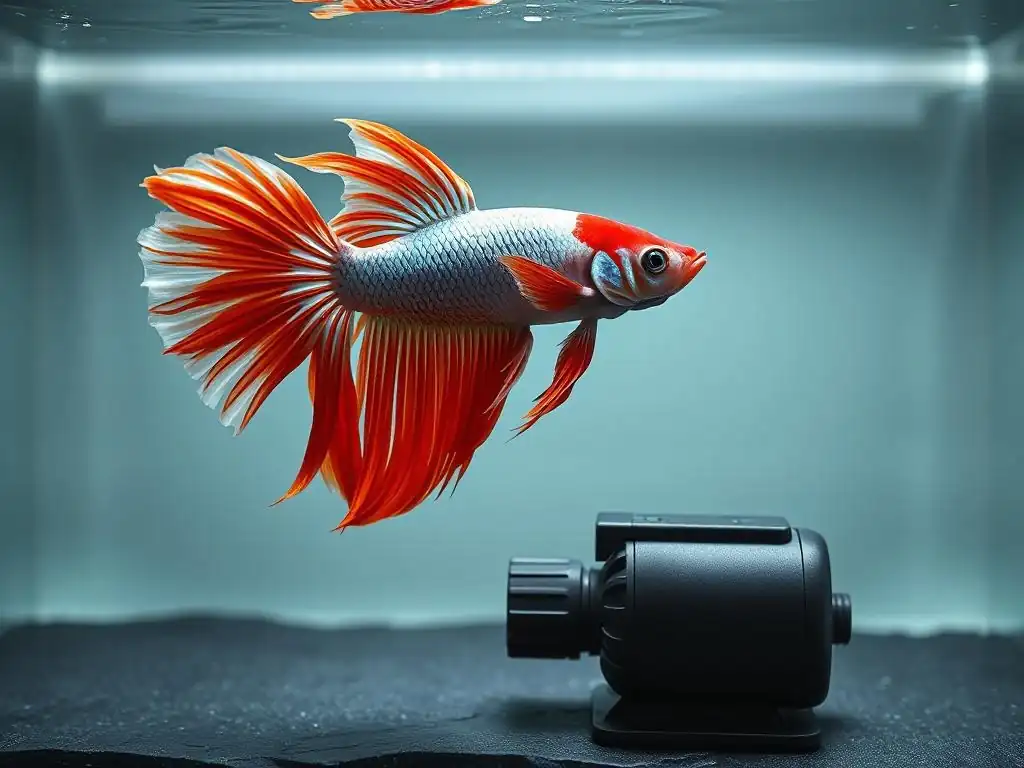
Visual Inspection: Identifying Physical Damage and Misalignment
The first step in diagnosing a noisy aquarium pump is a thorough visual inspection. Begin by unplugging the pump and carefully examining its external housing for any signs of cracks, loose screws, or unusual wear marks that might indicate rubbing or excessive vibration. Next, disassemble the pump's head unit and inspect the impeller.
Look for any chips, cracks, or missing blades on the impeller itself, and check the ceramic or metal shaft for bends or breaks. Even a tiny chip on an impeller blade, perhaps just a millimeter in size, can throw the entire assembly off balance, leading to a noticeable rattling or grinding sound.
Beyond the pump's internal components, assess its position and connections. Ensure that the pump is sitting level and not pressing against any part of the sump, tank, or stand.
Inspect all plumbing connections, including flexible tubing and rigid PVC pipes, for kinks, tight bends, or any signs of strain that could cause the pump to work harder or transmit vibrations. Additionally, check for air bubbles being drawn into the intake, as cavitation – the formation and collapse of air bubbles – can create significant gurgling and grinding noises, indicating a potential issue with water level or a loose intake connection.
Auditory Analysis: Locating the Precise Origin of the Noise
Once a visual inspection is complete, a systematic auditory analysis can help pinpoint the exact source of the noise. With the pump running, carefully listen to different parts of the pump and its surrounding area. You can use a simple paper towel tube held to your ear, or even a mechanic's stethoscope, to amplify sounds from specific points. Try to differentiate between types of noise: a low hum usually indicates motor vibration, a rattling sound suggests loose parts or debris, while a grinding noise often points to a worn impeller or shaft.
To isolate the pump's inherent noise from transmitted vibrations, carefully lift the pump (if submersible and safe to do so) slightly off the sump or stand for a few seconds. If the noise significantly diminishes or changes, it strongly suggests that the pump's vibrations are being transferred and amplified by the stand or tank structure.
This confirms that a quiet aquarium pump vibrations solution needs to focus on decoupling the pump, rather than just fixing an internal issue. Also, listen closely to the plumbing; sometimes, water flowing through undersized or kinked pipes can create turbulent noise, mistaken for pump noise.
Evaluating Water Flow and Pump Efficiency
A noisy pump can sometimes be a symptom of reduced efficiency or improper operation, rather than a direct mechanical fault. Evaluate the pump's actual water flow against its rated capacity. If the flow seems significantly reduced, it could indicate a blockage in the intake or output lines, a partially clogged impeller, or even a failing motor struggling to push water. A pump working harder to overcome resistance will often vibrate more and produce louder noises, as it strains beyond its optimal operating parameters.
Furthermore, ensure that the water level in the sump or return chamber is consistently adequate. If the water level drops too low, the pump might start drawing in air, leading to a characteristic gurgling or slurping sound, similar to a toilet flushing. This air ingestion can also cause the pump to cavitate, which is highly detrimental to its lifespan and produces significant noise and vibration. Maintaining the recommended water level, typically at least 2-3 inches above the pump intake, is a simple yet effective step towards a quiet aquarium pump vibrations solution.
Solutions for Quieting Aquarium Pump Vibrations: A Detailed Guide
Leveling and Stabilizing Your Aquarium Pump
Ensuring your aquarium pump is perfectly level and stable is a foundational step in achieving a quiet aquarium pump vibrations solution. A pump that wobbles or sits unevenly on its surface will inevitably create more vibration and noise as its internal components struggle to maintain balance. Use a small spirit level to check the pump's orientation, and if necessary, place thin, non-absorbent shims made of plastic or hard rubber beneath it to achieve a perfectly flat resting position. This simple adjustment can often reduce a noticeable hum by several decibels.
Furthermore, ensure the pump is not simply resting on a bare, hard surface that can act as a resonant chamber. For instance, placing a pump directly on a glass sump bottom or a wooden stand shelf can amplify its inherent vibrations. The goal is to provide a stable, yet vibration-absorbing, foundation.
Employing Anti-Vibration Pads for Noise Mitigation
Anti-vibration pads are an exceptionally effective quiet aquarium pump vibrations solution. These pads, typically made from materials like silicone, high-density rubber, or neoprene, are designed to absorb and dissipate kinetic energy, preventing the pump's vibrations from transferring to the tank or stand. Placing a pad directly under the pump can reduce transmitted noise by approximately 5-10 dB, transforming a noticeable hum into a barely perceptible whisper. For larger pumps or those known to be particularly noisy, consider using thicker pads or even stacking two thinner ones.
When selecting an anti-vibration pad, look for materials with good dampening properties. Sorbothane, for example, is a highly viscoelastic polymer renowned for its ability to absorb over 90% of impact energy, making it an excellent, albeit sometimes pricier, choice for extreme noise reduction. For submersible pumps, ensure the material is inert and safe for aquatic environments. Place the pad so that it covers the entire footprint of the pump, providing uniform support and maximum vibration absorption.
Reinforcing the Pump Housing
While less common, sometimes the pump's external housing itself can be a source of noise due to loose seams or thin plastic resonating with internal vibrations. For external pumps, carefully check if all screws securing the pump casing are tightened. Loose screws, even one, can cause a persistent rattling noise. If the housing still seems to resonate, a quiet aquarium pump vibrations solution can involve applying a non-toxic, aquarium-safe silicone sealant or epoxy to external seams to add rigidity and dampening.
For internal pumps, this is rarely an option due to the need for water contact. However, ensuring the pump is firmly seated in its designated spot, perhaps with its suction cups fully engaged, can reduce housing vibrations. If the pump's plastic casing feels flimsy or appears to be vibrating independently, it might indicate internal component wear or a manufacturing defect, in which case replacement might be the most effective long-term solution.
Decoupling the Pump from the Aquarium Stand
Decoupling refers to the process of physically separating the vibrating pump from rigid structures that can amplify sound, such as the aquarium stand or sump walls. This is crucial because vibrations travel much more efficiently through solid materials than through air. By creating a flexible "break" in the vibration path, you prevent structure-borne noise from turning your entire aquarium setup into a giant speaker.
The principle is to avoid any direct, rigid contact between the pump and any part of the tank, sump, or stand. Even a slight touch can transmit significant vibrations. This separation is key to achieving a truly quiet aquarium pump vibrations solution, as it addresses the amplification of noise rather than just the source.
Integrating Vibration-Dampening Materials
To effectively decouple the pump, integrate vibration-dampening materials at all contact points. This includes placing thick rubber or neoprene mats not only under the pump but also under any equipment within the sump that might be touching the stand or cabinet walls.
For instance, if your sump rests on a wooden cabinet floor, a large rubber mat beneath the entire sump can prevent vibrations from the pump (located inside the sump) from transferring to the stand. Materials like sorbothane, known for their superior vibration absorption, can be used as small feet under the sump itself if it's a major source of transmitted noise, reducing vibrations by up to 90%.
Consider also using strips of foam or rubber along the edges where the sump might touch the cabinet walls. The goal is to create soft, absorbent interfaces wherever a vibrating component could meet a rigid structure. This comprehensive application of dampening materials is a cornerstone of a robust quiet aquarium pump vibrations solution.
Isolating the Pump with Silicone Tubing
Replacing rigid PVC connections directly to and from the pump with flexible silicone tubing or reinforced vinyl hose is an excellent strategy for isolating pump vibrations. Rigid piping transmits vibrations directly, acting like a conduit. A short, flexible section of tubing (e.g., 6-12 inches) immediately after the pump's output and before any rigid plumbing can effectively break this transmission path. Silicone is particularly effective due to its inherent flexibility and dampening properties.
When installing the flexible tubing, ensure it is not stretched taut. Allow for a slight sag or curve in the tubing, as tension will negate its dampening effect and could even increase vibration transfer. The tubing should be appropriately sized for the pump's flow rate to avoid creating restriction, which could ironically make the pump work harder and vibrate more. This simple modification is often one of the most impactful quiet aquarium pump vibrations solutions for external pumps.
Optimizing Pump Placement for Minimal Acoustic Impact
Strategic placement of your aquarium pump can significantly reduce the perceived noise level. It's not just about what's under the pump, but also what's around it. Avoiding direct contact with rigid surfaces, especially the aquarium glass, is paramount.
Aim to place the pump in an area within the sump or cabinet where it has ample clearance from all walls and other equipment. If possible, a central, open area allows for better sound dissipation and prevents the pump from "leaning" against a surface that could amplify its hum.
Preventing Contact with Aquarium Glass
The aquarium glass itself is a highly efficient conductor of sound. Even the slightest contact between the pump, its plumbing, or even the anti-vibration pad and the glass can turn your entire tank into a large resonance chamber, amplifying a minor hum into a significant disturbance. Ensure there is a clear gap, ideally several centimeters, between the pump and any part of the aquarium's glass walls.
If plumbing runs close to the glass, use non-toxic suction cups or plastic clips lined with a soft material to secure the pipes away from the glass. This ensures that no vibrations from the pump or water flow are directly transmitted to the tank structure, which is a critical aspect of a quiet aquarium pump vibrations solution.
Promoting Efficient Water Circulation
A pump that is struggling to move water efficiently will often be noisier. Ensure that the plumbing is clear of obstructions, such as algae buildup, snails, or detritus. Regularly check impellers for clogs. The diameter of your plumbing should be adequate for your pump's flow rate; undersized pipes create back pressure, forcing the pump to work harder, leading to increased vibration and noise.
Also, verify that the water level in your sump or return section is consistently optimal, preventing the pump from sucking air. Air ingestion not only creates gurgling sounds but also causes cavitation, which is both noisy and damaging to the pump's internal components. Proper water circulation and unimpeded flow contribute significantly to a quiet aquarium pump vibrations solution.
Regular Aquarium Pump Maintenance: Preventing Recurring Noise Issues
Consistent and thorough maintenance is paramount to ensuring your aquarium pump remains a quiet component of your system. Neglecting routine cleaning allows debris, calcification, and wear to accumulate, inevitably leading to increased noise and reduced efficiency over time. A proactive maintenance schedule, perhaps monthly or bi-monthly depending on your tank's bioload and water chemistry, is a cornerstone of a lasting quiet aquarium pump vibrations solution.
This preventative approach not only keeps noise at bay but also extends the lifespan of your pump, saving you money in the long run. Ignoring minor hums or rattles can escalate into significant problems, leading to premature pump failure or the need for costly replacements.
Cleaning the Pump Impeller and Volute
The impeller is the heart of your pump, and its cleanliness is crucial for quiet operation. Over time, calcium deposits, algae, and detritus can build up on the impeller blades and inside the volute (the chamber where the impeller spins). This buildup creates imbalance and friction, leading to grinding, rattling, or a loud hum.
To clean, unplug the pump, disassemble the head, and carefully remove the impeller. Use a small brush (like a toothbrush or a pipe cleaner) and a solution of white vinegar or citric acid to meticulously scrub away all deposits from the impeller, its ceramic or metal shaft, and the inside of the volute.
Pay particular attention to the impeller's magnet and the chamber it rotates within; even a small piece of snail or gravel lodged here can cause significant noise and wear. Regular cleaning, perhaps every 1-3 months depending on your tank's calcification rate, will prevent these common noise sources and maintain a quiet aquarium pump vibrations solution.
Inspecting and Replacing Bushings and Seals
The bushings (or bearings) and seals are critical components that ensure the impeller spins smoothly and quietly. These parts, typically made of ceramic, rubber, or plastic, wear down over time due to constant friction and exposure to water. Worn bushings allow the impeller to wobble on its shaft, creating a noticeable rattling or grinding noise, while degraded seals can lead to water leaking into the motor housing. During maintenance, carefully inspect these components for any signs of cracks, hardening, or excessive wear.
Many pump manufacturers offer replacement kits for impellers, shafts, bushings, and seals. Replacing these small, inexpensive parts when they show signs of wear is a highly effective quiet aquarium pump vibrations solution, often restoring the pump to its original quiet operation without the need for a full pump replacement. This preventative measure is far more cost-effective than waiting for a complete failure.
Replacing Worn-Out Components
Despite regular cleaning and inspection, some pump components will eventually wear out beyond simple maintenance. If cleaning the impeller and replacing bushings and seals doesn't resolve persistent noise, the impeller itself might be permanently warped or chipped, or the motor's magnetic drive might be failing. For instance, a ceramic shaft that has developed a groove from wear will continue to cause noise even with a new impeller.
In such cases, replacing the specific worn-out component, such as the entire impeller assembly, is often the next step. A new impeller assembly might cost approximately 20-30% of a brand-new pump. However, if the motor housing feels excessively hot, or if the pump struggles to start, it might indicate a failing motor, in which case investing in a new, more efficient, and inherently quieter pump is often the most economical and effective quiet aquarium pump vibrations solution in the long run.
Selecting a Quieter Aquarium Pump: Key Considerations

When setting up a new tank or replacing an old, noisy pump, choosing a model specifically designed for quiet operation is the ultimate quiet aquarium pump vibrations solution. Modern pump technologies have made significant strides in reducing noise output, offering aquarists more options for a peaceful setup.
Beyond general design, understanding specific pump technologies and specifications can guide you toward a truly silent powerhouse for your aquatic system.
Exploring Different Pump Technologies for Noise Reduction
Pump technology has evolved significantly, with manufacturers focusing on designs that inherently reduce noise. Many modern pumps utilize magnetic drive technology, which eliminates direct mechanical seals and reduces friction, contributing to quieter operation. Look for pumps with robust construction, high-quality ceramic shafts, and well-balanced impellers, as these design elements are crucial for minimizing vibrations and ensuring a quiet hum rather than a loud buzz.
Some high-end pumps also incorporate features like soft-start functions, which gradually ramp up motor speed, preventing sudden jolts and associated noise upon startup. These design considerations are a testament to the industry's commitment to providing a quiet aquarium pump vibrations solution for discerning aquarists.
DC Pumps vs. AC Pumps: Noise Level Comparison
Direct Current (DC) pumps are generally considered superior to traditional Alternating Current (AC) pumps in terms of noise output and energy efficiency. DC pumps often feature variable speed control, allowing aquarists to fine-tune flow rates and, crucially, run the pump at lower speeds when full power isn't needed, significantly reducing noise. Many high-quality DC pumps can operate below 25 dB at typical flow rates, which is barely audible in a quiet room (a whisper is around 30 dB). Their electronic commutation also results in a smoother, less resonant hum compared to AC pumps.
In contrast, traditional AC pumps, while robust and reliable, often produce a more noticeable 50/60 Hz hum due to the nature of their electrical operation. A typical AC pump might generate 40-50 dB of noise, which can be quite noticeable. While some AC pumps are designed to be quieter, DC technology generally offers a more inherently quiet aquarium pump vibrations solution.
Sicce Syncra Silent Pumps: Known for Quiet Performance
For aquarists prioritizing silence, specific brands and models have earned a reputation for their quiet operation. The Sicce Syncra Silent series of pumps, for example, is widely lauded in the aquarium hobby for its exceptionally low noise output. Sicce specifically designs these pumps with features like ceramic shafts and bearings, robust motor construction, and optimized impeller designs to minimize vibrations and noise.
These pumps are often advertised as "silent" for a reason; their engineering focuses on reducing friction and resonance. Choosing a pump from a line like the Sicce Syncra Silent, or other brands with similar reputations (e.g., Eheim, Reef Octopus VarioS), can be the most straightforward and effective quiet aquarium pump vibrations solution, bypassing many of the troubleshooting steps entirely.
Understanding Pump Specifications: Flow Rate and Noise Level (dB)
When purchasing a new pump, always scrutinize the manufacturer's specifications. The most critical figures for noise reduction are the pump's flow rate (usually in Gallons Per Hour, GPH, or Liters Per Hour, LPH) and its specified noise level in decibels (dB). A lower dB rating indicates a quieter pump. For context, 30 dB is a whisper, 40 dB is a quiet library, and 50 dB is a quiet office. Aim for pumps with a specified noise level below 40 dB, and ideally below 30 dB, for minimal auditory intrusion.
It's also important not to oversize your pump significantly. While having ample flow is good, a pump that is far too powerful for your system might generate more noise, even when throttled back, and consume unnecessary energy. Match the pump's flow rate closely to your system's filtration and circulation requirements, ensuring efficient operation at its optimal, and therefore quieter, performance range.
Addressing Resonance and Secondary Vibrations
Even if your pump itself is internally quiet and properly isolated, noise can still emanate from your aquarium system due to resonance and secondary vibrations. These occur when the pump's subtle vibrations are transmitted to other components, causing them to vibrate and amplify the sound. Addressing these often overlooked sources is crucial for a truly quiet aquarium pump vibrations solution.
Identifying and Eliminating Tank Resonance
Sometimes, the entire aquarium tank or its stand can act as a giant amplifier, resonating with the pump's inherent vibrations and turning a minor hum into a widespread, low-frequency buzz. To identify tank resonance, gently press on different parts of the tank glass or the stand while the pump is running. If the noise changes or dampens significantly with pressure, you've found a resonant point. This often indicates poor isolation between the tank and its stand.
To eliminate tank resonance, ensure that the aquarium is properly isolated from the stand. If your stand is made of wood or metal, place thin foam or rubber shims (e.g., neoprene or yoga mat material) between the tank's bottom rim and the stand's top surface. For stands with legs, place furniture pads or rubber feet under each leg to prevent vibrations from traveling into the floor. This decoupling of the tank from the stand is a vital quiet aquarium pump vibrations solution.
Inspecting and Securing Plumbing Connections
Loose or unsecured plumbing connections are a common source of rattling and secondary vibrations. Rigid PVC pipes can vibrate against the tank, sump walls, or the stand, creating significant noise. Inspect all unions, elbows, and straight pipe runs. Ensure that all threaded connections are tight and that any quick-disconnect unions are fully seated.
For long runs of plumbing, especially those carrying high flow, use pipe clamps lined with rubber or foam to secure them firmly to the stand or a solid surface. This prevents the pipes from rattling or vibrating freely. Ensure that the clamps are tight enough to hold the pipe securely but not so tight that they deform the pipe or create new stress points. This attention to detail in plumbing is a key part of a comprehensive quiet aquarium pump vibrations solution.
Minimizing Vibration Transfer through Aquarium Accessories
It's not just the pump itself that can cause noise; other aquarium accessories can also transmit or amplify pump vibrations. Protein skimmers, media reactors, or even heaters that are in direct contact with the pump, its plumbing, or the sump walls can pick up and amplify vibrations. For instance, a skimmer body touching the sump glass can hum loudly if the pump is vibrating.
Ensure that all accessories within the sump are also properly isolated. Place small rubber feet or silicone pads under skimmers, reactors, and any other equipment that rests directly on the sump bottom or leans against its walls. Use soft, flexible tubing for air lines and water lines connected to these devices where possible. This holistic approach to dampening all potential vibration points contributes significantly to an overall quiet aquarium pump vibrations solution.
Advanced Solutions for Sensitive Environments

For aquarists in highly sensitive environments, such as bedrooms or quiet studies, where even a low hum is unacceptable, more advanced noise reduction strategies may be necessary. These solutions typically involve constructing barriers to airborne noise and utilizing specialized sound-absorbing materials.
Building a Sound-Dampened Enclosure
Constructing a sound-dampened enclosure around your sump or pump area can dramatically reduce audible noise. This involves building a box or cabinet from dense materials like plywood or medium-density fiberboard (MDF) to contain the noise. The enclosure should be designed to completely surround the noisy equipment, but crucially, it should not touch the main aquarium tank or stand directly. This separation prevents the enclosure from becoming another source of transmitted vibrations.
Ensure the enclosure has adequate ventilation to prevent the pump from overheating, which can reduce its lifespan. Small ventilation holes or a quiet computer fan can be incorporated, ideally with baffled openings to prevent sound from escaping. This physical barrier is highly effective at blocking airborne pump noise, providing a substantial quiet aquarium pump vibrations solution for even the most discerning ears.
Utilizing Sound-Absorbing Materials Such as Acoustic Foam
Once a sound-dampened enclosure is built, lining its interior with sound-absorbing materials will further enhance its effectiveness. Materials like acoustic foam, mass-loaded vinyl (MLV), or rockwool are excellent choices. Acoustic foam works by converting sound energy into heat as sound waves penetrate its porous structure, significantly reducing reverberation and overall noise levels within the enclosure. A typical application of acoustic foam can reduce airborne noise by 10-20 dB, depending on its thickness and density.
Mass-loaded vinyl is particularly effective at blocking low-frequency sounds, which are often the most pervasive. When using these materials, ensure they are securely fastened to the interior walls of the enclosure and cover as much surface area as possible. Remember to maintain proper airflow within the enclosure to prevent heat buildup, as high temperatures can stress pump components and shorten their operational life.
Maintaining a Quiet Aquarium: A Sustained Approach
Achieving a quiet aquarium is not a one-time fix but a sustained commitment to routine care and vigilance. By integrating preventative measures into your regular aquarium maintenance schedule, you can ensure that your quiet aquarium pump vibrations solution remains effective for the long term.
Routine Inspections and Preventative Maintenance
Implement a schedule for routine inspections and preventative maintenance. A quick visual check of your pump and plumbing for any new vibrations or sounds can be done weekly. More detailed maintenance, such as cleaning the impeller and inspecting seals, should be performed monthly or bi-monthly, depending on your tank's bioload and the rate of calcium buildup. Keep a log of your maintenance activities and any observed noise issues; this can help you identify patterns and address potential problems before they escalate into significant disturbances. Proactive maintenance is always more effective than reactive troubleshooting.
Monitoring Water Parameters and Pump Performance
Stable water chemistry plays a role in pump longevity and quiet operation. High levels of calcium and alkalinity, for example, can lead to rapid calcification on pump impellers and shafts, increasing friction and noise. Regular monitoring of your water parameters can help you manage these factors. Additionally, pay attention to subtle changes in your pump's performance, such as a slight decrease in flow rate or a new, faint hum. These early indicators can signal the onset of wear or blockage, allowing you to address the issue promptly before it becomes a loud, disruptive problem.
Knowing When to Replace Your Aquarium Pump
Despite all efforts in maintenance and noise reduction, every pump has a finite lifespan. Persistent grinding, excessive heat emanating from the motor, or a significant and irreversible reduction in flow despite thorough cleaning and component replacement are strong indicators that your pump is nearing the end of its operational life.
While extending a pump's life through maintenance is commendable, there comes a point where the cost of replacement parts or the energy inefficiency of an old pump outweighs the benefit. Investing in a new, modern, and inherently quieter pump, especially a DC model with variable speed control, can be the ultimate and most effective quiet aquarium pump vibrations solution, providing years of peaceful operation.
Frequently Asked Questions
How do I identify the source of aquarium pump noise and vibrations?
Identifying the source is crucial! Start by visually inspecting the pump itself and its connections. Then, carefully listen to pinpoint where the sound originates – is it the pump motor, the tubing, or the tank glass vibrating?
What are some common causes of aquarium pump vibrations?
Common causes include direct contact between the pump and the tank stand, worn-out impellers, or air trapped within the pump housing. Even a slightly unbalanced pump can cause significant vibration.
How can I isolate the aquarium pump to reduce noise transfer?
Use vibration-dampening materials like aquarium mats or foam pads under the pump. Ensure the pump is not touching any part of the tank stand directly to minimize sound transmission.
What maintenance steps can help keep my aquarium pump quiet?
Regularly clean the impeller to remove debris that can cause imbalance and noise. Also, check for air bubbles in the pump and prime it properly to eliminate them.
When should I consider replacing my aquarium pump due to excessive noise?
If the pump continues to be noisy even after cleaning, isolating, and troubleshooting, it might be time for a replacement. Significant wear and tear or internal damage can lead to persistent, unbearable noise, indicating the pump's lifespan is ending.
Okay, here's a final reflection designed to close your "Silent Power: Top Tips for Reducing Aquarium Pump Noise and Vibrations" article, optimized for the keyword "Quiet aquarium pump vibrations solution" and following your specified structure:
Final Reflection: Embracing Aquarium Serenity
The quest for a quiet aquarium pump vibrations solution is more than just a technical pursuit; it's a journey towards creating a truly tranquil underwater haven. The tips and techniques explored throughout this article highlight the importance of mindful aquarium management, transforming a potentially noisy setup into a peaceful sanctuary for both its inhabitants and its human observers.
This pursuit of silence extends beyond the aquarium itself, influencing the overall atmosphere of our homes and lives. The subtle hum of a well-maintained aquarium, rather than a disruptive vibration, fosters a sense of calm and connection with nature. The best and most beautiful things in the world cannot be seen or even touched - they must be felt with the heart.
- Helen Keller. This sentiment resonates deeply with the experience of a quiet, thriving aquarium, where the true beauty lies in the unseen harmony it brings.
Now, consider the impact of these lessons on your own aquarium. Are you ready to take the next step towards achieving a truly silent and serene underwater world? By implementing these strategies, you not only enhance the well-being of your aquatic companions but also cultivate a more peaceful and restorative environment for yourself. Embrace the challenge, and discover the profound tranquility that a quiet aquarium can bring.
Unveil the Serenity: Transform Your Aquarium into a Tranquil Oasis!
Thank you for diving into the world of quieter aquariums! We hope you’ve discovered some effective strategies to tame those noisy pumps. Now, let's put that newfound knowledge into action and create a more peaceful environment for you and your aquatic friends.
Here's what you can do right now:
- Implement at least one of the pump isolation techniques discussed in this article to dramatically reduce noise transfer. Experiment with different materials to find the most effective solution for your setup.
- Explore alternative pump placements within your aquarium cabinet. Sometimes a slight repositioning can work wonders.
- Share this article with fellow aquarium enthusiasts who might be struggling with noisy pumps – spread the tranquility!
What innovative soundproofing solution will you try first, and how much quieter do you hope to make your aquarium?