
Severum Aggression: Is It a Concern and How Do You Manage It Effectively?

Welcome to Aquarium Mastery!
Ever wondered if your Severum is secretly plotting against its tank mates? Severum aggression can be a real concern for aquarists, but don't worry, you've come to the right place. Dive in to uncover essential Severum aggression management techniques and learn how to create a harmonious freshwater haven. Ready to unlock the secrets to a peaceful tank? Let's get started!
- Understanding Severum Aggression: Is It a Common Problem?
- Severum Aggression Management Techniques: A Comprehensive Guide
- Addressing Existing Aggression Issues: Practical Solutions
- Severum Aggression Prevention: Long-Term Strategies
- Conclusion: Achieving a Peaceful Aquarium with Your Severums
-
Frequently Asked Questions
- What are the primary indicators of aggression in Severum cichlids?
- Is Severum aggression more common in freshwater or saltwater aquariums?
- How does tank size impact Severum aggression levels?
- What are some effective strategies for managing Severum aggression?
- How can I prevent Severum aggression from escalating to harmful levels?
- Final Reflection: Navigating the Waters of Severum Harmony
- Ignite Your Severum's Harmony!
Understanding Severum Aggression: Is It a Common Problem?
Severum Temperament: What to Expect
Severums, scientifically known as Heros severus, are often lauded as one of the more peaceful large cichlids, especially when compared to their more boisterous relatives like Oscars or Flowerhorns. In a well-maintained and appropriately sized aquarium, adult Severums typically exhibit a calm and inquisitive demeanor. They are known to be intelligent fish, often recognizing their keepers and even interacting during feeding times. However, labeling them as entirely "peaceful" can be misleading; like most cichlids, they possess an inherent territorial instinct that can manifest as aggression under certain conditions.
This territoriality becomes more pronounced as Severums mature, particularly when they reach their full adult size, which can range from 8 to 12 inches (approximately 20 to 30 cm), depending on the species variant and individual growth. During breeding periods, their protective instincts amplify significantly, leading to increased aggression towards other tank inhabitants, even previously compatible ones. Understanding this dual nature – generally placid but capable of strong territorial defense – is the first step in effective Severum aggression management techniques.
Identifying Signs of Aggression in Severums
Recognizing the early warning signs of Severum aggression is crucial for preventing serious harm to other fish and for implementing effective Severum aggression management techniques. Subtle indicators often precede overt attacks. These can include fin nipping, where the Severum repeatedly bites the fins of tank mates, often targeting the caudal (tail) or dorsal fins. Another common sign is persistent chasing, where one Severum or a dominant individual relentlessly pursues another fish around the tank, preventing it from resting or feeding.
More pronounced signs include gill flaring, a display where the fish spreads its gill covers to appear larger and more intimidating, often accompanied by a darkening of its body coloration, particularly around the head and gill plates. Head-butting, where the Severum physically rams another fish, is a clear aggressive act. Submissive fish might exhibit stress behaviors such as clamped fins, faded coloration, rapid breathing, or constantly hiding, indicating they are being bullied. Observing these behaviors closely helps pinpoint the aggressor and assess the severity of the situation.
Factors Contributing to Severum Aggression
Several environmental and social factors can trigger or exacerbate Severum aggression. One of the most significant contributors is inadequate tank size. A Severum requires substantial space; for a single adult, a minimum of 55 gallons (approximately 208 liters) is often recommended, with 75 gallons (284 liters) or more being ideal for a pair or small group. Insufficient space leads to heightened territorial disputes as fish struggle to establish their own zones, a critical aspect of Severum aggression management techniques.
Overcrowding is another major stressor. Placing too many fish, or too many large fish, in a tank can quickly deplete resources and space, leading to increased competition for food, territory, and even oxygen. Similarly, a lack of adequate hiding spots or visual barriers can intensify aggression, as submissive fish have nowhere to escape or retreat from dominant individuals.
Incompatible tank mates, such as overly small, slow-moving, or similarly shaped/colored fish, can also provoke aggression, as Severums might perceive them as threats or competitors. Furthermore, poor water quality, inconsistent feeding, or the stress of breeding can also contribute to heightened aggressive behaviors in Severums, making comprehensive Severum aggression management techniques essential.
Severum Aggression Management Techniques: A Comprehensive Guide
Tank Size and Overcrowding: The Impact on Severum Behavior
Choosing the Right Tank Size for Multiple Severums
Selecting an appropriately sized aquarium is perhaps the most fundamental aspect of Severum aggression management techniques. For a single adult Severum, a tank of at least 55 gallons (approximately 208 liters) is generally considered the minimum to allow for adequate swimming space and territory. However, if you plan to keep a pair or a small group of Severums, a significantly larger tank is imperative. For instance, a group of three to four Severums would ideally require a tank of 125 gallons (about 473 liters) or more to provide sufficient individual territories and reduce the likelihood of conflict.
The dimensions of the tank are often more critical than just the gallonage. A longer and wider tank offers more horizontal swimming space and floor area for establishing territories, which is more beneficial than a taller, narrower tank of the same volume.
For example, a 72" x 18" x 25" (length x width x height) 125-gallon tank provides superior territorial separation compared to a 48" x 24" x 24" 120-gallon tank, despite similar volumes. Ample space allows each Severum to claim its own area, reducing the need to constantly defend it from nearby tank mates and thereby minimizing aggressive encounters.
The Dangers of Overcrowding: Stress and Aggression
Overcrowding is a direct pathway to increased stress and aggression in Severums, undermining even the best Severum aggression management techniques. When too many fish are housed in a confined space, competition for resources like food, territory, and even oxygen intensifies dramatically. This constant competition creates a highly stressful environment, leading to a breakdown in social hierarchies and an increase in disputes. Submissive fish may become perpetually stressed, leading to health issues such as weakened immune systems, susceptibility to disease, and stunted growth.
Beyond the physical stress, overcrowding can also lead to more frequent and severe aggressive interactions. Dominant Severums may constantly harass weaker individuals, preventing them from feeding adequately or forcing them into hiding, which can ultimately lead to their demise. For example, in a 75-gallon tank housing five adult Severums, it's highly probable that one or two individuals will become severely bullied, whereas in a 180-gallon tank, the same group might coexist relatively peacefully. Therefore, adhering to proper stocking levels is not just about water quality, but a critical component of maintaining peaceful Severum behavior.
Establishing Territory: Creating a Peaceful Tank Environment
Decor and Aquascaping: Breaking Up Sightlines
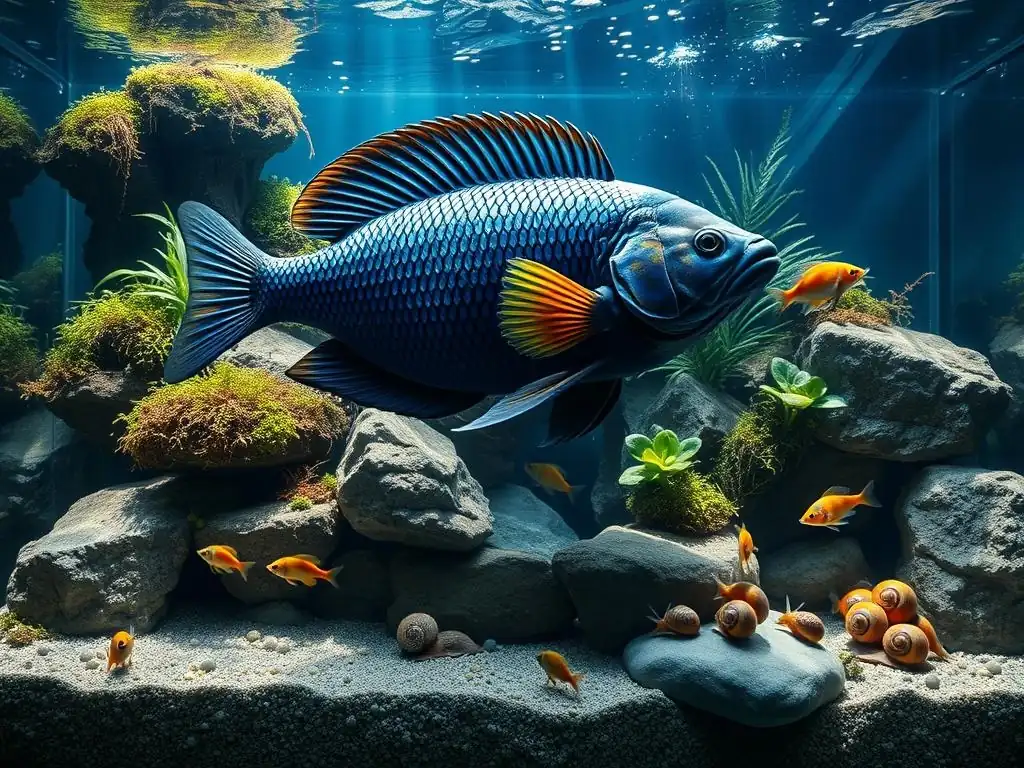
Strategic aquascaping is a powerful tool for Severum aggression management techniques, specifically by creating visual barriers and breaking up direct sightlines. Severums are territorial, and uninterrupted lines of sight across the tank can lead to constant visual confrontation between individuals. By introducing large pieces of driftwood, rock formations, and dense plant groupings, you can effectively segment the aquarium into multiple distinct territories. This allows each Severum to claim its own space without constantly seeing or being seen by other dominant fish, reducing the urge to defend their perceived territory.
For instance, a large piece of Mopani wood positioned centrally, or a stack of smooth river rocks creating a cave system, can serve as excellent visual breaks. When planning your layout, aim to create complex environments with multiple pathways and hidden corners. This reduces the "line of fire" effect, where a dominant fish can see and pursue another across the entire tank. Even in larger tanks, an open, barren layout can provoke aggression, whereas a thoughtfully designed aquascape promotes a sense of security and minimizes direct confrontations, making it a cornerstone of Severum aggression management techniques.
Providing Adequate Hiding Places for Severums
In conjunction with breaking up sightlines, providing ample hiding places is essential for Severum aggression management techniques. Hiding spots serve as crucial retreats for submissive or stressed Severums, allowing them to escape the attention of more dominant individuals. Without safe havens, bullied fish are under constant stress, which can lead to illness or even death. These hiding places can take various forms, including caves formed by rocks or ceramic decor, dense thickets of robust live plants like Anubias or Java Fern attached to driftwood, or even PVC pipes disguised within the aquascape.
It is important to provide more hiding spots than there are Severums, ideally at least one per fish, plus a few extra. This ensures that even if one spot is occupied, there are alternative safe zones available. For example, in a tank with four Severums, aiming for five to six distinct hiding spots or complex areas would be beneficial. The presence of these safe zones allows less dominant fish to de-stress and feel secure, which in turn reduces the overall tension in the tank and significantly contributes to effective Severum aggression management techniques.
Tank Mate Selection: Choosing Compatible Fish for Your Severum
Best Severum Tank Mates: Peaceful Community Fish
Selecting appropriate tank mates is a critical aspect of Severum aggression management techniques. While Severums can be territorial, they often coexist well with other robust, similarly sized, and generally peaceful fish that do not compete directly for the same resources or territory. Ideal tank mates are those that inhabit different levels of the water column, are not overly boisterous, and can hold their own without being aggressive themselves.
Excellent choices often include other large, peaceful cichlids that are not known for extreme aggression, such as certain species of Geophagus (Earth Eaters) or larger Acara species. Large, schooling tetras like Silver Dollars or Congo Tetras are also good options, as their size and schooling behavior make them less susceptible to bullying.
Large armored catfish, such as Plecos (e.g., Bristlenose or common Plecos, provided the tank is large enough) and various species of Synodontis catfish, are also generally compatible, as they occupy the bottom stratum and are well-protected. These species are typically too large to be seen as food and are hardy enough to withstand any minor territorial disputes, contributing to successful Severum aggression management techniques.
Fish to Avoid: Aggressive Tank Mates for Severums
Just as important as choosing good tank mates is knowing which fish to avoid when practicing Severum aggression management techniques. Certain species can either provoke aggression from Severums or become targets of their territoriality. Highly aggressive cichlids, such as Oscars, Flowerhorns, or Midas Cichlids, are generally unsuitable. Their boisterous nature and often extreme aggression can quickly overwhelm even a robust Severum, leading to constant stress, injury, or death for the Severum or other tank inhabitants.
Similarly, very small or delicate fish should be avoided. Small tetras, guppies, or other dainty community fish are likely to be seen as food or become constant targets of fin nipping. Their small size makes them vulnerable to predation, especially as Severums grow.
Fish with long, flowing fins, such as angelfish or fancy guppies, can also be targets for fin nipping, leading to stress and potential infection. Lastly, fish that are highly territorial themselves and inhabit the same mid-to-bottom water column as Severums, especially those of similar shape or coloration, should be approached with caution, as they are likely to engage in direct competition, complicating Severum aggression management techniques.
Diet and Feeding: Reducing Competition and Aggression
Ensuring Adequate Food for All Severums
Proper nutrition and equitable food distribution are vital, often overlooked, components of Severum aggression management techniques. In a multi-Severum tank, competition for food can quickly escalate into aggressive encounters, especially if one fish is consistently dominant at feeding time. To mitigate this, ensure that you are feeding a sufficient quantity of high-quality food to satisfy all inhabitants without overfeeding. A varied diet consisting of high-quality pellets or flakes, supplemented with frozen foods like bloodworms, brine shrimp, or chopped earthworms, provides essential nutrients and keeps fish engaged.
When feeding, it's beneficial to distribute the food across different areas of the tank. Instead of dropping all the food in one spot, scatter it widely or drop small portions in multiple locations. This encourages all Severums to forage and reduces the concentration of fish in one area, minimizing direct competition and allowing less dominant individuals to get their share. For instance, if you have three Severums, dropping food at three distinct points can help ensure each fish has access without direct confrontation, which is a key part of effective Severum aggression management techniques.
Feeding Techniques to Minimize Aggression
Beyond simply distributing food, specific feeding techniques can further reduce competition and aggression among Severums. One effective method is to feed smaller, more frequent meals rather than one large meal. For example, feeding twice or three times a day in smaller portions can help keep all fish satiated and reduce the urgency and aggression associated with a single, large feeding frenzy. This also mimics their natural foraging behavior more closely.
Another technique is to use different types of food simultaneously. For instance, you could drop sinking pellets for the bottom dwellers and floating flakes for the mid-water Severums, or offer frozen food in one area while dry food is in another. This diversification can help spread out the feeding activity and ensure that even the more timid Severums get their share without having to directly confront the dominant ones. By making feeding less of a high-stakes competition, you significantly contribute to overall Severum aggression management techniques and a more harmonious tank environment.
Water Quality and Maintenance: Stress Reduction for Severums
Maintaining Optimal Water Parameters
Maintaining pristine and stable water quality is a foundational element of effective Severum aggression management techniques. Poor water parameters are a significant source of stress for fish, and stressed fish are far more likely to exhibit aggressive behaviors. Severums thrive in clean, well-oxygenated water with stable conditions. Ideal parameters typically include a temperature range of 75-82°F (24-28°C), a pH between 6.0 and 7.5, and very low levels of ammonia, nitrite, and nitrate. Ammonia and nitrite should always be zero, while nitrates should ideally be kept below 20 ppm.
Regular testing of water parameters using a reliable liquid test kit is crucial. Any fluctuations or elevated levels of toxins can cause discomfort, weaken the fish's immune system, and make them irritable. For example, a sudden spike in nitrates from 10 ppm to 40 ppm after a skipped water change can induce stress, potentially leading to increased nipping or chasing. By consistently providing optimal water conditions, you create a healthy and less stressful environment, which directly contributes to the overall success of Severum aggression management techniques.
Regular Water Changes and Their Impact on Severum Behavior
Consistent and appropriately sized water changes are the primary method for maintaining optimal water quality and are therefore indispensable for Severum aggression management techniques. Weekly water changes of 25-30% are often recommended for tanks housing Severums, though larger tanks or those with a higher bioload might benefit from slightly larger or more frequent changes. This routine helps to dilute nitrates, replenish essential minerals, and remove accumulated organic waste that can contribute to poor water quality.
The positive impact of regular water changes on Severum behavior is profound. By removing pollutants and introducing fresh, conditioned water, you reduce the physiological stress on the fish, making them less prone to irritability and aggression. A tank that consistently smells fresh and has clear water is a good indicator of healthy conditions. For instance, a tank with irregular water changes might see an increase in territorial disputes and fin nipping, whereas the same tank with a consistent 25% weekly change often exhibits calmer, more natural behaviors. This consistent maintenance is a cornerstone for preventing and mitigating Severum aggression.
Addressing Existing Aggression Issues: Practical Solutions
Observation and Identification: Pinpointing the Aggressor
When aggression issues arise, the first critical step in Severum aggression management techniques is meticulous observation to accurately identify the aggressor and understand the nature of the conflict. It's not always the largest or most obvious fish; sometimes, a smaller, more territorial Severum can be the instigator. Spend time watching your tank, especially during feeding, after lights come on, or when new fish are introduced. Look for specific behaviors: which fish is initiating chases, flaring at others, or consistently nipping fins?
Pay attention to body language: the aggressor might display darkened colors, particularly around the head, and hold its fins stiffly, while the bullied fish might appear pale, have clamped fins, or constantly hide. Documenting these observations, perhaps over a few days, can provide valuable insights. For example, if you notice a specific 8-inch male Severum consistently chasing a 6-inch female during feeding, you've identified a key dynamic. This precise identification allows you to target your Severum aggression management techniques effectively rather than making generalized changes that might not address the root cause.
Re-arranging the Tank: Disrupting Established Territories
Once you've identified the aggressor or if aggression is widespread, a highly effective, albeit temporary, Severum aggression management technique is to completely re-arrange the tank decor. Severums are creatures of habit and establish territories based on the existing layout of rocks, wood, and plants. By significantly altering the aquascape, you effectively erase these established boundaries and force all fish to re-evaluate and re-establish new territories.
This disruption can temporarily confuse the dominant fish, giving the submissive ones a chance to claim new, safer spots. When re-arranging, focus on creating new visual barriers, caves, and open swimming spaces. For example, if a large central rock was the aggressor's stronghold, move it to a corner or replace it with multiple smaller pieces. This method is particularly useful when dealing with a single dominant Severum or a pair that has become overly territorial, as it resets the social dynamics and allows for a fresh start in applying Severum aggression management techniques.
Temporarily Separating Aggressive Severums: Quarantine Techniques
In cases of severe or persistent aggression, where other Severum aggression management techniques have failed, temporarily separating the aggressive Severum may be necessary to prevent serious harm or death to tank mates. This involves moving the aggressor to a separate quarantine tank or a large breeder net within the main tank. A quarantine tank of at least 20-30 gallons (75-113 liters) is ideal for this purpose, providing enough space for the fish without further stressing it.
The duration of separation can vary, but typically a period of one to two weeks is sufficient. This time away from the main display allows the bullied fish to recover from stress and injuries, and it can also cause the aggressive Severum to lose its dominance and territorial claims within the main tank. Upon reintroduction, the previously dominant fish may be perceived as a newcomer, forcing it to integrate more cautiously into the existing hierarchy. When reintroducing, ensure the main tank's layout has been modified to further disrupt old territories, maximizing the success of this Severum aggression management technique.
Introducing New Severums: A Gradual Acclimation Process
Introducing new Severums, or any new fish, into an established Severum tank requires a careful, gradual acclimation process to minimize stress and prevent aggression. Simply dropping a new fish into an existing setup can provoke severe territorial disputes. A crucial Severum aggression management technique here is to use a quarantine tank for at least two to four weeks for any new fish. This period allows you to observe the new fish for signs of disease and allows it to de-stress from transport.
Before introducing the new Severum into the main tank, consider dimming the tank lights or even turning them off completely. You might also want to re-arrange some of the existing decor in the main tank just before introduction, as discussed previously, to disrupt existing territories.
Introduce the new fish after feeding the existing Severums, when they are less focused on territorial disputes. Some aquarists even float the new Severum in a clear container within the main tank for a day or two, allowing the existing fish to see and get used to the newcomer without direct contact, further aiding in effective Severum aggression management techniques.
Severum Aggression Prevention: Long-Term Strategies
Maintaining a Balanced Ecosystem: Promoting Harmony in the Aquarium
Long-term Severum aggression management techniques revolve around fostering a balanced and stable aquarium ecosystem. This extends beyond just water parameters and includes creating an environment where all inhabitants feel secure and have their needs met. A balanced ecosystem implies a healthy biological filter, consistent temperature, adequate oxygenation, and a well-established nitrogen cycle. When these fundamental elements are in place, fish are less stressed and more likely to exhibit their natural, peaceful behaviors.
Consider the role of live plants in promoting harmony. Beyond their aesthetic appeal and contribution to water quality, dense plant groupings provide natural hiding spots and visual barriers, which are crucial for Severum aggression management techniques. A tank with robust plant growth, appropriate substrate, and well-maintained filtration creates a more natural and less stressful environment. For example, a tank with healthy plant growth and a stable pH of 6.8 will likely see fewer stress-induced aggressive outbursts compared to a barren tank with fluctuating pH.
Monitoring Severum Behavior: Early Detection of Potential Problems
Consistent and diligent monitoring of Severum behavior is a proactive Severum aggression management technique that allows for early detection of potential problems. Don't just observe during feeding times; take a few minutes each day to watch the interactions between your Severums and their tank mates. Look for subtle changes in their typical behavior, such as one fish consistently chasing another, fin nipping that wasn't present before, or a fish constantly hiding or exhibiting clamped fins.
Early detection allows you to intervene before aggression escalates into serious injury or chronic stress. For instance, if you notice a particular Severum starting to display increased territoriality around a specific rock, you might proactively re-arrange that area or add another hiding spot nearby. Addressing minor squabbles or changes in behavior promptly can prevent them from becoming full-blown aggressive conflicts. This continuous vigilance is key to maintaining a peaceful Severum aquarium for the long term.
Reviewing and Adjusting Tank Conditions: Adapting to Changing Needs
As Severums grow and mature, their needs and behaviors can change, necessitating a flexible approach to Severum aggression management techniques. A tank setup that was perfectly adequate for juvenile Severums might become cramped or insufficient for adults. Regularly review your tank conditions and be prepared to make adjustments. This might mean upgrading to a larger tank as your Severums grow from 4 inches to 10 inches, or adding more decor as they mature and become more territorial.
Consider the dynamic nature of a fish community. If you introduce new fish or if a pair begins to breed, the existing social hierarchy and territorial dynamics will shift. Be ready to adapt your aquascape, feeding regimen, or even tank mate composition in response to these changes. For example, a breeding pair of Severums will require significantly more personal space and may become highly aggressive towards others, potentially necessitating temporary separation or a dedicated breeding tank. This ongoing assessment and willingness to adjust are crucial for sustained success in Severum aggression management techniques.
Conclusion: Achieving a Peaceful Aquarium with Your Severums
Frequently Asked Questions
What are the primary indicators of aggression in Severum cichlids?
The main signs of aggression include chasing, nipping fins, and establishing territories with aggressive displays. Pay close attention to how they interact with tank mates.
Is Severum aggression more common in freshwater or saltwater aquariums?
Severum cichlids are freshwater fish, so aggression is only a concern in freshwater setups. They are not suitable for saltwater environments.
How does tank size impact Severum aggression levels?
Smaller tanks can exacerbate aggression, as there is less space for fish to establish territories and escape conflict. A larger tank is essential for reducing stress.
What are some effective strategies for managing Severum aggression?
Introduce tank mates carefully, ensuring they are of comparable size and temperament. Also, providing ample hiding places and breaking up sightlines is helpful.
How can I prevent Severum aggression from escalating to harmful levels?
Regularly monitor water parameters and perform frequent water changes to reduce stress. Also, ensure your Severums have a balanced diet and adequate space.
The intricacies of aquarium keeping, particularly when dealing with cichlids like Severums, highlight a crucial intersection between understanding animal behavior and responsible pet ownership. The need for effective Severum aggression management techniques is more relevant than ever, as hobbyists strive to create thriving and balanced aquatic ecosystems. Ignoring the potential for aggression can lead to stress, injury, and even death within the aquarium, underscoring the importance of proactive and informed care.
The challenges of managing Severum aggression reflect a broader understanding of how environmental factors and social dynamics shape animal behavior. My own experiences observing these fascinating fish have reinforced the importance of careful observation and adaptive strategies. The greatness of a nation and its moral progress can be judged by the way its animals are treated.
- Mahatma Gandhi. This quote, while often applied to broader animal welfare, resonates deeply when considering the ethical responsibility we have to create enriching and harmonious environments for the creatures in our care, even within the confines of an aquarium.
As you navigate the complexities of Severum keeping, remember that creating a peaceful aquarium is an ongoing process of learning and adaptation. Consider the insights shared in this article not just as a set of rules, but as a foundation for developing your own intuitive understanding of your fish. Embrace the challenge of creating a balanced ecosystem, and you will be rewarded with the vibrant beauty and captivating behavior of these remarkable creatures.
Ignite Your Severum's Harmony!
Thank you for diving into the world of Severums! We hope this article has shed light on understanding and managing aggression in these fascinating fish. Now, let's translate that knowledge into action and create a thriving community in your aquarium.
Here are some steps you can take right away:
- Prioritize providing a spacious environment for your Severums and tankmates. A larger tank can significantly reduce territorial disputes.
- Experiment with rearranging your tank decorations to disrupt established territories and minimize aggression. A fresh layout can do wonders!
- Share your experience and insights on managing Severum aggression in the comments section below. What strategies have worked for you?
What innovative tank design will you implement to foster a peaceful environment for your Severums?