
The Ultimate Betta Fish Care Guide: From Novice to Expert

Welcome to Aquarium Mastery!
Curious about keeping those captivating Bettas happy and healthy? Dive in! This Bettas Care Beginner Guide unlocks the secrets to thriving Betta splendens, even if you're just starting your aquarium journey. Prepare to be amazed by the vibrant world you're about to create – let's explore the fundamentals together and transform you from a novice to a Betta expert!
- Introduction to Betta Fish Care: A Beginner's Guide
- Setting Up the Ideal Betta Fish Tank Environment
- Betta Fish Water Quality: Maintaining a Healthy Ecosystem
- Feeding Your Betta Fish: Nutritional Needs and Diet
- Betta Fish Health: Recognizing and Treating Common Diseases
- Betta Fish Behavior: Understanding Their Unique Personalities
- Troubleshooting Common Betta Fish Problems
- Betta Fish Care Checklist: A Quick Reference Guide for Beginners
- Conclusion: Mastering Betta Fish Care for a Thriving Aquarium
- Frequently Asked Questions
- Final Reflection: The Enduring Allure of the Betta
- Ignite Your Betta Brilliance!
Introduction to Betta Fish Care: A Beginner's Guide
Why Betta Fish Are Popular Aquarium Choices
Betta fish, scientifically known as Betta splendens or Siamese Fighting Fish, are renowned for their striking beauty and vibrant colors, making them incredibly popular choices for both novice and experienced aquarists. Their flowing fins, often resembling delicate silk, come in an astonishing array of shapes and hues—from deep reds and blues to iridescent greens and purples. Beyond their aesthetic appeal, Bettas also exhibit captivating personalities, often interacting with their owners and exploring their environment with curiosity, which adds to their charm and appeal as aquatic companions.
While often mistakenly housed in tiny bowls, the true allure of a Betta fish unfolds when provided with a proper, spacious habitat that caters to their specific needs. Their relatively compact size, compared to many larger freshwater fish, makes them suitable for smaller aquariums, typically 5 to 10 gallons for a single specimen. This accessibility, combined with their unique behaviors like bubble nesting and flaring, solidifies their status as a beloved centerpiece in many home aquariums, encouraging many to seek a comprehensive Bettas care beginner guide.
Understanding Betta Fish Needs: A Quick Overview
Originating from the shallow, warm, slow-moving waters of Southeast Asia, Betta fish have specific environmental requirements that must be met to ensure their health and longevity. Unlike the common misconception that they thrive in small, stagnant puddles, their natural habitat is vast and vegetated, providing plenty of space and hiding spots. Key needs include consistently warm water temperatures, a meticulously clean environment, a high-protein diet, and ample space for exploration and comfort.
Despite their reputation for hardiness, Bettas are sensitive to poor water quality and fluctuating temperatures. They are not simply "easy" fish that can be neglected; rather, they require diligent care, a properly cycled tank, and a keen understanding of their unique physiology and behavior. A truly successful Bettas care beginner guide emphasizes that providing these fundamental conditions goes beyond mere survival, allowing these magnificent fish to truly thrive, display their natural behaviors, and live out their full lifespan, which can extend to 3-5 years with optimal care.
Setting Up the Ideal Betta Fish Tank Environment
Choosing the Right Size Tank for Your Betta: Beyond the Bowl
The pervasive myth that Betta fish can thrive in tiny bowls or vases is one of the most damaging misconceptions in the aquarium hobby. Bowls are detrimental to a Betta's health for several reasons: they lack the space for proper filtration and heating, leading to rapid temperature fluctuations and toxic waste buildup. Without sufficient volume, ammonia and nitrite levels can spike dangerously quickly, severely impacting the fish's respiratory system and overall well-being.
For a single Betta fish, a minimum tank size of 5 gallons (approximately 19 liters) is widely recommended. This volume provides enough water to dilute waste products, allows for stable temperature maintenance with a heater, and offers adequate swimming space. A 10-gallon tank (around 38 liters) is even better, providing enhanced stability for water parameters, more room for decor, and a larger buffer against potential water quality issues, making it an ideal choice for anyone following a comprehensive Bettas care beginner guide. Larger tanks are always preferable for maintaining a healthier, more stable environment.
Essential Equipment for a Healthy Betta Tank: Filter, Heater, and Lighting
A functional filtration system is paramount for maintaining pristine water quality in a Betta tank. Filters remove solid waste mechanically, convert toxic ammonia and nitrite into less harmful nitrate through biological filtration, and can remove impurities chemically. For Bettas, which prefer calm waters, a gentle filter like a sponge filter or a low-flow hang-on-back (HOB) filter with a baffle is ideal. Strong currents can stress Bettas, tear their delicate fins, and make swimming difficult, so selecting the right type and flow rate is a critical step in a Bettas care beginner guide.
As tropical fish, Bettas require stable water temperatures, ideally between 78-82°F (25.5-27.8°C). A submersible aquarium heater with a thermostat is thus an indispensable piece of equipment. Consistent temperature prevents stress, boosts their immune system, and ensures proper metabolic function. Fluctuations, even by a few degrees, can weaken a Betta and make it susceptible to diseases. Appropriate lighting, typically an LED light, is also necessary to establish a natural day/night cycle for the fish, support live plant growth (if used), and allow for proper observation of your Betta's health and behavior.
Substrate Selection for Betta Tanks: Gravel vs. Sand
When choosing a substrate for a Betta tank, both gravel and sand have their merits and drawbacks. Gravel is a popular choice due to its ease of cleaning and ability to anchor live plants effectively. However, it's crucial to select smooth, rounded gravel to prevent any sharp edges from tearing a Betta's delicate fins. Additionally, detritus and uneaten food can accumulate deep within coarse gravel, requiring thorough vacuuming during water changes to prevent the buildup of harmful compounds.
Sand, particularly fine-grained aquarium sand, offers a more natural aesthetic and can be safer for Bettas with long, flowing fins as it lacks sharp edges. Waste tends to sit on top of sand, making it easier to siphon during cleaning. However, sand can compact over time, potentially leading to anaerobic pockets if not stirred periodically, and requires very thorough rinsing before being added to the tank to prevent cloudiness. Ultimately, the choice depends on personal preference and maintenance routine, but ensuring the substrate is safe and easy to keep clean is key for any Bettas care beginner guide.
Decorating Your Betta Tank: Creating a Stress-Free Habitat
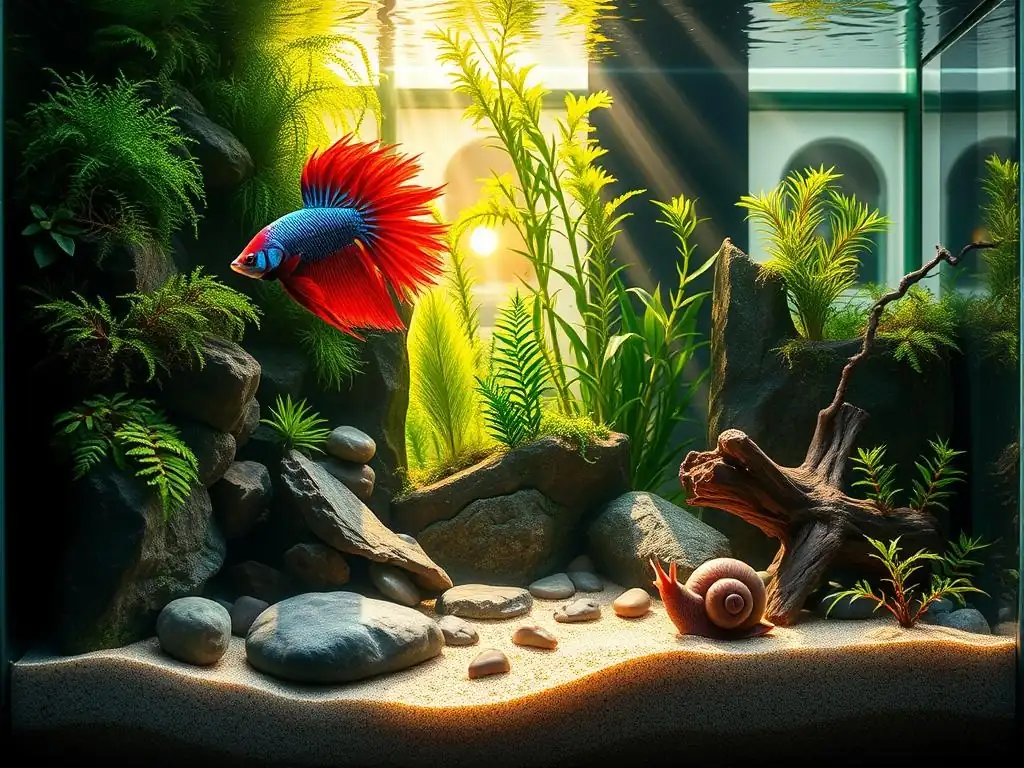
Decorating your Betta tank goes beyond aesthetics; it's about creating a stimulating and secure environment that mimics their natural habitat. Bettas are intelligent and curious fish that thrive when they have places to explore, hide, and rest. A well-decorated tank provides visual barriers, which can reduce stress by making the Betta feel more secure, and offers various textures and shapes for interaction. It's important to balance open swimming spaces with densely planted or decorated areas to cater to their dual need for exploration and security.
When selecting decorations, prioritize items that are smooth and free of sharp edges or rough textures that could snag or tear a Betta's delicate fins. Always perform a "nylon stocking test" by running a piece of pantyhose over the decoration; if it snags, it's not safe for your Betta. Natural driftwood (properly prepared to prevent leaching tannins and sinking) and smooth river rocks are excellent, safe choices. Avoid artificial decorations with small, restrictive holes where a Betta might get stuck.
Live Plants for Betta Fish: Benefits and Recommendations
Live plants are highly beneficial for Betta fish tanks, offering a multitude of advantages that contribute to a healthier, more natural ecosystem. They act as natural filters, absorbing nitrates and other waste products, thus improving water quality. Plants also oxygenate the water during the day, provide excellent hiding spots and resting places for Bettas, and significantly reduce stress by mimicking their densely vegetated natural habitats. The presence of live plants can also encourage natural behaviors, such as exploring and resting on broad leaves.
For a Bettas care beginner guide, several easy-to-care-for live plants are highly recommended. Anubias species and Java Fern are excellent choices as they can be attached to driftwood or rocks, requiring minimal substrate. Amazon Sword plants and Water Wisteria are also popular, providing dense foliage and good cover. Cryptocoryne species are another great option, offering a variety of leaf shapes and colors. Ensure any plants with sharp or rigid leaves, like certain plastic plants, are avoided to protect your Betta's delicate fins.
Safe Decorations for Betta Fish: Avoiding Hazards
Ensuring all decorations are safe is a critical aspect of Betta fish care. The delicate, flowing fins of Bettas are highly susceptible to damage from rough surfaces or sharp edges. Common culprits include cheap plastic plants with sharp seams, abrasive rocks, or decorations with small, narrow openings where a Betta could get trapped. Always inspect any new decoration meticulously before adding it to the tank.
Opt for natural elements such as smooth river stones, polished glass pebbles, or properly cured driftwood. Silk plants are a fantastic alternative to live plants if you prefer low maintenance, as they are soft and pose no risk to fins. When choosing artificial caves or hideouts, ensure the openings are large enough for your Betta to comfortably swim through and that there are no sharp internal edges. Prioritizing safety in decor selection is a small but crucial step in preventing injuries and stress for your Betta, a key point in any thorough Bettas care beginner guide.
Betta Fish Water Quality: Maintaining a Healthy Ecosystem
The Importance of Water Parameters: pH, Ammonia, Nitrite, and Nitrate
Maintaining stable and appropriate water parameters is the cornerstone of Betta fish health. Ammonia (NH3/NH4+) and nitrite (NO2-) are highly toxic compounds produced from fish waste and decaying organic matter. Even in small concentrations, they can cause severe gill damage, stress, and ultimately lead to death. Nitrate (NO3-), the end product of the nitrogen cycle, is less toxic but still harmful in high concentrations, necessitating regular removal through water changes.
For Bettas, the ideal water parameters include: Ammonia at 0 parts per million (ppm), Nitrite at 0 ppm, and Nitrate ideally below 20 ppm (with less than 10 ppm being optimal). The pH level should be maintained within a range of 6.5 to 7.5, which is slightly acidic to neutral, reflecting their natural soft water habitat. Consistent monitoring of these parameters through regular testing is essential for a thriving Betta, making it a central focus of any reliable Bettas care beginner guide.
Cycling Your Betta Fish Tank: Establishing a Beneficial Bacteria Colony
Tank cycling is a fundamental process that establishes a colony of beneficial bacteria in your aquarium filter and substrate. These bacteria are vital for converting the highly toxic ammonia, produced by fish waste and decaying food, into less toxic nitrite, and then further into relatively harmless nitrate. Without a properly cycled tank, Bettas are exposed to lethal levels of ammonia and nitrite, leading to "new tank syndrome" and often, the death of the fish.
The most recommended method for a Bettas care beginner guide is fishless cycling, which involves adding a controlled ammonia source (like pure ammonia solution or fish food) to the empty tank and monitoring parameter changes until beneficial bacteria populations are established. This process typically takes 4 to 6 weeks. Once ammonia and nitrite consistently read zero, and nitrates are present, the tank is considered cycled and safe for a Betta. This proactive approach prevents immense stress and potential harm to your fish.
Water Changes for Betta Fish: Frequency and Procedure
Regular water changes are indispensable for maintaining excellent water quality and removing accumulated nitrates, which cannot be entirely processed by beneficial bacteria. The frequency and volume of water changes depend on tank size, filtration efficiency, and the bioload (amount of waste produced). For a 5-gallon Betta tank, a 25-30% water change weekly is often recommended. For a 10-gallon tank, 20-25% bi-weekly might suffice, but weekly changes are always safer, especially for a Bettas care beginner guide.
To perform a water change, use an aquarium siphon or gravel vacuum to remove the old water and detritus from the substrate. Always treat new tap water with a reputable water conditioner to neutralize chlorine and chloramines, which are lethal to fish and beneficial bacteria. Crucially, ensure the temperature of the new water matches the tank water closely, within a degree or two, to prevent shocking your Betta. Gradual, consistent water changes are far less stressful than infrequent, large volume changes.
Water Testing for Betta Fish: Ensuring Optimal Conditions
Regular water testing is the only reliable way to know if your Betta's aquatic environment is healthy and stable. Relying solely on visual cues can be misleading, as problems may be advanced before symptoms appear in your fish. A liquid-based test kit, such as the API Freshwater Master Test Kit, is highly recommended over test strips, as liquid kits provide more accurate and reliable readings for ammonia, nitrite, nitrate, and pH.
For a Bettas care beginner guide, it's advisable to test your water parameters weekly, especially during the initial cycling phase and after adding new fish or decor. Once the tank is well-established and stable, testing every two weeks or monthly might be sufficient, but always test immediately if you observe any signs of stress or illness in your Betta. Consistent monitoring allows for early detection and correction of issues, preventing health problems before they become severe.
Feeding Your Betta Fish: Nutritional Needs and Diet
Understanding Betta Fish Dietary Requirements: Protein is Key
Betta fish are primarily carnivores, meaning their natural diet consists mainly of insects and insect larvae found in their native rice paddies and slow-moving streams. Therefore, their captive diet must reflect this high-protein requirement. A good quality Betta food should contain a minimum of 35-40% protein to support their vibrant colors, strong immune system, and overall vitality. Diets low in protein can lead to lethargy, dull coloration, and susceptibility to disease.
Providing a varied diet is just as important as ensuring high protein content. Relying on a single type of food, even a high-quality pellet, can lead to nutritional deficiencies over time. Incorporating different types of protein sources and textures helps ensure a complete nutritional profile and keeps your Betta stimulated and engaged during feeding. This varied approach to nutrition is a cornerstone of any effective Bettas care beginner guide.
Best Food Options for Betta Fish: Pellets, Flakes, and Live Foods
High-quality Betta pellets should form the staple of your Betta's diet. Brands like Hikari Bio-Gold, New Life Spectrum Betta Formula, or Omega One Betta Pellets are specifically formulated to meet their carnivorous needs, often containing shrimp meal, fish meal, and various vitamins. These pellets are designed to sink slowly, allowing Bettas, which often feed from the surface, ample time to consume them. While some Betta flakes exist, they are generally less nutritionally dense and can quickly pollute the water if not fully consumed.
To provide dietary variety and essential nutrients, supplement pellets with live or frozen foods 2-3 times per week. Excellent options include frozen or freeze-dried bloodworms, brine shrimp, and daphnia. Live foods like mosquito larvae (if safely sourced) or small worms can also be offered, stimulating their natural hunting instincts. These supplements are highly palatable and provide crucial vitamins and minerals, contributing significantly to your Betta's long-term health and vibrancy, a key part of an advanced Bettas care beginner guide.
Feeding Schedule for Betta Fish: How Much and How Often
Overfeeding is one of the most common mistakes made by new aquarists and can lead to serious health problems for your Betta. A Betta's stomach is roughly the size of its eye, so only a small amount of food is needed per meal. A recommended feeding schedule is to offer 2-4 high-quality Betta pellets twice a day, or an equivalent small amount of live/frozen food. The key is to provide only what your Betta can consume completely within 2-3 minutes.
It is generally better to slightly underfeed than to overfeed. Uneaten food quickly decays in the tank, leading to ammonia spikes and deteriorating water quality. Some aquarists even recommend skipping one day of feeding per week to allow the Betta's digestive system to clear out, which can help prevent issues like bloating and constipation. Observing your Betta's appetite and body condition will help you fine-tune the feeding amount, a crucial tip for any Bettas care beginner guide.
Avoiding Overfeeding: Preventing Health Problems
The consequences of overfeeding extend beyond just polluting the tank water. Internally, consistently overfeeding can lead to severe health issues for your Betta. Common problems include swim bladder disease (where the Betta struggles to swim properly, often floating uncontrollably or sinking), bloating, and severe constipation, which can be fatal if left untreated. These conditions are often a direct result of an overloaded digestive system.
To prevent overfeeding, adhere strictly to the recommended portion sizes and feeding frequency. Always remove any uneaten food from the tank promptly after the feeding period using a small net or siphon. This simple step prevents the food from decaying and contributing to poor water quality. By exercising portion control and vigilance, you ensure your Betta receives adequate nutrition without risking its health or compromising the delicate balance of its aquatic environment.
Betta Fish Health: Recognizing and Treating Common Diseases
Identifying Signs of Illness in Betta Fish
Early detection of illness is paramount for successful treatment and recovery in Betta fish. Regular observation of your Betta's behavior and physical appearance is crucial. Signs of a healthy Betta include vibrant colors, active exploration of the tank, strong swimming, and a hearty appetite. Any deviation from these norms should be a cause for concern and prompt further investigation.
Key indicators of illness include changes in behavior such as lethargy, hiding excessively, rubbing against tank decorations (flashing), or gasping at the surface. Physical symptoms can range from clamped or frayed fins, dull or faded coloration, white spots resembling salt grains (Ich), a dusty gold or rust-colored coating (Velvet), bloating, pop-eye (bulging eyes), or visible sores and lesions. Promptly addressing these signs is a vital step in any comprehensive Bettas care beginner guide.
Common Betta Fish Diseases: Fin Rot, Ich, and Velvet
Fin Rot is a common bacterial infection often caused by poor water quality, stress, or injury. Symptoms include the edges of the fins appearing frayed, ragged, or disintegrating, sometimes with a dark or reddish rim. If left untreated, it can progress to the body, causing severe tissue damage. Improving water quality is the first and most critical step in treating fin rot.
Ich, or White Spot Disease, is a highly contagious parasitic infection identifiable by small, white, salt-like spots on the fish's body and fins. Affected Bettas may also exhibit flashing behavior due to intense itching. Velvet (Oodinium) is another parasitic infection, often appearing as a fine, dusty, yellowish or gold coating on the fish's skin, which can be difficult to see without strong lighting. Both Ich and Velvet can severely damage gills, leading to rapid breathing and lethargy, and require swift intervention.
Treating Betta Fish Diseases: Medications and Natural Remedies
For Fin Rot, the primary treatment involves immediate and significant improvement of water quality through daily small water changes (25-50%). In mild cases, adding Indian Almond Leaves (IAL) can aid healing due to their mild antiseptic properties. For more severe bacterial infections, broad-spectrum antibiotics like those containing nitrofurazone or kanamycin (e.g., API Fin & Body Cure, Seachem KanaPlex) may be necessary, always following dosage instructions carefully.
Treating Ich typically involves gradually raising the tank temperature to 82-84°F (28-29°C) over 24 hours (if no sensitive tank mates are present) and using an Ich medication (e.g., Seachem ParaGuard, API Super Ick Cure). The elevated temperature accelerates the parasite's life cycle, making it more vulnerable to medication. For Velvet, copper-based medications (e.g., Seachem Cupramine) or specific velvet treatments are effective; it's also advisable to turn off tank lights during treatment as the parasite is photosynthetic. Always remove activated carbon from the filter during medication to ensure efficacy.
Preventing Betta Fish Diseases: Proactive Care Strategies
Prevention is the most effective approach to Betta fish health. The vast majority of Betta diseases are stress-related and can be directly linked to poor water quality or unstable environmental conditions. Therefore, the cornerstone of disease prevention is maintaining pristine water parameters through proper tank cycling, regular water changes, and consistent water testing. A stable, clean environment significantly boosts your Betta's immune system.
Beyond water quality, other proactive strategies include providing a varied and nutritious diet to ensure optimal health and resilience. Maintaining a stable water temperature within the ideal range (78-82°F) is crucial, as temperature fluctuations cause stress. Avoid overcrowding, even if considering a community tank, and always quarantine new fish for 2-4 weeks in a separate tank before introducing them to your main Betta setup to prevent the spread of potential pathogens. Minimizing stress through appropriate tank decor and gentle handling further contributes to a robust and healthy Betta, a critical component of any comprehensive Bettas care beginner guide.
Betta Fish Behavior: Understanding Their Unique Personalities
Betta Fish Aggression: Managing Tank Mates (or Lack Thereof)
Betta fish earned their common name, "Siamese Fighting Fish," due to the highly territorial and aggressive nature of male Bettas, particularly towards other males. Placing two male Bettas together, even in a large tank, almost invariably results in violent fights that often lead to severe injury or death. Females can also exhibit aggression, especially if housed together in insufficient numbers or space, a setup often referred to as a "sorority tank" which requires advanced care and a very large, heavily planted aquarium.
For most aquarists, especially those following a Bettas care beginner guide, the safest and most recommended approach is to keep a single male Betta alone in its own tank. If considering tank mates, choose species that are peaceful, fast-moving, and do not possess long, flowing fins that could be mistaken for another Betta. Good candidates for a sufficiently large tank (10+ gallons) might include Otocinclus catfish, some smaller Corydoras species, or various snail species. Avoid bright, colorful, or fin-nipping fish that could either provoke or harm your Betta.
Recognizing Normal Betta Fish Behavior: Exploring and Interacting
A healthy and thriving Betta fish exhibits a range of fascinating and often interactive behaviors. They are naturally curious creatures and will spend much of their time actively exploring every corner of their tank, darting between plants and investigating decorations. Many Bettas will also recognize and interact with their owners, often swimming to the front of the tank when approached, following finger movements outside the glass, or even "begging" for food.
Other normal behaviors include the male Betta's tendency to build bubble nests at the water's surface, a clear sign of health and readiness to breed. Occasional flaring, where they extend their gill covers and fins to appear larger, is also normal, often directed at their reflection, other fish (if present), or even sometimes at their owner. Resting on leaves or substrate is also common, as Bettas enjoy having comfortable perching spots. Observing these positive signs indicates a happy and well-adjusted Betta, a testament to good care.
Enrichment for Betta Fish: Keeping Them Stimulated
Bettas are intelligent fish that benefit significantly from environmental enrichment. A bare tank can lead to boredom and stress, potentially contributing to lethargy or even self-mutilation (like fin biting). Providing a stimulating environment encourages natural behaviors and keeps your Betta mentally and physically active. This involves more than just basic decorations; it's about offering variety and opportunities for exploration.
Enrichment can include rearranging tank decor during water changes to offer new exploration routes, providing floating Betta logs or leaves where they can rest near the surface, or even introducing very safe, non-toxic "toys" like a clean ping-pong ball for them to nudge. Gently interacting with your Betta, such as through careful hand-feeding or playing simple games with a pointer, can also provide mental stimulation. A well-enriched Betta is generally more vibrant, active, and less prone to stress-related issues.
Troubleshooting Common Betta Fish Problems
My Betta Fish is Not Eating: Possible Causes and Solutions
A Betta refusing to eat is a significant cause for concern and often indicates an underlying problem. The most common culprits include poor water quality (elevated ammonia, nitrite, or nitrate levels), incorrect water temperature (too cold, as Bettas become lethargic and lose appetite in cool water), or stress from an improper environment. Illnesses such as internal parasites or bacterial infections can also cause appetite loss.
To address this, first, immediately test all water parameters (ammonia, nitrite, nitrate, pH, and temperature) and correct any imbalances through water changes and temperature adjustments. Ensure the tank temperature is consistently within the ideal 78-82°F range. Offer a variety of highly palatable foods, such as frozen bloodworms or brine shrimp, to entice eating. If water quality and temperature are optimal and the Betta still refuses food, observe closely for other signs of illness and consider appropriate treatment. This systematic approach is key for any Bettas care beginner guide.
My Betta Fish is Lethargic: Diagnosing the Problem
Lethargy, characterized by unusual inactivity, prolonged resting at the bottom or surface, or clamped fins, is a general symptom of stress or illness in Betta fish. It indicates that something in their environment or health is not right. Common causes include poor water quality, incorrect or fluctuating water temperature, lack of oxygen, or the onset of a specific disease.
Upon noticing lethargy, the first and most crucial step is to test your water parameters thoroughly. Address any issues with ammonia, nitrite, or nitrate by performing immediate water changes. Verify that your heater is functioning correctly and maintaining a stable temperature. Check for signs of external parasites or bacterial infections. If the tank is heavily planted or has low surface agitation, consider adding an air stone to increase oxygenation. Persistent lethargy, even after environmental corrections, warrants a closer look for specific disease symptoms.
My Betta Fish's Fins Are Damaged: Understanding Fin Rot and Tears
Damaged fins in a Betta fish can be attributed to two primary causes: Fin Rot, a bacterial infection, or physical tears. Fin Rot typically presents as frayed, ragged, or disintegrating fins, often with a dark or reddish edge, and is almost always a result of poor water quality or prolonged stress. The fins appear to be "melting" away.
Physical tears, on the other hand, are usually cleaner breaks or splits in the fins and can be caused by sharp tank decorations, aggressive tank mates (if any), or even the Betta nipping its own fins out of stress or boredom. To treat fin rot, focus on improving water quality with daily partial water changes and consider medication if severe. For tears, remove any sharp decor, ensure tank mates are appropriate, and maintain pristine water conditions to promote natural healing. Adding Indian Almond Leaves can also aid in fin regeneration due to their beneficial properties.
Betta Fish Care Checklist: A Quick Reference Guide for Beginners
- Tank Setup:
- [ ] Minimum 5-gallon tank (10+ gallons recommended).
- [ ] Reliable heater set to 78-82°F (25.5-27.8°C).
- [ ] Gentle filter (sponge or baffled HOB).
- [ ] Smooth substrate (fine gravel or sand).
- [ ] Safe, smooth decorations and plenty of hiding spots.
- [ ] Live plants (Anubias, Java Fern) or soft silk plants.
- [ ] Appropriate lighting for a day/night cycle.
- Water Quality:
- [ ] Tank is fully cycled (Ammonia 0 ppm, Nitrite 0 ppm).
- [ ] Nitrate below 20 ppm (ideally <10 ppm).
- [ ] pH between 6.5-7.5.
- [ ] Weekly water changes (25-30% for 5-gallon, 20-25% for 10-gallon).
- [ ] Water conditioner used with every water change.
- [ ] Regular water testing with a liquid test kit.
- Feeding:
- [ ] High-quality Betta pellets as a staple.
- [ ] Supplement with frozen/freeze-dried bloodworms, brine shrimp 2-3 times/week.
- [ ] Feed 2-4 pellets twice daily, or equivalent amount.
- [ ] Remove uneaten food promptly.
- [ ] Consider skipping one feeding day per week.
- Health & Behavior:
- [ ] Observe Betta daily for signs of illness (lethargy, clamped fins, spots).
- [ ] Ensure stable water temperature to prevent stress.
- [ ] Provide enrichment (varied decor, Betta log).
- [ ] Avoid aggressive or fin-nipping tank mates (or keep alone).
- [ ] Quarantine new fish before introduction.
Conclusion: Mastering Betta Fish Care for a Thriving Aquarium
Caring for a Betta fish is a rewarding experience that extends far beyond simply putting a fish in a bowl. By understanding and diligently applying the principles outlined in this Bettas care beginner guide, you empower your Betta to not just survive, but truly thrive. From selecting the appropriate tank size and essential equipment to meticulously maintaining water quality and providing a varied, nutritious diet, each step contributes to a healthy, vibrant, and long-lived aquatic companion.
The unique personalities and stunning beauty of Betta fish are best showcased when their specific needs are met with consistent, informed care. Mastering Betta fish care involves proactive monitoring of water parameters, keen observation of behavior for early signs of illness, and a commitment to providing an enriching, stress-free environment. With this comprehensive knowledge, even a novice aquarist can confidently create an optimal habitat, ensuring their Betta flourishes and brings years of joy and fascination to their home aquarium.
Frequently Asked Questions
How do I set up a suitable aquarium for a Betta fish?
A suitable Betta aquarium should be at least 5 gallons in size, equipped with a filter and heater to maintain stable water conditions. Decorate with smooth decorations and live plants to provide hiding places.
What are the ideal water parameters for Betta fish?
Bettas thrive in water temperatures between 78-82°F (25-28°C). The pH should be around 6.5-7.5, and ammonia and nitrite levels should always be zero.
What should I feed my Betta fish?
Bettas are carnivores and should be fed a diet of high-quality Betta pellets or flakes. Supplement their diet with live or frozen foods like bloodworms or brine shrimp for variety and optimal health.
How often should I perform water changes in my Betta tank?
Perform 25-50% water changes weekly to maintain water quality. Use a water conditioner to remove chlorine and chloramine from tap water before adding it to the tank.
Can I keep Betta fish with other fish or invertebrates?
Bettas can be aggressive, especially males. It's best to keep them alone in their own tank. If you choose to keep them with tank mates, select peaceful species and ensure the tank is large enough to provide ample space.
Final Reflection: The Enduring Allure of the Betta
The journey from novice to expert in Betta fish care, as we've explored, is more than just mastering water parameters and feeding schedules; it's about fostering a deep connection with these captivating creatures. This connection, in our increasingly disconnected world, offers a unique opportunity to cultivate patience, responsibility, and a profound appreciation for the delicate balance of life. The principles of responsible Betta keeping – meticulous research, attentive observation, and a commitment to providing a thriving environment – extend far beyond the aquarium glass, offering valuable lessons applicable to all aspects of our lives.
The Betta fish, with its vibrant colors and intricate finnage, has captivated hearts for generations, becoming a symbol of beauty and resilience. My own fascination with these fish began with a simple curiosity, blossoming into a deep respect for their complex needs and individual personalities. This journey underscores the importance of continuous learning and adaptation, not just in Betta care, but in all our endeavors. The best way to learn is by doing. The only way to master is by teaching.
This sentiment perfectly encapsulates the spirit of this guide, encouraging readers to not only care for their Bettas but also to share their knowledge and inspire others.
Now, as you embark on your own Betta keeping adventure, remember that you are not just a caretaker, but a guardian of a living being. Take the knowledge you've gained, apply it with diligence and compassion, and allow the Betta's silent wisdom to guide you. Let the vibrant colors and graceful movements of your Betta fish serve as a constant reminder of the beauty and fragility of life, inspiring you to create a more harmonious and enriching world, both within and beyond the aquarium.
Ignite Your Betta Brilliance!
Thanks for diving deep into the world of Betta fish care! We hope this guide has equipped you with the knowledge to create a thriving aquatic haven for your colorful companion. Now, it's time to put that knowledge into action and unlock your Betta's full potential.
- Immediately review your Betta's current setup to identify and address any areas for improvement based on what you’ve learned.
- Delve deeper and explore the fascinating world of Betta breeding and genetics, broadening your understanding and appreciation for these remarkable fish.
- Share your Betta care journey and photos with fellow enthusiasts on social media using #AquariumMasteryBetta to inspire others.
What specific improvement will you make to your Betta's environment today to ensure their long-term happiness and health?