
Beyond Ugly Greens: How Plant Nutrient Deficiencies & Algae Sabotage Your Entire Aquarium Ecosystem

Welcome to Aquarium Mastery!
Ever wondered why your beautiful aquatic plants are looking less than vibrant, and algae is taking over despite your best efforts? You're not alone. This article dives deep into the often-overlooked world of plant nutrient deficiencies in the aquarium ecosystem. Discover how these imbalances can wreak havoc on your entire tank and, more importantly, learn how to identify and correct them before they sabotage your underwater paradise. Ready to uncover the secrets to a thriving, algae-free aquarium? Let's get started!
- Understanding Plant Nutrient Deficiencies in the Aquarium Ecosystem
- Diagnosing Plant Nutrient Deficiencies: A Visual Guide
- The Connection Between Plant Health & Algae Blooms
- Correcting Plant Nutrient Deficiencies: A Step-by-Step Approach
- Preventing Future Nutrient Deficiencies & Algae Problems
- Achieving a Balanced Aquarium Ecosystem: The Long-Term View
-
Frequently Asked Questions
- What are the common signs of plant nutrient deficiencies in an aquarium?
- How do plant nutrient deficiencies affect the overall aquarium ecosystem?
- What are the most important nutrients for aquatic plants in an aquarium?
- How can I test for nutrient deficiencies in my aquarium water?
- What are some ways to address plant nutrient deficiencies in my aquarium?
- Final Reflection: Cultivating a Thriving Aquatic World
- Revitalize Your Reef: Plunge into a Thriving Aquarium!
Understanding Plant Nutrient Deficiencies in the Aquarium Ecosystem
The Vital Role of Nutrients for Aquatic Plant Health
Aquatic plants, much like their terrestrial counterparts, rely on a consistent supply of essential nutrients to thrive. These nutrients are the building blocks for photosynthesis, the process by which plants convert light energy into chemical energy, producing oxygen and sugars for growth. A robust nutrient profile ensures vibrant colors, strong root systems, and healthy leaf development, all of which are crucial for a thriving aquarium ecosystem.
Without adequate nutrients, the very foundation of plant health crumbles. Plants become stressed, exhibiting stunted growth, pale coloration, and increased susceptibility to disease and pest infestations. This weakening not only diminishes the aesthetic appeal of your tank but also severely impairs the plants' ability to perform their vital role in maintaining water quality, leading to potential imbalances throughout the entire plant nutrient deficiencies aquarium ecosystem.
Identifying Key Plant Nutrients & Their Functions in Aquariums
Macronutrients: Nitrogen, Phosphorus, and Potassium (NPK) for Plant Growth
Macronutrients are those required in larger quantities by aquatic plants for robust growth and development. Nitrogen (N) is fundamental for leaf growth and chlorophyll production, giving plants their vibrant green color. It's a primary component of proteins and nucleic acids, essential for cell division. In an aquarium, fish waste and decaying organic matter are common sources of nitrogen, often manifesting as nitrates.
Phosphorus (P) is crucial for energy transfer within the plant, supporting root development, flowering (though less common in submerged aquatic plants), and overall cellular metabolism. Potassium (K), often overlooked but equally vital, plays a key role in enzyme activation, water regulation within plant cells, and enhancing disease resistance. A deficiency in any of these can significantly impact the plant's vigor and its contribution to the aquarium ecosystem.
Micronutrients: Iron, Trace Elements & Their Importance
Micronutrients, while needed in smaller amounts, are no less critical for plant health. Iron (Fe) is perhaps the most well-known, essential for chlorophyll formation and enzyme activity. Its deficiency is a common cause of yellowing leaves, particularly in new growth. Unlike macronutrients, iron is often less available in the water column and may need regular supplementation.
Beyond iron, a suite of trace elements such as Manganese (Mn), Zinc (Zn), Copper (Cu), Boron (B), and Molybdenum (Mo) each perform specific enzymatic or structural roles. For instance, Manganese is involved in photosynthesis, while Boron supports cell wall formation and nutrient transport. Even slight deficiencies in these elements can lead to specific symptoms, highlighting the complex interplay of nutrients within the plant nutrient deficiencies aquarium ecosystem.
Diagnosing Plant Nutrient Deficiencies: A Visual Guide
Recognizing Common Symptoms of Nutrient Deficiencies in Aquarium Plants
Yellowing Leaves (Chlorosis): Indicating Nitrogen or Iron Deficiency
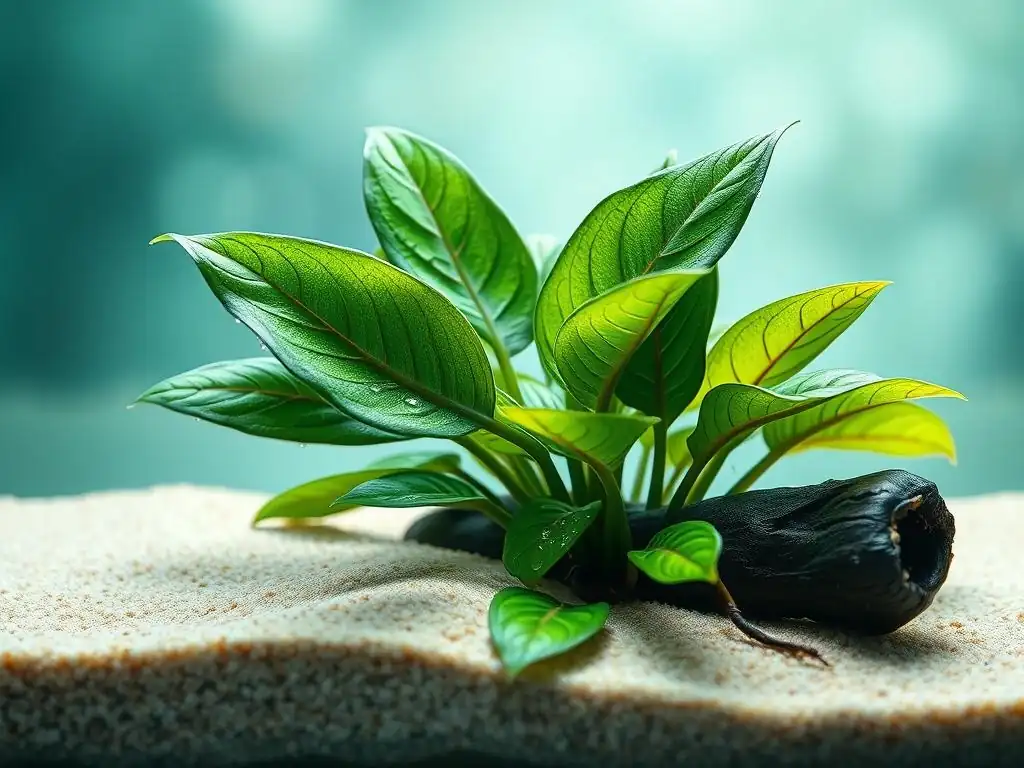
Yellowing leaves, or chlorosis, are one of the most common visual cues of nutrient distress in aquatic plants. When the yellowing occurs predominantly on older leaves, affecting the entire leaf blade, it often points to a Nitrogen deficiency. Plants like Cryptocoryne wendtii or Vallisneria spiralis may exhibit a general fading of green, as the plant mobilizes nitrogen from older growth to support newer, developing leaves.
Conversely, if the yellowing appears primarily on new growth, with the veins often remaining green (interveinal chlorosis), Iron deficiency is the likely culprit. Species such as Rotala rotundifolia or Ludwigia repens are particularly prone to showing this symptom on their delicate new shoots. Understanding this distinction is vital for accurate diagnosis and effective treatment within the plant nutrient deficiencies aquarium ecosystem.
Stunted Growth: A Sign of Phosphorus or Calcium Deficiency Impacting Development
Stunted growth, characterized by smaller-than-normal leaves, shortened internodes (the space between leaf nodes), and an overall lack of vigor, can be a clear indicator of Phosphorus deficiency. This nutrient is crucial for energy transfer and root development, so its absence inhibits the plant's ability to develop new tissue effectively. For example, stem plants like Hygrophila polysperma might stop growing vertically and produce very compact, tiny leaves.
Calcium (Ca) deficiency, though less commonly discussed than NPK, also leads to stunted or distorted new growth. Calcium is essential for cell wall formation and the proper functioning of growing tips. Symptoms can include twisted or malformed new leaves, or even the death of the apical meristem (growing tip). Recognizing these specific signs helps pinpoint the exact issue undermining the aquarium ecosystem.
Pinholes and Leaf Decay: Identifying Potassium or other Micronutrient Problems
The appearance of pinholes, small clear holes that later turn brown, and melting or decaying leaves, are classic signs of Potassium deficiency. This is frequently observed in larger-leafed plants like Echinodorus (Amazon Swords) or Anubias barteri, where older leaves develop these holes and eventually disintegrate. Potassium plays a key role in numerous plant processes, and its shortage directly impacts leaf integrity.
Other micronutrient deficiencies can present unique symptoms. For instance, Boron deficiency might cause twisted or brittle new growth and the death of growing points, while Manganese deficiency can lead to interveinal chlorosis on new leaves, similar to iron but often with different patterns. Careful observation of these precise visual cues is critical for identifying the specific plant nutrient deficiencies aquarium ecosystem issues at hand.
Distinguishing Nutrient Deficiencies from Other Plant Problems
Ruling Out Light Issues as a Cause of Plant Problems
Before attributing plant problems solely to nutrient deficiencies, it's crucial to assess lighting conditions, as inadequate or excessive light can mimic nutrient issues. Too little light often results in leggy growth, pale leaves, and a general lack of vibrancy, as plants stretch to reach light and cannot produce enough chlorophyll. Conversely, too much light, especially without adequate CO2 and nutrients, can lead to scorched leaves, algal growth, and stress.
A typical planted tank benefits from 8-10 hours of light daily. Light intensity, measured in PAR (Photosynthetically Active Radiation), is also vital; low-tech tanks might aim for 20-40 PAR, while high-tech setups often require 50-80 PAR at the substrate level. Adjusting light duration or intensity and observing plant response for a week or two can often reveal if light is the primary limiting factor, influencing the entire aquarium ecosystem.
Identifying CO2 Deficiency vs. Nutrient Deficiency
Carbon dioxide (CO2) is a primary raw material for photosynthesis, and its deficiency is a common cause of poor plant growth, even when nutrients are abundant. Symptoms of low CO2 include very slow or halted growth, brittle or translucent leaves, and often, the proliferation of Black Brush Algae (BBA). Plants may also appear to "gasp" or show minimal pearling (oxygen bubbles on leaves), even under strong light.
Distinguishing CO2 deficiency from plant nutrient deficiencies aquarium ecosystem issues lies in the specificity of symptoms. Nutrient deficiencies usually present with distinct leaf discoloration or structural deformities. CO2 deficiency, however, tends to affect all plants in the tank similarly, leading to overall sluggishness. Using a CO2 drop checker, aiming for a lime green color indicating approximately 30 ppm CO2, is an effective way to monitor and ensure this vital component is not limiting growth.
The Connection Between Plant Health & Algae Blooms
How Nutrient Imbalances Fuel Algae Growth in Aquariums
When aquatic plants are struggling due to plant nutrient deficiencies aquarium ecosystem issues, they become inefficient at absorbing nutrients from the water column. This leaves an excess of key compounds, particularly nitrates and phosphates, available for other organisms. Algae, being less complex and often more adaptable than higher plants, are quick to exploit these readily available nutrients.
This nutrient surplus acts as a powerful fertilizer for algae, leading to rapid and unsightly blooms. For instance, consistently high nitrate levels (e.g., above 30-40 ppm) combined with low plant mass can lead to green water or hair algae outbreaks. Similarly, elevated phosphate levels (e.g., above 1-2 ppm) often contribute to green spot algae on glass and plant leaves.
The Role of Healthy Plants in Outcompeting Algae
Healthy, fast-growing aquatic plants are your best defense against algae. They act as natural filters, actively absorbing excess nutrients from the water before algae can utilize them. A dense stand of plants effectively consumes nitrates, phosphates, and other trace elements, essentially "starving out" the algae.
Consider a tank with a lush carpet of Monte Carlo or a vibrant background of Rotala indica. These plants, when thriving, can process significant amounts of nutrients daily, leaving little for opportunistic algae. They also create shade, further inhibiting algae growth on surfaces. This competitive advantage is crucial for maintaining a clean and balanced aquarium ecosystem.
Understanding the Link Between Plant Nutrient Deficiencies and Algae Outbreaks
The link between plant nutrient deficiencies aquarium ecosystem issues and algae outbreaks is a vicious cycle. Weakened plants, unable to absorb nutrients efficiently, allow the nutrient levels in the water column to rise. This creates an ideal environment for algae to proliferate. As algae grow, they further compete with the already struggling plants for light and any remaining nutrients, exacerbating the plants' poor health.
For example, a common scenario is a potassium deficiency leading to melting leaves, which then release organic matter and nutrients, fueling further algae growth. Similarly, a lack of iron can stunt plant growth, reducing their nutrient uptake capacity and allowing green dust algae to colonize surfaces. Addressing the underlying plant health issue is often the most effective long-term solution to persistent algae problems.
Correcting Plant Nutrient Deficiencies: A Step-by-Step Approach
Testing Your Aquarium Water Parameters: A Crucial First Step
Using Test Kits to Measure Nutrient Levels Accurately
The first and most crucial step in addressing plant nutrient deficiencies aquarium ecosystem issues is to accurately test your aquarium water parameters. Rely on reliable liquid test kits, as they generally provide more precise readings than test strips. Key parameters to measure include Nitrates (NO3), Phosphates (PO4), and often Iron (Fe), especially if iron deficiency symptoms are present.
To perform a test, follow the kit instructions meticulously, ensuring precise measurements of water and reagents. For example, a typical nitrate test involves adding reagents to a water sample and comparing the resulting color to a chart. Regularly testing, perhaps weekly or bi-weekly depending on your tank's stability, provides vital data to track nutrient consumption and identify imbalances.
Understanding Acceptable Nutrient Ranges for Planted Aquariums
Once you have your test results, interpreting them against acceptable ranges for planted aquariums is essential. For Nitrates, a target range of 5-20 ppm is generally recommended for most planted tanks, though heavily planted, high-tech setups might aim for 20-30 ppm. Phosphates are typically desired in the range of 0.2-1 ppm. Potassium levels should ideally be maintained between 10-20 ppm, and Iron around 0.05-0.1 ppm.
It's important to note that these are general guidelines, and the "ideal" range can vary slightly based on your specific plant species, lighting intensity, and CO2 levels. The goal is to maintain consistent, stable nutrient levels rather than chasing exact numbers, as large fluctuations can stress plants and encourage algae growth, disrupting the delicate aquarium ecosystem.
Implementing Targeted Nutrient Dosing Strategies
Choosing the Right Liquid Fertilizers for Your Aquarium
Selecting the appropriate liquid fertilizers is paramount for correcting plant nutrient deficiencies aquarium ecosystem problems. For beginners or those with moderately planted tanks, an "all-in-one" liquid fertilizer (e.g., Seachem Flourish, Tropica Specialized) provides a balanced blend of macro and micronutrients. These are convenient and often sufficient for low to medium light setups.
For advanced hobbyists or tanks with specific deficiencies, individual macronutrient solutions (e.g., Potassium Sulfate for Potassium, Potassium Nitrate for Nitrogen, Monopotassium Phosphate for Phosphorus) and separate micronutrient mixes (e.g., chelated iron solutions) allow for more precise, targeted dosing. Consider your tank's plant density and lighting level when making your selection; a high-light, CO2-injected tank will have significantly higher nutrient demands.
Calculating and Administering Appropriate Doses of Macronutrients
Calculating and administering macronutrient doses requires careful attention to avoid over or under-dosing. Many hobbyists follow methods like the "Estimated Index" (EI) dosing, which involves adding enough nutrients to ensure plants never run out, coupled with large weekly water changes to prevent buildup. For instance, a common EI recommendation might involve adding enough Potassium Nitrate to raise NO3 by 10 ppm, Potassium Sulfate to raise K by 5 ppm, and Monopotassium Phosphate to raise PO4 by 1 ppm, typically 2-3 times per week.
It's advisable to start with a lower dose than recommended and gradually increase it while observing your plants' response. Overdosing, especially with nitrates or phosphates, can directly contribute to algae outbreaks. Consistent, regular dosing is more beneficial than sporadic large doses, ensuring a stable nutrient supply for the aquarium ecosystem.
Supplementing with Micronutrients: Iron and Trace Elements
Micronutrients, particularly iron, are often the limiting factor in planted aquariums. Supplementing with a dedicated liquid micronutrient mix, or a chelated iron product, is often necessary. Chelated iron forms are preferred as they remain bioavailable in the water column for longer periods, preventing it from quickly precipitating out.
Dosing micronutrients is typically done 2-3 times a week, often on days alternating with macronutrient dosing if you're using separate solutions. Monitor your plants closely for signs of deficiency, such as new growth chlorosis (yellowing of new leaves with green veins), which strongly indicates an iron shortage. Adjust your dose incrementally based on these visual cues, as an excess of certain trace elements can be toxic to both plants and fish within the plant nutrient deficiencies aquarium ecosystem.
Optimizing CO2 Levels for Enhanced Nutrient Uptake
The Importance of CO2 Injection for Plant Growth
Carbon dioxide (CO2) is arguably the most critical nutrient for thriving aquatic plants, acting as the primary carbon source for photosynthesis. Without adequate CO2, even a tank with perfect lighting and nutrient levels will exhibit stunted growth and poor plant health. CO2 injection significantly boosts photosynthetic rates, allowing plants to grow faster, more vigorously, and utilize available macro and micronutrients far more efficiently.
Pressurized CO2 systems are the most effective and consistent method for CO2 injection, typically delivering 25-35 ppm of CO2 into the water column. This concentration can be monitored using a CO2 drop checker, aiming for a lime green color. Optimal CO2 levels transform plants, enabling them to outcompete algae and overcome many plant nutrient deficiencies aquarium ecosystem challenges.
Balancing CO2 and Nutrient Levels to Prevent Algae
Achieving a balanced aquarium ecosystem hinges on the harmonious interplay of light, CO2, and nutrients. If CO2 levels are high but nutrients are insufficient, plants will struggle to process the light energy and grow, leading to nutrient deficiencies despite apparent CO2 availability. Conversely, if nutrients are abundant but CO2 is low, plants cannot utilize those nutrients effectively, leaving them for algae.
The key is to match CO2 and nutrient levels to your lighting intensity. High light demands high CO2 and higher nutrient dosing. If any of these three elements are out of sync, an imbalance will occur, often resulting in rampant algae growth. For example, too much light without sufficient CO2 and nutrients is a common recipe for green hair algae. Consistent monitoring and adjustment of all three factors are paramount.
Preventing Future Nutrient Deficiencies & Algae Problems
Maintaining a Regular Fertilization Schedule
Consistency is key to preventing plant nutrient deficiencies aquarium ecosystem issues from recurring. Aquatic plants continuously absorb nutrients from the water column, and a regular, predictable fertilization schedule ensures a steady supply. For many planted tanks, a weekly or bi-weekly dosing regimen is effective, depending on plant density, lighting, and CO2 levels.
Establishing a routine, such as dosing macronutrients on specific days (e.g., Monday, Wednesday, Friday) and micronutrients on others (e.g., Tuesday, Thursday, Saturday), with a larger water change on Sunday, can significantly stabilize the nutrient profile. This proactive approach minimizes fluctuations, reduces plant stress, and creates a more stable environment that discourages opportunistic algae growth.
Performing Routine Water Changes to Replenish Nutrients
Routine water changes are an indispensable part of maintaining a healthy aquarium ecosystem and preventing nutrient deficiencies. While fertilizers replenish specific nutrients, water changes help reset the overall water chemistry, removing accumulated waste products and diluting any temporary excesses of certain nutrients. A 30-50% weekly water change is a common and highly beneficial practice for most planted tanks.
Tap water, even after dechlorination, contains a baseline of beneficial minerals and trace elements that can contribute to plant health. Furthermore, water changes prevent the buildup of organic waste that can contribute to algae or disease. They are crucial for maintaining the delicate balance, ensuring a fresh supply of necessary elements and preventing the stagnation that often precedes plant nutrient deficiencies aquarium ecosystem issues.
Monitoring Plant Health and Adjusting Dosing as Needed
Constant observation of your aquatic plants is perhaps the most powerful tool in preventing future nutrient deficiencies. Regularly inspect new and old growth for signs of discoloration, stunted development, or decay. Healthy plants will exhibit vibrant colors, steady growth, and no visible signs of stress.
Based on these observations, make small, incremental adjustments to your dosing regimen. If a plant shows slight yellowing on new leaves, a minor increase in iron might be warranted. If algae begins to appear, re-evaluate your CO2, light, and nutrient levels for any imbalances. This continuous feedback loop of observation, testing, and adjustment is essential for long-term success in managing the dynamic plant nutrient deficiencies aquarium ecosystem.
Choosing the Right Substrate for Optimal Plant Growth
The substrate forms the foundation of your planted aquarium ecosystem and plays a significant role in nutrient availability. Nutrient-rich substrates, such as baked clay granules (e.g., Aquasoil, Fluval Stratum), are designed to slowly release essential nutrients, particularly for heavy root-feeding plants like Cryptocoryne species, Echinodorus (Amazon Swords), and certain stem plants. These substrates often contain iron, manganese, and other trace elements.
Inert substrates like sand or gravel, while aesthetically pleasing, offer minimal nutrients to plant roots and require a greater reliance on water column dosing. For optimal results, many hobbyists use a nutrient-rich base layer capped with an inert layer to prevent nutrient leaching into the water column. A well-chosen substrate provides a stable and long-term source of nutrients, significantly reducing the likelihood of plant nutrient deficiencies aquarium ecosystem problems.
Achieving a Balanced Aquarium Ecosystem: The Long-Term View
The Interconnectedness of Plants, Fish, and Nutrients
A thriving planted aquarium is a testament to the intricate interconnectedness of its components: plants, fish, and nutrients. Fish produce waste products, including ammonia, which is then converted by beneficial bacteria into nitrites and then nitrates. These nitrates, along with phosphates from fish food, become vital nutrients for aquatic plants. In turn, plants absorb these nutrients, helping to purify the water and prevent algae, while simultaneously releasing oxygen through photosynthesis, which is essential for fish respiration.
This symbiotic relationship forms a natural filtration system, where each element contributes to the health and stability of the whole. Overfeeding fish, for example, can lead to an excess of nitrates and phosphates that overwhelm the plants' capacity to absorb them, leading to nutrient imbalances and potential algae outbreaks. Understanding and respecting this delicate balance is paramount for a sustainable aquarium ecosystem.
Creating a Sustainable and Thriving Planted Aquarium
Creating a sustainable and thriving planted aquarium is not a one-time setup but an ongoing journey of learning and adaptation. It requires consistent attention to the balance of light, CO2, and nutrient levels, understanding that each factor influences the others. Proactive management of plant nutrient deficiencies aquarium ecosystem issues, coupled with regular maintenance, is the cornerstone of long-term success.
The reward for this dedication is a dynamic, self-sustaining aquarium ecosystem that provides a beautiful, natural habitat for its inhabitants and a serene, captivating display for the hobbyist. By ensuring your aquatic plants are healthy and robust, you not only enhance the aesthetic appeal of your tank but also establish a powerful biological filter that contributes to superior water quality and a truly flourishing aquatic environment.
Frequently Asked Questions
What are the common signs of plant nutrient deficiencies in an aquarium?
Common signs include yellowing or browning leaves, stunted growth, and the appearance of holes in leaves. These indicate a lack of essential nutrients for plant health.
How do plant nutrient deficiencies affect the overall aquarium ecosystem?
Nutrient deficiencies can lead to weakened plants, which are then outcompeted by algae. This creates an unbalanced environment where algae thrive and desirable plants struggle.
What are the most important nutrients for aquatic plants in an aquarium?
Key nutrients include macronutrients like nitrogen, phosphorus, and potassium (NPK), as well as micronutrients like iron and trace elements. Plants need these for healthy growth and vibrant colors.
How can I test for nutrient deficiencies in my aquarium water?
You can use aquarium test kits specifically designed to measure levels of nitrates, phosphates, iron, and other essential nutrients. Regular testing helps identify imbalances before they become severe.
What are some ways to address plant nutrient deficiencies in my aquarium?
Solutions include using liquid fertilizers designed for aquatic plants, ensuring adequate lighting, and performing regular water changes. Adjusting CO2 levels may also be necessary for certain plants.
Final Reflection: Cultivating a Thriving Aquatic World
The exploration of plant nutrient deficiencies within the aquarium ecosystem reveals a truth far deeper than just unsightly algae blooms. It highlights the delicate balance inherent in any closed environment, and the crucial role we play as stewards of these miniature worlds. Understanding the intricate dance between nutrients, light, and life is not merely about aesthetics; it's about fostering a thriving, sustainable ecosystem within our glass walls.
This journey into the microscopic battles waged within our aquariums underscores the profound impact of seemingly small imbalances. It reminds us that even in controlled environments, nature demands respect and understanding. The best time to plant a tree was 20 years ago. The second best time is now.
This ancient proverb resonates deeply with the proactive approach required to combat nutrient deficiencies and cultivate a healthy aquarium. It's a call to action, urging us to learn, adapt, and continuously strive for a more harmonious relationship with our aquatic companions.
Now, armed with this knowledge, consider the power you hold to transform your aquarium from a battleground into a sanctuary. Reflect on the lessons learned about balance, observation, and proactive care. Let this understanding extend beyond the glass walls, inspiring you to cultivate a deeper appreciation for the interconnectedness of all living things and to embrace your role as a responsible guardian of the natural world, both big and small.
Revitalize Your Reef: Plunge into a Thriving Aquarium!
Thank you for diving deep into the world of aquarium health! Now that you're armed with the knowledge to identify and combat those pesky nutrient deficiencies and algae blooms, let's transform your tank into a vibrant underwater paradise.
Here's how to take the next step:
- Test your water parameters today! Accurate testing is the foundation of a healthy aquarium. Don't guess; know your nutrient levels.
- Share this guide with fellow aquarium enthusiasts. Spreading knowledge is key to a thriving community!
- Experiment with unconventional algae eaters like Nerite snails or Amano shrimp for a naturally balanced ecosystem.
What specific nutrient level are you most excited to finally get under control? Share your plan in the comments below!