
The Impact of School Size on Danio and Rasbora Compatibility and Wellbeing

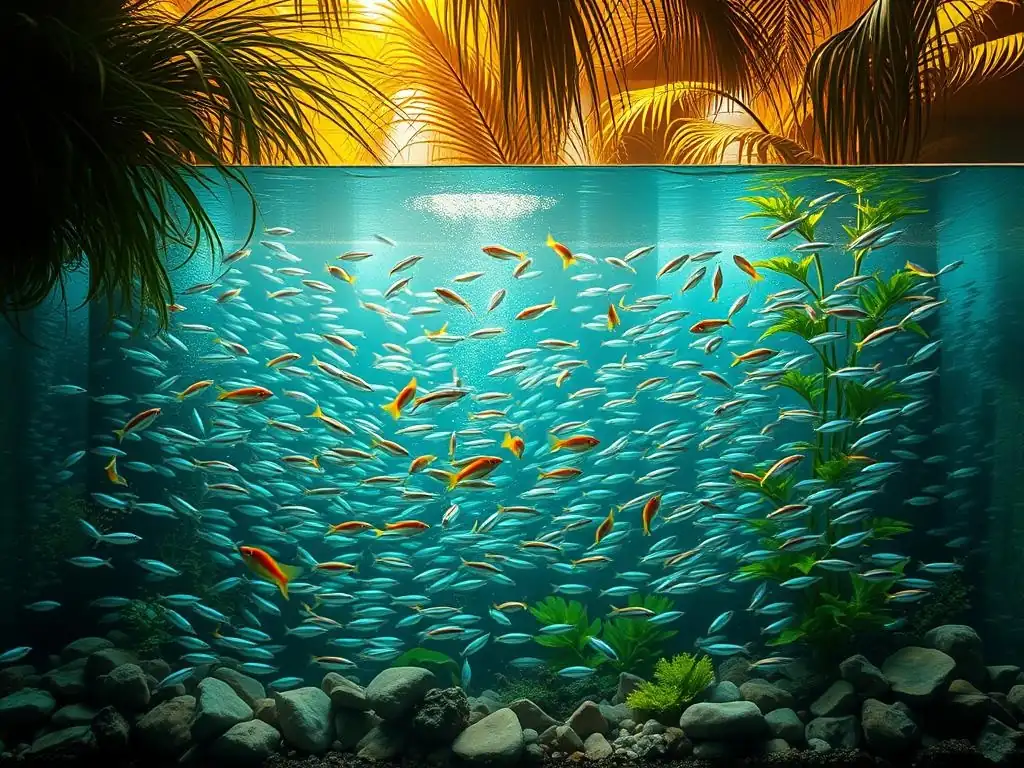
Welcome to Aquarium Mastery, your ultimate guide to the captivating world of aquariums!
Ever wondered if your Danio and Rasbora are truly thriving in their school? Discover the secrets to achieving optimal school size compatibility and unlocking their vibrant, natural behaviors. Dive in to learn how the right social dynamics can dramatically impact their wellbeing and create a truly harmonious underwater ecosystem. Keep reading to master the art of creating the perfect environment for your finned friends!
- Understanding Danio and Rasbora Schooling Behavior in Aquariums
- Danio and Rasbora Species: Schooling Preferences and Minimum Numbers
- Danio and Rasbora School Size Compatibility: Can Different Species School Together?
- Optimizing Tank Size and Environment for Danio and Rasbora Schools
- Potential Problems Arising from Inadequate School Sizes
- Maximizing Danio and Rasbora Wellbeing Through Optimal Schooling Practices
- Best Practices for Maintaining a Healthy and Harmonious Danio and Rasbora School
- Conclusion: Achieving Danio and Rasbora School Size Compatibility for a Thriving Aquarium
-
Frequently Asked Questions
- How does school size affect Danio and Rasbora behavior in an aquarium?
- What is the recommended minimum school size for Danios and Rasboras in a community aquarium?
- How does keeping Danios and Rasboras in inadequate school sizes impact their compatibility with other fish?
- What are the signs that Danios and Rasboras are not in a large enough school?
- Can different species of Danios and Rasboras school together, or is it important to keep them in single-species groups?
- Final Reflection: Cultivating Harmony in the Aquarium
- Dive Deeper into Danio and Rasbora Harmony!
Understanding Danio and Rasbora Schooling Behavior in Aquariums
The Importance of School Size for Danio and Rasbora Health
The size of a school profoundly impacts the overall health and vitality of Danio and Rasbora species in an aquarium. These small cyprinids are naturally social creatures, relying on the safety in numbers provided by a cohesive group. When kept in insufficient numbers, typically fewer than six to eight individuals, Danios and Rasboras often exhibit signs of stress, including lethargy, faded coloration, and increased shyness, spending more time hiding than interacting. This chronic stress weakens their immune systems, making them significantly more susceptible to common aquarium diseases like Ich (white spot disease) or fin rot.
Furthermore, a proper school size contributes to the natural display of their vibrant colors and engaging behaviors. For instance, a group of 10-12 Zebra Danios (Danio rerio) will actively swim together, creating a dynamic visual appeal, whereas three or four individuals might appear anxious and dart erratically. Similarly, Harlequin Rasboras (Trigonostigma heteromorpha) in a group of eight or more will form a more defined, observable school, exhibiting their characteristic triangular body shape with confidence. This collective behavior is not just for aesthetics; it's a fundamental aspect of their wellbeing, reflecting their instinctual need for security and social interaction.
How Schooling Dynamics Affect Fish Stress Levels
The dynamics within a schooling group directly influence the stress levels of individual Danio and Rasbora fish. In a sufficiently large school, the "dilution effect" comes into play, where the presence of many individuals reduces the likelihood of any single fish being targeted by a perceived threat, whether it's a larger tank mate or even another fish within their own species.
This shared vigilance and security allow the fish to relax, explore their environment, and engage in natural foraging and social behaviors without constant apprehension. Conversely, in small groups, the absence of this collective security can lead to heightened anxiety, as each fish feels more exposed and vulnerable.
Additionally, schooling provides a social structure that minimizes aggression and territorial disputes. While Danios and Rasboras are generally peaceful, a small group can sometimes lead to dominant individuals bullying weaker ones, especially if space is limited.
For example, a group of five Chili Rasboras (Boraras brigittae) in a 5-gallon tank might see one or two individuals dominate the feeding area, while a group of 15 in the same tank would distribute this social pressure more evenly, reducing individual stress. A well-sized school fosters a sense of belonging and reduces internal conflicts, promoting a calmer, more harmonious environment for all members and showcasing their natural schooling patterns more effectively.
Danio and Rasbora Species: Schooling Preferences and Minimum Numbers
Danio Schooling: Minimum Numbers and Tank Size
Danios, encompassing various species like the popular Zebra Danio ( Danio rerio) and the delicate Celestial Pearl Danio ( Danio margaritatus), are known for their active and often tight schooling behavior. For most common Danio species, a minimum school size of 8 to 10 individuals is generally recommended to observe their natural schooling patterns and ensure their comfort.
For instance, Zebra Danios thrive in groups of 10 or more, exhibiting robust activity levels and a distinct schooling formation. A group smaller than this often results in skittish behavior or increased aggression among the few individuals as they attempt to establish a hierarchy without the buffering effect of a larger group.
The appropriate tank size for Danios is directly related to their school size and activity levels. Zebra Danios, being highly active swimmers that can reach about 2 inches (5 cm) in length, require at least a 20-gallon long aquarium for a school of 10-12 individuals to provide ample swimming space.
Celestial Pearl Danios, while much smaller at approximately 1 inch (2.5 cm), are also active and benefit from groups of 10-15 in a 10-gallon or larger tank to truly display their intricate social dynamics. Providing sufficient space is crucial for these fast-moving fish to perform their characteristic darting and synchronized swimming, which is essential for their physical and psychological wellbeing.
Rasboras, a diverse group including species like the Harlequin Rasbora ( Trigonostigma heteromorpha), Chili Rasbora ( Boraras brigittae), and Espei Rasbora ( Trigonostigma espei), also exhibit strong social needs, though their schooling behavior can vary from tight formations to looser shoals. For most medium-sized Rasboras like Harlequins, a minimum group of 6 to 8 individuals is essential, with 10-12 being ideal for a more pronounced schooling display.
Harlequin Rasboras, reaching around 1.5-2 inches (3.5-5 cm), are known for their calm demeanor and will form a cohesive school in a 10-gallon tank for a small group, or a 20-gallon or larger for an optimal school of 10+.
For the very small Boraras species, such as the Chili Rasbora (often less than 1 inch / 2.5 cm), a larger group is often recommended to truly see their natural behaviors and ensure their confidence. While a minimum of 8-10 is often cited, a group of 15-20 Chili Rasboras in a densely planted 10-gallon nano tank will exhibit far more natural schooling and display their vibrant colors more readily.
These tiny fish feel more secure in larger numbers, reducing their natural shyness and allowing them to explore their environment more openly. The increased numbers also help distribute any minor social squabbles, preventing any single individual from being overly stressed.
Danio and Rasbora School Size Compatibility: Can Different Species School Together?
Exploring Interspecies Schooling Potential: Danio and Rasbora
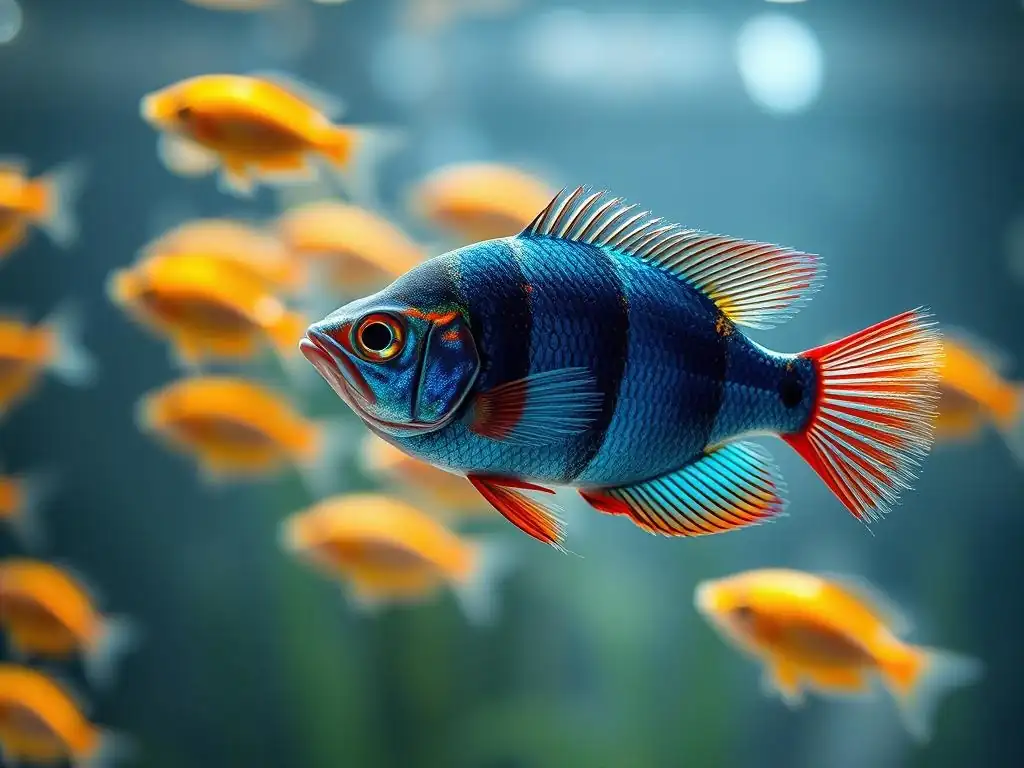
While Danios and Rasboras are both cyprinids and often co-exist peacefully in community aquariums, they generally do not form true interspecies schools. Each species possesses its own distinct schooling instinct and social cues, which are typically directed towards members of their own kind. For example, a school of Zebra Danios will predominantly interact and swim together, largely ignoring a group of Harlequin Rasboras, which will in turn form their own cohesive unit. This is because true schooling relies on species-specific visual and chemical cues for coordinated movement and predator avoidance.
However, a sufficiently large school of both Danio and Rasbora species can certainly coexist harmoniously and even loosely shoal in the same tank, creating a vibrant and active display. The key to successful Danio Rasbora school size compatibility lies in ensuring that each species has its own adequate group size.
For instance, having 10 Zebra Danios and 10 Harlequin Rasboras in a 30-gallon or larger tank allows both species to feel secure within their respective groups, reducing stress and promoting natural behaviors. Attempting to mix species in smaller numbers, such as 3 Danios and 3 Rasboras, would leave both groups feeling vulnerable and potentially lead to stress-related issues, as neither group is large enough to provide the necessary security.
The success of Danio and Rasbora social interactions, especially when housed together, is influenced by several critical factors beyond just school size. One primary factor is the inherent temperament and activity level of the specific species chosen. For example, the highly active and sometimes boisterous Zebra Danio can potentially outcompete or stress more timid Rasbora species like Chili Rasboras, especially during feeding, if the tank is too small or if the Rasbora group is too small to feel secure. Conversely, the calmer Harlequin Rasbora generally poses no threat to Danios.
Another significant factor is the overall tank environment, including parameters like temperature and water chemistry, as well as the physical layout. If the water parameters are outside the optimal range for one or both species, it can lead to chronic stress, which exacerbates any potential social issues. Similarly, a well-designed tank with ample swimming space, appropriate hiding spots, and visual breaks can significantly reduce aggression and provide areas for both active schooling and quiet retreat. Understanding these nuances is vital for achieving optimal Danio Rasbora school size compatibility and ensuring a thriving multi-species community.
Temperature and Water Parameters: Impact on Schooling
Optimal temperature and water parameters are fundamental to the wellbeing of Danios and Rasboras and, consequently, their schooling behavior. While both groups are generally adaptable, they do have preferred ranges. Most Danios, such as the Zebra Danio, thrive in temperatures between 64-75°F (18-24°C), while many Rasboras, including Harlequin Rasboras, prefer slightly warmer water, typically 72-79°F (22-26°C).
When housing both, finding a common ground, such as 72-75°F (22-24°C), is crucial. Deviations from their ideal temperature range can cause metabolic stress, leading to lethargy, reduced schooling activity, and a weakened immune system, making them less inclined to exhibit their natural social behaviors.
Beyond temperature, water chemistry—specifically pH and hardness—also plays a role. Danios generally prefer neutral to slightly alkaline water (pH 6.5-7.5, GH 5-15 dGH), whereas many Rasboras, particularly those from Southeast Asia like the Harlequin and Chili Rasboras, prefer slightly acidic to neutral water (pH 6.0-7.0, GH 2-10 dGH). Maintaining parameters within an acceptable overlap for both species (e.g., pH 6.5-7.0, GH 5-10 dGH) reduces physiological stress. When fish are consistently stressed by unsuitable water conditions, their natural schooling instincts may diminish as they prioritize survival, often leading to hiding or erratic, uncoordinated swimming rather than cohesive group behavior.
Tank Layout and Decoration: Creating a Suitable Environment for Schooling
The physical layout and decoration of the aquarium play a pivotal role in encouraging positive schooling behavior and minimizing stress for Danio and Rasbora species. A well-structured tank provides both open swimming areas and ample hiding spots, catering to their dual needs for security and activity.
For active schooling fish like Zebra Danios, a long tank (e.g., a 20-gallon long or 30-gallon breeder) is preferable over a tall one, as it offers more horizontal swimming space for their characteristic darting movements. This allows a school of 10-12 Danios to perform synchronized swims without constantly bumping into obstacles or each other.
For Rasboras, particularly the more timid Boraras species, dense planting provides crucial cover and a sense of security. A tank with a large open area in the front or middle, flanked by thick vegetation along the back and sides, allows a school of 15-20 Chili Rasboras to feel safe enough to venture into the open, while still having immediate refuge if startled.
Floating plants can also help diffuse overhead lighting, which some Rasboras find comforting. When designing for Danio Rasbora school size compatibility, incorporating diverse elements like driftwood, rocks, and live plants creates visual breaks, reducing territorial disputes and ensuring that both active and more sedate species have their preferred zones, thus fostering a harmonious environment.
Optimizing Tank Size and Environment for Danio and Rasbora Schools
Determining the Correct Tank Size Based on School Size
Determining the correct tank size is paramount for the wellbeing and natural behavior of Danio and Rasbora schools. A common guideline is to provide at least 1 gallon of water per inch of adult fish, but for active schooling fish, horizontal swimming space is more critical than vertical depth.
For a robust school of 10-12 Zebra Danios, a 20-gallon long tank (30 inches long) is considered a minimum, allowing them ample space for their characteristic fast-paced swimming. Upsizing to a 29-gallon or 30-gallon tank would provide even better conditions for a larger school of 15-20 individuals, ensuring they don't feel cramped.
For smaller Rasboras, like Harlequin Rasboras, a 10-gallon tank can house a small school of 6-8, but a 20-gallon tank is far better for a group of 10-12, promoting more confident schooling behavior. For tiny species such as Chili Rasboras, while a large group of 15-20 can inhabit a 10-gallon nano tank, the emphasis should be on dense planting to provide security.
When considering Danio Rasbora school size compatibility in a mixed tank, always calculate the requirements for the larger or more active species, and then add tank volume for the second species. For example, a community tank with 10 Zebra Danios and 10 Harlequin Rasboras would ideally require a 30-gallon or 40-gallon breeder tank to provide sufficient space for both active schools without overcrowding.
Creating a Natural Habitat to Encourage Positive Schooling Behavior
Creating a natural habitat that mimics their native environments significantly encourages positive schooling behavior in Danios and Rasboras. For many Danio species, this means providing open swimming lanes alongside areas of dense vegetation. In their natural streams and rivers, Zebra Danios navigate open channels but can quickly retreat into submerged roots and plants when threatened. An aquarium setup reflecting this duality—a central open area with heavy planting around the perimeter—will make a school of 8-10 Danios feel secure enough to actively swim and display their vibrant patterns.
Rasboras, particularly the Boraras species, often originate from slow-moving blackwater streams heavily laden with leaf litter and dense aquatic plants. For these species, a biotope-style setup with a dark substrate, plenty of driftwood, and thick planting (including floating plants to diffuse light) is ideal.
A school of 15-20 Chili Rasboras will exhibit more confident and cohesive schooling in such an environment, darting amongst the leaves and displaying their brilliant red hues against the dark background. This sense of security, derived from a familiar and protective environment, is crucial for fostering robust and visible Danio Rasbora school size compatibility and overall wellbeing.
Plant Selection for Danio and Rasbora: Providing Shelter and Security
Selecting appropriate aquatic plants is vital for providing shelter and security, which in turn encourages natural schooling behavior in Danio and Rasbora species. For Danios, plants like Java Fern ( Microsorum pteropus), Anubias species ( Anubias barteri), and various stem plants such as Rotala or Ludwigia can be arranged to create both open swimming lanes and dense thickets.
These plants offer visual breaks and hiding spots where individual fish can retreat if feeling stressed, while the open areas allow the school to perform their characteristic fast-paced swimming. A good balance might involve dedicating 60-70% of the tank footprint to open space, with the remaining 30-40% densely planted.
Rasboras, especially the more delicate Boraras species, thrive in heavily planted tanks that replicate their natural, often densely vegetated, habitats. Plants like Java Moss ( Taxiphyllum barbieri), various Cryptocoryne species, and floating plants such as Dwarf Water Lettuce ( Pistia stratiotes) or Salvinia species are excellent choices.
These plants offer overhead cover and intricate hiding spots within their foliage, which significantly boosts the confidence of a school of 15-20 Chili Rasboras, for example. The presence of ample plant cover reduces their perceived vulnerability, allowing them to school more openly and display their full color potential, which is key for Danio Rasbora school size compatibility.
Substrate and Decor Considerations: Minimizing Stress and Maximizing Wellbeing
The choice of substrate and decor elements significantly contributes to minimizing stress and maximizing the wellbeing of Danio and Rasbora schools. A dark-colored substrate, such as black sand or fine gravel, is often preferred for both groups. Dark substrates help to reduce reflected light, which can be stressful for some fish, and also help to highlight the vibrant colors of Danios and Rasboras, making them appear more confident. For instance, the iridescent blues and greens of a school of Celestial Pearl Danios become much more prominent against a dark background, reflecting their comfort in the environment.
Beyond the substrate, incorporating natural decor like driftwood, smooth river rocks, and leaf litter (e.g., Indian Almond leaves) can further enhance the habitat and provide additional security. Driftwood offers interesting structures for exploration and can release beneficial tannins, which create a "blackwater" effect favored by many Rasbora species, contributing to their sense of security and health.
For a school of Harlequin Rasboras, a piece of driftwood with an attached Anubias can serve as a focal point and a gentle barrier. Strategically placed decor breaks up line of sight, preventing any single fish from being constantly visible to others, thus reducing potential aggression and ensuring that all members of the Danio Rasbora school size compatibility setup feel safe and comfortable within their home.
Potential Problems Arising from Inadequate School Sizes
Stress and Aggression in Small Danio and Rasbora Groups
One of the most immediate and observable problems arising from inadequate school sizes in Danios and Rasboras is heightened stress and aggression. When these naturally schooling fish are kept in groups of fewer than six to eight individuals, their innate sense of security is compromised. This often leads to chronic stress, manifesting as rapid gill movement, faded colors, and a tendency to hide excessively. For example, a group of three Zebra Danios in a 20-gallon tank will frequently dart around erratically, attempting to find safety, rather than exhibiting the calm, cohesive schooling seen in larger groups.
Furthermore, insufficient numbers can lead to increased intraspecific aggression. In a small group, the natural pecking order becomes more pronounced, with dominant individuals constantly nipping at or chasing weaker ones, as there aren't enough fish to diffuse the aggression. This is particularly true for some Danio species. A small group of five Leopard Danios, for instance, might see one or two individuals constantly harassing the others, leading to fin damage and severe stress for the bullied fish. This lack of Danio Rasbora school size compatibility within their own species significantly impacts their overall health and longevity.
Inadequate school sizes can severely compromise the immune systems of Danios and Rasboras, leading to an increased susceptibility to disease. Chronic stress, induced by social isolation or insufficient numbers, directly impacts a fish's physiological state, making them less resilient to pathogens.
Fish kept in small, unnatural groups are often the first to show signs of illness when new fish are introduced or water quality fluctuates, even slightly. For example, a school of four Harlequin Rasboras might succumb to Ich or bacterial infections much more readily than a group of twelve in the same conditions, simply because their stress levels are consistently higher.
This weakened immunity is a direct consequence of the constant state of alert and anxiety experienced by fish in undersized schools. Their bodies divert energy from immune function to stress response, leaving them vulnerable. It's not uncommon for aquarists to report that their small groups of Danios or Rasboras seem "fragile" or "prone to sickness," which often points back to the fundamental issue of inadequate social grouping. Ensuring proper Danio Rasbora school size compatibility is a preventative measure against a host of common aquarium ailments, promoting robust health and resilience against environmental stressors.
Fin Nipping and Hiding Behavior in Under-Sized Schools
Fin nipping and persistent hiding behavior are clear indicators of stress and social discomfort in under-sized Danio and Rasbora schools. When Danios, known for their active nature, are kept in groups that are too small, individual fish may become overly aggressive towards their tank mates, including other Danios, or even other species.
This aggression manifests as fin nipping, where fish repeatedly bite the fins of others, leading to frayed or torn fins, which are then susceptible to secondary bacterial infections. A common observation is Zebra Danios targeting the flowing fins of slower-moving fish if their own school is too small or if they lack sufficient swimming space.
Similarly, Rasboras in inadequate numbers often exhibit extreme shyness and hiding behavior. Instead of confidently schooling in open water, a small group of Chili Rasboras might spend the majority of their time tucked away in dense plants or behind decor, only emerging cautiously for food.
This constant hiding indicates a severe lack of security and comfort, preventing them from displaying their natural behaviors and vibrant coloration. Such behavior is a clear sign that the Danio Rasbora school size compatibility is off, and the fish are under significant stress, which can lead to long-term health issues and a diminished quality of life in the aquarium.
Maximizing Danio and Rasbora Wellbeing Through Optimal Schooling Practices
Maximizing the wellbeing of Danio and Rasbora schools begins with vigilant monitoring of their behavior for any signs of stress or social discomfort. Healthy, well-adjusted schools typically exhibit active, coordinated swimming, vibrant coloration, and confident foraging behavior. For instance, a thriving school of 10-12 Zebra Danios will constantly dart and weave together in the mid-to-upper water column, displaying their characteristic stripes. Any deviation from this, such as individual fish isolating themselves, prolonged hiding, erratic swimming patterns, or faded colors, should be a red flag indicating potential stress due to inadequate Danio Rasbora school size compatibility or other environmental factors.
Observing feeding behavior is another critical indicator. A healthy school will eagerly approach food, with all members participating. If certain individuals are consistently reluctant to eat, or if there's excessive competition and aggression during feeding times, it could suggest that the school is not large enough to diffuse social tensions, or that there's an imbalance in the group dynamics. Paying close attention to subtle changes in posture, fin clamping, or rapid gill movements can also provide early warnings of distress, allowing aquarists to intervene before minor issues escalate into serious health problems for the entire Danio Rasbora school.
Adjusting School Size and Tank Conditions to Improve Fish Health
Once signs of stress or social discomfort are identified, adjusting school size and tank conditions becomes crucial for improving Danio and Rasbora fish health. The most straightforward solution for an undersized school is to add more individuals of the same species, gradually increasing the group to the recommended minimum of 8-10, or even 12-15 for smaller species or larger tanks. For example, if a group of five Harlequin Rasboras is shy and hides, adding another five or seven individuals often transforms their behavior, making them more confident and active within days as the Danio Rasbora school size compatibility improves.
Beyond adding fish, evaluating and adjusting tank conditions is equally important. If fish are exhibiting stress despite adequate numbers, factors such as water parameters (temperature, pH, ammonia, nitrite, nitrate levels), tank layout, and tank mates should be reviewed. For instance, if a school of Celestial Pearl Danios is stressed, ensuring the temperature is stable around 74-78°F (23-26°C) and providing more dense planting can make a significant difference.
Eliminating overly aggressive tank mates or adding more hiding spots can also alleviate stress. A holistic approach that addresses both social needs and environmental factors is key to fostering a thriving and harmonious Danio and Rasbora community.
Best Practices for Maintaining a Healthy and Harmonious Danio and Rasbora School
Feeding Strategies for Optimal School Health
Effective feeding strategies are crucial for maintaining the optimal health and harmony within a Danio and Rasbora school. These small omnivores benefit from a varied diet that includes high-quality flake food, micro-pellets, and a mix of live or frozen foods such as daphnia, brine shrimp, and bloodworms (for larger species).
Offering food in small amounts multiple times a day (2-3 times) rather than one large feeding ensures that all members of the school, including the more timid ones, get adequate nutrition without excessive competition. This approach reduces stress and promotes overall Danio Rasbora school size compatibility, as fewer individuals feel deprived.
For active schooling fish like Zebra Danios, food should be dispersed across the water surface to encourage their natural foraging behavior and ensure that the entire school can participate. For more bottom-oriented or shy Rasboras like Chili Rasboras, ensuring some food sinks or is distributed near their preferred hiding spots is beneficial. Observing how the school feeds provides insights into their overall health and social dynamics; a vigorous, coordinated feeding response indicates a healthy and well-adjusted group, whereas sluggishness or intense competition might signal underlying issues related to stress or inadequate school size.
Water Quality Management and Its Impact on Schooling Behaviour
Impeccable water quality management is arguably the single most important factor influencing the health, vibrancy, and natural schooling behavior of Danio and Rasbora schools. Consistent water parameters and low levels of pollutants directly reduce physiological stress, allowing these fish to thrive and exhibit their full range of natural behaviors. Regular partial water changes, typically 25-30% weekly, are essential to dilute nitrates and replenish essential minerals. For instance, maintaining nitrates below 20 ppm dramatically reduces chronic stress, which can otherwise lead to lethargy and a breakdown in schooling cohesion.
Beyond water changes, robust filtration (mechanical, chemical, and biological) is necessary to keep ammonia and nitrite at zero and efficiently remove particulate matter. Testing water parameters weekly with a reliable kit provides crucial data, allowing for proactive adjustments before problems arise.
A stable environment, free from sudden fluctuations in temperature or pH, and consistently clean water, fosters a sense of security that encourages Danios and Rasboras to school confidently and display their best colors. Conversely, poor water quality is a primary stressor that can cause fish to become reclusive, lose their schooling instincts, and fall ill, underscoring its profound impact on Danio Rasbora school size compatibility and overall wellbeing.
Conclusion: Achieving Danio and Rasbora School Size Compatibility for a Thriving Aquarium
Achieving optimal Danio Rasbora school size compatibility is fundamental to cultivating a thriving and visually captivating aquarium. These small, social cyprinids depend on the collective security and social interaction provided by a sufficiently large group to exhibit their natural behaviors, vibrant colors, and robust health. Keeping them in undersized schools leads to chronic stress, increased aggression, heightened susceptibility to disease, and unnatural behaviors like hiding or fin nipping, ultimately diminishing their quality of life and the aesthetic appeal of the aquarium.
By adhering to recommended minimum school sizes—typically 8-10 individuals for most Danios and Rasboras, and even larger groups for tiny Boraras species—aquarists can foster confident, cohesive schools. Complementing appropriate school sizes with suitable tank dimensions, a naturalistic habitat featuring dense planting and dark substrates, and meticulous water quality management creates an environment where these remarkable fish can truly flourish. Understanding and respecting the intricate social needs of Danios and Rasboras, and prioritizing their school size compatibility, transforms an ordinary tank into a dynamic, harmonious ecosystem where these beautiful fish can display their full potential.
Frequently Asked Questions
How does school size affect Danio and Rasbora behavior in an aquarium?
A proper school size is crucial for the wellbeing of both Danios and Rasboras. Smaller schools can lead to stress, aggression, and shyness. Larger schools promote natural behaviors and a sense of security.
What is the recommended minimum school size for Danios and Rasboras in a community aquarium?
Generally, a minimum of six individuals is recommended for both Danios and Rasboras. However, larger tanks and more active species may benefit from even larger schools, such as 8-10.
How does keeping Danios and Rasboras in inadequate school sizes impact their compatibility with other fish?
Fish kept in inadequate schools are more stressed, which can lead to increased aggression towards tankmates. This can disrupt the entire aquarium ecosystem and cause problems for other species.
What are the signs that Danios and Rasboras are not in a large enough school?
Signs of stress due to inadequate school size include hiding, fin nipping, loss of color, and decreased activity. They may also become more susceptible to diseases.
Can different species of Danios and Rasboras school together, or is it important to keep them in single-species groups?
While some Danios and Rasboras might loosely shoal together, it's generally best to keep them in single-species schools. This ensures they can communicate effectively and reduces potential competition or stress.
Final Reflection: Cultivating Harmony in the Aquarium
The findings presented here underscore the critical importance of understanding species-specific social needs when designing a thriving aquarium ecosystem. While seemingly simple, the size of a school directly impacts the compatibility and wellbeing of both Danios and Rasboras, highlighting the ethical responsibility we bear as aquarists to provide environments that foster natural behaviors and minimize stress. Ignoring these fundamental requirements can lead to compromised health, increased aggression, and ultimately, a diminished quality of life for these fascinating creatures.
This exploration into optimal school sizes has profoundly influenced my perspective on responsible fishkeeping. It's a constant reminder that our role extends beyond mere aesthetics; we are stewards of miniature ecosystems. The greatness of a nation and its moral progress can be judged by the way its animals are treated.
- Mahatma Gandhi. This quote resonates deeply, urging us to consider the ethical implications of our choices and to prioritize the wellbeing of the animals entrusted to our care.
As you consider your own aquariums, I encourage you to reflect on the social dynamics at play. Are your fish exhibiting natural schooling behaviors? Are there signs of stress or aggression? By applying the principles discussed in this article, you can create a more harmonious and enriching environment for your Danios and Rasboras, ensuring their long-term health and happiness. Let's strive to be more than just keepers; let's be architects of wellbeing in our underwater worlds.
Dive Deeper into Danio and Rasbora Harmony!
Thank you for exploring the fascinating dynamics of danio and rasbora compatibility! Now that you're equipped with insights into creating a thriving community tank, let's put that knowledge into action.
Here's how you can further enrich your aquarium journey:
- Audit Your Tank: Critically assess your current or planned aquarium setup. Consider the swimming space, hiding spots, and tank mates, specifically with the danio and rasbora wellbeing in mind.
- Share your newfound wisdom! Pass on this article to fellow aquarium lovers, in forums or in person.
- Experiment with subtle environmental changes! Try adjusting the water flow, light, or hiding spots. Then log the changes in your fishes behavior for future comparisons.
What specific adjustment are you most excited to make to your tank to enhance danio and rasbora wellbeing?