
Pigmentation & Eye Development: Key Indicators for Tracking Larval Maturation

Welcome to Aquarium Mastery!
Dive into the fascinating world of larval fish and uncover the secrets held within their developing colors. Ever wondered how pigmentation reveals the health and maturation of these tiny aquatic wonders? This article explores the vital role of larval fish pigmentation development, providing key insights into tracking their progress. Let's unlock the mysteries of these vibrant transformations together – read on to learn more!
- Understanding Larval Fish Development in Saltwater Aquariums
- Larval Fish Pigmentation Development: A Deep Dive
- Eye Development in Larval Fish: A Window into Neurological Maturity
- Practical Applications: Using Pigmentation and Eye Development for Larval Rearing Success
- Case Studies: Examples of Pigmentation and Eye Development in Specific Saltwater Species
- Conclusion: Optimizing Larval Rearing Through Careful Observation
-
Frequently Asked Questions
- How does pigmentation relate to the overall health of larval fish?
- Why is eye development considered a key indicator of larval fish maturation?
- What environmental factors can most significantly impact larval fish pigmentation?
- What are some common pigmentation problems observed in larval fish, and what do they indicate?
- How can aquarists use pigmentation and eye development observations to improve larval fish rearing techniques?
- Final Reflection: Unveiling the Secrets of Larval Life
- Unveil the Secrets: Raise Thriving Larvae!
Understanding Larval Fish Development in Saltwater Aquariums
The Importance of Monitoring Larval Development Stages
Monitoring larval development stages in saltwater aquariums is paramount for success in aquaculture and advanced fish breeding. The early life stages of marine fish are often the most fragile, with mortality rates in commercial hatcheries sometimes exceeding 90% during the first few weeks post-hatching for many species. Close observation allows aquarists to identify critical transition points, such as the shift from endogenous (yolk-sac) to exogenous (external food) feeding, or the onset of metamorphosis, enabling timely adjustments to rearing protocols.
Without meticulous tracking of these developmental milestones, breeders risk significant losses due to starvation, malformation, or environmental stressors. For instance, a delay in mouth opening or eye development, if undetected, can lead to mass starvation even when food is abundant. Understanding the normal progression of larval fish pigmentation development and eye formation provides a non-invasive, visual roadmap for assessing health, nutritional status, and overall readiness for the next developmental phase, ultimately improving survival rates and the quality of juvenile fish.
Pigmentation and Eye Formation as Critical Indicators
Pigmentation and eye formation serve as exceptionally critical indicators of larval fish health and developmental progress. These visible traits reflect complex underlying physiological and neurological processes, offering aquarists immediate insight into the well-being of their delicate charges. Healthy larval fish pigmentation development, characterized by specific patterns and colors, suggests adequate nutrition and proper organ function, while abnormalities can signal deficiencies or stress.
Similarly, the sequential development of the eyes, from initial optic vesicles to fully functional visual organs, directly correlates with the larvae's ability to locate and capture live prey, a vital skill for survival. Clear, symmetrical, and appropriately sized eyes indicate proper neurological maturation and visual acuity. Any deviation, such as cloudiness, asymmetry, or underdevelopment, can severely impair feeding success and overall vitality, making these two parameters indispensable for effective larval rearing management.
Larval Fish Pigmentation Development: A Deep Dive
The Role of Pigment Cells (Chromatophores) in Larval Appearance
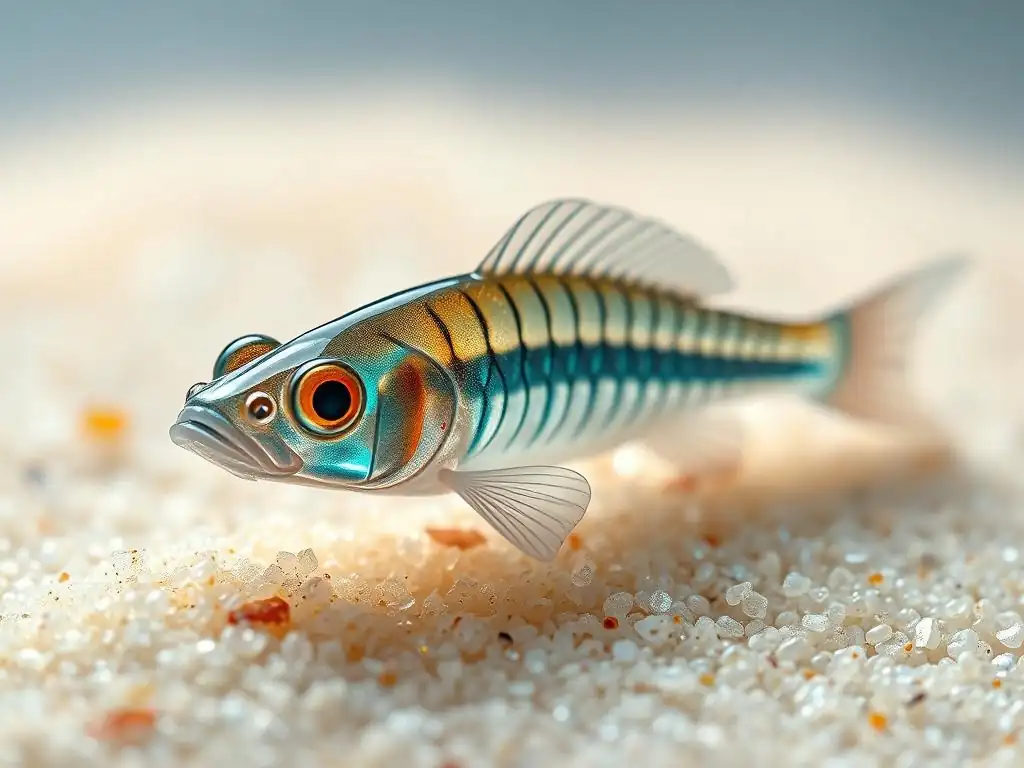
Pigment cells, known as chromatophores, are specialized cells responsible for the diverse coloration observed in larval fish. These cells, derived from the neural crest, contain various types of pigments and can expand or contract, allowing the larvae to rapidly change their appearance. In the early stages of larval fish pigmentation development, chromatophores are often sparsely distributed, but as the larva matures, they proliferate and organize into species-specific patterns essential for camouflage, signaling, and protection.
The precise arrangement and activity of chromatophores are crucial for larval survival. For example, the development of cryptic coloration helps larvae blend into their pelagic or benthic environments, evading predators. Beyond camouflage, pigmentation can also offer protection against harmful UV radiation and may play a role in social signaling as larvae approach metamorphosis. Monitoring the expansion, contraction, and overall distribution of these cells provides direct visual cues about the larva's physiological state and its progression through developmental stages.
Types of Pigments and Their Distribution in Larval Fish
Larval fish pigmentation development involves the synthesis and deposition of several distinct types of pigments, each contributing to the overall coloration and serving specific biological functions. The primary pigment types include melanins, carotenoids, and purines (often forming iridophores). The distribution of these pigments is highly species-specific and changes dramatically as larvae grow and prepare for metamorphosis, offering clear visual benchmarks for aquarists.
The presence and vibrancy of these pigments are often directly linked to diet and environmental conditions. For instance, a lack of specific dietary components can lead to pale or abnormal coloration, impacting both survival and future marketability in aquaculture. Understanding the different pigment types and their typical distribution patterns is fundamental for accurately assessing the health and developmental trajectory of larval fish.
Melanins: Black and Brown Pigmentation in Larval Stages
Melanins are the most common pigments found in larval fish, responsible for black and brown coloration. These pigments are contained within melanophores, cells that can aggregate or disperse melanin granules, leading to rapid changes in shade. In many larval species, initial pigmentation often involves a few scattered melanophores along the dorsal surface or ventral gut, providing basic camouflage.
As larval fish pigmentation development progresses, melanophores typically increase in number and organize into more complex patterns, such as bands, spots, or uniform darkening, particularly as the larvae approach metamorphosis and settle into a more benthic lifestyle. The intensity and pattern of melanin can also indicate stress; overly dark or aggregated melanophores can sometimes signify poor water quality or disease, while very pale melanism might suggest a nutritional deficiency affecting melanin synthesis pathways.
Carotenoids: Red, Orange, and Yellow Hues
Carotenoids are lipid-soluble pigments responsible for the vibrant red, orange, and yellow hues seen in many fish species. Unlike melanins, fish cannot synthesize carotenoids de novo and must obtain them directly from their diet, making them critical indicators of nutritional adequacy in larval rearing. Common dietary sources include microalgae, rotifers, and Artemia, especially when enriched with carotenoid-rich supplements like astaxanthin.
The development of carotenoid-based coloration often occurs later in larval fish pigmentation development, as the digestive system matures and larvae consume sufficient quantities of carotenoid-rich live feeds. A lack of these pigments can result in a dull or pale appearance, indicative of a dietary deficiency that may also impact immune function and stress resistance. Monitoring the emergence and intensity of these colors is thus a direct measure of the effectiveness of the larval feeding regime.
Iridophores: Reflective Pigments and Iridescent Colors
Iridophores are specialized chromatophores that contain light-reflecting platelets, typically composed of guanine crystals. These cells produce structural colors, leading to iridescent, silvery, or metallic sheens, rather than absorbing and reflecting specific wavelengths like other pigments. Iridophores are crucial for camouflage, particularly in pelagic larvae, where their reflective properties help the fish blend with the surrounding water by mirroring ambient light.
The development of iridophores typically begins during the later stages of larval fish pigmentation development, often coinciding with the onset of metamorphosis. For many open-water species, the silvery appearance provided by iridophores is vital for survival. The proper formation and distribution of these reflective cells indicate healthy development and the larvae's readiness to transition to more advanced camouflage strategies, which is essential for evading predators in their natural or cultured environment.
Stages of Pigmentation Development in Saltwater Larvae
Initial Pigmentation: From Hatching to Yolk-Sac Absorption
The initial stages of larval fish pigmentation development typically begin shortly after hatching, even while larvae are still relying on their yolk sac for nutrition. At this point, pigmentation is usually minimal, often consisting of a few scattered melanophores on the dorsal surface, along the gut, or around the eyes. For many species, larvae are largely transparent, a strategy for camouflage in the open water.
As the yolk sac is absorbed, usually within 2-5 days post-hatch depending on the species, the larvae transition to exogenous feeding. During this critical period, the number and distribution of melanophores may slightly increase, providing early indicators of stress or environmental conditions. Observing these subtle changes is vital, as it marks the beginning of the larva's reliance on external cues and nutrition for continued pigment synthesis and development.
Progression of Pigmentation Patterns: Identifying Key Milestones
As larval fish grow, their pigmentation patterns undergo significant transformations, providing crucial milestones for tracking development. After yolk-sac absorption, there is a gradual increase in the density and complexity of chromatophores, including the emergence of melanins, carotenoids, and iridophores in species-specific patterns. For example, many species develop distinct bars, spots, or uniform coloration that mimics the adult form as they approach metamorphosis.
For species like clownfish, the characteristic white bands begin to appear visibly around 10-15 days post-hatch, progressively solidifying. In others, such as some tang species, a silvery, clear larval stage transitions to a more defined body coloration often linked to a shift from pelagic to benthic habitats. Tracking these predictable changes in larval fish pigmentation development allows aquarists to estimate the larval age, assess their readiness for metamorphosis, and anticipate changes in their habitat requirements or feeding behavior.
Pigmentation as an Indicator of Larval Health and Diet
The state of larval fish pigmentation development is a powerful visual indicator of a larva's overall health and the adequacy of its diet. Healthy larvae typically exhibit vibrant, well-defined pigmentation patterns appropriate for their developmental stage, reflecting a balanced nutritional intake. For instance, a rich supply of carotenoids in the diet will result in strong red, orange, or yellow hues in species capable of displaying these colors.
Conversely, abnormal pigmentation can signal underlying issues. Pale or faded coloration, particularly a lack of vibrant yellows or reds, often points to a deficiency in dietary carotenoids or other essential nutrients. Overly dark or mottled pigmentation, especially if accompanied by lethargy, can indicate stress, poor water quality, or disease. Aquarists routinely use these visual cues to fine-tune their feeding protocols, enrich live feeds, or adjust environmental parameters, aiming to restore optimal larval fish pigmentation development and overall vitality.
Eye Development in Larval Fish: A Window into Neurological Maturity
The Formation of the Eye: From Vesicle to Functional Organ
The formation of the eye in larval fish is a complex and highly coordinated embryological process, beginning with the evagination of optic vesicles from the neural tube and culminating in a fully functional visual organ. This developmental journey is crucial, as the eyes are among the first sensory organs to become functional, enabling larvae to detect light, orient themselves, and, most importantly, locate and capture food.
Proper eye development is intrinsically linked to the larva's neurological maturity and its ability to transition from relying on endogenous yolk reserves to actively hunting live prey. Any impediment during this process, whether due to genetic factors, nutritional deficiencies, or environmental stressors, can severely compromise the larva's ability to feed and survive, making it a critical aspect to monitor in larval rearing.
Stages of Eye Development and Visual Acuity in Larval Fish
The progression of eye development in larval fish involves distinct stages, each contributing to increasing visual acuity and functionality. From simple light perception at hatching to the development of sophisticated photoreceptors and coordinated eye movements, these stages directly impact the larva's capacity for survival. The timing and completeness of these developments vary by species but follow a general pattern.
Monitoring these stages allows aquarists to predict when larvae will become visually dependent feeders, guiding the introduction of live feeds. For instance, many species require highly developed eyes to successfully predate on small rotifers or Artemia nauplii. Delays or abnormalities in any stage can lead to starvation, even if suitable food is present, underscoring the importance of meticulous observation.
Early Eye Development: Lens Formation and Pigment Cup
In the earliest stages of eye development, shortly after hatching, the primary structures visible are the optic cup and the developing lens. The optic cup, a double-layered structure, forms the precursor to the retina, while the lens, derived from the ectoderm, begins to form within the cup. At this point, the eye often appears as a dark, pigmented spot, due to the formation of the pigment epithelium, which is crucial for light absorption and preventing light scattering.
During this phase, the larvae typically exhibit only rudimentary light perception, allowing for basic phototaxis (movement towards or away from light) or shadow detection. The integrity and clarity of the lens are paramount, as any opacity or malformation at this early stage can lead to permanent visual impairment. Aquarists monitor the symmetry and clarity of these initial eye structures to ensure a healthy start to visual development.
Maturation of the Retina: Development of Photoreceptors
Following the initial formation of the lens and pigment cup, the critical phase of retinal maturation begins, involving the differentiation and development of photoreceptor cells: rods and cones. Rods are responsible for vision in low light conditions (scotopic vision), while cones provide color vision and high acuity in brighter light (photopic vision). The precise layering and density of these cells within the retina are essential for clear vision.
As the retina matures, usually within the first week or two post-hatch for many species, the larvae's visual capabilities significantly improve, enabling them to discern smaller prey items and navigate their environment more effectively. The proper development of the fovea, a specialized area for acute vision, in some species, further enhances their predatory efficiency. Nutritional factors, particularly Vitamin A, are crucial for proper photoreceptor development and function, impacting the overall success of larval rearing.
Eye Movement and Visual Tracking Abilities in Larval Stages
Beyond the internal structures, the development of coordinated eye movement and visual tracking abilities is a key indicator of neurological maturity and feeding readiness in larval fish. This involves the maturation of the extrinsic eye muscles and the neural pathways that control them, allowing the larvae to fixate on and follow moving objects, such as live planktonic prey.
Typically, by the time larvae are ready to transition to exogenous feeding, they exhibit rudimentary eye movements, which progressively become more coordinated and precise. The ability to visually track and successfully strike at live food, such as rotifers or newly hatched Artemia nauplii, is a direct measure of their visual acuity and motor control. Observing larvae actively scanning their environment and targeting food particles confirms the functional development of their visual system, signaling appropriate timing for feeding adjustments.
Assessing Eye Health and Development in Larval Rearing
Indicators of Healthy Eye Development
Assessing healthy eye development in larval fish involves observing several key indicators. Firstly, the eyes should be symmetrical, clear, and appropriately sized for the larval stage and species. They should be free from cloudiness, opacities, or any signs of inflammation. Secondly, the larvae should exhibit normal responses to light, such as orienting themselves towards a light source or showing a startle response to sudden changes in illumination.
Furthermore, healthy larvae will display coordinated eye movements, actively scanning their environment and demonstrating the ability to track and pursue live food particles. The presence of a distinct, reflective tapetum lucidum in some species, which enhances night vision, can also be a positive sign. Consistent observation of these indicators provides aquarists with a reliable gauge of the larvae's neurological and visual health, directly correlating with their feeding success and survival potential.
Potential Problems: Blindness and Abnormal Eye Formation
Various issues can lead to blindness or abnormal eye formation in larval fish, severely impacting their survival. Microphthalmia, characterized by abnormally small eyes, is a common developmental anomaly that can result from genetic predispositions, nutritional deficiencies (especially Vitamin A), or exposure to environmental stressors like pollutants or extreme temperatures during critical developmental windows. Anophthalmia, the complete absence of eyes, is rarer but equally devastating.
Other problems include cataracts (clouding of the lens), retinal degeneration, or malformations of the optic nerve. These issues often manifest as larvae failing to feed, exhibiting disorientation, or swimming erratically, even when food is abundant. Identifying these problems early through careful observation is crucial, as they often indicate underlying genetic issues in the broodstock, inadequate nutrition in the larval diet, or suboptimal rearing conditions that require immediate intervention to prevent widespread mortality.
Practical Applications: Using Pigmentation and Eye Development for Larval Rearing Success
Monitoring Pigmentation and Eye Development in Real-Time
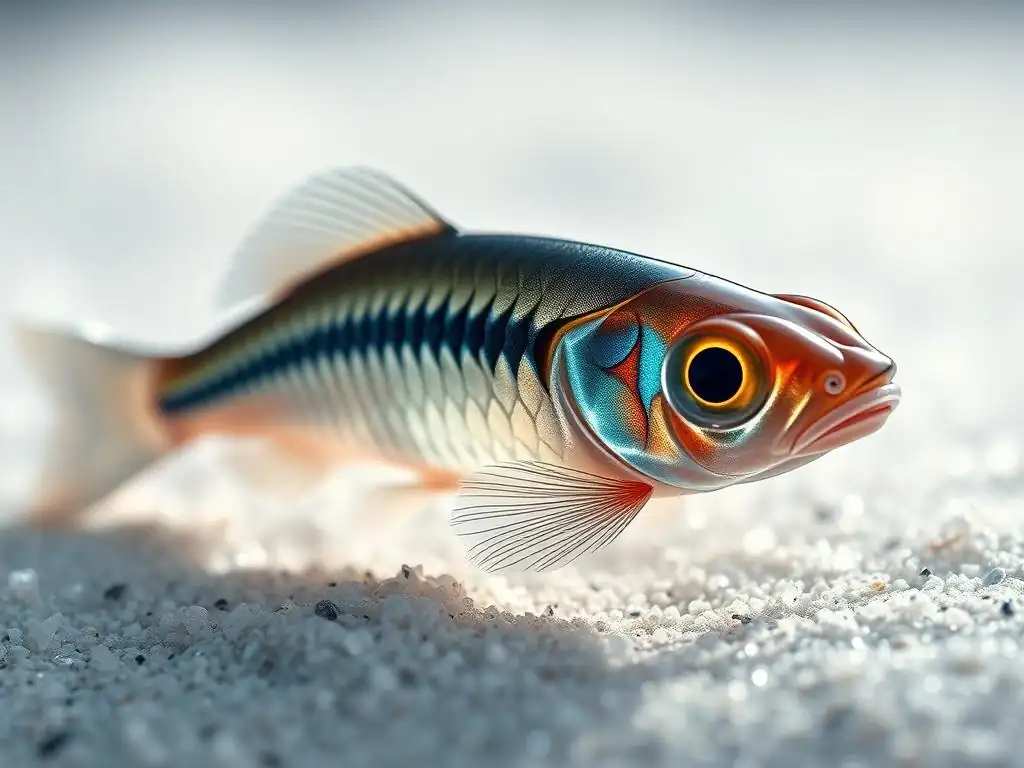
Monitoring larval fish pigmentation development and eye development in real-time is a fundamental practice for successful larval rearing. Aquarists typically use dissecting microscopes or high-magnification lenses to closely examine individual larvae or small batches sampled from the rearing tank. Regular checks, often daily or even twice daily during critical stages, allow for immediate detection of developmental anomalies or changes indicative of stress or nutritional deficiencies.
Detailed record-keeping, including sketches, photographic documentation, or simple descriptive notes on the progression of pigmentation patterns and eye clarity, is invaluable. This data helps establish species-specific developmental benchmarks and allows aquarists to compare current larval batches against historical successful runs. Early identification of issues, such as delayed pigmentation or cloudy eyes, enables prompt adjustments to feeding, water quality, or lighting, significantly improving the chances of survival and healthy maturation.
Adjusting Feeding and Environmental Conditions Based on Development
The observed state of larval fish pigmentation development and eye development directly informs critical adjustments to feeding and environmental conditions. For instance, once eyes are clearly formed and larvae demonstrate coordinated eye movements and visual tracking, it signals their readiness for exogenous feeding, prompting the introduction of appropriately sized live feeds like rotifers or copepod nauplii. If pigmentation appears faded or abnormal, it may indicate a need for enhanced live feed enrichment with specific nutrients, such as carotenoids or essential fatty acids.
Environmental parameters also play a role. Optimal light intensity is crucial for eye development and visual feeding; too dim, and larvae struggle to find food; too bright, and they might experience stress. Water quality, temperature, and salinity also directly impact larval health and development. For example, sudden drops in temperature or poor water quality can stress larvae, leading to delayed pigmentation or abnormal eye development, necessitating immediate corrective actions to maintain stable and favorable rearing conditions.
Troubleshooting Pigmentation and Eye Development Issues
Albinism and Solutions
Albinism in larval fish, characterized by a complete or partial lack of melanin pigmentation, can be a significant issue in aquaculture. While true albinism is a genetic condition resulting from a mutation in melanin synthesis pathways, a phenotypical 'albinism' or hypopigmentation can also be induced by nutritional deficiencies, particularly a lack of the amino acids tyrosine and phenylalanine, which are precursors to melanin.
When nutritional albinism is suspected, the primary solution involves fortifying the larval diet. This can be achieved by enriching live feeds (rotifers, Artemia) with protein-rich supplements or specific amino acid blends. For true genetic albinism, there is no dietary solution, but affected larvae may still be reared successfully if their vision is not impaired, though they often exhibit reduced camouflage and increased sensitivity to light, requiring adjusted rearing environments, such as lower light levels.
Addressing Microphthalmia in Larval Fish
Microphthalmia, the condition of abnormally small eyes in larval fish, is a serious developmental problem that severely impairs vision and feeding success. Its causes are multifactorial, including genetic predisposition, exposure to environmental toxins (e.g., heavy metals, certain pesticides) during critical developmental stages, or, most commonly, nutritional deficiencies, particularly a lack of Vitamin A (retinol). Vitamin A is crucial for the proper development of the retina and other ocular structures.
To address microphthalmia, aquarists must first identify the likely cause. If nutritional deficiency is suspected, enriching the live feeds with Vitamin A and other essential vitamins is paramount. Maintaining stable and optimal water quality parameters, avoiding sudden temperature fluctuations, and ensuring broodstock are well-nourished can also mitigate the risk. In cases where the condition is widespread, it may necessitate a review of broodstock genetics or a more rigorous assessment of the entire rearing environment to prevent recurrence in future batches.
Case Studies: Examples of Pigmentation and Eye Development in Specific Saltwater Species
Case Study 1: Pigmentation in Yellow Tang Larvae (Zebrasoma flavescens)
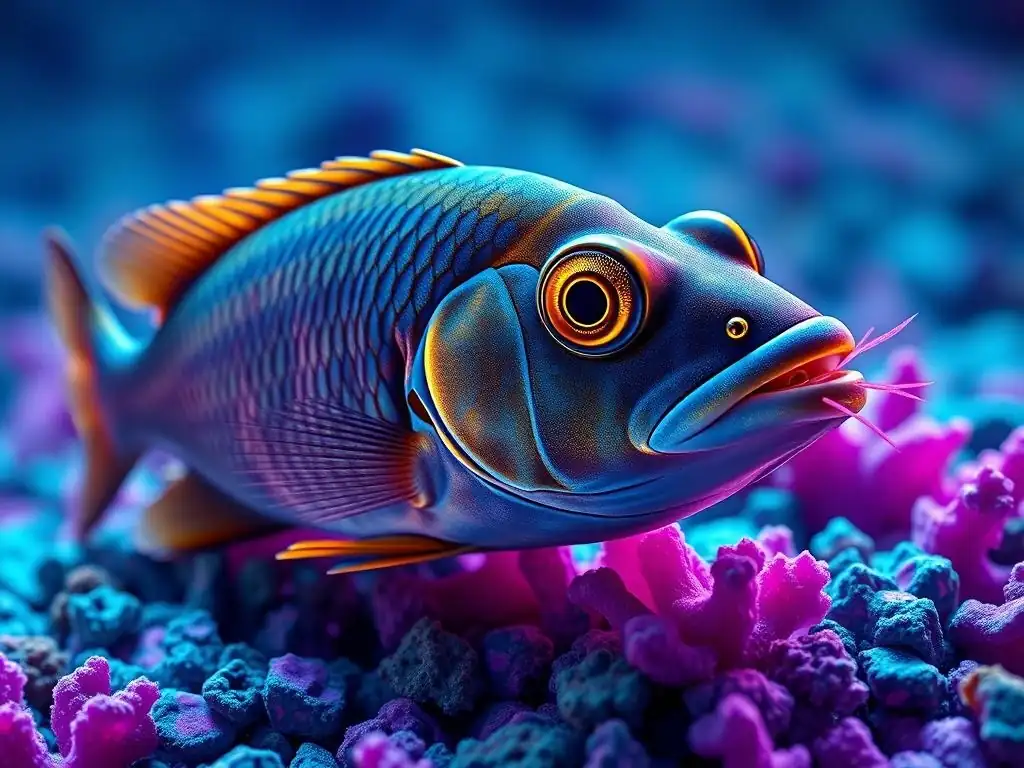
The larval fish pigmentation development in Yellow Tang (Zebrasoma flavescens) provides a challenging yet illustrative case study. Yellow Tang larvae are notoriously difficult to rear, partly due to their protracted larval duration, which can range from 40 to 60 days. At hatching, the larvae are largely transparent, with minimal pigmentation, primarily a few scattered melanophores. As they grow, they maintain a silvery, pelagic appearance for an extended period, which is a significant challenge for aquarists aiming to track their development visually.
The most dramatic change in larval fish pigmentation development occurs just prior to and during metamorphosis, when the larvae transition from a pelagic life to a benthic, reef-associated existence. During this phase, the characteristic vibrant yellow coloration of the juvenile tang begins to emerge, along with the development of the adult body shape.
This color change is heavily dependent on the dietary intake of carotenoids. Hatcheries striving to produce Yellow Tang focus intensely on providing high-quality, carotenoid-rich live feeds (e.g., enriched copepods and Artemia) throughout the larval phase to ensure optimal pigment deposition and successful metamorphosis into healthy, brightly colored juveniles.
Case Study 2: Eye Development in Banggai Cardinalfish Fry (Pterapogon kauderni)
Banggai Cardinalfish (Pterapogon kauderni) offer a contrasting example due to their unique reproductive strategy of paternal mouthbrooding and the relatively large, well-developed fry they release. Unlike many marine fish with tiny, delicate larvae, Banggai Cardinalfish fry are born with highly advanced eye development. At release, their eyes are fully formed, clear, and functional, enabling immediate visual feeding.
This advanced eye development is a key factor contributing to their comparatively easier rearing in captivity. The fry are immediately capable of tracking and consuming relatively large live prey, such as newly hatched Artemia nauplii, without the protracted period of visual maturation seen in species with smaller, less developed larvae.
Observing their immediate ability to visually target and strike at prey confirms their readiness for feeding and indicates robust neurological development. Any signs of cloudy eyes, asymmetry, or lack of visual tracking in Banggai Cardinalfish fry would be an immediate red flag, indicating a severe developmental issue, likely linked to broodstock health or genetic factors, given their advanced state at birth.
Conclusion: Optimizing Larval Rearing Through Careful Observation
The Crucial Role of Pigmentation and Eye Development Monitoring
The meticulous monitoring of larval fish pigmentation development and eye development stands as a cornerstone of successful marine fish aquaculture. These two visually accessible parameters offer invaluable, non-invasive insights into the internal physiological state, nutritional adequacy, and neurological maturation of delicate larval fish. By providing immediate feedback on health and developmental progression, they enable aquarists to make timely and precise adjustments to rearing protocols, from feeding regimes to environmental conditions.
The ability to accurately assess these indicators allows for proactive problem-solving, significantly reducing mortality rates that often plague early larval stages. Whether it's identifying a carotenoid deficiency through faded coloration or detecting a Vitamin A deficiency via underdeveloped eyes, these observations empower aquarists to optimize every aspect of the larval environment, fostering robust growth and increasing the yield of healthy, viable juvenile fish.
Future Directions in Larval Fish Rearing Research
Future directions in larval fish rearing research will undoubtedly continue to build upon the foundational understanding of larval fish pigmentation development and eye development. Advances in non-invasive imaging techniques, such as high-resolution microscopy and even automated image analysis, could enable more precise and less labor-intensive monitoring of these critical indicators across larger populations of larvae. Genetic research will further elucidate the specific genes controlling pigment synthesis and eye formation, potentially leading to selective breeding programs for more resilient and faster-developing strains.
Furthermore, a deeper understanding of specific nutritional requirements for optimal larval fish pigmentation development and eye health, particularly for challenging species, will drive the formulation of more sophisticated live feed enrichment products and microdiets. Integrating real-time sensor data on water quality with visual observations could also create predictive models for larval health. These advancements promise to refine current rearing practices, making the aquaculture of diverse marine fish species more efficient, sustainable, and ultimately, more successful.
Frequently Asked Questions
How does pigmentation relate to the overall health of larval fish?
Pigmentation is a visual indicator of the fish's development and its ability to synthesize essential nutrients. Poor pigmentation can signify nutritional deficiencies or stress.
Why is eye development considered a key indicator of larval fish maturation?
The eye's development directly reflects the neurological and visual capabilities of the larva. Proper eye formation is crucial for hunting and survival. Delayed or abnormal eye development usually points to problems.
What environmental factors can most significantly impact larval fish pigmentation?
Light intensity, water quality (especially ammonia levels), and the presence of specific nutrients in the diet are crucial. Imbalances can lead to pigmentation issues.
What are some common pigmentation problems observed in larval fish, and what do they indicate?
Common issues include lack of pigmentation (albinism, often genetic), uneven pigmentation (stress or nutritional deficiency), and dark spots (possible disease or parasitic infection).
How can aquarists use pigmentation and eye development observations to improve larval fish rearing techniques?
Regular observation helps in early detection of problems, allowing for timely adjustments to diet, water parameters, and lighting. This leads to improved survival rates.
Final Reflection: Unveiling the Secrets of Larval Life
The intricate dance of pigmentation and eye development in larval fish, as explored throughout this article, isn't merely an academic exercise; it's a window into the very survival of future generations. Understanding these developmental markers provides crucial insights into the health and resilience of aquatic ecosystems, allowing us to better monitor and protect these vital populations in a rapidly changing world. The ability to accurately track larval fish pigmentation development is now more critical than ever.
This journey into the microscopic world of larval development has profoundly underscored the interconnectedness of life. Witnessing the delicate interplay of genes and environment shaping these tiny creatures reminds us of the fragility and beauty of the natural world. As we strive to understand these processes, we are reminded of the profound responsibility we have to safeguard the biodiversity of our oceans. In the end, we will conserve only what we love; we will love only what we understand; and we will understand only what we are taught.
- Baba Dioum. This quote encapsulates the importance of continued research and education in fostering a deeper appreciation for the complexities of larval fish development.
Now, consider the implications of this knowledge. How can you contribute to a greater understanding and appreciation of the aquatic world? Whether through supporting sustainable fishing practices, advocating for cleaner waterways, or simply sharing the wonder of these discoveries with others, each of us has a role to play in ensuring a healthy future for our oceans and the remarkable creatures that call them home. Let the insights gained here inspire you to look closer, to learn more, and to act decisively in protecting the delicate balance of life beneath the waves.
Unveil the Secrets: Raise Thriving Larvae!
Thank you for diving into the fascinating world of larval development and discovering the crucial role of pigmentation and eye formation. Now that you're equipped with this knowledge, it's time to put it into action!
- Start observing: Begin meticulously documenting the pigmentation and eye development stages of your own larval fish or invertebrates. This hands-on experience is invaluable.
- Share your insights: Post your observations, including photos, on relevant online forums or social media groups dedicated to aquarium breeding.
- Explore further: Research specific species and their unique larval development patterns to deepen your understanding.
What subtle pigment changes have you noticed in your larval observations, and how did it affect your rearing strategy?