
Creating a Balanced Community Tank with Angelfish as Centerpieces

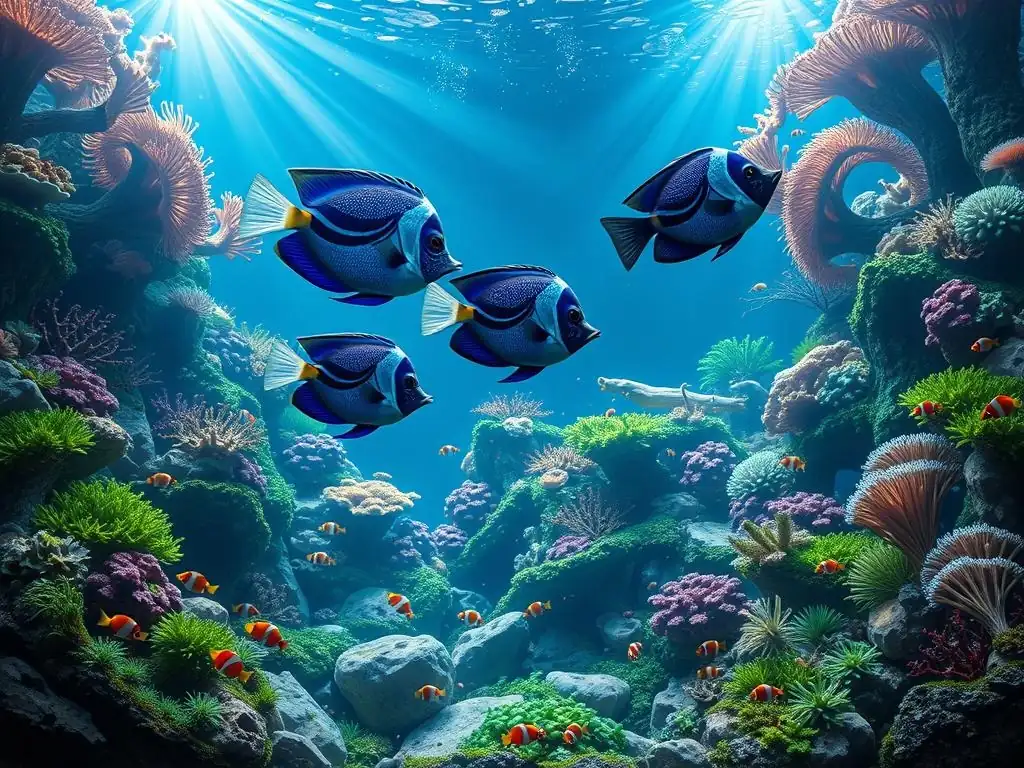
Welcome to Aquarium Mastery!
Ever dreamt of a thriving community aquarium with the majestic Angelfish as its centerpiece? But is it truly possible to achieve that perfect balance? Dive into our guide on "Angelfish community tank balance" and uncover the secrets to creating a harmonious underwater world where these elegant fish not only survive, but truly flourish. Read on to discover the do's and don'ts, and transform your aquarium dreams into a vibrant reality!
- Understanding Angelfish Temperament for Community Tank Success
-
Frequently Asked Questions
- How many Angelfish can I keep in a community tank?
- What are the best tank mates for Angelfish in a community setting?
- What water parameters are crucial for maintaining a balanced Angelfish community tank?
- How do I prevent Angelfish from becoming aggressive in a community tank?
- What should I feed my Angelfish in a community tank to ensure their health and well-being?
- Final Reflection: Embracing Harmony in the Aquarium
- Inspire Your Aquarium: Start Building Your Dream Angelfish Tank Today!
Understanding Angelfish Temperament for Community Tank Success
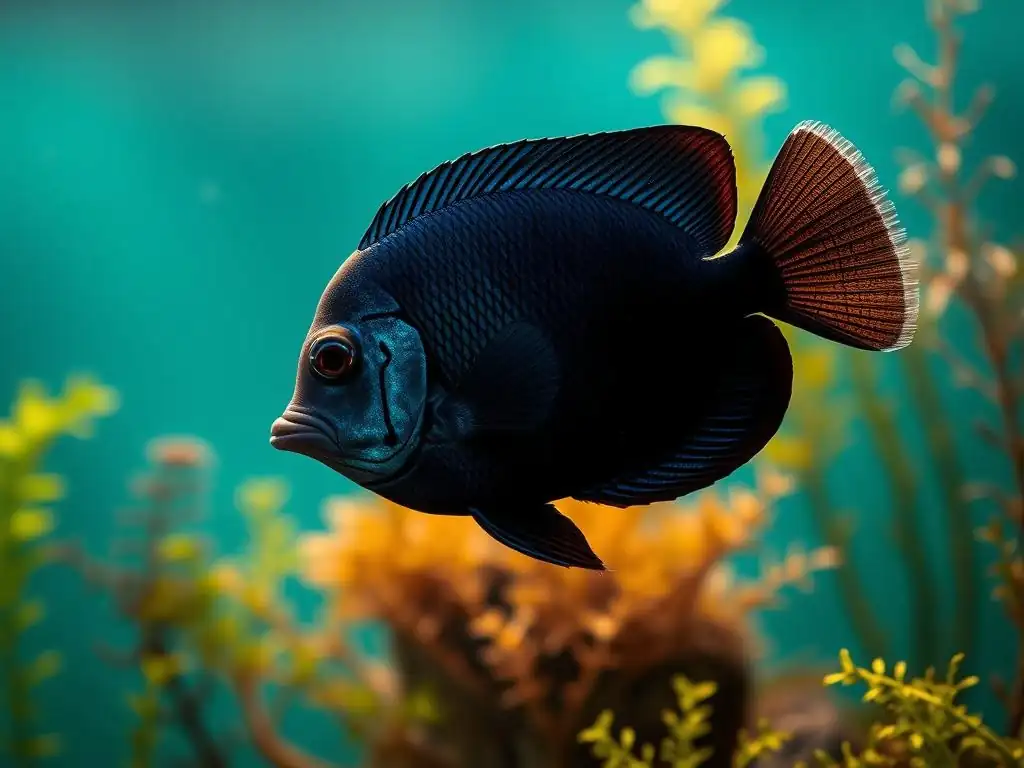
Angelfish: A General Overview of Behavior and Compatibility
Saltwater angelfish, known for their vibrant colors and graceful swimming, are often desired centerpieces in marine aquariums. Their behavior, however, can range significantly from peaceful to highly territorial, depending on the species and individual personality.
Dwarf angelfish, such as the Flame Angelfish ( Centropyge loriculus) or Coral Beauty Angelfish ( Centropyge bispinosa), are generally considered more community-friendly than their larger counterparts like the Emperor Angelfish ( Pomacanthus imperator) or Queen Angelfish ( Holacanthus ciliaris). While dwarf angels often coexist well with various non-angelfish species, larger angelfish require substantial tank sizes and careful selection of tank mates due to their potential for aggression, especially as they mature.
Successful Angelfish community tank balance hinges on understanding these inherent behavioral traits. Many angelfish species exhibit a degree of territoriality, particularly towards conspecifics or fish with similar body shapes and color patterns. For instance, introducing two male Centropyge angelfish into a smaller tank often leads to severe aggression, resulting in one dominating or even killing the other. Therefore, careful planning and research into the specific angelfish species' typical temperament are paramount before attempting a community setup.
Assessing Angelfish Personality Before Introducing Tank Mates
Before integrating an angelfish into an existing community tank or building a new one around it, a crucial step is to observe its individual personality. This assessment is best performed during a quarantine period, typically lasting 2 to 4 weeks, where the angelfish can be monitored in isolation.
During this time, observe its feeding habits, activity levels, and any signs of stress or unusual aggression, such as flaring gills at reflections or attempting to nip at the quarantine tank walls. A healthy, confident angelfish that explores its surroundings and readily accepts food is generally a good candidate for a community setup.
Conversely, an angelfish that appears overly timid, hides constantly, or exhibits signs of persistent stress may struggle in a bustling community environment. Similarly, an angelfish showing immediate aggression towards any temporary tank mates (if applicable in quarantine) or displaying overly dominant behavior might be challenging to integrate without disrupting the Angelfish community tank balance. Recognizing these early indicators can prevent future conflicts and ensure the well-being of all inhabitants.
Recognizing Signs of Aggression in Angelfish
Promptly identifying signs of aggression in angelfish is vital for maintaining a harmonious Angelfish community tank balance. Aggression can manifest in various ways, from subtle warnings to overt physical attacks. Common indicators include fin nipping, where the angelfish bites or tears the fins of other fish, often resulting in frayed or damaged fins. Chasing behavior is another clear sign, where the angelfish relentlessly pursues a tank mate, preventing it from feeding or finding shelter.
More intense displays of aggression involve body slamming, where the angelfish physically pushes or rams another fish, and gill flaring, an intimidating display of dominance. Rapid changes in coloration, particularly darkening or intensifying of colors during confrontations, can also signal stress or aggression. Observing these behaviors early allows for intervention, such as rearranging rockwork to break up territories, adding more hiding spots, or, in severe cases, removing the aggressor or the targeted fish to restore peace and prevent injury or death among the tank inhabitants.
Frequently Asked Questions
How many Angelfish can I keep in a community tank?
It depends on the tank size. A general rule is to provide at least 20 gallons per Angelfish. Overcrowding can lead to aggression and poor water quality.
What are the best tank mates for Angelfish in a community setting?
Good tank mates include peaceful fish like Tetras, Corydoras, and Rasboras. Avoid fin-nippers or overly aggressive species that will stress the Angelfish.
What water parameters are crucial for maintaining a balanced Angelfish community tank?
Maintain a temperature of 78-82°F (25-28°C), a pH of 6.0-7.0, and keep ammonia and nitrite levels at 0 ppm.
How do I prevent Angelfish from becoming aggressive in a community tank?
Ensure enough space, provide plenty of hiding spots, and avoid overcrowding. Monitor the tank closely for signs of aggression and adjust the stocking accordingly.
What should I feed my Angelfish in a community tank to ensure their health and well-being?
Offer a varied diet of high-quality flake food, frozen food, and live food. Ensure that all tank inhabitants are getting enough food to prevent competition.
Final Reflection: Embracing Harmony in the Aquarium
The principles of Angelfish community tank balance extend far beyond the glass walls of our aquariums. Understanding the delicate interplay between species, the importance of environment, and the necessity of careful planning are lessons that resonate deeply in our own lives and communities. Just as a thriving aquarium requires mindful stewardship, so too does a harmonious society.
The pursuit of a balanced Angelfish community tank has profoundly shaped my understanding of ecosystem dynamics and the responsibility we bear as caretakers. This journey has underscored the importance of empathy and observation, reminding me that true beauty lies not just in individual brilliance, but in the collective flourishing of all. The best and most beautiful things in the world cannot be seen or even touched - they must be felt with the heart.
- Helen Keller. This sentiment perfectly captures the essence of creating a truly balanced and thriving ecosystem, whether in an aquarium or in our own lives.
Now, I invite you to reflect on the principles of balance and harmony presented in this article. Consider how you can apply these lessons to foster more balanced and thriving communities in your own life. Just as we strive to create a peaceful haven for our Angelfish, let us also strive to cultivate environments of understanding, respect, and mutual support in the world around us. Let the pursuit of Angelfish community tank balance inspire you to become a more mindful and compassionate steward of our shared planet.
Inspire Your Aquarium: Start Building Your Dream Angelfish Tank Today!
Thank you for exploring the art of creating a balanced community aquarium with angelfish. We hope this guide has provided the insights you need to craft a thriving underwater world. Now, let's turn that knowledge into action!
Here are a few steps to get you started:
- Begin by sketching out your tank design, focusing on creating dedicated territories and open swimming spaces suitable for Angelfish. This will be the foundation of your balanced ecosystem.
- Research compatible tank mates unique to your interests and desired ecosystem such as peaceful Corydoras, or schooling Cardinal Tetras to create visual harmony and natural behavior.
- Share your initial tank design ideas and fish pairings with the Aquarium Mastery community on our forum to get feedback and suggestions from fellow enthusiasts.
Ready to take the plunge? What exciting elements will you incorporate into your Angelfish community tank to make it uniquely your own?