
The Real Cost of Owning a Large Saltwater Angelfish: A Detailed Breakdown

Welcome to Aquarium Mastery!
Ever wondered if you can truly afford that majestic saltwater angelfish you've been dreaming about? Beyond the initial purchase, the real cost might surprise you. Dive in to our detailed breakdown of saltwater angelfish tank costs and discover everything you need to know to make an informed decision. Get ready to unlock the secrets to successfully keeping these stunning creatures!
- Understanding the Financial Commitment of Large Saltwater Angelfish Keeping
-
Tank Setup Costs for Large Saltwater Angelfish
- Aquarium Size and Type: Selecting the Right Tank for Your Angelfish
- Filtration Systems: Essential Equipment for Water Quality and Angelfish Health
- Lighting: Providing the Necessary Spectrum for Angelfish and Coral (If Applicable)
- Substrate and Aquascaping: Creating a Natural and Functional Environment
- Heaters and Chillers: Maintaining a Stable Temperature for Saltwater Angelfish
- Powerheads and Wave Makers: Enhancing Circulation and Oxygenation
-
The Ongoing Expense of Saltwater Angelfish Care
- Saltwater Mix: Calculating Regular Saltwater Change Costs
- Food and Supplements: Meeting the Nutritional Needs of a Large Angelfish
- Water Testing Kits and Reagents: Monitoring Water Parameters
- Electricity Consumption: The Impact of Aquarium Equipment on Your Bill
- Replacement Parts and Maintenance: Accounting for Unexpected Expenses
- Medications and Treatments: Preparing for Potential Health Issues
-
Hidden Costs of Saltwater Angelfish Ownership
- Quarantine Tank Setup: Protecting Your Main Display Tank
- Professional Aquarium Maintenance: When to Seek Expert Help
- Coral Compatibility Considerations: Impact on Reef Tank Costs
- The Cost of Time: Dedication to Aquarium Maintenance
- Dealing with Aggression: Potential Costs of Rehoming or Tankmate Losses
- Strategies to Minimize Saltwater Angelfish Tank Costs
- Is a Large Saltwater Angelfish Right for Your Budget?
-
Frequently Asked Questions
- How much does it really cost to set up a saltwater angelfish tank?
- What are the ongoing maintenance costs associated with keeping saltwater angelfish?
- Are there specific equipment needs that significantly impact the saltwater angelfish tank costs?
- How does the size of the angelfish impact the overall saltwater angelfish tank costs?
- Are there hidden or unexpected costs to consider when planning a saltwater angelfish tank?
- Final Reflection: Beyond the Price Tag: A Deeper Dive into Saltwater Angelfish Keeping
- Dive Deeper: Transform Your Tank into an Angelfish Paradise!
Understanding the Financial Commitment of Large Saltwater Angelfish Keeping
Initial Investment vs. Long-Term Costs: Planning Your Angelfish Budget
Embarking on the journey of owning a large saltwater angelfish involves a significant financial commitment that extends far beyond the initial purchase price of the fish itself. The upfront cost for setting up a suitable habitat, encompassing the aquarium, filtration, lighting, and aquascaping, can easily range from $3,000 to $6,000 or more for a substantial system. This initial investment is often the most daunting part, as it requires a lump sum for all the necessary equipment to create a stable and healthy environment for these magnificent creatures.
However, the saltwater angelfish tank costs do not end with the setup. Prospective owners must also factor in recurring, long-term expenses that accumulate over the lifespan of the aquarium. These ongoing costs include essential consumables like salt mix, specialized angelfish food, water testing reagents, and the often-underestimated electricity consumption from running various equipment. Annually, these operational expenses can add up to hundreds, or even over a thousand dollars, making careful budgeting and financial planning crucial for the sustainable enjoyment of this rewarding hobby.
Tank Setup Costs for Large Saltwater Angelfish
Aquarium Size and Type: Selecting the Right Tank for Your Angelfish
Large saltwater angelfish, such as the Emperor Angelfish ( Pomacanthus imperator) or Queen Angelfish ( Holacanthus ciliaris), require substantial living space to thrive, typically needing a minimum of 120 gallons, with many experts recommending 180-250 gallons for an adult specimen. This larger volume significantly increases the base cost of the tank itself. A standard 180-gallon glass aquarium might cost approximately $800 to $1,500, while a custom acrylic tank of the same size could easily exceed $2,000, due to its lighter weight and superior clarity.
The type of aquarium also plays a critical role in the overall saltwater angelfish tank costs. Reef-ready tanks, which come pre-drilled with bulkheads for external plumbing, are often preferred for their cleaner aesthetic and more efficient water flow to a sump. While these tanks typically add an initial $100 to $300 to the cost compared to undrilled versions, they save time and potential hassle during setup. The dimensions of the tank, particularly its footprint, are also important, as a wider or deeper tank offers more swimming space and aquascaping possibilities, often commanding a higher price.
Filtration Systems: Essential Equipment for Water Quality and Angelfish Health
Robust filtration is paramount for maintaining pristine water quality in a large saltwater angelfish tank, directly impacting the health and longevity of these sensitive fish. A typical setup requires a large sump, which acts as a hidden compartment for equipment and increases the system's total water volume, often costing between $300 and $800.
Within the sump, a high-quality protein skimmer is indispensable for removing organic waste, with models suitable for large tanks ranging from $200 to over $1,000. Additionally, a powerful return pump, necessary to circulate water from the sump back to the display tank, can add another $100 to $400 to the initial expense.
Beyond these core components, many advanced filtration methods contribute to the overall saltwater angelfish tank costs. This might include a refugium, a dedicated section within the sump for growing macroalgae (e.g., Chaetomorpha) to absorb nitrates, potentially adding $50 to $200 for its setup and lighting. Filter socks, carbon, and GFO (granular ferric oxide) are also frequently used to polish water and remove phosphates, with ongoing media replacement costs averaging $20-$50 per month. For disease prevention, especially with new fish, a UV sterilizer might be considered, adding $150-$500 to the setup.
Lighting: Providing the Necessary Spectrum for Angelfish and Coral (If Applicable)
Lighting requirements for a large saltwater angelfish tank vary significantly depending on whether the setup is fish-only (FO) or a mixed reef with corals. For a fish-only system, the primary purpose of lighting is to illuminate the fish and provide a natural day-night cycle. Basic LED fixtures or T5 fluorescent lights for a 180-gallon tank can cost anywhere from $100 to $300, offering sufficient brightness without specialized spectrums. This represents a more modest contribution to the saltwater angelfish tank costs.
However, if the intention is to house reef-compatible angelfish (a cautious endeavor due to their propensity to nip corals) alongside photosynthetic corals, the lighting investment escalates dramatically. High-quality, full-spectrum LED fixtures or powerful T5/metal halide setups are required to support coral growth and coloration. These advanced lighting systems, often featuring programmable controls and multiple color channels, can range from $500 to well over $2,000 for a large aquarium. This substantial increase in lighting expense is a key factor when considering reef setups in relation to saltwater angelfish tank costs.
Substrate and Aquascaping: Creating a Natural and Functional Environment
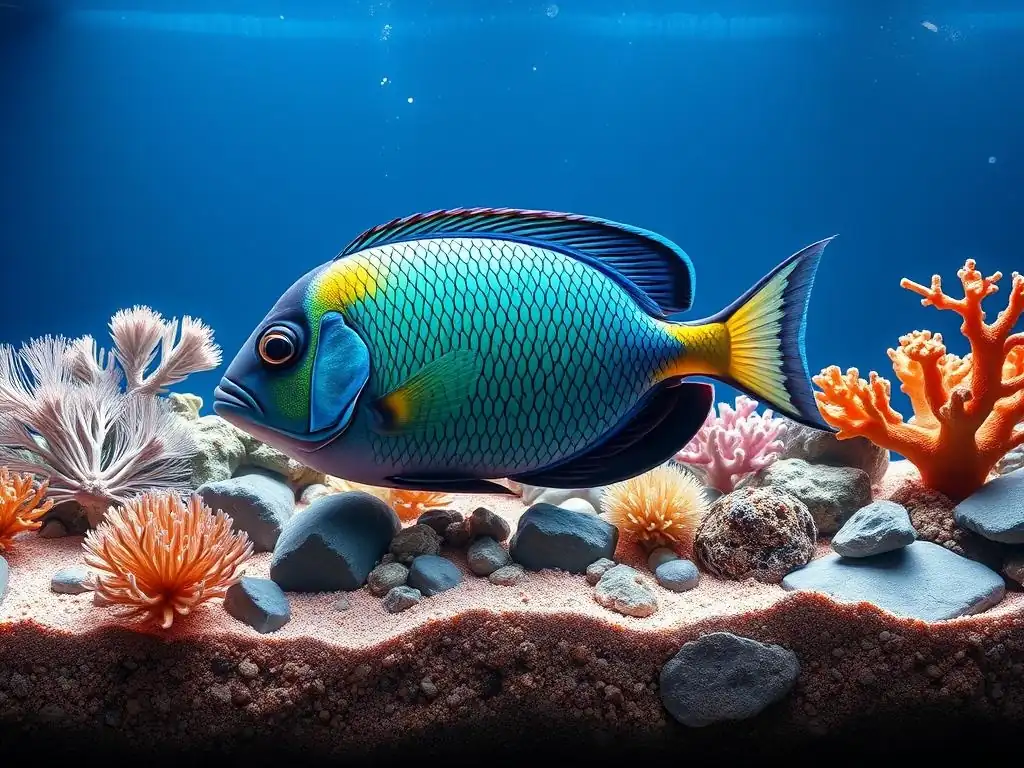
The substrate forms the base of the aquarium and contributes to both aesthetics and water chemistry. For a large saltwater angelfish tank, approximately 150-200 pounds of aragonite sand or crushed coral might be needed to achieve a sufficient depth, with costs ranging from $150 to $300. This type of substrate helps buffer the pH, maintaining stable water parameters crucial for marine life. However, the most significant aquascaping expense typically comes from live rock.
Live rock is vital for providing biological filtration and creating a natural, complex environment with hiding spots and territories for the angelfish. High-quality cured live rock can cost $6-$12 per pound, meaning 150-200 pounds for a large tank could easily total $900 to $2,400. While cheaper dry rock ($3-$6 per pound) can be used and seeded with beneficial bacteria, it requires a longer cycling period. The strategic arrangement of this rockwork is not only aesthetically pleasing but also functional, helping to mitigate aggression among tank inhabitants, a crucial consideration for large, territorial angelfish.
Heaters and Chillers: Maintaining a Stable Temperature for Saltwater Angelfish
Maintaining a stable temperature, typically between 76-78°F (24-25.5°C), is critical for the health of large saltwater angelfish. For a 180-gallon tank, this usually requires multiple heaters or a single high-wattage unit, with a combined wattage of 500W-800W. The cost for these heaters can range from $80 to $250. It is highly recommended to use an external digital temperature controller ( $50-$150) for precise temperature management and as a safeguard against heater malfunctions, which could lead to dangerous temperature swings.
In warmer climates, or if the tank's equipment (like powerful pumps and lighting) generates significant heat, a chiller may become a necessary component, adding substantially to the saltwater angelfish tank costs. A chiller for a 180-gallon system can cost between $500 and $1,500, and it also significantly increases the ongoing electricity consumption. While a considerable investment, a chiller prevents temperature spikes that can severely stress angelfish, making it a vital piece of equipment for long-term stability in certain environments.
Powerheads and Wave Makers: Enhancing Circulation and Oxygenation
Proper water circulation is essential in a large saltwater angelfish tank, replicating natural ocean currents and ensuring adequate oxygenation throughout the system. Powerheads and wave makers achieve this by preventing dead spots where detritus can accumulate and by promoting gas exchange at the water's surface. For a 180-gallon tank, two to four high-quality powerheads or wave makers are often recommended, with costs ranging from $150 to $600, depending on their flow rate, programmability, and features.
Modern wave makers offer advanced capabilities, such as creating random flow patterns or pulsing currents, which can mimic the natural environment more closely. This not only benefits the angelfish by providing varied swimming conditions but also aids in keeping the aquascape clean and preventing the buildup of organic matter. While these devices add to the initial saltwater angelfish tank costs, their contribution to a dynamic and healthy ecosystem is invaluable for the well-being and vitality of large marine fish.
The Ongoing Expense of Saltwater Angelfish Care
Saltwater Mix: Calculating Regular Saltwater Change Costs
Regular water changes are a cornerstone of saltwater aquarium maintenance, essential for replenishing trace elements and removing accumulated nitrates and other undesirable compounds. For a large saltwater angelfish tank, a typical water change involves replacing 10-20% of the total water volume every two to four weeks. For a 180-gallon tank, a 20% water change means mixing 36 gallons of new saltwater. A high-quality synthetic salt mix, typically sold in buckets or large bags, costs approximately $60-$100 for a container that makes 200 gallons of saltwater.
This translates to an ongoing expense of roughly $10-$20 per water change, depending on the brand and quantity of salt used. Over the course of a year, this recurring cost for salt mix alone can accumulate to $240-$480. Additionally, the water used for mixing must be purified using a reverse osmosis/deionization (RO/DI) unit, which is an initial investment of $150-$300. The annual cost of replacing the filters for an RO/DI unit, typically around $50-$100, must also be factored into the long-term saltwater angelfish tank costs.
Food and Supplements: Meeting the Nutritional Needs of a Large Angelfish
Large saltwater angelfish are often robust eaters, requiring a diverse and high-quality diet to maintain their health, vibrant colors, and immune system. Their diet typically consists of a variety of frozen foods such as mysis shrimp, brine shrimp, spirulina-enriched formulas, and often specialized angelfish preparations that contain sponges or other specific ingredients. A single large angelfish can consume $20-$50 worth of frozen and dry foods per month, depending on its size, appetite, and the specific dietary needs of its species.
Beyond staple foods, regular supplementation with vitamins and specialized nutrients is crucial, especially for species known to be difficult eaters or those with unique dietary requirements. Liquid vitamin supplements or foods fortified with essential fatty acids and amino acids can contribute an additional $5-$15 per month to the ongoing saltwater angelfish tank costs. Ensuring a balanced and varied diet not only promotes the angelfish's well-being but also helps prevent nutritional deficiencies that could lead to more expensive health problems down the line.
Water Testing Kits and Reagents: Monitoring Water Parameters
Consistent and accurate water parameter monitoring is non-negotiable for the health of a large saltwater angelfish and the stability of its environment. Essential liquid test kits for parameters like ammonia, nitrite, nitrate, pH, alkalinity, calcium, and magnesium are crucial. The initial investment for a comprehensive set of these high-quality test kits can range from $100 to $250. These kits provide precise readings that allow hobbyists to identify and address imbalances before they become critical.
The reagents within these test kits have a finite shelf life and are consumed with each test, meaning they require regular replacement, contributing to the ongoing saltwater angelfish tank costs. Replacement reagents for frequently used tests might average $10-$30 per test kit annually, depending on how often tests are performed. Maintaining optimal parameters—for example, an alkalinity of 8-12 dKH, calcium levels between 400-450 ppm, and undetectable ammonia/nitrite—is vital for preventing stress, disease, and the potential loss of valuable livestock.
Electricity Consumption: The Impact of Aquarium Equipment on Your Bill
One of the largest, yet often underestimated, ongoing saltwater angelfish tank costs is electricity consumption. A large marine aquarium operates numerous pieces of equipment 24/7, including return pumps, protein skimmers, heaters, and powerheads. Additionally, lighting systems, especially for reef setups, can consume significant power for 10-12 hours daily. For a 180-gallon tank, the combined wattage of all equipment can easily exceed several hundred watts.
To illustrate, consider a typical setup: a 500W heater (cycling on and off), a 100W return pump, a 50W protein skimmer, and 200W of lighting. This combined load, even with intermittent heater use, can easily translate to over 1 kWh of consumption per hour.
At an average electricity rate of $0.15 per kWh, this could mean an electricity bill increase of approximately $108 per month, or over $1,200 annually. This figure can escalate significantly if a chiller is required or if more powerful lighting systems are in use, making electricity a dominant factor in the long-term saltwater angelfish tank costs.
Replacement Parts and Maintenance: Accounting for Unexpected Expenses
Despite careful planning and quality initial purchases, aquarium equipment has a finite lifespan, and replacement parts are an inevitable part of ongoing saltwater angelfish tank costs. Impellers for pumps, UV bulbs for sterilizers, heater elements, and filter socks are all items that will eventually need to be replaced. The cost for these individual parts can range from $20 to $100 or more, depending on the specific component and brand. Failing to replace worn parts can lead to equipment malfunction, compromising water quality or tank stability.
Beyond specific parts, general maintenance supplies also contribute to the long-term budget. Items like algae scrapers, siphon hoses, buckets, and specialized cleaning solutions for protein skimmers or glass are necessary for routine upkeep. While the initial outlay for these items might be $50-$150, replacements and specialized cleaners add to the ongoing expenses. Proactive maintenance and timely replacement of parts not only ensure the longevity of your equipment but also prevent more costly problems from arising due to system failures.
Medications and Treatments: Preparing for Potential Health Issues
Even in a well-maintained saltwater aquarium, fish can occasionally fall ill, making the cost of medications and treatments an important, albeit infrequent, consideration in saltwater angelfish tank costs. Common marine diseases like Ich (Cryptocaryon irritans), Marine Velvet (Amyloodinium ocellatum), or various bacterial infections require specific treatments. A bottle of effective Ich treatment, for instance, might cost $20-$50, while broader-spectrum antibiotics or anti-parasitic medications can range from $30-$70.
The financial impact of disease extends beyond the cost of medication. A severe outbreak can necessitate the setup of a separate hospital or quarantine tank, incurring additional equipment costs. More critically, a widespread disease can lead to the loss of valuable livestock, including the angelfish itself (which can be a significant investment of $100-$300+), and other tankmates. Having a small emergency fund or maintaining a basic stock of common treatments is a prudent measure to mitigate these potential and often unexpected expenses.
Quarantine Tank Setup: Protecting Your Main Display Tank
One of the most critical, yet often overlooked, hidden saltwater angelfish tank costs is the establishment of a dedicated quarantine tank (QT). A QT is a separate, smaller aquarium used to acclimate and observe new fish for several weeks before introducing them to the main display tank. This practice is essential for preventing the introduction of parasites, bacteria, and viruses that can devastate an established system. A basic 20-gallon QT setup, including a small tank, heater, sponge filter, and air pump, can cost an additional $100-$250.
While this seems like an extra upfront expense, investing in a QT saves significant money and heartache in the long run. Without it, a single diseased new fish could infect the entire main tank, leading to widespread illness among your existing inhabitants. Treating a large display tank for a virulent disease can involve expensive medications, extensive water changes, and potentially the loss of multiple valuable fish. Therefore, the modest cost of a QT is a vital insurance policy against much larger, more devastating financial losses.
Professional Aquarium Maintenance: When to Seek Expert Help
While many dedicated hobbyists manage their large saltwater angelfish tanks independently, some owners, especially those with busy schedules or highly complex systems, opt to hire professional aquarium maintenance services. This can be a significant hidden cost. Professional services typically involve weekly, bi-weekly, or monthly visits for water changes, equipment cleaning, water parameter testing, and general health checks of the livestock. The cost per visit can range from $75 to $200, depending on location, tank size, and the scope of services.
Annually, this can add several thousands of dollars to the saltwater angelfish tank costs. For example, bi-weekly visits at $100 per visit would total over $2,400 per year. While expensive, this option provides peace of mind, ensures consistent care, and leverages expert knowledge for troubleshooting and system optimization. It's a trade-off between financial outlay and the time, effort, and expertise required to maintain a thriving large marine aquarium.
Coral Compatibility Considerations: Impact on Reef Tank Costs
Large angelfish, particularly species like the Emperor, Queen, or Blueface Angelfish, are renowned for their beauty but also their propensity to nip at or consume corals. While some individual angelfish may prove "reef-safe with caution," there is always an inherent risk when attempting to house them in a mixed reef environment. If a large angelfish begins to nip at corals, the potential financial loss can be substantial.
Individual coral colonies, especially desirable LPS (Large Polyp Stony) or SPS (Small Polyp Stony) corals, can cost anywhere from $50 to several hundred dollars, with large or rare colonies often exceeding $1,000. If an angelfish develops a taste for these expensive invertebrates, it can lead to repeated replacement costs for damaged or consumed corals, or the difficult decision to rehome the angelfish itself. This risk adds a significant layer of potential hidden saltwater angelfish tank costs for hobbyists aiming for a mixed reef setup.
The Cost of Time: Dedication to Aquarium Maintenance
Beyond the monetary expenses, the "cost of time" is a considerable hidden factor in owning a large saltwater angelfish tank. These complex ecosystems demand consistent attention and effort. Daily tasks include feeding and observing the fish for any signs of stress or disease. Weekly commitments involve water parameter testing, topping off evaporated water, and cleaning the protein skimmer cup.
More intensive monthly or bi-monthly tasks include performing large water changes, cleaning filters, scrubbing algae from glass and rockwork, and inspecting all equipment. For a 180-gallon system, a single water change can take 1-2 hours, and total weekly maintenance might easily consume 3-5 hours. Over the course of a year, this equates to hundreds of hours of dedicated labor, a significant personal investment that often goes uncalculated when assessing the true saltwater angelfish tank costs.
Dealing with Aggression: Potential Costs of Rehoming or Tankmate Losses
Large angelfish are known for their territorial and sometimes aggressive nature, especially towards similar species, smaller fish, or even new additions to the tank. This aggression can manifest as chasing, fin nipping, or outright attacking other tank inhabitants, leading to stress, injuries, or even the death of tankmates. Replacing lost fish means additional livestock purchases, with each new fish potentially costing $30-$150 or more, depending on the species and size.
If an angelfish's aggression becomes unmanageable or poses a persistent threat to other valuable tank inhabitants, the difficult decision to rehome the angelfish may become necessary. This can result in the loss of the initial investment in the angelfish itself (which, for a large specimen, can be $100-$300+), as well as the time and effort invested in its care. These unforeseen costs highlight the importance of careful planning of tankmate compatibility and having a contingency plan for potential behavioral issues, influencing the overall saltwater angelfish tank costs.
Strategies to Minimize Saltwater Angelfish Tank Costs
DIY Solutions: Building Your Own Equipment and Decorations
One effective way to significantly reduce the initial saltwater angelfish tank costs is to embrace do-it-yourself (DIY) solutions for various components. Building a custom aquarium stand from lumber, for instance, can save hundreds of dollars compared to purchasing a pre-made stand, which can cost anywhere from $300 to $800+. Similarly, fabricating a sump from acrylic sheets can be done for $100-$300 in materials, a substantial saving over buying a pre-built sump for $300-$800.
Aquascaping can also be made more affordable through DIY. Instead of expensive live rock, using cheaper dry rock (often $3-$6 per pound compared to $6-$12 for live rock) and bonding it with reef-safe epoxy to create intricate structures can save hundreds of dollars. While these DIY approaches require time, effort, and some basic skills, they empower hobbyists to significantly lower the barrier to entry for large angelfish keeping.
Bulk Purchasing: Saving Money on Consumables
For ongoing saltwater angelfish tank costs, one of the most effective strategies is to purchase consumables in bulk. Items like synthetic salt mix, frozen foods, and filter media are used regularly and can add up quickly. Buying a 200-gallon bucket of salt mix is often more cost-effective per gallon than purchasing smaller bags, potentially leading to 10-20% savings over time.
Similarly, buying larger quantities of frozen foods from local fish stores or online suppliers can reduce the per-unit cost significantly. Stocking up on filter media like carbon or GFO in larger containers rather than small pre-packaged doses also leads to cost efficiencies. While bulk purchasing requires a larger upfront expenditure for these items, the long-term savings on essential consumables are substantial, reducing the overall financial burden of maintaining a large angelfish aquarium.
Energy-Efficient Equipment: Reducing Electricity Bills
Given that electricity consumption is one of the largest ongoing saltwater angelfish tank costs, investing in energy-efficient equipment can yield significant long-term savings. Modern DC-driven pumps, including return pumps and protein skimmers, consume considerably less power than their older AC counterparts. Although they may have a higher initial purchase price, the reduced operational costs quickly offset this difference.
For example, a high-efficiency DC return pump might consume 30% less power than an equivalent AC pump, translating to dozens of dollars in annual savings on electricity bills. Similarly, upgrading to efficient LED lighting systems, especially those with dimming capabilities, can drastically reduce energy usage compared to traditional lighting. While the initial investment might increase the upfront saltwater angelfish tank costs, the cumulative savings over the lifespan of the equipment make it a worthwhile strategy.
Proactive Maintenance: Preventing Costly Problems
Perhaps the most potent strategy to minimize saltwater angelfish tank costs is diligent, proactive maintenance. Regular water changes, consistent water parameter testing, and prompt attention to minor issues can prevent them from escalating into major, expensive problems. For instance, addressing a slight dip in alkalinity with a small dose of buffer is far less costly than dealing with the consequences of prolonged low alkalinity, such as coral recession or fish stress.
A well-maintained aquarium is a stable aquarium, and stability is key to preventing stress, disease, and equipment failures. By meticulously cleaning equipment, staying on top of water quality, and observing fish behavior daily, hobbyists can often catch problems early, when they are easier and less expensive to remedy. This preventative approach reduces the likelihood of needing costly medications, emergency equipment replacements, or even replacing lost livestock due to preventable issues.
Is a Large Saltwater Angelfish Right for Your Budget?
Evaluating Your Financial Readiness for Angelfish Keeping
Before committing to the ownership of a large saltwater angelfish, it is imperative for prospective hobbyists to conduct a thorough evaluation of their financial readiness. The total initial setup for a 180-gallon marine aquarium, including the tank, stand, filtration, lighting, and aquascaping, can easily range from $3,000 to $6,000 or more, not including the cost of the angelfish itself, which can be an additional $100-$500+ for a healthy, mature specimen. This significant upfront investment requires careful budgeting and often a dedicated savings plan.
Beyond the initial outlay, it is crucial to budget for the ongoing saltwater angelfish tank costs, which can average $50-$200 per month for consumables like salt mix, food, and water testing reagents, plus substantial electricity bills. Furthermore, maintaining an emergency fund of $500-$1,000 annually for unexpected issues like equipment failure or disease outbreaks is a prudent financial measure. A candid assessment of these figures will determine if the dream of owning a large angelfish aligns with one's current financial capacity.
Alternative Saltwater Fish Options: More Affordable Choices
If the projected saltwater angelfish tank costs prove to be beyond a comfortable budget, the marine aquarium hobby offers numerous other beautiful and fascinating fish options that are significantly more affordable. Smaller, less demanding species such as clownfish, gobies, blennies, or certain damselfish require much smaller aquariums, typically in the 20-gallon to 50-gallon range. This reduction in tank size directly translates to substantially lower initial equipment costs for the tank, stand, and filtration system.
Moreover, the ongoing expenses for smaller tanks are considerably less. Less salt mix is needed for water changes, food portions are smaller, and the electricity consumption from smaller pumps and lighting is lower. Exploring these more budget-friendly alternatives allows enthusiasts to enjoy the wonders of a saltwater aquarium and gain valuable experience without the substantial financial commitment associated with a large angelfish, making the hobby accessible to a wider audience.
Long-Term Financial Planning for a Thriving Saltwater Aquarium
Successful long-term ownership of a large saltwater angelfish and its complex ecosystem necessitates continuous financial planning beyond the initial setup. This involves not only budgeting for routine monthly expenses but also setting aside funds for anticipated future costs. Equipment components such as pumps, heaters, and lighting fixtures have finite lifespans and will eventually require replacement or upgrades; for example, a return pump might need replacing every 5-7 years, while LED lighting might last 3-5 years before efficiency declines.
Viewing the aquarium as an ongoing investment rather than a one-time purchase helps manage expectations and ensures the financial resources are consistently available. Establishing a dedicated savings account for aquarium maintenance and potential emergencies will allow for timely interventions and equipment upgrades, ensuring the angelfish can thrive for its potentially long lifespan, which can be 10-15 years or more for some large angelfish species. This proactive financial strategy makes the substantial saltwater angelfish tank costs more manageable and sustainable over time.
Frequently Asked Questions
How much does it really cost to set up a saltwater angelfish tank?
The initial setup can be expensive, often ranging from $1,000 to $5,000 or more. This includes the tank, filtration, lighting, and substrate, all crucial for angelfish health. These costs depend on the size and quality of the equipment.
What are the ongoing maintenance costs associated with keeping saltwater angelfish?
Expect to spend around $50 to $200 per month on food, water changes, salt mix, and replacement equipment. Regular testing and adjustments of water parameters are also necessary, adding to the expense.
Are there specific equipment needs that significantly impact the saltwater angelfish tank costs?
Yes, a high-quality protein skimmer and robust filtration system are essential for maintaining water quality, increasing costs. Powerful lighting for coral growth (if desired) also adds to the overall expense.
How does the size of the angelfish impact the overall saltwater angelfish tank costs?
Larger angelfish require a larger tank, meaning significantly higher costs for the tank itself, filtration, and other equipment. They also produce more waste, increasing the need for more frequent water changes.
Absolutely! Unexpected costs might include quarantine tank needs, disease treatments, and potential livestock losses. Also factor in the cost of electricity to power all the equipment.
Final Reflection: Beyond the Price Tag: A Deeper Dive into Saltwater Angelfish Keeping
The detailed breakdown of saltwater angelfish tank costs presented throughout this article serves as a stark reminder that responsible fishkeeping extends far beyond the initial purchase. It highlights the significant financial commitment, ongoing maintenance, and ethical considerations involved in providing a suitable and thriving environment for these magnificent creatures. Ignoring these realities ultimately leads to compromised animal welfare and a potentially unsustainable hobby.
This exploration of the true cost underscores how deeply our choices impact the delicate balance of marine ecosystems. The commitment to providing a proper habitat for a saltwater angelfish reflects a broader commitment to conservation and responsible stewardship of our planet's resources. We are tied to the ocean. And when we go back to the sea, whether it is to sail or to watch it, we are going back from whence we came.
- John F. Kennedy. This quote reminds us that our connection to the ocean, and its inhabitants, demands respect and responsibility.
Now, armed with a clearer understanding of the true investment required, consider your own role in the aquarium hobby. Are you prepared to meet the needs of these complex and beautiful animals? Let this knowledge empower you to make informed decisions, advocate for ethical practices, and contribute to a future where saltwater angelfish, and all marine life, can thrive both in the wild and in our care.
Dive Deeper: Transform Your Tank into an Angelfish Paradise!
Thank you for exploring the fascinating world of saltwater angelfish! We hope you've gained a clear understanding of the commitment involved in caring for these majestic creatures. Now, it's time to turn knowledge into action.
Here's how you can take the next step:
- Prioritize your existing tank's dimensions: Before anything else, re-evaluate your current aquarium setup to ensure it meets the substantial space requirements for a large angelfish species. Is your tank truly ready to provide a thriving environment?
- Explore ethical sourcing: Research reputable breeders or retailers known for sustainable angelfish acquisition. Avoid impulsive purchases from unknown sources that may contribute to unsustainable wild harvesting.
- Share your commitment: Post a photo of your current setup (or research notes!) on social media using #AquariumMasteryAngelfish and pledge to responsible angelfish keeping!
What specific adjustments will you make to your aquarium setup to ensure a healthy and fulfilling life for a potential angelfish resident?