
Setting Up a Guppy Breeding Tank: Your Blueprint for Success

Welcome to Aquarium Mastery!
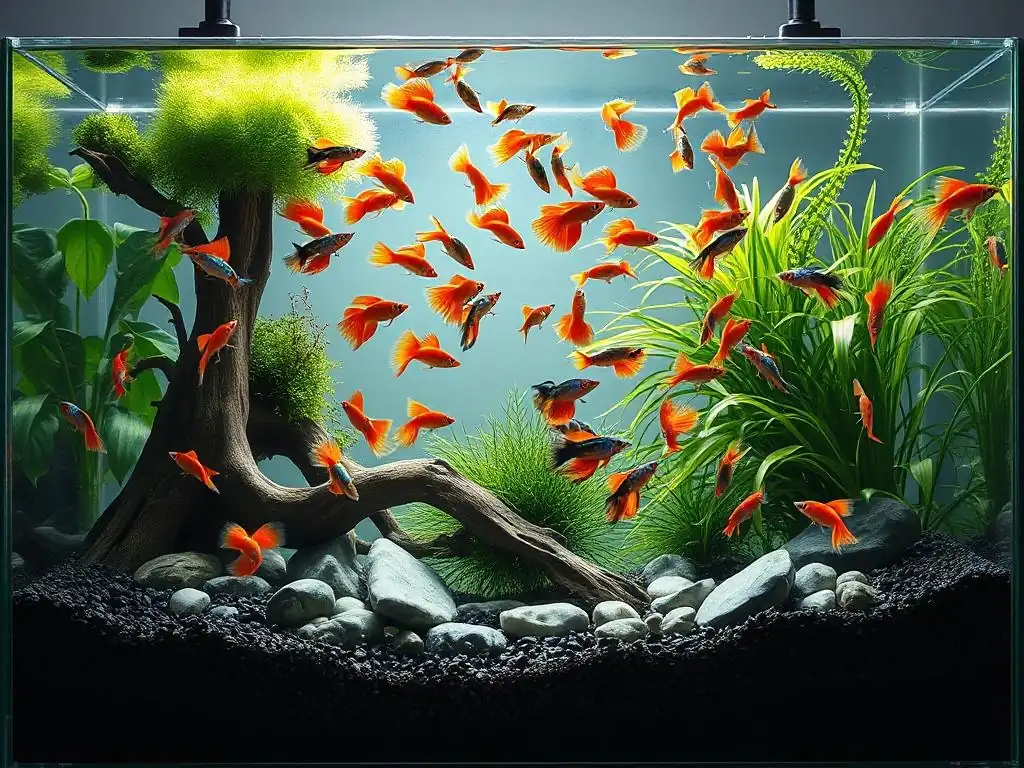
Ready to unlock the secrets to a thriving guppy family? Dive into our expert guide on guppy breeding tank setup and discover the essential steps to create the perfect environment for successful breeding. Curious how to maximize fry survival and achieve vibrant, healthy guppies? Let's get started!
- Understanding Guppy Breeding: The Basics for Aquarium Mastery
- Planning Your Guppy Breeding Tank: Key Considerations
-
Step-by-Step Guide to Setting Up Your Guppy Breeding Tank
- Step 1: Preparing the Guppy Breeding Tank – Cleaning and Substrate
- Step 2: Establishing the Water Parameters for Guppy Breeding
- Step 3: Adding Decorations and Hiding Places for Guppy Fry
- Step 4: Setting Up Filtration and Aeration for Guppy Health
- Step 5: Introducing Your Guppies to Their Breeding Tank
- Maintaining Your Guppy Breeding Tank: Ensuring Fry Survival
- Preventing Common Problems in Guppy Breeding Tanks
- Advanced Guppy Breeding Techniques: Taking it to the Next Level
- Troubleshooting Your Guppy Breeding Tank Setup
- Conclusion: Mastering Guppy Breeding for a Vibrant Aquarium
- Frequently Asked Questions
- Final Reflection: The Living Tapestry of New Life
- Unleash Your Inner Guppy Guru!
Understanding Guppy Breeding: The Basics for Aquarium Mastery
Why Breed Guppies? Exploring the Benefits
Breeding guppies offers a fascinating and rewarding experience for aquarists of all levels, extending beyond simply increasing your fish population. One significant benefit is the opportunity to observe the complete life cycle of a livebearer, from tiny fry to mature adults, providing invaluable insights into fish biology and behavior. This hands-on experience can deepen your understanding of aquatic ecosystems and the delicate balance required to sustain life within your aquarium. Furthermore, successful guppy breeding contributes to the sustainability of the hobby, reducing reliance on wild-caught specimens and promoting responsible pet ownership.
Beyond the educational aspect, breeding guppies allows for selective breeding, enabling enthusiasts to develop specific color strains, fin shapes, or patterns. For instance, you might aim to produce guppies with vibrant Moscow Blue tails or striking Cobra patterns. This genetic manipulation can be a highly engaging project, leading to unique and visually appealing fish that are distinct from those commonly found in pet stores. Many breeders also find satisfaction in sharing their excess fry with local fish stores or fellow hobbyists, fostering a sense of community and contributing to the wider aquarist network.
Guppy Breeding Tank Setup: A Complete Overview
Establishing a dedicated guppy breeding tank is crucial for maximizing successful reproduction and fry survival, distinct from a general community tank. This specialized setup focuses on creating an environment optimized for spawning, fry protection, and healthy growth. Key elements include appropriate tank size, specific water parameters, ample hiding places for fry, and effective yet gentle filtration. A well-planned guppy breeding tank minimizes stress for the breeding pair and offers the best possible conditions for the vulnerable fry to thrive, significantly increasing their chances of reaching maturity.
The ideal guppy breeding tank setup prioritizes the needs of both the adult guppies and their offspring. For instance, while adult guppies can tolerate a range of conditions, their fry require stable, pristine water and readily available micro-foods. The design of the tank must account for the adults' tendency to consume their young, necessitating dense planting or breeding boxes.
Furthermore, the selection of equipment, such as a sponge filter, is critical to prevent tiny fry from being sucked into the filtration system. By meticulously planning each aspect of the guppy breeding tank, aquarists can create a self-sustaining system that consistently produces healthy guppy fry.
Planning Your Guppy Breeding Tank: Key Considerations
Choosing the Right Size Guppy Breeding Tank
Selecting an appropriately sized tank is foundational for a successful guppy breeding operation. For a small-scale breeding project involving one male and two to three female guppies, a 10-gallon (approximately 38-liter) aquarium is often sufficient. This size provides enough space for the adults to feel comfortable and for the fry to have room to grow in their initial stages, without becoming cramped too quickly.
However, if you anticipate a large number of fry or plan to house multiple breeding groups, a 20-gallon (approximately 76-liter) long tank is a more advantageous choice. The longer footprint of a 20-gallon long tank offers more swimming space and a larger surface area for gas exchange, which can be beneficial for water quality.
While smaller tanks like 5-gallon setups might seem appealing for space constraints, they are generally not recommended for sustained guppy breeding. Smaller volumes of water are significantly more prone to rapid fluctuations in temperature and water chemistry, making it challenging to maintain the stable conditions crucial for guppy health and fry survival.
For example, a sudden temperature drop of just a few degrees in a 5-gallon tank can stress guppies, potentially leading to illness or failed breeding attempts. A 10-gallon tank provides a more stable environment, allowing for easier maintenance of consistent parameters and reducing the risk of stress-related issues for your breeding guppies.
Selecting a Suitable Location for Your Guppy Breeding Tank
The placement of your guppy breeding tank is more critical than often perceived, impacting both the fish's well-being and the tank's maintenance. Ideally, the tank should be situated in a quiet area of your home, away from high-traffic zones or sudden loud noises that could startle the fish. Constant vibrations or unexpected movements can cause stress to guppies, potentially affecting their breeding behavior and overall health. Furthermore, choose a location with stable ambient temperature, avoiding areas near external doors, drafty windows, or direct heating/cooling vents, as these can lead to undesirable temperature fluctuations within the tank.
Direct sunlight is another factor to avoid when positioning your guppy breeding tank. While natural light can be beneficial, too much direct sun exposure can rapidly raise water temperatures to dangerous levels and, more commonly, trigger explosive algae blooms. A significant algae problem not only detracts from the tank's aesthetics but can also compete with beneficial bacteria for nutrients and potentially deplete oxygen levels at night. Therefore, a spot that receives indirect, ambient room light, or relies solely on artificial aquarium lighting, is preferable for maintaining a stable and healthy environment for your guppy breeding tank setup.
Essential Equipment for a Thriving Guppy Breeding Environment
Setting up a successful guppy breeding tank requires specific equipment to ensure the health of both adult guppies and their delicate fry. Firstly, a reliable heater is paramount to maintain a stable water temperature, ideally between 75-82°F (24-28°C), which is optimal for guppy metabolism and breeding. Fluctuations outside this range can stress the fish and hinder reproductive success.
Secondly, a gentle filtration system is crucial; sponge filters are highly recommended for guppy breeding tanks. Their porous surface provides excellent biological filtration without creating strong currents that could harm or suck in tiny guppy fry, unlike powerful hang-on-back or canister filters.
In addition to heating and filtration, a dedicated air pump connected to the sponge filter or an air stone will ensure adequate oxygenation, vital for the health of all tank inhabitants. A thermometer is indispensable for consistently monitoring water temperature, allowing for immediate adjustments if needed. Furthermore, a siphon or gravel vacuum is essential for routine water changes and substrate cleaning, maintaining pristine water quality. Lastly, a sturdy tank lid is necessary to prevent guppies from jumping out and to reduce evaporation, contributing to stable water parameters in your guppy breeding tank setup.
Step-by-Step Guide to Setting Up Your Guppy Breeding Tank
Step 1: Preparing the Guppy Breeding Tank – Cleaning and Substrate
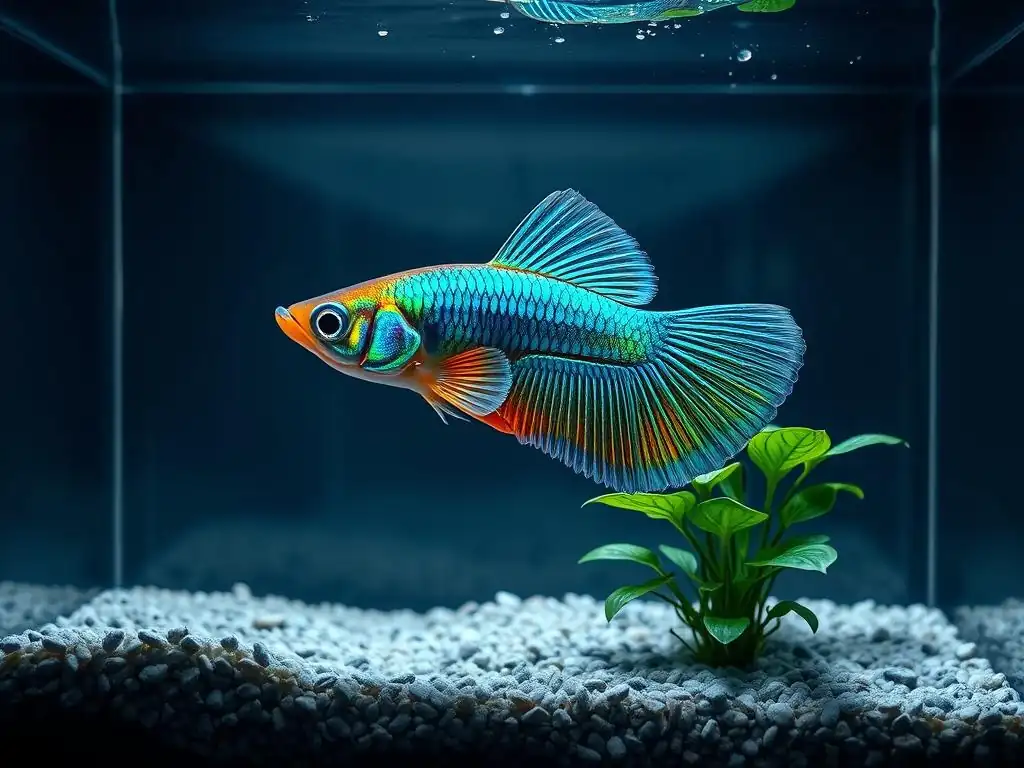
The initial preparation of your guppy breeding tank is critical to establish a healthy environment from the start. Begin by thoroughly cleaning the aquarium itself. Use only plain water and a clean, dedicated sponge or cloth.
Avoid using any soaps, detergents, or chemical cleaners, as their residues can be highly toxic to fish, even after rinsing. After cleaning the tank walls, proceed to rinse any substrate you plan to use, such as fine gravel or sand. Rinse the substrate repeatedly under running tap water until the water runs completely clear, removing any dust, debris, or fine particles that could cloud your tank water.
Once the substrate is clean, carefully add it to the bottom of your aquarium, typically to a depth of 1-2 inches (2.5-5 cm). This depth is sufficient for plant rooting if you choose live plants, and provides a surface for beneficial bacteria to colonize without accumulating too much waste.
While some breeders opt for a bare-bottom tank for easier cleaning, a thin layer of substrate can help create a more natural environment and provide additional surface area for beneficial bacteria, which are vital for breaking down fish waste. After adding the substrate, arrange any hardscape elements like rocks or driftwood, ensuring they are also thoroughly rinsed and fish-safe.
Step 2: Establishing the Water Parameters for Guppy Breeding
Achieving and maintaining precise water parameters is paramount for successful guppy breeding, as these fish thrive within specific ranges. Guppies are generally hardy, but for optimal breeding and fry survival, aim for a pH level between 6.8 and 7.8, with 7.0-7.5 being ideal. The water should be slightly hard, with a General Hardness (GH) of 8-12 dGH and a Carbonate Hardness (KH) of 10-15 dKH. These parameters provide the necessary minerals for healthy growth and reproduction. Temperature is equally critical, with a range of 75-82°F (24-28°C) promoting faster metabolism, active breeding, and quicker fry development.
Once your guppy breeding tank is filled with dechlorinated water, it's essential to allow it to cycle before introducing any fish. The nitrogen cycle, typically taking 4-6 weeks, involves the establishment of beneficial bacteria that convert toxic ammonia and nitrite into less harmful nitrate. During this period, regularly test the water using a reliable liquid test kit to monitor ammonia, nitrite, and nitrate levels.
Ammonia and nitrite should consistently read 0 ppm before adding guppies. Gradually introduce your breeding guppies once the tank is fully cycled, ensuring the water parameters are stable and within the optimal ranges to minimize stress and maximize their breeding potential.
Achieving Ideal Water Chemistry for Guppy Fry
For guppy fry, consistent and clean water chemistry is even more critical than for adults, as they are highly sensitive to fluctuations. Ideal water for guppy fry mirrors the adult parameters: a stable temperature of 75-82°F (24-28°C), and a pH between 7.0-7.5. What's crucial for fry is the absolute absence of ammonia and nitrite, even trace amounts can be lethal due to their underdeveloped systems. Therefore, diligent monitoring of these parameters is non-negotiable in a guppy breeding tank.
To maintain pristine water chemistry for guppy fry, regular, small water changes (10-15% every 2-3 days) are often more effective than infrequent large ones. This approach replenishes essential minerals, removes accumulated nitrates, and prevents the buildup of harmful toxins without causing significant shifts in water parameters that could stress the fry. Additionally, ensuring adequate aeration, possibly through a gentle air stone or the sponge filter, guarantees sufficient dissolved oxygen, which is vital for the rapid metabolism of growing guppy fry.
Step 3: Adding Decorations and Hiding Places for Guppy Fry
The strategic placement of decorations and abundant hiding places is paramount in a guppy breeding tank setup, primarily to protect vulnerable fry from adult guppies, who are known to predate on their own offspring. Dense clumps of live plants are the most effective and natural solution. Species like Java Moss (Taxiphyllum barbieri), Guppy Grass (Najas guadalupensis), and Hornwort (Ceratophyllum demersum) are excellent choices because they grow quickly, are easy to maintain, and provide intricate networks of leaves and stems where fry can hide. These plants also offer additional benefits such as oxygenation and absorption of nitrates.
Beyond live plants, other decorations can contribute to a safe environment for guppy fry. Small caves, driftwood with crevices, or even ceramic breeding caves specifically designed for livebearers can offer additional refuge. It's important to arrange these elements to create multiple escape routes and visual barriers, breaking up sightlines for the adult guppies. While plastic plants can be used as an alternative, live plants are generally preferred as they also contribute to the overall water quality and ecosystem health of the guppy breeding tank.
The Importance of Plants in a Guppy Breeding Tank
Live plants play a multifaceted and indispensable role in a guppy breeding tank, extending far beyond their aesthetic appeal. Their primary function is to provide critical hiding places for newly born guppy fry, drastically increasing their survival rate against cannibalistic adult guppies. Dense, bushy plants like Java Moss or Anacharis create a natural labyrinth where the tiny fry can instinctively retreat and find shelter, effectively camouflaging themselves from hungry parents. Without sufficient plant cover, the majority of fry are likely to be consumed within hours of birth.
Furthermore, live plants actively contribute to maintaining superior water quality, which is vital for the health of both adults and delicate fry. Through photosynthesis, they absorb harmful nitrates, a byproduct of the nitrogen cycle, and release oxygen into the water.
This natural filtration helps keep nitrate levels low, reducing the need for frequent large water changes and creating a more stable and less stressful environment for the guppies. The presence of healthy plants also promotes the growth of beneficial microorganisms and infusoria, which can serve as a natural food source for newly hatched guppy fry, offering an initial nutritional boost.
Step 4: Setting Up Filtration and Aeration for Guppy Health
Proper filtration and aeration are critical components of a healthy guppy breeding tank, ensuring a stable and oxygen-rich environment for both adult guppies and their delicate fry. For filtration, a sponge filter is overwhelmingly the preferred choice for this specific setup. Sponge filters provide excellent biological filtration by offering a large surface area for beneficial bacteria to colonize, which are essential for breaking down ammonia and nitrite. Crucially, their gentle suction mechanism prevents tiny guppy fry from being drawn into the filter, a common issue with more powerful hang-on-back or canister filters.
Aeration, typically provided by an air pump connected to the sponge filter or a separate air stone, is equally important. Guppies, especially when breeding and with a growing population of fry, require ample dissolved oxygen in the water. Good aeration ensures that oxygen levels remain high, preventing stress and promoting robust health. It also aids in water circulation, preventing stagnant areas and helping to distribute heat evenly throughout the tank. A consistent flow of oxygenated water is vital for the metabolic processes of all fish, particularly the rapidly developing guppy fry, contributing significantly to their survival rates.
Step 5: Introducing Your Guppies to Their Breeding Tank
Once your guppy breeding tank is fully cycled, with stable water parameters (0 ppm ammonia, 0 ppm nitrite, low nitrates), and all equipment is running smoothly, it's time to introduce your guppies. Begin by selecting healthy, active breeding stock. A common ratio is one male to two or three females. This ratio helps to disperse the male's attention and reduces stress on any single female, as males can be quite persistent in their pursuit of mates. Choose females that appear robust and, if possible, already show signs of gravidity (a dark gravid spot near the anal fin indicates pregnancy).
Before placing them directly into the tank, acclimate your guppies slowly to the new water conditions. The drip acclimation method is highly recommended for sensitive fish and breeding stock. This involves slowly dripping water from the breeding tank into the bag containing the guppies over a period of 30-60 minutes, gradually equalizing the water temperature and chemistry. This gradual introduction minimizes stress and shock, reducing the risk of illness or adverse reactions to the new environment. Once acclimated, gently net the guppies and release them into their new guppy breeding tank, allowing them to settle in without disturbance.
Maintaining Your Guppy Breeding Tank: Ensuring Fry Survival
Feeding Guppy Fry: A Nutritional Guide
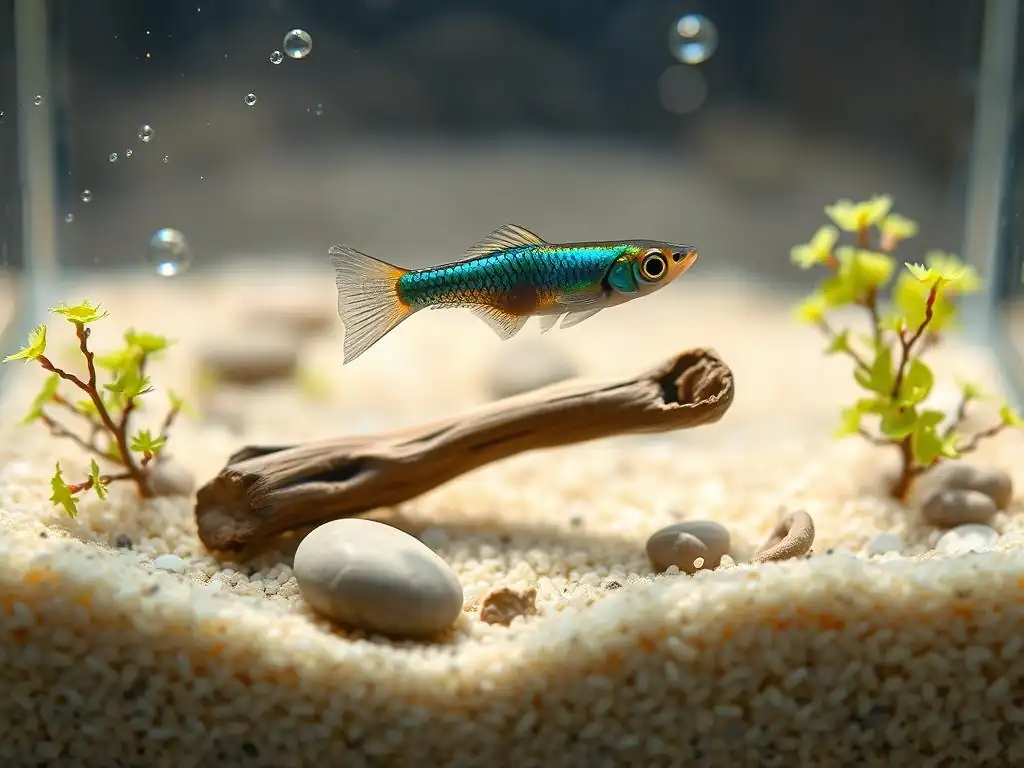
Providing the correct nutrition to guppy fry is critical for their rapid growth and survival, as they have incredibly fast metabolisms and require constant access to food. Immediately after birth, guppy fry are tiny and require micro-foods. High-quality powdered fry food, specifically designed for livebearers, is an excellent staple. This food is finely ground to an appropriate size for their small mouths and is typically rich in proteins and essential nutrients. Another highly effective food source is newly hatched brine shrimp nauplii; their live movement stimulates feeding, and they are packed with protein, promoting accelerated growth.
For the first few weeks, feed guppy fry small amounts multiple times a day, ideally 3-5 times. Their stomachs are small, but their energy demands are high. Overfeeding should be avoided, as uneaten food can quickly foul the water, leading to dangerous ammonia spikes.
As the fry grow, typically after 2-3 weeks, you can gradually introduce finely crushed high-quality flake food or specialized micro-pellets. Observing their feeding behavior is key: ensure all food is consumed within a few minutes. Consistent, high-quality feeding is a cornerstone of successful guppy breeding tank management, directly impacting the health and viability of your brood.
Regular Water Changes in a Guppy Breeding Tank
Regular water changes are perhaps the single most critical maintenance task for a healthy guppy breeding tank, directly impacting the survival and growth of both adult guppies and their delicate fry. Due to the high bioload of breeding adults and a rapidly growing population of fry, waste products like nitrates accumulate quickly. While beneficial bacteria convert ammonia and nitrite, nitrates still build up and can become toxic at high concentrations. Small, frequent water changes are far superior to large, infrequent ones; for a guppy breeding tank, a 10-20% water change every 2-3 days is often recommended.
This consistent schedule helps to dilute accumulated nitrates, replenish essential minerals, and remove any uneaten food or detritus, all without causing drastic shifts in water parameters that could stress the fish. For instance, a sudden 50% water change can cause temperature shock or pH swings, especially for sensitive fry. Always use dechlorinated water that is as close as possible to the tank's existing temperature. Utilizing a gravel vacuum during water changes can also help remove waste from the substrate, further contributing to the pristine water quality necessary for a thriving guppy breeding tank setup.
Monitoring Water Quality for a Healthy Guppy Brood
Consistent monitoring of water quality is non-negotiable for ensuring the health and survival of your guppy brood. The three most critical parameters to track are ammonia, nitrite, and nitrate. Ammonia and nitrite are highly toxic to fish, especially vulnerable guppy fry, and should always be at 0 parts per million (ppm).
Even slight detectable levels can cause stress, gill damage, and mortality. Nitrate, while less toxic, can also become harmful at high concentrations (ideally below 20 ppm for breeding tanks). Regular testing, at least once a week with a reliable liquid test kit, is essential to catch and address issues promptly.
Beyond these nitrogen cycle compounds, maintaining stable pH and temperature is also vital. Guppies thrive in a pH range of 6.8-7.8, and sudden shifts can be detrimental. Temperature should be consistently maintained between 75-82°F (24-28°C) for optimal breeding and fry development. Any significant deviation can stress the fish. By diligently monitoring these parameters and reacting quickly to any undesirable readings through immediate small water changes or troubleshooting, you can prevent many common problems and ensure a healthy, thriving environment for your guppy breeding tank and its inhabitants.
Preventing Common Problems in Guppy Breeding Tanks
Addressing Guppy Fry Predation
One of the most significant challenges in guppy breeding is preventing the adult guppies from eating their own fry, a common behavior among livebearers. Despite their vibrant appearance, adult guppies view their offspring as a food source, and without adequate protection, survival rates can be extremely low. The primary strategy to combat this is to provide an abundance of dense hiding places within the guppy breeding tank. Live plants like Java Moss, Guppy Grass, and Hornwort are exceptionally effective as their intricate structures offer immediate refuge for the tiny, newly born fry.
In addition to dense planting, some aquarists opt for breeding boxes or breeder nets. These devices isolate the pregnant female from the main tank just before she gives birth, allowing the fry to drop into a separate compartment, safe from predation. Once the female has delivered, she can be returned to the main guppy breeding tank.
While effective, it's important to note that these boxes can be stressful for the female if she is left in them too long, so they should be used judiciously. Ultimately, a combination of ample hiding spots and careful monitoring is key to maximizing guppy fry survival.
Dealing with Guppy Diseases in the Breeding Tank
Guppies, while generally hardy, can be susceptible to various diseases, especially in a breeding tank where stress levels might be higher due to constant reproduction and potentially crowded conditions with fry. Common ailments include Ich (White Spot Disease), Fin Rot, and Columnaris (Cotton Mouth). Ich, characterized by small white spots resembling salt grains on the fish's body and fins, is often triggered by temperature fluctuations or poor water quality. Fin Rot manifests as frayed or disintegrating fins, usually due to bacterial infection in suboptimal water conditions. Columnaris presents as white, cotton-like growths around the mouth or body.
Prevention is the best defense against diseases in your guppy breeding tank. Maintaining pristine water quality through regular water changes, stable temperatures, and proper filtration is paramount. Overfeeding should be avoided to prevent organic waste buildup. Quarantining new fish for 2-4 weeks before introducing them to the breeding tank can prevent the introduction of pathogens. If disease does occur, prompt identification and treatment are crucial. For instance, Ich is typically treated by gradually raising the tank temperature and adding aquarium salt or specific medications, while bacterial infections often require antibiotics administered according to product instructions.
Preventing Overpopulation in Your Guppy Tank
Guppies are notoriously prolific breeders, with females capable of giving birth every 28-30 days to dozens of fry. While exciting initially, this rapid reproduction can quickly lead to severe overpopulation in your guppy breeding tank if not managed proactively. Overpopulation causes increased bioload, leading to deteriorating water quality, higher stress levels for the fish, stunted growth, and increased susceptibility to disease. For instance, a 10-gallon tank can become dangerously overcrowded with just a few generations of guppies, potentially leading to oxygen depletion and mass die-offs.
To prevent overpopulation, several strategies can be employed. One common method is to allow natural predation by adult guppies on some of the fry, although this can be distressing for some aquarists. More humane options include separating males and females once the desired number of fry has been produced, or relocating excess fry.
Local fish stores often accept healthy guppy fry, or you can offer them to fellow hobbyists. Alternatively, some aquarists use guppies as live food for larger predatory fish in separate tanks. Careful planning and management of your guppy breeding tank setup are essential to maintain a healthy and balanced population.
Advanced Guppy Breeding Techniques: Taking it to the Next Level
Selective Breeding for Desired Traits in Guppies
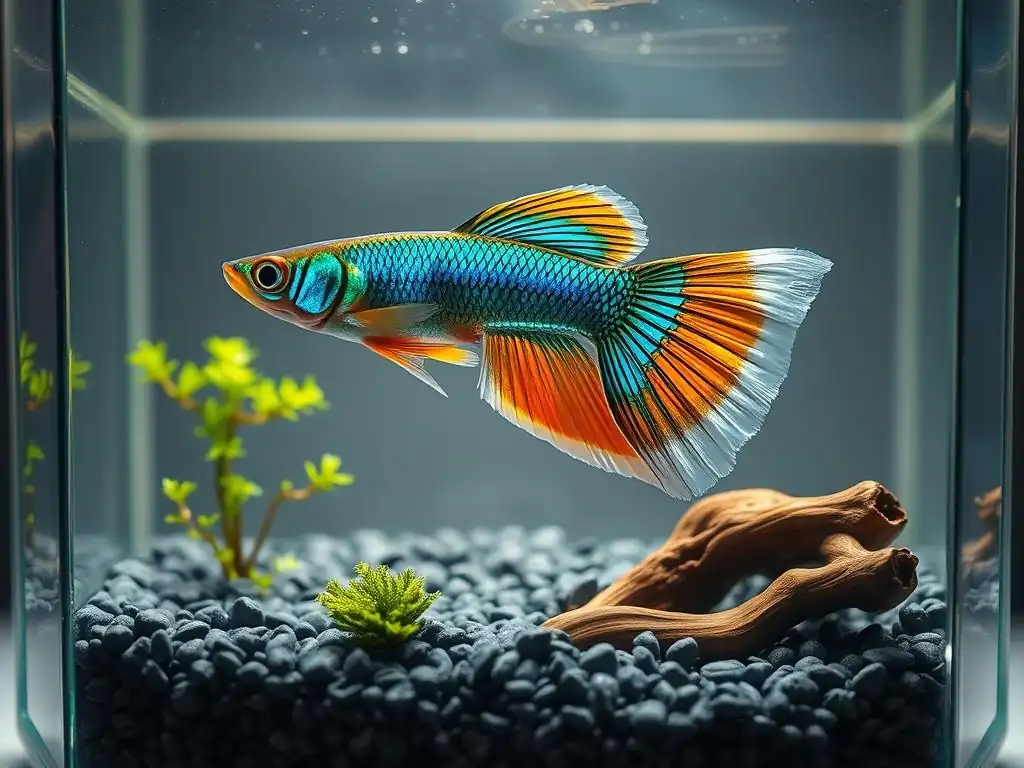
Selective breeding is an advanced technique in guppy breeding that allows aquarists to develop and enhance specific genetic traits, leading to new and unique strains. This process involves carefully choosing individual guppies with desirable characteristics—such as vibrant coloration (e.g., intense reds, blues, or multi-colors), specific fin shapes (e.g., fan tails, delta tails, lyre tails), or distinct body patterns (e.g., snakeskin, tuxedo, cobra)—and breeding them together. The goal is to consistently reproduce these traits in successive generations, gradually refining the strain over time.
To effectively practice selective breeding, meticulous record-keeping is essential. This includes tracking parentage, birth dates, and the traits expressed in each generation. For instance, if you're aiming for a particular shade of blue, you would only breed the bluest males with the bluest females from each brood, culling or separating any offspring that don't meet your criteria.
This often requires multiple separate guppy breeding tanks to house different lines or to isolate specific individuals for controlled breeding pairs. Patience and a keen eye for genetic expression are key, as it can take many generations to fix a desired trait within a guppy line.
Separating Guppy Fry by Sex
Separating guppy fry by sex, also known as "sexing," is a crucial advanced technique for aquarists serious about controlled breeding or preventing unwanted pregnancies. Guppies can reach sexual maturity surprisingly early, sometimes as young as 3-4 weeks, making early separation vital to avoid premature breeding and maintain genetic lines. Distinguishing male from female guppy fry typically becomes possible around 3-6 weeks of age, though it can vary based on growth rate and environmental conditions.
The primary visual indicator for sexing guppy fry is the anal fin. In males, the anal fin will gradually transform into a gonopodium, a distinct, rod-like reproductive organ that is pointed and elongated. Female guppies, conversely, will retain a triangular or fan-shaped anal fin.
Additionally, males often start to develop more vibrant coloration and larger, more elaborate caudal fins earlier than females. Once identified, males should be moved to a separate "male grow-out" tank, and females to a "female grow-out" tank. This meticulous separation ensures that only specific, chosen pairs are bred in your dedicated guppy breeding tank, allowing for precise control over your breeding program.
Troubleshooting Your Guppy Breeding Tank Setup
Problem: Guppies Not Breeding
If your guppies are not breeding despite being in a dedicated guppy breeding tank, several factors could be at play, and systematically checking them is crucial. Firstly, verify the sex ratio: ensure you have at least two to three females for every male. A lone female might be stressed by constant male attention, while too many males can lead to aggression and stress among the females, hindering breeding. Secondly, meticulously re-check your water parameters. Guppies breed best in stable water conditions, typically 75-82°F (24-28°C) and a pH of 6.8-7.8. Fluctuations or parameters outside this range can inhibit reproduction.
Another common reason for a lack of breeding activity is poor water quality or inadequate diet. Even if your tank is cycled, high nitrate levels or inconsistent water changes can stress the fish. Ensure you are performing regular, small water changes (e.g., 10-15% every 2-3 days) and feeding a high-quality, varied diet, including live or frozen foods like brine shrimp or bloodworms, which can condition them for breeding.
Lastly, consider the age and health of your breeding stock. Very young or very old guppies, or those with underlying health issues, may be less inclined to breed. Provide ample hiding places and a calm environment to reduce stress, which can also impede breeding.
Problem: High Guppy Fry Mortality
Experiencing high mortality rates among guppy fry in your breeding tank can be disheartening but is often indicative of specific environmental or nutritional deficiencies. The most common cause is predation by adult guppies. Despite being their offspring, adult guppies will readily consume fry if sufficient hiding places are not provided. Ensure your guppy breeding tank is densely planted with fine-leaved plants like Java Moss or Guppy Grass, offering ample refuge for the tiny fry immediately after birth. Breeding boxes, though potentially stressful for the female, can also be used to separate fry from adults.
Secondly, poor water quality is a significant contributor to fry mortality. Guppy fry are highly sensitive to ammonia and nitrite, even at low concentrations. Regular, small water changes (e.g., 10% daily or every other day) are essential to keep these toxins at zero and nitrates low.
Overfeeding, which leads to uneaten food rotting and fouling the water, must be avoided. Lastly, inadequate nutrition or insufficient feeding frequency can lead to starvation. Newly hatched brine shrimp, micro-worms, or high-quality powdered fry food should be offered multiple times a day (3-5 times) in small amounts to ensure the fry receive constant nourishment for their rapid growth.
Problem: Algae Growth in the Breeding Tank
Algae growth in a guppy breeding tank, while generally harmless in small amounts, can quickly become an aesthetic nuisance and, in severe cases, indicate an imbalance in the tank's ecosystem. Excessive algae often stems from an overabundance of nutrients (nitrates and phosphates) combined with too much light. Check your lighting schedule: is the light on for more than 8-10 hours a day? Reducing the photoperiod can significantly curb algae growth. Secondly, evaluate your feeding habits. Overfeeding leads to uneaten food decomposing, releasing excess nutrients into the water that fuel algae blooms.
To combat algae, perform consistent, small water changes (10-20% weekly or bi-weekly) to reduce nitrate levels. Ensure your filter is clean and functioning efficiently to remove organic waste.
Introducing a few algae-eating invertebrates, such as Nerite snails or Amano shrimp, can also be an effective biological control, though be mindful of their bioload in a breeding tank. In extreme cases, a blackout period (covering the tank for 2-3 days to block all light) combined with a water change can reset the balance, but addressing the root cause of excess light or nutrients is key to long-term prevention in your guppy breeding tank setup.
Conclusion: Mastering Guppy Breeding for a Vibrant Aquarium
Frequently Asked Questions
How large should my guppy breeding tank be?
A minimum size of 5-10 gallons is recommended. This provides enough space for the adult guppies and the fry, allowing for adequate water quality. A larger tank helps prevent overcrowding.
What essential equipment do I need for a guppy breeding tank?
You'll need a heater to maintain a stable temperature, a filter to keep the water clean, and some form of protection for the fry, such as a breeding net or heavily planted areas.
What water parameters are ideal for guppy breeding?
Maintain a water temperature between 72-78°F (22-26°C), a pH of 6.8-7.8, and ensure the water is well-oxygenated. Regular water changes are also crucial for optimal breeding conditions.
How can I prevent adult guppies from eating their fry?
Provide ample hiding places for the fry using dense plants like Java moss, or use a breeding trap or net to separate the fry from the adults immediately after birth.
How often should I feed guppy fry, and what should I feed them?
Feed guppy fry several times a day with small amounts of nutritious food. Good options include baby brine shrimp, microworms, and finely crushed flake food.
Final Reflection: The Living Tapestry of New Life
The journey of setting up a guppy breeding tank, as we've explored, is more than just assembling equipment and adding water; it's about cultivating an ecosystem, a miniature world teeming with potential. The enduring appeal of guppies, and the satisfaction derived from witnessing their life cycle unfold, speaks to a fundamental human connection with nature and the miracle of creation. In a world increasingly disconnected from the natural world, creating a space for life to flourish, however small, offers a powerful antidote.
This endeavor, the creation of a thriving guppy breeding tank, has profoundly influenced and continues to influence my understanding of responsibility and the delicate balance of life. It's a constant reminder that even the smallest creatures deserve our care and attention, and that our actions have a direct impact on their well-being. The greatness of a nation and its moral progress can be judged by the way its animals are treated.
- Mahatma Gandhi. This quote resonates deeply, highlighting the importance of empathy and compassion in all our interactions with the living world, even within the confines of a small aquarium.
Now, as you consider your own guppy breeding tank setup, I invite you to reflect on the broader implications of your actions. Embrace the opportunity to learn, to nurture, and to contribute to the continuation of life. Let the vibrant colors and playful energy of your guppies serve as a constant reminder of the beauty and fragility of the natural world, inspiring you to be a more conscious and compassionate steward of our planet.
Unleash Your Inner Guppy Guru!
Thank you for diving into the world of guppy breeding with us! We hope you've found the knowledge and inspiration to embark on this exciting journey. Now, it's time to put that knowledge into action!
Here are a few ways to continue your guppy adventure:
- Start Building! Set up your first breeding tank this weekend. Dedicate a few hours, gather your materials, and follow the steps outlined in the article. Your guppies will thank you!
- Share your progress and challenges on our forum at Aquarium Mastery. Let's learn and grow together as a community of guppy enthusiasts!
- Try something different! Instead of the standard sponge filter, experiment with a heavily planted tank for natural filtration. Document your results!
What unique plant will you add to your breeding tank to create the perfect haven for your guppy fry?