
The Aquarist's Dilemma: How Much Light is Too Much for Your Aquarium?

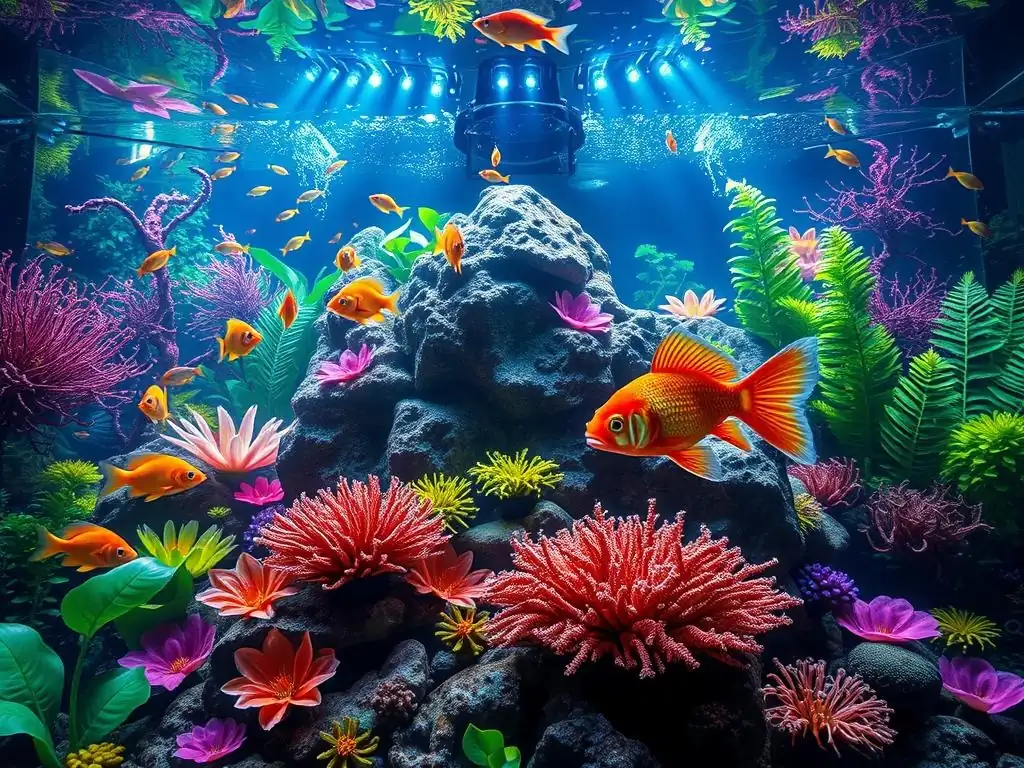
Welcome to Aquarium Mastery, fellow aquarist!
Ever wondered if your underwater paradise is actually getting too much sun? Dive into our latest article, "The Aquarist's Dilemma: How Much Light is Too Much for Your Aquarium?" and discover the secrets to perfectly balanced lighting for a thriving aquatic ecosystem. Unravel the mysteries of light's impact on your fish, plants, and the overall health of your tank, and learn how to avoid the common pitfalls of over-illumination. Ready to shed some light on the subject? Let's get started!
- Understanding Aquarium Lighting: A Balancing Act for a Healthy Ecosystem
- Identifying Signs of Excessive Aquarium Lighting: A Visual Guide
- Calculating the Right Amount of Light for Your Aquarium
- Adjusting Your Aquarium Lighting to Achieve Optimal Levels
- Troubleshooting Common Lighting Issues in Aquariums
- Preventing Future Lighting Problems: Proactive Aquarium Management
- Advanced Aquarium Lighting Techniques: Beyond the Basics
- Conclusion: Finding the Perfect Light Balance for a Thriving Aquarium
-
Frequently Asked Questions
- What are the primary negative effects of too much aquarium light?
- How can I visually identify if my aquarium is receiving too much light?
- Does the type of aquarium (freshwater vs. saltwater) influence the ideal light level?
- What are some practical steps I can take to reduce the amount of light in my aquarium?
- Besides algae, what other problems can arise from excessive aquarium lighting?
- Final Reflection: Illuminating the Path Forward
- Ignite Your Aquarium's Brilliance!
Understanding Aquarium Lighting: A Balancing Act for a Healthy Ecosystem
The Importance of Light in a Freshwater or Saltwater Aquarium
Light is a fundamental component of any thriving aquarium ecosystem, playing a pivotal role in the health and vitality of its inhabitants. In freshwater planted tanks, light fuels photosynthesis in aquatic plants, converting light energy into chemical energy essential for growth. This process not only provides plants with the necessary nutrients but also contributes significantly to oxygen production, which is vital for fish and beneficial bacteria. For instance, a well-planted aquarium can see dissolved oxygen levels increase by up to 60% during peak photoperiods due to plant photosynthesis.
Similarly, in saltwater reef aquariums, light is indispensable for corals. Most corals host symbiotic algae called zooxanthellae within their tissues, which perform photosynthesis and provide up to 90% of the coral's nutritional requirements. Beyond photosynthesis, light also influences the natural circadian rhythms of fish and invertebrates, guiding their feeding, resting, and breeding behaviors. A consistent and appropriate light cycle promotes natural activity patterns, reducing stress and enhancing the overall well-being of the aquatic community.
Defining "Too Much Light" in the Aquarium Context
While essential, the concept of "too much light" in an aquarium is critical to understand. It's not merely about the intensity of the light fixture, but also encompasses the duration (photoperiod) and the specific spectrum of light being emitted. When an aquarium receives excessive illumination, whether through overly powerful lights, an extended photoperiod, or an unbalanced spectrum, the delicate balance of the ecosystem can be severely disrupted. This imbalance often manifests as rampant algae growth, stressed aquatic life, and compromised water quality.
The threshold for what constitutes "too much aquarium light" varies significantly depending on the type of aquarium and its inhabitants. For example, a low-tech freshwater tank with undemanding plants like Java Fern might require a PAR (Photosynthetically Active Radiation) value of only 20-40 µmol/m²/s at the substrate, whereas a high-tech planted tank with CO2 injection and demanding plant species could thrive with 100-200 µmol/m²/s.
In reef aquariums, soft corals might do well with 50-150 PAR, while many SPS (Small Polyp Stony) corals often demand 250-450+ PAR. Exceeding these optimal ranges without corresponding nutrient and CO2 levels can quickly lead to phototoxicity and stress, making it clear that finding the right balance is paramount.
Identifying Signs of Excessive Aquarium Lighting: A Visual Guide
Algae Overgrowth: The Most Obvious Indicator of Too Much Light
Algae overgrowth is arguably the most common and immediate visual cue that your aquarium might be receiving too much light. While some algae are natural and even beneficial, a sudden, rapid proliferation that coats surfaces, decor, and even plants is a strong indicator of an imbalance, with excessive light often being the primary catalyst.
Algae, being opportunistic photosynthetic organisms, capitalize on abundant light and available nutrients to multiply at an alarming rate, outcompeting desirable plants and corals. Many aquarists report a noticeable increase in green spot algae on glass within 2-3 days of increasing light intensity or duration beyond optimal levels.
When there's too much aquarium light, especially in tanks with fluctuating or low nutrient levels, algae can quickly become a persistent nuisance. This is because algae are highly efficient at utilizing light and trace nutrients, often thriving in conditions where higher plants or corals might struggle due to insufficient CO2 or other limiting factors. The presence of dense, unsightly algal mats not only detracts from the aesthetic appeal of the tank but can also impact water quality and inhibit the growth of desired aquatic flora.
Types of Algae Blooms Caused by Excessive Light
Excessive aquarium lighting can trigger various types of algae blooms, each with distinct appearances and implications for your tank:
- Green Spot Algae (GSA): These are small, hard, circular green spots that adhere firmly to glass, rocks, and slow-growing plant leaves. They indicate high light levels, often combined with low phosphates.
- Green Hair Algae (GHA): Characterized by long, stringy, filamentous green strands that wave in the current. GHA often appears when there's an excess of both light and nutrients (nitrates/phosphates).
- Diatoms (Brown Algae): While common in new tanks due to silicates, persistent diatom blooms in mature tanks, appearing as a dusty brown coating, can signal too much light combined with high silicates or dissolved organic compounds.
- Cyanobacteria (Blue-Green Algae - BGA): This slimy, often foul-smelling algae can be blue-green, red, or black. It's not true algae but a photosynthetic bacterium, often triggered by a combination of high nutrients, low flow, and excessive light.
- Black Brush Algae (BBA): Appearing as tough, dark grey to black tufts or patches, BBA is notoriously difficult to eradicate. It frequently indicates fluctuating CO2 levels in planted tanks, coupled with too much aquarium light.
Stressed Fish and Invertebrates: Behavioral Changes to Watch For
Beyond algae, the inhabitants of your aquarium can also exhibit clear signs of stress when exposed to too much aquarium light. Fish, in particular, may display behavioral changes such as increased hiding, darting erratically, or constantly staying in shaded areas of the tank. Their colors might also appear faded or dull, a common stress response. Some species, like cardinal tetras or bettas, which naturally inhabit dimly lit, shaded waters, are particularly susceptible to stress from intense, prolonged lighting. Such stress can weaken their immune systems over time, making them more prone to disease.
Invertebrates, including snails, shrimp, and particularly corals, can also react negatively to over-illumination. Snails and shrimp might become less active during the day or seek refuge in dark crevices. Corals, especially those not accustomed to high light, may retract their polyps, appear shrunken, or lose their vibrant coloration. These behavioral and physical changes are direct indicators that the light intensity or photoperiod is beyond what is comfortable or healthy for them, and prompt adjustment is necessary to prevent long-term health issues.
Fading Colors in Corals and Plants: The Bleaching Effect of Over-illumination
One of the most concerning effects of too much aquarium light, especially in reef tanks, is coral bleaching. This phenomenon occurs when corals expel their symbiotic zooxanthellae algae, which provide them with most of their color and energy. Without these algae, the coral's white skeleton becomes visible, giving it a bleached appearance.
While bleaching can be caused by various stressors, excessive light, particularly intense PAR levels, is a significant trigger, leading to photoinhibition where the photosynthetic machinery of the zooxanthellae becomes overloaded and damaged. SPS corals like Acropora, when exposed to PAR levels exceeding their tolerance (e.g., above 600 PAR without proper acclimation), can begin to bleach within a week, losing their vibrant colors as their symbiotic algae are expelled.
Similarly, aquatic plants in freshwater setups can also suffer from over-illumination, leading to fading or dulling of their vibrant colors. Leaves may turn pale, yellow, or even become transparent, a condition often referred to as "melting."
Red-pigmented plants, such as Alternanthera reineckii, are particularly prone to losing their deep red hues and turning greenish or pale under excessive light conditions if not adequately supplied with CO2 and nutrients. This fading is a sign that the plants are struggling to process the intense light, often due to a lack of corresponding CO2 or nutrient availability, leading to a breakdown in their photosynthetic processes.
Water Parameter Imbalances: The Indirect Effects of Intense Lighting
While not a direct physical sign, too much aquarium light can indirectly lead to significant fluctuations and imbalances in water parameters, particularly in heavily planted or highly photosynthetically active tanks. During the day, intense light drives vigorous photosynthesis, leading to a rapid consumption of carbon dioxide (CO2) and a corresponding increase in dissolved oxygen (O2). This can cause pH levels to rise sharply in freshwater tanks (e.g., from 6.8 to 7.8 in a few hours in a high-tech planted tank), as CO2 acts as an acid. Such drastic pH swings can be highly stressful and even dangerous for fish.
Conversely, during the night, when photosynthesis ceases, plants and algae, along with fish and bacteria, continue to respire, consuming oxygen and releasing CO2. If the daytime oxygen production was excessive and the tank is heavily stocked or planted, this nighttime respiration can lead to a significant drop in dissolved oxygen levels, potentially causing fish to gasp at the surface.
Furthermore, the rapid growth of algae or plants fueled by too much aquarium light can quickly deplete essential nutrients like nitrates and phosphates, or, conversely, create an environment where nutrients are rapidly cycled, leading to unstable conditions that stress the entire ecosystem.
Calculating the Right Amount of Light for Your Aquarium
Factors Influencing Aquarium Lighting Needs: Size, Depth, and Inhabitants
Determining the optimal amount of light for your aquarium is a nuanced process that depends on several critical factors. The physical dimensions of your tank, particularly its depth, play a significant role. A deeper tank will require a more powerful light source to achieve the same intensity at the substrate or coral level compared to a shallower tank of the same volume, due to light attenuation through water. For example, a 20-gallon long tank (12 inches deep) will require less powerful lighting than a 20-gallon high tank (24 inches deep) to achieve similar PAR values at the bottom.
Crucially, the specific inhabitants of your aquarium dictate the light intensity and spectrum required. A low-tech freshwater tank housing only fish and hardy, low-light plants like Anubias or Java Fern will have vastly different lighting needs than a high-tech planted tank aiming for dense carpeting plants or a reef tank supporting light-demanding SPS corals. The type of substrate and water clarity also influence light penetration and reflection. Understanding these variables is the first step in avoiding the pitfalls of providing too much aquarium light or too little.
PAR (Photosynthetically Active Radiation) and Aquarium Lighting Measurement
For planted aquariums and reef tanks, the most accurate and relevant measure of light intensity is Photosynthetically Active Radiation (PAR). PAR quantifies the amount of light within the visible spectrum (400 to 700 nanometers) that is usable by photosynthetic organisms like plants and zooxanthellae algae. Unlike lumens or watts, PAR directly indicates the light energy available for photosynthesis, making it an indispensable metric for aquarists aiming for optimal growth and health.
For low-light plants like Anubias or Java Fern, a PAR range of 20-50 µmol/m²/s is often sufficient. Medium-light plants (Cryptocoryne, Swords) thrive at 50-100 PAR, while high-light plants (HC Cuba, Rotala) require 100-200+ PAR. For corals, soft corals and LPS might need 50-150 PAR, while SPS corals often demand 200-450+ PAR.
Understanding PAR helps prevent the common mistake of providing too much aquarium light, which can lead to photoinhibition and algae outbreaks. By measuring PAR at different depths and locations within your tank, you can precisely tailor your lighting setup to meet the specific requirements of your plants or corals, ensuring they receive adequate energy without being overwhelmed. While a higher PAR generally corresponds to more intense light, the optimal range is always specific to the organisms being cultivated.
Lumens, Watts, and Kelvin: Demystifying Aquarium Lighting Specifications
Before PAR meters became widely accessible, aquarists often relied on less precise metrics like lumens, watts, and Kelvin to assess lighting. While these terms are still used, it's important to understand their limitations when it comes to photosynthetic needs.
- Lumens: This measures the total amount of visible light emitted by a source. While useful for general illumination, lumens do not indicate the spectral quality of the light or its usability for photosynthesis. A high lumen output does not necessarily mean high PAR, especially if the spectrum is not tailored for plant or coral growth.
- Watts: Historically, watts per gallon was a common rule of thumb for planted tanks (e.g., 2-3 watts per gallon for medium light). However, with the advent of energy-efficient LED technology, watts primarily indicate power consumption, not light output or intensity relevant to photosynthesis. Two 50-watt LED fixtures might have vastly different PAR outputs.
- Kelvin (K): This unit measures the color temperature of light, ranging from warm (lower Kelvin values, e.g., 2700K) to cool (higher Kelvin values, e.g., 20000K). While Kelvin influences the aesthetic appearance of the tank and can play a role in plant and coral pigmentation, it does not measure light intensity or photosynthetic usability. For instance, 6500K is often considered ideal for freshwater planted tanks due to its balanced spectrum, whereas 10,000K-20,000K is typically preferred for marine reef tanks to enhance coral colors. Relying solely on these metrics can easily lead to providing too much aquarium light without realizing the true PAR levels.
Using a PAR Meter to Determine Light Intensity in Your Tank
For serious aquarists, particularly those with planted tanks or reef systems, a PAR meter is an invaluable tool for accurately assessing light intensity. These devices measure the Photosynthetically Active Radiation at specific points within your aquarium, providing precise data on how much usable light your plants or corals are actually receiving.
This eliminates guesswork and helps prevent issues stemming from too much aquarium light or too little. A PAR meter can reveal that even a seemingly dim light fixture might deliver 200 PAR directly under the center, but only 50 PAR at the edges or near the substrate, allowing for precise placement of different light-demanding organisms.
To use a PAR meter, you typically submerge its sensor at various depths and locations within your tank, recording the readings. This allows you to create a "light map" of your aquarium, identifying areas of high and low intensity. Armed with this data, you can then make informed decisions about adjusting your lighting system, whether by dimming, raising the fixture, or repositioning light-demdemanding inhabitants. While PAR meters can be an investment (often costing several hundred dollars), many local fish stores or aquarium clubs offer rental services for about $20-$50 per day, making them accessible for periodic checks.
Adjusting Your Aquarium Lighting to Achieve Optimal Levels
Dimming LED Aquarium Lights: A Gradual Approach
Modern LED aquarium lights often come equipped with dimming capabilities, offering aquarists precise control over light intensity. This feature is crucial for fine-tuning the lighting to meet the specific needs of your tank's inhabitants and is one of the most effective ways to combat the effects of too much aquarium light. When reducing light intensity, it is imperative to do so gradually. Drastic changes can shock plants and corals, leading to stress or even death.
A recommended approach is to reduce the light intensity by a small increment, such as 5-10%, every few days or once a week. Monitor your tank closely for signs of improvement in algae growth or the health of your plants and corals.
For instance, if a new LED fixture is set to 100% and corals show signs of bleaching, reducing intensity by 10% initially, then another 5% weekly until signs subside, is a common strategy. This gradual acclimation allows your aquatic ecosystem to adjust to the lower light levels without experiencing undue stress, helping you find the sweet spot for optimal growth and coloration.
Using Light Timers for Consistent Photoperiods
Consistency in photoperiod (the duration of light exposure) is just as important as intensity in preventing too much aquarium light. Manual control can lead to erratic light schedules, where lights are left on for excessively long periods on some days and shorter periods on others. This inconsistency can stress aquatic life and promote algae growth. Investing in a reliable light timer is a simple yet highly effective solution.
Digital timers allow you to set precise on and off times, ensuring a stable and predictable light cycle every day. For most freshwater planted tanks, an 8-10 hour photoperiod is generally recommended, while reef tanks often benefit from 10-12 hours.
Advanced LED controllers can even simulate sunrise and sunset effects, gradually increasing and decreasing light intensity at the beginning and end of the photoperiod, which further reduces stress on fish and corals. A consistent 8-hour photoperiod for a freshwater planted tank, perhaps from 1 PM to 9 PM, is far more beneficial than sporadic 12-hour periods on some days and 6-hour periods on others.
Introducing Floating Plants to Reduce Light Penetration
For freshwater aquariums experiencing too much aquarium light, particularly in tanks with less demanding inhabitants or those prone to surface algae, introducing floating plants can be a natural and aesthetically pleasing solution. Plants like Dwarf Water Lettuce ( Pistia stratiotes), Frogbit ( Limnobium laevigatum), and even Duckweed ( Lemna minor) form a canopy on the water's surface, effectively diffusing and reducing the amount of light penetrating to the lower levels of the tank.
This reduction in light can benefit light-sensitive fish species that prefer dimmer environments, such as Bettas or certain Tetras, by providing shaded areas to retreat to. It also helps to suppress algae growth on the substrate and lower tank glass by limiting light availability. A dense mat of Red Root Floaters ( Phyllanthus fluitans), for example, can reduce light penetration by 30-50% in the lower levels of a tank, benefiting light-sensitive fish and reducing algae growth on the substrate, all while adding a unique visual element.
Adjusting Light Height to Control Intensity
One of the simplest and most cost-effective methods to reduce the intensity of too much aquarium light, especially for fixtures without dimming capabilities, is to adjust their height above the water surface. Light intensity decreases significantly with distance from the source, following the inverse square law. This means that even a small increase in the height of your light fixture can lead to a substantial reduction in the PAR levels reaching your plants or corals.
For example, raising a typical LED light fixture by just 6 inches can reduce the PAR value at the substrate by 20-30%, depending on the fixture's optics and spread. This makes it a quick and easy fix for instances where light is clearly overwhelming the tank's inhabitants. Conversely, lowering the light can increase intensity if more light is needed. This method allows for precise, physical control over light levels, making it a valuable tool in the aquarist's arsenal for achieving optimal lighting balance.
Troubleshooting Common Lighting Issues in Aquariums
Dealing with Diatom Blooms: Managing Early Stage Algae
Diatom blooms, often appearing as a brown, dusty coating on glass, substrate, and decor, are a common early-stage algae issue in new aquariums due to the presence of silicates. However, persistent diatom blooms in mature tanks can indicate a combination of too much aquarium light and excess nutrients, particularly silicates from tap water or substrate. To combat them, begin by reducing your photoperiod to 6-8 hours daily and ensure regular water changes to export silicates and excess nutrients.
Manual removal is crucial; siphon the diatoms from the substrate and wipe them off surfaces during water changes. Improving mechanical filtration can also help. Introducing diatom-eating snails, such as Nerite snails (e.g., 3-5 Nerite snails in a 50-gallon tank), can be highly effective, often clearing the issue within 2-3 weeks, assuming silicates aren't continuously leaching into the water. Patience and consistency in these methods are key to resolving diatom issues.
Addressing Green Water Algae: A Persistent Lighting Challenge
Green water algae, which manifests as a cloudy green tint in the aquarium water, is caused by a bloom of microscopic, suspended algae. This persistent issue is almost always a direct result of an imbalance where there's too much aquarium light combined with an excess of dissolved nutrients (nitrates and phosphates). It often indicates that the ecosystem cannot process the available nutrients as quickly as the algae can consume them under intense light.
One of the most effective solutions is a complete blackout period: cover your tank entirely for 3-5 days to deprive the algae of light. Ensure good aeration during this time to prevent oxygen depletion. Following the blackout, perform a large water change (50% or more) and significantly reduce your daily photoperiod (e.g., from 10 hours down to 7 hours). A UV sterilizer is also highly effective at killing suspended algae, often clearing green water within 24-48 hours in a 40-gallon tank. Introducing Daphnia (water fleas) in freshwater tanks can also help, as they filter-feed on the algae.
Combating Hair Algae and Black Brush Algae: Targeted Solutions
Hair algae (GHA) and Black Brush Algae (BBA) are two of the most frustrating algae types for aquarists, often exacerbated by too much aquarium light. Hair algae, which appears as long, stringy green strands, thrives on high light and excess nutrients. Combat GHA by manually removing as much as possible, reducing your photoperiod, and ensuring consistent nutrient export through regular water changes. Spot treatment with a small amount of hydrogen peroxide (e.g., 1-2 ml per 10 gallons, applied directly with a syringe after turning off filters for 15 minutes) can also be effective, but caution is advised.
Black Brush Algae, tough and dark tufts, is particularly stubborn and often indicates fluctuating CO2 levels in planted tanks in addition to too much aquarium light. The primary solution for BBA in planted tanks is to ensure stable and adequate CO2 levels throughout the photoperiod (e.g., maintaining 30 ppm consistently). Reducing light intensity by 15-20% and increasing water flow in affected areas can also help. Siamese Algae Eaters (SAE) are one of the few fish that will consistently eat BBA. Consistent manual removal and addressing the underlying imbalance are key to gaining control over these persistent algal issues.
Preventing Future Lighting Problems: Proactive Aquarium Management
Regular Water Testing and Maintenance: Key to a Balanced System
Proactive aquarium management is paramount in preventing future lighting-related problems, especially those stemming from too much aquarium light in conjunction with nutrient imbalances. Regular water testing for parameters such as nitrates, phosphates, pH, alkalinity, and calcium (in reef tanks) provides crucial insights into your tank's health. High levels of nitrates (e.g., above 20 ppm) and phosphates (e.g., above 0.03 ppm in reef tanks) combined with excessive light are a recipe for nuisance algae blooms.
Consistent water changes are essential for exporting excess nutrients and replenishing vital trace elements. For instance, a weekly 20-30% water change in a freshwater tank or a bi-weekly 10-15% change in a reef tank can significantly reduce the build-up of algal fuel. Maintaining stable water parameters through diligent testing and maintenance creates an environment where desirable plants and corals can outcompete algae, even under moderately intense lighting, thereby preventing the issues that arise from an imbalanced system.
Choosing the Right Lighting System for Your Aquarium's Needs
The first and most critical step in preventing lighting problems is to select the appropriate lighting system for your specific aquarium setup. Avoid the temptation to buy the most powerful light available without considering your tank's size, depth, and the light requirements of your intended inhabitants. Research is key: understand the PAR requirements of your chosen plants or corals before making a purchase.
For freshwater planted tanks, a good quality LED fixture with dimming capabilities and a spectrum rich in red and blue wavelengths (often around 6500K) is ideal, allowing for flexibility as your plants grow and their needs evolve. For reef tanks, LEDs with multiple controllable channels (including royal blue, violet, and UV) are highly recommended to provide the specific spectrums needed for coral coloration and growth.
Choosing a light that can be dimmed or adjusted to deliver the right PAR range (e.g., selecting an LED fixture capable of 60-80 PAR at the substrate for a 75-gallon freshwater planted tank) will prevent you from inadvertently introducing too much aquarium light from the outset.
Acclimating New Plants and Corals to Existing Lighting Conditions
When introducing new plants or corals to an established aquarium, proper acclimation to the existing lighting conditions is crucial to prevent shock and ensure their long-term health. Even if your tank's lighting is optimal for its existing inhabitants, new additions might come from vastly different lighting environments (e.g., a coral from a frag tank with lower PAR or a plant grown under less intense lighting). Introducing them directly to high light can cause immediate stress, leading to melting in plants or bleaching in corals, a clear sign of too much aquarium light for the new specimen.
A recommended strategy is to start new plants or corals in a lower-light area of the tank, or if using a dimmable LED, temporarily reduce the light intensity for a few days to a week. For corals, some aquarists use temporary shading screens or place them lower in the tank, gradually moving them to their final, higher-light position over several weeks.
For instance, when introducing new SPS corals to a tank with high PAR (e.g., 400+), it's advisable to place them lower in the tank or in a shaded area for 1-2 weeks, gradually moving them to their final, higher-light position. This gradual acclimation allows the organisms to adjust their photosynthetic machinery and pigments to the new light intensity, significantly increasing their chances of survival and thriving.
Advanced Aquarium Lighting Techniques: Beyond the Basics
Spectral Control and its Impact on Plant and Coral Growth
Beyond simply managing intensity and photoperiod, advanced aquarists often delve into spectral control—manipulating the specific wavelengths of light emitted. Different wavelengths play distinct roles in plant photosynthesis and coral coloration. For freshwater plants, red (630-660 nm) and blue (450-470 nm) wavelengths are most efficiently absorbed for photosynthesis, promoting robust growth. Many high-end LED fixtures designed for planted tanks offer channels that allow aquarists to fine-tune the balance of these crucial wavelengths.
In reef aquariums, spectral control is even more critical. Specific blue wavelengths (e.g., 450-470 nm, often referred to as royal blue) are essential for stimulating the production of fluorescent proteins in many corals, leading to more vivid greens, blues, and purples.
UV (ultraviolet) and violet (400-420 nm) light can also enhance coral coloration and health. Advanced LED reef lights commonly feature multiple independent channels (white, red, green, royal blue, blue, violet, UV) that can be individually adjusted, allowing aquarists to create a customized spectrum that optimizes both coral growth and aesthetic appeal, all while carefully avoiding providing too much aquarium light in any single problematic wavelength.
Using Light Controllers for Automated Lighting Schedules
Modern aquarium lighting controllers represent a significant leap beyond basic timers, offering sophisticated automation and customization of the light cycle. These controllers allow aquarists to program intricate lighting schedules that mimic natural conditions, including gradual sunrise and sunset effects, cloud cover simulations, and even moonlight phases. This gradual ramp-up and ramp-down of light intensity, typically over 30-60 minutes, significantly reduces stress on fish and corals that would otherwise be subjected to an abrupt on/off switch.
Beyond daily cycles, advanced controllers can manage seasonal changes, provide feeding modes (briefly dimming lights), and integrate with other aquarium equipment. An advanced controller, for example, can simulate a 1-hour sunrise, followed by 8 hours of peak lighting, a 30-minute sunset, and 2 hours of moonlight, providing a natural light cycle that benefits both fish and photosynthetic organisms. Such precise control not only optimizes conditions for growth and health but also prevents the sudden shock that can contribute to stress and issues associated with too much aquarium light suddenly appearing.
The Role of Light in Coral Coloration and Health
For reef aquarists, achieving vibrant coral coloration is often a primary goal, and light plays a pivotal role in this. While zooxanthellae provide the base coloration, the specific pigments produced by the coral host itself (chromoproteins and fluorescent proteins) are often influenced by the light spectrum they receive. Different wavelengths can trigger or enhance the production of these pigments, leading to a stunning array of colors. For instance, certain blue light wavelengths (e.g., 450-470 nm) are known to stimulate the production of fluorescent proteins in many corals, leading to more vivid greens, blues, and purples.
However, the balance is delicate. While specific spectrums can enhance color, excessive light intensity, even with the "right" spectrum, can still lead to dulling or bleaching as the coral's photosynthetic machinery becomes overwhelmed. Proper photo-acclimation and a nuanced understanding of PAR requirements for different coral species are essential to maximize their health and coloration. It's a continuous balancing act: providing enough light of the correct spectrum to encourage vibrant pigmentation, without providing too much aquarium light that causes stress or damage.
Conclusion: Finding the Perfect Light Balance for a Thriving Aquarium
The Ongoing Process of Monitoring and Adjusting Aquarium Lighting
Finding the perfect light balance in an aquarium is not a one-time setup; it is an ongoing process of monitoring, observation, and adjustment. The needs of your aquarium can change over time as plants grow, corals mature, or new inhabitants are introduced. Therefore, continuous vigilance is crucial to maintain a thriving ecosystem and prevent issues like algae outbreaks or stressed livestock that indicate too much aquarium light.
Regularly observe your fish for signs of stress, examine your plants and corals for optimal growth and coloration, and keep a close eye on any emerging algae. A slight increase in green spot algae, for example, might prompt a 30-minute reduction in your daily photoperiod, or a 5% dimming of your lights, followed by a re-evaluation after a week. Being proactive and responsive to these visual cues, rather than waiting for problems to escalate, will ensure your aquarium remains a vibrant, healthy, and aesthetically pleasing environment for all its inhabitants.
Frequently Asked Questions
What are the primary negative effects of too much aquarium light?
Too much light can lead to an overgrowth of algae, stressing your fish and negatively impacting water quality. It can also cause problems for some plants that can't tolerate intense illumination.
How can I visually identify if my aquarium is receiving too much light?
Look for excessive algae growth on the glass, decorations, and plants. Also, observe your fish; they might be hiding more often or displaying signs of stress due to the bright light.
Does the type of aquarium (freshwater vs. saltwater) influence the ideal light level?
Yes, saltwater aquariums, especially reef tanks, generally require more intense lighting than freshwater tanks. The specific needs depend on the corals and invertebrates being kept.
What are some practical steps I can take to reduce the amount of light in my aquarium?
You can adjust the light intensity by dimming or raising the light fixture. Consider shortening the duration the lights are on each day, and using a light timer can help.
Besides algae, what other problems can arise from excessive aquarium lighting?
Excessive light can cause temperature fluctuations in the tank, potentially harming sensitive species. It can also fade the colors of some fish and corals over time.
Final Reflection: Illuminating the Path Forward
The delicate balance within an aquarium, as we've explored, hinges significantly on the often-overlooked factor of light. Understanding the potential pitfalls of too much aquarium light is not merely a technical exercise for aquarists; it's a crucial step towards fostering thriving aquatic ecosystems within our homes. The principles of balance and moderation we've discussed extend far beyond the glass walls of a tank, resonating with broader ecological concerns in our increasingly fragile world.
This journey into the nuances of aquarium lighting has underscored the importance of mindful observation and responsible stewardship. My own experiences with algae blooms, a direct consequence of excessive light, have instilled in me a deep respect for the interconnectedness of life within an aquarium. This microcosm mirrors the larger world, where imbalances can have cascading effects. The best time to plant a tree was 20 years ago. The second best time is now.
This ancient proverb reminds us that proactive measures, like carefully managing aquarium lighting, are always more effective than reactive solutions.
As you consider the lessons learned from this exploration of aquarium lighting, I encourage you to reflect on the broader implications of balance and moderation in your own life. Just as a thriving aquarium requires careful attention and a delicate touch, so too does our planet. Let the principles of responsible aquascaping inspire you to cultivate a more sustainable and harmonious existence, both within your home and in the world beyond.
Ignite Your Aquarium's Brilliance!
Thanks for diving into the world of aquarium lighting! We hope you've gained a clearer understanding of how to balance light for a thriving underwater ecosystem. Now, it's time to put that knowledge into action and watch your aquarium flourish.
Here are a few ways to continue your aquarium lighting journey:
- Implement a lighting schedule: Create a consistent lighting cycle for your aquarium, mimicking natural day and night patterns. Observe how your plants and fish respond and adjust accordingly.
- Share your lighting setup: Post a photo of your aquarium's lighting setup on social media and tag us @AquariumMastery! Let's build a community of thriving tanks.
- Research uncommon aquarium plants: Look into plants with various light requirements beyond your current ecosystem. This may allow you to better tune the overall light output and try new things!
What lighting upgrade will you tackle first to bring out the best in your aquatic world?