
Lighting for Macroalgae Success: Illuminating Chaeto, Caulerpa, and Gracilaria Effectively

Welcome to Aquarium Mastery!
Ever wondered how to unlock the vibrant potential of your macroalgae, particularly Chaeto in your saltwater aquarium? The key often lies in understanding the nuances of Chaeto lighting. Dive into our guide to discover expert tips and tricks for illuminating Chaeto, Caulerpa, and Gracilaria effectively, ensuring a thriving ecosystem within your tank. Ready to shed some light on your macroalgae success? Let's get started!
- Optimizing Lighting for Macroalgae Growth in Reef Aquariums
- Understanding Photosynthesis and Light Requirements for Macroalgae
- Chaetomorpha (Chaeto) Lighting Strategies
- Caulerpa Lighting Management
- Gracilaria Lighting for Color and Growth
- Comparing Lighting Options for Macroalgae
- Monitoring and Adjusting Lighting Based on Macroalgae Health
- Advanced Lighting Techniques for Macroalgae
- Troubleshooting Common Lighting-Related Macroalgae Issues
-
Frequently Asked Questions
- How much light does Chaeto algae generally need in a saltwater tank?
- What spectrum of light is best for promoting Chaeto growth in a refugium?
- Should I use a timer to regulate the lighting for my Chaeto algae?
- How close should the light be positioned to the Chaeto algae in my refugium?
- What are the signs of insufficient or excessive lighting for Chaeto algae in a saltwater tank?
- Final Reflection: Illuminating the Path to Thriving Macroalgae
- Ignite Your Algae Growth Potential Now!
Optimizing Lighting for Macroalgae Growth in Reef Aquariums
Understanding Photosynthesis and Light Requirements for Macroalgae
The Role of Light Spectrum and Intensity in Macroalgae Growth
Photosynthesis in macroalgae, much like in terrestrial plants, relies heavily on specific wavelengths of light. Chlorophyll a and b, along with accessory pigments like phycobilins and carotenoids, absorb light energy most efficiently in the blue (approximately 400-500 nm) and red (approximately 600-700 nm) regions of the electromagnetic spectrum. These absorbed wavelengths drive the conversion of carbon dioxide and water into sugars, fueling growth and nutrient uptake. While the full Photosynthetically Active Radiation (PAR) range (400-700 nm) is important, a spectrum tailored to these peak absorption areas significantly enhances macroalgae health and nutrient export capabilities.
Light intensity, measured in PAR (Photosynthetically Active Radiation) or lux, is equally critical. Too little intensity will lead to stunted growth, reduced nutrient uptake, and potentially macroalgae die-off. Conversely, excessive intensity can cause photoinhibition, where the photosynthetic machinery becomes overwhelmed and damaged, leading to bleaching or necrosis. Each macroalgae species has an optimal intensity range; for instance, some common refugium macroalgae like Chaetomorpha generally thrive in moderate PAR levels, typically between 50-150 µmol·m⁻²·s⁻¹, while others might demand higher or lower ranges. Finding this balance ensures efficient photosynthesis without stressing the organism.
Specific Light Needs of Popular Macroalgae Species
Chaetomorpha, often referred to as "Chaeto," is a highly popular macroalgae for nutrient export in saltwater refugiums due to its robust nature and ease of care. It is relatively forgiving regarding light spectrum and intensity, thriving under a broad range of full-spectrum or cool white LED lights. While it benefits from blue and red wavelengths, its adaptability means it can grow effectively with fixtures designed simply to provide adequate PAR, making it a staple for many Chaeto lighting tips saltwater tank setups. Its primary demand is consistent, moderate light to continuously absorb nitrates and phosphates.
Caulerpa species, such as Caulerpa taxifolia or Caulerpa prolifera, are known for their rapid growth and aesthetic appeal in display refugiums. Unlike Chaeto, many Caulerpa varieties prefer higher light intensity and a spectrum richer in blue and red wavelengths to maintain vibrant coloration and robust growth. However, their rapid growth also means a higher risk of "going sexual" – releasing gametes into the water column, which can deplete oxygen and nutrients, potentially crashing a tank. Proper light management, including intensity and duration, is crucial to prevent this stressful event.
Gracilaria, including species like Gracilaria parvispora (Ogo), is valued not only for nutrient export but also for its beautiful colors, ranging from green to vibrant red. To maintain these colors and promote healthy growth, Gracilaria typically requires moderate to high light intensity and a spectrum with a strong emphasis on blue and red wavelengths, particularly for red varieties. For instance, a light with a significant red component (e.g., 620-660 nm) can enhance the expression of phycoerythrin pigments, intensifying the red coloration, while sufficient blue light supports overall photosynthetic efficiency.
Chaetomorpha (Chaeto) Lighting Strategies
Ideal Light Spectrum for Chaeto Growth and Nutrient Uptake
Chaetomorpha, a cornerstone for many Chaeto lighting tips saltwater tank guides, exhibits excellent growth and nutrient uptake across a broad spectrum of light, but it particularly thrives when light includes strong components in the blue (around 450-470 nm) and red (around 620-660 nm) regions. These wavelengths align with the peak absorption efficiencies of its photosynthetic pigments. Many successful refugium setups utilize cool white or daylight LEDs, often with a color temperature between 6500K and 10000K, which provide a balanced spectrum. Some hobbyists opt for fixtures with a higher proportion of blue LEDs (e.g., a 2:1 or 3:1 blue to white ratio) to enhance growth and penetration in water, effectively targeting the Photosynthetically Usable Radiation (PUR) for Chaeto.
While complex full-spectrum grow lights are not strictly necessary for Chaeto, a dedicated refugium light designed to emit light predominantly in the blue and red spectrums can significantly boost its performance in nutrient export. For example, a 15-watt LED fixture emitting primarily blue light with some white can support a substantial Chaeto mass in a 10-gallon refugium, ensuring efficient nitrate and phosphate reduction. This targeted spectrum ensures that the light energy is optimally converted into biomass, making it a vital Chaeto lighting tip for saltwater tank nutrient management.
Optimizing Photoperiod for Chaeto in Refugiums
The photoperiod, or the duration of light exposure, is a critical factor for Chaeto success. The most widely adopted and effective strategy in saltwater refugiums is the "reverse photoperiod" or "opposite cycle." This means the refugium lights are illuminated when the main display tank lights are off, typically during the night (e.g., refugium lights on from 10 PM to 10 AM, while the display tank lights are off).
This approach offers a significant benefit: it helps stabilize the aquarium's pH by ensuring continuous photosynthetic activity. During the display tank's dark cycle, pH naturally drops due to respiration; the Chaeto's photosynthesis during this time consumes CO2 and releases oxygen, mitigating this pH dip and maintaining a more stable environment.
A common and highly effective photoperiod for Chaeto ranges from 12 to 18 hours daily. Many aquarists find optimal growth and nutrient export with a consistent 14- to 16-hour cycle. While longer durations can theoretically increase nutrient uptake, extending beyond 18 hours often yields diminishing returns and can potentially stress the macroalgae or even encourage nuisance algae if nutrient levels in the water column become too low. Consistency is key; using a reliable timer ensures the Chaeto receives a predictable light cycle, which is a fundamental Chaeto lighting tip for saltwater tank stability.
PAR and PUR Considerations for Chaeto Illumination
For Chaetomorpha, understanding PAR (Photosynthetically Active Radiation) and PUR (Photosynthetically Usable Radiation) is beneficial for optimal growth. PAR measures the total light intensity available for photosynthesis across the 400-700 nm spectrum. Chaeto generally thrives under moderate PAR levels. In a typical refugium setup, a PAR range of 50-100 µmol·m⁻²·s⁻¹ at the top of the Chaeto ball is often sufficient for robust growth and nutrient uptake. While higher PAR levels, up to 150-200 µmol·m⁻²·s⁻¹, can accelerate growth, they demand vigilant monitoring to prevent photoinhibition or bleaching, especially if nutrient levels (nitrates and phosphates) are already low.
PUR, on the other hand, refers to the specific wavelengths of light that are actually absorbed and utilized by the macroalgae's photosynthetic pigments. While direct PUR measurements are not typically accessible to hobbyists, selecting a light fixture with a spectrum rich in the blue and red wavelengths (as discussed previously) effectively targets the PUR requirements of Chaeto. This ensures that the energy provided by the light is efficiently converted into biomass, maximizing nutrient absorption and making the light source as effective as possible. Focusing on a light with a strong blue peak (e.g., 450-470 nm) and a secondary red peak (e.g., 620-660 nm) is a practical Chaeto lighting tip for saltwater tank systems to enhance photosynthetic efficiency.
Best Practices for Chaeto Placement Relative to Light Source
The physical placement of Chaetomorpha within the refugium, relative to its light source, significantly impacts its growth and effectiveness. For most refugiums, the light fixture should be positioned directly above the Chaeto mass, typically at a distance of 4 to 12 inches (10 to 30 cm) from the water surface, depending on the intensity and spread of the specific fixture. The primary goal is to ensure uniform light distribution across the entire Chaeto ball, minimizing shaded areas where growth could stagnate or detritus could accumulate. Uneven lighting can lead to unproductive sections within the algae mass.
To maximize light exposure and overall efficiency, many aquarists encourage a gentle tumbling motion of the Chaeto ball. This can be achieved through moderate, indirect water flow within the refugium, allowing different sections of the algae to be periodically exposed to the light. If the Chaeto is static, manually rotating or "fluffing" the ball every few days can help ensure all parts receive adequate light and prevent dead spots. Furthermore, ensure the light fixture is rated for use in a humid, saltwater environment or is adequately protected from saltwater spray, as salt creep can degrade light output and damage electronic components over time. This common Chaeto lighting tip for saltwater tank setups enhances overall efficiency and longevity.
Caulerpa Lighting Management
Recommended Light Spectrum to Promote Healthy Caulerpa Growth
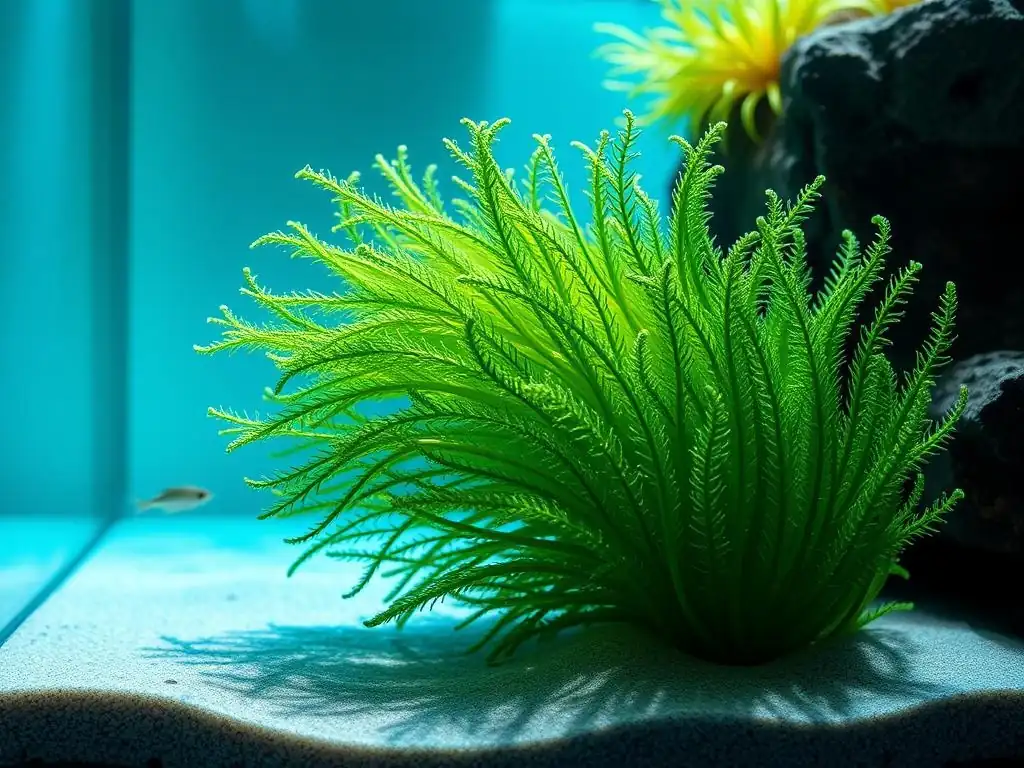
Caulerpa species, such as Caulerpa prolifera or Caulerpa serrulata, generally prefer a higher intensity of light compared to Chaetomorpha and thrive under a spectrum rich in both blue and red wavelengths. While they can adapt to various full-spectrum lights, a light fixture with a significant emphasis on blue (450-470 nm) and red (620-660 nm) light will promote more robust growth and help maintain their vibrant green coloration. Many successful Caulerpa cultivators use LED fixtures designed for sumps or refugiums that include a mix of cool white, blue, and sometimes red LEDs to provide a balanced yet potent light source.
The specific light spectrum can influence not only growth rate but also the morphological characteristics of the Caulerpa. For instance, some species may develop more pronounced fronds or denser growth under specific light conditions. Aim for a fixture that provides ample PAR (Photosynthetically Active Radiation), often in the range of 100-200 µmol·m⁻²·s⁻¹, directly above the Caulerpa. This ensures sufficient energy for its rapid photosynthetic processes and efficient nutrient absorption, supporting its role in nutrient export.
Controlling Caulerpa Growth with Light Intensity and Duration
Caulerpa's rapid growth rate is a double-edged sword: while it efficiently removes nutrients, it can also quickly outcompete other organisms or become invasive. Light intensity and duration are primary tools for managing this growth. Providing high light intensity generally accelerates growth, meaning more frequent harvesting is necessary to prevent it from overgrowing the refugium or display. Conversely, slightly reducing light intensity can slow its growth, making it more manageable, though too little light can lead to die-off.
The photoperiod for Caulerpa typically ranges from 10 to 14 hours per day. A longer photoperiod will generally promote faster growth, while a shorter one can slow it down. It's crucial to establish a consistent cycle, often in a reverse photoperiod setup, to maintain tank stability. Monitoring the Caulerpa's growth rate and adjusting light intensity or duration accordingly allows aquarists to fine-tune its performance and prevent it from becoming a nuisance, balancing its benefits with its potential for overgrowth.
Preventing Caulerpa Sexual Reproduction through Lighting
One of the most significant concerns with Caulerpa species is their tendency to "go sexual" or "crash." This phenomenon involves the macroalgae releasing its entire cellular contents, including gametes, into the water column, turning the water milky and potentially causing a rapid depletion of oxygen and a tank crash. While nutrient levels, temperature fluctuations, and physical disturbance can trigger this, inconsistent or stressful lighting is a major contributing factor. Sudden changes in light intensity or photoperiod can induce this stress response.
To minimize the risk of Caulerpa going sexual, maintain a stable and consistent lighting schedule. Avoid abrupt changes in light duration or intensity. Some aquarists implement a slight "siesta" period during the light cycle (e.g., 6 hours on, 2 hours off, 6 hours on) to mimic natural light patterns and potentially reduce stress, though this is debated. Regular harvesting of a portion of the Caulerpa biomass is also crucial, as older, nutrient-depleted sections are more prone to crashing. Consistent, stable light, coupled with regular pruning, is key to preventing this detrimental event.
Maintaining Stable Water Parameters Alongside Lighting Adjustments
While lighting is paramount for Caulerpa health, its effectiveness is intrinsically linked to stable water parameters. Fluctuations in temperature, salinity, alkalinity, calcium, and especially nutrient levels (nitrate and phosphate) can significantly impact Caulerpa's ability to photosynthesize and grow, regardless of the lighting quality. For instance, if nitrate levels drop below 0.2 ppm and phosphate below 0.03 ppm consistently, even optimal lighting may not prevent the Caulerpa from starving, leading to stunted growth or potentially going sexual.
Therefore, any adjustments to Caulerpa lighting strategies should be made in conjunction with diligent monitoring of water chemistry. Regular testing for key parameters is essential. If Caulerpa growth is slower than expected despite adequate lighting, investigate nutrient levels. Similarly, if the macroalgae appears stressed or shows signs of bleaching, check for sudden shifts in temperature or salinity. A holistic approach that integrates precise lighting management with stable water parameters is vital for long-term Caulerpa success and overall reef tank health.
Gracilaria Lighting for Color and Growth
Selecting the Optimal Light Spectrum for Gracilaria Species
Gracilaria species, particularly the red varieties like Gracilaria parvispora (Ogo), are highly prized for their vibrant coloration and effective nutrient export. To maintain their characteristic red hues and promote robust growth, the optimal light spectrum is crucial. These macroalgae benefit significantly from light with strong peaks in both the blue (450-470 nm) and red (620-660 nm) regions. The blue light supports general photosynthesis, while the red light is particularly important for enhancing the expression of phycoerythrin pigments, which are responsible for their red coloration.
Many aquarists find success with LED fixtures designed for refugiums or even specialized plant grow lights that offer a balanced spectrum with a noticeable emphasis on blue and red. For example, a fixture incorporating a mix of royal blue, deep red, and cool white LEDs can provide the ideal spectrum for Gracilaria. While a general 6500K daylight bulb might support basic growth, it often won't bring out the intense reds that a more tailored spectrum can achieve, making spectrum selection a key factor for both health and aesthetic appeal.
Ensuring Sufficient Light Intensity for Gracilaria Photosynthesis
Gracilaria generally requires moderate to high light intensity to thrive and maintain its vibrant colors. Unlike Chaeto, which is quite forgiving, Gracilaria can become pale or lose its color if light levels are too low. A PAR (Photosynthetically Active Radiation) intensity range of 100-250 µmol·m⁻²·s⁻¹ at the depth of the Gracilaria is often recommended for optimal growth and coloration. This range ensures that the macroalgae receives sufficient energy for efficient photosynthesis and the synthesis of its color-producing pigments.
When setting up lighting for Gracilaria, consider the depth of the water and the light spread. A fixture that provides uniform intensity across the entire Gracilaria mass is ideal. If the light is too weak, growth will be slow, and the algae may appear brownish or translucent. If the light is excessively strong, especially without adequate nutrient levels, it can lead to bleaching. Regular observation of the Gracilaria's color and growth rate will help in fine-tuning the light intensity to its specific needs within your system.
Balancing Light Duration for Consistent Gracilaria Growth
A consistent photoperiod is essential for promoting stable and continuous growth in Gracilaria species. Similar to other refugium macroalgae, a reverse photoperiod (lights on when the main display is off) is highly recommended for Gracilaria. This setup helps to stabilize the pH of the aquarium by ensuring continuous CO2 consumption and oxygen production, counteracting the natural pH drop that occurs during the main tank's dark cycle.
The ideal light duration for Gracilaria typically falls within a 12 to 16-hour range per day. A photoperiod of 14 hours is a common and effective starting point for many aquarists, promoting steady growth and nutrient uptake. While longer durations might theoretically increase growth, they can also increase the risk of stress or encourage nuisance algae if nutrient levels become too low. Maintaining a consistent schedule using a reliable timer is crucial for the long-term health and productivity of Gracilaria in your system.
Preventing Gracilaria Bleaching with Proper Lighting
Gracilaria species can be susceptible to bleaching, a condition where the macroalgae loses its vibrant coloration and turns pale, often due to stress. While nutrient deficiencies, sudden temperature changes, or poor water quality can contribute, improper lighting is a frequent cause of bleaching. Excessive light intensity, especially when combined with very low nutrient levels, can overwhelm the photosynthetic machinery, leading to photo-oxidative stress and the degradation of pigments.
To prevent bleaching, ensure that the light intensity is appropriate for your specific Gracilaria species and existing nutrient levels. If you notice signs of bleaching (e.g., red Gracilaria turning yellowish or white), consider reducing the light intensity or duration slightly. Gradually acclimate new Gracilaria to high-intensity lights if they come from a lower-light environment. Providing stable water parameters, particularly consistent nutrient levels (e.g., nitrates at 2-5 ppm, phosphates at 0.03-0.08 ppm), alongside proper lighting, will significantly reduce the risk of bleaching and maintain the macroalgae's healthy, vibrant appearance.
Comparing Lighting Options for Macroalgae
LED Lighting Systems for Refugiums and Macroalgae Reactors
LED (Light Emitting Diode) lighting systems have become the gold standard for macroalgae cultivation in refugiums and dedicated algae reactors due to their energy efficiency, long lifespan, and customizable spectrums. Modern LED fixtures for refugiums often combine various wavelengths, including cool white, royal blue, and deep red, to provide a spectrum optimized for macroalgae photosynthesis. This allows hobbyists to target the specific light needs of species like Chaetomorpha, Caulerpa, and Gracilaria, enhancing their growth and nutrient export capabilities.
Many popular refugium LED lights consume relatively low power, typically ranging from 9 watts to 30 watts for average-sized sumps (e.g., 10-30 gallons). Despite their low wattage, they can deliver high PAR values, making them highly effective. Their compact size and minimal heat output are also significant advantages, allowing for flexible placement and reduced impact on water temperature. Furthermore, the directional nature of LEDs means less light is wasted, ensuring that the majority of the emitted light reaches the macroalgae.
Fluorescent Lighting (T5 and Compact Fluorescent) for Macroalgae
Before the widespread adoption of LEDs, fluorescent lighting, particularly T5 High Output (HO) and Compact Fluorescent Lights (CFLs), were common choices for macroalgae refugiums. T5 HO bulbs offer good light penetration and a wide range of spectrums, including daylight (6500K-10000K) and actinic blue, which can be beneficial for macroalgae. A typical 24-inch T5 HO fixture might use 24 watts, providing sufficient light for a medium-sized refugium. CFLs are also used for smaller setups, offering a simple, inexpensive solution, with wattages ranging from 13 watts to 65 watts.
While fluorescent lights are generally less energy-efficient and have a shorter lifespan (typically 6-12 months before needing replacement) compared to LEDs, they remain a viable option for budget-conscious aquarists. They produce more heat, which can be a consideration for maintaining stable water temperatures, especially in enclosed spaces. However, their broad light spread can be advantageous for illuminating a wide area of macroalgae, ensuring even growth.
Considerations for Using Metal Halide Lighting in Macroalgae Systems
Metal Halide (MH) lighting, while once dominant for main display reef tanks due to its intense light output and excellent PAR penetration, is rarely recommended or used for dedicated macroalgae refugiums today. The primary reasons are their high energy consumption, significant heat generation, and large footprint. A single 150-watt or 250-watt metal halide bulb can produce immense PAR values, often exceeding 500 µmol·m⁻²·s⁻¹ at the surface, which is far more intensity than most macroalgae require and can lead to bleaching or photoinhibition if not carefully managed.
The heat produced by metal halides can also raise the water temperature in the refugium, potentially stressing the macroalgae and requiring additional cooling solutions. Their short bulb lifespan (typically 6-9 months for optimal performance) and higher replacement costs further detract from their suitability for refugium use. While they can grow macroalgae, the operational inefficiencies and potential for overheating make them an impractical choice compared to modern LED or even fluorescent options for targeted macroalgae cultivation.
Specific Product Recommendations for Macroalgae Lighting
For Chaeto lighting tips saltwater tank setups and other macroalgae, several LED fixtures are highly regarded. The Kessil H160 Tuna Flora is a popular, albeit premium, choice, offering tunable spectrums that can be optimized for various macroalgae, including a strong actinic blue mode ideal for Chaeto and Gracilaria. Its compact design and strong output make it suitable for medium to large refugiums. Another excellent option is the AI Prime Fuge, which is specifically designed for refugiums and provides a broad spectrum with a strong blue component for robust macroalgae growth.
For more budget-friendly yet effective solutions, various generic "refugium lights" or "grow lights" available online can be highly effective. Look for fixtures with a mix of blue (450-470 nm) and white (6500K-10000K) LEDs, typically in the 15-30 watt range. Brands like JBJ Nano-Glo LED Refugium Light or similar full-spectrum clip-on LEDs are often sufficient for smaller refugiums (5-20 gallons). When selecting, prioritize fixtures with a good reputation for durability in saltwater environments and a spectrum known to support macroalgae growth and nutrient export.
Monitoring and Adjusting Lighting Based on Macroalgae Health
Identifying Signs of Insufficient Light in Macroalgae
Insufficient light is a common issue that can hinder macroalgae growth and nutrient export efficiency. One of the most noticeable signs is stunted or extremely slow growth. If your Chaetomorpha, Caulerpa, or Gracilaria is barely increasing in biomass over several weeks, despite adequate nutrient levels and flow, it's a strong indicator of low light. The algae may also appear pale, translucent, or develop a yellowish hue, as it struggles to produce enough chlorophyll and other pigments to capture what little light is available.
For red macroalgae like Gracilaria, insufficient light can cause a loss of their vibrant red coloration, turning them a dull brown or green as the accessory pigments responsible for the red hue degrade. The macroalgae might also become stringy, elongated, and less dense, stretching towards the light source in an attempt to capture more photons. If you observe these symptoms, increasing the light intensity or duration, or moving the light closer to the macroalgae, would be appropriate adjustments.
Recognizing Symptoms of Excessive Light Exposure in Macroalgae
While often less common than insufficient light, excessive light exposure can also stress macroalgae and lead to detrimental effects. The primary symptom of too much light is bleaching, where the macroalgae loses its color and turns white or very pale. This occurs because the photosynthetic pigments are overwhelmed and damaged by the intense light, leading to photo-oxidative stress. For example, a vibrant green Chaeto might turn yellowish-white, or a red Gracilaria might become pinkish-white and brittle.
Other signs of excessive light include a slimy or decaying appearance, particularly at the parts of the algae closest to the light source. Growth may also cease entirely, or the macroalgae might begin to shrink and disintegrate. In severe cases, particularly with Caulerpa, extreme light stress can trigger a "sexual crash." If these symptoms are observed, the immediate action should be to reduce the light intensity (e.g., by raising the fixture, dimming it, or shortening the photoperiod) and ensure that nutrient levels are not critically low, which exacerbates light stress.
The Importance of Nutrient Levels in Relation to Lighting
The relationship between lighting and nutrient levels is symbiotic and critical for macroalgae health. Macroalgae use light energy to convert dissolved nutrients, primarily nitrate and phosphate, into biomass. If nutrient levels are too low, even optimal lighting will not result in robust growth; the macroalgae will essentially starve, leading to stunted growth, paling, or even die-off. For instance, if nitrates consistently read below 0.5 ppm and phosphates below 0.03 ppm, your Chaeto might struggle to grow effectively regardless of light intensity.
Conversely, very high nutrient levels coupled with insufficient light can lead to undesirable outcomes, such as the proliferation of nuisance algae (e.g., diatoms, dinoflagellates) which can outcompete the desired macroalgae. It's crucial to maintain a balance: provide sufficient nutrients for the macroalgae to consume, and then provide adequate lighting for them to efficiently process those nutrients. Regular testing of nitrate and phosphate levels (e.g., weekly or bi-weekly) allows aquarists to fine-tune both nutrient dosing (if needed) and lighting adjustments to ensure the macroalgae remains a productive nutrient export engine.
Advanced Lighting Techniques for Macroalgae
Utilizing Light Timers for Consistent Photoperiods
The consistent application of light is paramount for macroalgae health and efficient nutrient export. Manual switching of lights is prone to inconsistency, leading to stress for the macroalgae and potential fluctuations in water parameters. Utilizing a reliable digital or mechanical light timer is therefore an essential advanced technique. Timers ensure that the macroalgae receives a precise and repeatable photoperiod every day, typically 12 to 18 hours, depending on the species and desired growth rate.
Implementing a timer allows for the precise execution of a reverse photoperiod, where the refugium lights are on when the main display tank lights are off. For example, if your display tank lights are on from 10 AM to 10 PM, setting your refugium timer to turn on from 10 PM to 10 AM ensures continuous photosynthetic activity in the system. This stability in lighting contributes significantly to a stable pH and overall system health, making it a foundational Chaeto lighting tip for saltwater tank optimization.
Implementing Reverse Lighting Schedules for Nutrient Export
The reverse lighting schedule is a cornerstone of effective nutrient export in reef aquariums utilizing macroalgae in a refugium. This technique involves illuminating the macroalgae (e.g., Chaetomorpha, Caulerpa) during the hours when the main display tank lights are off. The primary benefit of this strategy is the stabilization of aquarium pH. During the night, when the display tank lights are off, the inhabitants' respiration releases CO2, causing the pH to naturally drop.
By having the macroalgae lights on during this period, the algae actively photosynthesize, consuming CO2 and releasing oxygen. This continuous photosynthetic activity buffers the pH drop, helping to maintain a more stable pH throughout the 24-hour cycle. For example, if your main tank's pH typically drops from 8.2 to 7.9 overnight, a reverse lit refugium can help keep it within a narrower range, perhaps 8.1 to 8.0, reducing stress on sensitive corals and fish. This continuous nutrient uptake also ensures efficient removal of nitrates and phosphates, preventing their accumulation.
Utilizing Reflectors and Diffusers to Maximize Light Coverage
To maximize the efficiency of your macroalgae lighting, especially in larger or irregularly shaped refugiums, utilizing reflectors and diffusers can be highly beneficial. Reflectors are typically made of polished aluminum or other highly reflective materials and are designed to direct light that would otherwise escape upwards or sideways back down onto the macroalgae. This can significantly increase the PAR reaching the algae, making the light fixture more effective without increasing its wattage. For example, a simple parabolic reflector can increase light intensity by 15-20% in certain areas.
Diffusers, on the other hand, spread light more evenly across a wider area, reducing hotspots and ensuring uniform illumination. While they might slightly reduce peak intensity, they can be valuable in preventing localized bleaching and promoting consistent growth throughout the entire macroalgae mass. For instance, a light with a narrow beam angle might benefit from a diffuser to better cover a broad, shallow refugium. Combining these elements ensures that every part of the macroalgae receives adequate light, enhancing overall photosynthetic efficiency and nutrient removal.
Controlling Unwanted Algae Growth Through Lighting Adjustments
Nuisance algae, such as diatoms, hair algae, or cyanobacteria, can be a persistent problem in reef tanks, often appearing when the balance of light and nutrients is off. While excess nutrients are a primary cause, improper lighting can exacerbate the issue. If your main display tank lights are too intense, on for too long, or have a spectrum that favors nuisance algae over corals/desired macroalgae, you might see unwanted growth. For example, a photoperiod exceeding 10-12 hours in the main display can often fuel nuisance algae.
To combat this, first ensure your main display tank's light intensity and photoperiod are appropriate for your corals (if any) and not excessive. For refugiums, ensure the macroalgae is thriving and consuming nutrients effectively. If nuisance algae appear in the refugium itself, it might indicate that the macroalgae isn't growing fast enough due to insufficient light or nutrient limitation, allowing the unwanted algae to colonize. Adjusting the refugium light intensity or spectrum to better suit your desired macroalgae (e.g., for Chaeto lighting tips saltwater tank setups, ensuring sufficient blue light) can help it outcompete nuisance forms.
Addressing Nutrient Deficiencies Impacting Macroalgae Health
Even with optimal lighting, macroalgae cannot grow effectively if essential nutrients are depleted. The most critical nutrients for macroalgae are nitrates and phosphates. If your water tests consistently show undetectable or extremely low levels of these nutrients (e.g., nitrate < 0.2 ppm, phosphate < 0.01 ppm), your macroalgae may appear pale, stunted, or begin to melt, even under perfect light. This is a common issue in ultra-low nutrient (ULNS) systems where reactors or aggressive skimming remove too much.
To address nutrient deficiencies, the first step is to confirm low levels through accurate test kits. If confirmed, you might need to temporarily reduce aggressive nutrient export methods like protein skimming or GFO (Granular Ferric Oxide) reactors. In some cases, controlled dosing of liquid nitrate or phosphate solutions (e.g., using products like Red Sea NO3:PO4-X or similar) may be necessary to provide the macroalgae with the building blocks it needs. Aim for detectable but low levels, such as nitrates around 2-5 ppm and phosphates around 0.03-0.08 ppm, to sustain healthy macroalgae growth and maximize its nutrient removal capacity.
Balancing Light Competition Between Macroalgae and Other Organisms
In some reef tank setups, particularly those with display refugiums or mixed-species sumps, macroalgae may compete for light with other photosynthetic organisms, such as corals or other types of algae. This competition can hinder the growth of your desired macroalgae. For example, if a rapidly growing coral casts a shadow over a patch of Gracilaria, the Gracilaria may become pale or slow its growth in that area.
To balance light competition, strategic placement is key. Position macroalgae in areas where they receive direct, unobstructed light from their dedicated fixture. If using a display refugium, ensure the macroalgae light is powerful enough to penetrate the water column and reach the algae without being overshadowed by other inhabitants. Pruning fast-growing corals or moving them can free up light for macroalgae. Conversely, if macroalgae is overgrowing and shading other desired organisms, regular harvesting is crucial. Maintaining a healthy, dense mass of your target macroalgae through proper Chaeto lighting tips saltwater tank practices and other care routines will help it outcompete unwanted competitors for light and nutrients.
Frequently Asked Questions
How much light does Chaeto algae generally need in a saltwater tank?
Chaeto algae thrives with moderate to high lighting levels. Aim for at least 4-6 hours of light per day. Insufficient light can lead to poor growth and even die-off.
What spectrum of light is best for promoting Chaeto growth in a refugium?
Chaeto algae utilizes a broad spectrum of light, but red and blue wavelengths are particularly effective. Many aquarists find success with full-spectrum LED grow lights designed for plants.
Should I use a timer to regulate the lighting for my Chaeto algae?
Yes, using a timer is highly recommended to ensure consistent light cycles. This promotes stable growth and prevents algae from going sexual, which can cloud your tank.
How close should the light be positioned to the Chaeto algae in my refugium?
The optimal distance depends on the light's intensity. Start with the light a few inches away and adjust as needed. Observe the Chaeto for signs of burning (bleaching) or insufficient light (browning).
What are the signs of insufficient or excessive lighting for Chaeto algae in a saltwater tank?
Insufficient light can cause Chaeto to turn brown or disintegrate. Excessive light can lead to bleaching or a yellowing of the algae. Monitor your Chaeto regularly and adjust the lighting accordingly.
Final Reflection: Illuminating the Path to Thriving Macroalgae
The journey to optimal macroalgae growth in saltwater tanks is more than just a technical exercise; it's a testament to our dedication to creating balanced and thriving ecosystems. In a world increasingly aware of the delicate balance of our natural environments, understanding how to effectively illuminate macroalgae like Chaeto, Caulerpa, and Gracilaria becomes a microcosm of our larger responsibility to nurture life.
This exploration of Chaeto lighting tips for saltwater tanks has underscored the profound impact of seemingly small adjustments on the overall health and stability of our aquariums. My own experience with cultivating macroalgae has taught me that patience and observation are as crucial as the right equipment. The best way to predict the future is to create it.
This quote resonates deeply, reminding us that by actively engaging with the science and art of aquarium keeping, we are shaping a healthier future for our aquatic companions and, perhaps, learning valuable lessons applicable to the larger world.
Now, armed with these insights into the nuances of macroalgae lighting, I invite you to consider the power you hold to transform your own saltwater tank into a vibrant, self-sustaining ecosystem. Embrace the challenge, experiment with confidence, and remember that every ray of light you provide is a step towards a healthier, more beautiful underwater world. Let your aquarium be a beacon of responsible stewardship, illuminating the path towards a more sustainable future, one Chaeto-lit tank at a time.
Ignite Your Algae Growth Potential Now!
Thank you for diving into the world of macroalgae lighting! We hope you've gained valuable insights to optimize your aquarium's ecosystem. Now, let's put that knowledge into action and witness the vibrant growth you deserve.
- Supercharge your macroalgae growth by immediately adjusting your light cycle. Experiment with slightly longer photoperiods to maximize photosynthesis and overall health.
- Explore different lighting spectrums! Why not try introducing a red-shifted LED alongside your current light to see how your Chaeto responds?
- Share your algae lighting setup successes (and challenges!) with the Aquarium Mastery community. Your experiences can help other hobbyists!
What unique lighting hacks will you implement to achieve stunning algae growth in your aquarium?