
Essential Equipment for a Thriving Freshwater Shrimp Tank: A Checklist

Welcome to Aquarium Mastery!
Ready to witness the vibrant dance of freshwater shrimp in your very own aquatic haven? You've come to the right place! Setting up a thriving shrimp tank can seem daunting, but don't worry, we're here to guide you. Dive into our Freshwater Shrimp Tank Equipment Checklist below, and discover the essential tools and gear you'll need to create a perfect, shrimp-tastic environment. Curious about what's absolutely necessary and what's simply a nice-to-have? Let's find out!
- Setting Up Your Freshwater Shrimp Tank: A Complete Equipment Checklist
- The Foundation: Tank and Substrate Essentials for Shrimp
- Water Quality is Key: Filtration and Water Parameter Control
- Creating the Perfect Habitat: Lighting, Heating, and Decoration
- Feeding Your Shrimp: Food and Supplements
- Essential Tools for Maintenance and Care
- Advanced Shrimp Keeping: Optional Equipment for Breeding and Specialized Needs
- The Complete Freshwater Shrimp Tank Equipment Checklist: A Summary
- Troubleshooting Common Shrimp Tank Issues: Equipment-Related Problems
-
Frequently Asked Questions
- What is the most essential piece of equipment for a freshwater shrimp tank?
- Why is a heater necessary, even in a climate-controlled home?
- What type of substrate is best for a freshwater shrimp tank?
- Do I need special lighting for a shrimp tank?
- What kind of water testing kit should I use for my shrimp tank?
- Final Reflection: Cultivating Aquatic Harmony
- Ignite Your Shrimp Keeping Passion!
Setting Up Your Freshwater Shrimp Tank: A Complete Equipment Checklist
Embarking on the journey of keeping freshwater shrimp is a rewarding experience, offering a glimpse into the fascinating world of these tiny, industrious invertebrates. However, success hinges on meticulous preparation and the right tools.
A comprehensive freshwater shrimp tank equipment checklist is not merely a suggestion; it's the bedrock for a thriving ecosystem where your shrimp can flourish, breed, and display their vibrant colors. This guide will walk you through every essential piece of equipment, from the fundamental tank setup to advanced tools for specialized needs, ensuring you're fully prepared to create an optimal habitat for your delicate aquatic residents.
Proper equipment selection minimizes common pitfalls, such as unstable water parameters, inadequate filtration, or insufficient housing, all of which can lead to stress, illness, or even death in sensitive shrimp species. Whether you are planning your first Neocaridina (e.g., Cherry shrimp, Blue Dream) colony or venturing into the more demanding world of Caridina (e.g., Crystal Red shrimp, Taiwan Bees), understanding and acquiring the correct gear is the first and most critical step. This detailed freshwater shrimp tank equipment checklist aims to provide clarity and confidence for aquarists at all levels, helping to establish a balanced and sustainable shrimp sanctuary.
The Foundation: Tank and Substrate Essentials for Shrimp
Choosing the Right Size Tank for Your Freshwater Shrimp
The size of your aquarium is a foundational decision that impacts water stability and the well-being of your shrimp colony. For Neocaridina shrimp, which are relatively hardy, a 5-gallon (approximately 19 liters) tank can serve as a good starting point for a small colony of 10-15 individuals. This size allows for basic maintenance and observation, making it suitable for beginners. However, it's important to note that smaller tanks are more susceptible to rapid fluctuations in water parameters, requiring more diligent monitoring and consistent care.
For Caridina shrimp, which are generally more sensitive to environmental changes, a 10-gallon (around 38 liters) tank is often preferred. The larger water volume in a 10-gallon tank provides greater stability, reducing the impact of minor temperature shifts or slight changes in water chemistry. Larger tanks, such as 20 gallons (76 liters) or more, offer even greater stability and allow for larger colonies, mixed species setups, or more elaborate aquascapes, providing ample space for foraging and breeding as your colony expands.
Selecting the Ideal Substrate for Neocaridina and Caridina Shrimp
Substrate choice is a critical component of your freshwater shrimp tank equipment checklist, directly influencing water chemistry and shrimp health. For Neocaridina shrimp, an inert substrate such as fine-grained sand or small-diameter gravel is generally suitable. Examples include CaribSea Super Naturals or Seachem Flourite Sand. These substrates do not significantly alter water parameters, allowing the aquarist to maintain water chemistry directly through water changes and remineralization, which is ideal for Neocaridina that thrive in a slightly wider range of parameters compared to their Caridina cousins.
In contrast, Caridina shrimp species, which typically originate from soft, acidic waters, benefit immensely from active, buffering substrates. Brands like ADA Aqua Soil Amazonia, Fluval Stratum, or Brightwell Aquatics FlorinVolcanit are designed to naturally lower and stabilize pH and KH (carbonate hardness) to ideal levels, often in the range of pH 5.5-6.5 and KH 0-2 dKH. These specialized substrates create the specific water conditions that Caridina shrimp require for optimal health, successful molting, and prolific breeding.
Substrate Considerations: Buffering vs. Inert Options
Buffering substrates, also known as active substrates or "aquarium soils," are formulated to exchange ions with the aquarium water, thereby lowering the pH and KH and maintaining them within a specific acidic range. This buffering capacity is crucial for Caridina shrimp, which require very soft, acidic water to prevent molting issues and promote vitality.
For instance, a new bag of ADA Aqua Soil can effectively reduce the pH of tap water from 7.5 to 6.0-6.5 within 24-48 hours, maintaining this stability for approximately 1-2 years before its buffering capacity diminishes. Regular monitoring of water parameters is still essential, even with buffering substrates, to ensure stability.
Inert substrates, on the other hand, do not chemically interact with the water and therefore do not alter its parameters. This characteristic makes them an excellent choice for Neocaridina shrimp, which prefer slightly alkaline to neutral water (pH 6.8-7.8, KH 3-8 dKH). Using an inert substrate gives the aquarist full control over water chemistry, allowing for precise adjustments through water changes and the addition of specific remineralizers. For beginners, an inert substrate combined with suitable tap water can simplify water management, as it removes the variable of substrate-induced parameter shifts.
Water Quality is Key: Filtration and Water Parameter Control
Essential Filtration for a Healthy Shrimp Tank Environment
Maintaining pristine water quality is paramount for the health and longevity of freshwater shrimp, making filtration a cornerstone of any freshwater shrimp tank equipment checklist. Filtration serves multiple critical functions: mechanical removal of particulate matter, chemical absorption of toxins, and most importantly, biological conversion of harmful nitrogenous waste products. Shrimp are incredibly sensitive to ammonia and nitrite, even at concentrations as low as 0.25 ppm, which can be lethal. A robust biological filter ensures that these toxic compounds, produced from shrimp waste and uneaten food, are efficiently converted into less harmful nitrates through the nitrogen cycle.
Beyond biological filtration, the chosen filter must also be shrimp-safe. Many common aquarium filters have powerful intakes that can easily suck in delicate shrimplets, leading to injury or death. Therefore, selecting a filter that provides gentle flow and has a protective intake mechanism is crucial. Adequate surface agitation for gas exchange is also important, ensuring sufficient oxygen levels in the water, but without creating strong currents that can stress the shrimp.
Types of Filters Suitable for Freshwater Shrimp: Sponges, HOBs, and Canisters
When considering filtration for a freshwater shrimp tank, certain types stand out for their effectiveness and safety. Sponge filters are widely regarded as the gold standard for shrimp tanks. They offer excellent biological filtration due to their large surface area for beneficial bacteria, provide gentle water movement, and are inherently shrimplet-safe. Powered by an air pump, a typical sponge filter for a 10-gallon tank might cost around $10-$15, plus the cost of an air pump and airline tubing, making them an economical and highly effective choice.
Hang-on-Back (HOB) filters, such as those from AquaClear or Seachem Tidal, can also be used successfully, provided they are modified with a pre-filter sponge placed over the intake tube. This prevents shrimplets from being drawn into the filter impeller. HOBs offer good flow rates and media capacity, allowing for mechanical and chemical filtration in addition to biological.
For larger shrimp tanks (20 gallons and above), canister filters (e.g., Fluval, Eheim) provide superior filtration volume and flexibility in media choice. Like HOBs, they require a pre-filter sponge on the intake to protect shrimplets, but they offer powerful, quiet operation and are ideal for heavily planted setups.
Maintaining Optimal Water Parameters for Shrimp: A Guide
Achieving and maintaining optimal water parameters is a non-negotiable aspect of successful freshwater shrimp keeping. For Neocaridina shrimp, the target parameters generally fall within a pH range of 6.8-7.8, a General Hardness (GH) of 6-10 dGH, a Carbonate Hardness (KH) of 3-8 dKH, and a Total Dissolved Solids (TDS) reading between 150-300 ppm. These ranges support their robust health and prolific breeding. Consistent stability within these ranges is often more critical than hitting exact numbers, as rapid fluctuations can cause significant stress and molting problems.
Caridina shrimp, particularly those from specialized breeding lines like Crystal Red or Taiwan Bee shrimp, demand much stricter parameters. Their ideal environment typically has a pH of 5.5-6.5, a GH of 4-6 dGH, a KH of 0-2 dKH, and a TDS of 80-150 ppm.
Achieving these precise conditions often necessitates the use of reverse osmosis (RO) or deionized (DI) water, which is then remineralized to the specific target parameters using products like SaltyShrimp GH+ for Caridina or SaltyShrimp GH/KH+ for Neocaridina. For example, adding approximately 2 grams of SaltyShrimp GH/KH+ per 10 gallons of RO water can raise GH by roughly 6 dGH and KH by 3 dKH, providing the essential minerals for molting and overall vitality.
Water Testing Kits: Monitoring Ammonia, Nitrite, and Nitrate Levels
Regular and accurate water testing is an indispensable part of your freshwater shrimp tank equipment checklist. A high-quality liquid-based test kit, such as the API Freshwater Master Test Kit, is essential for monitoring the critical parameters of ammonia, nitrite, and nitrate. While test strips offer convenience, they are generally less accurate and reliable for the precise measurements required in sensitive shrimp environments. Ammonia and nitrite levels should always read 0 ppm in an established, cycled tank, as even trace amounts are highly toxic to shrimp.
Nitrate levels, while less toxic than ammonia or nitrite, should be kept consistently low. For Neocaridina shrimp, maintaining nitrates below 20 ppm is generally acceptable, whereas for Caridina shrimp, ideally, they should remain below 10 ppm. Elevated nitrate levels indicate a need for larger or more frequent water changes. Consistent weekly testing for new tanks, and bi-weekly or monthly testing for established tanks, allows for proactive management of water quality, helping to identify and address issues before they become life-threatening for your delicate shrimp.
Creating the Perfect Habitat: Lighting, Heating, and Decoration
Lighting for Planted Shrimp Tanks: Promoting Growth and Color
While freshwater shrimp themselves do not have specific lighting requirements beyond a natural day/night cycle, the choice of lighting becomes crucial if you intend to keep live plants in your shrimp tank. Live plants are highly beneficial for shrimp, providing foraging surfaces, hiding spots, and contributing to water quality by absorbing nitrates and oxygenating the water.
For a low-tech planted shrimp tank, a full-spectrum LED light with a moderate PAR (Photosynthetically Active Radiation) output is ideal. For example, a light providing 15-20 PAR at the substrate level is often sufficient for most low-to-medium light plants like Java Moss, Anubias, or Bucephalandra in a 10-gallon tank.
Excessive or inadequate lighting can lead to problems. Too much light, especially without sufficient CO2 or nutrients, can trigger rampant algae growth, which, while generally harmless to shrimp, can be unsightly and outcompete desired plant growth. Conversely, too little light will result in stunted plant growth. A consistent light cycle, typically 6-8 hours per day, managed by an inexpensive timer, is recommended to prevent algae issues and promote healthy plant development.
Maintaining Consistent Water Temperature: Heaters and Thermometers
Maintaining a stable water temperature is vital for the health and metabolic functions of freshwater shrimp. Neocaridina shrimp are quite adaptable and thrive comfortably within a temperature range of 68-78°F (20-25.5°C). Caridina shrimp, however, generally prefer slightly cooler and more stable conditions, typically between 68-74°F (20-23.5°C). In most indoor environments, a reliable submersible heater (e.g., Fluval M Series, Eheim Jager) is an essential part of the freshwater shrimp tank equipment checklist to prevent temperature fluctuations, which can stress shrimp and lead to molting problems or disease. For a standard 10-gallon tank, a 25-50 watt heater is usually sufficient.
Equally important is an accurate thermometer to monitor the water temperature. A glass or digital thermometer (e.g., Marina, Finnex) provides real-time readings, allowing you to ensure your heater is functioning correctly and maintaining the desired temperature range. Sudden temperature swings of more than 2-3°F (1-1.5°C) within a short period can severely stress shrimp, making consistent monitoring crucial. Always ensure your heater has an automatic shut-off feature to prevent overheating, which can be rapidly fatal to your shrimp.
Decorating Your Shrimp Tank: Providing Shelter and Breeding Grounds
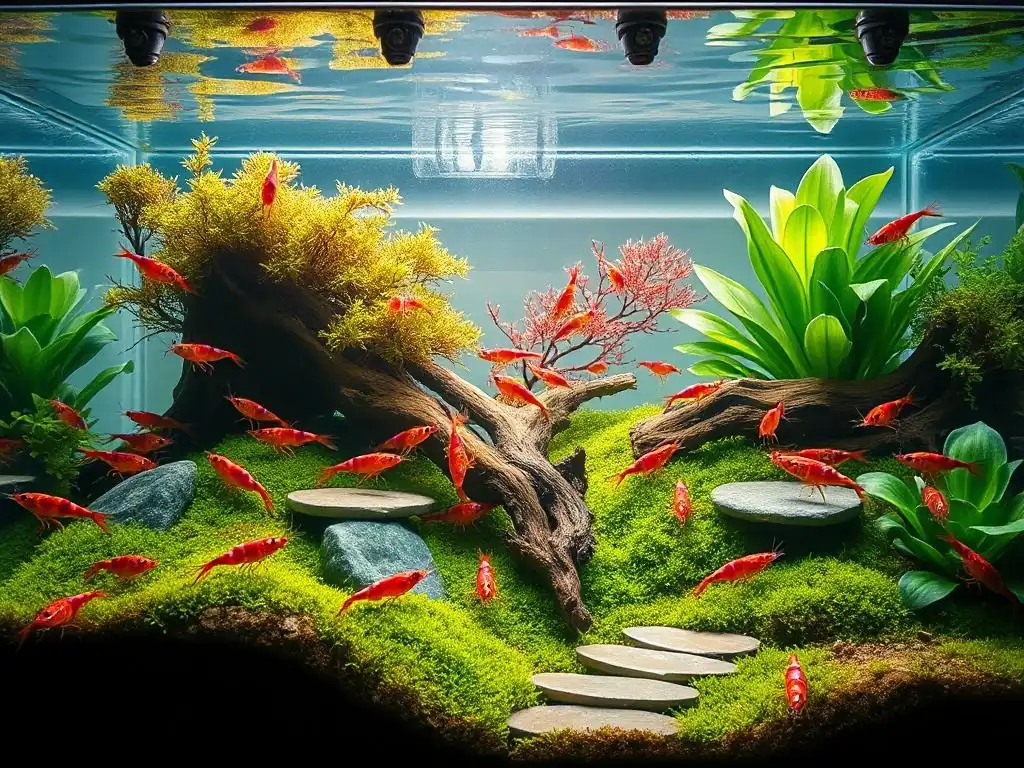
Strategic decoration is not just for aesthetics; it's a functional necessity in a freshwater shrimp tank, providing crucial shelter, foraging surfaces, and breeding grounds. Shrimp are prey animals by nature and require ample hiding spots to feel secure and reduce stress. Live plants, such as Java Moss, Christmas Moss, Anubias, or Bucephalandra, are excellent choices, offering dense foliage where shrimplets can hide and adults can graze on biofilm.
Additionally, natural driftwood (e.g., Manzanita, Cholla wood) and ceramic shrimp caves or coconut shells provide ideal nooks and crannies. Cholla wood, for example, slowly breaks down, releasing beneficial tannins and providing a continuous source of biofilm for shrimp to graze upon.
A well-decorated tank also contributes significantly to the overall stability of the ecosystem. Plants absorb nitrates and provide oxygen, while the surfaces of decor items become colonized by beneficial bacteria and algae, which serve as supplementary food sources. Aim for a balance that offers plenty of vertical and horizontal hiding places without making the tank too cluttered for maintenance. A tank with at least 50% of its footprint covered by plants or decor offers a rich and secure environment for a thriving shrimp colony.
Shrimp-Safe Decorations: Avoiding Toxic Materials
When selecting decorations for your freshwater shrimp tank, safety is paramount. It is crucial to avoid any materials that might leach harmful chemicals, heavy metals, or alter water parameters in an undesirable way. Steer clear of painted or glazed ceramics not specifically designed for aquariums, as their coatings can degrade and release toxins. Similarly, avoid any metal objects unless they are specifically certified as aquarium-safe stainless steel, as most metals will rust and release copper, which is highly toxic to invertebrates like shrimp, even in minute quantities.
Opt for natural, untreated materials that are known to be inert or beneficial. Natural driftwood (ensure it's aquarium-safe and pre-soaked to release tannins and sink), inert rocks (e.g., Seiryu Stone, Dragon Stone – though some Seiryu can slightly raise pH/GH), and aquarium-specific ceramics are excellent choices. Always thoroughly rinse and, if possible, boil any new decorations before introducing them to the tank to remove any surface contaminants or loose debris. This meticulous approach to decoration selection is a vital part of your freshwater shrimp tank equipment checklist to prevent unexpected water chemistry issues.
Feeding Your Shrimp: Food and Supplements
Choosing the Right Food for Your Freshwater Shrimp
Freshwater shrimp are primarily scavengers and omnivores, constantly grazing on biofilm, algae, and detritus within the tank. While a mature tank with abundant biofilm can provide a significant portion of their diet, supplemental feeding with high-quality, shrimp-specific foods is essential for optimal health, growth, and breeding. Look for specialized pellets from reputable brands such as GlasGarten, Shirakura, Dennerle, or Hikari, which are formulated with a balanced blend of plant-based materials (like spirulina and kelp), proteins, and essential minerals. These foods are designed to be easily digestible and minimize water fouling.
Beyond commercial pellets, supplementing your shrimp's diet with blanched vegetables can provide additional nutrients and variety. Small pieces of blanched zucchini, spinach, or kale are readily accepted by shrimp and offer valuable vitamins and fiber. It's important to remove any uneaten vegetable matter after 24 hours to prevent it from decaying and fouling the water. Occasional protein sources, such as a tiny piece of bloodworm or brine shrimp (fed sparingly), can also be offered, particularly for breeding colonies.
Supplementing Your Shrimp's Diet: Vitamins and Minerals
While a balanced staple diet is crucial, specific supplements can further enhance the health, color, and breeding success of your freshwater shrimp. Calcium is particularly vital for the development and strengthening of their exoskeleton, which is shed during molting. If your water parameters are on the lower side for GH, or if you are using RO/DI water, dedicated calcium-rich supplements like SaltyShrimp Shrimp Mineral or other invertebrate-specific mineral additives can be highly beneficial to prevent molting issues. These products ensure that shrimp have access to the necessary building blocks for a successful molt.
Additionally, products that promote biofilm growth or provide beneficial bacteria can be excellent supplements. For example, GlasGarten Bacter AE is a popular powdered supplement that encourages the growth of beneficial bacterial films on surfaces, providing a continuous, natural food source, especially for delicate shrimplets. However, these supplements should be used sparingly and according to instructions, as over-dosing can lead to cloudy water or bacterial blooms. A well-rounded approach to nutrition, combining high-quality prepared foods with natural grazing opportunities and targeted supplements, ensures your shrimp receive all the necessary nutrients.
Feeding Schedule: Avoiding Overfeeding
One of the most common mistakes in freshwater shrimp keeping is overfeeding, which can rapidly lead to deteriorated water quality and significant health issues for your colony. Uneaten food decays, releasing ammonia and nitrite, which are highly toxic to shrimp, and contributing to elevated nitrate levels. A general rule of thumb is to feed only what your shrimp can consume within 2-3 hours. For a typical colony of 20-30 Neocaridina in a 10-gallon tank, a single small pellet (e.g., 2-3mm diameter) every other day might be sufficient, depending on the abundance of natural biofilm and algae in the tank.
The ideal feeding schedule will vary based on your colony size, tank maturity, and the presence of other food sources (like live plants and biofilm). Observe your shrimp closely: if they immediately swarm the food, they might be hungry. If food remains largely untouched after a few hours, you are likely overfeeding. A mature, heavily planted tank with established biofilm may require less supplemental feeding than a newly set up tank. It's always safer to underfeed slightly than to overfeed, as shrimp can graze on natural resources, but cannot escape toxic water conditions.
Essential Tools for Maintenance and Care
Water Change Equipment: Buckets, Siphons, and Dechlorinators
Regular water changes are fundamental to maintaining a healthy freshwater shrimp tank and are a crucial part of any comprehensive freshwater shrimp tank equipment checklist. To perform these safely and efficiently, you'll need a few dedicated tools. Two clean, food-grade 5-gallon buckets are essential: one for collecting old tank water and another for preparing new water. An aquarium siphon or gravel vacuum (e.g., a simple manual siphon or a Python No Spill Clean and Fill system for larger tanks) is necessary for removing water and detritus from the substrate.
Crucially, a high-quality dechlorinator (e.g., Seachem Prime, API Stress Coat) is non-negotiable. Tap water contains chlorine and/or chloramines, which are lethal to shrimp and beneficial bacteria. Dechlorinators neutralize these harmful chemicals. Seachem Prime, for instance, not only removes chlorine but can also temporarily detoxify ammonia and nitrite for up to 24-48 hours, providing an extra layer of safety during water changes.
For Neocaridina, a 10-20% weekly water change is common. For Caridina, smaller, more frequent changes (e.g., 5-10% twice a week) might be preferred, especially when using remineralized RO/DI water, to maintain optimal stability. Always ensure the new water's temperature matches the tank water within 1-2 degrees Fahrenheit to prevent temperature shock.
Algae Scrapers and Tank Cleaning Tools
Maintaining the aesthetic appeal and cleanliness of your shrimp tank requires a few dedicated cleaning tools. An algae scraper, either a magnetic one for easy external cleaning or a blade scraper (safe for glass tanks only, as it can scratch acrylic), is invaluable for removing unsightly algae from the tank walls. A long-handled brush or sponge can help reach difficult spots and clean decor items. While shrimp are excellent at grazing on certain types of algae, some varieties can become pervasive and require manual removal.
For substrate maintenance, particularly in shrimp tanks where deep gravel vacuuming is generally avoided to preserve beneficial biofilm, a small turkey baster is an excellent tool. It allows for precise spot cleaning, enabling the removal of uneaten food, detritus, or small patches of unwanted algae without significantly disturbing the substrate or the delicate root systems of plants. Regular, gentle cleaning helps prevent the buildup of organic waste, contributing to overall water quality.
Nets and Catching Equipment: Handling Shrimp with Care
Handling freshwater shrimp requires extreme gentleness to avoid injury. A fine-mesh shrimp net is an essential item on your freshwater shrimp tank equipment checklist. Standard fish nets often have larger mesh sizes or rougher edges that can damage a shrimp's delicate antennae, legs, or carapace. Dedicated shrimp nets, typically made with very fine, soft mesh, allow for safe and stress-free capture and transfer. Brands like Shirakura or other specialized shrimp net manufacturers offer excellent options.
When it's necessary to move shrimp, such as for observation, health checks, or transferring to a new tank, always keep them submerged in water. Exposing shrimp to air, even for a brief moment, can be fatal due to their gill structure. Using a small, clear container or a specimen cup, in addition to the net, can facilitate gentle transfer by allowing you to scoop the shrimp with water, minimizing direct physical contact and reducing stress during the process. The goal is to make any handling as quick and non-invasive as possible.
Advanced Shrimp Keeping: Optional Equipment for Breeding and Specialized Needs
Reverse Osmosis (RO) System: Creating Pure Water for Sensitive Shrimp
For advanced shrimp keepers, particularly those focused on Caridina species or other highly sensitive shrimp (like Sulawesi shrimp), a Reverse Osmosis (RO) system is often an indispensable piece of equipment. Tap water, even if seemingly clean, can contain varying levels of minerals, chlorine, chloramines, heavy metals, or fluctuating parameters that are detrimental to delicate shrimp.
An RO system, often combined with a deionization (DI) stage (RO/DI system), produces highly purified water with a Total Dissolved Solids (TDS) reading of 0-5 ppm. This "blank slate" water can then be precisely remineralized to the exact parameters required by specific shrimp species using specialized mineral additives.
An RO/DI unit, such as a 50 GPD (gallons per day) system, can cost between $150-$250, but it offers unparalleled control over water chemistry. This level of precision is critical for successful breeding of demanding Caridina varieties, which often require very soft, acidic water with specific mineral compositions. Without an RO/DI system, achieving and maintaining the consistent, low KH/GH parameters required by many Caridina shrimp can be nearly impossible with typical tap water sources, making it a crucial component of an advanced freshwater shrimp tank equipment checklist.
CO2 Injection System: Enhancing Plant Growth in Planted Shrimp Tanks
For aquarists aiming for a lush, heavily planted shrimp tank, particularly those with carpeting plants like Monte Carlo or Dwarf Hairgrass, a pressurized CO2 injection system can significantly enhance plant growth and vitality. Carbon dioxide is a vital nutrient for aquatic plants, and supplementing it can lead to faster, denser growth, more vibrant colors, and improved overall plant health. Healthy plants, in turn, contribute to a more stable and oxygenated environment for shrimp by absorbing excess nutrients (like nitrates) and providing ample foraging surfaces and hiding spots.
However, incorporating a CO2 system into a shrimp tank requires careful monitoring, as CO2 lowers pH. Over-dosing CO2 can rapidly reduce the water's pH and oxygen levels, leading to suffocation and death for shrimp. A reliable CO2 regulator, a bubble counter, and a drop checker are essential to ensure precise dosing and continuous monitoring of CO2 levels. A typical 5 lb CO2 tank can last several months in a 10-gallon tank with proper dosing, but the initial investment and ongoing vigilance make this an advanced addition to the freshwater shrimp tank equipment checklist.
Breeding Boxes and Hatcheries: Isolating and Protecting Shrimplets
For serious shrimp breeders, or in tanks where fish might prey on delicate shrimplets, breeding boxes or small dedicated hatcheries can be invaluable. These specialized enclosures provide a safe, isolated environment for berried (egg-carrying) females to give birth, or for newborn shrimplets to grow larger before being introduced into the main display tank. This significantly increases the survival rate of offspring, especially in community tanks or setups with larger, more active adult shrimp.
Breeding boxes come in various forms, including hang-on-tank mesh boxes or acrylic containers. Mesh boxes allow water to flow freely from the main tank, maintaining consistent parameters, while acrylic boxes may require small air stone for circulation. For even greater control, a small, separate "shrimplet grow-out" tank (e.g., 1-2 gallons) equipped with its own gentle sponge filter provides an ideal, dedicated nursery. This allows for targeted feeding of shrimplets and protection from predation or competition from adults, ensuring a higher yield of healthy young shrimp.
The Complete Freshwater Shrimp Tank Equipment Checklist: A Summary
Checklist for Setting up a New Shrimp Tank
- Aquarium: 5-10+ gallons, depending on shrimp type and desired colony size.
- Substrate: Inert (sand/fine gravel) for Neocaridina; buffering (aquarium soil) for Caridina.
- Filter: Sponge filter (with air pump and airline tubing) or HOB/canister with pre-filter sponge.
- Heater: Submersible heater of appropriate wattage (e.g., 25-50W for 10-gallon).
- Thermometer: Accurate glass or digital thermometer for temperature monitoring.
- Water Test Kit: Liquid-based kit for Ammonia, Nitrite, Nitrate, pH, GH, KH.
- TDS Meter: Optional but highly recommended for precise water parameter monitoring, especially for Caridina.
- Dechlorinator: High-quality liquid dechlorinator (e.g., Seachem Prime).
- Shrimp Food: High-quality, shrimp-specific pellets and blanched vegetables.
- Decorations: Shrimp-safe live plants, driftwood, ceramic caves, or coconut shells.
- Water Change Equipment: Two dedicated buckets and an aquarium siphon/gravel vacuum.
- Shrimp Net: Fine-mesh shrimp net for safe handling.
- Remineralizer: Essential if using RO/DI water (e.g., SaltyShrimp GH+ or GH/KH+).
Checklist for Maintaining an Established Shrimp Tank
- Water Testing Supplies: Regular refills for liquid test kit reagents.
- Dechlorinator: Ongoing supply for routine water changes.
- Shrimp Food: Consistent supply of high-quality shrimp pellets and supplements.
- Remineralizer: Ongoing supply if using RO/DI water.
- Algae Scraper: Magnetic or blade scraper for tank wall cleaning.
- Tank Cleaning Tools: Long-handled brush, sponge, or small turkey baster for spot cleaning.
- Replacement Filter Media: As needed for HOB/canister filters (e.g., filter floss, pre-filter sponges).
- Quarantine Tank: (Optional but highly recommended) A small, separate tank for new shrimp or sick individuals.
- Backup Heater: (Optional but recommended) For emergencies, especially for valuable colonies.
Identifying and Addressing Equipment Malfunctions
Many common health issues and mortalities in freshwater shrimp tanks can be directly attributed to malfunctioning or improperly used equipment. Regular and thorough checks of all your freshwater shrimp tank equipment are paramount to preventing crises. Pay attention to the subtle cues: is your filter flow consistent? Is the heater indicator light on when it should be? Are there any unusual noises coming from your air pump or filter motor? A minor equipment issue, left unaddressed, can quickly escalate into a catastrophic event for a sensitive shrimp colony.
If you observe sudden changes in shrimp behavior—such as lethargy, erratic darting, or unexplained deaths—your equipment should be among the first things you investigate. For instance, cloudy water might indicate a bacterial bloom due to insufficient biological filtration or an issue with filter media, while a sudden drop in water temperature could point to a heater failure. Proactive identification of these signs allows for prompt intervention, potentially saving your entire colony.
Heater Malfunction: Overheating or Failure to Heat
A malfunctioning heater presents one of the most immediate and severe threats to freshwater shrimp. Overheating is particularly deadly; a heater stuck "on" can rapidly raise water temperature beyond the shrimp's tolerance. For a 10-gallon tank, even a 5°F (2.8°C) increase above the ideal range can be lethal within hours. If the water feels unusually warm, immediately unplug the heater and verify the temperature with a separate, reliable thermometer. In an emergency, floating sealed bags of ice can temporarily cool the water, but the heater must be replaced.
Conversely, a heater that fails to heat or maintain a stable temperature can also lead to stress, weakened immune systems, and molting problems. This is especially critical for Caridina species that thrive in very stable, cooler conditions. If your thermometer consistently reads below the desired range, or the heater's indicator light is off when it should be on, it's time for a replacement. Investing in a reliable brand and having a backup heater readily available can prevent significant losses, making heater reliability a critical consideration for any freshwater shrimp tank equipment checklist.
Frequently Asked Questions
What is the most essential piece of equipment for a freshwater shrimp tank?
A reliable filter is absolutely crucial. It maintains water quality by removing debris and processing harmful ammonia and nitrites, creating a safe environment for your shrimp.
Why is a heater necessary, even in a climate-controlled home?
While your home might be comfortable for you, shrimp need a stable temperature. A heater ensures the water stays within the optimal temperature range (typically 70-78°F) crucial for their health and breeding.
What type of substrate is best for a freshwater shrimp tank?
Inert substrates like aquarium gravel or sand are often preferred. Avoid substrates that alter water parameters unless specifically needed for the shrimp species you keep. These inert substrates will allow for plants to thrive, and beneficial bacteria to colonize.
Do I need special lighting for a shrimp tank?
While shrimp don't require intense lighting, adequate lighting is essential for plant growth, which in turn benefits the shrimp. A full-spectrum LED designed for planted tanks is a good choice.
What kind of water testing kit should I use for my shrimp tank?
A comprehensive liquid test kit that measures ammonia, nitrite, nitrate, pH, GH (general hardness), and KH (carbonate hardness) is highly recommended. Regular testing is essential to maintain stable water parameters for sensitive shrimp.
Final Reflection: Cultivating Aquatic Harmony
The journey into freshwater shrimp keeping, as highlighted in this checklist, is more than just setting up a tank; it's about creating a thriving ecosystem within the confines of glass. The careful selection of equipment, from filtration to lighting, directly impacts the health and happiness of these delicate creatures, and understanding this interconnectedness is crucial for success in this rewarding hobby.
The allure of a vibrant shrimp tank extends beyond mere aesthetics; it's a microcosm of nature, a living artwork that demands our respect and attention. Witnessing the intricate behaviors of these tiny invertebrates, their constant grazing and meticulous cleaning, fosters a deeper appreciation for the delicate balance of the natural world. In nature, nothing exists alone.
- Rachel Carson. This quote perfectly encapsulates the essence of a successful shrimp tank, where each element plays a vital role in the overall health and stability of the environment.
Now, as you embark on or continue your shrimp keeping journey, remember that this checklist is just a starting point. Let it be a foundation upon which you build your knowledge and understanding. Observe your shrimp, learn their needs, and adapt your approach accordingly. Embrace the challenges and celebrate the successes, for in doing so, you'll not only create a beautiful and thriving shrimp tank, but also cultivate a deeper connection with the natural world and a greater sense of responsibility towards its preservation.
Ignite Your Shrimp Keeping Passion!
Thank you for diving into the world of freshwater shrimp keeping! We hope this checklist has equipped you with the knowledge to create a thriving habitat for these fascinating creatures. Now, let's take that knowledge and put it into action.
Here's how you can continue your journey:
- Prioritize acquiring a high-quality filter designed specifically for shrimp tanks to maintain pristine water conditions.
- Share your dream shrimp tank setup ideas with fellow enthusiasts in our forum. Let's inspire each other!
- Consider experimenting with different types of aquatic plants to provide both food and shelter for your shrimp. Who knows, you might discover a new favorite!
What's the first piece of equipment you're most excited to add to your shrimp tank?