
The Ultimate Oscar Fish Care Guide: Secrets to a Thriving Giant

Welcome to Aquarium Mastery!
Ever been captivated by the intelligent gaze of an Oscar fish? Unravel the mysteries behind keeping these magnificent giants happy and healthy with our Ultimate Oscar Fish Care Guide. Dive in and discover the secrets to creating a thriving environment for your Oscar, from tank setup to optimal diet, and everything in between. Ready to unlock the potential of your aquarium? Let's begin!
- The Ultimate Oscar Fish Care Guide: Secrets to a Thriving Astronotus ocellatus
- Understanding Oscar Fish: An Introduction to Astronotus ocellatus
- Setting Up the Ideal Oscar Fish Tank: Tank Size and Essentials
- Oscar Fish Diet and Nutrition
- Oscar Fish Tank Mates
- Oscar Fish Health and Disease Prevention
- Oscar Fish Breeding
- Oscar Fish Care: Advanced Tips and Tricks
- Troubleshooting Common Oscar Fish Problems
- The Joy of Oscar Fish Keeping
-
Frequently Asked Questions
- What are the essential tank requirements for keeping Oscar fish?
- What is the ideal diet for Oscar fish to ensure their health and growth?
- How often should I perform water changes in an Oscar fish tank?
- What are some common diseases that affect Oscar fish, and how can I prevent them?
- Can Oscar fish be kept with other fish, and if so, which species are suitable tank mates?
- Final Reflection: Nurturing Giants, Cultivating Connection
- Ignite Your Oscar's Potential!
The Ultimate Oscar Fish Care Guide: Secrets to a Thriving Astronotus ocellatus
Understanding Oscar Fish: An Introduction to Astronotus ocellatus
Oscar Fish Origins and Natural Habitat
Oscar fish, scientifically known as Astronotus ocellatus, originate from the vast Amazon River basin in South America. Their natural range spans across several countries, including Peru, Ecuador, Colombia, Brazil, and French Guiana. They are typically found in slow-moving rivers, flooded forests, oxbow lakes, and tributary streams, preferring areas with submerged roots, branches, and muddy or silty bottoms. These environments are characterized by warm, soft, and slightly acidic to neutral waters.
In their native habitat, Oscars thrive in conditions where water flow is gentle, allowing them to ambush prey effectively. The presence of dense vegetation and submerged structures provides ample hiding spots and foraging grounds. Understanding these natural conditions is fundamental to providing optimal Oscar fish care in a home aquarium, as replicating their environment contributes significantly to their well-being.
Oscar Fish Appearance and Size
Oscar fish are renowned for their striking appearance, characterized by a robust, oval-shaped body and a large, prominent mouth. The most common variety, the Tiger Oscar, exhibits a mottled pattern of dark brown or black with vibrant orange or reddish blotches, resembling a tiger's stripes. Other popular captive-bred variations include Red Oscars, Albino Oscars, and Lutino Oscars, each with unique colorations that add to their appeal.
These impressive cichlids are among the largest freshwater aquarium fish, reaching substantial sizes in captivity. With proper Oscar fish care, an adult Oscar can grow to an average length of 10-14 inches (25-35 cm), with some exceptional individuals potentially exceeding 16 inches (40 cm). Their rapid growth, especially during their first year, necessitates careful planning for tank size and filtration, making size a critical consideration in any Oscar fish care guide.
Oscar Fish Lifespan and Behavior
With diligent Oscar fish care, these magnificent cichlids can enjoy a remarkably long lifespan. It is not uncommon for Oscars to live for 10 to 15 years in a well-maintained aquarium, and some dedicated aquarists have reported their Oscars living for up to 20 years. Their longevity is a testament to their hardiness when provided with stable and appropriate conditions, highlighting the long-term commitment involved in their keeping.
Beyond their impressive lifespan, Oscar fish are celebrated for their distinctive personalities and intelligent behavior. They are highly interactive and can often recognize their keepers, responding to their presence by swimming excitedly or even allowing themselves to be hand-fed. While generally curious and engaging, they can also be territorial and prone to rearranging tank decor, showcasing their strong individual characters, which is a fascinating aspect of Oscar fish care.
Setting Up the Ideal Oscar Fish Tank: Tank Size and Essentials
Choosing the Right Size Tank for Oscar Fish
The immense size and significant bioload of Oscar fish make tank size the single most crucial factor in their successful keeping. For a single adult Oscar, a minimum tank size of 75 gallons (approximately 280 liters) is strongly recommended. This volume provides adequate swimming space for a fish that can exceed a foot in length and helps dilute the substantial waste products they generate, preventing rapid water quality degradation.
For those considering housing a pair of Oscars or multiple Oscars with compatible tank mates, the required tank size increases dramatically. A tank of 125-150 gallons (470-570 liters) or larger is advisable to provide sufficient territory and reduce aggression. Investing in the largest possible tank is always beneficial for Oscar fish care, as it contributes to stable water parameters, reduces stress, and allows these active fish to thrive.
Essential Filtration for Oscar Fish
Given their propensity for messy eating and high waste production, Oscar fish demand exceptionally robust filtration. A combination of mechanical, biological, and chemical filtration is essential to maintain pristine water conditions. Canister filters are often the preferred choice for Oscar tanks due to their large media capacity and powerful flow rates, capable of turning over the tank's volume multiple times per hour.
As a general guideline for effective Oscar fish care, aim for a filter system rated to process at least 3-4 times the tank's actual volume per hour. For example, a 75-gallon tank would ideally benefit from filtration rated for 225-300 gallons per hour (GPH) or more. Many experienced aquarists opt for multiple filters or an oversized single filter to ensure superior water clarity and detoxification, creating an optimal environment for these large cichlids.
Heating and Lighting for Oscar Fish
Being tropical fish, Oscars require stable and warm water temperatures to thrive. The ideal temperature range for Oscar fish care is between 75-80°F (24-27°C). It is crucial to invest in a reliable, high-quality submersible heater, and for larger tanks, using two smaller heaters at opposite ends can help ensure uniform temperature distribution and provide a safeguard against heater failure. Consistent temperature prevents stress and supports a healthy metabolism.
While Oscars do not have specific, demanding lighting requirements, a standard aquarium light on a timer set for 10-12 hours per day is generally sufficient for viewing and promoting a natural day-night cycle. Avoid excessively bright lighting, which can sometimes cause stress or encourage unwanted algae growth. If live plants are incorporated into the Oscar fish care setup, the lighting choice will also need to accommodate their specific needs, though robust, low-light plants are often preferred due to the Oscar's tendency to rearrange decor.
Substrate and Decorations
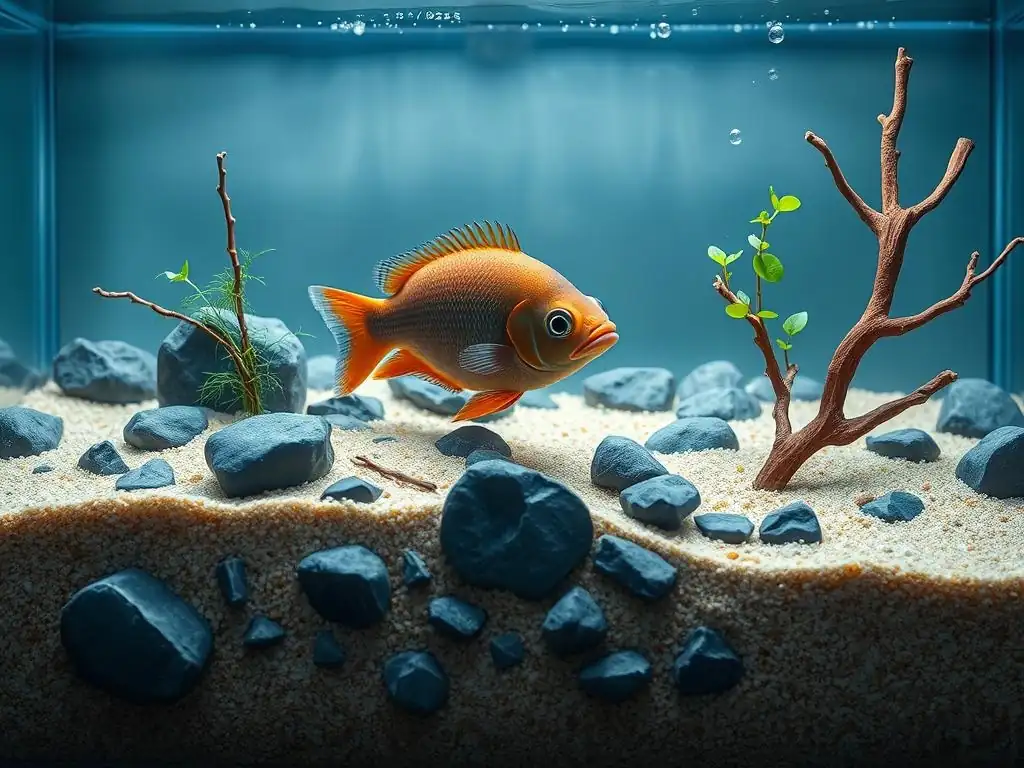
When selecting a substrate for an Oscar tank, fine gravel or sand is highly recommended. Oscars are natural diggers and enjoy sifting through the substrate, so a soft, non-abrasive material will prevent injuries to their sensitive mouths and fins. A substrate depth of 2-3 inches (5-7.5 cm) is typically adequate, allowing for light planting if desired and providing a comfortable base for the fish.
For decorations, prioritize sturdy, smooth, and heavy items that cannot be easily moved or dislodged by a boisterous Oscar. Large, smooth rocks, substantial pieces of driftwood, and robust artificial plants are excellent choices. Avoid any decorations with sharp edges or small openings where the fish could get stuck. The best Oscar fish care practices involve securing decorations to prevent them from falling and potentially harming the fish or damaging the tank.
Water Parameters for Oscar Fish
Maintaining precise and stable water parameters is paramount for successful Oscar fish care and preventing disease. Oscars thrive in a pH range of 6.0-7.5, which is slightly acidic to neutral, mirroring their natural Amazonian habitat. Water hardness (GH) should ideally be between 5-19 dGH (degrees of General Hardness). Crucially, ammonia and nitrite levels must always be at 0 ppm, as any measurable amount is highly toxic to fish.
Nitrate levels, the end product of the nitrogen cycle, should be kept below 20 ppm, and ideally below 10 ppm, through regular and diligent water changes. Using a high-quality liquid test kit to monitor these parameters weekly is indispensable. Consistent water quality reduces stress, supports immune function, and is the cornerstone of a healthy and thriving Oscar, making parameter management a vital part of any Oscar fish care guide.
Oscar Fish Diet and Nutrition
Understanding the Oscar Fish's Dietary Needs
Oscar fish are primarily carnivorous, with a strong predatory instinct in their natural habitat. In the wild, their diet consists largely of smaller fish, insects, crustaceans, and even some plant matter. This omnivorous tendency, leaning heavily towards protein, must be accurately reflected in their captive diet to ensure their optimal health, vibrant coloration, and robust growth.
A balanced, high-protein diet is non-negotiable for Oscar fish care. Insufficient or unbalanced nutrition can lead to stunted growth, faded colors, and a compromised immune system, making them susceptible to various diseases. Therefore, understanding and fulfilling their specific dietary needs is a critical component of providing the best possible care for these impressive cichlids.
Best Foods for Oscar Fish
The foundation of an Oscar's diet should be high-quality cichlid pellets or sticks, formulated specifically for large carnivorous cichlids. Brands like Hikari Cichlid Gold, New Life Spectrum Cichlid Formula, or Omega One Cichlid Pellets provide a balanced nutritional base. These staple foods should constitute the majority of their daily intake, ensuring they receive essential vitamins and minerals.
To supplement their primary diet and provide dietary enrichment, a variety of frozen foods can be offered several times a week. Excellent choices include frozen bloodworms, brine shrimp, krill, spirulina-enriched formulas, and chopped earthworms. While live feeder fish are often considered, they carry a high risk of introducing diseases and are generally nutritionally deficient; therefore, their use is not recommended for responsible Oscar fish care.
Feeding Schedule and Portion Control
The feeding schedule for Oscar fish varies slightly with age. Juvenile Oscars, which are rapidly growing, benefit from being fed 2-3 times a day. Each feeding should consist of a small portion that they can consume entirely within 2-3 minutes. This frequent feeding supports their rapid development and high metabolic rate.
As Oscars mature into adults, their feeding frequency can be reduced to once a day or even every other day. Portion control is paramount to Oscar fish care; overfeeding is a common mistake that leads to several problems. Uneaten food quickly decays, polluting the water and causing dangerous spikes in ammonia and nitrite, while consistent overfeeding can also lead to obesity and digestive issues in the fish.
Supplementing Your Oscar's Diet
While high-quality commercial foods are nutritionally complete, occasionally supplementing your Oscar's diet can further enhance their health and vibrancy. Liquid vitamin supplements, specifically formulated for aquarium fish, can be added to their food by soaking pellets or flakes, or directly to the tank water during water changes. This ensures they receive a full spectrum of essential nutrients, particularly beneficial if their diet lacks variety.
For enhancing their striking coloration, especially the reds and oranges, consider feeding foods rich in natural carotenoids like astaxanthin or spirulina. Many high-quality cichlid pellets are already fortified with these ingredients. A diverse diet and optimal water conditions are key factors in bringing out the most brilliant hues in your Oscar, showcasing the results of excellent Oscar fish care.
Oscar Fish Tank Mates
Oscar Fish Temperament
Oscar fish possess a unique and often captivating temperament, but it's crucial to understand their nature when considering tank mates. They are generally classified as semi-aggressive and highly territorial, especially as they mature. Their intelligence and individual personalities mean that some Oscars may be more docile, while others are significantly more assertive.
A defining characteristic of their temperament is their predatory nature. Anything small enough to fit into an Oscar's surprisingly large mouth is instinctively viewed as a food item. This predatory drive, combined with their territorial tendencies, makes careful and informed selection of tank mates an absolutely critical component of successful Oscar fish care.
Best Tank Mates for Oscar Fish
When selecting tank mates for Oscar fish, the primary criteria are size, temperament, and shared water parameter requirements. Ideal companions are similarly sized, robust fish that can hold their own without being overly aggressive themselves. Good examples include other large, hardy cichlids such as Green Terrors, Severums, or even a well-matched Jack Dempsey, though these pairings require careful observation.
Large, peaceful bottom dwellers can also be suitable. Common Plecos (though they can grow very large themselves), Sailfin Plecos, and various species of Synodontis catfish are often compatible, as they occupy a different part of the water column and are generally too large for an Oscar to bother significantly. Providing ample space and multiple hiding spots within the tank is essential to diffuse potential aggression and create a harmonious environment for comprehensive Oscar fish care.
Fish to Avoid
Given their predatory nature and potential for aggression, a wide range of fish are unsuitable as Oscar tank mates. Any small fish, such as Neon Tetras, Guppies, or Mollies, will inevitably be perceived as food and quickly consumed. Similarly, slow-moving fish or those with long, flowing fins, like Angelfish, Bettas, or fancy Guppies, are highly susceptible to fin nipping and stress-related issues.
It is also advisable to avoid overly aggressive or hyperactive fish that could constantly harass the Oscar or outcompete it for food. Highly specialized fish with different water parameter requirements, or those that are particularly delicate, should also be excluded. The goal of responsible Oscar fish care is to create a peaceful and safe environment for all inhabitants, which means avoiding incompatible species.
Introducing New Fish to the Oscar Tank
Introducing new fish to an established Oscar tank requires a methodical approach to minimize stress and potential conflict. First and foremost, all new fish should undergo a strict quarantine period of at least 2-4 weeks in a separate tank. This allows for observation for any signs of disease and treatment if necessary, preventing the introduction of pathogens to your main Oscar setup.
When the time comes to introduce them, rearrange the main tank's decor slightly. This disrupts existing territories and can reduce the Oscar's territorial aggression. Introducing the new tank mates simultaneously with the Oscar (if possible) or placing the Oscar in the tank last can also help. Monitor interactions closely for the first few days, and be prepared to separate fish if severe aggression or injury occurs. This careful introduction is a key step in successful Oscar fish care.
Oscar Fish Health and Disease Prevention
Recognizing Signs of Illness
Early detection of illness is crucial for successful treatment and maintaining the health of your Oscar fish. Vigilant observation of their daily behavior and appearance is the first line of defense in proactive Oscar fish care. Common signs of illness include lethargy or unusual inactivity, a noticeable loss of appetite or refusal to eat, clamped fins held close to the body, and erratic or unusual swimming patterns.
Other indicators can include labored or rapid breathing, visible spots, growths, or lesions on the body or fins, and faded or dull coloration. An Oscar rubbing or "flashing" against tank decorations or the substrate can indicate external parasites or irritation. Any deviation from their normal vigorous and interactive behavior warrants immediate investigation of water parameters and closer inspection of the fish itself.
Common Oscar Fish Diseases
Hole-in-the-Head Disease (HITH)
Hole-in-the-Head Disease (HITH) is a common ailment in large cichlids, including Oscars, characterized by the appearance of small pits or lesions on the head and along the lateral line. While the exact cause is complex, it is strongly associated with poor water quality, nutritional deficiencies (particularly a lack of vitamins and minerals), and chronic stress. Overuse of activated carbon, which can strip essential minerals from the water, is also suspected as a contributing factor.
Treatment for HITH primarily involves addressing the underlying environmental issues. This means immediate, large water changes to improve water quality, ensuring a balanced diet rich in vitamins (especially Vitamin C), and removing activated carbon from the filter if it's been used extensively. Medications containing metronidazole can be used in conjunction with environmental improvements to aid recovery, but prevention through optimal Oscar fish care is always the best approach.
Ich (White Spot Disease)
Ich, or White Spot Disease, is one of the most common and recognizable parasitic infections in freshwater aquariums. It is caused by the Ichthyophthirius multifiliis parasite and manifests as small, white spots resembling grains of salt scattered across the fish's body and fins. Ich is highly contagious and often triggered by sudden temperature fluctuations, poor water quality, or general stress.
Treatment for Ich typically involves gradually raising the tank temperature to 82-84°F (28-29°C) over 24 hours (if compatible with tank mates), adding aquarium salt at a concentration of 1 tablespoon per 5 gallons of water, and using over-the-counter Ich medications containing malachite green or formalin. Ensure excellent aeration during treatment, as higher temperatures reduce dissolved oxygen. Consistent and clean Oscar fish care is crucial for preventing outbreaks.
Fin Rot
Fin Rot is a bacterial infection that causes the fins of fish to appear frayed, ragged, or to disintegrate entirely. It often presents as a cloudy or opaque appearance on the fin edges, sometimes with reddish streaks. While caused by bacteria, Fin Rot is almost always a secondary infection, meaning it takes hold when a fish is already weakened by poor water quality, injury, or stress.
Treatment for Fin Rot begins with immediate and significant water changes (50% or more) to drastically improve water quality. This should be followed by the use of broad-spectrum antibacterial medications available at pet stores. Addressing the underlying cause – whether it's poor water quality, aggression from tank mates, or an injury – is essential for long-term recovery and preventing recurrence in effective Oscar fish care.
Preventing Oscar Fish Diseases
The most effective strategy for maintaining healthy Oscar fish is a proactive approach focused on disease prevention. This hinges on consistently providing excellent water quality through regular and substantial water changes, coupled with robust and well-maintained filtration. Maintaining stable water parameters (temperature, pH, ammonia, nitrite, nitrate) and avoiding sudden fluctuations is also critical to minimize stress.
Furthermore, a balanced and nutritious diet, as discussed earlier, significantly boosts their immune system. Minimizing stress by providing adequate tank size, compatible tank mates, and a stable environment further reduces susceptibility to illness. Finally, quarantining all new fish and live plants before introducing them to the main tank is an indispensable preventative measure in comprehensive Oscar fish care.
Quarantine Procedures for New Fish
Implementing a strict quarantine procedure for all new fish is arguably the single most important preventative measure against disease introduction in your main Oscar tank. A dedicated quarantine tank, typically 10-20 gallons (38-75 liters) with its own heater and filter, should be set up. This tank does not need elaborate decor but should provide basic shelter.
New fish should reside in the quarantine tank for a minimum of 2-4 weeks, during which they are observed daily for any signs of illness, unusual behavior, or parasites. Any symptoms that arise should be treated within the quarantine tank, preventing the potential spread of pathogens to your established Oscar fish population. This diligent practice is a cornerstone of responsible Oscar fish care.
Oscar Fish Breeding
Setting Up a Breeding Tank
Breeding Oscar fish in a home aquarium can be a challenging yet rewarding endeavor due to their large size and potential for aggression. A dedicated breeding tank of at least 100-150 gallons (378-570 liters) is highly recommended for a single breeding pair. The tank should feature large, flat, smooth surfaces such as slate tiles, large flat rocks, or even a ceramic plate, as these will serve as the preferred spawning sites.
Maintaining pristine water quality and robust filtration is crucial, though strong currents directly over the spawning site should be avoided as they can dislodge eggs. Water temperature should be maintained at the higher end of their preferred range, ideally between 78-82°F (26-28°C), and the pH should be slightly acidic to neutral, around 6.5-7.0, to encourage spawning.
Conditioning Oscar Fish for Breeding
To encourage Oscar fish to breed, a process known as conditioning is essential. This involves feeding the prospective breeding pair a varied, high-protein diet multiple times a day for several weeks. Include a generous amount of live or high-quality frozen foods such as earthworms, krill, bloodworms, and vitamin-enriched pellets to maximize their nutritional intake and stimulate reproductive readiness.
In addition to dietary conditioning, performing frequent, large water changes (30-50% daily or every other day) using slightly cooler water can help induce spawning. This mimics the influx of cooler rainwater during the wet season in their natural habitat, which often triggers breeding behavior. Consistent and optimal Oscar fish care during this period is vital for success.
Oscar Fish Spawning
Once conditioned, a breeding pair of Oscars will typically begin by meticulously cleaning a chosen flat surface, such as a large rock or slate. The female will then begin to lay hundreds of eggs, often in neat rows, followed closely by the male who fertilizes them. This spawning process can be lengthy, often lasting several hours, and results in a large clutch of eggs, sometimes numbering between 300 to 2,000.
Both parents exhibit strong parental care, aggressively guarding the eggs from any perceived threats. They will tirelessly fan the eggs with their fins, ensuring proper aeration and preventing the growth of fungus. Depending on the water temperature, the eggs typically hatch within 3-5 days, transitioning into the larval stage.
Caring for Oscar Fish Fry
After hatching, Oscar fry are initially very small and remain attached to their spawning site, absorbing nutrients from their yolk sac for the first few days. Once they become free-swimming, typically after 4-7 days, they require very fine, nutritious foods. Their first foods should be infusoria or newly hatched brine shrimp, which are small enough for them to consume.
As they grow, their diet can be gradually transitioned to finely crushed flakes and then to larger foods. Frequent, small feedings (3-5 times a day) are necessary to support their rapid growth. Maintaining impeccable water quality through small, frequent water changes is crucial for the fry's survival. While parents may continue to guard and even "mouth-brood" the fry for a short period, separating the fry into a dedicated grow-out tank is often necessary for higher survival rates due to the parents' eventual predatory instincts.
Oscar Fish Care: Advanced Tips and Tricks
Optimizing Water Changes
Beyond the basic recommendation, optimizing water changes is paramount for the long-term health of Oscar fish. For these large, messy eaters, a weekly water change of 30-50% is generally the minimum requirement. In heavily stocked tanks or those with very large Oscars, performing two water changes per week can significantly improve water quality and stability. Always use a gravel vacuum to thoroughly remove detritus and uneaten food from the substrate.
When performing water changes, ensure the new water is temperature-matched to the tank water to prevent thermal shock, and always add a high-quality dechlorinator or water conditioner to neutralize chlorine and chloramines. For large tanks, investing in a water change system like a Python no-spill cleaner can make the process much more efficient and less laborious, encouraging more frequent maintenance, which is key to superior Oscar fish care.
Effective Tank Maintenance Routines
Establishing a consistent and effective tank maintenance routine is crucial for the thriving of your Oscar fish. Daily checks should include observing your fish for any signs of illness or unusual behavior, verifying the heater and filter are functioning correctly, and ensuring the water temperature is stable. Weekly tasks involve testing water parameters (ammonia, nitrite, nitrate, pH), performing the recommended 30-50% water change, and wiping down the inside glass to prevent algae buildup.
On a monthly basis, perform a more thorough filter cleaning, rinsing filter media in old tank water (never tap water, which can kill beneficial bacteria) to preserve the bacterial colony. Replace mechanical media like filter floss as needed. A quarterly deep clean, involving more extensive substrate vacuuming and inspection of all equipment, further contributes to a healthy environment. This proactive routine minimizes problems and ensures consistent, high-quality Oscar fish care.
Enhancing Oscar Fish Coloration
The vibrant coloration of Oscar fish is a key indicator of their health and well-being, and several factors can enhance their hues. A diet rich in natural carotenoids, such as astaxanthin and spirulina, is the primary driver of intense reds and oranges. Many high-quality cichlid pellets are specifically formulated for color enhancement, and supplementing with foods like krill, which is naturally high in astaxanthin, can further boost their vibrancy.
Beyond diet, excellent water quality and minimal stress are fundamental. Fish that are stressed or living in poor conditions often exhibit faded or dull colors. Providing a stable environment with appropriate lighting (avoiding overly dim conditions) and compatible tank mates allows your Oscar to display its full, brilliant spectrum. Consistent and diligent Oscar fish care directly translates into a more colorful and visually appealing fish.
Dealing with Aggression
Despite careful planning, aggression can sometimes arise in an Oscar tank, even with seemingly compatible tank mates. This behavior is often triggered by limited space, territorial disputes, or the introduction of new fish. It's important to observe the patterns of aggression: is it constant harassment, or does it only occur during feeding or when a particular fish enters another's territory?
Strategies to manage aggression include increasing the overall tank size if possible, as insufficient space is a common cause. Adding more hiding spots, caves, and visual barriers (like tall pieces of driftwood or robust plants) can help break up sightlines and reduce direct confrontation. Ensuring all fish are well-fed and not competing for resources can also mitigate aggression. In severe cases where aggression leads to injury or chronic stress for the target fish, separating the aggressive Oscar or rehoming the target fish may be the only solution, a difficult but sometimes necessary aspect of Oscar fish care.
Troubleshooting Common Oscar Fish Problems
Cloudy Water
Cloudy water is a common issue in Oscar tanks and can indicate several underlying problems. The most frequent cause is a bacterial bloom, often seen in newly set up tanks ("new tank syndrome") or in established tanks due to overfeeding or insufficient filtration, leading to an overload of beneficial bacteria. It can also be caused by suspended particles from substrate disturbance or an algae bloom if the cloudiness is green.
To resolve cloudy water, first, test your water parameters for ammonia, nitrite, and nitrate; high levels of the first two point to a bacterial bloom. Perform large water changes (50-75%) immediately. Reduce feeding to prevent excess organic waste. Ensure your filtration is adequate and functioning properly, adding mechanical filtration like filter floss for clearer water. If it's a new tank, allow the nitrogen cycle to complete. Consistent Oscar fish care with regular maintenance prevents most cloudiness.
Oscar Fish Not Eating
An Oscar fish refusing to eat is a significant concern and usually a clear sign that something is amiss. Common causes include stress from poor water quality (high ammonia/nitrite, incorrect pH/temperature), a new environment (just introduced to the tank), incompatible tank mates, or the onset of illness. Sometimes, an Oscar might simply be having a temporary "hunger strike" if it's been overfed previously.
To address this, immediately test all water parameters and confirm the temperature is within the ideal range. Observe your Oscar closely for any other signs of illness (spots, clamped fins, labored breathing). Offer a variety of foods to tempt its appetite. If water parameters are good and no visible signs of illness are present, a temporary fast (1-2 days) might reset its appetite. If the problem persists, especially with other symptoms, consider treatment for internal parasites or bacterial infections, ensuring it aligns with comprehensive Oscar fish care.
Aggressive Behavior Towards Tank Mates
Aggressive behavior in Oscar fish towards their tank mates is a common challenge, stemming from their territorial and predatory instincts. This can manifest as fin nipping, chasing, or even direct attacks. It's often triggered by insufficient tank size, which leads to cramped conditions and heightened territorial disputes, or the introduction of new fish into an established pecking order.
Solutions involve ensuring the tank is adequately sized for all inhabitants (a minimum of 125 gallons for multiple Oscars). Adding more visual breaks, such as large pieces of driftwood or tall, sturdy artificial plants, can help to disrupt direct lines of sight and create more perceived territories. Rearranging the decor can also temporarily disrupt established territories.
Ensuring all fish are well-fed and not competing for food can help. If aggression continues to cause injury or chronic stress to other fish, the most responsible action in Oscar fish care might be to separate the aggressive Oscar or rehome the target fish.
Algae Growth
Algae growth in an Oscar tank, while not directly harmful to the fish, can be unsightly and indicate an imbalance in the aquarium ecosystem. The most common causes are excess nutrients in the water (primarily high nitrates and phosphates) and too much light exposure, especially direct sunlight.
To combat algae, first, address the root causes. Reduce the duration of your aquarium lighting to 8-10 hours per day. Perform more frequent and larger water changes to lower nitrate and phosphate levels. Reduce feeding to prevent excess nutrients from uneaten food.
While Oscars tend to uproot live plants, adding robust, low-light plants (if they can be secured) can help outcompete algae for nutrients. As a last resort, algaecides can be used, but they only treat the symptom, not the underlying cause. Consistent and proper Oscar fish care through nutrient control and light management is the most effective long-term solution.
The Joy of Oscar Fish Keeping
Oscar Fish Personality
The true joy of Oscar fish care lies in experiencing their truly unique and engaging personalities. Unlike many other aquarium fish, Oscars are renowned for their intelligence, curiosity, and highly interactive nature. They are often described as having "dog-like" qualities, recognizing their keepers, following movements outside the tank, and even learning to respond to cues or be hand-fed.
Each Oscar possesses its own distinct character, ranging from playful and boisterous to more reserved and observant. Their ability to solve simple problems, their keen awareness of their surroundings, and their often dramatic reactions to new stimuli make them endlessly fascinating to watch. This deep engagement transforms them from mere pets into interactive companions, making the effort involved in their care profoundly rewarding.
The Bond Between Oscar Fish and Their Keepers
One of the most remarkable aspects of Oscar fish care is the strong, almost palpable bond that can develop between these intelligent cichlids and their dedicated keepers. Oscars are known to greet their owners at the front of the tank, follow their movements, and even exhibit excitement when they approach. They can learn to associate certain actions or sounds with feeding time, creating a unique form of communication.
This capacity for interaction and recognition goes beyond typical fish behavior, fostering a genuine connection. Many aquarists find immense satisfaction in nurturing this bond, as it makes the daily routines of feeding and maintenance feel less like chores and more like meaningful interactions. It's a testament to their intelligence and the depth of their personalities, solidifying their place as beloved aquatic companions.
Contributing to Oscar Fish Conservation
While Oscar fish are widely bred in captivity and are not currently considered an endangered species, responsible Oscar fish care still plays a vital role in broader conservation efforts within the aquarium hobby. By providing exemplary care, aquarists contribute to the overall health and sustainability of the captive population, reducing reliance on wild-caught specimens and minimizing any potential ecological impact.
Supporting reputable breeders who prioritize the health and genetic diversity of their fish ensures ethical practices. Furthermore, understanding the specific needs of these powerful cichlids and committing to long-term care helps prevent their abandonment or release into non-native ecosystems, where they could become invasive. Thus, dedicated Oscar fish care not only benefits the individual fish but also contributes to the responsible stewardship of aquatic life.
Frequently Asked Questions
What are the essential tank requirements for keeping Oscar fish?
Oscar fish need a large tank, ideally 75 gallons or more for a single adult. They also require a powerful filtration system to manage their bioload.
What is the ideal diet for Oscar fish to ensure their health and growth?
Oscars are omnivores and thrive on a varied diet. Offer them high-quality cichlid pellets as a staple, supplemented with frozen foods like bloodworms and occasional live food.
How often should I perform water changes in an Oscar fish tank?
Due to their size and messy eating habits, Oscars require frequent water changes. Aim for 25-50% water changes weekly to maintain optimal water quality.
What are some common diseases that affect Oscar fish, and how can I prevent them?
Common diseases include Hole-in-the-Head disease and Ich. Prevention involves maintaining pristine water quality and avoiding sudden temperature fluctuations.
Can Oscar fish be kept with other fish, and if so, which species are suitable tank mates?
Oscars can be aggressive, so choose tank mates carefully. Large, robust fish like Plecos or Silver Dollars can be suitable, but avoid small or docile species.
Final Reflection: Nurturing Giants, Cultivating Connection
The journey of understanding and caring for Oscar fish, as detailed in this guide, transcends mere pet ownership; it's about embracing the responsibility of nurturing a magnificent creature. The enduring popularity of Oscars speaks volumes about our fascination with the wild and our desire to connect with nature, even within the confines of our homes. This guide, hopefully, provides the tools and knowledge to ensure that connection is a positive and enriching one, both for the fish and the keeper.
This exploration into Oscar fish care has highlighted not only the practical aspects of their upkeep but also the deeper connection we forge with these intelligent and charismatic animals. Witnessing an Oscar thrive under your care is a uniquely rewarding experience, a testament to the power of dedication and understanding. The greatness of a nation and its moral progress can be judged by the way its animals are treated.
- Mahatma Gandhi. This quote, while often applied to broader animal welfare, resonates deeply when considering the individual care we provide to creatures like the Oscar, demanding respect and responsible stewardship.
Now, armed with the knowledge within this guide, I encourage you to reflect on your own relationship with the natural world. Consider the impact you can have on the well-being of these remarkable creatures, and strive to provide them with the best possible life. Let this guide be more than just a set of instructions; let it be a catalyst for a deeper appreciation of the beauty and complexity of the Oscar fish, and a commitment to responsible and compassionate care.
Ignite Your Oscar's Potential!
Thank you for diving into the world of Oscar fish care! We hope this guide has empowered you with the knowledge to create a thriving environment for your aquatic companion. Now, let's translate knowledge into action.
Here's how you can take the next steps:
- Commit to Implementing One Key Change: Choose one specific adjustment from the guide – whether it's upgrading your filtration system, adjusting the tank temperature, or enriching their diet – and make it happen this week.
- Explore the Depths of Oscar Behavior: Spend some quality time observing your Oscar's unique personality and interaction in their environment. Share your observations with other aquarists.
- Share Your Oscar Story: Post a photo of your Oscar on social media with a caption detailing your favorite thing about them and tag Aquarium Mastery to inspire others.
What's the first thing you'll change to create a better life for your Oscar, and why?