
Beyond the Veil: Exploring the Majestic Veiltail Betta

Welcome to Aquarium Mastery!
Ever been captivated by the flowing fins and vibrant colors of a Veiltail Betta? Beyond their beauty lies a responsibility – and a fascinating journey into understanding their specific needs. This article dives deep into essential Veiltail Betta care tips, revealing secrets to keeping these majestic fish thriving in your aquarium. Ready to unlock the key to a happy, healthy Veiltail? Let's explore!
- Caring for the Veiltail Betta: A Comprehensive Guide
- Understanding the Veiltail Betta: History and Characteristics
- Creating the Ideal Veiltail Betta Habitat: Aquarium Setup and Maintenance
- Veiltail Betta Nutrition: Feeding for Health and Longevity
- Selecting Compatible Tank Mates: Understanding Betta Temperament
- Health and Disease Prevention: Recognizing and Addressing Common Ailments
- Veiltail Betta Fin Care: Maintaining Fin Health and Preventing Damage
- Common Veiltail Betta Problems and Solutions: Troubleshooting Guide
- Conclusion: Ensuring a Happy and Healthy Life for Your Veiltail Betta
-
Frequently Asked Questions
- What are the key differences between Veiltail bettas and other betta types?
- What size tank is recommended for a Veiltail betta?
- What are some common health issues that Veiltail bettas are prone to?
- What kind of diet is best for a Veiltail betta?
- How often should I perform water changes in a Veiltail betta tank?
- Final Reflection: Appreciating the Grace and Responsibility
- Unveil Your Veiltail's Vibrant Potential!
Caring for the Veiltail Betta: A Comprehensive Guide
Understanding the Veiltail Betta: History and Characteristics
Origins of the Veiltail Betta: Selective Breeding and Popularity
The Veiltail Betta ( Betta splendens ) traces its origins back to the rice paddies and slow-moving streams of Southeast Asia, particularly Thailand and Cambodia. In their natural habitat, these fish exhibit relatively short fins and duller colors compared to their domesticated counterparts. The practice of selective breeding, initially driven by the desire for aggressive fighting fish in their native lands, gradually shifted towards enhancing their aesthetic qualities, leading to the diverse array of fin types and vibrant colors we see today.
The Veiltail fin type emerged as one of the earliest and most widely recognized results of this selective breeding process. Its genetic simplicity made it relatively easy to propagate, quickly establishing it as the most common and accessible betta variety for aquarists worldwide. This widespread availability and distinctive appearance played a significant role in popularizing betta keeping, making the Veiltail a gateway species for countless enthusiasts venturing into the world of tropical fish care, and setting the foundation for essential Veiltail betta care tips.
Distinguishing Features of the Veiltail: Fin Shape and Color Variations
The defining characteristic of the Veiltail Betta is its long, flowing caudal (tail) fin, which drapes elegantly downwards, resembling a bride's veil. This distinctive fin shape is typically asymmetrical, with the top ray often extending further than the bottom, distinguishing it from other symmetrical fin types like the Halfmoon or Delta tail. The dorsal and anal fins are also elongated, complementing the caudal fin's graceful flow and contributing to the betta's overall majestic appearance.
While the "Veiltail" moniker refers specifically to the fin shape, these bettas exhibit an astounding array of color variations. They can be found in solid hues of vibrant red, sapphire blue, emerald green, and royal purple. Furthermore, complex patterns like marble, koi, and butterfly are also common, adding layers of visual interest. This combination of an iconic fin shape and a kaleidoscope of colors makes the Veiltail Betta a visually stunning addition to any freshwater aquarium, necessitating specific Veiltail betta care tips to maintain their beauty.
Creating the Ideal Veiltail Betta Habitat: Aquarium Setup and Maintenance
Tank Size and Essentials: Providing Adequate Space and Filtration
Contrary to popular belief, Veiltail Bettas thrive in tanks larger than the small bowls often marketed for them. A minimum tank size of 5 gallons (approximately 19 liters) is highly recommended for a single Veiltail betta. This provides sufficient swimming space, helps maintain stable water parameters, and minimizes the buildup of harmful waste products. Larger tanks, such as 10 gallons (38 liters) or more, offer even greater stability and more opportunities for enriching their environment.
Essential equipment for a Veiltail betta habitat includes a low-flow filter, such as a sponge filter or a baffled hang-on-back filter, to ensure gentle water circulation that won't stress their delicate fins. A heater is crucial to maintain a consistent water temperature, as bettas are tropical fish. An optimal range of 78-82°F (25.5-27.8°C) is ideal for their metabolism and immune system. A reliable thermometer should also be used to monitor the temperature continuously, forming a core part of effective Veiltail betta care tips.
Maintaining Optimal Water Quality: Temperature, pH, and Water Changes
Maintaining pristine water quality is paramount for the health and longevity of your Veiltail Betta. Beyond temperature, the ideal pH range for these fish is generally between 6.5 and 7.5, with neutral 7.0 often being a good target. Regular testing for ammonia, nitrite, and nitrate levels is essential, as even small fluctuations can cause significant stress and lead to illness. Ammonia and nitrite should always be at 0 ppm, while nitrates should ideally be kept below 20 ppm.
Consistent partial water changes are a cornerstone of proper Veiltail betta care. For a 5-10 gallon tank, a 25-30% weekly water change is recommended. For larger, lightly stocked tanks, bi-weekly changes might suffice, but always test parameters to confirm. Always use a high-quality dechlorinator or water conditioner to remove chlorine and chloramines from tap water, and ensure the new water matches the tank's temperature to prevent shock. These diligent practices are vital Veiltail betta care tips for preventing disease.
Decor and Substrate: Creating a Natural and Stress-Free Environment
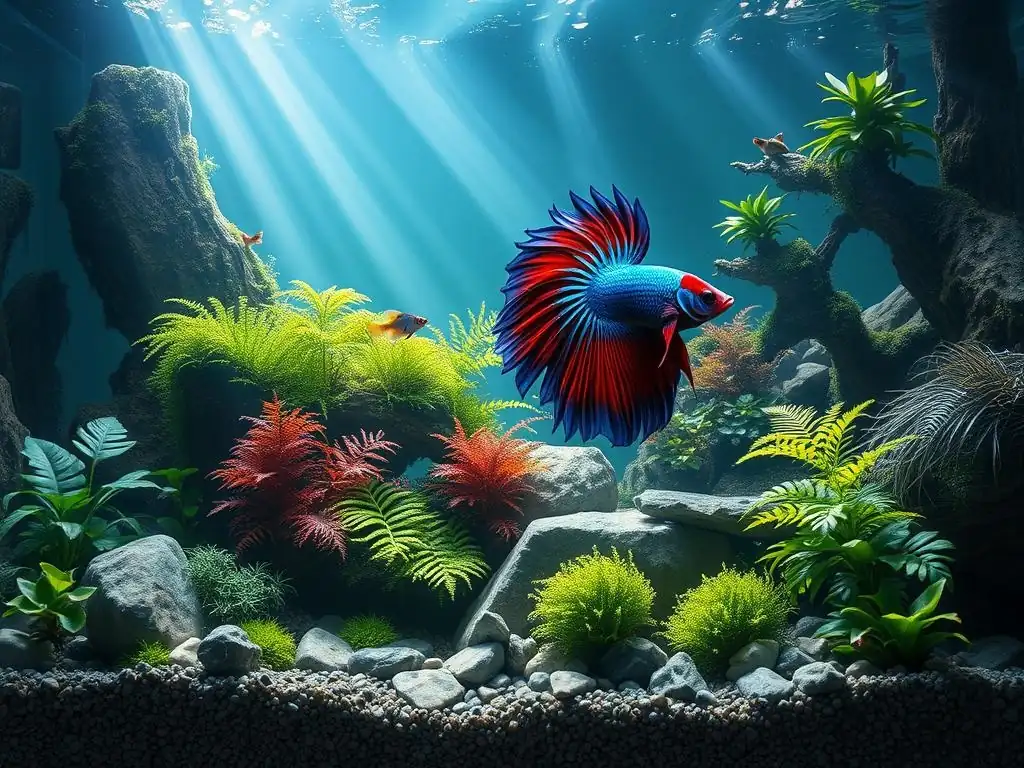
The choice of substrate and decor significantly impacts a Veiltail Betta's well-being. A fine gravel or sand substrate is preferable, as it is gentle on their delicate fins and easier to keep clean. Avoid coarse or sharp-edged gravel that could snag or tear their flowing fins. Darker substrates can also help enhance their vibrant colors and reduce reflections that might stress the fish.
Providing ample hiding spots and resting places is crucial for a stress-free environment. Live plants like Anubias, Java Fern, and Amazon Sword are excellent choices, as they not only enhance water quality by absorbing nitrates but also offer natural shelter and soft resting places. If opting for artificial plants, ensure they are made of silk, not plastic, to prevent fin damage. Smooth rocks and driftwood can also be incorporated, creating a naturalistic and enriching habitat that supports optimal Veiltail betta care.
Veiltail Betta Nutrition: Feeding for Health and Longevity
Recommended Foods: Pellets, Live, and Frozen Options
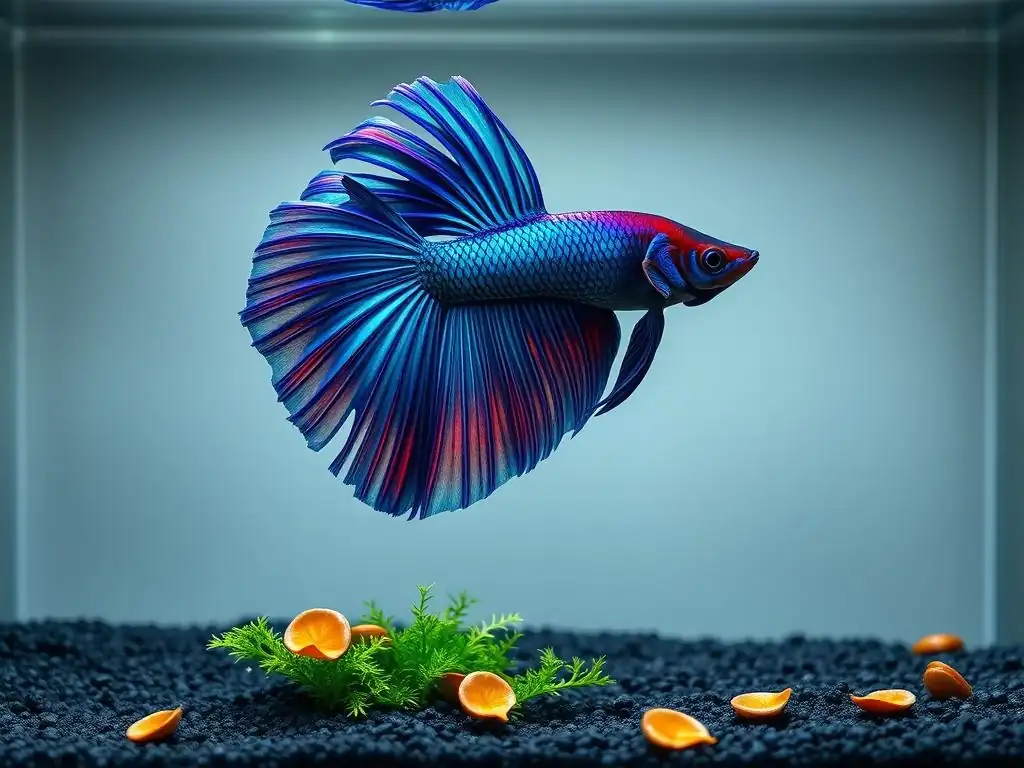
A balanced and varied diet is fundamental to the health and vibrant coloration of your Veiltail Betta. The primary component of their diet should be high-quality betta pellets or flakes specifically formulated for carnivorous fish. Look for brands that list fish meal, shrimp meal, or other aquatic proteins as the first ingredients, indicating a high protein content crucial for their dietary needs. Popular choices include Hikari Betta Bio-Gold or New Life Spectrum Betta Formula.
To provide a more complete nutritional profile and mimic their natural diet, supplement their staple food with live or frozen options 2-3 times per week. Excellent choices include bloodworms, brine shrimp, and daphnia. These protein-rich foods offer essential vitamins and minerals that promote strong immune systems and vibrant colors. Always thaw frozen foods before feeding and ensure live foods are from a reputable, disease-free source. Incorporating these diverse options is a key aspect of comprehensive Veiltail betta care tips.
Feeding Frequency and Portion Control: Avoiding Overfeeding and Bloat
Proper feeding frequency and strict portion control are vital to prevent digestive issues and maintain water quality. Veiltail Bettas should be fed 1-2 times per day. The general rule of thumb is to offer only what your betta can consume within 2-3 minutes. This typically translates to about 2-4 pellets or a small pinch of flakes per feeding, depending on the food's size and density.
Overfeeding is a common mistake that can lead to several problems, including bloat, constipation, and a rapid decline in water quality due to uneaten food decaying. Bloat, characterized by a swollen abdomen, is often a sign of digestive distress. To aid digestion and prevent constipation, it's beneficial to include a "fasting day" once a week. Occasionally offering blanched, deshelled pea or daphnia can also help alleviate constipation. Mastering these aspects of feeding is essential for effective Veiltail betta care.
Selecting Compatible Tank Mates: Understanding Betta Temperament
Suitable Tank Companions: Species that Coexist Peacefully
While Veiltail Bettas are known for their territorial and sometimes aggressive nature, particularly males, it is possible for some individuals to coexist peacefully with certain non-aggressive species in appropriately sized tanks (typically 10 gallons or larger). The key is to select tank mates that are not fin-nippers, are not brightly colored or long-finned (which could be perceived as rivals), and prefer different areas of the tank.
Suitable tank companions include small, peaceful schooling fish like Neon Tetras or Ember Tetras, provided they are kept in a school of at least six to disperse aggression. Bottom-dwellers such as Otocinclus catfish or dwarf Corydoras catfish are also good choices, as they occupy a different water column. Snails like Nerite or Mystery Snails can also be excellent additions, as they are slow-moving and pose no threat. Always observe interactions closely, as individual betta temperaments can vary, making careful selection a key Veiltail betta care tip.
Avoiding Aggression: Recognizing Signs of Stress and Preventing Fin Nipping
Recognizing signs of stress and aggression is crucial when introducing tank mates to your Veiltail Betta. Signs include flaring, chasing, nipping at other fish's fins, excessive hiding, or a dulling of the betta's vibrant colors. If these behaviors are observed, it indicates that the current tank mate situation is causing stress, and adjustments are necessary.
To prevent aggression and fin nipping, ensure the tank provides ample space and plenty of hiding spots and visual breaks, allowing all inhabitants to establish their own territories. Avoid introducing other bettas, especially male bettas, to the same tank. Also, steer clear of known fin-nippers like Tiger Barbs or aggressive cichlids. If aggression persists despite these measures, it may be necessary to separate the fish into individual tanks to ensure the well-being of all inhabitants, which is a critical aspect of Veiltail betta care.
Health and Disease Prevention: Recognizing and Addressing Common Ailments
Common Betta Diseases: Identifying and Treating Fin Rot, Ich, and Velvet
Veiltail Bettas, like all fish, can be susceptible to various diseases, often triggered by poor water quality or stress. Fin Rot is a common bacterial infection characterized by ragged, deteriorating fins, sometimes with white or red edges. Treatment typically involves improving water quality through frequent water changes and using broad-spectrum antibiotics or antibacterial medications like Furan-2.
Ich (Ichthyophthirius multifiliis), also known as White Spot Disease, is a parasitic infection appearing as small, white, salt-like spots scattered across the fish's body and fins. It often causes itching and lethargy. Treatment involves slowly raising the water temperature to 82-84°F (28-29°C) and using Ich-specific medications (e.g., API Super Ick Cure). Velvet (Oodinium), another parasitic infection, presents as a dusty, yellowish-brown coating, often with rapid breathing and clamped fins. It's treated with copper-based medications or specific velvet treatments, often combined with darkening the tank. Prompt identification and treatment are crucial Veiltail betta care tips.
Preventing Illness: Maintaining Water Quality and Observing Behavior
The most effective method for preventing illness in your Veiltail Betta is maintaining consistently pristine water quality. This involves regular partial water changes, proper filtration, and keeping the water temperature stable within their optimal range of 78-82°F (25.5-27.8°C). Overfeeding and overstocking the tank are common pitfalls that quickly degrade water quality, stressing the fish and making them more vulnerable to disease.
Daily observation of your betta's behavior is equally important for early detection of potential health issues. Pay attention to changes in appetite, swimming patterns (e.g., listlessness, erratic movements), fin condition (e.g., clamping, tearing), color vibrancy, and any unusual spots, growths, or swelling. A healthy Veiltail Betta is active, curious, and displays vibrant coloration. Early intervention upon noticing any subtle changes can significantly improve the success rate of treating ailments, making keen observation a vital part of Veiltail betta care tips.
Recognizing and Addressing Swim Bladder Disorder
Swim Bladder Disorder (SBD) is a common ailment in Veiltail Bettas that affects their ability to control buoyancy, leading them to float uncontrollably, sink to the bottom, or swim on their side. This condition is most frequently caused by digestive issues such as overfeeding, constipation, or a diet lacking in fiber. In some cases, it can also be attributed to bacterial infections or physical injury to the swim bladder.
To address SBD, the first step is to fast the betta for 2-3 days to allow its digestive system to clear. After fasting, offer a small piece of blanched, deshelled pea or a few daphnia, both of which act as natural laxatives and can help clear blockages. Ensure the water quality is excellent during this time.
If the issue persists or appears to be caused by an infection, broad-spectrum antibiotics may be necessary. For severe cases, temporarily lowering the water level in the tank can reduce stress on the fish. These targeted Veiltail betta care tips can often resolve SBD.
Veiltail Betta Fin Care: Maintaining Fin Health and Preventing Damage
Causes of Fin Damage: Nipping, Poor Water Quality, and Rough Decor
The long, flowing fins of Veiltail Bettas, while beautiful, are particularly susceptible to damage. One common cause is fin nipping by incompatible tank mates, such as certain types of tetras, barbs, or even other bettas if housed improperly. These nipping incidents can lead to torn or ragged fins, which then become vulnerable to secondary bacterial infections.
Poor water quality is another significant contributor to fin damage, often leading to conditions like fin rot. High levels of ammonia, nitrite, or nitrate, or inconsistent water parameters, stress the fish and compromise their immune system, allowing bacteria to attack the delicate fin tissue. Lastly, rough or sharp decor, including plastic plants with pointed edges or abrasive rocks, can physically snag and tear a Veiltail Betta's fins as they swim or rest, underscoring the importance of selecting safe tank decorations as part of comprehensive Veiltail betta care tips.
Promoting Fin Regeneration: Maintaining Water Quality and Using Medications
Promoting fin regeneration in a Veiltail Betta primarily hinges on maintaining impeccably clean and stable water conditions. Frequent, small water changes (e.g., 25% every other day) with dechlorinated, temperature-matched water are crucial to reduce the bacterial load in the tank and provide an optimal environment for healing. This minimizes the risk of secondary infections that can hinder recovery.
If the fin damage is due to a bacterial infection like fin rot, treatment with mild aquarium salt (1-2 teaspoons per gallon) or a broad-spectrum antibiotic designed for fin rot (e.g., Furan-2) may be necessary, following product instructions carefully. Concurrently, ensure the tank environment is free of sharp objects and strong currents that could impede healing or cause further damage. A nutritious diet also plays a supportive role in providing the energy and nutrients needed for tissue repair, completing these vital Veiltail betta care tips for fin health.
Common Veiltail Betta Problems and Solutions: Troubleshooting Guide
Problem: Loss of Color - Causes and Remedies
Loss of vibrant coloration in a Veiltail Betta is a common indicator of underlying issues, with stress being the most frequent cause. Stress can stem from a variety of factors, including poor water quality (elevated ammonia, nitrite, or nitrate levels), incorrect or fluctuating water temperature, an inadequate tank size, bullying by tank mates, or a general lack of hiding spots and enrichment in their environment. In some cases, a gradual fading of color can simply be a sign of aging.
To remedy color loss, it is crucial to identify and address the root cause. Begin by performing a thorough water test and correcting any parameter imbalances through immediate partial water changes. Ensure the tank temperature is stable and within the optimal range of 78-82°F (25.5-27.8°C). Provide a sufficiently sized tank with plenty of safe decor and hiding places to reduce stress. If tank mates are causing stress, consider separating them. A high-quality, varied diet can also significantly contribute to restoring and maintaining vibrant coloration, a key aspect of effective Veiltail betta care tips.
Problem: Lethargy and Inactivity - Identifying Potential Issues
Lethargy and unusual inactivity in a Veiltail Betta can be concerning signs, pointing to various potential health or environmental problems. Common causes include poor water quality, particularly the presence of ammonia or nitrite poisoning, which are highly toxic to fish. Water that is too cold can also significantly slow down a betta's metabolism, leading to listlessness. Additionally, various diseases such as Ich, Velvet, or internal parasites can manifest as lethargy, often accompanied by other symptoms.
When faced with a lethargic betta, the first step is always to test the water parameters immediately to rule out or address water quality issues. If the temperature is too low, gradually increase it to the optimal range.
Carefully observe your betta for other symptoms like spots, clamped fins, labored breathing, or swelling, which would help pinpoint a specific disease requiring targeted treatment. If all parameters are perfect and no apparent disease is present, ensure your betta has comfortable resting spots near the surface, such as betta hammocks or large plant leaves, as these are important elements of comprehensive Veiltail betta care.
Problem: Bullying and Aggression - Solutions for a Peaceful Tank
Veiltail Bettas, particularly males, are inherently territorial, and bullying or aggression towards tank mates is a common problem. This behavior is often exacerbated in tanks that are too small, overcrowded, or lack sufficient hiding places. Incompatible tank mate choices, such as other bettas, fish with long flowing fins, or species that are naturally aggressive or fin-nippers, can also trigger aggression.
The most effective solution for persistent bullying is to remove either the aggressive betta or the bullied fish into a separate, dedicated tank. If attempting a community tank, ensure it is generously sized (e.g., 10 gallons or more for a betta community) with ample hiding spots, visual barriers, and plants to break up lines of sight. Avoid overcrowding, as this increases stress and competition.
Carefully re-evaluate tank mate choices, sticking to peaceful, short-finned species that occupy different areas of the tank. Sometimes, simply rearranging the tank decor can disrupt established territories and reduce aggression, contributing to overall successful Veiltail betta care.
Conclusion: Ensuring a Happy and Healthy Life for Your Veiltail Betta
Frequently Asked Questions
What are the key differences between Veiltail bettas and other betta types?
Veiltail bettas are primarily distinguished by their long, flowing caudal (tail) fin, which droops downwards. Other betta types have different tail shapes, such as the crowntail with its spiky rays or the halfmoon with its 180-degree tail spread.
What size tank is recommended for a Veiltail betta?
While bettas can survive in small containers, a minimum of 5 gallons is recommended for a Veiltail betta to thrive. Larger tanks provide more space for swimming and enrichment, promoting better health and behavior.
What are some common health issues that Veiltail bettas are prone to?
Due to their long fins, Veiltail bettas are susceptible to fin rot, caused by poor water quality. They can also experience swim bladder disorder, which affects their ability to swim properly. Maintaining pristine water conditions is crucial.
What kind of diet is best for a Veiltail betta?
A high-quality betta pellet food should be the staple of their diet. Supplement with occasional treats like bloodworms or daphnia. Avoid overfeeding, as bettas are prone to obesity.
How often should I perform water changes in a Veiltail betta tank?
Regular partial water changes of 25-50% should be performed weekly. This helps remove nitrates and maintain optimal water parameters for your Veiltail betta, preventing the build-up of harmful substances.
Final Reflection: Appreciating the Grace and Responsibility
The journey into the world of the Veiltail Betta, as we've explored, reveals not just a beautiful fish, but a commitment to understanding and providing optimal care. This commitment to responsible pet ownership is more crucial than ever, as the popularity of these magnificent creatures continues to rise, demanding a deeper understanding of their specific needs and a move away from outdated, often harmful, care practices.
The Veiltail Betta, with its flowing fins and vibrant colors, has captivated aquarists for generations. This enduring appeal underscores the importance of continuous learning and adaptation in our approach to their welfare. We must remember that their beauty comes with a responsibility to provide them with a thriving environment. The greatness of a nation and its moral progress can be judged by the way its animals are treated.
- Mahatma Gandhi. This quote resonates deeply when considering the ethical implications of keeping any animal, including the Veiltail Betta.
Now, as you close this article, I invite you to reflect on your own role in the lives of these captivating creatures. Consider how you can implement these Veiltail betta care tips to not only enhance their well-being but also contribute to a more compassionate and informed community of aquarists. Let's strive to be guardians, not just owners, ensuring that the majestic Veiltail Betta continues to thrive for generations to come.
Unveil Your Veiltail's Vibrant Potential!
Thank you for diving into the mesmerizing world of Veiltail Bettas! We hope this article has illuminated the beauty and unique care requirements of these finned jewels. Now, let's translate that knowledge into action and truly enhance your Betta's life.
Here are a few ways to continue your journey:
- Prioritize a Varied Diet: Introduce live or frozen foods like daphnia or brine shrimp to supplement your Betta's pellet-based diet. A happy Betta is a well-fed Betta!
- Explore different tank decorations to enrich your Betta's environment. Add hiding places, plants, and smooth rocks to create a stimulating underwater landscape.
- Share your newfound Veiltail expertise! Help other Betta enthusiasts by contributing to online forums or social media groups.
What small change will you make today to improve your Veiltail's habitat or care routine?