
The Angelfish & Discus First Aid Kit: Essential Medications & Supplies

Welcome to Aquarium Mastery!
Ever wondered how to ensure your Angelfish and Discus thrive, even when faced with common aquarium ailments? Dive in! We're unlocking the secrets to building the perfect Angelfish & Discus First Aid Kit, guiding you through essential medications and proper dosages. Curious about navigating the complexities of Angelfish discus medication dosage? Let's get started and keep your finned friends happy and healthy!
- Angelfish & Discus First Aid Kit: Essential Medications & Supplies
- Understanding Angelfish and Discus Health Challenges
-
Building Your Angelfish & Discus Medication Arsenal: Essential Products
- Broad-Spectrum Antibiotics for Angelfish and Discus
- Anti-Parasitic Medications: Treating Internal and External Parasites in Angelfish & Discus
- Anti-Fungal Treatments for Angelfish and Discus: Combatting Fungal Infections
- Medications for Treating Ich (White Spot Disease) in Angelfish and Discus
- Ammonia Detoxifiers: Protecting Angelfish and Discus from Ammonia Spikes
- pH Buffers: Maintaining Optimal Water Chemistry for Angelfish and Discus Health
-
Essential Supplies for Angelfish & Discus Treatment
- Quarantine Tank: Isolating Sick Angelfish and Discus
- Air Pump and Air Stone: Ensuring Oxygenation During Treatment
- Heater and Thermometer: Maintaining Stable Water Temperature for Angelfish & Discus
- Medications Dosing Tools: Syringes, Pipettes and Measuring Cups
- Water Testing Kit: Monitoring Water Parameters During Treatment
- Angelfish Discus Medication Dosage: Guidelines and Considerations
- Administering Medications to Angelfish and Discus: Best Practices
- Preventing Angelfish and Discus Diseases: Proactive Measures
- Troubleshooting Common Angelfish and Discus Medication Issues
-
Frequently Asked Questions
- What medications are essential for a first aid kit specifically for Angelfish and Discus aquariums?
- How do Angelfish and Discus differ in their sensitivity to medications, and how does this affect dosage?
- Where can I find reliable information on calculating the correct Angelfish Discus medication dosage?
- What are some common signs that my Angelfish or Discus might need medication?
- Are there any preventative measures I can take to reduce the need for medication in my Angelfish and Discus aquarium?
- Final Reflection: Ensuring Aquatic Harmony
- Equip Yourself: Be Ready for Anything!
Angelfish & Discus First Aid Kit: Essential Medications & Supplies
Understanding Angelfish and Discus Health Challenges
Common Angelfish Diseases and Ailments Requiring Medication
Angelfish, while generally hardy, are susceptible to a range of diseases, particularly when stressed by poor water quality or improper tank conditions. Bacterial infections are among the most prevalent, often manifesting as fin rot, bacterial gill disease, or body slime. For instance, Aeromonas and Pseudomonas bacteria can cause fin rot, leading to frayed or disintegrating fins, and if left untreated, can progress to systemic infections. It's estimated that up to 40% of fin rot cases in community tanks are linked to water quality issues.
Beyond bacterial issues, parasitic infections like Ich (Ichthyophthirius multifiliis) and Velvet (Oodinium) are common, especially after introducing new, unquarantined fish. Fungal infections, often appearing as white, cotton-like growths ( Saprolegnia), are typically secondary to an injury or a primary bacterial infection. These ailments underscore the need for a targeted Angelfish discus medication dosage strategy, as early intervention is crucial for successful recovery and preventing widespread outbreaks in the aquarium.
Discus are renowned for their beauty but are also highly sensitive and prone to specific diseases due to their delicate nature and specific water parameter requirements. Internal parasites, particularly flagellates like Hexamita, are a significant concern, often leading to "Hole-in-the-Head" disease, characterized by pitting lesions around the head and lateral line, and white, stringy feces. This condition can affect up to 60% of discus populations in suboptimal conditions.
Bacterial diseases such as Columnaris (often mistaken for fungus due to its cotton-like appearance around the mouth or body) and Dropsy (characterized by bloating and pineconing scales due to internal organ failure) are also common and often fatal if not treated promptly. Discus are also susceptible to viral issues like "Discus Plague," which can wipe out an entire tank rapidly. Given their high value and sensitivity, precise Angelfish discus medication dosage is vital when addressing these complex health challenges.
Why a Dedicated Angelfish & Discus First Aid Kit is Crucial
The sensitive nature of angelfish and especially discus means that diseases can progress rapidly, turning a minor issue into a life-threatening crisis within hours. A dedicated first aid kit allows for immediate intervention, which is often the difference between recovery and loss. This immediate access prevents the stress and delay of purchasing medications when a fish is already critically ill, potentially saving valuable and cherished specimens, which can cost upwards of $50-$200 per fish for mature discus.
Furthermore, having a specific Angelfish discus medication dosage guide and the necessary supplies on hand reduces the risk of disease spreading to other tank inhabitants. Treating sick fish in a separate quarantine tank, using precise dosages, protects the main display tank's ecosystem and its healthy residents from exposure to pathogens and medications. This proactive approach is more cost-effective in the long run than dealing with a full-blown tank epidemic or repeated veterinary visits.
Building Your Angelfish & Discus Medication Arsenal: Essential Products
Broad-Spectrum Antibiotics for Angelfish and Discus
Broad-spectrum antibiotics are indispensable for treating bacterial infections when the specific pathogen isn't definitively identified, or when multiple types of bacteria are suspected. Products containing ingredients like Furan-2 (nitrofurazone), Maracyn 2 (minocycline), or Kanamycin are effective against a wide range of common bacterial ailments such as fin and tail rot, body slime, red streaks, and bacterial gill disease. These medications work by inhibiting bacterial growth or directly killing the bacteria, helping to resolve symptoms like frayed fins or cloudy eyes.
When using broad-spectrum antibiotics, it's crucial to follow the manufacturer's Angelfish discus medication dosage instructions meticulously, typically for a duration of 5-7 days. Underdosing can lead to ineffective treatment and contribute to antibiotic resistance, while overdosing can harm the fish or beneficial bacteria in the filter. It's important to note that these medications can impact the biological filter, necessitating careful water parameter monitoring during treatment.
Anti-Parasitic Medications: Treating Internal and External Parasites in Angelfish & Discus
Parasitic infections are a common threat to angelfish and discus, requiring specific anti-parasitic treatments. For external parasites like Ich (white spot disease), Velvet, and flukes, medications containing Malachite Green, Formalin, or Praziquantel are effective. Symptoms like small white spots resembling salt grains, a dusty appearance on the body, or rapid gill movements indicate external parasites. Treatment often involves daily dosing for 3-7 days, depending on the specific product and parasite lifecycle.
Internal parasites, such as Hexamita (causing Hole-in-the-Head) and various types of worms, are best treated with medications like Metronidazole (for flagellates) or Levamisole/Fenbendazole (for worms). These are often administered by soaking food, ensuring the medication is ingested. Precise Angelfish discus medication dosage for internal parasites is particularly important, as some medications can be harsh on sensitive species. For instance, Metronidazole is often dosed at 250mg per 10 gallons of water, or mixed into food at a ratio of 1/4 teaspoon per tablespoon of food.
Anti-Fungal Treatments for Angelfish and Discus: Combatting Fungal Infections
Fungal infections, primarily caused by Saprolegnia and Achlya species, appear as white, cotton-like growths on the fish's body, fins, or mouth. These are typically secondary infections, occurring after an initial injury, bacterial infection, or prolonged exposure to poor water conditions. While not as common as bacterial or parasitic issues, fungal infections can quickly spread and cause significant tissue damage if left untreated.
Effective anti-fungal medications include Methylene Blue, Malachite Green, or proprietary formulas like API Fungus Cure, which often contain active ingredients such as Victoria Green and Acriflavine. Methylene Blue, for example, is often used as a bath treatment at 1 teaspoon per 10 gallons for up to 5 days. It's crucial to address any underlying causes, such as poor water quality or existing injuries, alongside medication. Following the specific Angelfish discus medication dosage on the product label is essential to ensure efficacy and prevent harm to the fish.
Medications for Treating Ich (White Spot Disease) in Angelfish and Discus
Ich, caused by the protozoan Ichthyophthirius multifiliis, is one of the most common and recognizable fish diseases, appearing as small, white spots resembling salt grains on the fish's body and fins. The lifecycle of Ich involves free-swimming stages (theronts) that are susceptible to medication, and encysted stages (tomites, trophonts) that are resistant. This necessitates prolonged treatment to target the vulnerable free-swimming stage.
Common treatments for Ich include medications containing Malachite Green, Formalin, or copper-based compounds. For angelfish and discus, increasing the water temperature to 82-86°F (28-30°C) over 24-48 hours can accelerate the parasite's lifecycle, making it more vulnerable to medication, provided the fish tolerate the higher temperature. Treatment typically lasts 7-14 days to ensure all stages of the parasite are eradicated. Adhering to the precise Angelfish discus medication dosage for the chosen product is critical to break the Ich lifecycle effectively.
Ammonia Detoxifiers: Protecting Angelfish and Discus from Ammonia Spikes
Ammonia spikes are highly toxic to all fish, but especially so for sensitive species like angelfish and discus. These spikes can occur due to overfeeding, filter crashes, or during the initial cycling of a new aquarium. Symptoms of ammonia poisoning include gasping at the surface, red gills, lethargy, and clamped fins. Even low levels of ammonia can stress fish, making them more susceptible to disease.
Ammonia detoxifiers, such as Seachem Prime or Kordon AmQuel Plus, temporarily bind and neutralize ammonia and nitrite, converting them into a non-toxic form. These products are emergency measures, providing a buffer while the biological filter recovers or during medication treatments that may suppress beneficial bacteria. For example, a 10-gallon tank experiencing an ammonia spike might require 5 ml of a concentrated detoxifier. Regular water changes should accompany their use to permanently remove the ammonia source and ensure long-term stability, reducing the urgency for Angelfish discus medication dosage for secondary infections.
pH Buffers: Maintaining Optimal Water Chemistry for Angelfish and Discus Health
Maintaining a stable pH is crucial for the health of angelfish and discus. Angelfish generally thrive in a pH range of 6.0-7.5, while discus prefer slightly more acidic conditions, typically 5.5-6.5, though many tank-bred strains adapt to up to 7.0. Fluctuations in pH can cause severe stress, weaken the immune system, and lead to disease, making fish more vulnerable to infections and reducing their ability to recover from illness.
Specific buffering products, like Seachem Discus Buffer or API pH Down/Up, help stabilize pH within the desired range. Natural methods, such as adding driftwood or peat moss, can also help lower pH and provide beneficial humic substances. For instance, adding 1-2 pieces of medium-sized driftwood to a 50-gallon tank can subtly lower pH over several weeks.
It is vital to make pH adjustments gradually, no more than 0.2 pH units per day, to avoid shocking the fish. Regular monitoring with a reliable water testing kit is essential to ensure the stability of the water chemistry, which in turn reduces the need for emergency Angelfish discus medication dosage.
Essential Supplies for Angelfish & Discus Treatment
Quarantine Tank: Isolating Sick Angelfish and Discus
A quarantine tank is an absolute necessity for any serious aquarist, especially those keeping angelfish and discus. Typically, a 10 to 20-gallon tank with a simple sponge filter, heater, and air stone is sufficient. This setup allows for the isolation of sick fish, preventing the spread of disease to the main display tank, which can be costly and devastating to an established community.
Furthermore, a quarantine tank provides a controlled environment for observation and treatment. Medications can be administered precisely without affecting the beneficial bacterial colony in the main filter or stressing other fish. This focused approach allows for close monitoring of the sick fish's response to treatment and ensures that any necessary Angelfish discus medication dosage is delivered accurately and without impacting the primary aquarium's delicate ecosystem.
Air Pump and Air Stone: Ensuring Oxygenation During Treatment
Adequate oxygenation is paramount during disease treatment, especially for sick angelfish and discus whose respiratory systems may already be compromised. Many medications can reduce the water's oxygen-carrying capacity, and warmer temperatures (often used for Ich treatment, e.g., 82-86°F) further decrease dissolved oxygen levels. Fish under stress from illness also have an increased metabolic rate, demanding more oxygen.
An air pump connected to an air stone creates vigorous surface agitation, which facilitates gas exchange and significantly increases dissolved oxygen levels in the water. This ensures that the sick fish have sufficient oxygen to aid their recovery and cope with the stress of illness and medication. For a typical 20-gallon quarantine tank, a small air pump rated for 10-30 gallons with a single air stone is usually sufficient to maintain optimal oxygen levels during medication.
Heater and Thermometer: Maintaining Stable Water Temperature for Angelfish & Discus
A reliable heater and an accurate thermometer are critical for maintaining stable water temperatures, which is vital for the recovery of sick angelfish and discus. Consistent temperatures reduce stress on the fish's immune system, allowing them to focus energy on healing. For instance, angelfish and discus generally thrive around 78-82°F (25.5-27.8°C).
Moreover, specific treatments, such as those for Ich, often require elevating the water temperature to 82-86°F (28-30°C) to accelerate the parasite's life cycle, making it more vulnerable to medication. A precise heater ensures the temperature remains within the therapeutic range, while a thermometer allows for constant monitoring to prevent dangerous fluctuations. For a 20-gallon quarantine tank, a 50-100 watt submersible heater is typically appropriate.
Medications Dosing Tools: Syringes, Pipettes and Measuring Cups
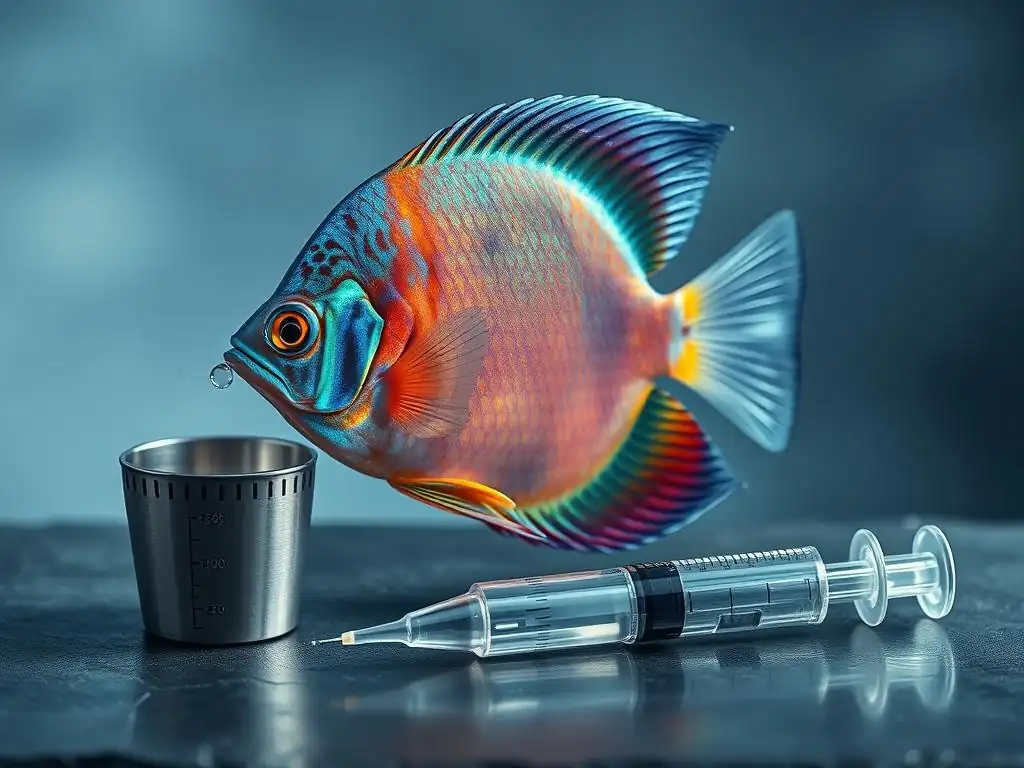
Accurate measurement of medication is non-negotiable when treating angelfish and discus. Overdosing can be fatal to sensitive fish, while underdosing renders the treatment ineffective and can lead to pathogen resistance. Dedicated dosing tools ensure that the precise Angelfish discus medication dosage is administered every time.
A set of oral syringes (e.g., 1ml, 3ml, 5ml sizes) without needles are ideal for measuring small, precise volumes of liquid medications. Pipettes are excellent for measuring drops or very small quantities. For larger volumes, a small, dedicated measuring cup (e.g., 5ml, 10ml, 20ml) with clear markings is essential. Always use tools specifically for aquarium use to avoid cross-contamination and ensure sterility.
Water Testing Kit: Monitoring Water Parameters During Treatment
Monitoring water parameters diligently during treatment is as important as administering the medication itself. Medications can sometimes impact the biological filter, leading to ammonia or nitrite spikes, or alter pH levels. Sick fish are also far more sensitive to poor water quality, and high levels of toxins can negate the effects of medication.
An essential liquid-based water testing kit should include tests for Ammonia, Nitrite, Nitrate, and pH. Regular testing—at least daily or every other day—allows you to detect any adverse changes immediately. For example, if ammonia levels rise above 0.25 ppm, an emergency water change or ammonia detoxifier may be necessary. This vigilance ensures that the environment remains optimal for healing and that the Angelfish discus medication dosage can work effectively without additional environmental stressors.
Angelfish Discus Medication Dosage: Guidelines and Considerations
Determining the Correct Angelfish Medication Dosage
Determining the correct angelfish medication dosage primarily relies on accurately calculating the water volume of the treatment tank. Most medication labels provide instructions based on gallons or liters. It's crucial to measure your quarantine tank's dimensions (Length x Width x Height in inches) and divide by 231 to get the precise gallon volume, then subtract any substrate or decorations volume for maximum accuracy.
While angelfish are generally more robust than discus, precision is still paramount. Common dosage guidelines might be "1 teaspoon per 10 gallons" or "1 drop per gallon." Always read the specific product label carefully, as concentrations vary widely between brands and active ingredients. For example, a standard dose of an Ich medication might be 1 drop per gallon for a 7-day treatment cycle, requiring daily redosing after partial water changes.
Determining the Correct Discus Medication Dosage
Discus are exceptionally sensitive to medications, making the precise Angelfish discus medication dosage for these fish a critical factor in treatment success. Many standard fish medications can be too harsh or even toxic to discus. It is often recommended to start with a reduced dose (e.g., 50-75% of the suggested dose for other tropical fish) and observe the fish's reaction closely before proceeding with the full dose, if necessary.
Always seek out medications specifically labeled as "Discus Safe" or research their compatibility thoroughly. For instance, some copper-based medications, while effective for Ich, can be particularly stressful or harmful to discus. Products containing Metronidazole for internal parasites are generally well-tolerated. It is paramount to measure volumes with calibrated syringes or pipettes, even for fractions of a milliliter, to ensure the exact Angelfish discus medication dosage is administered, minimizing stress and maximizing efficacy.
Factors Affecting Angelfish and Discus Medication Dosage
Several factors can influence the effective Angelfish discus medication dosage and its impact on your fish. The most critical is the accurate volume of water in the treatment tank; miscalculating tank size can lead to dangerous under- or overdosing. Water parameters, such as pH and hardness, can also affect medication efficacy and toxicity; some medications are more effective or less toxic at certain pH levels.
The presence of activated carbon in the filter will rapidly remove medications from the water, rendering treatment ineffective, so it must be removed. Additionally, a high organic load (e.g., excessive waste, uneaten food) can bind to medications, reducing their concentration and effectiveness. The specific disease being treated and its severity may also dictate a longer duration or slightly adjusted dosage, always within safe parameters, to ensure complete eradication of the pathogen.
Importance of Accurate Measurement and Dosage Calculation
The accurate measurement and calculation of Angelfish discus medication dosage are the single most important aspects of successful disease treatment. Incorrect dosing is the leading cause of treatment failure, fish mortality, and the development of drug-resistant pathogens. Underdosing fails to eradicate the illness, allowing it to persist or worsen, while overdosing can cause severe organ damage, neurological issues, or immediate death.
Using household spoons or imprecise measuring devices is highly discouraged due to significant variations in volume. For example, a "teaspoon" can vary by up to 20% in volume. Instead, rely on dedicated, calibrated measuring tools such as syringes (for liquids), precise measuring spoons (for powders), or graduated measuring cups. Always double-check your calculations, especially for high-concentration medications or large tank volumes, to ensure the health and safety of your angelfish and discus.
Administering Medications to Angelfish and Discus: Best Practices
Preparing the Medication Solution
Proper preparation of the medication solution is a crucial step to ensure even distribution and prevent concentrated pockets of medication that could harm your angelfish or discus. Never pour concentrated medication directly into the aquarium. Instead, measure the precise Angelfish discus medication dosage into a separate, clean container filled with a small amount of tank water.
Stir the medication thoroughly until it is completely dissolved (for powders) or evenly dispersed (for liquids). Once mixed, slowly add the diluted solution to the treatment tank, pouring it into an area of high water flow, such as near the filter output or air stone. This method ensures rapid and uniform dispersal throughout the water column, maximizing the medication's effectiveness and minimizing stress on the fish.
Direct Administration vs. Food Soaking
Medications can be administered in two primary ways: direct administration into the water column or by soaking food. Direct administration is the most common method for treating external parasites (like Ich) and many systemic bacterial or fungal infections, as it ensures that all fish in the treatment tank are exposed to the medication. This method is effective when the pathogen is in the water or on the fish's exterior.
Food soaking is the preferred method for treating internal parasites (e.g., Hexamita, internal worms) or systemic bacterial infections where the medication needs to be ingested to be effective. High-quality pellets or flakes are soaked in a small amount of medication solution for 15-30 minutes, allowing the food to absorb the medication. This medicated food is then fed to the fish. This method requires the fish to be actively eating, and it ensures that the Angelfish discus medication dosage reaches the internal organs directly.
Monitoring Angelfish and Discus During Treatment
Continuous and diligent monitoring of your angelfish and discus during medication treatment is paramount. Observe their behavior, appetite, coloration, and physical appearance daily, even multiple times a day. Look for signs of improvement, such as reduced symptoms, increased activity, or a return to normal feeding behavior.
Equally important is watching for any adverse reactions to the medication, which could include rapid gill movement, erratic swimming, gasping at the surface, loss of color, lethargy, or signs of increased stress. Keep a detailed log of the medication administered, the precise Angelfish discus medication dosage, water parameters, and your observations. This data will help you assess the treatment's effectiveness, identify any issues, and make informed decisions, such as adjusting the dosage or discontinuing treatment if severe side effects occur.
Water Changes During Medication
The necessity and frequency of water changes during medication depend heavily on the specific medication, the disease being treated, and the fish's condition. Some medications require daily water changes (e.g., 25-50%) before redosing to maintain water quality and prevent medication buildup. This is common for treatments that are rapidly absorbed or broken down, or for those that can impact the biological filter.
Other medications may require minimal or no water changes during the treatment cycle, with a large water change performed only after the full course of medication is complete, followed by the addition of activated carbon to remove residual medication. Always refer to the specific product instructions for guidance on water changes. Failing to follow these instructions regarding Angelfish discus medication dosage and water changes can lead to ineffective treatment or harm to the fish.
Preventing Angelfish and Discus Diseases: Proactive Measures
Maintaining Optimal Water Quality: The Key to Angelfish and Discus Health
Pristine water quality is the single most critical factor in preventing diseases in angelfish and discus. These species are highly sensitive to fluctuations and pollutants, making regular partial water changes essential. For discus, weekly water changes of 25-50% are often recommended, while angelfish typically benefit from 20-30% weekly changes, depending on bioload.
Beyond water changes, robust filtration (mechanical, biological, and chemical) is crucial to keep ammonia and nitrite at zero, and nitrates below 20 ppm. Consistent water parameters—including stable temperature (78-82°F / 25.5-27.8°C) and appropriate pH (e.g., 6.0-7.0 for angelfish, 6.0-6.5 for discus)—are vital. Poor water quality directly stresses the fish's immune system, making them highly susceptible to opportunistic pathogens and reducing the likelihood of needing emergency Angelfish discus medication dosage.
Proper Nutrition for a Strong Immune System in Angelfish and Discus
A varied, high-quality diet is fundamental to building a strong immune system in angelfish and discus, enabling them to resist diseases naturally. For angelfish, a diverse diet including high-quality flakes, pellets, frozen foods (such as bloodworms, brine shrimp, and Mysis shrimp), and occasional live foods (like daphnia or grindal worms) provides essential nutrients.
Discus, with their more specialized dietary needs, benefit from high-quality discus pellets, frozen beefheart mixes (prepared correctly to avoid excess fat), spirulina-enriched foods, and frozen bloodworms. A balanced diet, rich in vitamins (especially Vitamin C) and minerals, strengthens their natural defenses, improves their coloration, and promotes overall vitality. Well-nourished fish are significantly less likely to fall ill, thereby reducing the need for targeted Angelfish discus medication dosage.
Quarantine New Fish: Preventing Disease Introduction
Quarantining new fish is perhaps the most effective proactive measure against introducing diseases into your main aquarium. All new angelfish and discus, regardless of their apparent health, should be housed in a separate, dedicated quarantine tank for a minimum of 4-6 weeks. This period allows ample time for any latent diseases to manifest.
During quarantine, observe the fish closely for any signs of illness, such as clamped fins, lethargy, spots, or abnormal behavior. Prophylactic treatments for common parasites (like Ich) or internal flagellates (like Hexamita) can be administered in the quarantine tank without affecting the main display. This critical step prevents devastating outbreaks in your established tank, saving existing fish and significantly minimizing the future need for emergency Angelfish discus medication dosage for your entire collection.
Regular Observation: Early Detection of Angelfish and Discus Illnesses
Daily, meticulous observation of your angelfish and discus is paramount for early disease detection, which dramatically increases the chances of successful treatment. Spend a few minutes each day watching their behavior: are they swimming normally? Is their breathing regular? Are they eating eagerly? Are their fins extended and their colors vibrant?
Subtle changes, such as slight lethargy, clamped fins, minor discoloration, or a sudden loss of appetite, can be the first indicators of illness. Early detection allows for prompt isolation of the affected fish and targeted treatment with specific Angelfish discus medication dosage before the disease progresses to a more advanced, difficult-to-cure stage. This proactive vigilance is a cornerstone of responsible fish keeping and greatly contributes to the long-term health of your prized angelfish and discus.
Troubleshooting Common Angelfish and Discus Medication Issues
What to do if you observe adverse reactions
If you observe adverse reactions in your angelfish or discus during medication treatment, immediate action is crucial. Symptoms of an adverse reaction can include rapid gill movement, erratic or darting swimming, gasping at the surface, loss of color, extreme lethargy, or a sudden worsening of their condition. The first step is to perform a large water change, typically 50-75%, using dechlorinated, temperature-matched water to dilute the medication.
Following the water change, add activated carbon to your filter to rapidly remove any remaining medication from the water column. Monitor the fish closely for recovery. Re-evaluate the Angelfish discus medication dosage you administered, the medication choice itself, and all water parameters. If the reaction is severe, consider discontinuing the medication entirely and consult an experienced aquarist or aquatic veterinarian for further guidance.
When to seek expert advice from a veterinarian
While a well-stocked first aid kit covers many common ailments, there are instances when seeking expert advice from an aquatic veterinarian is essential. You should consult a vet if:
- The diagnosis of the illness is unclear despite your observations.
- Standard treatments with your first aid kit have been ineffective after a reasonable period (e.g., 3-5 days).
- Multiple fish are affected rapidly, suggesting a severe, highly contagious, or unusual outbreak.
- You suspect a rare pathogen or a condition that requires specialized diagnostic testing.
An aquatic veterinarian can perform diagnostic tests such as skin scrapes, gill biopsies, or fecal exams to precisely identify the pathogen. Based on these findings, they can recommend a targeted treatment plan, including specific medications and precise Angelfish discus medication dosage guidelines, potentially saving your entire collection and preventing future recurrences.
Understanding medication interactions
Understanding medication interactions is critical, as combining different medications can be dangerous for angelfish and discus. Certain combinations can lead to synergistic toxicity, where the combined effect is far more harmful than either medication alone. For example, combining some dyes (like Malachite Green) with certain antibiotics can produce highly toxic compounds. Similarly, some medications can reduce the effectiveness of others or severely stress the fish's already compromised immune system.
It is strongly advised against "cocktailing" medications unless explicitly recommended by the product manufacturer or a qualified aquatic health professional. Always treat one ailment at a time if possible. If you need to switch medications, perform a large water change (e.g., 75-90%) and use activated carbon for at least 24-48 hours to completely remove the previous medication before introducing a new one. This precaution minimizes the risk of adverse interactions and ensures the effectiveness of the new Angelfish discus medication dosage.
Frequently Asked Questions
What medications are essential for a first aid kit specifically for Angelfish and Discus aquariums?
A first aid kit should include medications for common diseases like Ich, Fin Rot, and Bacterial Infections. Copper-based medications and antibiotics are crucial for treating these ailments.
How do Angelfish and Discus differ in their sensitivity to medications, and how does this affect dosage?
Discus are generally considered more sensitive to medications than Angelfish. This means dosages need to be carefully calculated, often starting with lower concentrations and observing the fish closely.
Where can I find reliable information on calculating the correct Angelfish Discus medication dosage?
AquariumMastery.com provides detailed articles and guides on calculating medication dosages based on tank volume and species sensitivity. Always consult reputable sources before administering any treatment.
What are some common signs that my Angelfish or Discus might need medication?
Signs include loss of appetite, lethargy, fin clamping, white spots, and abnormal swimming behavior. Early detection is crucial for successful treatment.
Are there any preventative measures I can take to reduce the need for medication in my Angelfish and Discus aquarium?
Maintaining excellent water quality through regular water changes and proper filtration is key. Also, quarantine new fish before introducing them to the main tank.
Final Reflection: Ensuring Aquatic Harmony
The comprehensive guide to Angelfish and Discus first aid, meticulously detailing essential medications and supplies, underscores the critical responsibility we bear as aquarists. It's not merely about admiring the beauty of these majestic fish, but about proactively safeguarding their health and well-being, especially when considering the delicate balance required for their survival and the specific challenges of medication dosage.
This commitment to responsible fishkeeping extends beyond the individual aquarium, influencing the broader aquatic hobby and fostering a deeper appreciation for these creatures. My own experiences with these fish have taught me the profound interconnectedness of their environment and their health, highlighting the importance of preventative care and informed intervention. The best way to treat disease is to prevent it.
This simple truth resonates deeply within the world of aquariums, urging us to prioritize proactive measures over reactive cures.
Now, armed with this knowledge, consider how you can further enhance the lives of your Angelfish and Discus. Reflect on your current practices, identify areas for improvement, and embrace the ongoing journey of learning and refinement. By committing to responsible fishkeeping, you not only ensure the health of your aquatic companions but also contribute to a more sustainable and ethical future for the hobby as a whole.
Equip Yourself: Be Ready for Anything!
Thanks for diving into the world of angelfish and discus first aid! We hope you’ve gained valuable insights to keep your finned friends healthy and thriving. Now, let's put that knowledge into action.
- Prioritize Your Fish's Well-being: Assemble a dedicated Angelfish & Discus First Aid Kit based on the medications and supplies mentioned. Don't wait for an emergency – be proactive!
- Share your newfound knowledge by discussing your fish keeping experiences with a fellow aquarist.
- Continue to learn new things about this hobby and revisit AquariumMastery.com for more expert advice and tips.
What are some of the most valuable things that you have learned today, or what medications are the trickiest to get your hands on in this Angelfish and Discus first aid kit?