
Turquoise Severum (Heros appendiculatus): A Gem in Your Aquarium – Care & Profile

Welcome to Aquarium Mastery!
Ever been captivated by a fish that seems to glow from within? Dive into our comprehensive Turquoise Severum care guide and unlock the secrets to keeping this stunning South American cichlid thriving in your own freshwater aquarium. Prepare to be amazed as we explore everything from their ideal tank conditions to their unique personality! Ready to discover how to make your Heros appendiculatus truly shine? Let's get started!
- Understanding the Turquoise Severum: An Introduction to Heros appendiculatus
- Turquoise Severum Care: Essential Guidelines for a Thriving Fish
- Turquoise Severum Tank Mates: Compatibility and Community Tank Considerations
- Turquoise Severum Breeding: A Guide to Spawning Heros appendiculatus in Captivity
- Purchasing Turquoise Severums: Selecting Healthy Specimens
- The Allure of the Turquoise Severum: Why They Make Great Aquarium Fish
- Turquoise Severum Care Guide: Quick Reference Checklist
- Frequently Asked Questions
- Final Reflection: Appreciating the Aquatic Jewel
- Dive Deeper: Unlock the Turquoise Severum's Full Potential!
Understanding the Turquoise Severum: An Introduction to Heros appendiculatus
Origin and Natural Habitat of the Turquoise Severum
The Turquoise Severum, scientifically known as Heros appendiculatus, originates from the vast river systems of South America, primarily within the Amazon and Orinoco basins. Their natural range spans countries such as Brazil, Colombia, Venezuela, Peru, and Bolivia. In these regions, they typically inhabit slow-moving waters, including tributaries, floodplains, and oxbow lakes, often found amidst dense vegetation, submerged roots, fallen branches, and leaf litter. This environment provides ample hiding spots and foraging opportunities.
The water conditions in their native habitats are generally soft and acidic, frequently stained with tannins released from decaying organic matter. Typical pH levels range from 5.0 to 6.5, although they can tolerate slightly higher pH in certain areas. Temperatures usually fall between 75-82°F (24-28°C), reflecting the warm, tropical climate of their Amazonian home. Understanding these natural conditions is fundamental to providing optimal Turquoise Severum care in a home aquarium.
Appearance and Distinctive Features of Turquoise Severums
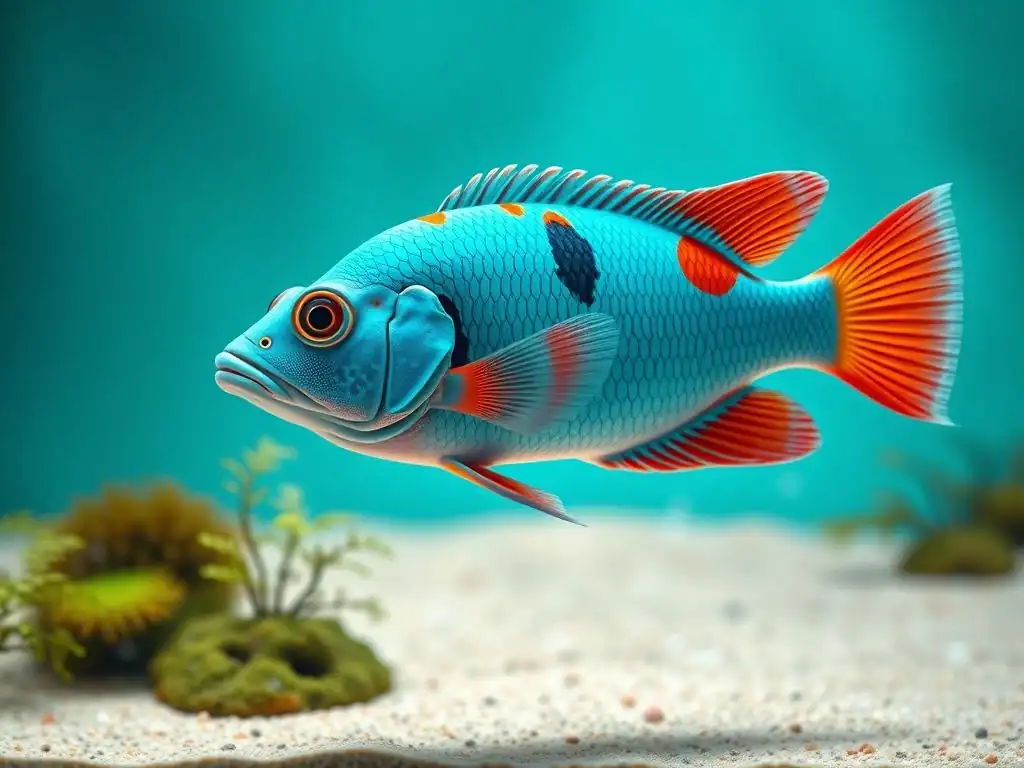
The Turquoise Severum possesses a distinctive oval, laterally compressed body shape, characteristic of many cichlids. Their most striking feature, and the source of their common name, is the vibrant turquoise or blue-green iridescent sheen that covers their flanks, often varying in intensity depending on the individual's mood, health, and lighting conditions. Many specimens also display intricate patterns of red or orange spots and lines on their faces, gill plates, and fins, which become more pronounced as they mature.
Beyond their captivating coloration, Heros appendiculatus exhibit several other notable features. Their dorsal and anal fins are typically elongated, often coming to a pointed tip, especially in mature males. The eyes are usually a striking reddish-orange. A subtle dark spot or vertical bar may be present on their mid-flank, though its prominence can vary. While sexual dimorphism is not always pronounced, males may develop slightly more extended fins and, occasionally, a nuchal hump on their forehead, particularly during breeding periods, contributing to their impressive presence in any aquarium.
Turquoise Severum Size and Lifespan in Captivity
In a well-maintained captive environment, the Turquoise Severum can grow to an impressive size, typically reaching between 8 to 12 inches (20-30 cm) in length. Some exceptionally large individuals, especially males in spacious tanks, have been known to exceed this range. The ultimate size attained by a Turquoise Severum is heavily influenced by factors such as tank size, diet quality, water parameters, and overall care, emphasizing the importance of a comprehensive Turquoise Severum care guide.
With proper care, a Turquoise Severum can be a long-term inhabitant of your aquarium, boasting a lifespan of 8 to 10 years. In optimal conditions, some individuals have even been reported to live for up to 15 years. Achieving this longevity requires consistent attention to water quality, a balanced nutritional diet, and a low-stress environment. Their potential for a long life makes them a significant commitment for any aquarist.
Turquoise Severum Care: Essential Guidelines for a Thriving Fish
Setting Up the Ideal Turquoise Severum Tank Environment
Tank Size Recommendations for Turquoise Severums
Providing adequate space is paramount for the health and well-being of Turquoise Severums. For a single adult Turquoise Severum, a minimum tank size of 55 to 75 gallons (208-284 liters) is recommended. This volume allows for sufficient swimming space and helps to dilute the waste produced by these relatively large cichlids. However, a larger tank is always preferable to minimize stress and potential aggression.
If you plan to keep a pair of Turquoise Severums or integrate them into a community tank, a 90-gallon (340-liter) aquarium should be considered the absolute minimum, with 125 gallons (473 liters) or more being ideal. This increased volume provides ample territory for each fish, reducing territorial disputes and promoting a more peaceful environment. A spacious tank is a foundational element of successful Turquoise Severum care.
Water Parameters: Temperature, pH, and Hardness for Optimal Health
Maintaining stable and appropriate water parameters is critical for the health of Turquoise Severums. The optimal temperature range for these fish is 75-82°F (24-28°C). A consistent temperature prevents metabolic stress and supports their immune system. The ideal pH level should be slightly acidic to neutral, specifically between 6.0 and 7.0. While they can tolerate a small deviation, stability is more important than hitting an exact number.
Regarding water hardness, Turquoise Severums thrive in soft to medium-hard water, typically ranging from 5-15 dGH (89-268 ppm). Regular water testing using a reliable kit, such as the API Freshwater Master Test Kit, is essential to monitor these parameters. If your tap water is significantly outside these ranges, methods such as using reverse osmosis (RO) water mixed with tap water, or incorporating driftwood and peat into the filtration, can help achieve the desired conditions. Consistent water quality is a non-negotiable aspect of a thorough Turquoise Severum care guide.
Substrate and Decor Considerations for a Turquoise Severum Habitat
For the substrate, a fine sand or small-grain gravel is highly recommended for a Turquoise Severum aquarium. These fish are natural substrate sifters, often foraging for food by sifting mouthfuls of sand. A fine substrate prevents injury to their delicate mouths and barbels. A depth of at least 2-3 inches (5-7.5 cm) allows them to engage in their natural digging behaviors without exposing the tank bottom.
When it comes to decor, provide plenty of driftwood and smooth rocks to create a naturalistic environment that mimics their native habitat. These elements offer visual barriers and potential hiding spots, which can reduce stress and territorial aggression, especially in a community setup. Robust live plants like Anubias, Java Fern, or Amazon Swords are suitable, but they should be securely anchored or potted, as Severums are known to uproot plants. These naturalistic additions are vital for a comprehensive Turquoise Severum care guide.
Turquoise Severum Diet and Feeding Habits: What to Feed Your Severum
Recommended Food Types for Turquoise Severums: Flakes, Pellets, and Live Foods
Turquoise Severums are omnivores, exhibiting a strong preference for plant matter in their natural diet, alongside small invertebrates. Therefore, a varied and balanced diet is crucial for their long-term health. High-quality sinking cichlid pellets or flakes, specifically formulated with a significant vegetable content, should form the cornerstone of their daily meals. Supplementing with spirulina flakes or wafers can further enhance their nutrient intake.
To provide a well-rounded diet, incorporate a variety of fresh or frozen foods. Options include bloodworms, brine shrimp, Mysis shrimp, and chopped earthworms. Additionally, blanched vegetables such as zucchini slices, cucumber, or shelled peas can be offered occasionally to provide essential fiber and vitamins. It is important to avoid over-reliance on high-protein foods like feeder fish, as this can lead to digestive issues and other health problems. A diverse diet is a key component of effective Turquoise Severum care.
Feeding Schedule and Portion Control for Severums
For adult Turquoise Severums, feeding 1 to 2 times per day is generally sufficient. Younger, growing Severums, however, can benefit from 2 to 3 smaller feedings daily to support their rapid development. The critical rule for portion control is to offer only what your fish can consume completely within 2 to 3 minutes. Overfeeding is a common mistake that can lead to significant water quality degradation and increase the risk of health issues like bloat.
Observe your fish closely during feeding times. If food remains uneaten after the recommended duration, reduce the portion size for subsequent feedings. Varying the feeding locations within the tank can also encourage natural foraging behaviors and ensure all fish get their share. Implementing a consistent feeding schedule with appropriate portion control is a fundamental aspect of a successful Turquoise Severum care guide.
Maintaining Water Quality for Turquoise Severums: A Crucial Aspect of Care
Regular Water Changes: How Often and How Much?
Maintaining pristine water quality is arguably the most crucial aspect of Turquoise Severum care. Regular water changes are essential to prevent the buildup of nitrates and other harmful compounds. For a moderately stocked aquarium, a weekly water change of 25-30% of the total tank volume is a good general guideline. In heavily stocked tanks or those with very large Severums, increasing the frequency to twice a week or the volume to 40-50% bi-weekly might be necessary.
During water changes, use a gravel vacuum to remove uneaten food and detritus from the substrate, which are major contributors to water pollution. Always ensure that the replacement water is dechlorinated and conditioned to remove chloramines and heavy metals. It is also vital to match the temperature of the new water as closely as possible to the tank water to prevent temperature shock to your fish. Consistent, diligent water changes are the backbone of any effective Turquoise Severum care guide.
Filtration Needs for a Healthy Turquoise Severum Aquarium
Given their size and the amount of waste they produce, Turquoise Severums require robust and efficient filtration. A powerful external canister filter is highly recommended, often one rated for a tank size larger than your actual aquarium volume. This ensures ample mechanical, biological, and chemical filtration to handle their significant bio-load. Canister filters provide excellent flow rates and media capacity for superior water purification.
Mechanical filtration removes particulate matter, keeping the water clear. Biological filtration, facilitated by beneficial bacteria colonizing filter media, converts toxic ammonia and nitrites into less harmful nitrates. Chemical filtration, typically provided by activated carbon, removes odors, discoloration, and some dissolved organic compounds. Consider adding a supplemental sponge filter for additional biological filtration, particularly in breeding setups where gentle flow is preferred. Adequate filtration is non-negotiable for a thriving Turquoise Severum aquarium and is a core element of comprehensive Turquoise Severum care.
Common Health Issues in Turquoise Severums and How to Prevent Them
Recognizing Symptoms of Disease in Severums
Early detection of health issues is paramount for successful treatment and prevention of disease spread in your aquarium. Aquarists providing Turquoise Severum care should be vigilant for changes in their fish's behavior, such as lethargy, loss of appetite, excessive hiding, or erratic swimming patterns. Physical symptoms to watch for include clamped fins, faded or patchy coloration, the appearance of white spots (Ich), fuzzy white growths (fungus), red streaks on the body or fins, a bloated appearance, or frayed fins.
Many common ailments in cichlids, including "Hole-in-the-Head" disease (HITH), are often linked to poor water quality, inadequate nutrition, or chronic stress. HITH manifests as pitting and lesions around the head and lateral line. Bloat, another serious condition, can result from an improper diet, particularly one too high in protein or lacking fiber, or from internal parasites. Promptly recognizing these signs allows for timely intervention, which is crucial for effective Turquoise Severum care.
Treating Common Severum Ailments
Once symptoms are identified, prompt and appropriate treatment is necessary. For common parasitic infections like Ich (white spot disease), increasing the tank temperature gradually to 82-86°F (28-30°C) combined with an appropriate Ich medication (e.g., malachite green or formalin-based treatments) is often effective. Ensure enhanced aeration during treatment, as higher temperatures reduce dissolved oxygen levels.
Bacterial infections, which can manifest as fin rot, body sores, or cloudy eyes, typically require broad-spectrum antibiotic treatments. Fungal infections, appearing as white, cotton-like growths, are best treated with antifungal medications. Whenever possible, isolate sick fish in a dedicated quarantine tank to prevent the spread of disease to healthy tank mates and to allow for more focused treatment. Always follow medication instructions carefully, as this vigilance is a vital part of responsible Turquoise Severum care.
Turquoise Severum Tank Mates: Compatibility and Community Tank Considerations
Suitable Tank Mates for Turquoise Severums: Peaceful Companions
Turquoise Severums are generally considered one of the more peaceful large cichlid species, especially when kept in a spacious aquarium with appropriate conditions. Good tank mates are other large, robust, and relatively peaceful fish that can withstand the Severum's size and occasional territoriality without being intimidated or harmed. Excellent choices include other large, non-aggressive South American cichlids such as Angelfish (if of a substantial size), Geophagus species, or peaceful Uaru cichlids.
Other suitable companions include large, peaceful schooling fish that are too big to be considered a meal, such as Silver Dollars, Giant Danios, or large Tetras like Congo Tetras or Emperor Tetras. Bristlenose Plecos or other large, non-aggressive pleco species can also make good bottom dwellers, as they occupy a different niche and generally mind their own business. Introducing tank mates simultaneously or introducing the Severums last can help minimize territorial disputes, a key consideration in comprehensive Turquoise Severum care.
Fish to Avoid Keeping with Turquoise Severums: Aggressive or Predatory Species
When selecting tank mates for Turquoise Severums, it is crucial to avoid highly aggressive or overly boisterous fish that could harass or injure them. Species like Oscars (unless in an exceptionally large tank and introduced with extreme caution), Flowerhorns, or highly territorial African Cichlids are generally unsuitable due to their aggressive nature. Similarly, very small and delicate fish, such as Neon Tetras or Guppies, should be avoided as they may be perceived as food or become overly stressed by the Severum's imposing size.
Fin-nipping species, such as Tiger Barbs, are also poor choices as they can damage the Severum's beautiful and elongated fins, leading to stress and potential infections. Predatory fish, even if similar in size, might pose a threat or compete too aggressively for food. The aim is to create a harmonious and stress-free environment for all inhabitants, which is a fundamental principle of any Turquoise Severum care guide discussing community tanks.
Considerations for a Successful Community Tank with Severums
Space is the most critical factor for a successful community tank featuring Turquoise Severums. A larger aquarium, ideally 125 gallons (473 liters) or more, is highly recommended for a mixed-species setup. This ample space provides sufficient territory for all inhabitants, helping to diffuse potential aggression and reduce stress among fish. Incorporate plenty of hiding spots and visual barriers using driftwood, rocks, and robust live plants to break up lines of sight and create individual territories.
When introducing new fish, it is often beneficial to introduce all tank mates at roughly the same size, or to introduce the Severums last if they are smaller than existing inhabitants. Closely monitor interactions for the first few weeks, being prepared to separate any fish showing excessive aggression. Consistent, high-quality Turquoise Severum care, including pristine water conditions and a varied diet, significantly influences fish temperament and contributes to the overall success and stability of a community aquarium.
Turquoise Severum Breeding: A Guide to Spawning Heros appendiculatus in Captivity
Setting Up a Breeding Tank for Turquoise Severums
For aquarists interested in breeding Turquoise Severums, setting up a dedicated breeding tank is highly recommended. A tank of at least 75 gallons (284 liters) is suitable for a breeding pair, though 90-125 gallons (340-473 liters) offers even more space and stability. The water parameters in the breeding tank should closely mimic their natural soft, acidic conditions: a pH of 6.0-6.5 and a temperature of 78-82°F (25.5-28°C) are ideal. Use a gentle filtration system, such as a sponge filter, to avoid strong currents that could disturb eggs or fry.
Provide plenty of flat, smooth surfaces for egg laying, such as large, flat rocks, pieces of slate, or even overturned clay pots. Driftwood and broad-leaf plants like Anubias can also serve as spawning sites and offer cover for the parents. Dim lighting and a peaceful environment will encourage spawning behavior. This specialized setup is a crucial step in a comprehensive Turquoise Severum care guide focused on reproduction.
Identifying Male and Female Turquoise Severums
Identifying the sex of Turquoise Severums, especially when they are young, can be challenging. As they mature, certain subtle differences often become apparent. Males typically exhibit more elongated and pointed dorsal and anal fins compared to the females, whose fins tend to be rounder and shorter. Some mature males may also develop a slight nuchal hump on their forehead, which can become more prominent during breeding periods.
During the actual spawning process, the most reliable method for sex identification is observing their breeding tubes (papillae). The female's ovipositor will become visible as a blunt, rounded tube, used for depositing eggs. In contrast, the male's breeding tube will be more pointed. Observing pairing behavior, where two fish consistently stay together and clean a spawning site, is also a strong indicator of a male and female pair. This observation is key for successful Turquoise Severum breeding.
Spawning Behavior and Egg Care in Severums
Once a pair of Turquoise Severums has formed and water conditions are optimal, they will select a spawning site, which they meticulously clean. The female will then begin to lay rows of adhesive eggs, often numbering anywhere from 300 to over 1000, depending on her size and health. Immediately following, the male will pass over the eggs to fertilize them. The entire spawning process can last for several hours.
Both parents exhibit excellent biparental care, a highly rewarding aspect of Turquoise Severum care. They diligently guard the eggs, fanning them with their fins to ensure proper aeration and prevent fungal growth. Eggs typically hatch within 3-5 days at a temperature of 80°F (26.5°C). After hatching, the parents often move the wrigglers (newly hatched fry) to pre-dug pits in the substrate or other secure locations, continuing their protective duties.
Raising Turquoise Severum Fry: From Hatching to Juvenile Stage
After another 4-7 days, the Turquoise Severum fry will absorb their yolk sacs and become free-swimming. At this stage, they are ready to begin feeding. For the first few days, infusoria or commercially available liquid fry food are suitable. As they grow slightly larger, typically within a week, transition them to newly hatched brine shrimp or microworms, which are highly nutritious and stimulate feeding responses. As they continue to grow, finely crushed flakes or small pellets can be introduced.
Frequent, small water changes (10-15% daily or every other day) are paramount for maintaining pristine water quality, which is crucial for rapid and healthy fry development. The parents will continue to guard the fry for several weeks, sometimes even months, herding them around the tank. If maximum fry yield is desired, some breeders choose to remove the eggs or fry to a separate rearing tank after 1-2 weeks, though this means sacrificing the fascinating parental care display. This dedicated approach to fry care completes the breeding section of the Turquoise Severum care guide.
Purchasing Turquoise Severums: Selecting Healthy Specimens
Where to Buy Turquoise Severums: Reputable Sources
When considering adding Turquoise Severums to your aquarium, selecting healthy specimens from reputable sources is crucial for their long-term well-being. Your local fish store can be a good starting point, especially if they have knowledgeable staff who maintain clean, well-stocked tanks. Reputable local stores often have established relationships with quality breeders or wholesalers, ensuring healthier fish.
Online retailers specializing in aquatic livestock are another excellent option, particularly if you are seeking specific color morphs or larger, more mature specimens that might not be available locally. When purchasing online, always research the vendor's reputation, checking for positive customer reviews, clear shipping policies, and a live arrival guarantee. Avoid purchasing from stores with overcrowded, dirty tanks or fish that appear stressed or diseased, as this is the first step in ensuring good Turquoise Severum care.
Identifying Healthy Turquoise Severums: What to Look For
Upon arriving at a fish store or receiving an online shipment, take the time to carefully inspect any potential Turquoise Severum. A healthy specimen should be active and alert, swimming naturally with its fins erect and not clamped against its body. Its coloration should be vibrant and even, without any faded patches, unnatural spots, or discolored areas. The fins should be intact and undamaged, with no signs of fin rot or nipping.
Check the fish's eyes for clarity; they should not appear cloudy, sunken, or bulging. The body should be full and well-rounded, not emaciated or bloated. Observe their breathing; it should be steady and regular, not labored or rapid. Avoid fish with any visible external parasites (e.g., white spots, fuzzy growths) or unusual lesions. These visual cues are invaluable for any Turquoise Severum care guide, helping you select a robust and thriving fish.
Acclimation Process: Introducing Your New Severum to Its Tank
Proper acclimation is vital to minimize stress and prevent shock when introducing new Turquoise Severums to your established aquarium. Begin by floating the sealed bag containing your new fish in your tank for 15-20 minutes. This allows the water temperature in the bag to gradually equalize with your tank's temperature, preventing temperature shock, which can severely stress new arrivals.
After temperature equalization, open the bag and begin a slow drip acclimation process. Using an airline tube and a knot to control the flow, slowly drip water from your main tank into the bag over a period of 30-60 minutes, roughly a quarter cup every 5-10 minutes. This gradual introduction slowly adjusts the fish to your tank's specific water parameters (pH, hardness, etc.). Once the bag contains about 50% tank water, gently net the fish and place it in the aquarium, discarding the bag water. This careful acclimation is a cornerstone of responsible Turquoise Severum care.
The Allure of the Turquoise Severum: Why They Make Great Aquarium Fish
Benefits of Keeping Turquoise Severums
Turquoise Severums offer a multitude of benefits that make them highly desirable aquarium inhabitants. Their striking beauty, characterized by iridescent blue-green scales often highlighted with reddish accents, makes them an immediate centerpiece in any large freshwater aquarium. Unlike some other large cichlids, they are generally peaceful and less aggressive, allowing for more diverse community tank options, provided adequate space is available.
Beyond their aesthetics, Severums are intelligent and highly interactive fish. They often learn to recognize their owners, responding to their presence and even accepting food directly from hands. Their relatively long lifespan means they can become a cherished and enduring pet for many years, offering a rewarding experience for dedicated aquarists. Their ease of care, once their basic needs for tank size and water quality are met, solidifies their position as a top choice for those looking to expand their hobby, making them a highlight in any comprehensive Turquoise Severum care guide.
The Charm and Personality of Heros appendiculatus
The personality of Heros appendiculatus is arguably one of their most appealing attributes. They are often described as having a curious and inquisitive nature, constantly exploring their environment and interacting with their surroundings. They demonstrate a remarkable level of intelligence, often observing activities outside the tank and even learning routines. This engagement adds a dynamic and captivating element to the aquarium.
While they can be territorial, especially during breeding, Severums typically display a more gentle and calm demeanor compared to many other large cichlid species. Their unique behaviors, such as sifting through substrate, carefully inspecting decor, or the fascinating parental care they exhibit during breeding, provide endless opportunities for observation and enjoyment. This blend of stunning beauty, intelligence, and a relatively peaceful temperament solidifies the Turquoise Severum's status as a true gem in the freshwater aquarium hobby, making a detailed Turquoise Severum care guide essential for enthusiasts.
Turquoise Severum Care Guide: Quick Reference Checklist
- Tank Size: Minimum 55-75 gallons for a single adult; 90-125+ gallons for a pair or community.
- Temperature: 75-82°F (24-28°C).
- pH: 6.0-7.0.
- Hardness: 5-15 dGH (Soft to medium-hard).
- Filtration: Robust, oversized external canister filter highly recommended.
- Water Changes: 25-30% weekly, more for heavily stocked tanks.
- Substrate: Fine sand or small-grain gravel, at least 2-3 inches deep.
- Decor: Plenty of driftwood, smooth rocks, robust live plants (securely anchored), and hiding spots.
- Diet: Omnivore; high-quality cichlid pellets/flakes (vegetable-based) as staple, supplemented with frozen/live foods (bloodworms, brine shrimp) and blanched vegetables.
- Feeding Frequency: 1-2 times daily for adults, small portions consumed within 2-3 minutes.
- Tank Mates: Compatible with other large, peaceful South American cichlids, large schooling fish (e.g., Silver Dollars, large Tetras), and non-aggressive plecos. Avoid aggressive or very small fish.
- Lifespan: 8-10+ years with proper care.
- Max Size: Typically 8-12 inches (20-30 cm).
- Key Care Aspect: Stable water parameters and pristine water quality are paramount for health and longevity.
- Behavior: Generally peaceful but can be territorial, intelligent, curious, and engaging with owners.
- Breeding: Egg-layers; exhibit biparental care; require a dedicated breeding setup with flat spawning surfaces.
Frequently Asked Questions
What is the ideal tank size for a Turquoise Severum?
A minimum of 55 gallons is recommended for a single Turquoise Severum. A larger tank, 75 gallons or more, is preferable, especially if keeping them with tank mates.
What are the ideal water parameters for Turquoise Severums?
Turquoise Severums thrive in slightly acidic to neutral water. Aim for a pH of 6.0 to 7.0, a temperature of 78-84°F (25-29°C), and maintain good water quality through regular water changes.
What should I feed my Turquoise Severum?
Offer a varied diet of high-quality cichlid pellets or flakes, supplemented with frozen or live foods like bloodworms, brine shrimp, and vegetables.
Are Turquoise Severums aggressive?
Generally, Turquoise Severums are peaceful cichlids, but they can become territorial during breeding. It's best to avoid keeping them with very small or aggressive fish.
How do I breed Turquoise Severums?
Provide a flat surface like a rock or slate for them to lay their eggs. Maintaining stable water parameters and providing a varied diet can encourage spawning.
Final Reflection: Appreciating the Aquatic Jewel
The journey of understanding the Turquoise Severum, as we've explored, is more than just mastering aquarium parameters; it's about appreciating the delicate balance of an ecosystem we recreate within our homes. In a world increasingly disconnected from nature, the act of nurturing these vibrant creatures serves as a powerful reminder of the beauty and complexity that exists beyond our screens.
The allure of the Turquoise Severum extends beyond its stunning coloration. It represents a commitment to responsible pet ownership and a deeper understanding of the natural world. In the end, we will conserve only what we love; we will love only what we understand; and we will understand only what we are taught.
- Baba Dioum. This quote encapsulates the importance of sharing knowledge and fostering appreciation for these magnificent fish, ensuring their continued presence in both our aquariums and their natural habitats.
Now, as you embark on your own journey with the Turquoise Severum, remember that providing optimal care is an act of stewardship. Let the vibrant hues of this aquatic jewel inspire you to reflect on your connection with nature and to cultivate a deeper appreciation for the delicate ecosystems that surround us. May your aquarium be a testament to your dedication and a vibrant reflection of the beauty that exists within our world.
Dive Deeper: Unlock the Turquoise Severum's Full Potential!
Thank you for exploring the captivating world of the Turquoise Severum. We hope this article has provided you with valuable insights into caring for this stunning fish. Now, let's turn that knowledge into action!
- Commit to observing your Severum daily: Pay close attention to their behavior, coloration, and feeding habits. Early detection of any issues is key to a healthy and happy fish.
- Share this article with fellow aquarium enthusiasts! Help spread the word about the beauty and unique needs of the Turquoise Severum.
- Consider joining an online aquarium forum or local fish club to connect with experienced keepers and learn even more about these magnificent creatures.
What's one small change you can make today to better care for your Turquoise Severum, or prepare for one in the future?