
Breeding Severums Successfully: A Rewarding Journey for Dedicated Aquarists

Welcome to Aquarium Mastery!
Ever dreamt of witnessing the magic of spawning in your own aquarium? Breeding Severums can be a truly rewarding experience, but success hinges on understanding their specific needs. Are you ready to unlock the secrets to successful Severum breeding? Dive in and discover practical Severum breeding care tips that will guide you through every stage, from preparing the perfect environment to nurturing the fry. Let's embark on this fascinating journey together!
- Understanding Severum Breeding: An Introduction to Successful Spawning
- Preparing Your Severums for Breeding: Optimizing Tank Conditions
- Severum Spawning Behavior: Recognizing the Signs and Providing Support
- Severum Fry Care: From Hatching to Independence
- Troubleshooting Common Severum Breeding Challenges
- Severum Breeding Care Tips: Essential Guidelines for Success
- Choosing the Next Generation: Selecting Quality Severum Fry
- Conclusion: The Joys and Challenges of Breeding Severums
- Frequently Asked Questions
- Final Reflection: The Enduring Allure of Severum Parenthood
- Nurture Your Severums: Begin Your Breeding Adventure Today!
Understanding Severum Breeding: An Introduction to Successful Spawning
Why Breed Severums? A Rewarding Aquarist Experience
Breeding Severums (Heros severus) offers a uniquely rewarding experience for dedicated aquarists, extending beyond the simple joy of seeing new life. This journey provides an intimate look into the complex and fascinating parental behaviors of these New World Cichlids, which are known for their diligent care of eggs and fry. Successfully raising a clutch of Severum fry from tiny eggs to independent juveniles is a testament to an aquarist's skill and patience, fostering a deeper connection to the aquatic hobby.
Furthermore, breeding Severums can contribute to the sustainability of the hobby, reducing reliance on wild-caught specimens, especially for specific color morphs or less common varieties. For instance, successfully breeding a pair can yield hundreds of fry, with a typical clutch size ranging from 200 to 800 eggs, offering ample opportunity for distribution to other enthusiasts or local fish stores. This process also allows for selective breeding, where aquarists can focus on enhancing desirable traits like vibrant coloration or robust health, contributing to the overall quality of Severums available in the hobby.
Severum Reproduction: Key Characteristics and Behaviors
Severums are substrate spawners, meaning they lay their eggs on a flat, solid surface within the aquarium. They typically form strong, monogamous pair bonds, and once a pair is established, they will often breed repeatedly under optimal conditions. Sexual maturity in Severums is usually reached when they are around 4-6 inches in length, which can be anywhere from 12 to 18 months of age, though individual growth rates vary.
Their reproductive cycle is characterized by distinct pre-spawning behaviors, followed by the meticulous care of eggs and fry. Both parents actively participate in cleaning the chosen spawning site, guarding the eggs, and fanning them to ensure proper oxygenation and prevent fungal growth. After hatching, the fry remain under parental supervision, often herded by the parents, showcasing a level of intricate family dynamics rarely seen in other aquarium fish. Understanding these inherent behaviors is crucial for providing effective Severum breeding care tips and maximizing success.
Preparing Your Severums for Breeding: Optimizing Tank Conditions
Setting Up a Dedicated Severum Breeding Tank: Size and Essentials
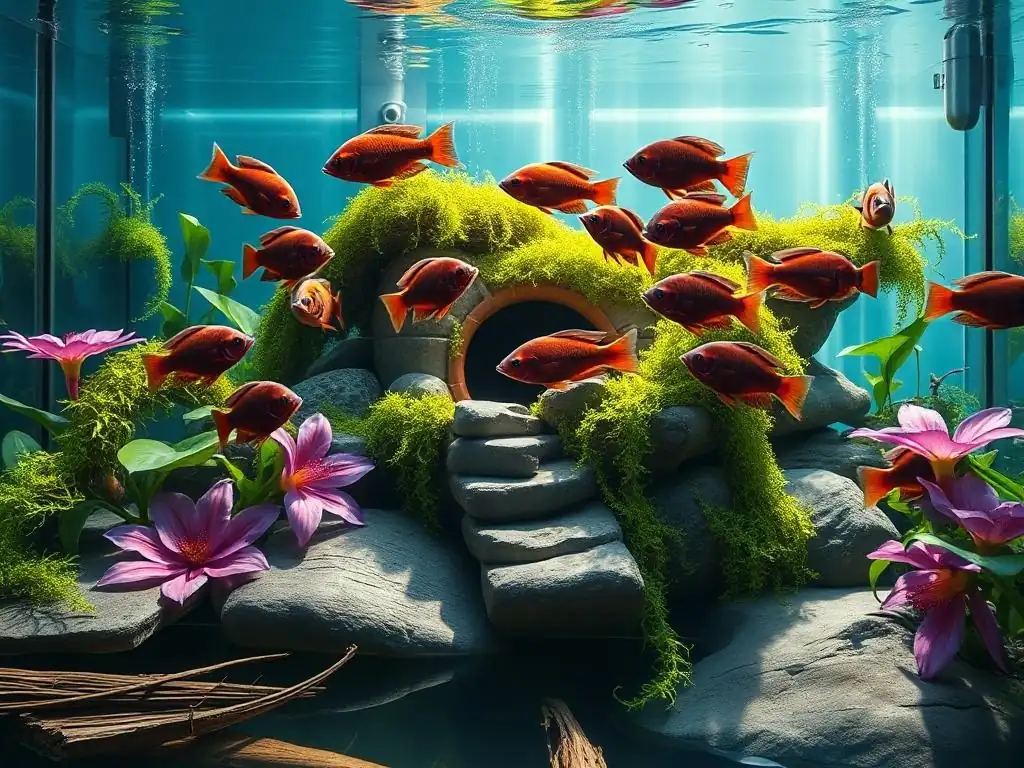
A dedicated breeding tank is essential for successful Severum reproduction, providing a stress-free environment conducive to spawning and fry rearing. For a single breeding pair, a tank of at least 75 gallons is recommended, though 100 gallons or more is ideal to accommodate their size and reduce potential aggression, especially during the breeding phase. The tank should be equipped with a reliable heater to maintain stable temperatures and a mature filtration system that provides excellent water quality without creating excessive current, which could disturb delicate eggs or fry.
Essential tank furnishings include large, flat rocks, slate, or pieces of driftwood, which serve as preferred spawning sites. A bare bottom tank is often favored by experienced breeders for easier cleaning and fry collection, but a thin layer of fine sand can also be used if desired. Subdued lighting can help reduce stress, and the tank should be placed in a quiet area of the home, free from sudden movements or loud noises that could startle the breeding pair. These precise Severum breeding care tips ensure the optimal environment for successful reproduction.
Water Parameters for Severum Spawning: Achieving Ideal Chemistry
Maintaining pristine and specific water parameters is paramount for triggering and sustaining Severum spawning. The ideal temperature range for breeding is typically between 78°F and 82°F (25.5°C to 27.8°C), which can be gradually increased from a general maintenance temperature of 76°F to stimulate spawning. The pH should be slightly acidic to neutral, ranging from 6.0 to 7.0, and water hardness should be soft to moderately hard, around 5-12 dGH.
Consistent water changes, typically 25-30% weekly, using dechlorinated water that matches the tank's parameters, are crucial for removing nitrates and other pollutants that can inhibit spawning or harm developing fry. Some breeders use reverse osmosis (RO) water mixed with tap water to achieve precise hardness levels. Monitoring ammonia, nitrite, and nitrate levels regularly with a reliable test kit is non-negotiable. These precise Severum breeding care tips regarding water chemistry are fundamental to encourage a healthy breeding cycle.
Choosing the Right Severum Breeding Pair: Compatibility and Health
Selecting a healthy and compatible Severum breeding pair is perhaps the most critical step in the entire process. While it can be challenging to sex Severums outside of breeding season, observing behavior is key. Look for a pair that naturally congregates, displays mutual interest, and potentially exhibits subtle pre-spawning behaviors like gill flaring or gentle fin nipping towards each other. It's often recommended to acquire a group of 4-6 young Severums and allow them to pair off naturally as they mature; this increases the chances of obtaining a compatible male and female.
Both individuals in the prospective pair must be in peak health, free from any signs of disease, parasites, or physical deformities. A well-rounded diet rich in high-quality pellets, flakes, and frozen foods like bloodworms, brine shrimp, and spirulina is essential for conditioning them for breeding. Healthy, well-fed fish are more likely to spawn successfully and produce viable eggs. These Severum breeding care tips underscore the importance of initial selection for long-term success.
Severum Spawning Behavior: Recognizing the Signs and Providing Support
Identifying Severum Pair Bonding: Signs of a Compatible Couple
Before actual spawning, a compatible Severum pair will exhibit several distinct behaviors indicating their bond and readiness to breed. One of the most obvious signs is increased aggression towards other tank inhabitants, as they become territorial and begin to claim a specific area of the tank. The pair will often be seen together, swimming in close proximity, and performing a "shaking" or "quivering" dance where they rapidly vibrate their bodies next to each other.
Another clear indicator is the meticulous cleaning of a chosen spawning site. Both the male and female will use their mouths to thoroughly clean a flat surface, such as a large piece of slate, a smooth rock, or even the side of the tank glass. This cleaning can last for several hours or even days, ensuring the surface is free of debris for egg adhesion. Observing these behaviors provides crucial Severum breeding care tips for anticipating and supporting the spawning event.
Severum Egg Deposition and Fertilization: What to Expect
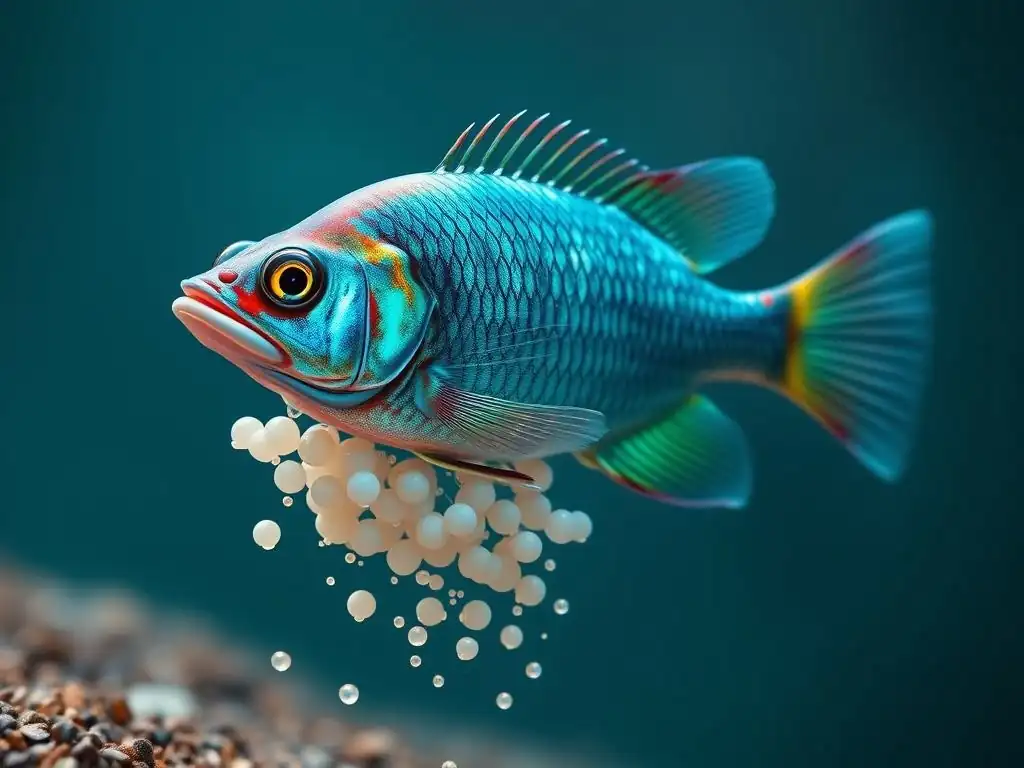
Once the spawning site is prepared, the actual egg deposition begins. The female will typically make several passes over the cleaned surface, carefully laying rows of small, adhesive eggs. Immediately following her, the male will pass over the same rows, fertilizing them. This process is repeated numerous times, often for several hours, with the pair alternating passes until all eggs are laid. A healthy Severum pair can lay anywhere from 200 to 800 eggs in a single clutch, depending on their size, age, and conditioning.
The eggs are typically off-white to yellowish in color, and healthy, fertilized eggs will appear translucent. Unfertilized eggs, or those that succumb to fungus, will turn opaque white within 24-48 hours. Both parents will diligently guard the eggs, fanning them with their fins to ensure adequate oxygenation and remove any unfertilized or fungused eggs, which they may gently pick off and consume. This parental care is a hallmark of Severum breeding success.
Providing Spawning Substrates: Slate, Cones, and Plants
While Severums are adaptable and may spawn on various flat surfaces, providing appropriate spawning substrates can significantly increase the likelihood of successful egg deposition and fry survival. Large, smooth pieces of slate are a popular choice, as they offer a flat, easily cleaned surface that can be positioned strategically within the tank. Ceramic spawning cones, traditionally used for Angelfish, can also be accepted by Severums, providing a vertical option.
Driftwood pieces with flat, smooth sections, or even the broad leaves of sturdy aquarium plants like Anubias or Java Fern, can also serve as natural spawning sites. The key is to offer multiple options and ensure they are stable and free from sharp edges. Providing these specific substrates is a vital part of Severum breeding care tips, as it caters to their natural spawning instincts and gives the pair a secure location to lay their precious clutch, enhancing their comfort and reducing stress.
Severum Fry Care: From Hatching to Independence
Hatching Severum Eggs: Incubation and Initial Fry Care
Severum eggs typically hatch within 3 to 5 days, depending on the water temperature. At 80°F (26.7°C), hatching usually occurs around the 72-hour mark. Once hatched, the tiny fry, often called "wigglers," are not free-swimming. They remain attached to the spawning site or are moved by the parents to a pre-dug pit in the substrate (if present), where they continue to absorb nutrients from their yolk sacs. During this stage, the parents remain highly vigilant, fanning the fry and meticulously guarding them from any perceived threats.
The wigglers will typically become free-swimming within another 4 to 7 days, once their yolk sacs are fully absorbed. This is the critical juncture where initial feeding must commence. The parents will often guide the free-swimming fry around the tank, sometimes herding them into a tight school. Providing a clean, stable environment during this incubation and initial free-swimming phase is paramount for high survival rates, making it a key focus of Severum breeding care tips.
Feeding Severum Fry: First Foods and Nutritional Needs
Once Severum fry become free-swimming, their first foods are crucial for their rapid growth and development. For the first few days, infusoria or commercially available liquid fry food can be used, although newly hatched brine shrimp nauplii are widely considered the best initial food source. Brine shrimp are highly nutritious, easy for the tiny fry to consume, and stimulate a strong feeding response. Prepare small batches of brine shrimp daily to ensure freshness.
As the fry grow, which can be remarkably fast with proper feeding, their diet can be diversified. After about a week of brine shrimp, finely crushed high-quality flake food, micro-pellets, and even finely chopped frozen bloodworms or spirulina can be introduced. Feed the fry small amounts multiple times a day, ideally 4-6 times, to ensure a constant supply of nutrients. Overfeeding should be avoided to prevent water quality issues, but underfeeding will lead to stunted growth and higher mortality. These Severum breeding care tips on nutrition are foundational for raising healthy fry.
Maintaining Water Quality for Growing Severum Fry: Essential Practices
Maintaining pristine water quality is perhaps the most critical aspect of Severum fry care, as young fish are highly susceptible to changes in water parameters and elevated waste products. Daily small water changes, typically 10-15% of the tank volume, are essential, using aged or dechlorinated water that matches the temperature and pH of the breeding tank. This frequent maintenance removes uneaten food and waste, preventing the buildup of ammonia and nitrites.
Filtration for a fry tank should be gentle but effective. Sponge filters are an excellent choice as they provide both mechanical and biological filtration without creating strong currents that could harm the delicate fry. Avoid power filters with strong intakes unless they are well-covered to prevent fry from being sucked in. Regular monitoring of water parameters (ammonia, nitrite, nitrate, pH) is crucial. Consistent attention to these Severum breeding care tips will significantly improve the survival rate of your growing Severum fry.
Troubleshooting Common Severum Breeding Challenges
Addressing Unsuccessful Severum Spawning: Identifying Potential Issues
Experiencing unsuccessful Severum spawning can be frustrating, but identifying the underlying issues is the first step toward resolution. Common reasons include an incompatible pair – sometimes two fish simply won't bond, even if they are male and female. Stress from tank mates, inadequate tank size, or excessive activity around the tank can also inhibit spawning. Water parameters that are off the ideal range (e.g., too high pH, too hard water, or fluctuating temperatures) are frequent culprits.
Nutritional deficiencies can also play a role; a pair not receiving a varied, high-quality diet may lack the energy or nutrients required for successful egg production. Furthermore, age can be a factor; very young or very old Severums may not be as prolific breeders. Systematically checking each of these variables—pair compatibility, environmental conditions, diet, and age—is crucial for refining your Severum breeding care tips and achieving success in subsequent attempts.
Preventing Egg Fungus and Fry Mortality: Proactive Measures
Egg fungus is a common challenge in Severum breeding, often leading to significant fry mortality. Fungus typically attacks unfertilized eggs first, then spreads rapidly to healthy, fertilized ones. To prevent this, ensuring robust fertilization by a healthy male is paramount. Good water circulation around the eggs, often provided by the parents' fanning, is also vital for oxygenation and preventing fungal spores from settling.
If you choose to remove the eggs from the parents for artificial incubation, a common practice to increase fry numbers, adding a mild antifungal agent like methylene blue to the water can prevent fungal outbreaks. However, this is not an option if parents are present. For both parent-raised and artificially incubated eggs, prompt removal of any opaque, fungused eggs is crucial to prevent spread. High water quality and stable parameters in the fry tank are the best defense against subsequent fry mortality from disease or poor conditions. These Severum breeding care tips are essential for maximizing fry survival.
Managing Aggression During Severum Breeding: Ensuring Pair Harmony
While Severums are generally less aggressive than some other large cichlids, aggression can escalate significantly during breeding, particularly towards other tank inhabitants. The breeding pair will become highly territorial, often chasing and nipping at any fish that ventures too close to their spawning site or fry. In a community tank, this can lead to severe stress, injury, or even death for other fish.
To manage this, a dedicated breeding tank with only the pair is highly recommended. If other fish must be present, ensure the tank is very large (e.g., 150+ gallons) with plenty of line-of-sight breaks and hiding spots to allow non-breeding fish to escape the pair's aggression. Even within the pair, aggression can sometimes occur, especially if one fish is not ready to spawn or if there's a significant size disparity. Providing ample space and retreat options is key to ensuring pair harmony and is a critical component of effective Severum breeding care tips.
Severum Breeding Care Tips: Essential Guidelines for Success
Key Takeaways for Successful Severum Reproduction
Successful Severum reproduction hinges on several interconnected factors, creating an environment that mimics their natural breeding conditions. Firstly, a spacious, dedicated breeding tank (75-100+ gallons) with stable and ideal water parameters (temperature 78-82°F, pH 6.0-7.0, soft to moderately hard water) is non-negotiable. Secondly, choosing a healthy, compatible pair, ideally by allowing them to naturally pair off from a group, significantly increases the chances of spawning.
Thirdly, providing suitable spawning substrates like flat rocks or slate, along with a high-quality, varied diet to condition the parents, prepares them for the rigors of breeding. Finally, diligent fry care, including daily small water changes and feeding newly hatched brine shrimp multiple times a day, is crucial for raising healthy fry. Adhering to these comprehensive Severum breeding care tips will pave the way for a rewarding breeding experience.
Advanced Severum Breeding Techniques: Raising Show-Quality Severums
For aquarists aiming to raise show-quality Severums, advanced breeding techniques go beyond basic propagation. This involves careful selective breeding, where only the fry exhibiting the most desirable traits—such as vibrant coloration, proper body shape, and robust health—are chosen for grow-out and future breeding. This often necessitates culling fry that display deformities, stunted growth, or undesirable coloration to maintain the integrity of the line.
Optimizing grow-out conditions is also vital. This means providing very large grow-out tanks (e.g., 100+ gallons for a few hundred fry), extremely frequent water changes (sometimes multiple times a day for very young fry), and a highly nutritious, protein-rich diet to maximize growth rates. Some breeders may also experiment with different lighting regimens or subtle variations in water chemistry to enhance specific color expressions. These Severum breeding care tips, when applied with precision, can elevate hobbyist breeding to a professional level.
Choosing the Next Generation: Selecting Quality Severum Fry
Identifying Healthy Severum Fry: Signs of Vigor and Good Genetics
Identifying healthy Severum fry is crucial for selecting the next generation and ensuring the propagation of robust genetics. Healthy fry will be active and alert, constantly foraging for food, and exhibiting a strong schooling behavior. They should have clear eyes, fully formed fins, and a well-rounded belly, indicating consistent feeding. Avoid fry that appear listless, have clamped fins, or show any signs of physical deformities such as bent spines or malformed mouths, as these often indicate genetic issues or poor early development.
Growth rate is another key indicator of vigor. Fry that grow quickly and uniformly are generally healthier and have better genetic potential. While some size variation is normal in a large clutch, a significant number of runts could indicate a problem with feeding, water quality, or overall genetic health of the parents. Carefully observing these characteristics provides valuable Severum breeding care tips for culling and selection.
Raising Severum Fry to Maturity: Long-Term Growth and Development
Raising Severum fry to maturity requires continued dedication beyond the initial free-swimming stage. As they grow, the fry will need increasingly larger tanks to prevent stunting and maintain optimal water quality. Overcrowding can quickly lead to stress, disease, and uneven growth. For instance, a batch of 200 Severum fry will outgrow a 20-gallon tank in a matter of weeks and will require significantly more space as they reach juvenile sizes of 1-2 inches.
A high-quality, varied diet remains critical, transitioning from brine shrimp to micro-pellets, high-quality flakes, and eventually frozen foods tailored for juvenile cichlids. Consistent water changes, often 25-50% several times a week, are essential to manage the increased bioload of growing fish. Patience and meticulous care during this grow-out phase are paramount for the long-term health and vibrant development of your Severums, ensuring they reach their full potential.
Conclusion: The Joys and Challenges of Breeding Severums
Frequently Asked Questions
How difficult is it to breed Severums in a home aquarium?
Breeding Severums can be relatively challenging compared to some other aquarium fish. It requires careful attention to water parameters and creating a suitable environment for spawning and raising fry.
What are the optimal water parameters for Severum breeding?
Maintain a stable temperature between 82-86°F (28-30°C), a pH of 6.5-7.0, and very clean water through frequent water changes. Soft water is also highly recommended.
What kind of substrate or spawning site do Severums prefer?
Severums are substrate spawners, meaning they will lay their eggs on a flat surface. Provide smooth rocks, slate, or even large leaves as potential spawning sites.
How can I tell if my Severums are preparing to spawn?
Look for increased aggression, cleaning behavior around a chosen spawning site, and visible breeding tubes (papillae) on both the male and female. The female will have a larger, more rounded tube.
What is the best food to feed Severum fry after they hatch?
Start with newly hatched brine shrimp or microworms as their first food. Gradually introduce finely crushed flake food or commercial fry food as they grow.
Final Reflection: The Enduring Allure of Severum Parenthood
The journey of breeding Severums, as we've explored, is far more than just a technical exercise; it's a testament to the deep connection we can forge with the natural world within the confines of our own homes. The meticulous care, the patient observation, and the ultimate reward of witnessing new life emerge – these are experiences that resonate deeply, especially in a world increasingly disconnected from nature. The success of Severum breeding hinges not just on following instructions, but on cultivating a genuine understanding and respect for these magnificent fish.
This endeavor, while seemingly niche, reflects a broader human desire to nurture and create. The dedication required to successfully breed Severums mirrors the dedication needed in any meaningful pursuit, be it artistic expression, scientific discovery, or simply raising a family. It reminds us that patience and perseverance, coupled with knowledge and empathy, can yield extraordinary results. The best way to learn is to do; the worst way to teach is to talk.
- John Dewey. This quote encapsulates the hands-on learning and profound understanding gained through the practical application of Severum breeding care tips.
Now, as you close this article, consider the lessons learned. The principles of observation, patience, and dedication that apply to Severum breeding are universally applicable. How can you apply these principles to other areas of your life? What seemingly daunting task can you approach with renewed focus and a deeper understanding? Embrace the challenge, cultivate your knowledge, and remember that the most rewarding journeys are often those that require the most care and commitment. The potential for growth, both for your Severums and for yourself, is limitless.
Nurture Your Severums: Begin Your Breeding Adventure Today!
Thank you for exploring the fascinating world of Severum breeding with us! We hope you've gained valuable insights into creating a thriving environment for these captivating fish. Now, it's time to put your knowledge into action and witness the miracle of life firsthand.
Here are a few next steps to embark on:
- Prioritize tank setup: Confirm that you have a separate, meticulously prepared breeding tank, paying special attention to water parameters and hiding places.
- Share your experiences! Connect with other Severum enthusiasts online to exchange tips, celebrate successes, and learn from challenges.
- Consider documenting your Severum breeding journey through photos or videos to inspire others and track your progress.
What is the first small adjustment you'll make to your aquarium environment to encourage spawning behaviour in your Severums?