
Are Kribensis Really More Aggressive? A Temperament Deep Dive

Welcome to Aquarium Mastery!
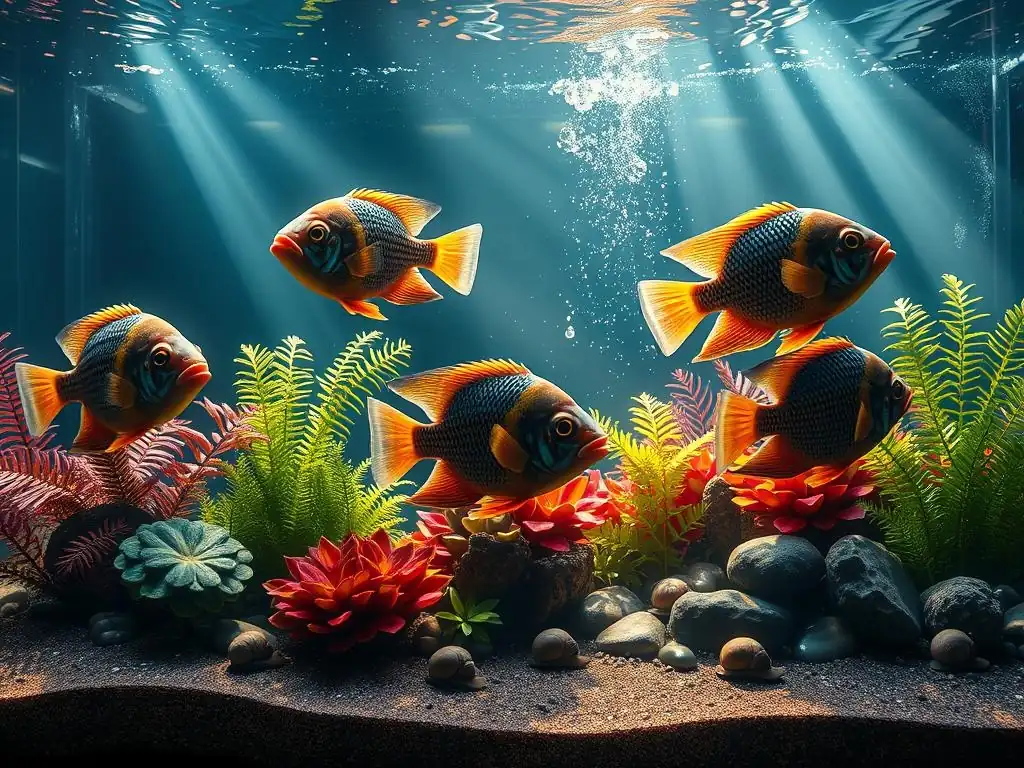
Intrigued by the vibrant Kribensis cichlid but worried about potential squabbles in your tank? Are Kribensis really more aggressive than you think? We dive deep into their temperament, offering insights and practical advice to help you create a harmonious freshwater haven. Uncover the truth about their aggression levels and learn how to manage their behavior in this comprehensive guide. Let's explore!
- Understanding Kribensis Aggression: An Overview for Aquarium Keepers
- Factors Influencing Kribensis Fish Aggression Levels
- Identifying Signs of Aggression in Your Kribensis Tank
- Mitigating Kribensis Fish Aggression Levels: Practical Solutions
- Kribensis Aggression vs. Other Dwarf Cichlids: A Comparison
- Successfully Keeping Kribensis in a Community Aquarium
- Kribensis Breeding and Increased Aggression: What to Expect
- Conclusion: Mastering Kribensis Temperament for a Harmonious Aquarium
- Frequently Asked Questions
- Final Reflection: Unveiling the Nuances of Kribensis Temperament
- Unlock the Secrets of Kribensis Happiness!
Understanding Kribensis Aggression: An Overview for Aquarium Keepers
Kribensis Cichlid Temperament: A Balanced View
Kribensis cichlids, scientifically known as Pelvicachromis pulcher, are popular dwarf cichlids renowned for their vibrant colors and intriguing behaviors. Often growing up to 4 inches for males and 3 inches for females, they are a staple in many freshwater aquariums. However, they carry a reputation for aggression, which can deter potential aquarists. It's essential to approach their temperament with a balanced perspective, recognizing that their perceived aggression is often conditional rather than an inherent, unmanageable trait.
Their temperament is highly variable, influenced significantly by factors such as their breeding status, the size of their aquarium, and the compatibility of their tank mates. While they can indeed exhibit territorial behaviors, especially when guarding eggs or fry, they are frequently manageable in appropriately set up community tanks. Understanding these nuances is crucial to accurately assess Kribensis fish aggression levels and successfully integrate them into a diverse aquatic environment.
Debunking the Myth: Are Kribensis Inherently Aggressive?
The notion that Kribensis are inherently aggressive is largely a myth, or at least a significant oversimplification. Unlike larger, more predatory cichlids, Pelvicachromis pulcher's aggression is primarily defensive and territorial, particularly when they are preparing to spawn or actively raising young. This behavior is a natural instinct to protect their vulnerable offspring from perceived threats, not an indiscriminate desire to harm other fish.
Many instances of elevated Kribensis fish aggression levels observed by aquarists stem from unsuitable tank conditions rather than an innate viciousness. Overcrowding, insufficient hiding spots, or inappropriate tank mates can amplify their natural territorial displays, leading to stress and escalated conflict. When provided with ample space and a well-structured environment, Kribensis often display a relatively peaceful disposition for a cichlid, primarily focusing their territoriality on their chosen spawning site.
Factors Influencing Kribensis Fish Aggression Levels
Breeding Behavior and Aggression in Kribensis
Breeding is, without a doubt, the most significant trigger for heightened Kribensis aggression. Once a pair forms and selects a spawning site, typically a cave or a secluded area, their protective instincts kick in. They will vigorously defend an area of approximately 6 to 12 inches (15-30 cm) around their nest from any fish, regardless of species, that ventures too close. This territoriality is essential for the survival of their eggs and subsequent fry.
The intensity of Kribensis fish aggression levels escalates further once the fry are free-swimming. Both parents participate in guarding their offspring, with the male often patrolling the outer perimeter and the female tending directly to the fry. This heightened aggression can persist for several weeks until the fry are large enough to be independent or are removed, demonstrating a strong parental bond that manifests as territorial defense.
Tank Size and Its Impact on Kribensis Temperament
Tank size plays a critical role in managing Kribensis temperament. For a single pair, a minimum of 20 gallons (approximately 75 liters) is generally recommended. This allows sufficient space for the Kribensis to establish a territory without encroaching too severely on other inhabitants' space. In tanks smaller than this, confined conditions lead to increased stress and intensified Kribensis fish aggression levels, as fish have limited room to escape or establish their own zones.
For a community aquarium housing a Kribensis pair alongside other fish, a 30-gallon (113-liter) or larger tank is vastly preferable. A longer tank (like a 20-gallon long) is often better than a taller one of the same volume, as it provides more horizontal swimming and territorial space. Adequate space allows for the creation of multiple distinct territories and visual barriers, which significantly reduces direct confrontations and helps to diffuse potential Kribensis aggression.
The Role of Tank Mates in Kribensis Aggression
Choosing compatible tank mates is paramount to mitigating Kribensis fish aggression levels. Ideal companions are fast-moving, mid-to-upper dwelling species that do not compete for bottom territory or resemble Kribensis in shape or color. Good examples include various peaceful Tetras (such as Neon Tetras or Rummy-nose Tetras), Rasboras, and certain smaller, peaceful Gouramis. These fish typically occupy different areas of the tank and are agile enough to evade any brief chases.
Conversely, incompatible tank mates can dramatically increase Kribensis aggression. Avoid other bottom-dwelling cichlids, especially other dwarf cichlids like Apistogramma or Rams, in tanks smaller than 40 gallons (150 liters), as this often leads to intense territorial disputes. Slow-moving, long-finned fish, or very small and delicate species, should also be avoided as they can easily become targets for nipping or constant harassment, elevating overall Kribensis fish aggression levels.
Water Quality and Stress: Aggression Triggers in Kribensis
Poor water quality is a significant stressor for all aquarium fish, and stressed fish are more prone to aggression. Fluctuations in pH, elevated ammonia or nitrite levels, and high nitrate concentrations can weaken a Kribensis's immune system, making them more irritable and likely to lash out at tank mates. Kribensis prefer slightly acidic to neutral water (pH 6.0-7.5) with soft to moderately hard water (GH 5-15 dGH) and stable temperatures around 75-80°F (24-27°C).
Consistent aquarium maintenance, including regular water changes of 25-30% weekly and effective filtration, is crucial for maintaining stable and optimal water parameters. When Kribensis are kept in pristine conditions, their overall stress levels are significantly reduced. A healthy, unstressed fish is far less likely to exhibit exaggerated Kribensis fish aggression levels, contributing to a more peaceful and harmonious tank environment.
Identifying Signs of Aggression in Your Kribensis Tank
Fin Nipping and Chasing: Common Aggressive Behaviors
Direct aggressive behaviors from Kribensis often manifest as fin nipping and persistent chasing. Fin nipping involves the Kribensis biting or tearing the fins of other fish, which can lead to stress, secondary infections, and physical injury. Chasing, on the other hand, is the rapid pursuit of another fish across the tank, frequently accompanied by flared fins and gill covers as a display of dominance and intimidation.
While a brief, exploratory chase might occur occasionally, prolonged or repeated incidents of fin nipping and chasing are clear indicators of elevated Kribensis fish aggression levels. If you observe these behaviors consistently, especially targeting specific tank mates, it suggests that the Kribensis is perceiving a threat or is attempting to establish dominance over a perceived rival within its territory.
Hiding and Stress Indicators in Submissive Fish
Aggression in an aquarium is not only evident in the actions of the aggressor but also in the reactions of the victims. Submissive fish that are constantly harassed by Kribensis aggression may exhibit various stress indicators. These include prolonged hiding in secluded areas, refusing to come out even for food, faded or dull coloration, clamped fins held close to the body, and general lethargy.
If tank mates are spending most of their time cowering in corners, behind decorations, or appear listless and uninterested in their surroundings, it's a strong sign that the Kribensis fish aggression levels are creating an intolerable environment for them. Chronic stress can severely compromise the immune system of the targeted fish, making them susceptible to diseases and significantly shortening their lifespan.
Territorial Displays: Understanding Kribensis Dominance
Kribensis cichlids, like many cichlids, engage in various territorial displays to assert dominance and delineate their space. These displays often involve flaring their fins (especially the dorsal and caudal fins), spreading their gill covers to appear larger, and intensifying their body coloration. They may also engage in ritualistic behaviors such as "mouth locking" with other Kribensis or similarly sized fish, a test of strength and dominance.
These territorial displays are often precursors to more direct physical aggression. While a certain degree of posturing is normal for a territorial species, excessive or prolonged displays, particularly when combined with active chasing or nipping, indicate that the Kribensis fish aggression levels are reaching a point where intervention may be necessary to maintain peace within the community aquarium.
Mitigating Kribensis Fish Aggression Levels: Practical Solutions
Optimizing Tank Size and Aquascaping for Kribensis
To effectively mitigate Kribensis fish aggression levels, optimizing tank size and aquascaping is paramount. For a single breeding pair, a 20-gallon long tank is often preferred over a 20-gallon high, as it offers more horizontal floor space for territory establishment. For community setups, tanks of 30 gallons (113 liters) or larger provide ample room for all inhabitants to coexist with minimal conflict.
Strategic aquascaping is equally crucial. Utilize driftwood, rocks, and live plants (such as Java Fern, Anubias, or Amazon Swords) to create numerous visual barriers and break up line of sight. This allows Kribensis and other fish to establish individual territories and retreat from aggressive encounters, effectively fragmenting the tank space and reducing the overall Kribensis aggression.
Choosing Compatible Tank Mates for Peaceful Coexistence
Selecting the right tank mates is a key strategy for managing Kribensis fish aggression levels. Opt for fish that occupy different water columns and have different temperaments. Good choices include mid-water schooling species like Harlequin Rasboras (Trigonostigma heteromorpha) or Lemon Tetras (Hyphessobrycon pulchripinnis), which are too fast and agile for Kribensis to consistently harass and do not compete for bottom real estate.
Avoid other bottom-dwelling cichlids or fish that closely resemble Kribensis in size or shape, as this will almost inevitably lead to heightened territorial disputes. Additionally, refrain from introducing very small, delicate, or slow-moving fish that could easily become targets, or conversely, large, overly aggressive fish that might intimidate or harm the Kribensis themselves.
Maintaining Optimal Water Parameters to Reduce Stress
Consistent maintenance of optimal water parameters is fundamental to reducing stress, which in turn significantly lowers Kribensis fish aggression levels. Regularly test your water for ammonia, nitrite, nitrate, pH, and temperature to ensure they remain stable and within the ideal range for Pelvicachromis pulcher (e.g., pH 6.0-7.5, temperature 75-80°F or 24-27°C). Perform weekly water changes of 25-30% to keep nitrates low and replenish essential minerals.
A clean, stable, and well-oxygenated environment reduces the physiological stress on your Kribensis. When fish are healthy and comfortable, they are less prone to exhibiting exaggerated territoriality or irritability. This proactive approach to water quality not only mitigates aggression but also promotes overall fish health and vitality, preventing disease and fostering natural behaviors.
Providing Adequate Hiding Places and Territory Division
Providing an abundance of suitable hiding places is essential for both the Kribensis and their tank mates. Offer multiple caves, ceramic pots, PVC pipes, or dense plant thickets for Kribensis to claim as their own, especially if you have a pair. Each Kribensis, or pair, should have at least one secure, private spot to retreat to. This is particularly vital during breeding periods when their Kribensis fish aggression levels are at their peak.
For a community tank, ensure that there are enough hiding spots for all fish, not just the Kribensis. This allows submissive or targeted fish to escape and de-stress, preventing constant harassment and providing a sense of security. By creating a visually complex environment with distinct territories, you can effectively diffuse potential conflicts and manage overall Kribensis fish aggression levels.
Kribensis Aggression vs. Other Dwarf Cichlids: A Comparison
Kribensis vs. Rams: Temperament and Tank Mate Compatibility
When comparing Kribensis ( Pelvicachromis pulcher) to German Blue Rams ( Mikrogeophagus ramirezi), Rams are generally considered more peaceful and less overtly territorial, especially outside of breeding periods. Rams are also notably more sensitive to water parameters and stress, making them less tolerant of aggression. While both are dwarf cichlids, their temperaments differ significantly.
Combining Kribensis and Rams in a tank smaller than 40 gallons (150 liters) is often ill-advised. Kribensis fish aggression levels, particularly when breeding, can easily overwhelm the more docile and delicate Rams, leading to chronic stress, illness, and even death for the Rams. If kept together, a very large, heavily planted tank with numerous hiding spots and separate territories is essential.
Kribensis vs. Apistos: Aggression Levels During Breeding
Apistogramma species, such as the popular Cockatoo Cichlid ( Apistogramma cacatuoides), are another common group of dwarf cichlids. While Apistos, especially males, can be quite territorial, their aggression is often directed more intensely towards other Apistos or similar-looking bottom dwellers. They tend to be less broadly aggressive towards non-cichlid tank mates compared to breeding Kribensis.
During breeding, both Kribensis and Apistogramma species exhibit significantly increased aggression. However, Kribensis aggression levels often manifest as more active chasing and nipping of a wider range of tank inhabitants within their established territory. Apistos, while fiercely protective of their immediate cave, might be less prone to extended chases across the entire tank.
Kribensis vs. Cockatoo Cichlids: A Comparison of Aggressive Tendencies
Cockatoo Cichlids ( Apistogramma cacatuoides) are a widely kept Apistogramma species known for their striking finnage. They share some territorial traits with Kribensis, as both are cave-spawners and defend their nests. However, Cockatoo Cichlids are generally considered slightly less aggressive in a well-set-up community tank, provided they have ample space and numerous caves. Their aggression is often more ritualistic and less persistent outside of direct threat to their territory.
When evaluating Kribensis fish aggression levels against Cockatoo Cichlids, Kribensis tend to have a larger "zone of aggression" around their breeding sites. While Cockatoos can be intensely protective within their immediate territory, they may be less inclined to chase fish across the entire tank compared to a breeding Kribensis pair. This difference can be crucial in a mixed-species community aquarium.
Successfully Keeping Kribensis in a Community Aquarium
Best Practices for Introducing Kribensis to a New Tank
For successful integration of Kribensis into a community aquarium, it is often best practice to introduce them last, especially if other bottom dwellers or established fish are already present. This allows existing inhabitants to settle and establish their territories first, potentially making the Kribensis less inclined to immediately claim vast areas. Always acclimate Kribensis slowly to the new tank's water parameters over at least 30 minutes to minimize initial stress.
Ensure the tank is fully aquascaped with ample hiding spots and visual breaks before introducing the Kribensis. Introducing them as juveniles can also be beneficial, as they grow accustomed to the tank and its inhabitants, potentially resulting in lower Kribensis fish aggression levels from the outset compared to introducing a mature, established pair.
Monitoring Behavior and Adjusting Tank Dynamics
Regular and diligent observation is key to long-term success with Kribensis in a community setting. Spend time watching your tank daily for any signs of prolonged chasing, fin damage on other fish, or stressed behaviors like hiding or clamped fins. Pay particular attention during feeding times, as competition for food can sometimes escalate existing Kribensis fish aggression levels.
Be prepared to make adjustments if problems arise. If Kribensis aggression becomes problematic, consider adding more visual barriers, rearranging existing decor to break up territories, or, in extreme cases, rehoming either the Kribensis or the most harassed tank mates. Sometimes, simply adding a few more dither fish (fast-moving mid-water fish) can help diffuse aggression by distracting the Kribensis.
Long-Term Success with Kribensis: A Thriving Community
Achieving long-term success with Kribensis in a community aquarium relies on consistent care, proactive management of their environment, and a deep understanding of their unique temperament. This includes adhering to regular water change schedules, providing a balanced diet, and continuously monitoring the social dynamics within the tank. Adaptability and willingness to adjust the setup are crucial.
A well-maintained tank that effectively manages Kribensis fish aggression levels allows these vibrant and intelligent cichlids to display their fascinating natural behaviors, including their intricate breeding rituals, without causing undue stress or harm to other inhabitants. This ultimately leads to a thriving, harmonious, and visually appealing aquatic display for any aquarist.
Kribensis Breeding and Increased Aggression: What to Expect
Understanding Kribensis Pair Bonding and Territoriality
Kribensis are known for forming strong pair bonds and are dedicated cave-spawners. Once a pair is established and ready to breed, they will select a specific cave, overturned pot, or even a dense plant thicket as their spawning site. Around this chosen location, they will become intensely territorial, typically defending a radius of 6 to 12 inches (15-30 cm) against any perceived intruders, regardless of species or size.
This heightened territoriality is a natural and vital instinct for the survival of their eggs and fry. The male Kribensis often guards the broader perimeter of the territory, while the female tends more directly to the eggs and newly hatched fry within the security of the cave. This protective drive is the primary factor behind the significant increase in Kribensis fish aggression levels during their breeding cycle.
Managing Aggression During Spawning and Fry Care
During the spawning period and the subsequent weeks of fry care, Kribensis aggression will be at its peak. It is crucial to ensure that other tank mates have ample space to retreat and find refuge. Providing multiple escape routes and numerous line-of-sight breaks within the aquascape is essential to prevent constant harassment from the protective parents.
If Kribensis fish aggression levels become excessively high, causing severe stress or injury to other fish, consider temporary measures. This might involve placing a tank divider to separate the breeding pair from the rest of the community, or temporarily moving the most harassed tank mates to a separate, dedicated tank. While parental protection is natural, extreme aggression can lead to dire consequences for other inhabitants.
Separating Fry to Minimize Stress on the Parents and Other Fish
Once Kribensis fry are free-swimming and have grown to a size where they are no longer entirely dependent on parental care, typically around 3-4 weeks post-hatching, consider separating them into a dedicated grow-out tank. This strategic move serves multiple purposes: it significantly reduces the parents' protective instincts and, consequently, their aggression towards other tank mates.
Removing the fry allows the Kribensis pair to revert to their normal, less aggressive temperament, thereby lowering the overall Kribensis fish aggression levels in the main aquarium. Furthermore, separating the fry into a dedicated tank often leads to higher survival rates for the young fish, as they are no longer at risk from other tank inhabitants or accidental predation by their own parents.
Conclusion: Mastering Kribensis Temperament for a Harmonious Aquarium
The perception of Kribensis as inherently aggressive is often a misunderstanding of their natural territorial and parental instincts. Their Kribensis fish aggression levels are largely situational, primarily influenced by breeding activity, the size and layout of their aquarium, and the compatibility of their tank mates. With proper planning, diligent observation, and consistent maintenance, their territorial nature can be effectively managed.
Mastering Kribensis temperament is key to a thriving, peaceful community aquarium. By providing an appropriately sized and aquascaped environment, selecting compatible tank mates, maintaining pristine water quality, and understanding their breeding behaviors, aquarists can successfully integrate these beautiful dwarf cichlids. This comprehensive approach allows Kribensis to display their fascinating behaviors without causing undue stress, leading to a harmonious and engaging aquatic display for years to come.
Frequently Asked Questions
### Are Kribensis fish always aggressive?
No, Kribensis are not always aggressive. Their aggression is often territorial and breeding-related. Outside of breeding periods, they can be quite peaceful in community tanks.
### What factors contribute to increased aggression in Kribensis?
Several factors can increase aggression, including limited tank space, incompatible tank mates, and breeding season. A lack of hiding spots can also heighten stress and aggression.
### How can I minimize aggression when keeping Kribensis?
Provide a large enough tank with plenty of hiding places like caves and plants. Carefully select compatible tank mates that are not easily intimidated or likely to provoke them.
### Are male or female Kribensis typically more aggressive?
During breeding, both males and females can exhibit increased aggression. However, females often become more fiercely protective of their fry (baby fish).
### What are signs that my Kribensis are displaying excessive aggression?
Signs include constant chasing, nipping fins, and isolating other fish in the tank. If aggression is causing injury or death, intervention is necessary.
Final Reflection: Unveiling the Nuances of Kribensis Temperament
The journey into understanding the true nature of Kribensis aggression reveals that labeling them as simply "aggressive" is a gross oversimplification. As we've explored, their behavior is deeply intertwined with environmental factors, individual personalities, and the crucial dynamics of pair bonding and parental care. This nuanced understanding is particularly relevant today, as the popularity of home aquariums continues to rise, demanding more informed and responsible fishkeeping practices.
The complexities we've uncovered highlight the importance of moving beyond generalizations and embracing a more empathetic approach to fishkeeping. My own experiences observing these fascinating creatures have underscored the need for patience and careful observation, recognizing that their "aggression" is often a manifestation of natural instincts and environmental stressors. The greatness of a nation and its moral progress can be judged by the way its animals are treated.
- Mahatma Gandhi. This quote, though broad, resonates deeply when considering the responsibility we bear as custodians of these delicate ecosystems within our homes.
Ultimately, understanding Kribensis fish aggression levels is not just about keeping fish alive; it's about fostering a deeper connection with the natural world and promoting responsible stewardship. Let us all take a moment to reflect on the lessons learned and commit to creating environments that allow these beautiful creatures to thrive, not just survive. Let us strive to be more than just keepers, but true guardians of their well-being.
Unlock the Secrets of Kribensis Happiness!
Thanks for diving deep with us into the Kribensis personality! Now that you understand their temperament a bit better, let’s make sure your own Kribensis thrive. Here are a few next steps to consider:
- Observe your Kribensis closely for a week: Take notes on their interactions, territories, and any signs of stress or aggression. This will give you a personalized understanding of their needs in your aquarium.
- Share your experiences! Head over to our Aquarium Mastery community forum and tell us about your Kribensis. Do they match the aggression levels we discussed?
- Consider experimenting with tank decorations: Rearrange the layout of your aquarium to create new territories and hiding spots. You might be surprised by the impact this has on their behavior!
What is the most surprising thing you've learned about Kribensis today and how will you apply it to your aquarium setup?