
Large Cichlid Tank Setup Essentials: Beyond the Basics for Oscars & Severums

Welcome to Aquarium Mastery!
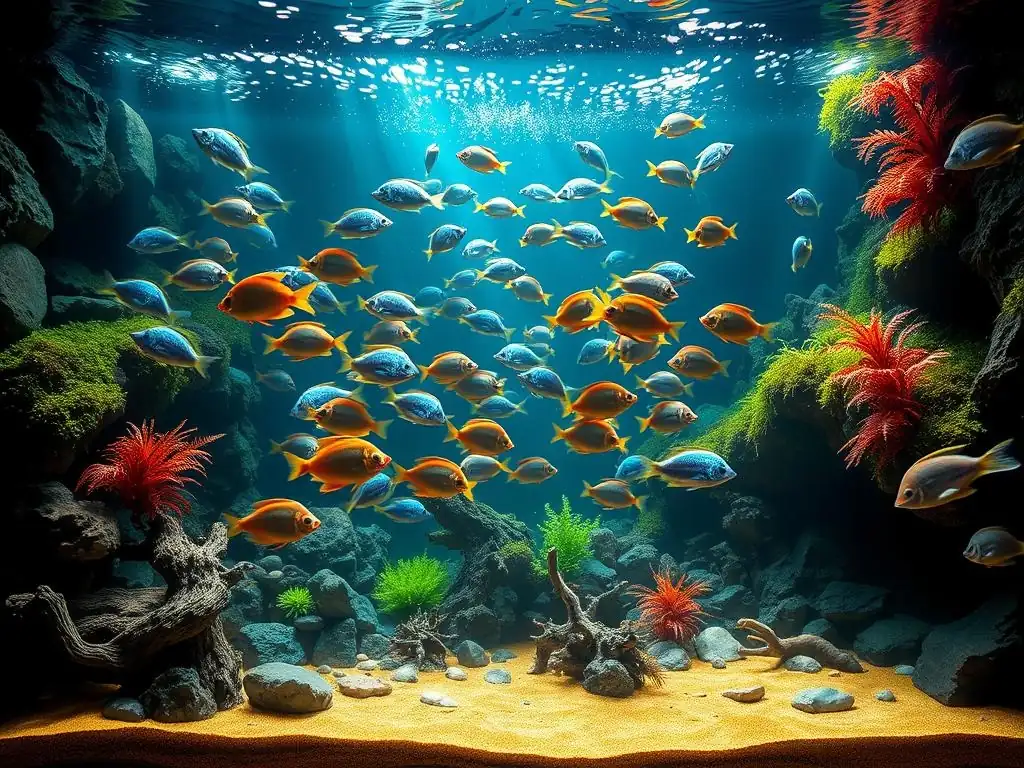
Ever dreamt of a thriving underwater kingdom ruled by majestic cichlids? Setting up a large cichlid tank isn't just about size; it's about creating the perfect ecosystem. Dive in to uncover the essential secrets for a stunning and healthy environment, focusing on species like Oscars and Severums. What key factors determine success beyond the basics? Let's explore...
- Large Cichlid Tank Setup Essentials: Thriving with Oscars & Severums
- Introduction: Building the Ideal Habitat for Large New World Cichlids
- Understanding the Needs of Oscars and Severums: Key Considerations
- Essential Equipment for a Large Cichlid Tank Setup
- Substrate and Decor for Large Cichlid Aquariums
- Water Chemistry and Cycling: Establishing a Stable Aquarium Ecosystem
- Feeding Oscars and Severums: A Balanced Diet for Optimal Health
- Tank Maintenance Schedule: Keeping Your Cichlid Tank Thriving
- Common Problems and Solutions in Large Cichlid Tanks
- Choosing Tank Mates for Oscars and Severums: Compatibility and Considerations
-
Advanced Techniques for Large Cichlid Keeping
- Aquascaping for Cichlids: Creating Functional and Aesthetically Pleasing Environments
- Breeding Oscars and Severums: Considerations for Successful Spawning
- Implementing a UV Sterilizer: Enhancing Water Clarity and Reducing Pathogens
- Using Denitrators for Nitrate Reduction: Maintaining Optimal Water Quality
- Conclusion: Achieving Success in Large Cichlid Tank Management
-
Frequently Asked Questions
- How much larger is a "large" cichlid tank setup, compared to a standard community tank?
- What are the essential filtration requirements for a large cichlid tank?
- What types of substrate are best suited for a large cichlid tank, considering their digging habits?
- What are some key considerations when selecting tankmates for large cichlids like Oscars and Severums?
- How often should I perform water changes in a large cichlid tank, and what percentage of the water should I change?
- Final Reflection: Cultivating Aquatic Kingdoms
- Unleash the Majesty: Create the Ultimate Cichlid Paradise!
Large Cichlid Tank Setup Essentials: Thriving with Oscars & Severums
Introduction: Building the Ideal Habitat for Large New World Cichlids
Setting up an aquarium for large New World cichlids like Oscars (Astronotus ocellatus) and Severums (Heros severus) goes far beyond simply choosing a tank. These charismatic and intelligent fish demand a meticulously planned and maintained environment to truly thrive. Their significant size, unique temperaments, and substantial bioload necessitate a large cichlid tank setup that prioritizes robust filtration, stable water parameters, and appropriate decor.
This comprehensive guide will delve into the essential considerations for establishing a successful large cichlid tank setup, moving past the basics to ensure a healthy and stimulating habitat. From understanding their growth patterns to implementing advanced filtration techniques and managing daily care, we will cover every aspect required to keep your Oscars and Severums vibrant and long-lived.
Understanding the Needs of Oscars and Severums: Key Considerations
Oscar and Severum Size and Growth Rate: Planning for Adult Dimensions
Oscars are renowned for their impressive size and rapid growth. A juvenile Oscar, often purchased at 2-3 inches, can quickly reach 6-8 inches within its first year with proper feeding and a suitable environment. Adult Oscars commonly attain lengths of 10-14 inches (25-35 cm), with some individuals even exceeding this. Planning a large cichlid tank setup must account for these adult dimensions, as cramped conditions will stunt growth, cause stress, and lead to health issues.
Severums, while slightly smaller than Oscars, are still substantial fish. They typically grow to 8-10 inches (20-25 cm) in length, though some varieties can reach up to 12 inches. Their growth rate is also significant, requiring ample space from a young age. Both species can live for 10-15 years or even longer in well-maintained aquariums, emphasizing the long-term commitment and the necessity of a spacious, well-designed large cichlid tank setup from the outset.
Temperament and Compatibility: Choosing Peaceful Tank Mates
Oscars are known for their semi-aggressive and predatory nature. While they can be personable with their owners, they are opportunistic feeders and can be territorial, especially as they mature. Their aggression is often directed at smaller fish, which they may view as food. Therefore, selecting tank mates for an Oscar-dominated large cichlid tank setup requires careful consideration of size and temperament.
Severums are generally more peaceful than Oscars, often exhibiting a more docile demeanor. However, they are still cichlids and can display territorial behavior, particularly during breeding or if space is limited. They are less likely to prey on smaller fish but can still be assertive. The success of a community large cichlid tank setup hinges on providing sufficient space and choosing tank mates that are robust, similarly sized, and can hold their own without being overly aggressive themselves.
Water Parameter Preferences: Maintaining Stable and Suitable Water Quality
Maintaining stable and appropriate water parameters is critical for the health of Oscars and Severums. Both species thrive in warm, slightly acidic to neutral water. The ideal temperature range is generally 74-80°F (23-27°C). For pH, Oscars prefer a range of 6.0-7.5, while Severums often do best in slightly softer, more acidic water, typically 6.0-7.0. Water hardness (GH) should be kept between 4-15 dGH.
Given their significant bioload, these large cichlids produce a substantial amount of waste, which can quickly degrade water quality. High levels of ammonia and nitrite are lethal, and even elevated nitrates can cause long-term stress and health problems. Therefore, a successful large cichlid tank setup requires not only hitting these target parameters but, more importantly, maintaining their stability through robust filtration and diligent maintenance to prevent fluctuations that can stress the fish.
Essential Equipment for a Large Cichlid Tank Setup
Tank Size and Dimensions: Selecting the Appropriate Volume for Adult Fish
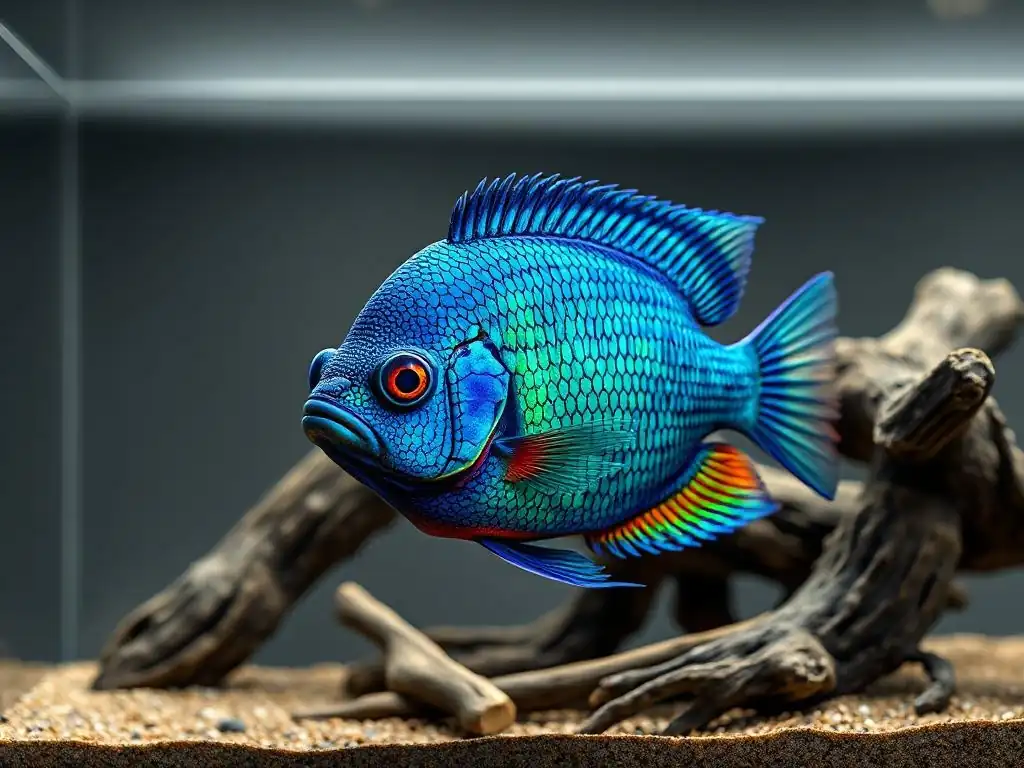
The most crucial piece of equipment for a large cichlid tank setup is the tank itself, and size truly matters. For a single adult Oscar, a minimum of 75 gallons (approximately 280 liters) is often cited, but 100-125 gallons (375-470 liters) is strongly recommended to allow for full growth and long-term well-being. If you plan to keep a pair of Oscars or house them with compatible tank mates, a 150-200 gallon (560-750 liters) aquarium or larger becomes necessary.
For Severums, a single adult can be comfortably housed in a 55-75 gallon (200-280 liter) tank. However, if keeping a pair or a small group, a 125-gallon (470 liter) tank or more is advisable to provide adequate territory and reduce potential aggression. Beyond volume, consider the tank's footprint: longer and wider tanks offer more usable swimming space and help to distribute aggression, making a 6-foot long tank an excellent choice for a community large cichlid tank setup.
Filtration System: Over-Filtration for Optimal Water Quality
Due to the high bioload of large cichlids, "over-filtration" is not just a recommendation but a necessity for a healthy large cichlid tank setup. The filtration system should be rated for at least 2-3 times the actual tank volume to effectively process the significant amount of waste produced. For instance, a 125-gallon tank would ideally benefit from a filter system designed for 250-375 gallons. This ensures efficient removal of particulate matter, dissolved organic compounds, and the rapid conversion of toxic nitrogenous waste.
A comprehensive filtration system for a large cichlid tank setup should incorporate all three types of filtration: mechanical, chemical, and biological. Mechanical filtration physically removes debris and uneaten food. Chemical filtration, often using activated carbon, removes dissolved organics, odors, and discoloration. Biological filtration, the most critical, involves beneficial bacteria converting harmful ammonia and nitrite into less toxic nitrate. A robust system excels in all three areas to maintain pristine water conditions.
Canister Filters: Powerful and Efficient Filtration Solutions
Canister filters are a popular and highly effective choice for a large cichlid tank setup due to their large media capacity and powerful flow rates. These external filters draw water from the aquarium, push it through multiple layers of filter media, and return clean water. Their sealed design allows for customizable media configurations, enabling aquarists to optimize mechanical, biological, and chemical filtration to suit their specific needs.
For a 100-gallon cichlid tank, a single large canister filter with a flow rate of 400-600 GPH (gallons per hour) might suffice, but many experienced aquarists opt for two large canister filters on tanks 125 gallons or larger. This provides redundant filtration, ensures superior water turnover, and offers ample space for extensive biological media, which is crucial for processing the high nitrogenous waste output characteristic of a large cichlid tank setup.
Sump Systems: Advanced Filtration and Increased Water Volume
Sump systems represent an advanced and highly efficient filtration method, particularly favored for very large cichlid tanks, typically 150 gallons and up. A sump is a separate, often smaller, aquarium located below the main display tank. Water overflows from the main tank into the sump, passes through various filtration stages (filter socks, biological media, chemical media), and is then pumped back into the main tank. This system significantly increases the total water volume of the aquarium system, enhancing stability and diluting waste products.
The benefits of a sump for a large cichlid tank setup are numerous: superior biological filtration capacity due to the vast space for media, easy access for maintenance without disturbing the display tank, and the ability to hide heaters, skimmers, and other equipment. For example, a 200-gallon cichlid tank paired with a 40-75 gallon sump effectively increases the total system volume by 20-37%, providing a much larger buffer against water parameter fluctuations and making nitrate management more efficient.
Heaters and Temperature Control: Maintaining a Stable Tropical Environment
Maintaining a consistent and stable water temperature is vital for the health of Oscars and Severums, as they are tropical fish. For a large cichlid tank setup, using multiple smaller heaters is often more effective and safer than relying on a single large unit. This strategy provides redundancy; if one heater fails, the other can still maintain a suitable temperature, preventing rapid and potentially dangerous temperature drops. A general guideline is to provide 3-5 watts of heating power per gallon of tank volume.
For a 125-gallon cichlid tank, for instance, two 150-200 watt heaters placed at opposite ends of the aquarium will ensure more even heat distribution and provide a safety net. It is crucial to use a reliable aquarium thermometer (or two, for cross-referencing) to monitor the water temperature accurately. Some advanced large cichlid tank setups also incorporate external temperature controllers, which offer precise temperature management and can shut off heaters if they malfunction and overheat, adding an extra layer of protection.
Lighting: Balancing Plant Growth and Algae Control
While large cichlids do not have specific lighting requirements beyond a natural day/night cycle, lighting plays a role in enhancing the visual appeal of the large cichlid tank setup and, if desired, supporting plant growth. Moderate lighting is generally sufficient to highlight the vibrant colors of your fish and decor. Overly intense or prolonged lighting can contribute to undesirable algae blooms, especially in a high-nutrient environment like a cichlid tank.
For a large cichlid tank setup without live plants, 8-10 hours of moderate LED lighting per day is typically adequate to simulate a natural cycle and allow for optimal viewing. If hardy live plants are incorporated, a full-spectrum LED light designed for moderate plant growth, running for 8-12 hours, would be appropriate. The primary goal should be to illuminate the aquarium effectively without fostering aggressive algae growth, which can be a persistent challenge in a cichlid aquarium.
Substrate and Decor for Large Cichlid Aquariums
Choosing the Right Substrate: Gravel vs. Sand Considerations
When selecting substrate for a large cichlid tank setup, both gravel and sand have their merits and drawbacks. Larger gravel (3-5mm) is generally less prone to being forcefully moved by the powerful digging and sifting behaviors of Oscars and Severums. It also allows detritus to settle between the pieces, making it easier to remove with a gravel vacuum during routine maintenance. However, if not thoroughly cleaned, gravel can trap significant amounts of waste, leading to anaerobic pockets.
Fine sand (0.5-1mm), such as pool filter sand or play sand, offers a more natural aesthetic and allows cichlids to engage in their natural sifting behaviors without damaging their mouths. Waste tends to sit on top of sand, making it visually obvious and often easier to siphon off. For a large cichlid tank setup with sand, a depth of 1-2 inches (2.5-5 cm) is usually sufficient to prevent deep anaerobic zones while still allowing for natural digging. Powerful filtration is essential to manage any sand stirred up by active fish.
Rockwork and Hardscape: Creating Hiding Places and Territories
Robust and stable rockwork is an indispensable element in any large cichlid tank setup. Large cichlids are strong and can easily dislodge or even topple lighter decorations, potentially injuring themselves or damaging the aquarium. Therefore, all rock structures must be heavy, stable, and ideally interlocked or secured with aquarium-safe silicone to prevent collapses. Safe choices include slate, lava rock, river stones, and large, smooth boulders.
The design of the rock formations should focus on creating functional spaces: caves, overhangs, and visual barriers. These structures provide essential hiding places where fish can retreat when stressed or establish territories to reduce aggression. For a large cichlid tank setup with multiple fish, ensuring a variety of secure hiding spots helps to dilute aggression and allows subordinate fish to escape dominant ones. Always ensure there are no sharp edges that could abrade or cut the fish.
Driftwood: Adding Natural Elements and Water Chemistry Benefits
Driftwood is an excellent addition to a large cichlid tank setup, offering both aesthetic appeal and practical benefits. It provides a natural look, mimics the root systems found in their native habitats, and offers additional hiding spots and visual breaks. Furthermore, driftwood slowly releases tannins into the water, which can slightly lower the pH and add a natural, tea-colored tint, creating a "blackwater" effect that can reduce stress in cichlids and inhibit the growth of some pathogens. Popular types include Mopani wood, Malaysian driftwood, and Manzanita.
Before introducing any driftwood into a large cichlid tank setup, it is crucial to thoroughly pre-soak it for several days to several weeks. This process helps to leach out excess tannins, preventing excessive discoloration of the tank water, and ensures the wood becomes waterlogged enough to sink. Large, intricate pieces of driftwood can serve as impressive focal points and provide extensive surface area for beneficial bacteria, further contributing to the biological filtration of the cichlid aquarium.
Live Plants: Selecting Hardy Species Resistant to Cichlid Behavior
Incorporating live plants into a large cichlid tank setup can be challenging, as Oscars and Severums are notorious for digging, uprooting, and sometimes even eating plants. Therefore, only very hardy, robust, and preferably root-feeding or rhizome-based plants should be considered. Species known to withstand cichlid attention include Anubias species (e.g., Anubias barteri, Anubias nana), Java Fern (Microsorum pteropus), and larger Cryptocoryne species (e.g., Cryptocoryne aponogetifolia, Cryptocoryne usteriana).
These resilient plants should be securely anchored to driftwood or rocks using fishing line or super glue, rather than planted directly in the substrate, to prevent them from being disturbed. Alternatively, some aquarists opt for potted plants that are too heavy for the cichlids to move. While maintaining a planted large cichlid tank setup requires careful selection and anchoring, the presence of live plants can significantly enhance the natural feel of the aquarium, provide additional oxygenation, and assist in nitrate absorption.
Water Chemistry and Cycling: Establishing a Stable Aquarium Ecosystem
The Nitrogen Cycle: Understanding Biological Filtration Processes
Understanding the nitrogen cycle is foundational to establishing any healthy aquarium, and it is particularly critical for a large cichlid tank setup due to the high bioload these fish produce. The nitrogen cycle is a natural biological process that converts highly toxic fish waste products into less harmful substances. It begins with ammonia (NH3/NH4+), which is released from fish waste, uneaten food, and decaying plant matter. Ammonia is extremely toxic to fish, even in small concentrations.
Specialized beneficial bacteria, primarily Nitrosomonas, colonize filter media and surfaces within the aquarium, converting ammonia into nitrite (NO2-). While less toxic than ammonia, nitrite is still highly dangerous to fish, impeding their ability to absorb oxygen. A second group of beneficial bacteria, Nitrobacter, then converts nitrite into nitrate (NO3-), which is significantly less toxic and can be managed through regular water changes or absorbed by live plants. Establishing a robust and complete nitrogen cycle is the bedrock of a stable and thriving large cichlid tank setup.
Initial Cycling Process: Preparing the Tank for Fish Introduction
Before any fish are introduced, a large cichlid tank setup must undergo the initial cycling process to establish a healthy colony of beneficial bacteria. The "fishless cycle" is the safest and most recommended method, as it avoids exposing fish to harmful ammonia and nitrite spikes. This process involves adding an ammonia source (such as pure ammonia solution or a pinch of fish food) to the empty tank, mimicking the waste production of fish.
During the fishless cycle, daily water testing for ammonia, nitrite, and nitrate is essential. Ammonia levels will initially rise, then nitrite levels will spike as ammonia is converted. Finally, as the bacteria colonies mature, both ammonia and nitrite will consistently read zero, and nitrate will begin to accumulate, indicating a fully cycled tank. This process typically takes 4-8 weeks but is crucial for the long-term health and survival of fish in a large cichlid tank setup, preventing "new tank syndrome" and ensuring a stable environment.
Regular Water Changes: Maintaining Water Quality and Parameter Stability
Regular and consistent water changes are arguably the most critical maintenance task for a large cichlid tank setup. Due to their size and high metabolism, Oscars and Severums produce a substantial amount of waste, leading to a rapid accumulation of nitrates, dissolved organic compounds, and other pollutants. Even with excellent filtration, water changes are necessary to dilute these compounds and replenish essential minerals that are consumed over time.
A weekly water change of 25-30% of the tank volume is generally recommended for a large cichlid tank setup. For example, a 125-gallon tank would require a 30-40 gallon water change each week. This routine helps to keep nitrate levels low, prevents the buildup of inhibitors that can stunt fish growth and weaken their immune systems, and maintains overall water parameter stability. Using a dechlorinator with each water change is essential to neutralize chlorine and chloramines found in tap water.
Monitoring Water Parameters: Using Test Kits for Ammonia, Nitrite, and Nitrate
Consistent monitoring of water parameters is non-negotiable for a healthy large cichlid tank setup. A reliable, liquid-based master freshwater test kit is an indispensable tool for every aquarist. This kit allows for accurate measurement of ammonia, nitrite, and nitrate levels, which are direct indicators of the nitrogen cycle's health and the overall water quality. pH and temperature should also be checked regularly, ideally weekly.
During the initial cycling process, daily testing of ammonia, nitrite, and nitrate is necessary to track the progress of bacterial colonization. Once the tank is fully cycled and fish are introduced, weekly testing, typically before a water change, is recommended. This routine allows aquarists to identify any deviations from optimal parameters early, enabling prompt corrective action before stress or disease impacts the fish. Proactive monitoring is a hallmark of successful large cichlid tank setup management.
Feeding Oscars and Severums: A Balanced Diet for Optimal Health
High-Quality Cichlid Pellets: The Foundation of Their Diet
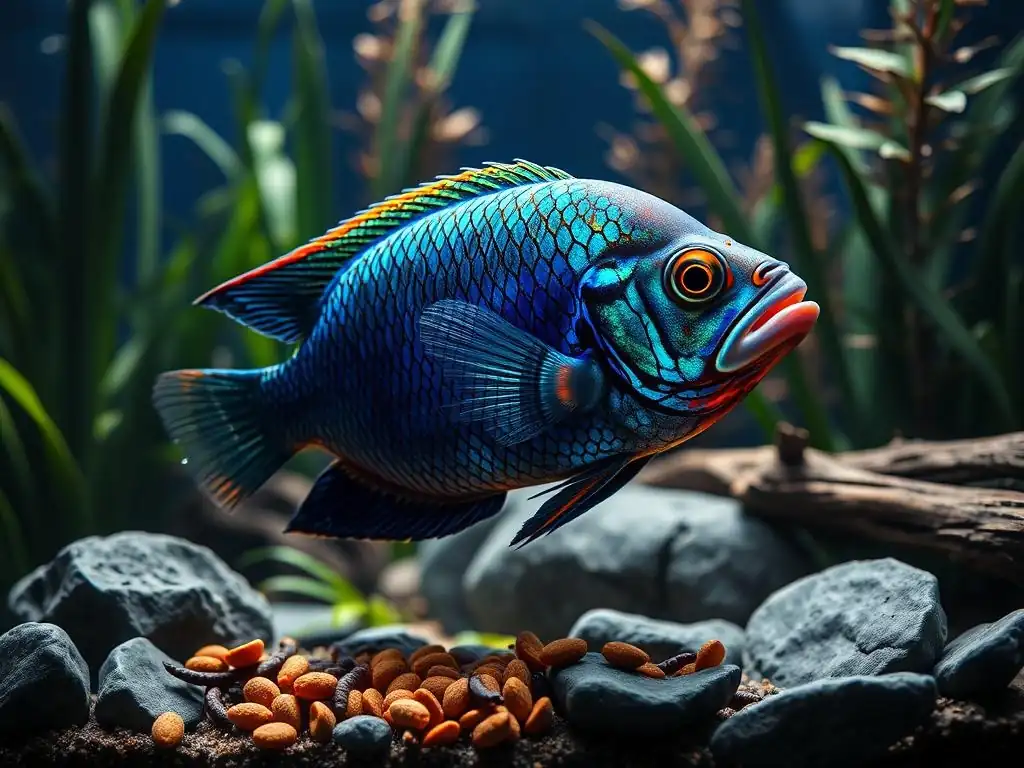
For Oscars and Severums in a large cichlid tank setup, high-quality, sinking cichlid pellets should form the cornerstone of their daily diet. These pellets are specifically formulated to meet the complex nutritional requirements of large omnivorous to carnivorous cichlids, providing a balanced mix of proteins, fats, vitamins, and minerals. Look for pellets with a protein content of at least 40-45%, as this supports their rapid growth and muscle development.
Reputable brands such as Hikari Cichlid Gold/Staple, Omega One, and New Life Spectrum offer excellent cichlid-specific formulas. Consistent feeding of these high-quality pellets helps prevent nutritional deficiencies, which can lead to various health issues, including conditions like Hexamita (often called "hole-in-the-head disease") in a large cichlid tank setup. Ensure the pellets are appropriately sized for the fish's mouth to prevent choking or difficulty in consumption.
Supplementing with Frozen Foods: Variety and Nutritional Enrichment
While pellets provide a solid foundation, supplementing the diet with a variety of frozen foods offers crucial nutritional enrichment, stimulates natural foraging behaviors, and prevents dietary boredom. Suitable frozen options for a large cichlid tank setup include bloodworms, brine shrimp, Mysis shrimp, krill, and chopped, unsalted seafood like shrimp, squid, or white fish (e.g., tilapia, cod).
These frozen foods should be thawed thoroughly before feeding and can be offered 2-3 times per week. They provide a diverse range of nutrients, including essential amino acids and fatty acids, that may be less abundant in dry foods. Regular supplementation with frozen foods can significantly enhance the coloration, vitality, and overall health of your Oscars and Severums, making them more vibrant inhabitants of your large cichlid tank setup.
Live Foods: Considerations for Nutritional Value and Parasite Risks
The use of live foods, particularly feeder fish like goldfish or minnows, should be approached with extreme caution, and is generally discouraged for a large cichlid tank setup. While they may seem like a natural food source, feeder fish often have poor nutritional value (high in fat, low in essential nutrients) and, more critically, carry a very high risk of introducing diseases and parasites into your established aquarium. These pathogens can be devastating to your valuable cichlids.
Safer live food alternatives, if you choose to offer them, include cultured earthworms, crickets (ensure they are gut-loaded with nutrients), or blackworms, which typically carry a much lower disease risk than feeder fish. However, even these should be offered sparingly and only sourced from reputable, clean suppliers. The benefits of live foods generally do not outweigh the risks when compared to the comprehensive nutrition provided by high-quality pellets and frozen diets in a well-managed large cichlid tank setup.
Feeding Frequency and Portion Control: Preventing Overfeeding and Waste Buildup
For adult Oscars and Severums in a large cichlid tank setup, feeding once or twice a day is typically sufficient. Juveniles, due to their rapid growth rate, may benefit from 2-3 smaller feedings daily. The cardinal rule of feeding is to offer only what the fish can consume entirely within 2-3 minutes. This prevents uneaten food from decaying in the tank, which is a major contributor to poor water quality.
Overfeeding is a common mistake that leads to a cascade of problems in a large cichlid tank setup, including elevated nitrate levels, cloudy water, unsightly algae blooms, and increased stress on the filtration system. Furthermore, chronic overfeeding can lead to obesity and digestive issues in the fish themselves, shortening their lifespan. Adjust feeding amounts based on the fish's activity level, size, and the overall cleanliness of the tank.
Tank Maintenance Schedule: Keeping Your Cichlid Tank Thriving
Weekly Maintenance Tasks: Water Changes, Gravel Vacuuming, and Algae Removal
Consistent weekly maintenance is the backbone of a healthy large cichlid tank setup. The most critical task is performing a 25-30% water change. As you drain the water, use a gravel vacuum to thoroughly clean the substrate, removing uneaten food, fish waste, and other detritus that accumulate. This action is paramount for preventing the buildup of nitrates and other pollutants that can degrade water quality and stress your fish.
Simultaneously, use an aquarium-safe algae scraper or magnetic cleaner to remove any algae buildup from the glass surfaces. This not only improves aesthetics but also prevents excessive algae growth from competing for nutrients. While performing these tasks, take a moment to visually inspect your fish for any signs of disease or stress, and ensure all equipment, such as heaters and filters, are functioning correctly. This routine is essential for maintaining pristine conditions in a large cichlid tank setup.
Monthly Maintenance Tasks: Filter Cleaning and Equipment Inspection
In addition to weekly tasks, a more thorough filter cleaning should be performed approximately once a month for a large cichlid tank setup. For canister filters, this involves opening the unit and gently rinsing mechanical filter media (sponges, filter floss) in old tank water that has been siphoned during a water change. Never rinse filter media under tap water, as the chlorine can kill beneficial bacteria crucial for biological filtration. Chemical media, such as activated carbon, should also be replaced monthly as it becomes exhausted.
During this monthly routine, take the opportunity to inspect all aquarium equipment. Check heaters for cracks or signs of malfunction, ensure powerheads and air pumps are running efficiently, and look for any blockages in tubing or filter intakes. Cleaning pre-filters and impellers can significantly improve filter performance. This proactive approach to equipment inspection ensures all components of your large cichlid tank setup are operating optimally and helps prevent sudden failures.
Long-Term Maintenance: Substrate Replacement and Tank Integrity
While not a frequent occurrence, certain long-term maintenance tasks contribute to the overall health and longevity of a large cichlid tank setup. Over time, even with regular gravel vacuuming, fine detritus and organic matter can accumulate deep within the substrate, contributing to nitrate buildup and potentially anaerobic pockets. A partial substrate replacement, perhaps 25-30% of the substrate every 1-2 years, can help refresh the bed and remove deeply embedded waste. This should be done in stages to minimize disruption to the beneficial bacteria residing in the substrate.
Additionally, it's prudent to periodically inspect the structural integrity of the aquarium itself. Check the silicone seams for any signs of degradation, peeling, or potential leaks. Ensure the aquarium stand remains level and stable, especially given the immense weight of a fully operational large cichlid tank setup. Addressing these long-term concerns proactively can prevent major issues and ensure the safety and durability of your cichlid aquarium for many years.
Common Problems and Solutions in Large Cichlid Tanks
Cloudy Water: Causes, Prevention, and Solutions
Cloudy water is a common issue in aquariums, and in a large cichlid tank setup, it often indicates an underlying problem. A milky white cloudiness typically points to a bacterial bloom, common in newly cycled tanks or after significant disturbances to the biological filter. Green cloudy water, on the other hand, is a single-celled algae bloom. Other causes include overfeeding, insufficient filtration, or an accumulation of decaying organic matter.
To prevent cloudy water, ensure your tank is fully cycled before adding fish, avoid overfeeding, and maintain a robust filtration system with regular cleaning. Solutions depend on the cause: for bacterial blooms, often patience and consistent water changes (e.g., 25% daily for a few days) are key, as the bacteria will die off once the nutrient source is consumed. For algae blooms, reduce lighting duration, perform water changes, and address nutrient excess. Enhancing mechanical filtration can also help clear particulate cloudiness in a large cichlid tank setup.
Algae Blooms: Prevention and Control Strategies
Algae blooms are a frequent frustration for aquarists, and they are particularly common in a large cichlid tank setup due to the high nutrient load from fish waste. The primary causes are excess nutrients (nitrates and phosphates) and/or too much light. Green water, brown diatom algae (common in new tanks), and various types of filamentous algae can quickly coat surfaces and obscure views.
Prevention strategies include strict adherence to a regular water change schedule (e.g., weekly 25-30%), avoiding overfeeding, and limiting lighting duration to 8-10 hours per day. Ensuring your filtration system is efficient at removing nitrates is also crucial. For control, manual removal (scraping glass, scrubbing decor) is the first step. Reducing light exposure, using blackout periods (2-3 days with no light), or in persistent cases, implementing a UV sterilizer can effectively clear green water. Addressing the root cause, typically nutrient imbalance, is paramount for long-term algae control in a large cichlid tank setup.
Disease Prevention and Treatment: Recognizing and Addressing Common Ailments
Prevention is the cornerstone of disease management in a large cichlid tank setup. Maintaining pristine water quality, providing a balanced and nutritious diet, avoiding overstocking, and strictly quarantining all new fish for 2-4 weeks are vital preventative measures. Despite best efforts, diseases can still occur. Common ailments in large cichlids include Ich (white spot disease), Hexamita (Hole-in-the-Head disease, often linked to poor water quality and diet), various bacterial infections (e.g., fin rot, body sores), and parasitic infestations.
Recognizing symptoms early is crucial for successful treatment. Look for signs such as clamped fins, lethargy, loss of appetite, abnormal swimming, rapid breathing, visible spots, lesions, or frayed fins. If possible, isolate affected fish in a hospital tank to treat them separately, preventing the spread of disease and avoiding medicating the entire display tank. Always follow medication instructions precisely. A healthy and stable large cichlid tank setup significantly reduces the likelihood of disease outbreaks.
Aggression Issues: Managing Territory Disputes and Establishing Hierarchy
Aggression is a natural behavioral trait for many cichlids, including Oscars and Severums, but it can escalate into problematic levels in a large cichlid tank setup if not managed. Aggression often stems from insufficient space, a lack of adequate hiding places, or incompatible tank mates. Signs of aggression include fin nipping, chasing, nipping at scales, bullying, or outright physical attacks that can lead to injury or even death.
Solutions involve providing ample space as dictated by tank size recommendations, creating numerous visual barriers and hiding spots using robust decor like rockwork and driftwood. This allows subordinate fish to escape and helps define individual territories, which can diffuse disputes. Carefully selecting tank mates that are similarly sized and temperamentally compatible is also vital. Sometimes, simply rearranging the decor can reset territories and reduce aggression. In severe, persistent cases, separating highly aggressive individuals or rehoming them may be necessary to maintain peace within the large cichlid tank setup.
Choosing Tank Mates for Oscars and Severums: Compatibility and Considerations
Suitable Tank Mates: Species that Coexist Peacefully with Cichlids
Choosing suitable tank mates for a large cichlid tank setup with Oscars and Severums requires careful consideration of size, temperament, and water parameter compatibility. Ideal tank mates must be large enough not to be considered food, robust enough to handle potential aggression, and able to thrive in similar water conditions. Good options for Oscars include other large, semi-aggressive cichlids like Green Terrors, Jack Dempseys, or Convict Cichlids (though manage aggression).
Large armored catfish such as Common Plecos, Sailfin Plecos, or even large Synodontis species are often compatible. Large schooling fish like Silver Dollars, Giant Danios, or Tinfoil Barbs can also work, provided the tank is exceptionally spacious (e.g., 150+ gallons) to allow them ample swimming room away from the cichlids. For Severums, which are generally more peaceful, large gouramis or even some larger rainbowfish can sometimes be considered in a spacious large cichlid tank setup, alongside the catfish options.
Unsuitable Tank Mates: Species to Avoid Due to Aggression or Size
A critical aspect of a successful large cichlid tank setup is knowing which species to avoid as tank mates. Any small fish, such as neon tetras, guppies, small corydoras, or small rasboras, will almost certainly be viewed and consumed as food by Oscars. Similarly, delicate, long-finned fish like Angelfish or Bettas are highly susceptible to fin nipping and stress from active cichlids.
Avoid overly aggressive or highly territorial fish that could outcompete or constantly harass your Oscars or Severums, leading to chronic stress. Slow-moving or shy species will also struggle to compete for food and secure hiding spots in a dynamic large cichlid tank setup. Furthermore, any fish requiring vastly different water parameters (e.g., very soft, acidic water or very hard, alkaline water) should be excluded to maintain the specific conditions beneficial to your large cichlids. Thorough research on specific species compatibility is always recommended.
Introducing New Fish: Quarantine and Acclimation Protocols
The introduction of new fish to an established large cichlid tank setup is a critical point that requires strict protocols to prevent the introduction of diseases and parasites. Always quarantine new fish in a separate, smaller tank for a minimum of 2-4 weeks. This isolation period allows you to observe the new arrivals for any signs of illness, such as Ich, fin rot, or unusual behavior, and treat them if necessary, without risking your entire established fish population.
When the quarantine period is complete and the new fish appear healthy, acclimate them slowly to the main tank's water parameters. The drip acclimation method, where water from the main tank is slowly dripped into the new fish's container over an hour or more, is highly recommended. Dimming the main tank lights during introduction can help reduce stress and potential aggression from established residents. Introducing new fish during feeding time can also distract current inhabitants, allowing the newcomers to settle more peacefully into the large cichlid tank setup.
Advanced Techniques for Large Cichlid Keeping
Aquascaping for Cichlids: Creating Functional and Aesthetically Pleasing Environments
Aquascaping a large cichlid tank setup goes beyond mere aesthetics; it's about crafting a functional environment that caters to their natural behaviors and needs. The focus should be on robust, heavy hardscape elements like large, stable rocks and substantial pieces of driftwood. These should be securely arranged to provide not only visual appeal but also numerous stable structures, caves, and overhangs that serve as hiding spots and territorial markers.
When designing the layout, consider the swimming patterns of Oscars and Severums. Provide open swimming areas in the mid-water column, alongside plenty of sheltered spots near the bottom for retreat. For a truly impressive and resilient large cichlid tank setup, integrate large, durable plants such as Anubias or Java Fern, securely tied to rocks or wood. Strategic placement of decor can create clear lines of sight and visual barriers, helping to break up the tank and diffuse aggression among inhabitants, making the environment both beautiful and harmonious.
Breeding Oscars and Severums: Considerations for Successful Spawning
Breeding Oscars and Severums in a home large cichlid tank setup is an achievable but demanding endeavor, often requiring a dedicated environment. A spacious tank, typically 150-200 gallons or more, is usually necessary to house a breeding pair, as they become highly territorial and aggressive during spawning and fry-rearing. Both species are substrate spawners, preferring to lay their eggs on flat, smooth surfaces such as large pieces of slate, flat rocks, or sometimes even the tank bottom. Providing several such surfaces increases the likelihood of spawning.
To stimulate spawning, water parameters should be stable, and often slightly softer and more acidic (pH 6.5-7.0) with a temperature elevated to 78-82°F (25.5-28°C) can encourage breeding. Once eggs are laid, the parents will meticulously guard them, becoming extremely aggressive towards any other tank inhabitants. Therefore, any other fish must be removed from the breeding large cichlid tank setup. Raising fry requires a separate grow-out tank and specialized feeding with tiny, high-protein foods like newly hatched brine shrimp.
Implementing a UV Sterilizer: Enhancing Water Clarity and Reducing Pathogens
An excellent advanced addition to a large cichlid tank setup is a UV sterilizer. This device uses ultraviolet (UV-C) light to kill free-floating microorganisms in the water column as it passes through the unit. This includes single-celled algae, bacteria, viruses, and some free-floating parasites. The result is significantly enhanced water clarity, often leading to crystal-clear water, and a substantial reduction in the overall pathogen load within the aquarium.
For optimal effectiveness, it is crucial that the UV sterilizer is appropriately sized for the tank volume and that the water flow rate through it is correct. A slower flow rate generally allows for longer exposure to the UV light, increasing its effectiveness in killing pathogens. While a UV sterilizer is not a substitute for proper filtration and diligent water changes, it provides an extra layer of protection against disease outbreaks and helps maintain pristine water conditions, making it a valuable tool for any high-bioload large cichlid tank setup.
Using Denitrators for Nitrate Reduction: Maintaining Optimal Water Quality
Denitrators are advanced filtration devices designed to specifically target and reduce nitrate levels in an aquarium by fostering anaerobic (oxygen-free) bacteria. These bacteria perform a process called denitrification, converting nitrate (NO3-) into harmless nitrogen gas (N2), which then off-gasses from the water. This can be particularly beneficial in a large cichlid tank setup where the high bioload inevitably leads to a rapid accumulation of nitrates, even with regular water changes.
Various types of denitrators exist, including coil denitrators, sulfur denitrators, and carbon-based denitrators, each requiring specific setup and maintenance. They operate by creating an environment where oxygen is depleted, forcing bacteria to use nitrate as an oxygen source. While not essential for all cichlid keepers, a well-implemented denitrifier can significantly extend the time between water changes or provide superior nitrate control in very large or heavily stocked large cichlid tank setups, contributing to exceptional long-term water quality.
Conclusion: Achieving Success in Large Cichlid Tank Management
Successfully managing a large cichlid tank setup for Oscars and Severums requires a comprehensive understanding of their specific needs and a commitment to diligent care. The foundation lies in providing ample space, implementing powerful and multi-faceted filtration, and maintaining stable water parameters through consistent monitoring and regular water changes. A balanced diet, appropriate decor that offers both stimulation and security, and proactive disease prevention are equally vital.
While the initial investment in a proper large cichlid tank setup and the ongoing maintenance may seem significant, the reward is a vibrant, healthy, and engaging aquatic environment. By adhering to these essential guidelines and continuously observing your fish, you can cultivate a thriving home for these magnificent New World cichlids, ensuring they live long, fulfilling lives in their custom-designed cichlid aquarium.
Frequently Asked Questions
How much larger is a "large" cichlid tank setup, compared to a standard community tank?
A "large" cichlid tank typically refers to tanks much larger than a standard community tank. Generally, you should aim for a minimum of 75 gallons for smaller cichlids and 125 gallons or more for larger species like Oscars.
What are the essential filtration requirements for a large cichlid tank?
Essential filtration includes a powerful filter capable of turning over the entire tank volume at least 5-7 times per hour. This is needed to handle the significant bioload produced by cichlids.
What types of substrate are best suited for a large cichlid tank, considering their digging habits?
Cichlids often dig, so a smooth, fine gravel or sand substrate is generally preferred. Avoid sharp or coarse substrates that could injure them. Consider the specific needs of the cichlid species you plan to keep.
What are some key considerations when selecting tankmates for large cichlids like Oscars and Severums?
Choose tankmates that are similarly sized and robust enough to avoid being bullied or eaten. Avoid small, delicate fish. Research the temperament and compatibility of each species carefully.
How often should I perform water changes in a large cichlid tank, and what percentage of the water should I change?
Regular water changes are crucial. Aim for 25-50% water changes weekly to maintain water quality. The frequency and percentage can be adjusted based on the tank's bioload and water parameters.
Final Reflection: Cultivating Aquatic Kingdoms
The journey of establishing a thriving large cichlid tank extends far beyond simply filling a glass box with water. It's about creating a balanced ecosystem, a miniature aquatic kingdom that reflects the natural habitats of these magnificent creatures. The principles outlined in this article, from meticulous water chemistry to thoughtfully chosen tankmates, are not just guidelines, but essential cornerstones for ensuring the long-term health and happiness of your Oscars and Severums.
This endeavor, more than just a hobby, becomes a testament to our commitment to responsible pet ownership and an appreciation for the intricate beauty of the natural world. The dedication required to maintain a large cichlid tank mirrors the dedication required to nurture any complex relationship, demanding patience, understanding, and a willingness to adapt. In nature, nothing is perfect and everything is perfect. Trees can be contorted, bent in weird ways, and they're still beautiful.
- Alice Walker. This quote reminds us that even within the controlled environment of our aquariums, embracing the natural behaviors and imperfections of our cichlids leads to a more authentic and rewarding experience.
Now, armed with this knowledge, I encourage you to reflect on your own approach to aquarium keeping. Are you simply providing a space for your cichlids, or are you actively cultivating an environment where they can truly flourish? Take the time to reassess your setup, consider the needs of your fish, and strive to create a truly exceptional aquatic kingdom. The rewards, both for you and your cichlids, will be immeasurable.
Unleash the Majesty: Create the Ultimate Cichlid Paradise!
Thank you for diving deep into the world of large cichlid setups! We hope you've gained valuable insights to enhance your aquarium journey. Now it's time to turn that knowledge into action!
Here are a few steps you can take to elevate your cichlid tank:
- Plan your next cichlid upgrade! Consider researching new plants, décor, or even a larger tank if you're ready to truly spoil your Oscars or Severums.
- Share your own cichlid setup tips and tricks in the comments below – help other hobbyists learn from your experiences!
- Experiment with a new natural food source for your cichlids, such as live blackworms, and observe how it enhances their coloration and vitality.
What's one surprising element you plan to add to your cichlid tank to make it stand out?