
Lionfish Lighting Requirements: Simulating Their Natural Dim Habitat

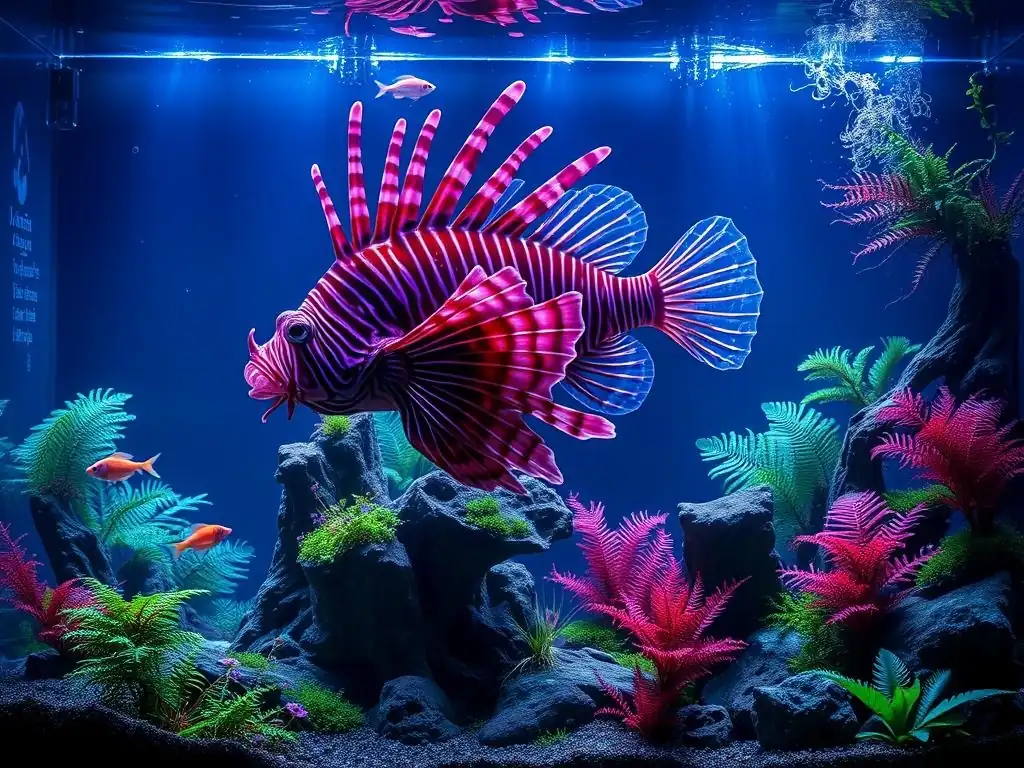
Welcome to Aquarium Mastery, where we unlock the secrets to thriving aquatic ecosystems!
Dive in and discover the intriguing world of lionfish! Ever wondered how to perfectly illuminate a lionfish tank to mimic their natural, shadowy habitat? Our Lionfish Tank Lighting Guide is your comprehensive resource, unraveling the mysteries behind optimal lighting for these fascinating saltwater predators. Get ready to master the art of creating a stunning and healthy environment for your lionfish!
- Understanding Lionfish Lighting Needs for a Thriving Aquarium
- The Importance of Proper Lionfish Tank Lighting
- Choosing the Right Lighting for Your Lionfish Aquarium: A Comprehensive Guide
- Lionfish Lighting Spectrum and Intensity: Key Considerations
- Setting Up Your Lionfish Tank Lighting System
- Creating a Dimly Lit Environment: Techniques and Strategies
- Troubleshooting Common Lionfish Lighting Problems
- Lionfish Lighting and Tank Mates: Compatibility Considerations
- Monitoring and Adjusting Your Lionfish Lighting Setup
- Frequently Asked Questions
- Final Reflection: Illuminating the Lionfish's World
- Dive Deeper: Illuminate Your Lionfish's World!
Understanding Lionfish Lighting Needs for a Thriving Aquarium
Why Lionfish Lighting Differs from Other Saltwater Fish
Lionfish, belonging to the Pterois genus, have distinct lighting requirements that set them apart from many other popular saltwater aquarium inhabitants, especially photosynthetic corals or brightly colored reef fish. Unlike creatures that rely on intense light for photosynthesis or vibrant displays in shallow, sun-drenched reefs, lionfish originate from deeper, more subdued environments. This fundamental difference means that a standard reef tank lighting setup, optimized for high PAR (Photosynthetically Active Radiation) and broad spectrum to promote coral growth, can be detrimental to a lionfish's well-being.
The primary reason for this divergence lies in their natural habitat and predatory nature. Lionfish are not designed to withstand or thrive under the glaring intensity often found in typical reef aquariums. Excessive light can cause significant stress, leading to a weakened immune system, reclusive behavior, and even a reluctance to feed. Therefore, any effective Lionfish tank lighting guide must prioritize creating a dim, naturalistic environment that mimics their ocean home rather than a brightly lit display.
Natural Habitat of Lionfish and Its Impact on Lighting Preferences
Lionfish are predominantly found in the Indo-Pacific region, inhabiting a wide range of depths from shallow lagoons to deeper reef slopes, often descending to 50 meters (approximately 165 feet) or more. For instance, the Common Lionfish ( Pterois volitans) is frequently observed at depths between 10 to 50 meters, where light penetration is significantly reduced compared to the surface. At these depths, sunlight is filtered, resulting in a cooler, dimmer light spectrum with less intensity.
This natural preference for subdued lighting directly impacts their behavior and physiology in an aquarium setting. In their native environment, lionfish utilize the shadows and reduced visibility to ambush prey, relying on their camouflage and swift movements. A Lionfish tank lighting guide should therefore emphasize replicating these dim conditions, providing ample shaded areas through rockwork and decor. This not only makes them feel secure but also encourages more natural hunting behaviors, contributing to their overall health and longevity.
The Importance of Proper Lionfish Tank Lighting
Reduced Stress and Improved Lionfish Health Through Optimal Lighting
Providing the correct lighting is paramount for minimizing stress in lionfish, which directly translates to improved health and longevity. Lionfish are ambush predators that thrive in environments where they can blend into their surroundings and feel secure. Bright, unfiltered light can make them feel exposed and vulnerable, leading to chronic stress. This stress manifests as increased hiding, lethargy, rapid breathing, and even refusal to eat, all of which compromise their immune system and make them susceptible to diseases like marine ich or bacterial infections.
A well-implemented Lionfish tank lighting guide will recommend a low-intensity, appropriate spectrum to create a calming atmosphere. For example, maintaining a PAR level significantly lower than a coral reef tank—perhaps in the range of 20-50 PAR at the substrate level—can dramatically reduce stress. This allows the lionfish to exhibit more natural behaviors, such as slowly cruising the tank, interacting with their environment, and confidently accepting food, ensuring they remain robust and healthy.
Enhanced Lionfish Colors and Patterns with the Right Light Spectrum
While lionfish do not possess photosynthetic pigments that react to light for energy, the right light spectrum can significantly enhance their striking coloration and intricate patterns. Their vibrant reds, browns, and whites, often accented with dark bands, are part of their natural camouflage and warning display. Too much intense, white light can wash out these colors, making the fish appear pale and less visually appealing.
An ideal Lionfish tank lighting guide will suggest a light spectrum that brings out these hues without over-saturating the tank. Lights with a Kelvin temperature range of 6,500K to 10,000K, often with a slight blue tint (actinic or royal blue LEDs at low intensity), can make their reds and oranges pop while maintaining the depth of their darker bands. This subtle enhancement not only makes the lionfish more attractive to the aquarist but also contributes to a more natural-looking display that accurately reflects their beauty in their dimly lit native habitats.
Choosing the Right Lighting for Your Lionfish Aquarium: A Comprehensive Guide
LED Lighting for Lionfish: Advantages and Considerations
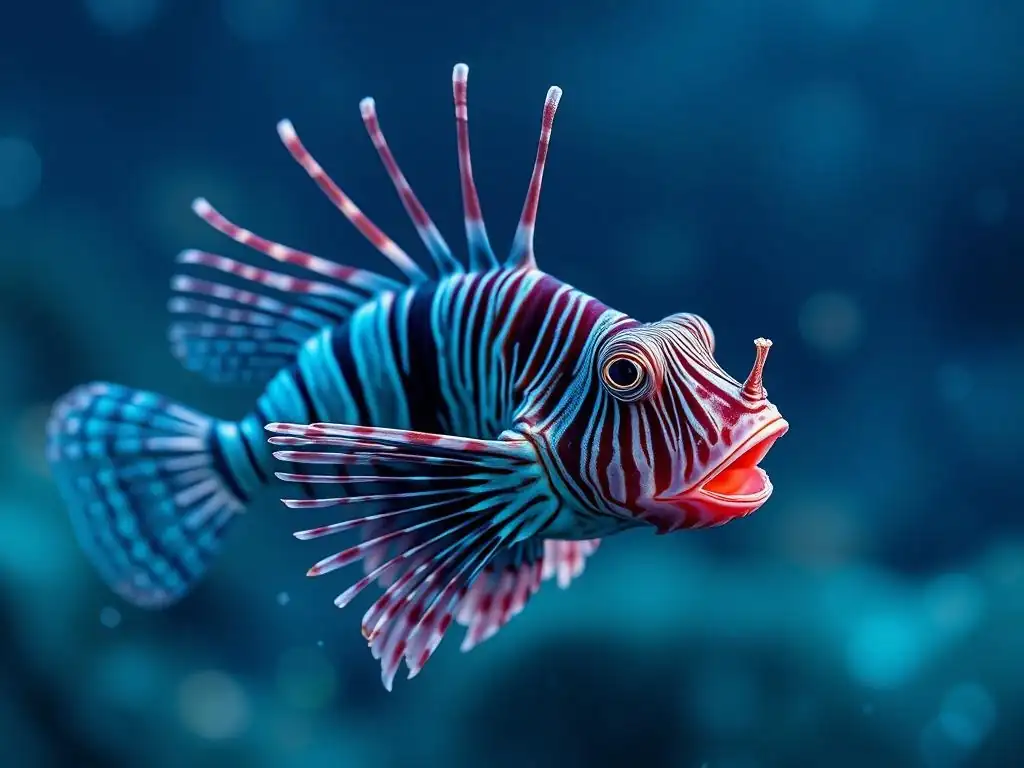
LED (Light Emitting Diode) lighting systems are arguably the best choice for a lionfish aquarium, offering unparalleled control and efficiency that aligns perfectly with their specific needs. Modern LED fixtures provide precise control over both intensity and spectrum, which are crucial for simulating a dim, natural habitat. Many units feature built-in dimmers and programmable timers, allowing aquarists to create realistic dawn-to-dusk cycles and even moonlight phases, significantly reducing light shock and promoting natural behavior.
Beyond control, LEDs are highly energy-efficient, producing less heat than traditional lighting options like metal halides, which is beneficial for maintaining stable water temperatures in a closed system. When selecting an LED fixture for a Lionfish tank lighting guide, look for models that offer independent control over white and blue channels. This allows for fine-tuning the balance to achieve a dim, slightly blue-shifted appearance that mimics deeper water, while still providing enough illumination for observation and maintenance without over-stressing the lionfish.
Other Lighting Options: Suitability for Lionfish Tanks?
While LEDs are generally preferred, other lighting options can be adapted for lionfish tanks, though they often come with limitations. Fluorescent lighting, specifically T5 or T8 bulbs, can be used if their intensity is carefully managed. A single T5 or T8 bulb, perhaps a 6,500K daylight or 10,000K pure white, can provide sufficient illumination without being overly bright for a smaller lionfish tank (e.g., 50-gallon). However, achieving the dimming and spectral control of LEDs is difficult or impossible with most fluorescent setups, making them less ideal for a truly dynamic Lionfish tank lighting guide.
Metal halide lights, while powerful and excellent for deep coral tanks, are generally unsuitable for lionfish aquariums due to their extreme intensity and significant heat output. Even with a single bulb, the PAR levels produced by metal halides would be far too high for lionfish, leading to severe stress and health issues. If these are the only option, they would require significant elevation above the tank (e.g., 24+ inches) and possibly diffusers, but the heat generation remains a concern. Therefore, for optimal lionfish care, the focus should remain on dimmable and spectrally controllable options.
Lionfish Lighting Spectrum and Intensity: Key Considerations
Ideal Kelvin Range for Lionfish Aquariums
The ideal Kelvin range for a lionfish aquarium typically falls between 6,500K and 10,000K. This range provides a cool white to slightly bluish light, which accurately replicates the light spectrum found at the moderate depths where lionfish naturally reside. Unlike shallow reef environments that benefit from very high Kelvin values (14,000K-20,000K) to promote coral fluorescence, lionfish do not require such specialized lighting. A spectrum within the 6,500K to 10,000K range enhances their natural colors—especially their reds, oranges, and blacks—without washing them out or causing stress.
When setting up your Lionfish tank lighting guide, consider a mix of white and blue LEDs. For instance, a ratio where blue LEDs contribute around 60-70% of the total light output, with white LEDs making up the remaining 30-40%, can create a visually appealing, naturalistic dim effect. This balance allows sufficient light for observation while maintaining the subdued ambiance crucial for lionfish comfort and health, reflecting the spectral shift that occurs as sunlight penetrates deeper into the ocean.
PAR (Photosynthetically Active Radiation) and Lionfish: What You Need to Know
PAR (Photosynthetically Active Radiation) measures the amount of light available for photosynthesis, a critical metric for coral reef tanks. However, for a Lionfish tank lighting guide, PAR is important for what it should not be. Lionfish are not photosynthetic; therefore, high PAR levels are not only unnecessary but detrimental. Excessive PAR can cause significant stress, leading to hiding, lethargy, and a general decline in health.
While specific PAR targets for lionfish are not as rigidly defined as for corals, a good approximation would be to aim for PAR levels between 20-50 at the substrate level, and perhaps up to 70-100 at the very top of the water column, if you have very tall rock structures. To put this in perspective, many coral reef tanks aim for PAR levels of 200-500 or even higher.
Using a PAR meter (available for rent or purchase) is the most accurate way to measure light intensity and ensure your lionfish are not being over-exposed. If a PAR meter isn't available, rely on visual cues: the tank should appear dim but clear enough for observation, and the lionfish should not be constantly hiding.
Avoiding Light Shock: Gradual Acclimation of Lionfish to New Lighting
Introducing a lionfish to an entirely new lighting environment, or even significantly changing an existing one, can induce "light shock" if not handled properly. Light shock is a form of acute stress caused by sudden exposure to unfamiliar or overly intense illumination. Symptoms can include rapid darting, hiding in the darkest corners, refusal to eat, and even swimming erratically. This is particularly critical when acquiring a new lionfish, as its previous environment's lighting might have been vastly different.
To prevent light shock, any Lionfish tank lighting guide should emphasize a gradual acclimation process. When introducing a new lionfish, keep the tank lights off or very dim for the first 24-48 hours, allowing the fish to explore its new surroundings without the added stress of bright light. If upgrading or changing existing lighting, start with the new lights at a very low intensity (e.g., 10-20% of desired maximum) and slowly increase it over several days or even weeks. Observe the lionfish's behavior closely; if signs of stress appear, dim the lights immediately and increase more slowly.
Setting Up Your Lionfish Tank Lighting System
Placement of Lights for Optimal Coverage and Shaded Areas
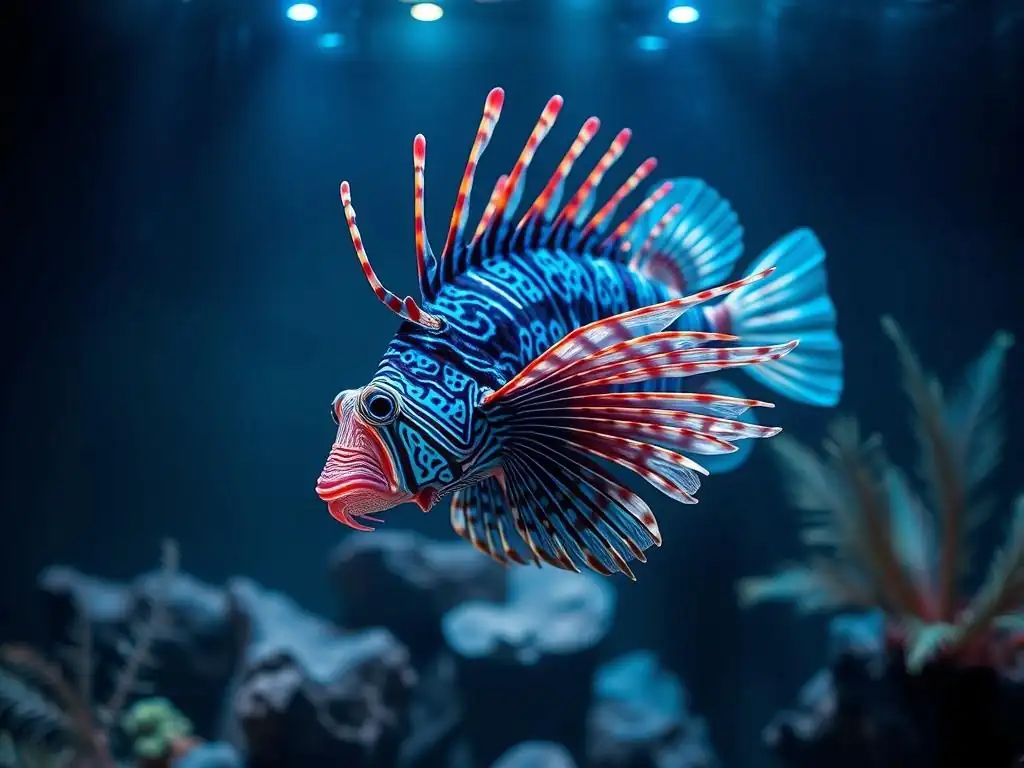
Proper placement of lights is crucial in a lionfish aquarium to achieve both adequate, yet subdued, illumination and to create essential shaded areas. Rather than aiming for uniform brightness across the entire tank, the goal is to provide enough ambient light for observation while ensuring ample retreats for the lionfish.
Lights should generally be positioned centrally above the tank, but their height relative to the water surface is key. For powerful LED units, raising them higher (e.g., 12-18 inches above the water for a 24-inch deep tank) can significantly reduce intensity at the substrate level, even at full power settings.
Additionally, consider the distribution of light. If using multiple fixtures or a single large fixture, ensure that the light doesn't directly blast into areas where lionfish are likely to rest. A well-designed Lionfish tank lighting guide will often suggest angling lights slightly or using baffles if necessary, to direct the illumination away from primary hiding spots. This strategic placement, combined with appropriate rockwork, creates a mosaic of light and shadow that mimics their natural reef environment, allowing the lionfish to choose their preferred level of exposure.
Using Dimmers and Controllers to Simulate Natural Light Cycles
The ability to dim and control the light cycle is perhaps the single most important feature for a successful lionfish lighting setup. Modern LED fixtures equipped with dimmers and programmable controllers allow aquarists to accurately simulate the natural rhythm of day and night, including gradual transitions like dawn and dusk. This gentle ramp-up and ramp-down of light intensity is vital for reducing stress, as sudden changes in light are highly unnatural and can startle or disorient lionfish.
A typical Lionfish tank lighting guide will recommend a light cycle that includes a period of very dim "moonlight" (perhaps 1-2% intensity of blue LEDs) for several hours after the main lights turn off, followed by a dark period, then a gradual increase through "dawn" (e.g., 10-20% intensity over 30-60 minutes), a peak "daylight" period (e.g., 30-50% intensity for 6-8 hours), and a gradual decrease through "dusk." This controlled simulation of natural light cycles not only benefits the lionfish's physiological well-being but also encourages more natural behaviors, making them more active and engaged within their appropriate lighting window.
Creating a Dimly Lit Environment: Techniques and Strategies
Utilizing Rockwork and Decorations to Create Shade
Beyond simply adjusting light intensity, the physical layout of your aquarium plays a critical role in creating the dimly lit environment lionfish prefer. Strategic placement of rockwork, caves, and other decorations can effectively block direct light, forming shaded retreats where lionfish can feel secure. These structures act as natural light diffusers and barriers, mimicking the complex reef structures found in their native habitats.
When designing your aquascape, aim for overhangs, deep crevices, and multiple hiding spots. For instance, creating a large cave using several pieces of live rock can provide a consistently dark area. Even a large, well-placed artificial coral insert or a PVC pipe (if aesthetically acceptable) can offer a much-needed shaded sanctuary. A comprehensive Lionfish tank lighting guide emphasizes that while dim lighting is essential, the availability of physical shade gives the lionfish the ultimate control over its light exposure, significantly reducing stress and promoting a sense of security.
Incorporating Live Rock: Benefits and Considerations for Lighting
Live rock is a cornerstone of any healthy saltwater aquarium, providing essential biological filtration and a natural habitat. For a lionfish tank, live rock serves an additional, crucial purpose: creating varied topography that naturally produces shaded areas. Its irregular shapes, nooks, and crannies are perfect for forming caves and overhangs that block direct light, offering lionfish the cover they instinctively seek.
When incorporating live rock, consider stacking it in a way that creates several layers and pockets of varying light intensity. For example, a tall structure that reaches near the surface can cast a significant shadow below it. While live rock itself does not require intense light, the organisms living on and within it (coralline algae, various invertebrates) may benefit from some low-level PAR. A Lionfish tank lighting guide should balance the need for dimness for the fish with the minimal light requirements of the live rock's beneficial microfauna, ensuring overall tank health without over-lighting the lionfish.
Dimming Lights During Feeding Times: Minimizing Stress
A unique and highly effective strategy for minimizing stress during feeding is to temporarily dim the aquarium lights. Lionfish are ambush predators that rely on stealth and often hunt in lower light conditions in their natural habitat. Bright lights can make them hesitant or even fearful, especially when they are new to the tank or if you are introducing a new type of food.
Before offering food, consider dimming the main lights to a very low intensity (e.g., 5-10% of peak brightness) or even switching to only blue moonlight for 5-10 minutes. This creates a more natural hunting environment, encouraging the lionfish to come out of hiding and actively pursue the food. This technique is a valuable tip in any practical Lionfish tank lighting guide as it directly addresses a common behavioral issue. Once the lionfish has finished eating, you can gradually return the lights to their normal dim daytime setting, ensuring a stress-free and successful feeding experience.
Troubleshooting Common Lionfish Lighting Problems
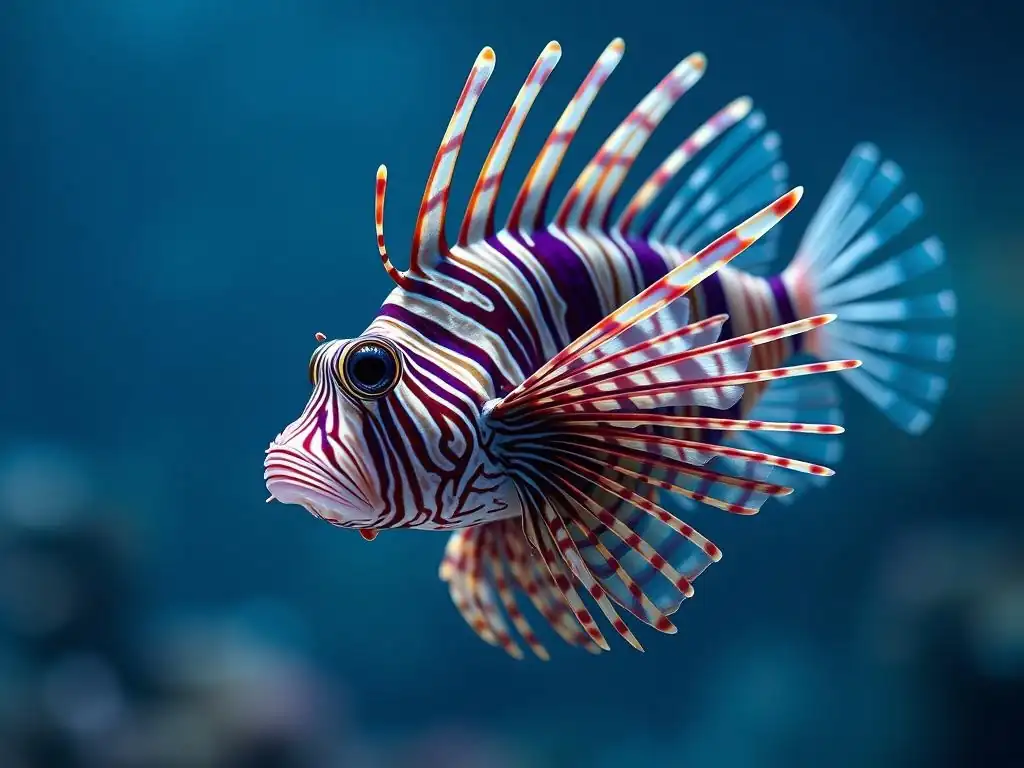
One of the most common problems in any aquarium, including a lionfish tank, that can be directly attributed to inappropriate lighting is excessive algae growth. While lionfish prefer dim conditions, many aquarists inadvertently provide too much light, either in intensity or duration. This excess light, combined with available nutrients (from fish waste, uneaten food, or tap water impurities), creates an ideal environment for nuisance algae like diatoms, green hair algae, or even cyanobacteria to proliferate rapidly.
If you observe a significant increase in algae, particularly on rocks, substrate, or tank walls, the first step in troubleshooting, as per any good Lionfish tank lighting guide, should be to evaluate your lighting schedule and intensity. Consider reducing the photoperiod (the duration lights are on) to 6-8 hours a day, and lower the overall light intensity. Utilizing a PAR meter can confirm if light levels are indeed too high. Addressing nutrient export through regular water changes, proper filtration, and avoiding overfeeding will also be crucial in conjunction with light reduction to effectively combat algae.
Lionfish Behavior Changes Due to Inappropriate Lighting
Lionfish are relatively stoic fish, but their behavior can be a clear indicator of lighting issues. If your lionfish is constantly hiding in the darkest corners of the tank, showing signs of lethargy, or darting erratically when the lights are on, it's a strong signal that the lighting is too intense. Conversely, if they appear unusually pale or their vibrant colors seem washed out, it could also point to excessive illumination causing stress.
A comprehensive Lionfish tank lighting guide advises close observation of your fish's daily habits. A healthy, comfortable lionfish will generally cruise its tank slowly, occasionally resting, but not constantly seeking the deepest shadows. If behavioral issues persist, try gradually dimming your lights further or increasing the amount of physical shade in the tank. Sometimes, even a slight adjustment in height or intensity can make a significant difference in their comfort level and overall demeanor, leading to a more active and naturally behaving fish.
Maintaining Optimal Lighting Conditions for Long-Term Lionfish Health
Maintaining optimal lighting conditions is not a one-time setup but an ongoing process crucial for the long-term health and well-being of your lionfish. Factors like bulb aging (for non-LED lights), changes in tank inhabitants, or even the growth of existing rockwork can subtly alter the light environment over time. Ignoring these changes can lead to chronic stress and a gradual decline in the lionfish's health, even if the initial setup was perfect.
Regular monitoring and periodic adjustments are essential. This means not only observing your lionfish's behavior but also periodically re-evaluating your light intensity, especially if you have dimmable LEDs. A proactive Lionfish tank lighting guide suggests making small, incremental adjustments based on your observations, rather than drastic changes. Ensuring a consistent, dim, and stable light cycle, free from sudden fluctuations, will significantly contribute to your lionfish's resilience, vibrant coloration, and overall longevity in your aquarium.
Lionfish Lighting and Tank Mates: Compatibility Considerations
Selecting Tank Mates That Thrive in Low-Light Environments
When planning a lionfish aquarium, it's not just about the lionfish's comfort; the lighting requirements of potential tank mates must also be considered. Since lionfish prefer dim, subdued lighting, any compatible species should ideally share this preference or at least tolerate lower light levels without stress. This often excludes many popular reef fish that are accustomed to brightly lit, shallow water environments.
Suitable tank mates often include species that also originate from deeper reef sections or are naturally reclusive. Examples might include certain moray eels, some species of large gobies that utilize rockwork for hiding, or even some larger, non-photosynthetic invertebrates like certain types of anemones that don't rely on light. A practical Lionfish tank lighting guide will stress the importance of researching each potential tank mate's specific lighting needs to ensure a harmonious environment where all inhabitants can thrive comfortably under the same low-intensity illumination, avoiding any species that would suffer from insufficient light.
Adjusting Lighting to Accommodate Both Lionfish and Other Species
While the primary focus of a Lionfish tank lighting guide is the lionfish's comfort, successful cohabitation with other species may require subtle adjustments to the lighting strategy. If you choose tank mates that, while tolerant of lower light, might still benefit from slightly more ambient illumination than a bare lionfish tank, a balance must be struck. This can often be achieved by strategically placing rockwork and decorations to create diverse micro-environments within the tank.
For instance, you might maintain the overall dim illumination but ensure that certain areas, perhaps higher up on the rockwork, receive slightly more diffused light for species that might venture out more. Conversely, ensure plenty of deep shadows and caves for the lionfish. Utilizing dimmable LED systems allows for fine-tuning the spectrum and intensity to cater to the general needs of the community while prioritizing the lionfish's requirement for subdued light. The key is to create a gradient of light, allowing each species to find its preferred spot without compromising the lionfish's primary need for dimness.
Monitoring and Adjusting Your Lionfish Lighting Setup
Regular Observation of Lionfish Behavior and Coloration
The most critical tool for monitoring your lionfish lighting setup is your own observation. Lionfish are quite expressive in their behavior and coloration when it comes to their comfort level with light. Regular, daily observation allows you to catch subtle cues that indicate whether your lighting is optimal or needs adjustment. Look for signs such as excessive hiding, rapid breathing, refusal to eat, or darting movements when the lights are on, which all suggest too much light.
Conversely, observe their coloration. While some color changes can be due to stress or health issues, persistently washed-out or dull colors can sometimes indicate that the spectrum or intensity isn't bringing out their best. A truly effective Lionfish tank lighting guide emphasizes that your fish's comfort and well-being are the ultimate indicators of successful lighting. Take note of how they react during different light phases (dawn, day, dusk, night) and adjust accordingly to encourage natural cruising and relaxed behavior.
Using a PAR Meter to Measure Light Intensity
While visual observation is crucial, a PAR (Photosynthetically Active Radiation) meter provides objective, quantitative data on light intensity, which is invaluable for fine-tuning a lionfish lighting setup. As discussed, lionfish thrive in low PAR environments, unlike corals. A PAR meter allows you to measure the exact light levels at various depths and locations within your aquarium, confirming if your dim settings are truly dim enough for your lionfish.
Most PAR meters are available for rent from local fish stores or can be purchased, though they can be a significant investment. When using a PAR meter, measure readings at the substrate, mid-water column, and near the surface, as well as in shaded areas created by rockwork. Aim for PAR values generally below 70-100 at the highest points and as low as 20-50 at the substrate. This precise data, combined with your behavioral observations, forms the cornerstone of an advanced Lionfish tank lighting guide, enabling you to create a perfectly tailored lighting environment.
Adapting Your Lighting Strategy Based on Lionfish Response
Maintaining an optimal Lionfish tank lighting guide is an adaptive process, requiring ongoing adjustments based on the lionfish's responses and changes within the aquarium. As lionfish grow, their needs might subtly shift, or as live rock matures and algae colonizes, the light dynamics within the tank can change. Therefore, a "set it and forget it" approach is rarely ideal for long-term success.
If, after initial setup, you notice your lionfish is still hiding excessively, try reducing the intensity by another 5-10% or shortening the photoperiod by an hour. If you find nuisance algae growing rapidly, it's a clear sign of too much light, necessitating a reduction. Conversely, if the tank appears too dark for your viewing pleasure and the fish seems comfortable, a slight, gradual increase in intensity might be acceptable. The key is to make small, iterative changes and observe the lionfish's reaction over several days before making further adjustments, ensuring their comfort remains the top priority.
Frequently Asked Questions
How much light do lionfish typically need in a tank?
Lionfish generally prefer dimly lit environments. Replicating their natural habitat means avoiding bright, intense lighting. A good rule of thumb is lower light intensity than what's needed for most reef tanks.
Why is bright light potentially harmful to lionfish?
Excessive light can cause stress and discomfort to lionfish. They are naturally nocturnal predators, adapted to hunting in low-light conditions. Prolonged exposure to bright light can also affect their overall health and behavior.
What type of lighting is recommended for a lionfish tank?
Consider using lower-wattage LED lights or dimmable options. Blue or actinic lighting can help simulate the deeper water environments that lionfish inhabit. Avoid metal halides, as they often produce too much light.
Can I keep corals in a lionfish tank if I'm careful about lighting?
While possible, it's challenging. Corals typically need brighter light than lionfish prefer. Careful zoning of lighting and selecting hardy, low-light corals might allow for cohabitation, but it's not always successful.
How can I tell if my lionfish is stressed due to too much light?
Signs of stress can include hiding excessively, refusing to eat, or displaying unusual behavior. Observing your lionfish's behavior is crucial. Adjust the light intensity if you notice these issues.
Final Reflection: Illuminating the Lionfish's World
The preceding exploration into lionfish lighting requirements underscores the critical importance of replicating natural environments in captivity. While aesthetics often drive aquarium design, prioritizing the well-being of our aquatic companions demands a deeper understanding of their evolutionary needs, particularly concerning light intensity and spectrum. This is not merely about keeping lionfish alive; it's about enabling them to thrive.
This journey into the dim, reef-sheltered world of the lionfish has profoundly impacted my perspective on responsible aquascaping. It's a reminder that our role as caretakers extends beyond providing food and water; it necessitates creating an environment where these magnificent creatures can express their natural behaviors and flourish. As Jacques Cousteau eloquently stated: The sea, once it casts its spell, holds one in its net of wonder forever.
This "net of wonder" demands our respect and diligent effort to understand and protect the creatures within it, even within the confines of our own tanks.
Now, armed with this knowledge, I invite you to reflect on your own approach to aquarium keeping. Consider how you can better simulate the natural habitats of your aquatic inhabitants, prioritizing their well-being over purely aesthetic considerations. Let us all strive to create environments where these creatures can not only survive, but truly thrive, bringing the wonders of the ocean into our homes responsibly and ethically.
Dive Deeper: Illuminate Your Lionfish's World!
Thanks for exploring the fascinating world of lionfish lighting! We hope this article has shed light on how to create the perfect environment for these captivating creatures. Now, it's time to bring that knowledge to life.
Here are some actionable steps you can take to enhance your lionfish aquarium:
- Start experimenting with dimming your aquarium lights by 20% this week. Observe your lionfish's behavior and adjust accordingly. This is the most impactful change you can make!
- Explore adding natural elements like overhanging rocks or tall plants to create shaded areas, mimicking their native reefs.
- Share your experiences and lighting setups with fellow lionfish enthusiasts on aquarium forums or social media groups.
What subtle lighting adjustments have you noticed make the biggest difference in your lionfish's behavior and activity levels?