
Building a MultiGenerational Shell Dweller Colony: LongTerm Success

Welcome to Aquarium Mastery!
Ever wondered how to achieve long term snail colony success in your freshwater aquarium? Dive in and discover the secrets to building a thriving, multi-generational shell dweller community. From selecting the right snails to mastering water parameters, prepare to unlock the keys to a flourishing underwater ecosystem. Ready to witness generations of shell dwellers thrive? Let's get started!
- Building a Multi-Generational Neolamprologus multifasciatus Colony: Long-Term Success
- Introduction to Multi-Generational Neolamprologus multifasciatus Colonies
- Setting Up the Ideal Aquarium for a Multi-Generational Neolamprologus multifasciatus Colony
- Maintaining Optimal Water Chemistry for Long-Term Neolamprologus multifasciatus Health
- Feeding Strategies for a Multi-Generational Neolamprologus multifasciatus Population
-
Promoting Breeding and Fry Survival in Your Neolamprologus multifasciatus Colony
- Creating Optimal Breeding Conditions: Temperature, Water Flow, and Shell Placement for Neolamprologus multifasciatus
- Protecting Fry from Predation: Providing Suitable Hiding Places for Neolamprologus multifasciatus Fry
- Raising Fry: Diet and Water Quality Considerations for Neolamprologus multifasciatus
- Managing Population Growth and Preventing Overcrowding in Neolamprologus multifasciatus Colonies
- Troubleshooting Common Issues in Multi-Generational Neolamprologus multifasciatus Colonies
- Long-Term Neolamprologus multifasciatus Colony Success: Observations and Adjustments
- The Future of Your Neolamprologus multifasciatus Colony
-
Frequently Asked Questions
- How do I ensure the long-term survival of my shell dweller snail colony?
- What are the best types of shells to use for establishing a multi-generational shell dweller colony?
- How often should I perform water changes in a tank housing a long-term snail colony?
- What are some common diseases that can affect a multi-generational shell dweller colony, and how can I prevent them?
- How can I manage the population size of my long-term snail colony if it becomes too large?
- Final Reflection: Cultivating Enduring Ecosystems
- Ignite Your Shell Dweller Dream!
Building a Multi-Generational Neolamprologus multifasciatus Colony: Long-Term Success
Introduction to Multi-Generational Neolamprologus multifasciatus Colonies
Understanding the Appeal of Neolamprologus multifasciatus Communities in Aquariums
Neolamprologus multifasciatus, affectionately known as "Multies," are perhaps the most popular and accessible of the shell-dwelling cichlids from Lake Tanganyika. Their small size, typically reaching only 1.5 to 2 inches (3.8 to 5 cm), combined with their captivating social behaviors, makes them ideal inhabitants for dedicated species tanks. Observing their intricate colony structure, where males, females, and various generations of fry coexist and interact around a dense field of shells, offers a truly unique and rewarding aquarist experience.
The enduring appeal of these fish lies in their natural propensity to form self-sustaining communities. Unlike many cichlids that require vast territories or aggressive species management, Multies thrive in a communal setup where new generations are continuously produced. This dynamic environment, akin to a miniature aquatic village, allows aquarists to witness a complete life cycle unfold, making them a prime choice for those aiming to establish a vibrant, long-term shell dweller colony.
The Key to a Thriving, Self-Sustaining Neolamprologus multifasciatus Ecosystem
The foundation of a successful multi-generational Neolamprologus multifasciatus ecosystem lies in replicating their natural environment as closely as possible and maintaining unwavering stability. This involves precise water parameters, ample suitable habitat, and a balanced diet. When these elements are consistently provided, the fish will naturally exhibit their full range of behaviors, from diligent shell maintenance to the intricate dance of courtship and parental care.
Establishing a truly thriving long-term shell dweller colony, sometimes colloquially referenced as a "long term snail colony" due to their reliance on empty snail shells, requires meticulous attention to detail. The continuous breeding and social dynamics of Multies mean that the aquarium environment must be robust enough to handle a fluctuating population and its associated bioload, ensuring that each new generation can grow and contribute to the colony's enduring success.
Setting Up the Ideal Aquarium for a Multi-Generational Neolamprologus multifasciatus Colony
Tank Size and Dimensions for a Healthy Neolamprologus multifasciatus Population Growth
While a small group of Neolamprologus multifasciatus can initially inhabit a 10-gallon (approximately 38-liter) tank, for a truly multi-generational and long-term shell dweller colony, a larger footprint is highly recommended. A 20-gallon long (approximately 76-liter) aquarium, measuring around 30 inches (76 cm) in length, provides significantly more linear space for territories, which is crucial as the colony expands. For optimal stability and population management, a 40-gallon breeder tank (approximately 150 liters), typically 36 inches (91 cm) long, offers an even better environment, accommodating a thriving community of 50+ individuals over time.
The emphasis on tank length rather than height is paramount for Multies. These fish primarily utilize the substrate for their territories and rarely venture into the upper water column. A tank with a greater length-to-height ratio allows for more distinct shell clusters and open sand areas, minimizing aggression between breeding pairs and sub-dominant individuals. For instance, a 30-inch long tank offers at least 50% more usable substrate territory compared to a standard 20-inch long tank of similar volume, directly impacting the long-term viability and harmony of your N. multifasciatus colony.
Substrate and Shell Selection: Creating a Natural and Functional Environment for Neolamprologus multifasciatus
The substrate is arguably the most critical element for a Neolamprologus multifasciatus tank. A fine, soft sand, such as play sand, pool filter sand, or specialized aquarium sand, is essential. This allows the fish to indulge in their natural digging behaviors, which include burying and unburying shells, creating intricate burrows, and shaping their territories. A substrate depth of at least 2-3 inches (5-7.5 cm) across the entire tank floor is necessary to facilitate these behaviors and provide adequate insulation for buried shells.
The shells themselves are the cornerstone of a long-term shell dweller colony. Empty snail shells, such as escargot shells, Neerite snail shells, or even small Turbo snail shells, are ideal. Provide an abundance of shells – a good rule of thumb is to have at least two to three times more shells than adult fish, and definitely more than one shell per fish. For example, if starting with 6 fish, aim for 15-20 shells. This ensures that every fish has multiple options for territory and breeding, reducing conflict and promoting the continuous expansion of your N. multifasciatus population.
Essential Decorations and Rockwork for Territory Definition for Neolamprologus multifasciatus
While shells form the primary habitat for Neolamprologus multifasciatus, strategically placed rockwork can significantly enhance the tank's functionality and aesthetics. A few smooth, inert rocks or small pieces of slate can be used to create visual barriers, breaking up lines of sight and helping to define distinct territories. This reduces direct confrontation between dominant males and provides additional hiding spots for sub-adults or females seeking refuge.
When arranging decorations, focus on creating a natural, somewhat cluttered appearance that mimics the rocky, shell-strewn areas of Lake Tanganyika. Avoid sharp edges that could injure the fish. The goal is to provide a complex environment where individuals can establish their personal space without constant interaction. This thoughtful arrangement of shells and rocks is vital for managing aggression and fostering a stable, thriving environment for a multi-generational N. multifasciatus community.
Maintaining Optimal Water Chemistry for Long-Term Neolamprologus multifasciatus Health
Understanding the Importance of Stable pH, KH, and GH for Neolamprologus multifasciatus
Neolamprologus multifasciatus originate from Lake Tanganyika, a rift lake renowned for its exceptionally hard and alkaline water. To ensure the long-term health and breeding success of your colony, it is crucial to replicate these conditions. The ideal pH range for Multies is between 7.8 and 9.0, with a target of 8.2-8.6 being excellent. Equally important are high levels of carbonate hardness (KH) and general hardness (GH), typically 10-18 dKH and 10-20 dGH, respectively.
Stability in these parameters is even more critical than hitting exact numbers. Wild-caught specimens and even tank-bred N. multifasciatus are highly sensitive to sudden fluctuations in water chemistry, which can lead to stress, weakened immune systems, and susceptibility to diseases like "Malawi Bloat" (though less common in Tanganyikans, it can occur under stress). Consistent parameters are the bedrock upon which a robust and self-sustaining long-term shell dweller colony is built.
Regular Water Changes and Filtration Strategies for Neolamprologus multifasciatus Tanks
Consistent water changes are non-negotiable for maintaining pristine conditions in a multi-generational N. multifasciatus colony. A weekly water change of 20-30% is generally recommended to keep nitrate levels low and replenish essential minerals that may be consumed by the fish or lost through biological processes. For heavily stocked tanks or those with a rapidly expanding population, two smaller water changes per week (e.g., 15% twice weekly) might be even more beneficial.
Regarding filtration, a robust biological filter is paramount. Canister filters or hang-on-back (HOB) filters with ample mechanical and biological media are highly effective. Ensure that the filter provides good water circulation throughout the tank, but avoid excessively strong currents, which can stress these small fish. A well-maintained filter will efficiently process fish waste and uneaten food, significantly contributing to the stable water quality required for a thriving long-term shell dweller colony.
Monitoring and Adjusting Water Parameters to Prevent Disease in Neolamprologus multifasciatus
Regular testing of water parameters is an indispensable part of Neolamprologus multifasciatus care. Utilize reliable liquid test kits to monitor pH, ammonia, nitrite, and nitrate levels at least once a week, especially during the initial cycling phase and when the colony is rapidly expanding. Ammonia and nitrite should always read zero, while nitrates should be kept below 20 ppm for optimal health.
If parameters drift, particularly pH or hardness, gradual adjustments are key. Products like specialized Tanganyika buffer salts or the inclusion of crushed coral or aragonite sand in the substrate or filter can help maintain the desired hardness and alkalinity. Avoid using harsh chemicals or making sudden, large changes, as these can cause osmotic shock and severely compromise the health of your long-term shell dweller colony. Proactive monitoring and gentle adjustments are far more effective than reactive disease treatment.
Feeding Strategies for a Multi-Generational Neolamprologus multifasciatus Population
Providing a Varied and Nutritious Diet for All Neolamprologus multifasciatus Life Stages
Neolamprologus multifasciatus are micro-predators in their natural habitat, primarily feeding on small invertebrates. In the aquarium, a varied and high-quality diet is crucial for promoting vibrant coloration, robust health, and consistent breeding throughout a long-term shell dweller colony. A good staple diet includes high-quality cichlid pellets or flakes specifically formulated for small cichlids, ideally with a protein content of 35-45%.
Supplementing the staple diet with frozen foods is highly beneficial for conditioning breeding pairs and ensuring the nutritional needs of all life stages are met. Excellent choices include frozen brine shrimp, daphnia, cyclops, and finely chopped mysis shrimp. For newly hatched fry, which are extremely tiny, infusoria, liquid fry food, or finely crushed high-protein flakes are suitable. As they grow, transitioning to newly hatched brine shrimp nauplii will significantly boost their growth rate and survival within the long-term N. multifasciatus community.
Feeding Techniques to Ensure All Neolamprologus multifasciatus Receive Adequate Nutrition
Due to the territorial nature of Neolamprologus multifasciatus, simply dropping food in one spot may result in dominant individuals consuming the majority, leaving smaller or more timid fish underfed. To ensure all members of your long-term shell dweller colony receive adequate nutrition, scatter food across the entire surface of the tank. This encourages wider distribution and allows sub-dominant fish and even fry to access food without direct confrontation.
It is generally better to feed small amounts multiple times a day (e.g., 2-3 times) rather than one large meal. This mimics their natural foraging behavior and reduces the amount of uneaten food that can foul the water. Observe your fish during feeding: all individuals should be actively foraging and consuming food. If some appear hesitant or consistently miss out, it might indicate insufficient food distribution or underlying stress, requiring adjustments to your feeding routine.
Avoiding Overfeeding and Maintaining Water Quality in Neolamprologus multifasciatus Tanks
Overfeeding is one of the most common pitfalls in aquarium keeping and can quickly destabilize the delicate balance of a multi-generational N. multifasciatus colony. Excess food decomposes, leading to spikes in ammonia and nitrite, and a rapid accumulation of nitrates, all of which compromise water quality and stress the fish. Feed only what your fish can consume within 2-3 minutes, ensuring no food remains floating or settles on the substrate.
Regularly siphoning any uneaten food, detritus, or fish waste from the sand is essential. Multies tend to dig and stir up the substrate, which can release trapped organic matter. Using a gravel vacuum specifically designed for sand, or simply a thin tube, to gently clean the substrate surface during water changes will prevent the buildup of harmful compounds. This diligent maintenance is critical for preserving the pristine water conditions necessary for the long-term health and vitality of your Neolamprologus multifasciatus colony.
Promoting Breeding and Fry Survival in Your Neolamprologus multifasciatus Colony
Creating Optimal Breeding Conditions: Temperature, Water Flow, and Shell Placement for Neolamprologus multifasciatus
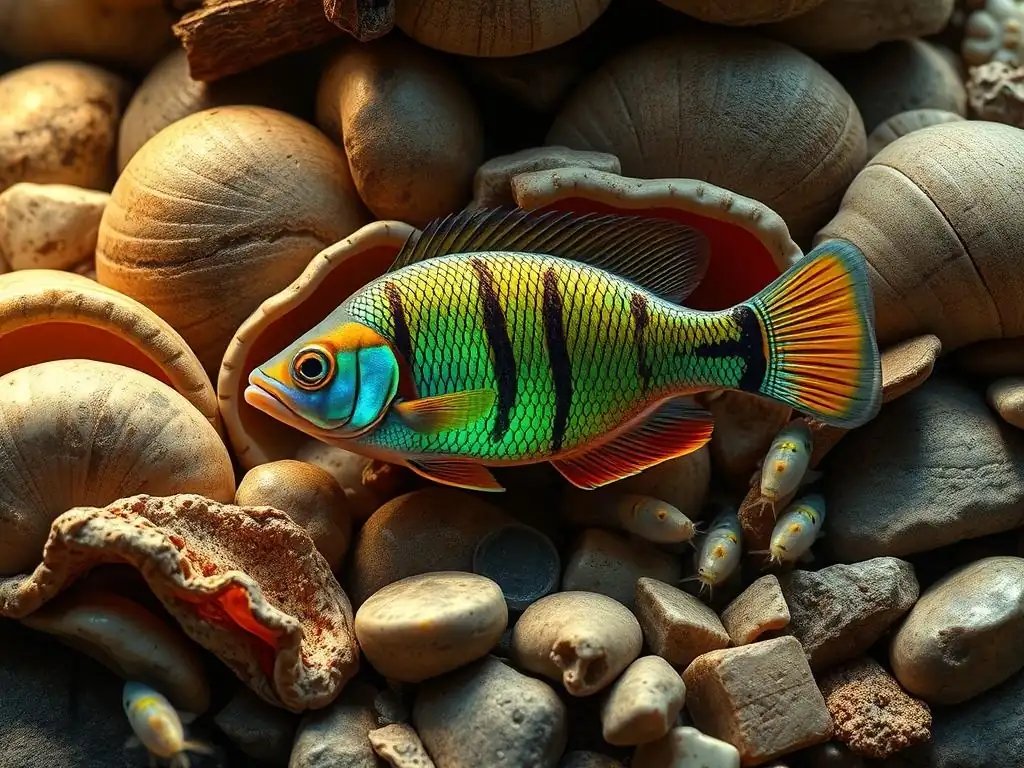
Neolamprologus multifasciatus are prolific breeders when provided with optimal conditions, a key factor in establishing a successful long-term shell dweller colony. Maintain a stable water temperature between 76-80°F (24-27°C); temperatures on the higher end of this range can encourage more frequent spawning. Water flow should be gentle to moderate, avoiding strong currents that might discourage the small fish from utilizing their shells or stress newly hatched fry.
The most critical element for breeding is an abundance of appropriately sized shells. Females will select a shell, often an escargot or Neerite shell, as their primary breeding site, laying eggs inside and diligently guarding them. Providing a dense field of shells, arranged in clusters with open sand paths between them, encourages territory formation and allows multiple females to breed simultaneously within the colony, ensuring a continuous supply of new generations.
Protecting Fry from Predation: Providing Suitable Hiding Places for Neolamprologus multifasciatus Fry
One of the remarkable aspects of Neolamprologus multifasciatus is the excellent parental care provided by the female. She will guard her eggs and fry diligently within and immediately surrounding her chosen shell. The tight confines of the shell offer significant protection from larger, potentially predatory tank mates, including other adult Multies, though severe overcrowding can sometimes lead to increased fry predation by the colony itself.
While the shells are the primary sanctuary, providing a complex environment with additional shell clusters and small rock formations can offer further refuge for juvenile fish as they grow and venture further from their mother's immediate protection. This layered approach to habitat provision significantly boosts fry survival rates, allowing a greater number of young to mature and integrate into the main long-term shell dweller colony, contributing to its ongoing vitality.
Raising Fry: Diet and Water Quality Considerations for Neolamprologus multifasciatus
Raising Neolamprologus multifasciatus fry is relatively straightforward due to their hardiness and the parents' care, but specific attention to diet and water quality is essential for optimal growth. For the first few days, newly hatched infusoria or liquid fry food are suitable, as the fry are minuscule. However, newly hatched brine shrimp nauplii should be introduced as soon as the fry are free-swimming and able to consume them; this protein-rich food significantly accelerates their growth. Feed small amounts several times throughout the day.
Young N. multifasciatus are particularly sensitive to deteriorating water quality. As their bioload increases with rapid growth, maintaining pristine conditions is paramount. Implement small, frequent water changes (e.g., 10% daily or every other day for tanks with many fry) and diligently siphon any uneaten food or waste from the substrate. This proactive approach to water management ensures a high survival rate for the new additions, bolstering the health and size of your long-term N. multifasciatus colony.
Managing Population Growth and Preventing Overcrowding in Neolamprologus multifasciatus Colonies
Recognizing the Signs of Overpopulation in a Neolamprologus multifasciatus Tank
A thriving multi-generational Neolamprologus multifasciatus colony will inevitably lead to population growth. While desirable, unchecked growth can result in overcrowding, which manifests through several negative signs. Increased aggression among fish, particularly between males establishing territories, is a common indicator. You may also observe stunted growth in younger individuals, reduced breeding activity, or a general decline in the overall health and vibrancy of the fish, with clamped fins or faded coloration becoming more prevalent.
Beyond behavioral cues, environmental indicators can also signal overpopulation. Despite regular water changes, a persistent rise in nitrate levels or an increase in stubborn algae growth often suggests that the bioload of the tank is exceeding the capacity of the filtration system and maintenance routine. These signs indicate that the delicate balance of your long-term shell dweller colony is at risk and requires immediate intervention to prevent widespread stress and disease.
Strategies for Reducing Population: Selective Removal or Separate Breeding Tanks for Neolamprologus multifasciatus
To prevent overcrowding and maintain the health of your long-term shell dweller colony, periodic population control is necessary. One common strategy is selective removal: carefully netting excess individuals, particularly sub-dominant males or weaker specimens, and rehoming them. Local fish stores, aquatic clubs, or other hobbyists are often keen to acquire healthy, tank-bred N. multifasciatus. This helps to maintain a manageable population density and reduces stress on the remaining fish.
For aquarists dedicated to breeding or those with multiple tanks, setting up separate grow-out tanks for fry and juveniles offers an excellent solution. This allows the main display tank to maintain a stable adult population while providing ample space for the younger generations to grow without competing with their parents or siblings for resources. This approach ensures a continuous cycle of healthy fish and prevents the main N. multifasciatus colony from becoming overstressed by its own success.
Maintaining a Balanced Ecosystem to Support a Sustainable Neolamprologus multifasciatus Population
Beyond direct population reduction, maintaining a balanced ecosystem is paramount for supporting a sustainable Neolamprologus multifasciatus population. This involves adhering to consistent, diligent maintenance practices: regular water changes, appropriate feeding to avoid excess waste, and thorough cleaning of the substrate to remove detritus. These actions directly contribute to stable water parameters and a healthy environment for all fish.
Furthermore, ensure that your filtration system is adequately sized and maintained for the mature bioload of a growing colony. A robust biological filter, rich in beneficial bacteria, is essential for efficiently processing ammonia and nitrite. Regular filter maintenance, such as rinsing media in old tank water, prevents clogging without destroying beneficial bacteria. A well-balanced biological system is the backbone of an enduring long-term shell dweller colony, allowing it to thrive for many years.
Troubleshooting Common Issues in Multi-Generational Neolamprologus multifasciatus Colonies
Addressing Aggression and Territorial Disputes Among Neolamprologus multifasciatus
While Neolamprologus multifasciatus are generally peaceful for cichlids, aggression and territorial disputes can arise, especially in a long-term shell dweller colony with a growing population. Common causes include insufficient shells, inadequate tank size, or an imbalanced male-to-female ratio where dominant males excessively harass others. While some squabbling is normal, persistent chasing, torn fins, or hiding behavior in sub-dominant fish indicate a problem.
To mitigate aggression, first ensure an overabundance of shells – at least twice the number of fish. This provides ample choices for territory establishment. Second, introduce more visual barriers using additional rocks or strategically placed shell clusters to break up lines of sight. If a particular individual is overly aggressive and causing significant stress or injury, its removal might be necessary to restore peace and stability within the N. multifasciatus community. A larger tank footprint can also significantly reduce these issues by offering more usable space.
Identifying and Treating Common Neolamprologus multifasciatus Diseases
Like all freshwater fish, Neolamprologus multifasciatus can be susceptible to common aquarium diseases, particularly when stressed by poor water quality or overcrowding. Ich (white spot disease), characterized by small white spots resembling salt grains on the body and fins, is one of the most prevalent. Other issues include bacterial infections (leading to fin rot or body sores) and, less commonly for Tanganyikans, "Malawi Bloat" if diet or water quality is severely compromised.
The best defense against disease is prevention: maintaining stable, pristine water parameters, providing a varied and nutritious diet, and avoiding overstocking. If disease is suspected, prompt identification and treatment are crucial. Isolate affected fish in a separate quarantine tank to prevent the spread to the entire long-term shell dweller colony. Use appropriate aquarium medications following manufacturer instructions, and always address the underlying cause of the outbreak, such as poor water quality, to prevent recurrence.
Preventing and Controlling Algae Growth in Neolamprologus multifasciatus Tanks
Algae growth is a common occurrence in aquariums, and while a small amount can be natural, excessive proliferation can be unsightly and indicate an imbalance in your Neolamprologus multifasciatus tank. The primary culprits for rampant algae are excessive light duration or intensity, overfeeding, and high nitrate levels. Common types include green spot algae on glass, hair algae on decorations, and brown diatom algae, especially in newer setups.
To prevent and control algae, first adjust lighting: limit photoperiods to 8-10 hours daily, and ensure your light intensity is appropriate for a fish-only setup. Second, strictly adhere to proper feeding practices, ensuring no uneaten food remains. Third, increase the frequency or volume of your water changes to keep nitrates consistently low – below 20 ppm is ideal. Manual removal with an algae scraper or brush, combined with these preventative measures, will help maintain a clean and visually appealing environment for your long-term N. multifasciatus colony.
Long-Term Neolamprologus multifasciatus Colony Success: Observations and Adjustments
Regular Monitoring of Neolamprologus multifasciatus Behavior and Health
The success of a long-term shell dweller colony hinges on continuous observation and a proactive approach to care. Dedicate a few minutes each day to simply watching your Neolamprologus multifasciatus. Pay close attention to their swimming patterns, appetite, coloration, and any changes in their physical appearance, such as clamped fins, lesions, or unusual growths. Early detection of subtle changes in behavior or health can be the difference between a minor issue and a widespread problem impacting the entire colony.
Beyond individual health, observe the overall colony dynamics. Note social interactions, the frequency of breeding activity, and the intensity of territorial disputes. Are new fry appearing regularly? Are all age groups thriving? Understanding the nuances of your colony's social structure and reproductive cycles allows you to anticipate potential issues, such as overcrowding or an imbalance in male-to-female ratios, and intervene before they escalate, ensuring the continued vitality of your multi-generational N. multifasciatus community.
Adapting Your Approach Based on Neolamprologus multifasciatus Colony Dynamics
Aquarium keeping, especially with a dynamic long-term shell dweller colony like Neolamprologus multifasciatus, is an ongoing learning process that requires flexibility. Be prepared to adjust your care routine based on the evolving needs of your fish. For instance, if you notice a significant increase in the number of fry, you might need to increase feeding frequency for the young or consider more frequent, smaller water changes to manage the rising bioload.
Similarly, if signs of aggression become prevalent, adapting your tank layout by adding more shells or visual barriers might be necessary. The key is to be responsive to the signals your colony provides. This adaptive approach, where you continuously assess and fine-tune your methods in response to the fish's behavior and environmental parameters, is crucial for maintaining a healthy and thriving N. multifasciatus habitat for many years.
Documenting Your Journey for Future Reference and Improvement in Neolamprologus multifasciatus Keeping
Maintaining a detailed logbook or digital record of your Neolamprologus multifasciatus colony's journey can be an invaluable tool for long-term success. Record essential data such as water parameters (pH, KH, GH, nitrates) after each water change, feeding schedules, types of food offered, and any significant events like breeding occurrences, new fry sightings, or the introduction/removal of fish. Documenting any observed health issues, their symptoms, and the treatments administered is also critical.
Reviewing these records allows you to identify patterns, understand the long-term impact of changes you've made, and refine your approach to care. For example, consistent high nitrates might prompt you to increase water change volume or frequency. This systematic approach to documentation provides data-driven insights, enabling you to optimize your husbandry techniques and ensure the enduring health and prosperity of your multi-generational N. multifasciatus population.
The Future of Your Neolamprologus multifasciatus Colony
Expanding Your Neolamprologus multifasciatus Colony: Adding a Second Tank
As your initial long-term shell dweller colony of Neolamprologus multifasciatus thrives and grows, you will likely find yourself with an abundance of healthy fish. At this point, many aquarists choose to expand their setup by adding a second tank. This expansion offers several benefits: it allows you to separate age groups, providing dedicated grow-out space for juveniles, reduces potential overcrowding in the primary display tank, and offers the opportunity to establish a second colony with different genetic lines or simply enjoy more of these fascinating cichlids.
Planning the expansion involves considering available space, budget for equipment (tank, filter, heater, substrate, shells), and the time commitment for additional maintenance. A second tank can serve as a dedicated breeding project for specific pairs, a display for a new lineage of N. multifasciatus, or simply a means to alleviate population pressure in your original setup. This strategic growth ensures continued genetic diversity and vitality across your entire N. multifasciatus keeping endeavor.
Frequently Asked Questions
How do I ensure the long-term survival of my shell dweller snail colony?
Focus on maintaining stable water parameters and providing a consistent food source. Regular water changes and a varied diet are crucial.
What are the best types of shells to use for establishing a multi-generational shell dweller colony?
Choose shells of an appropriate size for your species and ensure they are inert and non-toxic. Avoid shells with sharp edges.
How often should I perform water changes in a tank housing a long-term snail colony?
Smaller, more frequent water changes (10-20% weekly) are generally preferable to large, infrequent changes. This helps maintain water quality stability.
What are some common diseases that can affect a multi-generational shell dweller colony, and how can I prevent them?
Ich and bacterial infections are common. Quarantine new snails and maintain excellent water quality to prevent disease outbreaks.
How can I manage the population size of my long-term snail colony if it becomes too large?
Introduce a natural predator (carefully chosen and researched!), manually remove excess snails, or reduce the food supply available.
Final Reflection: Cultivating Enduring Ecosystems
The journey of establishing a thriving, multi-generational shell dweller colony, as we've explored, underscores the profound connection between patience, observation, and the delicate balance of nature. The principles of long-term sustainability extend far beyond the confines of our aquariums; they resonate with the urgent need for mindful stewardship of our planet and its resources. Building a successful snail colony is, in essence, a microcosm of the larger challenge of creating resilient and enduring ecosystems.
This endeavor has not only deepened our understanding of these fascinating creatures but has also fostered a greater appreciation for the interconnectedness of life. Witnessing generations flourish within a carefully crafted environment highlights the power of thoughtful intervention and the potential for creating lasting positive impact. The best time to plant a tree was 20 years ago. The second best time is now.
This ancient proverb perfectly encapsulates the long-term vision required for both successful shell dweller colonies and a sustainable future.
Now, as you consider the insights shared in this article, I encourage you to reflect on the "ecosystems" you cultivate in your own life – your relationships, your communities, your personal habits. Are you fostering environments that promote growth, resilience, and longevity? Embrace the principles of patience, observation, and mindful intervention, and you too can build something truly enduring, a legacy that extends far beyond your own lifetime.
Ignite Your Shell Dweller Dream!
Thanks for diving into the world of multigenerational shell dweller colonies! We hope this article has provided you with the insights and inspiration needed to embark on this rewarding journey. Ready to transform your aquarium into a thriving underwater community?
Here are some actions you can take today:
- Take the plunge and start planning your tank setup now! Consider the space, substrate, and decorations needed to create the ideal environment for your shell dwellers.
- Research different shell dweller species to find the perfect fit for your aquarium and experience level. Consider a less common species like Lamprologus ocellatus for a unique challenge!
- Share your vision! Connect with other aquarium enthusiasts online and discuss your plans for creating a multigenerational shell dweller colony.
What is the first step you'll take to create a flourishing shell dweller colony, and what excites you most about the process?