
Internal vs. External HighTech Skimmers: Which Reigns Supreme for Your Saltwater Tank?

Welcome to Aquarium Mastery!
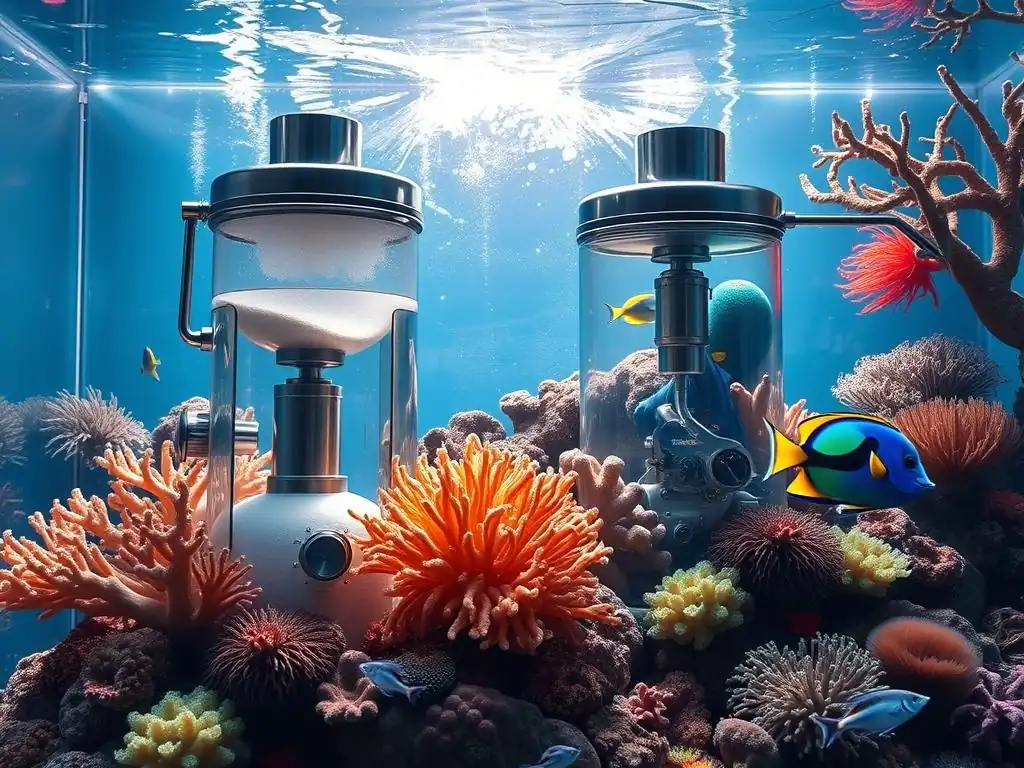
Ever wondered if your saltwater aquarium is truly reaching its full potential? Dive in and discover the crucial role your protein skimmer plays. We're kicking things off with a deep dive into the world of saltwater skimmers, particularly a saltwater skimmer types comparison, pitting internal and external high-tech models head-to-head. Which one will reign supreme for your tank? Get ready to unlock the secrets to crystal-clear water and thriving marine life. Let's explore!
- Internal vs. External Protein Skimmers: Choosing the Right One for Your Reef Tank
- Protein Skimmer Types: Internal vs. External - An AquariumMastery.com Guide
-
Internal Protein Skimmers: Advantages, Disadvantages, and Top Models
- Internal Skimmer Benefits: Space Efficiency and In-Tank Integration
- Internal Skimmer Drawbacks: Potential Noise and Heat Contribution
- Recommended Internal Protein Skimmers:
- External Skimmer Benefits: Enhanced Performance and Easier Access
- External Skimmer Drawbacks: Increased Footprint and External Plumbing
- Recommended External Protein Skimmers:
- Protein Skimmer Placement: Internal vs. External Installation Guide
- Protein Skimmer Performance: Internal vs. External Comparison
- Selecting the Ideal Protein Skimmer: Key Considerations
- Real-World Applications: Internal vs. External Skimmer Success Stories
- Optimizing Protein Skimmer Performance: Expert Tips and Techniques
- Protein Skimmer Types: Final Verdict - Which Skimmer Suits Your Needs?
-
Frequently Asked Questions
- What are the main differences between internal and external saltwater skimmers?
- Which type of skimmer is generally easier to install and maintain?
- How does the size of my aquarium influence my choice of skimmer type?
- Does the type of filtration system I already have impact the skimmer type I should choose?
- What are the advantages of using a "high-tech" skimmer over a basic model?
- Final Reflection: The Ever-Evolving Quest for Pristine Waters
- Unleash the Clarity: Dive Deeper Into Pristine Water!
Internal vs. External Protein Skimmers: Choosing the Right One for Your Reef Tank
Protein Skimmer Types: Internal vs. External - An AquariumMastery.com Guide
Why Protein Skimmers are Vital for Saltwater Tank Health
Protein skimmers are arguably the most crucial piece of equipment for maintaining pristine water quality in a saltwater aquarium, especially for reef tanks housing sensitive corals and invertebrates. They work by removing dissolved organic compounds (DOCs) from the water column before they can break down into harmful nitrates and phosphates.
Without effective skimming, a reef tank can quickly accumulate these pollutants, leading to algal blooms, coral stress, and even fish loss. For instance, in a typical 100-gallon reef tank with moderate fish load, a well-tuned protein skimmer can prevent nitrate levels from exceeding 10 ppm, a critical threshold for many SPS corals.
The efficiency of a protein skimmer directly impacts the overall health and stability of the aquarium ecosystem. By continuously extracting organic waste, skimmers reduce the biological load on the filtration system, minimizing the frequency of large water changes and promoting a more stable pH. Many aquarists report a noticeable improvement in water clarity and coral coloration within days of installing or upgrading to a high-quality skimmer. This proactive removal of organics is far more effective than reactive methods like chemical filtration, making the skimmer an indispensable component in a successful reef tank.
The Science Behind Protein Skimming: Eliminating Dissolved Organics
Protein skimming operates on the principle of foam fractionation. Air bubbles are injected into a reaction chamber, creating a large surface area where dissolved organic compounds, which are often amphiphilic (having both water-attracting and water-repelling properties), attach themselves to the surface of the bubbles. These bubbles then rise to the surface, forming a dense foam at the top of the skimmer's neck.
This foam, rich in organic waste, overflows into a collection cup, where it can be easily removed. This process effectively pulls out proteins, amino acids, carbohydrates, and other waste products that would otherwise decompose and contribute to nutrient buildup.
The effectiveness of this process is influenced by several factors, including bubble size, contact time, and water flow rate within the skimmer. Smaller, more numerous bubbles provide a greater surface area for organic adhesion, leading to more efficient removal. High-end skimmers often incorporate advanced pump designs, such as needle-wheel impellers, to generate a dense, consistent foam. For example, a well-designed skimmer can achieve a contact time of 30-60 seconds, allowing maximum adhesion of organics and resulting in a dark, concentrated skimmate that signifies effective waste removal.
Internal Protein Skimmers: Advantages, Disadvantages, and Top Models
Internal Skimmer Benefits: Space Efficiency and In-Tank Integration
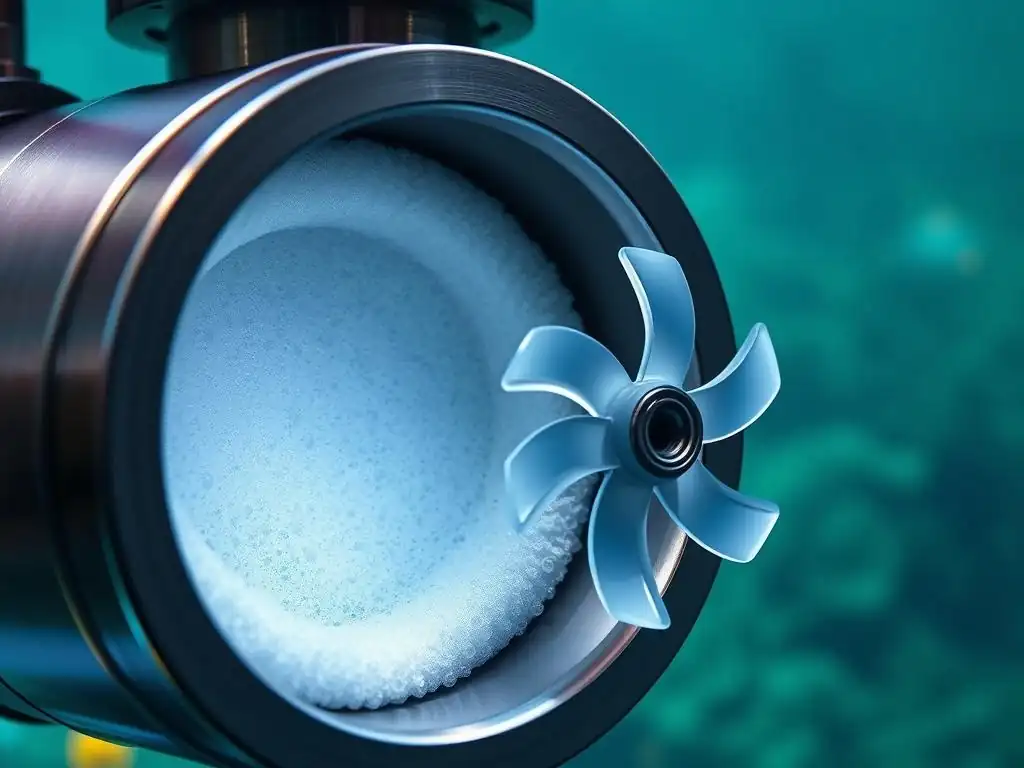
Internal protein skimmers are designed to be placed directly inside the sump or, in some cases, hung on the back of the display tank. Their primary advantage lies in their space-saving design; they don't require external plumbing or a dedicated footprint outside the sump, which is a significant benefit for aquarists with limited space in their fish room or cabinet.
This integrated design often means a simpler setup process, as there are fewer connections and less risk of leaks compared to external units. Many internal models are engineered to fit snugly within standard sump compartments, leaving room for other essential equipment like refugiums or reactors.
Furthermore, internal skimmers often operate with minimal impact on the surrounding environment, as their pumps and reaction chambers are submerged. This submersion can contribute to quieter operation, as the water acts as a sound dampener.
For instance, a quality internal skimmer like the Bubble Magus Curve 5, when properly installed in a sump, typically produces less than 40 decibels of noise, comparable to a quiet refrigerator hum, making it suitable for tanks located in living areas. This makes internal skimmers a popular choice for nano and medium-sized reef tanks where noise and space are critical considerations in a saltwater skimmer types comparison.
Internal Skimmer Drawbacks: Potential Noise and Heat Contribution
While internal skimmers offer space advantages, they are not without their drawbacks. Because they are placed directly in the sump, the heat generated by their pumps is dissipated directly into the aquarium water. This can be a concern for tanks in warmer climates or those with other heat-generating equipment, potentially raising the overall water temperature by 0.5°F to 1.5°F, which might necessitate additional cooling solutions like chillers. This heat contribution is a factor to consider, especially for sensitive coral species that thrive within a narrow temperature range of 76-78°F.
Another potential issue is accessibility for maintenance. While the collection cup is typically easy to remove, cleaning the skimmer body, pump, and neck often requires removing the entire unit from the sump, which can be cumbersome, especially if the sump is tightly packed. This can make routine deep cleaning a more involved process. Furthermore, some internal models, particularly those with less refined pump designs, can still transmit vibrations through the sump walls, leading to noticeable noise if not properly isolated. This aspect is crucial when conducting a saltwater skimmer types comparison for noise-sensitive environments.
Recommended Internal Protein Skimmers:
Reef Octopus Classic 110INT: Reliable Performance for Smaller Tanks
The Reef Octopus Classic 110INT is a workhorse internal skimmer, highly regarded for its robust build and consistent performance. Designed for tanks up to 120 gallons, it features a highly efficient Aquatrance 1000s pump that draws approximately 8 watts of power, producing a fine, dense foam crucial for effective waste removal. Users often praise its reliability and the consistent dark skimmate it produces, indicating excellent organic extraction. Its compact footprint, roughly 6.3" x 7.1" x 19.7" (L x W x H), makes it a suitable fit for most sumps in the 40-100 gallon range.
Bubble Magus Curve 5: Compact Design with Efficient Skimming
The Bubble Magus Curve 5 is a popular choice for aquarists seeking a compact yet powerful internal skimmer for tanks up to 140 gallons. Its unique "curve" body design helps to stabilize the foam head, leading to more consistent and efficient skimming. Powered by an SP1000 needle-wheel pump, it consumes around 16 watts and is known for its quiet operation. Many users report excellent skimmate production, often filling its 300ml collection cup with dark, odorous waste every few days in a moderately stocked 75-gallon reef tank. Its dimensions of 7.28" x 7.08" x 18.5" make it a space-efficient option.
Tunze Comline DOC Skimmer 9004: Ultra-Compact and Energy-Efficient
For nano and smaller aquariums (up to 60 gallons), the Tunze Comline DOC Skimmer 9004 stands out for its ultra-compact design and exceptional energy efficiency. It can be placed directly in the display tank or sump, requiring minimal space (4.3" x 3.5" x 12" H). Drawing only 4 watts of power, it's one of the most economical skimmers to operate, yet it delivers surprisingly effective skimming for its size. Its patented "Comline" design ensures quiet operation and easy maintenance, making it ideal for desktop or bedroom setups where noise and footprint are paramount.
External Skimmer Benefits: Enhanced Performance and Easier Access
External protein skimmers, also known as "sump-outside" or "recirculating" skimmers, are designed to sit outside the sump, drawing water in and returning it after processing. A major advantage of this configuration is the ability to use larger, more powerful pumps and reaction chambers, which often translates to superior skimming performance. These larger designs allow for longer contact times between air and water, leading to more efficient removal of dissolved organics. For example, a high-end external skimmer might process 1,000-1,500 gallons per hour, significantly turning over the tank's water volume multiple times an hour, leading to exceptionally clean water.
Another significant benefit is unparalleled accessibility for maintenance. Since the entire unit is outside the sump, cleaning the collection cup, neck, and pump is much easier and less disruptive to the aquarium system. This ease of access encourages more frequent cleaning, which directly contributes to sustained optimal performance. Additionally, the heat generated by the skimmer's pump is dissipated into the ambient air, not directly into the aquarium water, helping to maintain stable tank temperatures. This makes external skimmers a strong contender in a detailed saltwater skimmer types comparison for high-performance setups.
External Skimmer Drawbacks: Increased Footprint and External Plumbing
The primary disadvantage of external protein skimmers is their significant footprint. They require dedicated space outside of the sump cabinet, which can be an issue for aquarists with limited room. This often means needing a larger fish room or a dedicated area next to the aquarium stand. For instance, a high-capacity external skimmer might occupy a footprint of 12" x 14" and stand over 24" tall, demanding considerable real estate. This is a critical consideration in any saltwater skimmer types comparison where space is at a premium.
Furthermore, external skimmers necessitate more complex plumbing. They require an external feed pump to supply water from the sump to the skimmer, and a return line to send the skimmed water back to the sump. This involves drilling bulkheads in the sump or using overflow boxes, and connecting various PVC pipes and fittings. While not overly complicated for experienced hobbyists, it adds to the initial setup time and introduces more potential points for leaks if not properly sealed. The added plumbing also means more components to check and maintain over time.
Recommended External Protein Skimmers:
Reef Octopus Regal 250EXT: High-End Skimming Power for Large Reefs
The Reef Octopus Regal 250EXT is a top-tier external skimmer designed for large and heavily stocked reef tanks up to 400 gallons. It features a powerful controllable DC pump (VarioS-6) that sips around 40-50 watts, offering precise control over water flow and foam production. Its robust construction and large reaction chamber (10" diameter, 24" height) ensure maximum contact time and exceptional organic removal. Many users report a dramatic reduction in nitrates, often from 20 ppm down to undetectable levels in heavily fed 200-gallon systems within a month of operation.
AquaMaxx ConeS CO-1: Affordable External Skimming Solution
For those seeking the benefits of an external skimmer without the premium price tag, the AquaMaxx ConeS CO-1 offers an excellent balance of performance and affordability. Suitable for tanks up to 100 gallons, this compact external unit (9.5" x 7.5" x 19" H) utilizes an Italian-made Sicce Syncra 1.5 pump, consuming roughly 23 watts. It's praised for its consistent dry skimmate production and relatively quiet operation, making it a solid entry-level choice for an external saltwater skimmer types comparison.
Nyos Quantum 160: Innovative Design for Optimal Skimming
The Nyos Quantum 160 is renowned for its innovative design and superior skimming efficiency. While it can be used internally, its external capabilities are where it truly shines, processing water for tanks up to 250 gallons. Its patented "Hybrids" impeller and conical body optimize bubble formation and contact time, leading to exceptionally dark and concentrated skimmate. The Quantum 160 is also celebrated for its quiet operation (often under 35 dB) and low power consumption (around 22 watts), making it a highly desirable option for serious aquarists.
Protein Skimmer Placement: Internal vs. External Installation Guide
Internal Skimmer Installation: Optimizing In-Tank Performance
Installing an internal protein skimmer typically involves placing it directly into a designated compartment within the sump. For optimal performance, the water level in the sump compartment where the skimmer resides is crucial. Most internal skimmers have a recommended operating water depth, often specified by the manufacturer (e.g., 6 to 10 inches). Maintaining this consistent water level ensures stable foam production and prevents micro-bubbles from re-entering the display tank. Using an auto top-off system to keep the sump water level constant is highly recommended.
Once placed, ensure the skimmer is level to allow for even foam collection in the cup. Connect the air intake line, often equipped with a silencer, and plug in the pump. It's advisable to break in a new skimmer for a few days to a week; during this period, it may produce excessive micro-bubbles and inconsistent foam as manufacturing residues are flushed out. During this break-in, the skimmer may produce a light, watery skimmate. Over time, as it settles, it will begin to produce the desired dark, concentrated skimmate, indicating efficient organic removal.
External Skimmer Plumbing: Achieving Efficient Water Circulation
External skimmer installation is more involved due to the necessary plumbing. First, select a stable, level surface next to your sump or aquarium stand. You'll need a dedicated feed pump in your sump to supply water to the external skimmer. The size of this feed pump should match the skimmer's recommended input flow rate (e.g., a skimmer requiring 500 GPH input will need a pump rated similarly, accounting for head pressure). Connect the feed pump to the skimmer's inlet via PVC or flexible tubing.
Next, plumb the skimmer's output back to the sump. This usually involves a gravity-fed return line, often a larger diameter pipe (e.g., 1.5 inches) to prevent back pressure and ensure smooth flow. Ensure all connections are secure and leak-free using appropriate fittings and PVC cement or thread sealant. Once plumbed, prime the feed pump and check for leaks. Adjust the skimmer's gate valve or wedge pipe to achieve the desired water level inside the skimmer body, typically at the base of the neck for initial setup, then fine-tune for optimal skimmate production.
Protein Skimmer Performance: Internal vs. External Comparison
Skimming Efficiency: Maximizing Waste Removal Capacity
When it comes to raw skimming efficiency, external protein skimmers often have an edge over their internal counterparts in a comprehensive saltwater skimmer types comparison. Their larger footprint allows for more voluminous reaction chambers and taller contact columns, providing a greater surface area for air-water interaction and longer contact times. This typically results in the removal of a higher percentage of dissolved organic compounds per hour. For instance, a high-end external skimmer might consistently remove 80-90% of DOCs in a single pass, whereas a similarly priced internal model might achieve 70-80% due to design constraints.
However, advancements in internal skimmer technology, particularly with conical body designs and powerful DC pumps, have significantly narrowed this gap. Many modern internal skimmers can now rival the efficiency of older or mid-range external units, especially for tanks within their rated capacity. The key factor isn't solely internal versus external, but rather the skimmer's overall design, pump quality, and proper sizing for the specific tank's bioload. A well-tuned internal skimmer in a moderately stocked 75-gallon tank can maintain nitrate levels below 5 ppm, just as an external one could in a larger system.
Noise Levels: Evaluating Operational Sound for Each Type
Noise is a significant consideration for many aquarists, especially when tanks are located in living areas. In a saltwater skimmer types comparison, internal skimmers generally have the potential to be quieter because their pumps and main bodies are submerged in water, which acts as a natural sound dampener. High-quality internal skimmers from brands like Tunze or Bubble Magus often operate at sound levels between 35-45 decibels, which is barely noticeable in a quiet room. The primary noise source for internal skimmers is typically the air intake, which can be mitigated with a silencer.
External skimmers, on the other hand, sit outside the sump, meaning their pumps and reaction chambers are directly exposed to the ambient environment. While modern external skimmers have made strides in noise reduction, they can still produce more audible noise than their internal counterparts due to vibrations and pump hum. Some high-power external skimmers, particularly those with AC pumps, can generate noise levels in the 50-60 decibel range, comparable to a quiet conversation. However, DC controllable pumps and rubber isolation feet on many premium external models have significantly reduced this, with some achieving levels comparable to quiet internal units.
Maintenance Requirements: Comparing Ease of Cleaning and Adjustments
Maintenance is a crucial aspect of skimmer ownership, impacting long-term performance. Internal skimmers typically require less frequent full breakdown cleaning compared to external units, as they are less exposed to external dust and debris. However, when a deep clean is necessary, it often involves removing the entire unit from the sump, which can be a wet and cumbersome task, especially for larger models or in tightly packed sumps. The collection cup, which requires daily or weekly emptying, is usually easily accessible.
External skimmers generally offer superior ease of access for cleaning and adjustments. Since the entire unit is outside the sump, the collection cup, neck, and even the pump can be accessed and cleaned without getting wet or disturbing the sump's contents. This makes routine maintenance, such as cleaning the neck to prevent protein buildup and ensure optimal foam rise, much simpler and more likely to be performed regularly. The plumbing lines, however, will occasionally need to be checked for blockages or build-up, adding a minor extra maintenance step compared to internal units.
Selecting the Ideal Protein Skimmer: Key Considerations
Tank Size and Bioload: Matching Skimmer Capacity to Aquarium Needs
The most critical factor in selecting a protein skimmer is correctly matching its capacity to your aquarium's size and bioload. Skimmer manufacturers typically provide a "rated" tank size, but it's crucial to understand that this rating is often for a lightly stocked tank. For a heavily stocked reef tank with many fish and hungry corals (high bioload), it's advisable to choose a skimmer rated for 1.5 to 2 times your actual tank volume. For instance, a 100-gallon mixed reef with 10-15 fish and SPS corals would benefit from a skimmer rated for 150-200 gallons.
Undersizing a skimmer will lead to insufficient waste removal, resulting in elevated nitrates and phosphates, and compromised water quality. Conversely, an oversized skimmer might pull out too many beneficial trace elements or struggle to produce a consistent foam head, leading to "wet" skimmate. Always consider the specific needs of your tank – a fish-only with aggressive feeders will have a much higher bioload than a sparsely populated soft coral tank of the same volume.
Budget Allocation: Balancing Performance and Cost-Effectiveness
Protein skimmers range widely in price, from under $100 for basic models to over $1,000 for high-end units. Your budget will inevitably influence your choice, but it's important to view a skimmer as a long-term investment in your reef tank's health. While basic models might suffice for very small or lightly stocked tanks, investing in a mid-range or premium skimmer often pays dividends in terms of reliability, efficiency, and quiet operation. A quality skimmer can last for many years with proper maintenance, making its initial cost spread out over its lifespan.
Consider the long-term operational costs as well, such as power consumption. A skimmer that costs $50 more initially but uses 10 fewer watts over its lifespan can save you significant money on your electricity bill over several years. For example, a 10-watt difference translates to approximately $87.60 saved per year at an average electricity cost of $0.10/kWh, easily recouping the initial price difference. Balancing initial cost with performance and energy efficiency is key in a thorough saltwater skimmer types comparison.
Space Constraints: Evaluating Internal vs. External Footprint
The physical space available in your aquarium stand, sump, or fish room will heavily influence the choice between an internal and external skimmer. Internal skimmers are generally more compact and designed to fit within the confines of a sump, making them ideal for setups where space is limited, such as smaller apartments or living rooms where a large external unit would be impractical. Measure your sump compartments carefully to ensure the skimmer will fit with adequate clearance for maintenance.
External skimmers, while offering performance and accessibility advantages, demand a much larger dedicated footprint outside the sump. This is often the deciding factor for many hobbyists. If you have a large fish room or a spacious dedicated area for equipment, an external skimmer becomes a viable and often superior option. However, if every inch counts, an internal model is likely the more practical choice. This spatial consideration is paramount in any practical saltwater skimmer types comparison.
Real-World Applications: Internal vs. External Skimmer Success Stories
Case Study 1: Thriving SPS Reef with a Reef Octopus External Skimmer
Consider a 180-gallon heavily stocked SPS (Small Polyp Stony) coral reef tank, known for its demanding water quality requirements and high bioload from numerous fish. The owner, seeking ultimate performance and easy maintenance, opted for a Reef Octopus Regal 250EXT external protein skimmer. Before installation, nitrates consistently hovered around 20-25 ppm, even with regular 10% weekly water changes. Within three weeks of the skimmer's operation, running continuously, nitrates dropped to a consistent 2-5 ppm, and phosphates became undetectable with a high-resolution test kit.
The external placement allowed for daily collection cup emptying and weekly neck cleaning without disrupting the sump, ensuring peak performance. The skimmer's large reaction chamber and powerful DC pump consistently produced a thick, dark skimmate, indicating efficient removal of organic waste. This dramatically improved coral coloration and growth, and the fish showed increased vitality, demonstrating the significant impact a high-capacity external skimmer can have on a challenging, high-demand reef system.
Case Study 2: Flourishing Nano Reef with a Bubble Magus Internal Skimmer
In contrast, a 30-gallon nano reef tank, limited by space in a small apartment, required a compact yet effective skimming solution. The owner chose a Bubble Magus Curve 5 internal protein skimmer, placed directly in the tank's all-in-one rear sump. Despite its small footprint, this skimmer proved highly effective for the moderately stocked tank, which included a few small fish, LPS corals, and soft corals. Before the skimmer, the tank experienced occasional nuisance algae outbreaks, particularly green hair algae.
After installing the Curve 5, which operated quietly at around 40 dB, the algae issues significantly diminished within a month. Nitrate levels, previously fluctuating between 10-15 ppm, stabilized at a consistent 5 ppm. The skimmer's compact design allowed it to fit perfectly within the designated sump chamber, and its efficient needle-wheel pump produced a healthy amount of dark skimmate from the relatively small water volume. This case highlights how an appropriately sized and well-performing internal skimmer can ensure the success of even space-constrained nano reef environments.
Optimizing Protein Skimmer Performance: Expert Tips and Techniques
Fine-Tuning Skimmer Adjustments: Achieving Optimal Skimmate Production
Achieving optimal skimmate production involves careful fine-tuning of your protein skimmer. The goal is to produce a dark, thick, and odorous skimmate, indicating efficient removal of dissolved organics. Too "wet" (light, watery) skimmate indicates the water level in the skimmer body is too high, or the air intake is too low, leading to premature overflow of mostly water. Too "dry" (minimal, paste-like) skimmate means the water level is too low, or air intake is too high, leading to less efficient removal.
Adjustments are typically made using a gate valve, wedge pipe, or standpipe on the skimmer's output, which controls the internal water level. For new skimmers, start with the water level at the very base of the skimmer's neck. Over 24-48 hours, gradually raise the water level until foam consistently reaches the collection cup.
A common practice is to aim for the foam head to break just inside the collection cup's neck. Small adjustments (e.g., rotating a gate valve by 1/8th of a turn) should be made slowly, allowing 30 minutes to an hour for the skimmer to react before further changes.
Skimmer Maintenance Best Practices: Ensuring Long-Term Efficiency
Regular maintenance is paramount for ensuring your protein skimmer operates at peak efficiency. The most frequent task is emptying and cleaning the collection cup, ideally every 1-3 days, or whenever it's full. A dirty cup can inhibit proper foam formation and reduce skimming efficiency. The skimmer neck, where the foam rises, should be cleaned weekly to prevent protein buildup, which can restrict foam flow and lead to overflow. A simple brush or sponge can be used for this.
Every 3-6 months, a more thorough cleaning of the entire skimmer body and pump is recommended. This involves disassembling the skimmer, cleaning the impeller, pump volute, and reaction chamber with warm water and a vinegar solution (a 1:1 mixture with water works well) to dissolve any stubborn calcium deposits or organic slime. This deep cleaning restores the skimmer's original performance and extends its lifespan. Neglecting this can lead to decreased air intake, reduced bubble production, and ultimately, less effective waste removal, making this a critical aspect in any saltwater skimmer types comparison for longevity.
Protein Skimmer Types: Final Verdict - Which Skimmer Suits Your Needs?
Recommendation: Best Internal Skimmer for Small to Medium Reef Tanks
For aquarists with small to medium-sized reef tanks (up to 100-120 gallons) where space within the sump is limited, or who prioritize quiet operation and a clean, integrated look, an internal protein skimmer is often the superior choice. Models like the Bubble Magus Curve 5 or the Reef Octopus Classic 110INT offer excellent performance, reliability, and energy efficiency within a compact footprint.
They are relatively easy to set up and maintain their efficiency when properly sized for the tank's bioload. For nano tanks (under 60 gallons), the Tunze Comline DOC Skimmer 9004 is an outstanding, ultra-compact, and highly efficient option.
Recommendation: Best External Skimmer for Large or Heavily Stocked Reef Tanks
For larger reef tanks (150 gallons and above) or those with a very high bioload (numerous fish, heavy feeding, demanding SPS corals), an external protein skimmer typically provides the highest level of performance and ease of maintenance. The ability to use larger reaction chambers and more powerful pumps translates to superior organic removal and water clarity. Models like the Reef Octopus Regal 250EXT or the Nyos Quantum 160, while requiring more space and complex plumbing, deliver exceptional results, maintaining ultra-low nutrient levels critical for sensitive corals. The easier access for cleaning also ensures consistent peak performance over time.
Conclusion: Investing in Quality Skimming for a Healthy Reef Environment
Ultimately, the choice between internal and external protein skimmers depends on a careful evaluation of your specific tank's needs, available space, budget, and personal preferences regarding maintenance and noise. Both saltwater skimmer types comparison reveal distinct advantages and disadvantages. Regardless of the type chosen, investing in a high-quality protein skimmer that is appropriately sized for your system is paramount.
A well-performing skimmer is the cornerstone of a healthy, thriving saltwater aquarium, actively removing pollutants before they can negatively impact your aquatic inhabitants. It’s an essential piece of equipment that directly contributes to the long-term success and stability of your marine ecosystem.
Frequently Asked Questions
What are the main differences between internal and external saltwater skimmers?
Internal skimmers sit inside the aquarium or sump, offering a more compact footprint. External skimmers are placed outside the tank, allowing for potentially larger skimmer bodies and easier maintenance access.
Which type of skimmer is generally easier to install and maintain?
External skimmers often offer easier access for maintenance, such as cleaning the collection cup. However, internal skimmers may require less plumbing and are simpler to initially set up within the tank or sump.
How does the size of my aquarium influence my choice of skimmer type?
Larger aquariums typically benefit from the increased capacity of external skimmers, which can handle larger volumes of water. For smaller tanks, an internal skimmer might be more space-efficient and sufficient for waste removal.
Does the type of filtration system I already have impact the skimmer type I should choose?
Yes, the existing filtration setup, particularly the presence of a sump, will influence your choice. Sumps are ideal for housing internal skimmers, whereas external skimmers can be used with or without a sump, providing greater flexibility.
What are the advantages of using a "high-tech" skimmer over a basic model?
"High-tech" skimmers often incorporate advanced features like automatic cleaning cycles and electronic water level control, resulting in more consistent performance and reduced maintenance requirements compared to basic models.
Okay, here's a final reflection tailored for your article "Internal vs. External HighTech Skimmers: Which Reigns Supreme for Your Saltwater Tank?" aiming to rank for the keyword "Saltwater skimmer types comparison," following the structure you provided:
Final Reflection: The Ever-Evolving Quest for Pristine Waters
The debate between internal and external skimmers, as we've explored, is far from settled, and its continued relevance in the reefing world underscores the unwavering pursuit of optimal water quality. The advancements in skimmer technology, from needle-wheel impellers to sophisticated control systems, reflect a deep commitment to creating thriving aquatic ecosystems. This isn't just about equipment; it's about the health and well-being of the delicate life within our tanks.
The choice between internal and external skimmers is deeply personal, influenced by tank size, available space, and individual preferences. This journey of selecting the right equipment highlights the dedication and passion that reef keepers pour into their hobby, constantly learning and adapting to provide the best possible environment for their corals and fish. The sea, once it casts its spell, holds one in its net of wonder forever.
- Jacques Cousteau. This quote perfectly captures the allure of reef keeping and the lengths we go to in pursuit of replicating a piece of the ocean in our homes.
As you consider the information presented and weigh the pros and cons of each skimmer type, remember that the most important factor is your commitment to maintaining a healthy and balanced ecosystem. Let this comparison serve as a springboard for further research and experimentation. Embrace the challenge, learn from your experiences, and never stop striving to create the most vibrant and thriving reef you can.
Unleash the Clarity: Dive Deeper Into Pristine Water!
Thank you for exploring the nuances of protein skimmers with us! We hope this article has empowered you with the knowledge to choose the perfect skimmer for your saltwater aquarium. Ready to take action?
Here are a few things you can do now:
- Boldly assess your tank's specific needs and select the skimmer type (internal or external) that best addresses them.
- Share your own experiences with different protein skimmers in the comments below - let's learn from each other!
- Consider experimenting with different skimmer adjustments (air intake, water level) to fine-tune performance in your specific setup; you might be surprised by the results.
What’s the most surprising thing you learned about skimmer technology today, and how will it influence your next upgrade?