
Betta Tank Lighting: How Much is Too Much?

Welcome to Aquarium Mastery!
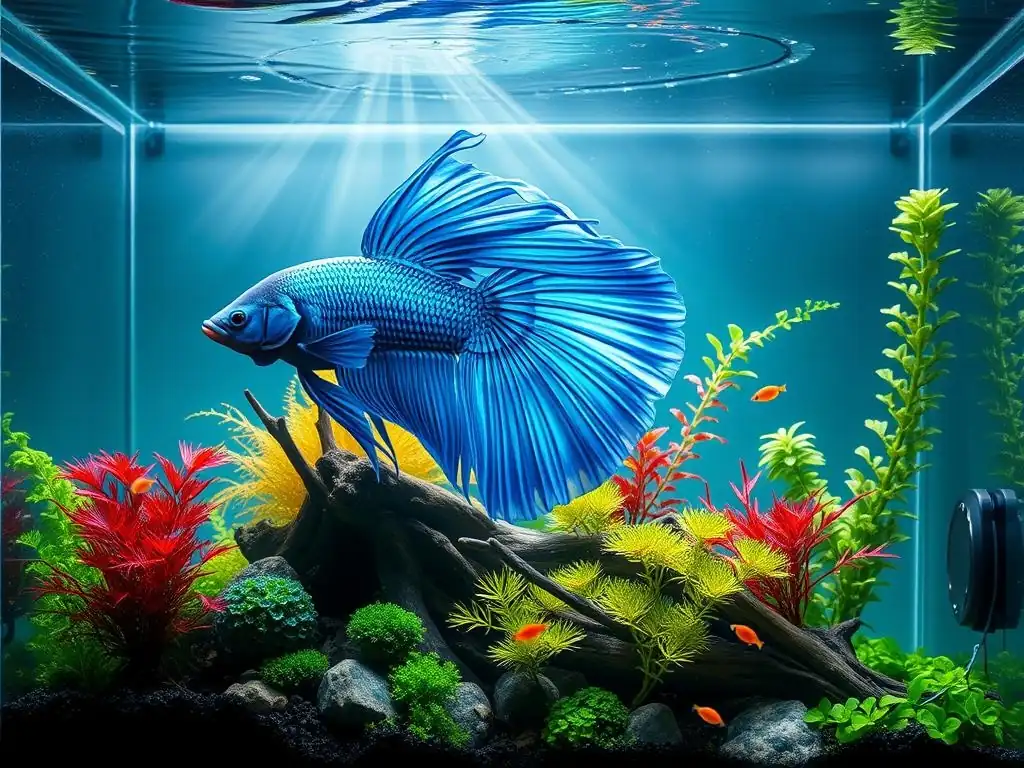
Curious about creating the perfect underwater haven for your Betta? You've landed in the right place! Dive into our Betta Tank Lighting Guide and unlock the secrets to illuminating your finned friend's world. But be warned, striking the right balance is key - how much light is too much? Let's explore!
- Betta Tank Lighting: How Much is Too Much? - AquariumMastery.com
- Understanding Betta Fish Lighting Needs
- Finding the Right Balance in Betta Tank Lighting
- Betta Lighting Schedule
- Signs of Betta Fish Stress Due to Improper Lighting
- Setting Up Betta Tank Lighting
- Troubleshooting Common Lighting Problems
- Advanced Lighting Techniques
- Conclusion: Mastering Lighting for a Healthy Betta Aquarium
- Frequently Asked Questions
- Final Reflection: Illuminating the Path to Betta Well-being
- Illuminate Your Betta's World: Take the Next Step!
Betta Tank Lighting: How Much is Too Much? - AquariumMastery.com
Understanding Betta Fish Lighting Needs
The Importance of Proper Lighting for Betta Fish Health
Proper Betta tank lighting is a fundamental component of maintaining a healthy and thriving environment for these captivating fish. Consistent light cycles play a crucial role in regulating a Betta's natural circadian rhythm, which directly influences their sleep-wake patterns, appetite, and even their immune system. For instance, a well-regulated photoperiod helps prevent chronic stress, allowing the Betta to exhibit its natural behaviors, such as active swimming, exploring, and vibrant coloration.
Furthermore, appropriate lighting supports the Betta's overall vitality. Studies in aquaculture have shown that fish exposed to stable photoperiods, typically within a 10-12 hour range, exhibit better growth rates and enhanced disease resistance compared to those kept in erratic or inconsistent lighting conditions. This stability ensures that the Betta's biological processes, from metabolism to hormonal regulation, function optimally, contributing to their long-term well-being in your aquarium.
Consequences of Insufficient Lighting for Betta Fish
Insufficient lighting can have several detrimental effects on Betta fish, primarily by disrupting their natural biological clock. When Betta fish are subjected to prolonged periods of dimness or darkness, their circadian rhythm is thrown off balance, leading to chronic stress. This stress often manifests as lethargy, where the fish becomes unusually inactive, spending excessive time resting at the bottom or in secluded areas of the tank, showing little interest in food or its surroundings.
Moreover, a lack of adequate Betta tank lighting can cause a noticeable fading of their vibrant coloration. The brilliant reds, blues, and purples that Bettas are renowned for may dull significantly, becoming pale or washed out, serving as a clear indicator of an unhealthy environment or stress. Prolonged periods of insufficient light, especially exceeding 14-16 hours of darkness consistently, can also suppress a Betta's immune system, making them more susceptible to common ailments like fin rot or Ich, thus compromising their long-term health.
Dangers of Overlighting a Betta Aquarium
While insufficient light is detrimental, excessive Betta tank lighting poses equally significant, if not greater, dangers to your fish and the aquarium ecosystem. Constant, intense light can induce severe chronic stress in Betta fish, causing them to become agitated, dart around erratically, or continuously seek refuge in shaded areas of the tank. This heightened stress can lead to undesirable behaviors such as fin nipping, where the Betta damages its own fins, or increased aggression towards any tank mates if present.
Beyond the immediate impact on the fish, one of the most common and persistent issues associated with overlighting is the rapid proliferation of nuisance algae. Algae, such as green spot algae or hair algae, can quickly cover tank glass, plants, substrate, and decor, detracting from the tank's aesthetics and competing with live plants for essential nutrients. For instance, a 5-gallon Betta tank exposed to 16 hours of intense light daily might experience a noticeable algae bloom within 1-2 weeks, necessitating frequent cleaning and potentially stressing the fish further due to fluctuating water parameters.
Finding the Right Balance in Betta Tank Lighting
Natural Light vs. Artificial Light
When considering a comprehensive Betta tank lighting guide, it's crucial to understand the distinction and limitations of natural versus artificial light. While some ambient natural light from a room can contribute to the overall brightness, relying solely on direct sunlight for your Betta's primary illumination source is generally not recommended. Direct sunlight is highly variable in intensity and duration throughout the day and year, making it impossible to establish a stable photoperiod, which is vital for a Betta's health.
Furthermore, direct sunlight can rapidly increase water temperatures in an aquarium, potentially leading to dangerous fluctuations that stress the fish. It also acts as a powerful catalyst for severe and persistent algae blooms, which can quickly overwhelm the tank's ecosystem. In contrast, artificial aquarium lighting offers precise control over intensity, spectrum, and duration, allowing aquarists to create a consistent and stable lighting schedule that perfectly mimics a natural day-night cycle without the associated risks.
Suitable Types of Aquarium Lights for Betta Fish
LED Lighting for Betta Aquariums
LED (Light Emitting Diode) lighting is widely regarded as the superior choice for a modern Betta tank lighting guide due to its efficiency and versatility. LEDs are incredibly energy-efficient, consuming significantly less power than traditional fluorescent bulbs, which translates to lower electricity costs over time. Their lifespan is also exceptionally long, often exceeding 50,000 hours, meaning less frequent bulb replacements and minimal maintenance.
Many contemporary LED fixtures designed for aquariums offer adjustable light spectrums and intensity, allowing aquarists to fine-tune the illumination to suit both the Betta's needs and any live plants within the tank. For example, a 5-watt LED light bar designed for tanks up to 10 gallons can provide ample, even illumination for a Betta without generating excessive heat, which is particularly beneficial for smaller aquariums where temperature stability is critical.
Fluorescent Lighting for Betta Aquariums
Fluorescent lighting, specifically T5 and T8 bulbs, has historically been a popular and cost-effective option for aquarium illumination. These lights are generally more affordable upfront compared to some advanced LED systems and can provide a broad spectrum of light, making them suitable for tanks containing live plants that require specific wavelengths for photosynthesis. They are a viable option for those looking for a functional and budget-friendly Betta tank lighting solution.
However, fluorescent bulbs do have a shorter operational lifespan compared to LEDs, typically requiring replacement every 6-12 months to maintain optimal light output and prevent spectral shift. They also generate more heat than LEDs, which can slightly impact water temperature in smaller Betta tanks, particularly those under 5 gallons. For instance, a 10-watt T8 fluorescent fixture over a 5-gallon tank might cause a 1-2 degree Fahrenheit increase in water temperature over a 12-hour photoperiod, necessitating careful monitoring, especially in warmer climates.
Light Spectrum and Intensity Requirements for Betta Fish
For Betta fish, the ideal light spectrum and intensity should closely mimic the dappled, moderate lighting conditions found in their natural Southeast Asian habitats. A moderate light intensity is generally preferred, as excessively bright light can cause stress and lead to hiding behavior. The Kelvin (K) temperature, which describes the color appearance of light, is an important consideration; a range of 6,500K to 7,500K is highly recommended. This spectrum produces a natural daylight appearance that is not only aesthetically pleasing but also beneficial for both the Betta's coloration and any live plants.
High PAR (Photosynthetically Active Radiation) values, often targeted for demanding planted tanks, are typically unnecessary and potentially detrimental in a Betta-centric aquarium. A light fixture providing around 20-30 PAR at the substrate level is usually sufficient for low to medium light plants and provides a comfortable illumination level for Betta fish. For example, a 5-gallon tank equipped with a 7-watt LED light set to a natural daylight spectrum often provides adequate illumination without causing stress or promoting excessive algae growth, striking the perfect balance for a healthy Betta environment.
Betta Lighting Schedule
Recommended Lighting Durations for Betta Tanks
Establishing a consistent and appropriate Betta tank lighting schedule is paramount for the health and well-being of your fish. The most widely recommended duration for Betta tanks is between 8 to 12 hours of light per day. This range effectively simulates a natural day-night cycle, which is crucial for regulating the Betta's circadian rhythm, promoting healthy sleep patterns, and supporting overall vitality. Consistency within this range is key; maintaining the same on/off times daily helps to reduce stress and allows the fish to establish a predictable routine.
Exceeding 12 hours of light can lead to chronic stress for the Betta, as they require periods of darkness for rest and recovery. Prolonged lighting also significantly increases the risk of nuisance algae blooms, which can quickly overtake the tank. Conversely, providing less than 8 hours of light can result in lethargy, faded colors, and a general lack of activity. For example, a common and highly effective schedule implemented by many successful aquarists is 10 hours of light, from 9 AM to 7 PM, providing ample illumination for viewing and plant growth without overexposing the fish.
Impact of Lighting on Betta Fish Behavior
Lighting plays a significant and direct role in influencing the behavior of Betta fish. During the "day" cycle, when the tank is illuminated, Betta fish are typically more active, exploring their environment, engaging in feeding behaviors, and interacting with tank decorations or plants. A proper Betta tank lighting guide ensures that these natural behaviors are observed consistently, indicating a healthy and comfortable fish. Conversely, during the "night" cycle, when the lights are off, Betta fish will rest, often settling near the bottom, finding a comfortable spot among plants, or even "sleeping" in peculiar positions.
Inconsistent or inappropriate lighting can lead to a range of undesirable behavioral issues. For instance, Betta fish exposed to constant light without a proper dark period may become hyperactive, anxious, or even aggressive, potentially leading to increased fin nipping or hiding.
Conversely, those kept in perpetual dimness or darkness might become lethargic, lose their vibrant coloration, and exhibit a general lack of interest in their surroundings. Anecdotal evidence from aquarists suggests that Betta fish in tanks with stable, predictable lighting cycles are more likely to exhibit healthy breeding behaviors, such as bubble nest building, compared to those in unstable lighting conditions.
Creating a Natural Day/Night Cycle
Creating a natural and consistent day/night cycle is paramount for the health and comfort of Betta fish. The most effective and reliable way to achieve this is by utilizing an automatic light timer. A timer eliminates human error and ensures that the aquarium lights turn on and off at precisely the same time every single day, providing the unwavering stability that Betta fish thrive on. This consistency is vital for regulating their internal clocks, reducing stress, and promoting overall well-being.
Some advanced LED lighting systems offer programmable features that mimic natural sunrise and sunset effects, gradually increasing and decreasing light intensity over a period of 30-60 minutes. While not strictly necessary for a basic Betta tank lighting guide, these "ramp up/down" features can further reduce stress by avoiding sudden, abrupt changes in illumination, allowing the Betta to adjust more naturally to light transitions. For example, setting a timer to turn lights on at 8:00 AM and off at 6:00 PM consistently provides a reliable 10-hour photoperiod, benefiting both the fish and any live plants.
Signs of Betta Fish Stress Due to Improper Lighting
Betta fish are highly sensitive creatures, and improper Betta tank lighting can quickly lead to observable signs of stress. One of the most common indicators is excessive hiding; a stressed Betta might spend the majority of its time tucked away behind decorations, dense plant cover, or in dark corners of the tank, actively avoiding the open, brightly lit areas. Another visual cue is faded coloration; the vibrant hues that Bettas are celebrated for may dull significantly, becoming pale or washed out, which is a clear signal of discomfort or an unhealthy environment.
Behavioral changes also serve as critical indicators of light-related distress. This includes lethargy, where the fish becomes unusually inactive, often resting at the bottom or floating near the surface for prolonged periods, exhibiting little energy. Conversely, some Betta fish might display erratic, darting movements, or repeatedly attempt to jump out of the tank due to overstimulation from excessive light. For example, a Betta exposed to 14 or more hours of bright light daily might develop clamped fins within a few days, a classic sign of discomfort and stress.
Common Betta Fish Health Issues Influenced by Lighting
Prolonged exposure to improper Betta tank lighting, particularly overlighting, can significantly contribute to several health issues in Betta fish. Constant, intense illumination can potentially lead to eye irritation or even long-term damage, as Betta fish naturally prefer more subdued environments. More significantly, chronic stress induced by inappropriate lighting severely weakens the Betta's immune system, rendering them highly susceptible to opportunistic diseases that they would otherwise be able to fight off.
Common ailments such as fin rot, characterized by frayed, deteriorating, or discolored fins, and Ich (white spot disease), a parasitic infection that appears as small white spots on the fish's body and fins, are frequently observed in stressed fish. While lighting isn't the sole cause of these diseases, it acts as a major contributing factor by compromising the fish's natural defenses. For instance, a Betta kept in a consistently over-lit tank might experience recurrent cases of fin rot or show persistent signs of Ich, despite otherwise good water parameters, indicating a compromised immune system due to environmental stress.
Setting Up Betta Tank Lighting
Choosing the Right Size and Wattage
Selecting the appropriate size and wattage for your Betta tank lighting is crucial for providing optimal illumination without overwhelming your fish or promoting excessive algae growth. The light fixture should ideally span the length of your aquarium, or at least adequately cover the entire water surface area to ensure even light distribution. For a standard 5-gallon Betta tank, a light fixture ranging from 5 to 10 watts is typically sufficient, especially if you are using energy-efficient LED technology.
For larger tanks, such as a 10-gallon Betta setup, a 10-15 watt LED fixture might be more appropriate, depending on the specific light's intensity and features. It's important to err on the side of moderation when choosing wattage; a light that is too powerful for the tank size can easily cause stress for the Betta and lead to rapid algae proliferation. For example, using a high-intensity 20-watt LED designed for a 20-gallon planted tank on a small 3-gallon Betta tank would be a significant overshoot, causing discomfort for the fish and a likely algae explosion.
Positioning for Optimal Results
Proper positioning of your Betta tank lighting fixture is essential for maximizing its effectiveness and minimizing stress for your fish. The light should ideally be centered directly over the aquarium to provide uniform illumination across the entire tank. This centralized placement helps to prevent dark spots and ensures that any live plants receive adequate light for healthy growth. Care should be taken to ensure the light is not positioned in a way that creates direct, blinding glare for the fish from their primary viewing angles, as this can cause discomfort.
Most aquarium lights are designed to sit directly on top of the tank's glass or acrylic lid, or clip securely onto the rim of the aquarium. If your tank has a hood, ensure the light fixture fits properly and that the hood itself does not significantly block or unevenly distribute the light. For instance, a light positioned too far forward or backward on a rimless tank might create strong shadows or overly bright areas, whereas a centrally placed fixture ensures even light penetration, benefiting both the Betta's comfort and the overall aesthetics of the tank.
Adjusting Lighting for Live Plants
If your Betta tank incorporates live plants, adjusting the Betta tank lighting becomes a delicate balance between the plants' photosynthetic needs and the Betta's comfort. Low-light plants such as Anubias species, Java Fern, various mosses (e.g., Java Moss), and Cryptocoryne species are excellent choices for Betta tanks because they thrive under moderate lighting conditions. These plants typically require only 0.25 to 0.5 watts per gallon (when using LEDs, this generally converts to roughly 5-10 PAR at the substrate level) and are perfectly compatible with the light levels comfortable for a Betta.
For a 5-gallon tank with such low-light plants, a 5-7 watt LED fixture set to a 6500K spectrum for 8-10 hours daily is generally sufficient to support healthy plant growth without stressing the fish. If you opt for more demanding, higher-light plants, you might need a stronger light, but this requires careful monitoring of your Betta for signs of stress and potentially reducing the photoperiod to compensate for higher intensity.
For example, while some high-tech plants might need 30+ PAR, aiming for 15-25 PAR is a safer range for a Betta-centric planted tank to ensure both flora and fauna thrive.
Troubleshooting Common Lighting Problems
Dealing with Algae Blooms
Algae blooms are one of the most prevalent issues directly associated with improper Betta tank lighting, particularly overlighting or excessively long photoperiods. When there's an excess of light coupled with available nutrients (from fish waste, uneaten food, or tap water), algae can rapidly proliferate, coating surfaces and making the tank unsightly. Identifying the specific type of algae (e.g., green spot algae, hair algae, brown diatoms) can sometimes offer clues, though the root cause often points to an imbalance in light and nutrient levels.
The primary solution involves reducing the photoperiod to a consistent 8-10 hours per day. Additionally, addressing nutrient levels through regular partial water changes (e.g., 25% weekly), avoiding overfeeding, and ensuring adequate mechanical and biological filtration can significantly help. For instance, a tank with a persistent green algae bloom after being lit for 14 hours daily might see a significant reduction in algae growth within 2-3 weeks of reducing the light cycle to 9 hours and performing an extra 25% water change.
Addressing Light Sensitivity
Some Betta fish exhibit greater light sensitivity than others, even under what might be considered moderate Betta tank lighting. Signs of light sensitivity include constant hiding in shaded areas, darting erratically when the lights are on, faded coloration despite otherwise good water parameters, or even attempting to jump out of the tank due to discomfort. This indicates that the light intensity might be too high for that specific individual fish.
To address light sensitivity, consider using a light fixture with a dimmer function to reduce the overall intensity, or if possible, opt for a lower wattage bulb. A highly effective solution is to introduce floating plants like Salvinia minima, Dwarf Water Lettuce, or Frogbit. These plants create natural shaded areas on the water surface, mimicking the dappled light conditions of their natural habitat, and providing a sense of security for the Betta.
Adding tank decor with overhangs or caves also offers valuable retreat options. For example, a Betta that consistently stays hidden in a cave might become more active and explore the tank more freely after floating plants cover 30-40% of the water surface.
Troubleshooting Dim or Non-Functioning Lights
When your Betta tank lighting becomes dim or stops functioning altogether, a systematic troubleshooting approach is necessary to identify the problem. First, check all power connections to ensure they are securely plugged in, from the wall outlet to the light fixture itself. If you are using an automatic timer, bypass it temporarily by plugging the light directly into an outlet; this can help rule out a faulty timer as the cause.
If you have a fluorescent fixture, the bulb itself might have reached the end of its operational lifespan and needs replacement; these typically dim significantly before failing entirely after 6-12 months of consistent use. For LED fixtures, while they boast exceptionally long lifespans (often 50,000+ hours), individual diodes can occasionally fail, or the power supply/driver unit might be faulty.
In such cases, contact the manufacturer for support or consider replacing the entire fixture if it's beyond repair. For example, if an LED light flickers intermittently, it often points to a loose connection or a failing power adapter rather than the LEDs themselves.
Advanced Lighting Techniques
Using a Timer for Consistent Schedules
For any aquarist serious about providing the best care, the use of an automatic timer for Betta tank lighting is not merely a convenience but an essential practice. Timers ensure absolute consistency in the light cycle, turning lights on and off at precisely the same time every day. This unwavering schedule is crucial for maintaining the Betta's natural circadian rhythm, which in turn profoundly impacts their immune system, appetite, sleep patterns, and overall vitality.
Both mechanical and digital timers are readily available and affordable options. Mechanical timers are simple, plug-and-play devices with pins that you push in or pull out to set the on/off times. Digital timers, while slightly more complex initially, offer greater precision and multiple programming options, often allowing settings down to the minute. For instance, setting a timer to provide a consistent 10-hour photoperiod, from 9:00 AM to 7:00 PM, eliminates the variability of manual operation and ensures the Betta experiences a predictable day-night cycle, leading to reduced stress and more consistent healthy behavior.
Implementing Adjustable Lighting for Gradual Changes
Modern Betta tank lighting solutions often include advanced adjustable features that allow for more sophisticated control, significantly enhancing the well-being of your fish. Many contemporary LED fixtures come with built-in dimmers or programmable "sunrise and sunset" modes. These features gradually increase light intensity at dawn and decrease it at dusk, mimicking the natural transitions of light in the wild, rather than an abrupt on/off switch.
The primary benefit of such gradual changes is a significant reduction in stress for the Betta. Sudden shifts from complete darkness to full brightness or vice versa can startle and disorient fish, leading to anxiety and erratic behavior.
By simulating natural light changes over a period of 30-60 minutes, the Betta can adjust smoothly to the changing illumination, promoting a calmer demeanor and more natural activity patterns. For example, a Betta in a tank with a ramp-up feature might be seen slowly waking and exploring as the light brightens, rather than darting in surprise when a standard light suddenly flips on.
Planted Betta Tank Lighting Considerations
When designing a planted Betta tank, the lighting strategy becomes more nuanced, requiring a careful balance between the needs of the plants and the comfort of the Betta fish. While plants require specific light spectrums and intensities for photosynthesis, Betta fish inherently prefer moderate light. This necessitates choosing aquatic plants that thrive under lower to medium light conditions, such as Anubias, Java Fern, various Cryptocoryne species, and most mosses, which generally perform well under the same light parameters suitable for Bettas.
For these low-to-medium light plants, a PAR (Photosynthetically Active Radiation) level of 15-30 at the substrate is often sufficient, which is also a comfortable range for most Betta fish. If higher light plants are desired, a more powerful light may be needed, but this then necessitates additional considerations like CO2 injection and regular liquid fertilizer dosing to prevent algae blooms and ensure healthy plant growth.
Moreover, for higher light setups, providing ample shaded areas (e.g., large driftwood, dense plant cover, floating plants) for the Betta is crucial. For instance, a 10-gallon tank with Java Fern and Anubias might thrive with an 8-watt LED light set to a 6500K spectrum for 9 hours daily, providing enough energy for the plants without overwhelming the Betta.
Conclusion: Mastering Lighting for a Healthy Betta Aquarium
Mastering Betta tank lighting is a cornerstone of creating a thriving and harmonious aquarium environment for your Betta fish. It profoundly impacts everything from their physical health and behavioral patterns to the overall stability and aesthetic appeal of the tank ecosystem. Understanding the delicate balance between providing sufficient light for the Betta's biological rhythms and any live plants, while diligently avoiding the pitfalls of both overlighting and underlighting, is crucial for long-term success.
A consistent 8-12 hour photoperiod, a moderate light intensity (e.g., a 5-10 watt LED for a 5-gallon tank), and the indispensable use of an automatic timer are key components of an effective Betta tank lighting guide. By diligently implementing these principles, aquarists can create a stable, comfortable, and visually appealing habitat that allows their Betta fish to flourish, displaying their natural beauty and engaging behaviors for years to come.
Frequently Asked Questions
How much light exactly do Bettas need in their tanks?
Bettas don't need bright light. They thrive in low to moderate lighting conditions. A good guideline is 2-3 watts per gallon of water.
What are the dangers of too much light in a Betta tank?
Excessive light can cause algae blooms and stress your Betta. Bright light can also lead to faded colors and increased aggression.
What type of lighting is best for a Betta tank?
LED lights are often recommended as they are energy-efficient and produce less heat. Look for lights with adjustable brightness to customize the intensity.
How do I know if my Betta is getting enough light?
Observe your Betta's behavior. If they're hiding constantly, the light might be too bright. Healthy plants and natural activity levels are good signs.
Can I use natural sunlight to light my Betta tank?
Direct sunlight is not recommended as it can cause rapid temperature changes and algae growth. Indirect sunlight is okay, but monitor the tank closely.
Final Reflection: Illuminating the Path to Betta Well-being
The information presented throughout this Betta tank lighting guide underscores a crucial point: understanding the specific needs of your Betta fish is paramount to their health and happiness. The delicate balance between providing adequate light for plant growth and avoiding harmful overexposure is more than just a technical consideration; it's a testament to our responsibility as caretakers.
This journey into the nuances of Betta tank lighting has, hopefully, illuminated the path to creating a thriving aquatic environment. It's a reminder that even seemingly small details, like the intensity and duration of light, can profoundly impact the well-being of these sensitive creatures. The best way to observe a fish is to become a fish.
- Jacques Cousteau. This quote reminds us that empathy and understanding are key to providing optimal care for any animal, including our finned friends.
Now, armed with this knowledge, I encourage you to reflect on your own Betta's environment. Are you providing the right balance of light and darkness? Are you observing your Betta for signs of stress or discomfort? Take the time to reassess your setup and make any necessary adjustments. By doing so, you're not just improving your Betta's life; you're deepening your connection with them and fostering a more enriching experience for both of you.
Illuminate Your Betta's World: Take the Next Step!
Thank you for diving deep into the world of Betta tank lighting! We hope this article has shed some light on how to create the perfect illuminated paradise for your finned friend. Now, let's put that knowledge into action:
- Start by evaluating your current lighting setup. Is it providing the right amount of light, or is it time for an upgrade?
- Share your new-found knowledge! Inspire fellow Betta enthusiasts by sharing this article.
- Got a lighting trick of your own? Contribute to our knowledge base by leaving a comment detailing your favorite lighting schedule for your Betta.
Ready to create the ideal lighting environment for your Betta? What changes will you make this week?