
Cryptocoryne Parva: The Tiny Crypt for Nano Tanks and Foregrounds

Welcome to Aquarium Mastery!
Ever dreamed of a lush, captivating carpet of green in your aquarium? Dive in and discover the secrets to mastering Cryptocoryne parva, the smallest and arguably most charming Cryptocoryne. This guide unlocks everything you need to know about this tiny plant, from optimal growing conditions to propagation tips. Ready to transform your nano tank or foreground into a vibrant underwater landscape? Let's get started with our comprehensive Cryptocoryne parva care guide and unveil the secrets to its successful cultivation.
- Introduction to Cryptocoryne Parva: A Detailed Care Guide
- What is Cryptocoryne Parva? Understanding This Dwarf Aquarium Plant
- Cryptocoryne Parva Care Guide: Essential Requirements for Success
- Planting and Propagation of Cryptocoryne Parva
- Common Problems and Solutions in Cryptocoryne Parva Care
- Cryptocoryne Parva Tank Mates: Compatibility and Considerations
- Cryptocoryne Parva vs. Other Cryptocoryne Species
- Creating a Stunning Aquascape with Cryptocoryne Parva
- Where to Buy Cryptocoryne Parva: Selecting Healthy Plants
- Conclusion: Mastering Cryptocoryne Parva Care for a Thriving Aquarium
-
Frequently Asked Questions
- What are the ideal water parameters for Cryptocoryne parva in an aquarium?
- How much light does Cryptocoryne parva need to grow successfully?
- What substrate is best for planting Cryptocoryne parva?
- Is CO2 injection necessary for Cryptocoryne parva?
- What are some common problems aquarists face when caring for Cryptocoryne parva?
- Final Reflection: The Enduring Allure of Miniature Worlds
- Unleash the Beauty of Crypt Parva in Your Aquarium!
Introduction to Cryptocoryne Parva: A Detailed Care Guide
Cryptocoryne parva, often simply called "Crypt Parva," stands out as one of the most diminutive and sought-after aquatic plants for freshwater aquariums. Originating from the island of Sri Lanka, this unique species is celebrated for its compact size and vibrant green foliage, making it an ideal choice for creating lush, carpet-like foregrounds, especially in smaller aquascapes and nano tanks. While it is known for its slow growth rate and specific care requirements, mastering the Cryptocoryne parva care guide can lead to exceptionally rewarding results, transforming the aesthetic of any planted aquarium.
This comprehensive Cryptocoryne parva care guide aims to provide aquarists with all the essential knowledge needed to successfully cultivate this beautiful plant. From understanding its natural habitat and distinguishing features to mastering critical tank parameters, substrate choices, CO2 injection, and fertilization, we will delve into every aspect of its cultivation. We'll also cover common challenges such as crypt melt and slow growth, offering practical solutions to ensure your Crypt Parva thrives and contributes to a stunning aquatic environment.
What is Cryptocoryne Parva? Understanding This Dwarf Aquarium Plant
Cryptocoryne Parva Origin and Natural Habitat
Cryptocoryne parva hails exclusively from the tropical island of Sri Lanka, a biodiversity hotspot in the Indian Ocean. In its native environment, this miniature aquatic plant is typically found growing along the banks of slow-moving rivers, streams, and marshy areas, often in very shallow water or even emersed (above water) during certain periods. Its natural substrate consists of fine sand or silty loam, rich in organic matter, which provides the necessary nutrients for its root system.
The unique conditions of its natural habitat, characterized by stable temperatures, consistent moisture, and often shaded light, have shaped Cryptocoryne parva's specific growth habits and requirements. Understanding these origins is crucial for replicating an optimal environment in the home aquarium, as the plant has evolved to thrive in these particular settings, making a detailed Cryptocoryne parva care guide essential for successful cultivation.
Distinguishing Features: Size, Shape, and Color
Cryptocoryne parva is renowned for being the smallest species within the diverse Cryptocoryne genus, rarely exceeding 5 cm (approximately 2 inches) in height under optimal submerged conditions. Its leaves are narrow, lanceolate to spatulate in shape, and typically display a vibrant to dark green coloration. The leaf margins are often smooth, though some variations may exhibit a slight undulation.
Unlike many other Cryptocoryne species that can grow quite large and develop various leaf colors, Cryptocoryne parva maintains its compact, uniform appearance, making it perfect for creating a fine-textured foreground carpet. Its slow growth rate means it retains its miniature stature, requiring minimal trimming to maintain its desired shape, a key consideration for its specific Cryptocoryne parva care guide.
Why Choose Cryptocoryne Parva for Your Planted Tank?
Choosing Cryptocoryne parva offers distinct advantages for aquascapers aiming for a specific aesthetic. Its primary appeal lies in its ability to form a dense, low-lying carpet that mimics a natural meadow, especially in smaller aquariums. For nano tanks, where space is limited, its diminutive size is unparalleled, allowing for intricate detailing and a sense of scale that larger plants cannot provide. It provides a unique texture that contrasts beautifully with smoother substrates or larger hardscape elements.
Furthermore, for experienced aquarists seeking a rewarding challenge, Cryptocoryne parva represents an excellent opportunity to fine-tune their aquatic gardening skills. While it demands precise conditions, particularly regarding light, CO2, and nutrients, successfully growing a lush carpet of Crypt Parva is a testament to an aquarist's dedication and understanding of advanced planted tank techniques. This makes the Cryptocoryne parva care guide particularly valuable for those aiming for a high-level aquascape.
Cryptocoryne Parva Care Guide: Essential Requirements for Success
Tank Parameters for Optimal Cryptocoryne Parva Growth
Ideal Water Chemistry: pH, GH, and KH Levels
For optimal Cryptocoryne parva growth, maintaining stable water chemistry is paramount. This plant thrives in slightly acidic to neutral water, with a recommended pH range of 6.0 to 7.5. While it can tolerate a broader range, consistency is more critical than hitting an exact number, as sudden fluctuations can induce stress and lead to issues like "crypt melt." Monitoring pH regularly with a reliable test kit, such as the API Freshwater Master Test Kit, is highly advisable to ensure stability.
Regarding general hardness (GH) and carbonate hardness (KH), Cryptocoryne parva prefers soft to medium-hard water. An ideal GH range is typically between 3 and 10 dGH, while a KH of 3 to 8 dKH is generally suitable. Maintaining these levels helps buffer the pH and provides essential minerals without being overly restrictive. Aquarists often use remineralized RO water or carefully balanced tap water to achieve and maintain these specific parameters, which are central to a successful Cryptocoryne parva care guide.
Temperature and Lighting Requirements for Crypt Parva
Temperature stability is another crucial factor in Cryptocoryne parva care. The plant thrives in tropical freshwater conditions, with an ideal temperature range of 22-28°C (72-82°F). Sudden or extreme temperature shifts can cause significant stress, leading to leaf decay or stunted growth. Using a reliable aquarium heater with a consistent thermostat is essential to maintain this stable environment.
When it comes to lighting, Cryptocoryne parva performs best under moderate to high light conditions. While it can survive in lower light, its growth will be exceedingly slow, and it may not form the desired dense carpet. For optimal growth and robust color, a Photosynthetically Active Radiation (PAR) level of 40-70 µmol/m²/s at the substrate level is often recommended. This can be achieved with quality LED lights designed for planted tanks, such as the Chihiros WRGB II or Twinstar series. A photoperiod of 8-10 hours per day is generally sufficient, providing enough energy for photosynthesis without promoting excessive algae growth, a key balance in this Cryptocoryne parva care guide.
Substrate and CO2 Considerations for Healthy Growth
Best Substrate Options for Cryptocoryne Parva
The substrate plays a vital role in the long-term health and growth of Cryptocoryne parva, as it is primarily a root feeder. Nutrient-rich aquatic plant substrates, often referred to as "aqua soils," are highly recommended for optimal results. Brands like ADA Aqua Soil Amazonia, Fluval Stratum, or Tropica Aquarium Soil provide a slow release of essential nutrients directly to the roots, fostering robust growth and vibrant coloration. These substrates also often help buffer the water to a slightly acidic pH, which Cryptocoryne parva prefers.
If using an inert substrate such as fine gravel or sand, it is absolutely essential to supplement with root tabs. Products like Seachem Flourish Tabs, API Root Tabs, or Tropica Plant Nutrition Capsules should be placed directly beneath the plant's root system every 2-3 months. The fine grain size of the substrate is also beneficial, allowing the delicate roots of Cryptocoryne parva to spread easily and anchor firmly, which is a critical aspect of effective Cryptocoryne parva care.
CO2 Injection: Is it Necessary for Crypt Parva?
While Cryptocoryne parva can technically survive without supplemental CO2 injection, its growth rate will be exceptionally slow, often appearing stunted, and it will struggle to form a dense carpet. For aquarists aiming for the lush, vibrant foreground that Crypt Parva is known for, CO2 injection is highly recommended and almost essential for optimal results. Providing a consistent supply of carbon dioxide significantly enhances photosynthesis, leading to much faster and healthier growth.
Target CO2 levels for Cryptocoryne parva should typically be in the range of 20-30 ppm (parts per million). This can be monitored using a drop checker or by observing the behavior of fish and plants. When CO2 is injected, it's crucial to ensure that lighting and nutrient levels are also balanced, as these three factors work synergistically. An imbalance can lead to algae issues or plant deficiencies. Investing in a reliable CO2 system, including a regulator, solenoid, and diffuser, is a worthwhile endeavor for serious Cryptocoryne parva care.
Fertilization: Providing Essential Nutrients for Crypt Parva
Liquid Fertilizers vs. Root Tabs: Which is Best?
Cryptocoryne parva, like most Cryptocoryne species, is predominantly a root feeder, meaning it absorbs a significant portion of its nutrients directly from the substrate through its extensive root system. For this reason, root tabs are considered indispensable for providing long-term, consistent nutrition. Products such as JBL Kugeln or Seachem Flourish Tabs, inserted near the plant's base, deliver vital micronutrients like iron, manganese, and boron, along with macronutrients, directly where they are most needed. These should typically be replenished every 2-4 months depending on the brand and plant density.
While root tabs are crucial, liquid fertilizers also play a supporting role in comprehensive Cryptocoryne parva care. Liquid fertilizers, such as Seachem Flourish or Tropica Specialised Fertiliser, provide nutrients to the water column, which can be absorbed by the leaves. They are particularly beneficial for supplementing overall plant health, ensuring that any nutrients not adequately supplied by the substrate are available. A balanced approach, combining regular root tab application with weekly liquid dosing, is often the most effective strategy for promoting vigorous growth and preventing deficiencies.
Avoiding Algae Issues with Proper Fertilization
Proper fertilization is a delicate balance, and over-fertilization or an imbalance of nutrients can quickly lead to unwanted algae outbreaks. Cryptocoryne parva, with its slow growth rate, can be susceptible to algae growth on its leaves if conditions are not optimal. The key is to provide just enough nutrients to support healthy plant growth without creating an excess that algae can exploit. For instance, too much iron can sometimes fuel certain types of algae, while a lack of CO2 combined with high light and nutrients is a common recipe for green spot algae.
To avoid algae, consistent and measured dosing is crucial. Instead of large, infrequent doses, smaller, more frequent applications of liquid fertilizers can help maintain stable nutrient levels. Regularly observing the plant's health and any signs of algae is vital for adjusting the fertilization regimen. Furthermore, ensuring strong water circulation helps distribute nutrients evenly throughout the tank, preventing "dead spots" where nutrients might accumulate or become depleted, both of which can stress plants and invite algae, making it a critical consideration in Cryptocoryne parva care.
Planting and Propagation of Cryptocoryne Parva
How to Plant Cryptocoryne Parva in Your Aquarium
Planting Density and Placement for a Lush Foreground
When planting Cryptocoryne parva, proper technique and strategic placement are essential for achieving a dense, carpet-like foreground. First, gently separate the individual plantlets from the mother clump, ensuring each has a healthy root system. Use fine-tipped planting tweezers to carefully insert each plantlet into the substrate. It is crucial to bury the roots completely while ensuring the crown (where the leaves emerge) remains above the substrate to prevent rot.
For a lush, carpeted effect, plant individual Cryptocoryne parva plantlets relatively close together, typically about 1-2 cm (0.4-0.8 inches) apart. While this may seem dense initially, it encourages the plants to send out runners more quickly, filling in the gaps and creating a continuous green mat. Due to its exceptionally small size, Cryptocoryne parva is almost exclusively used as a foreground plant, providing a detailed and finely textured base for your aquascape, a key consideration for its Cryptocoryne parva care.
Cryptocoryne Parva Propagation Methods
Dividing and Replanting Crypt Parva Runners
Cryptocoryne parva propagates primarily through the production of runners, also known as stolons. These are horizontal stems that grow along or just beneath the surface of the substrate, extending from the mother plant. Along these runners, new plantlets will emerge, each developing its own root system and a few tiny leaves. This natural process is how the plant spreads and forms a carpet over time.
To propagate Cryptocoryne parva, simply allow these runners to develop new plantlets until they are well-established, typically with at least 3-5 leaves and a discernible root system. Once mature enough, you can carefully snip the runner connecting the new plantlet to the mother plant using sharp aquascaping scissors. The newly detached plantlet can then be gently lifted and replanted elsewhere in your aquarium, following the same planting density guidelines. Patience is key, as this is a slow process, mirroring the plant's overall growth rate, making it a natural part of Cryptocoryne parva care.
Common Problems and Solutions in Cryptocoryne Parva Care
Crypt Melt: Understanding and Preventing Leaf Decay
"Crypt melt" is a common and often alarming phenomenon experienced by aquarists when cultivating Cryptocoryne species, including Cryptocoryne parva. It manifests as leaves becoming translucent, turning yellow or brown, and eventually dissolving into a mushy state. This sudden leaf decay is typically a stress response triggered by abrupt changes in the aquatic environment. Common causes include significant fluctuations in water parameters (pH, temperature, GH/KH), changes in lighting intensity or photoperiod, or the stress of being transplanted into a new aquarium.
To prevent crypt melt, stability is paramount in Cryptocoryne parva care. Acclimate new plants slowly to your tank's conditions. Once planted, avoid major disturbances to the substrate or drastic changes in water chemistry. If melt occurs, do not despair; the rhizome (underground stem) often survives. Carefully remove the decaying leaves to prevent water quality issues, and maintain stable, optimal conditions. With patience, the plant will usually send out new growth from the surviving rhizome, typically within a few weeks to a couple of months.
Slow Growth: Troubleshooting Stunted Cryptocoryne Parva
While Cryptocoryne parva is inherently a slow-growing plant, excessively stunted or non-existent growth indicates an underlying issue that needs addressing. The most frequent culprits for slow growth in Crypt Parva are insufficient lighting, inadequate CO2 levels, and nutrient deficiencies, particularly in the substrate. If your plant is not receiving enough light (below 40 PAR), or if CO2 levels are consistently below the optimal 20-30 ppm range, its photosynthetic capacity will be severely limited, leading to minimal growth.
To troubleshoot slow growth as part of your Cryptocoryne parva care guide, first verify your lighting intensity and duration. Consider upgrading your light or adjusting its height. Second, confirm your CO2 levels are stable and within the recommended range; a drop checker can help monitor this. Lastly, ensure your substrate is nutrient-rich or that root tabs are regularly replenished. Cryptocoryne parva relies heavily on root-absorbed nutrients, so a depleted substrate will severely hinder its progress. Addressing these factors systematically will encourage healthier, albeit still slow, growth.
Dealing with Algae on Cryptocoryne Parva Leaves
Algae growth on the delicate leaves of Cryptocoryne parva is a common aesthetic and health concern. This issue often arises from an imbalance in the holy trinity of planted tank parameters: light, CO2, and nutrients. For instance, too much light without sufficient CO2 and nutrients can lead to aggressive green spot algae (GSA) or hair algae outbreaks. Weak, stressed plants due to nutrient deficiencies are also more susceptible to being overgrown by algae.
Resolving algae on Cryptocoryne parva involves rebalancing your tank's ecosystem. Begin by assessing your lighting; consider reducing the intensity or photoperiod (e.g., from 10 hours to 7-8 hours per day). Next, ensure your CO2 injection is consistent and at optimal levels (25-30 ppm), as robust plant growth is the best defense against algae. Review your fertilization regimen: ensure you're providing adequate, but not excessive, macro and micronutrients. Manual removal of affected leaves (if heavily covered) and introducing algae-eating invertebrates like Amano Shrimp or Nerite Snails can also help in managing the problem, reinforcing good Cryptocoryne parva care practices.
Cryptocoryne Parva Tank Mates: Compatibility and Considerations
Suitable Fish and Invertebrates for a Crypt Parva Tank
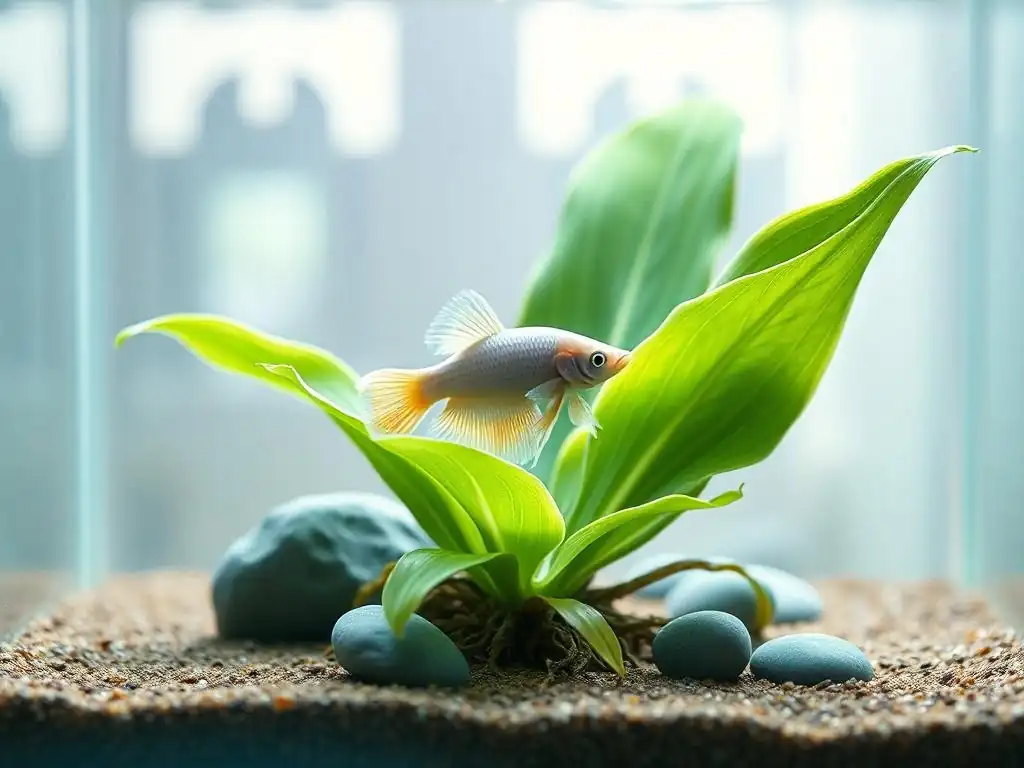
Choosing appropriate tank mates is crucial for the long-term health of your Cryptocoryne parva and the overall harmony of your aquarium. Ideal tank mates are small, peaceful fish species that will not disturb the delicate plant roots or graze on the leaves. Excellent choices include small schooling fish like Chili Rasboras (e.g., Boraras brigittae), Ember Tetras ( Hyphessobrycon amandae), Celestial Pearl Danios ( Danio margaritatus), or various species of peaceful Guppy Endlers ( Poecilia wingei). These fish typically occupy the mid to upper water column and have minimal impact on foreground plants.
Invertebrates are also highly compatible and often beneficial. Various dwarf shrimp species, such as Cherry Shrimp ( Neocaridina davidi) or Crystal Red Shrimp ( Caridina cantonensis), are excellent algae eaters and will not harm Cryptocoryne parva. Amano Shrimp ( Caridina multidentata) are particularly effective at consuming a wide range of algae. Snails like Nerite Snails ( Neritina natalensis) or Ramshorn Snails ( Planorbarius corneus) are also safe and can help keep the tank clean, contributing positively to the environment for Cryptocoryne parva care.
Avoiding Fish That Might Damage Cryptocoryne Parva
While many aquatic inhabitants are suitable, certain fish species can pose a threat to the delicate Cryptocoryne parva and should be avoided. Any large, boisterous, or known plant-eating fish are generally unsuitable. This includes large herbivorous species like Silver Dollars ( Metynnis argenteus), most Goldfish ( Carassius auratus), and many larger Cichlids (e.g., Oscars, Astronotus ocellatus), which are notorious for uprooting plants or consuming their foliage.
Additionally, bottom-dwelling fish that are excessive diggers can be problematic. Large species of Loaches, such as Clown Loaches ( Chromobotia macracanthus), or certain large Catfish can constantly disturb the substrate, potentially uprooting the shallow-rooted Cryptocoryne parva before it has a chance to establish. Even some smaller, seemingly innocuous fish like certain types of Barbs ( Puntius species) might nip at delicate plant leaves. Opting for species known for their peaceful temperament and minimal impact on plants is a vital part of effective Cryptocoryne parva care.
Cryptocoryne Parva vs. Other Cryptocoryne Species
Comparing Cryptocoryne Parva to Cryptocoryne Wendtii
Cryptocoryne parva and Cryptocoryne wendtii are both popular aquarium plants, but they differ significantly in size, appearance, and care requirements. Cryptocoryne parva is the undisputed dwarf of the genus, typically reaching only 2-5 cm (0.8-2 inches) in height. Its leaves are consistently narrow, lanceolate, and vibrant green. It is a slow grower, requiring moderate to high light, CO2 injection, and rich substrate for optimal carpeting. It is primarily a foreground plant.
In contrast, Cryptocoryne wendtii is a much larger and more variable species, capable of growing 10-30 cm (4-12 inches) tall. Its leaves come in a wide array of shapes (lanceolate, ovate, crinkled) and colors (green, brown, red, bronze, 'Mi Oya' green). C. wendtii is significantly easier to care for, tolerant of lower light conditions, and can grow well without CO2 injection, making it suitable for midground to background placement in a wider range of tanks. The stark difference in size and care complexity makes the Cryptocoryne parva care guide distinct from that of C. wendtii.
Cryptocoryne Parva vs. Cryptocoryne Lutea: Key Differences
Another common Cryptocoryne species often compared to Cryptocoryne parva is Cryptocoryne lutea (sometimes referred to as Cryptocoryne walkeri). The most striking difference lies in their mature size and overall growth habit. Cryptocoryne parva, as discussed, is a tiny foreground plant, rarely exceeding 5 cm, with delicate green leaves, demanding precise high-tech conditions for carpeting.
Cryptocoryne lutea, on the other hand, is a medium-sized Cryptocoryne, typically growing to 10-20 cm (4-8 inches) tall. Its leaves are generally broad, ovate, and often a uniform green, though some varieties can exhibit reddish-brown undersides. C. lutea is a much more robust and forgiving plant, thriving in a broader range of conditions and tolerating lower light and no CO2, making it an excellent choice for the midground. Its hardiness and larger size make it a much less demanding plant compared to the specific needs outlined in a Cryptocoryne parva care guide.
Creating a Stunning Aquascape with Cryptocoryne Parva
Utilizing Crypt Parva in Iwagumi and Dutch Aquascapes
Cryptocoryne parva's unique characteristics make it an exceptional plant for specific aquascaping styles, particularly Iwagumi and Dutch aquascapes. In an Iwagumi layout, which emphasizes minimalist rock arrangements, Crypt Parva is ideal for creating a lush, naturalistic carpet that softens the base of the rocks and provides a vibrant green contrast to the hardscape. Its small, uniform size perfectly maintains the scale within these often precise and detailed layouts, contributing to the serene, natural feel.
For Dutch aquascapes, known for their dense planting and meticulous arrangement of plant groups, Cryptocoryne parva can serve as an exquisite, low-lying foreground mass. Its ability to form a compact carpet allows aquascapers to create defined "streets" or sections, providing a smooth, uniform texture that contrasts beautifully with the varied forms and colors of midground and background stem plants. Its slow growth also means it requires less frequent trimming to maintain its shape in these intricate designs, a testament to its value in advanced Cryptocoryne parva care.
Complementary Plants for a Cryptocoryne Parva Foreground
To create a visually harmonious and stunning aquascape with Cryptocoryne parva as the foreground, selecting complementary plants for the midground and background is essential. For the midground, plants with contrasting leaf shapes and textures work best. Consider species like Anubias nana 'Petite', which offers dark green, rounded leaves that provide a nice contrast to the narrow Crypt Parva. Bucephalandra species, with their varied leaf forms and shimmering colors, also make excellent midground accents. Staurogyne repens or Hydrocotyle tripartita can transition gracefully from the foreground, offering a slightly taller, bushier texture.
For the background, taller stem plants that add height and color depth are ideal. Rotala rotundifolia or Rotala H'ra, with their fine textures and potential for reddish hues under high light, can create a vibrant backdrop. Ludwigia repens or Ludwigia inclinata var. 'Cuba' also offer rich reds and oranges. Even delicate Vallisneria nana can provide a simple, elegant green curtain. The key is to select plants that complement Cryptocoryne parva's delicate nature without overshadowing it, ensuring that your Cryptocoryne parva care contributes to a cohesive and beautiful display.
Where to Buy Cryptocoryne Parva: Selecting Healthy Plants
Choosing a Reputable Source for Your Cryptocoryne Parva
When acquiring Cryptocoryne parva, selecting a reputable source is crucial to ensure you receive healthy, pest-free plants. Specialized aquatic plant nurseries, whether online or brick-and-mortar, are often the best option. These establishments typically focus on plant health, proper handling, and may offer a wider selection of high-quality specimens. Online retailers should be vetted for positive customer reviews, clear return policies, and proper shipping methods that protect the plants during transit.
Many aquarists prefer "tissue culture" Cryptocoryne parva, which are grown in sterile laboratory conditions. These plants are guaranteed to be free of algae, pests (like snails), and diseases, providing a clean start for your aquascape. While potentially a bit more expensive, the peace of mind and reduced risk of introducing unwanted hitchhikers often outweigh the cost. Always inquire about the plant's origin and growing conditions if purchasing from a local fish store, as their quality can vary widely, directly impacting your initial Cryptocoryne parva care success.
Inspecting Plants for Signs of Health and Vigor
Before purchasing Cryptocoryne parva, a thorough inspection of the plants is essential, especially if buying from a physical store. Healthy Cryptocoryne parva should exhibit vibrant, uniform green coloration in its leaves; avoid plants with yellowing, browning, or translucent patches, which are signs of stress or decay. The leaves should feel firm to the touch, not mushy or brittle.
Carefully examine the root system if possible; healthy roots are typically white or light-colored and not slimy or decaying. Crucially, check for any signs of pests, such as snails, snail eggs (tiny clear or white dots on leaves/substrate), or unwanted algae growth on the leaves. Plants that appear leggy or stretched out might indicate they were grown in insufficient light, which could lead to initial melt when introduced to your tank. Opting for robust, compact plants sets the foundation for successful Cryptocoryne parva care in your aquarium.
Conclusion: Mastering Cryptocoryne Parva Care for a Thriving Aquarium
Mastering Cryptocoryne parva care is a journey that rewards patience and attention to detail with one of the most exquisite foreground plants in the freshwater aquarium hobby. While its reputation for being challenging is well-earned, understanding its specific needs for stable water parameters, moderate to high lighting, consistent CO2 injection, and a nutrient-rich substrate forms the bedrock of its successful cultivation. This comprehensive Cryptocoryne parva care guide has illuminated the essential requirements, from ideal water chemistry to strategic planting and troubleshooting common issues like crypt melt and slow growth.
By diligently applying the principles outlined, aquarists can transform their tanks with a lush, vibrant carpet of Cryptocoryne parva, creating a stunning focal point, particularly in nano tanks and detailed aquascapes. The unique texture and diminutive size of this plant offer unparalleled aesthetic possibilities, making the effort involved in its specialized care truly worthwhile. With consistent maintenance and a keen eye on its environmental needs, your Crypt Parva will not only survive but thrive, contributing to a breathtaking and thriving aquatic masterpiece.
Frequently Asked Questions
What are the ideal water parameters for Cryptocoryne parva in an aquarium?
Cryptocoryne parva thrives in slightly acidic to neutral water, with a pH between 6.0 and 7.5. Aim for a temperature range of 72-82°F (22-28°C) and moderate water hardness.
How much light does Cryptocoryne parva need to grow successfully?
This plant prefers low to moderate lighting. Too much light can lead to algae growth, while insufficient light can stunt its growth.
What substrate is best for planting Cryptocoryne parva?
A nutrient-rich substrate is crucial for healthy growth. Use a dedicated aquarium substrate or supplement with root tabs to provide essential nutrients.
Is CO2 injection necessary for Cryptocoryne parva?
While not strictly necessary, CO2 injection can significantly enhance the growth rate and overall health of Cryptocoryne parva.
What are some common problems aquarists face when caring for Cryptocoryne parva?
Crypt melt, a sudden disintegration of the plant, can occur due to changes in water parameters. Maintaining stable conditions and avoiding drastic changes is key to prevention.
Final Reflection: The Enduring Allure of Miniature Worlds
The journey into the world of Cryptocoryne parva reveals more than just the specifics of its care; it highlights the enduring appeal of creating miniature ecosystems within our homes. The dedication required to nurture this tiny crypt reflects a broader desire to connect with nature on an intimate scale, transforming small spaces into vibrant, living landscapes. This pursuit, though focused on a single plant, resonates with the growing trend of mindful aquascaping and the appreciation for the subtle beauty found in the smallest details.
This delicate plant, and the dedication it inspires, serves as a microcosm of our relationship with the natural world. Cultivating Cryptocoryne parva is a lesson in patience, observation, and the delicate balance required to foster life. It reminds us that even the smallest organisms play a vital role in the larger ecosystem. As the renowned naturalist John Muir once said: In every walk with nature one receives far more than he seeks.
This sentiment perfectly encapsulates the rewarding experience of nurturing this miniature aquatic marvel.
Now, as you consider the intricacies of Cryptocoryne parva care, I invite you to reflect on the broader implications. How can you apply the principles of patience, observation, and mindful cultivation to other aspects of your life? Embrace the challenge of creating your own miniature world, and in doing so, discover a deeper connection to the beauty and resilience of nature, both within your aquarium and beyond.
Unleash the Beauty of Crypt Parva in Your Aquarium!
Thank you for diving into the world of Cryptocoryne parva with us! We hope you've discovered the magic this tiny plant can bring to your aquascape. Now, it's time to put that knowledge into action and create your own stunning underwater world.
Here are some steps you can take to bring Crypt parva into your aquarium:
- Start Your Own Crypt Parva Carpet: Commit to planting a small section of your aquarium foreground with Crypt parva. Observe its growth over the next month and document your progress!
- Explore the possibility of using Crypt parva in a Wabi-Kusa arrangement to enjoy its beauty above water too.
- Share your initial Crypt parva planting design ideas in the comments below. What type of hardscape will you pair it with?